What Is a Mortise and Tenon Joint? Your Guide to Quality Furniture!


Ever admired a solid wood chair or table that felt unbelievably sturdy, with no screws or nails in sight? Chances are, you were looking at a piece held together by a mortise and tenon joint. It’s a classic, brilliant method of interlocking two pieces of wood where a precisely shaped tongue (the tenon) fits snugly into a matching slot (the mortise).
This simple connection uses the wood’s own structure to create a bond that can last for generations. It's one of the key things we look for in the furniture we bring into our showroom!
The Timeless Puzzle of Quality Furniture
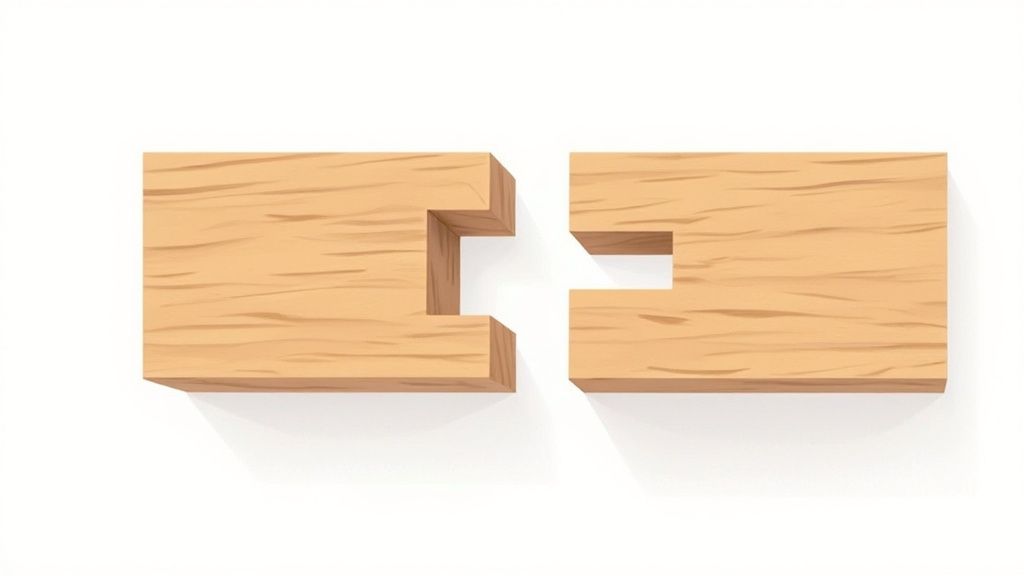
If you’ve ever snapped two puzzle pieces together, you already get the basic idea behind the mortise and tenon. It’s one of the oldest and most trusted techniques in woodworking for one simple reason: it just works. Instead of relying on metal fasteners that can loosen or rust over time, this method locks wood together mechanically, creating an incredibly strong and durable frame.
And this isn't some new-fangled idea. It’s one of humanity's oldest woodworking techniques, with examples found dating back an incredible 7,000 years! How cool is that? It’s a method that has truly stood the test of time.
Why We Trust This Joint at BILTRITE
Here at BILTRITE, we've been a family-owned business serving the Metro Milwaukee area since 1928, so we know a thing or two about furniture that’s built to last. The mortise and tenon joint is a signature of the affordable, better-quality furniture we carry, especially our beautiful USA and Amish-made collections.
Why do we love it so much? Because it’s a non-negotiable sign of true craftsmanship.
A well-made mortise and tenon joint is more than just a connection—it's a promise of strength and longevity, ensuring your furniture can handle the beautiful chaos of family life for years to come.
This joint is absolutely essential for building furniture that won’t wobble, twist, or weaken with use. It's especially critical for high-use pieces that need to be exceptionally sturdy:
- Dining Room Chairs: They have to support weight and constant movement, day in and day out.
- Table and Bed Frames: These pieces are the foundation of a room and demand uncompromising stability.
- Case Goods: The structural frames of dressers and cabinets rely on this joinery to stay rigid and square.
This level of quality is a huge part of what makes our Amish-built furniture so special. When you see this joint, you know you're looking at a piece built with integrity and a focus on creating something that will become a treasured part of your home.
Why This Joint Is Ideal for Family Furniture
When you’re picking out furniture for your home, you need pieces that can stand up to the beautiful chaos of daily life—from big holiday dinners to kids who think the coffee table is a racetrack. This is where the true strength of a mortise and tenon joint really shines. It’s not just some technical term; it's a promise that your furniture is built to last.
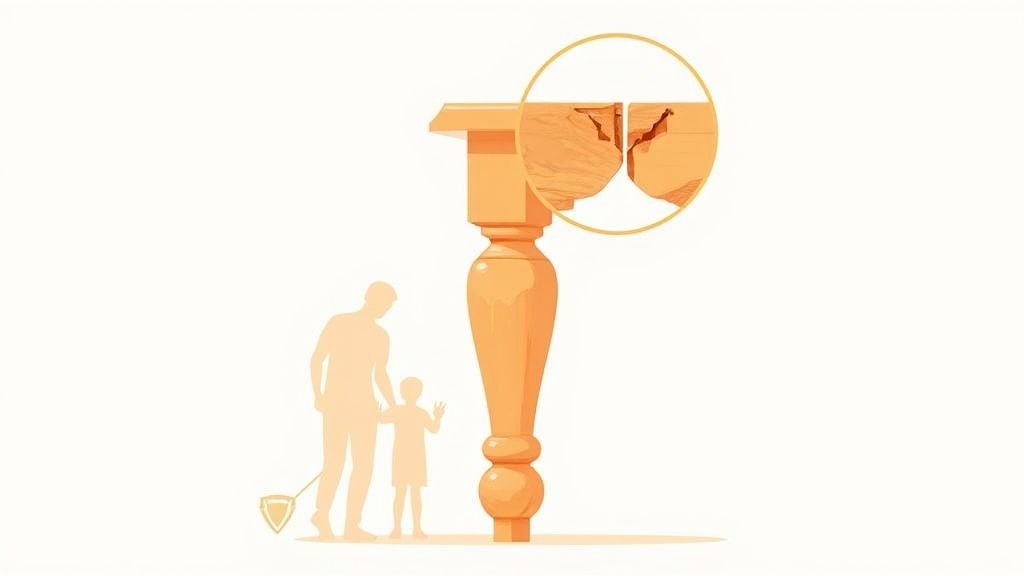
Because the joint creates a solid, internal lock, it’s incredibly resistant to the twisting and pulling known as racking forces. These are the very forces that make other furniture wobble and weaken over time. Think about a dining chair someone leans back in day after day, or a bed frame that has to put up with jumping contests. This joint is engineered to handle that kind of real-world use without giving up.
This natural strength makes it the best choice for the hardworking pieces that form the backbone of your home. It’s what turns a piece of furniture into a reliable, lasting part of your family’s story. This is the kind of craftsmanship we’ve been proud to feature in our Greenfield showroom since 1928, reflecting our family's commitment to affordable, better-quality furniture.
Built for Strength and Stability
The real magic of the mortise and tenon is how it distributes stress. Instead of piling all that pressure onto a few small screws or nails, the force is spread evenly across the large surface area where the tenon fits inside the mortise. This simple principle makes the connection points incredibly tough.
This is especially crucial for furniture that bears a lot of weight and sees constant motion. Here’s why it matters so much for specific pieces in your home:
- Dining Tables and Chairs: These pieces are used every single day. The legs of a table and the frame of a chair have to resist constant shuffling, leaning, and weight. Mortise and tenon construction keeps them solid, not rickety.
- Bed Frames: A bed needs to be a stable, silent foundation for a good night's sleep. This joint prevents the frame from creaking, swaying, or loosening over the years, giving you solid, dependable support.
- Benches and Coffee Tables: Often used for extra seating or holding heavy books and decor, these pieces benefit from a joint that can handle stress from all directions without compromise.
This is a huge reason why we are so passionate about the Amish-made furniture we carry. The builders are true masters of this technique, and you can honestly feel the difference in quality. To learn more, you can explore the advantages of Amish furniture in our detailed guide.
A Long-Term Investment in Your Home
Choosing furniture built with mortise and tenon joinery is really an investment in longevity. While pieces held together with screws and staples might seem like a bargain at first, they almost always loosen and break down, forcing you to buy replacements sooner than you’d like. Furniture with proper joinery, on the other hand, is built to become a permanent part of your home.
At BILTRITE, we believe furniture shouldn't be disposable. It should be strong enough to host decades of family dinners, sturdy enough for homework sessions, and beautiful enough to be passed down. That's the value of great craftsmanship.
This commitment to lasting quality is at the very heart of what we do. As a 4th generation family business, we’ve seen firsthand how well-made furniture stands the test of time. When you visit us, you’re not just buying a table or a chair; you’re choosing a piece that will be part of your family’s memories for years to come.
How to Spot Quality Joinery in Person
Knowing a mortise-and-tenon joint is a sign of quality is one thing, but how do you actually spot one in the wild when you’re out furniture shopping? It’s a bit like knowing the ingredients of a great recipe versus actually tasting the dish. That’s a huge reason we don’t sell online here at BILTRITE—we truly believe the only way to choose furniture for your family is to see it, touch it, and feel the difference for yourself.
When you visit our showroom in Greenfield, you’re not just browsing; you’re learning. Our friendly team has over 400 years of combined experience, and we love sharing what we know. We can walk you through exactly what to look for, helping you become a confident shopper who can recognize furniture that’s truly built with integrity.
Your Hands-On Inspection Guide
Think of yourself as a furniture detective for a moment. The clues to exceptional craftsmanship are right there if you just know what to look for and what to feel for. When you’re in our store, we encourage you to get up close and personal with the pieces.
Here’s a simple checklist our team will show you how to use:
- Look for a Tight, Seamless Fit: The most important clue is right where the wood connects. At the point where a table leg meets the apron, or a chair rail joins a leg, the fit should be almost invisible. You shouldn't see any gaps, cracks, or daylight peeking through.
- Give It the “Wiggle Test”: Don't be shy! Go ahead and grab the arm of a chair or the leg of a table and give it a gentle but firm wiggle. A piece built with a proper mortise-and-tenon joint will feel completely solid and rigid. No give, no wobble, no sway—nothing.
- Feel for Smoothness: Now, run your hand over the joint. In high-quality furniture, the transition from one piece of wood to the next should feel smooth and perfectly flush. If you feel any roughness, uneven edges, or see globs of wood filler, that’s a red flag.
This hands-on approach is the absolute best way to understand the stability and care that goes into our USA and Amish-made furniture.
Spotting the Extra Details of True Craftsmanship
Beyond the basic fit and feel, a few extra details signal truly exceptional joinery. These are the touches that master woodworkers—like the Amish artisans who build many of our pieces—add to make a joint even stronger for the long haul.
A classic example is the pinned or wedged tenon. Look closely, and you might see a small, round wooden dowel (a pin) driven straight through the side of the mortise and into the tenon. This acts like a lock, permanently securing the joint and making it nearly impossible to pull apart. In other cases, a craftsman might drive a tiny wedge into the end of the tenon, flaring it out and locking it tightly inside the mortise from within.
When you see these features, you’re looking at a level of detail that goes way beyond simple assembly. It's a clear sign that the furniture was built by someone who cared deeply about making it last not just for years, but for generations.
These principles of solid construction are just as important when you're shopping for case goods like dressers or chests. For more on that, check out our guide on the top five things to look for when buying chests, dressers, and cabinets. Come on down to our showroom, and we’ll be happy to point all of this out in person!
Comparing Mortise and Tenon to Other Joints
When you’re looking at furniture, it’s easy to focus on the big picture—the beautiful wood, the stylish design, or the comfy cushions. But the real secret to furniture that lasts a lifetime is hidden from view, in the way those pieces of wood are held together.
In the world of woodworking, there are dozens of ways to connect two pieces of wood. Think of them as different tools in a toolbox, each with a very specific job. Understanding the difference is why we at BILTRITE are so passionate about furniture built with superior joinery—it's the foundation of real quality.
The Right Joint for the Right Job
A skilled craftsperson knows that not all joints are created equal. They choose the best one for the task at hand.
A beautifully cut dovetail joint, with its iconic interlocking "pins" and "tails," is a fantastic choice for building the corners of a drawer box. It’s specifically designed to resist the constant pulling forces from opening and closing a drawer, making it an absolute champion for that one job.
Then you have simpler methods, like dowel joints, which use small wooden pegs to align and connect two boards. While they can be effective, they often rely more on the strength of the glue than the mechanical strength of the wood itself. Over time, that glue can weaken, leading to the dreaded wobble we've all felt in lesser-quality furniture.
For building the structural frame of a piece of furniture, the mortise and tenon joint is the undisputed heavyweight champion. Its entire purpose is to bear weight and handle daily stress—from chairs and tables to bed frames—without ever giving up.
This infographic breaks down the simple, hands-on process for checking this kind of quality when you're looking at furniture in person.

As the visual shows, a hands-on approach—inspecting, feeling, and asking questions—is the best way to confirm you're getting furniture built with integrity.
Common Woodworking Joints Compared
To give you a clearer picture, here’s a quick rundown of different joinery methods and where you'll typically find them.
| Joint Type | Primary Strength | Commonly Used For |
|---|---|---|
| Mortise and Tenon | Resists racking and shear forces | Chair frames, table legs, bed rails |
| Dovetail | Resists pulling forces (tension) | Drawer boxes, case construction corners |
| Dowel | Alignment and reinforcement | Cabinet assembly, light-duty frames |
| Screws & Staples | Fast assembly (low strength) | Back panels, attaching hardware |
This comparison shows it's not about one joint being "bad" and another "good," but about using the right joint for the right application.
Why It's Our Go-To for USA and Amish-Made Furniture
So, how does the mortise and tenon really stack up against other methods for building a strong furniture frame? Here’s a quick comparison to help you see the difference when you visit our showroom:
- Screws and Staples: These are the fastest and cheapest way to assemble furniture, but they're also the weakest link. They only connect wood at a few small points and are notorious for loosening, stripping, or pulling out over time. You simply won't find this method on the load-bearing frames of the high-quality, solid-wood pieces we carry.
- Dowel Joints: A step up from screws, but still limited. Dowels are decent for alignment but just don't have the massive surface area or interlocking strength to resist the twisting and racking forces that a dining chair or table leg has to endure every single day.
- Dovetail Joints: They are masters of their domain, but that domain isn't structural framing. Dovetails excel at resisting tension (being pulled apart), but they aren't the best solution for the complex, weight-bearing loads that a table or chair frame takes on.
- Mortise and Tenon Joints: This is the gold standard for structural integrity. Period. The large contact area between the mortise and tenon, almost always reinforced with glue, creates an incredibly powerful bond. This joint masterfully distributes stress across the entire piece, preventing weak points and ensuring the furniture remains stable and strong for generations.
It's this unwavering commitment to using the right joint for the job that sets our USA and Amish-made furniture apart. It’s a cornerstone of our promise to offer affordable, better-quality furniture that provides real, long-term value for your family.
Simple Care for Your Solid Wood Furniture
When you invest in a piece of furniture built with mortise and tenon joinery, you're bringing home something truly made to last. The best part? Taking care of it is surprisingly simple. Because the joints themselves are so strong and self-sufficient, your main job is just looking after the beautiful solid wood that surrounds them.
We want you to enjoy your furniture for decades, so it can become a cherished part of your family’s story. Following a few easy, practical tips will keep it looking fantastic for generations to come.
Keeping Your Furniture Looking Great
The most important thing you can do for solid wood is to keep its environment consistent. Wood is a natural material, after all, and it can react to big swings in temperature and humidity. Think of it like a houseplant—it’s happiest when it’s not dealing with extremes!
- Routine Dusting is Key: A soft, lint-free cloth is your best friend here. Dusting regularly prevents tiny particles from building up and scratching the finish over time.
- Avoid Direct Sunlight: Just like our skin, wood finishes can be damaged by too much exposure to harsh UV rays. If you can, try to place your furniture away from windows that get blasted with direct sun all day.
- Watch the Humidity: Wood can expand and contract with major shifts in humidity. Using a humidifier during dry winter months and a dehumidifier in the sticky summer helps keep the wood stable and happy.
One of the best things about solid wood furniture is that its care is straightforward. A little bit of consistent attention is all it takes to protect your investment and keep it looking wonderful for your family to enjoy.
Cleaning and Maintenance Made Easy
For everyday cleaning, a simple approach is always the best one. Steer clear of harsh chemical cleaners or abrasive polishes, as they can strip away the protective finish on your furniture. Most of the time, a dry cloth is all you’ll need for dusting.
When you’re dealing with sticky spots or spills, a slightly damp cloth followed immediately by a dry one will usually do the trick. For more detailed advice, we’ve put together a helpful guide on how to clean wood furniture that covers everything you need to know.
By following these simple steps, you're not just cleaning; you're preserving the craftsmanship and ensuring those strong mortise and tenon joints will hold steady for years. It’s all part of the joy of owning affordable, better-quality pieces built with genuine care.
Come See the Difference in Our Showroom
Reading about what a mortise and tenon joint is can give you the basic idea, but seeing and feeling its incredible strength in person? That’s a whole different experience. As a 4th generation, family-owned business, we’ve been helping folks in the Metro Milwaukee community find furniture they can rely on since 1928. We’ve always believed you need to get your hands on a piece to understand its quality—something you just can't get from clicking a picture online.
That's precisely why we don't sell our furniture on a website. Instead, we invite you to come on down to our showroom and see the amazing craftsmanship of mortise and tenon joinery for yourself. Go ahead, run your hand over a gorgeous solid oak table or give a sturdy maple dining chair a good wiggle. We promise it won’t budge! You’ll see the seamless fit where wood meets wood, and it’s a difference you can feel instantly.
Experience the BILTRITE Way
When you stop by, you'll never feel any pressure from us. Ever. Our incredible team has over 400 years of combined experience, and we’re here to chat, answer your questions, and just share our passion for furniture that’s made the right way. We’d love to walk you through our huge selection of USA and Amish-made pieces and help you find something your family will treasure for generations.
We’re all about family, which is why we’re proudly closed on Sundays. That’s our time to recharge and be with our own loved ones, just like you. We look forward to welcoming you into our store!
At BILTRITE, we believe seeing is believing. A visit to our showroom lets you compare different joinery styles and feel the stability that sets our furniture apart from the rest.
Ready for a Visit?
We’re genuinely excited to meet you and help you discover furniture built with true care and integrity. It’s an honor for us to be a part of your home’s story, and we’re here to make sure it’s a chapter filled with comfort and lasting quality.
Ready to see what makes our furniture so special? You can easily find our showroom location and hours to plan your visit. We can’t wait to say hi and show you around!
Your Questions, Answered
Every day in our showroom, we get fantastic questions from families just like yours. And honestly? We love it. It’s a core part of the family-to-family way we've done things since my great-grandparents started this business back in 1928. Here are a few of the most common questions we hear about mortise-and-tenon joints and why they're such a big deal.
Is Mortise and Tenon the Strongest Joint?
When you’re talking about the frame of a piece of furniture that has to hold weight—think of a dining chair, table legs, or the headboard and footboard of a bed—the mortise and tenon is absolutely the gold standard. Its design is just brilliant at fighting the side-to-side racking forces that make other furniture get wobbly over the years.
While other joints are champions in their own right (like dovetails for drawer boxes), the mortise and tenon is the undisputed king for creating a rigid, unshakeable frame that’s built to last.
Can a Mortise and Tenon Joint Ever Break?
Look, even the strongest things have their limits. While this joint is one of the most durable in all of woodworking, it’s not completely indestructible. A really severe impact or a failure in the wood itself could cause a break. But for normal, everyday family use? Even heavy-duty use? A properly made mortise and tenon joint is designed to last for generations.
This is exactly why we're so confident in the USA and Amish-made furniture we carry. The craftsmen we work with have this technique down to a science, ensuring every joint is as strong as it can possibly be.
Does This Joint Make Furniture More Expensive?
Creating a perfectly fitted mortise and tenon joint takes a lot more time, skill, and care than just slapping something together with screws or staples. Naturally, because there's more craftsmanship involved, furniture built this way often has a higher upfront cost than the mass-produced stuff.
But we see it as a much smarter investment. At BILTRITE, our whole mission is to provide affordable, better-quality furniture. You get incredible value because you’re buying a piece you won't have to replace in a few years. It's the classic definition of paying for quality that truly stands the test of time.
A well-crafted piece of furniture with solid joinery isn't an expense; it's a one-time investment that pays off with decades of reliable use and enjoyment for your family.
How Can I Tell if a Piece Has This Joint?
This is the fun part, and the best way is to see it and feel it for yourself! It's a huge reason we don't sell online—we want you to be 100% confident in your purchase. When you come into our showroom, we'll have you do the "wiggle test" on our chairs and tables. You’ll immediately feel how incredibly solid they are.
Our team, which has over 400 years of combined experience, would love to show you exactly what to look for. We can point out the seamless fit where two pieces of wood join and explain the subtle signs of top-notch work. It's a great, hands-on way to become a smarter furniture shopper!
Ready to feel the difference for yourself? Come visit our family at BILTRITE Furniture-Leather-Mattresses in Greenfield. We’d love to show you why quality joinery matters and help you find something wonderful for your home.