Small Scale Outdoor Furniture: Find Your Perfect Set


You step onto your patio with a cup of coffee, look around, and think, “This should be relaxing.” Instead, it feels cramped. The chairs are too deep, the table is too wide, and every inch matters when you're working with a balcony, condo patio, narrow porch, or a cozy backyard corner.
We hear this all the time at BILTRITE. Our family has been helping Metro Milwaukee folks furnish their homes since 1928, and small spaces have never been a throwaway problem. They need smart furniture, not shrunken furniture. They need pieces that fit, feel comfortable, and hold up through Wisconsin weather.
That's why small scale outdoor furniture matters. It isn't some passing fad. The outdoor furniture market is projected to grow from $55.34 billion in 2026 to $67.14 billion by 2030 according to The Business Research Company's outdoor furniture market report. People are treating patios, balconies, and little outdoor nooks like real living space. They should.
Your Guide to Enjoying Your Small Outdoor Space
A small outdoor space can be one of the hardest areas to furnish well. Indoors, you can usually cheat a little. Outside, you can't. A chair that sticks out too far blocks the walkway. A table that looks fine in a showroom suddenly eats the whole balcony. One bad choice, and the space stops being useful.
We've watched a lot of Milwaukee-area homeowners make the same mistake. They shop by style first and scale second. That's backwards. Start with fit, then comfort, then weather resistance, then looks. If you get the first one wrong, the rest won't matter.
Start with how you actually want to use it
Ask yourself one direct question. What do you want this space to do on a normal day?
- Morning coffee spot: Two chairs and a small table usually beat a full dining set.
- Quiet reading corner: A single comfortable chair with a compact side table may be all you need.
- Easy entertaining: Light pieces you can move around work better than anything bulky.
- Everyday dining: You need enough room for seating and safe movement, not just a table that technically fits.
Practical rule: A small patio should feel open when you're using it, not just when it's empty.
That's why we like helping people slow down and think through the actual job their outdoor space has to do. If you want more inspiration before you shop, take a look at our ideas for designing a captivating patio.
Small doesn't mean settling
A lot of people assume a compact patio means they have to give up comfort or style. That's just not true. A well-chosen small scale outdoor furniture setup can feel more inviting than a big oversized arrangement because it leaves breathing room.
And breathing room matters. Especially in Wisconsin, where you want to make the most of every usable outdoor day.
What Exactly Is Small Scale Outdoor Furniture
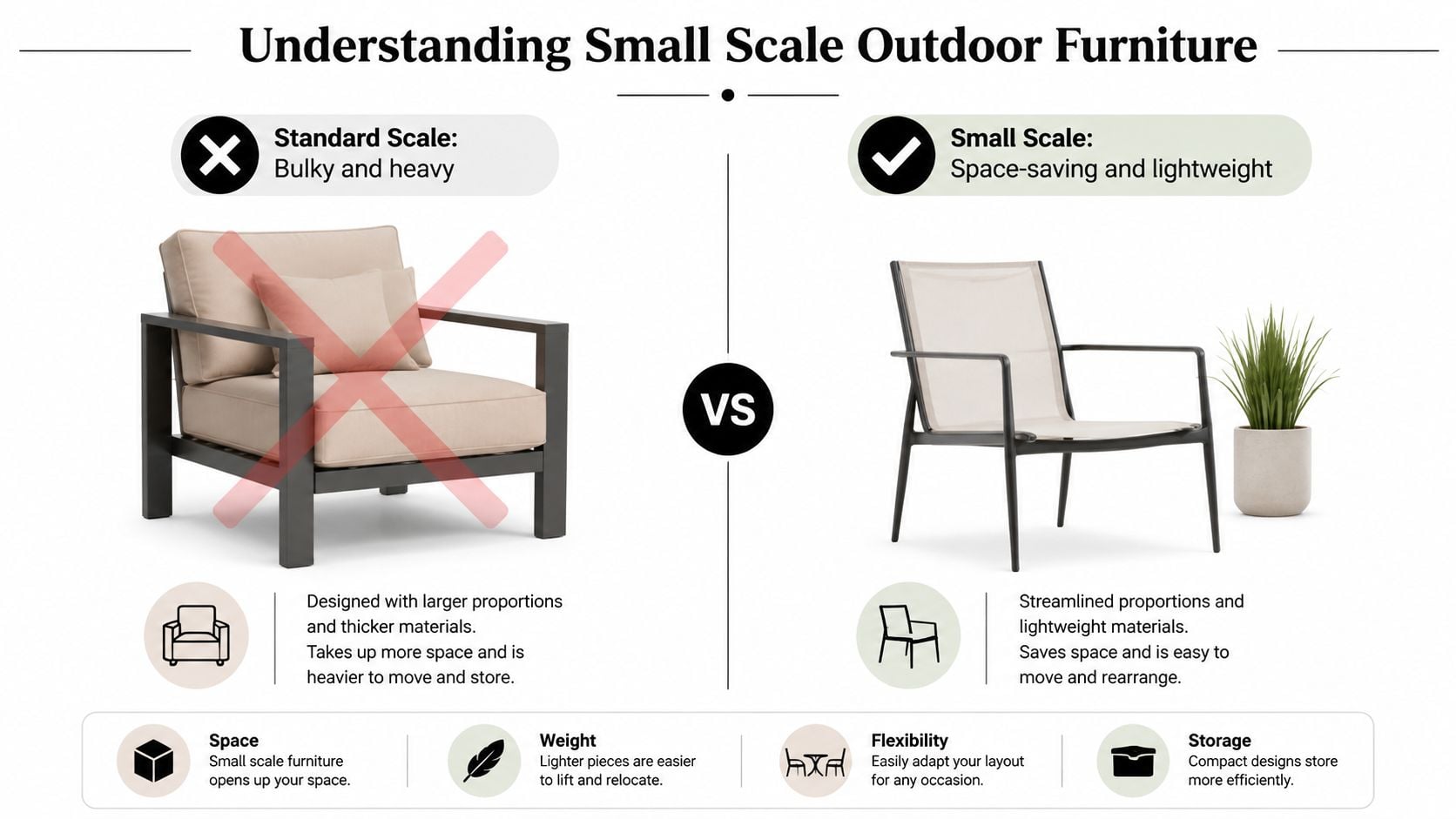
Small scale outdoor furniture is furniture designed with a smaller footprint, cleaner lines, and easier movement in mind. It's not toy-sized. It's right-sized.
Think about the difference between a condo kitchen and a big farmhouse kitchen. Both can work beautifully, but the smaller one needs every cabinet, stool, and appliance to earn its place. Outdoor furniture works the same way.
What it usually looks like
Small scale pieces often include:
- Slimmer chair frames: Less visual weight and less floor space taken up.
- Shallower seating: More room to move around without giving up support.
- Armless or lightly scaled arms: Easier to tuck under tables and easier to place side by side.
- Smaller tables: Round bistro tables, narrow coffee tables, and nesting styles tend to work well.
- Modular pieces: Handy when you want flexibility without committing to one giant setup.
What it is not
It's not cheap, flimsy, or temporary by definition. That's a big misunderstanding.
Some of the worst patio buys we see are “small” only because they're made poorly. They wobble, fade, crack, or feel awkward to sit in. Good small scale outdoor furniture is intentional. It balances proportion, comfort, and durability.
Here's the standard I'd use. If a piece fits your space but makes you feel like you're perched on it instead of sitting in it, skip it. If it fits physically but blocks the natural path in and out of the space, skip it again.
Why shoppers ask for it more often now
Apartment balconies, condo patios, senior living spaces, and compact porches all need furniture that works harder in less room. That's why we keep seeing stronger interest in pieces made for apartments and smaller homes, not just giant suburban decks. If that sounds like your situation, our guide to small scale furniture for apartments is a useful place to keep the same mindset indoors too.
Good small scale outdoor furniture should disappear into your routine, not dominate the whole space.
Measure and Plan Your Layout Like a Pro
Most patio mistakes happen before the furniture ever arrives. They happen with hopeful guessing.
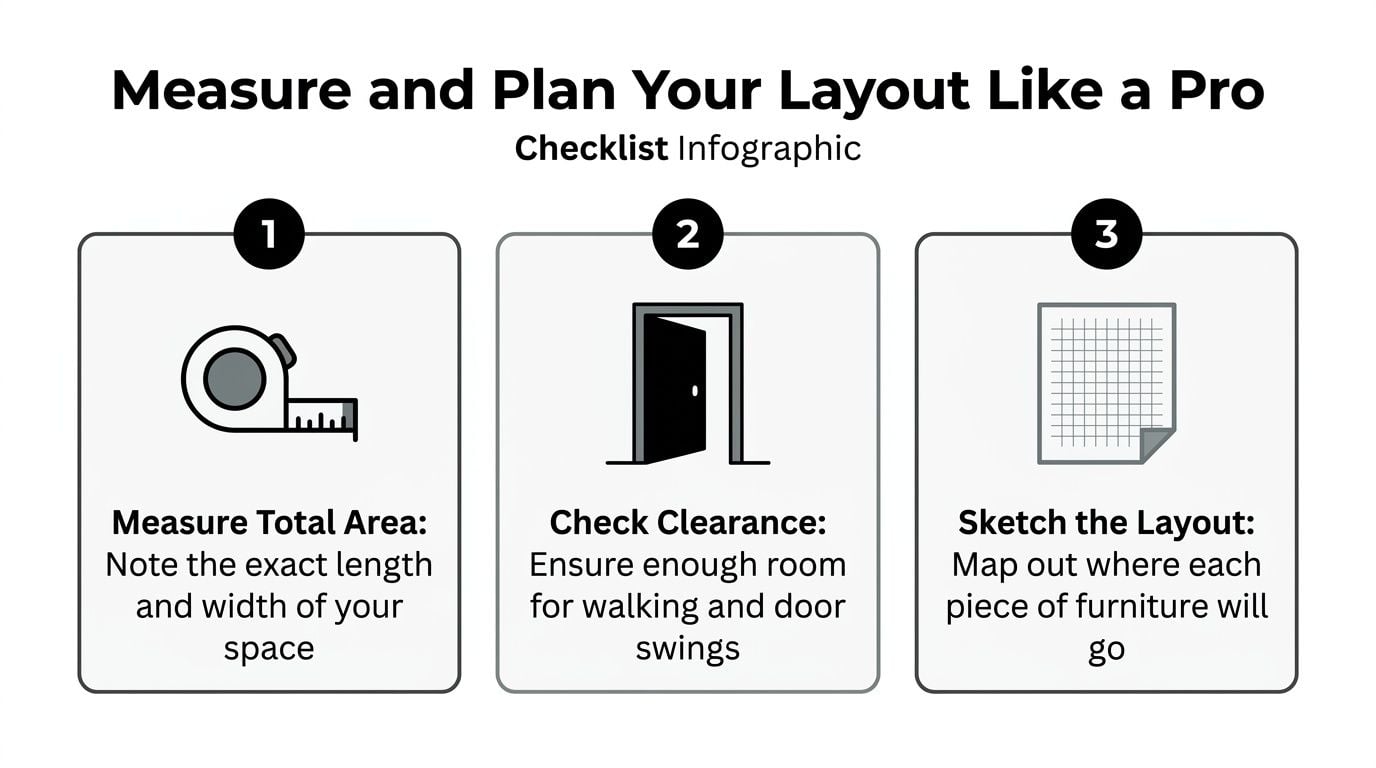
A customer sees a nice compact dining set, pictures it on the patio, and forgets one important detail. Chairs need room to move. People need room to walk. Doors still have to open. Planters, railings, grills, and steps don't magically disappear just because the furniture is attractive.
The number to remember
For comfortable use, experts recommend leaving at least 36 inches of clearance around an outdoor dining table, and even a compact 4-person set often needs an area of roughly 11×11 feet once chairs are pulled out, according to this outdoor furniture size guide from Tangkula.
That one guideline saves people a lot of frustration.
Our favorite no-nonsense planning trick
Use painter's tape on the patio floor.
Tape out the exact footprint of the table, chairs, loveseat, or bench you're considering. Then walk through the space like you normally would. Open the door. Pretend you're carrying a tray. Pull out the chair. Turn around.
That quick little exercise tells you more than staring at dimensions on a tag ever will.
Measure these before you shop
Don't stop with overall length and width. Write down:
- The full patio or balcony size
- Door swing and entry clearance
- Railing placement
- Permanent obstacles, like posts, planters, grills, or utility boxes
- Traffic path, meaning how you naturally move through the space
A layout can fail even when the furniture technically fits. That's the part many people miss.
A simple planning table
| Area to check | Why it matters |
|---|---|
| Entry door | Prevents blocked access and awkward door swing |
| Chair pull-back space | Keeps dining and lounging usable |
| Walk path | Makes the patio feel open instead of pinched |
| Corners and railings | Helps you spot dead space or tight spots |
| View line | Keeps the setup feeling pleasant, not crowded |
If you want help with the measuring side before you come in, our how to measure furniture guide is worth a read.
We're big believers in planning first because returns and regrets usually start with “I thought it would fit.” Our team has over 400 years of combined experience, and a lot of that wisdom comes from helping people avoid exactly that sentence.
Choosing Materials That Last in Wisconsin Weather
A compact patio set can look great on day one and still be a bad buy.
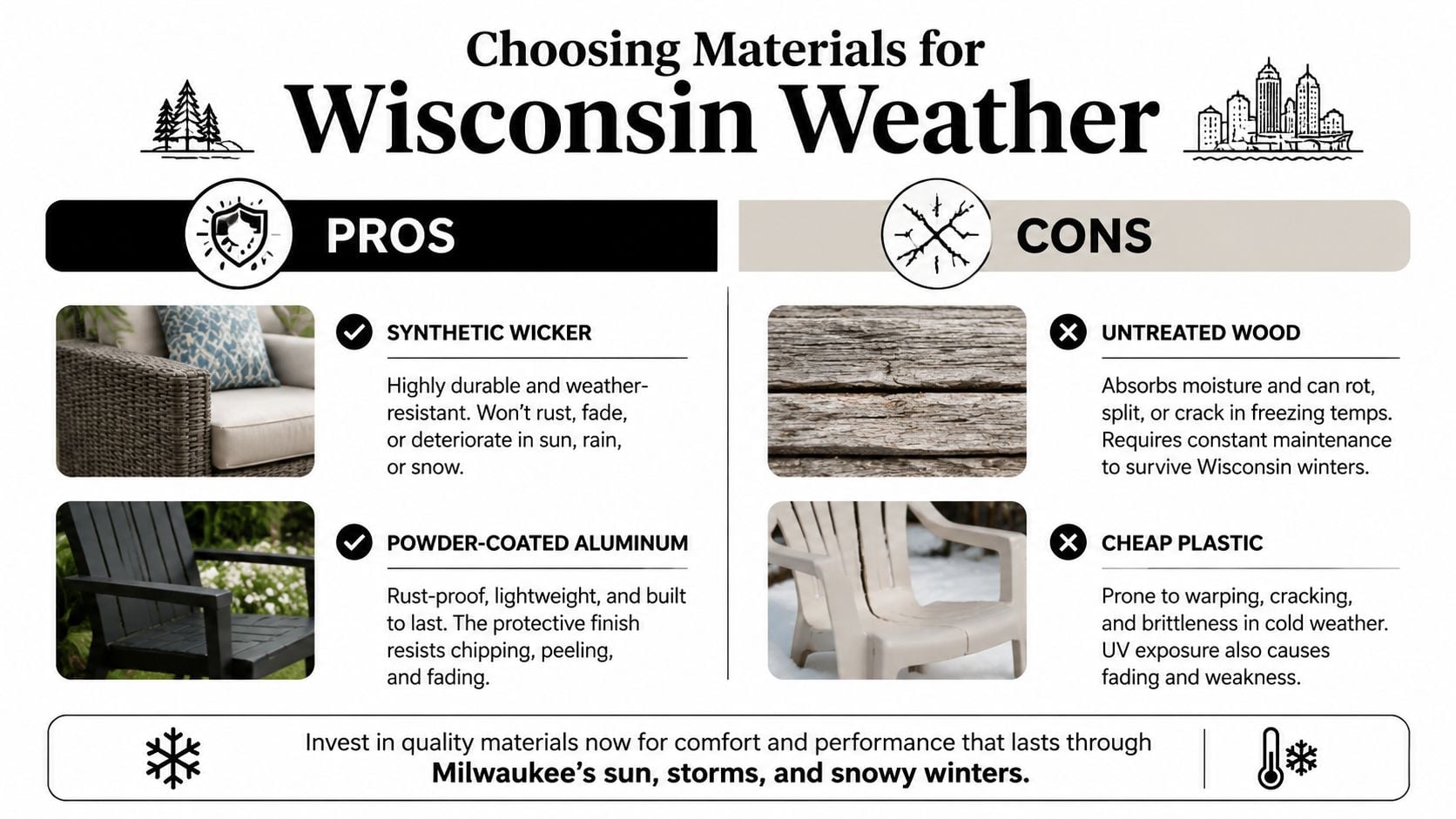
Around Milwaukee, outdoor furniture has to survive humid summer days, hard sun, sudden storms, and freezing winters. That weather exposes weak materials fast. If you buy for size alone, you usually end up shopping again sooner than you planned.
My advice is simple. In a small outdoor space, every piece needs to earn its footprint with durability, not just looks.
Materials I'd put at the top of the list
I steer Milwaukee-area shoppers toward three material categories again and again because they hold up, stay practical in tighter spaces, and don't turn ownership into a chore.
Powder-coated aluminum
This is one of the smartest choices for small-scale outdoor furniture. It's lighter than steel, easy to shift around, and it doesn't make a balcony or modest patio feel visually heavy.
Good aluminum furniture also resists rust far better than bargain metal pieces. That matters here. If you like to rework your setup through the season or tuck pieces away during winter, aluminum makes life easier.
HDPE or poly lumber
If you want low maintenance and long service life, start here. Poly lumber handles moisture well, cleans up easily, and feels far more solid than cheap resin furniture you see at big box stores.
It's especially good for Wisconsin homeowners who are done replacing flimsy patio pieces every few years. Many of the best options in this category are made in the USA, and that usually shows up in the hardware, joinery, and overall fit.
Quality wood
Wood can be excellent outdoors, but only if the species, finish, and construction are right. Poorly made wood furniture swells, cracks, loosens up, and becomes a project. Well-built wood furniture develops character and stays dependable.
This is one area where Amish-made and other USA-made pieces often stand apart. You can usually spot the difference in person. Tighter joinery, heavier components, smoother finish work, and better balance are hard to fake.
Materials I'd skip or inspect very carefully
Some materials do not age well outside, especially through Wisconsin's seasonal swings.
- Cheap plastic: tends to fade, get brittle, and feel unstable
- Low-grade steel: can rust quickly in exposed or damp conditions
- Poorly finished wood: absorbs moisture and wears out fast
- Weak woven materials: can fray, sag, or crack after limited outdoor use
Woven furniture causes a lot of confusion, so if you're comparing those options, read our guide on the difference between wicker and rattan.
Buy the furniture you want to keep, not the furniture you expect to replace.
What I recommend for Milwaukee-area shoppers
Match the material to how your space lives. Full sun calls for fade-resistant surfaces. Open exposure calls for rust resistance. If your furniture may stay outside through shoulder seasons, stable construction matters just as much as the finish.
I also think local shoppers should give more attention to where a piece is made. Small-scale outdoor furniture is often treated like a temporary purchase, but it shouldn't be. At BILTRITE Furniture-Leather-Mattresses, many shoppers come in looking for something compact and leave focused on build quality, because that is what determines whether the set still looks good after a few Wisconsin seasons. If you want help comparing materials side by side, come visit the showroom and put your hands on the difference.
Smart Styles and Space-Saving Designs
A small outdoor setup works when each piece has a job and the whole arrangement feels easy to use.
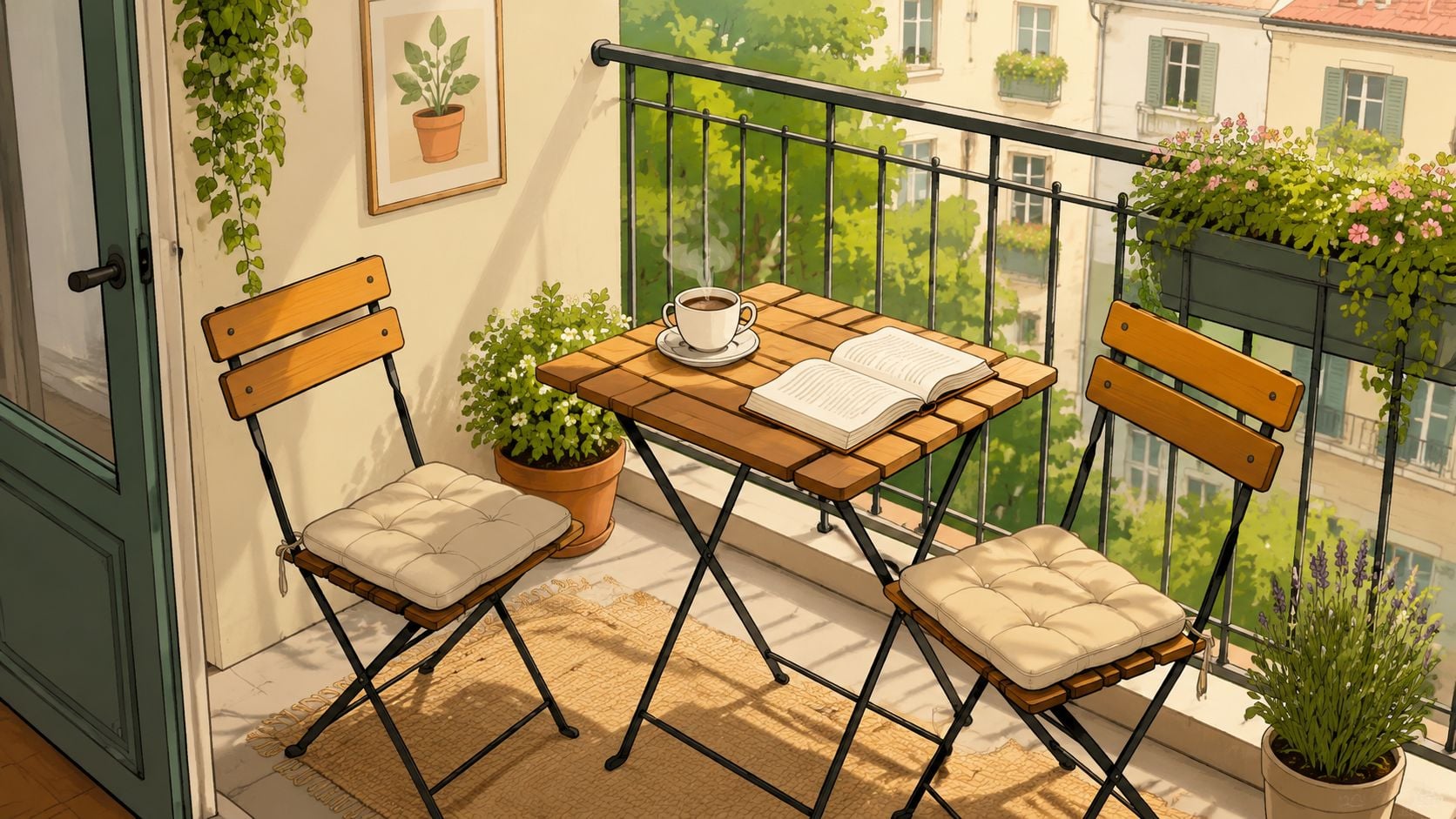
That could mean a little bistro table for coffee before work. It could mean two comfortable chairs and a compact table where you unwind after dinner. It could mean a bench that hides cushions so the area stays neat instead of turning into a storage problem.
Styles that earn their space
Some designs just make more sense in tight outdoor areas.
A bistro set is a classic for a reason. It gives you a place to sit, eat, chat, or work on your laptop for a bit without swallowing the whole patio.
A small conversation set works well when dining isn't your priority. Two scaled chairs and a modest table often feel more relaxed than trying to jam a dining set into a space that doesn't want one.
Then there's the storage bench, which I love for practical households. Seating plus hidden storage is the kind of double-duty thinking that small spaces need.
Pieces I'd choose over bulkier options
If you're deciding between two styles and one looks heavier, deeper, and more overbuilt for your space, I'd usually pass on it. Small areas reward restraint.
Here are some smart choices:
- Folding chairs: Good when flexibility matters more than a fixed layout
- Nesting tables: Useful when you need surface area sometimes, not all the time
- Armless dining chairs: Easier to tuck in and simpler to move around
- Benches on one side of a table: A handy way to save space visually and physically
- Lightweight accent tables: Easier to shift for guests or cleaning
Don't ignore accessibility
This is a bigger issue than most style articles admit. For many people, the question isn't just whether the furniture fits. It's whether it's safe and comfortable to use every day.
That's especially true for older adults. As noted by Porch and Patio's guide to outdoor furniture for small spaces, higher seats, stable arms, and layouts that preserve clear paths can make a small space more functional and safer.
A chair can be compact and still be easy to get in and out of. That should be the goal.
We work with plenty of shoppers furnishing senior living spaces or homes where ease of movement matters. In those cases, I'd favor chairs with supportive arms, a friendlier seat height, and a layout that doesn't force awkward twisting or sidestepping.
And while it's an indoor category, the same practical thinking is why our come-apart sofas are so helpful for tight stairways and narrow entries. Good furniture solves real-life space problems. That mindset applies outside too.
Find Your Furniture at Our Family Showroom
Knowing what to look for is half the job. The other half is finding outdoor furniture that feels solid, fits your space, and can handle a Wisconsin season without disappointing you a year later.
That is why shopping in person matters so much for small scale outdoor furniture. A photo can make a chair look trim and comfortable. It cannot tell you whether the seat height feels right, whether the arms help you get up easily, or whether the frame has the weight and build quality you want on a patio, balcony, or condo deck.
Why seeing it in person matters
Small spaces leave no room for mistakes. One oversized chair, one table with a bulky base, or one flimsy material choice can throw off the whole area.
In our Greenfield showroom, you can sit in the chairs, check the proportions, and compare better-built pieces side by side. You can also see the difference between furniture that is merely compact and furniture that is compact, durable, and worth bringing home. That is a big deal in Wisconsin, where sun, rain, humidity, and winter storage all put furniture to the test.
What you'll get when you stop in
We're a fourth-generation, family-owned business, and we've been helping Metro Milwaukee families furnish their homes since 1928. Our approach is simple. Listen first, ask good questions, and help people avoid buying the wrong thing.
A visit to our showroom gives you the chance to:
- Compare small scale outdoor options side by side
- Talk through tight layouts with experienced furniture people
- See USA-made and Amish-made quality up close
- Find practical fits for condos, apartments, patios, balconies, and senior living spaces
If you're trying to solve space issues indoors too, our guide to the best furniture for small spaces is a helpful next read.
A local place to shop with confidence
We care a lot about how furniture is built, but we also care about how people are treated. Shopping should feel useful, honest, and comfortable.
BILTRITE Furniture-Leather-Mattresses in Greenfield is the kind of store where you can ask direct questions and get direct answers. If you want small scale outdoor furniture that fits your space and stands up to real Wisconsin weather, come in and see it for yourself. We'd be glad to help you choose well.