OPEN MONDAY, NOVEMBER 23 10AM TO 6PM!
GREBE'S DONUT GIVEAWAY MONDAY, NOVEMBER 23 ONLY!
BLACK FRIDAY + SMALL BUSINESS SATURDAY DEALS ON NOW!
NO CREDIT CARD FEES!
1000's of Items IN-STOCK + 500 Mattresses!
Largest selection of USA Made Furniture & Mattresses + Amish Made!
FREE In-Store Design Services!
BUY LOCAL & LOVE YOUR HOME!
Tuesday-Thursday 10am to 6pm | Friday 10am to 7pm | Saturday 10am to 5pm | Sunday Closed To Be With Family & Friends | Monday Showroom Closed
5430 West Layton Ave, Greenfield - Metro Milwaukee
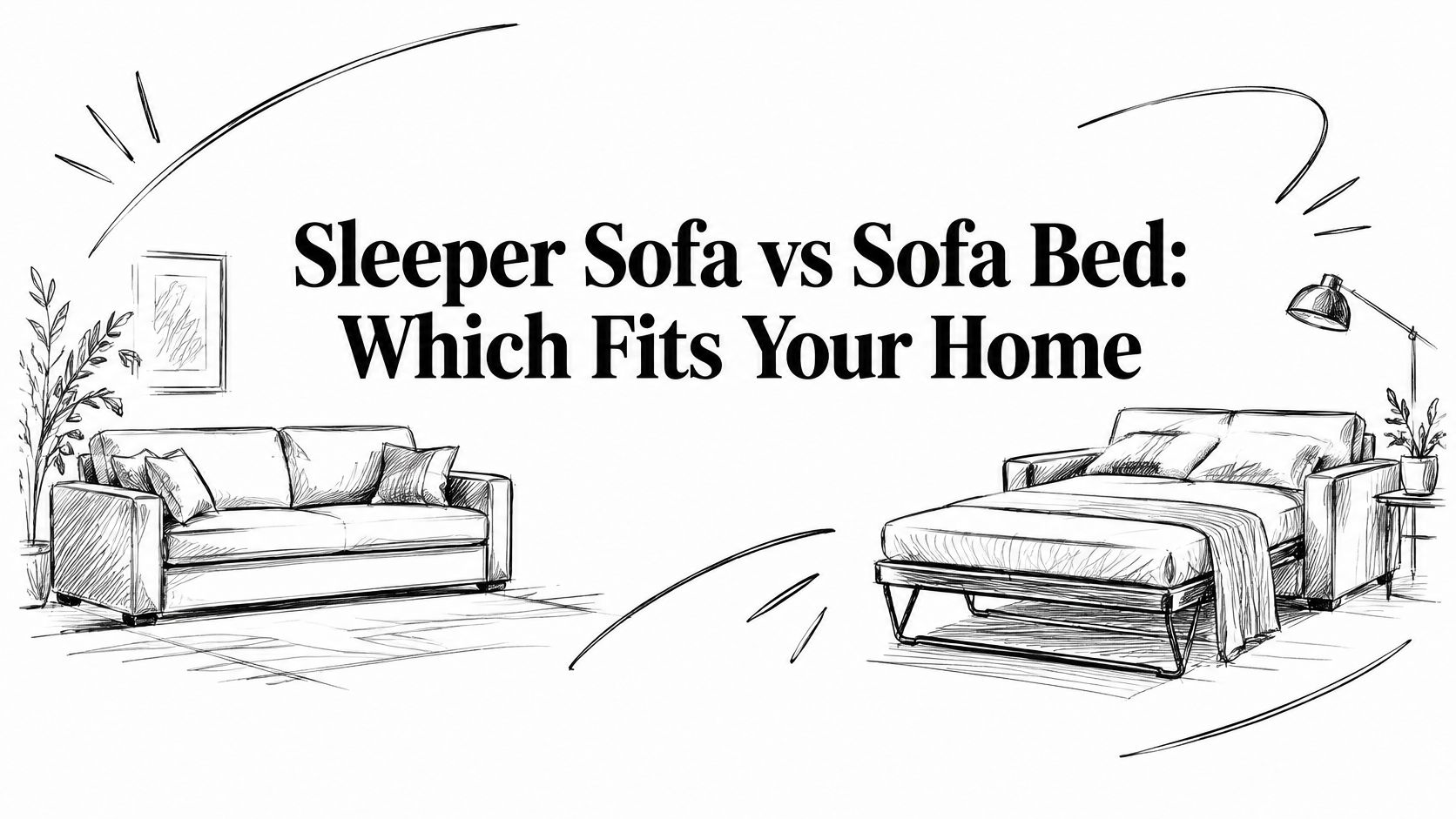
Is a queen sleeper sofa really a queen bed? Shoppers ask that question in our showroom most weekends, and it's the fastest way to see why the label on a sales tag matters far less than what's inside the frame. Two sofas can look identical from across the room and behave nothing alike at 11 p.m., when a guest is trying to get comfortable. One hides a separate mattress on a folding steel frame. The other turns its own seat and back cushions into the bed.
The mechanism decides how the piece opens, what your guest sleeps on, how much floor it claims once it's unfolded, and whether a tall visitor's feet hang off the end. That's the comparison worth making. What follows is how the pieces differ, how to read the sleeping dimensions, and how to measure both before anything gets delivered.
In contemporary U.S. furniture language, sleeper sofa and sofa bed are often used interchangeably, and that's harmless until you start comparing specific pieces. The distinction that helps is mechanical. A sleeper sofa usually means a sofa with a dedicated, hidden mattress and a pull-out mechanism: the seat cushions come off, and a folded mattress unfolds from inside the frame. Sofa bed is the broader category, covering pull-out sleepers as well as futons, flip-down sofas, click-clack designs and slide-out platforms, as a U.S. sleeper sofa sizing guide sets out. That difference in conversion hardware changes comfort, maintenance, clearance and everyday usability.
A traditional pull-out keeps a conventional sofa silhouette and gives you a separate mattress, which sits above the floor on a folding frame and feels closer to a real bed. A flip, futon or click-clack design converts by lowering or repositioning the back and seat, so the cushions themselves become the sleeping surface. The pull-out usually wins on sleep quality. The flip design wins on speed and simplicity, which matters more than people expect when a guest arrives late and tired.
Feature
Sleeper sofa
Sofa bed
Sleeping surface
Separate mattress folds out of the frame
Usually the seat and back cushions
Conversion
Pull-out frame from under the seat
Flip-down, fold-down, click-clack or slide-out
Comfort tendency
Bed-like surface, separate from the cushions
Often firmer, so check the seams and the transitions between sections
Space when open
Check the opened depth for the sleeper size
Set by the mechanism, so read the spec sheet for the opened depth
The four conversion types you'll meet
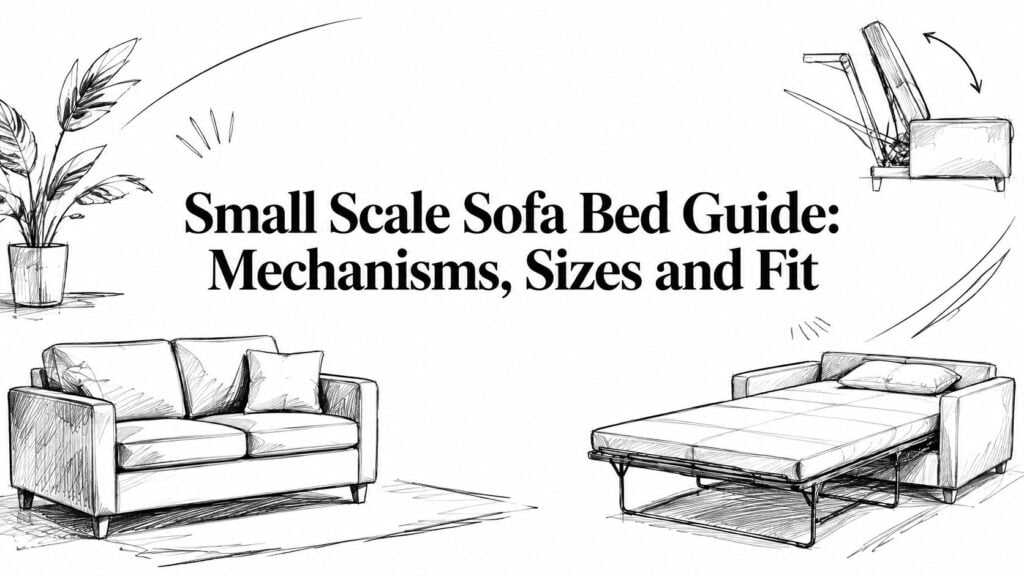
Almost every convertible sofa on a showroom floor uses one of four systems, and the system tells you how much lifting, pulling and clearance the piece needs:
Pull-out: a hidden frame and mattress extend from inside the sofa. It needs the most open floor in front of the piece and gives the most bed-like surface.
Click-clack: the backrest lowers until it meets the seat. Setup is quick and the back feels firm.
Fold-down: the back or seat drops into a flat platform, with fewer moving parts to maintain.
Lift-and-pull: a hinged or sliding movement lengthens the sleeping area. See one open before you commit, because the motion isn't the same across designs.
Why the hardware matters more than the tag
Sleeper sizes are named for the mattress they hold, not for how many people sit on the sofa, and the mattress inside is frequently shorter than the standard bed of the same name. Assume nothing until someone has measured the sleeping surface with a tape in front of you.
Practical rule: ask two questions before anything else. What do you actually sleep on, and how far does the piece reach into the room when it's open? Those answers separate a good fit from a return.
Plenty of households are making this exact decision. Verified Market Research valued the U.S. sleeper sofa market at USD 2.844 billion in 2024 (Verified Market Research), which is another way of saying the category holds wildly different hardware under very similar upholstery.
If you want to see how a frame folds before you shop, our sofa bed mechanism page walks through the parts that wear. Our family has helped Metro Milwaukee shoppers compare these pieces since 1928, and the living room floor at BILTRITE includes sofas, sectionals, loveseats, chairs, recliners, lift chairs and sleeper sofas, so you can open a pull-out and a fold-down side by side instead of guessing from photos.
Mattress Options and Real Sleeping Sizes
The measurement that decides whether a guest sleeps well isn't the sofa's width. It's the length of the sleeping surface, and sleeper surfaces run shorter than the beds they're named after.
Size
Typical sleeper surface (inches)
Standard bed (inches)
Length difference
Twin
38-39 x 72-75
38 x 75
Up to 3 inches shorter
Full
52-54 x 72-75
54 x 75
Up to 3 inches shorter
Queen
60 x 72-74
60 x 80
6-8 inches shorter
The queen row is where buyers get caught. A sleeper labeled queen gives you the full 60 inches of width, then hands back 6 to 8 inches of length compared with a standard queen bed. On a 72-inch surface, a guest who is 6 feet tall has nothing left over. If the household's tallest visitor is over about 5 foot 10, put that person on the opened bed in the showroom and watch where their heels land.
Thickness is a clearance spec, not a comfort rating
Standard pull-out frames commonly accept only about 4 to 5 inches of mattress thickness, with some designs reaching roughly 6 inches, because the mattress has to bend at the hinges and fold back inside the frame (a sofa bed mattress guide). A thicker mattress can improve pressure relief and still keep the frame from closing cleanly or add strain to the mechanism every time it opens. Confirm the manufacturer's maximum before you fall for a plush upgrade.
What supports a sleeper is the deck underneath it. The sleeping surface needs to be even and stable, with no exposed center bar climbing into the sleeper's hip, edges that don't collapse when someone sits down to put on shoes, and enough give at the shoulders and hips. A 6-inch mattress over an uneven deck still sleeps badly, and no amount of foam fixes a bar in the wrong place.
Cushion-based beds trade one limit for another
A fold-down or platform sofa bed skips the thickness cap because the seat and back cushions become the bed. The trade-off is a firmer surface and seams between sections that a guest will find with their spine before you find them with your eyes. Run a hand across every transition, then lie down and roll slightly to feel whether the sections sit level with each other.
Our Mattress Center carries over 60 mattress models, which matters here for a simple reason: a sleeper mattress can be matched to the opened dimensions of the sofa instead of guessed. If you want to understand how an innerspring sleeper mattress is put together, our page on the innerspring sleeper sofa shows the coil and deck arrangement that does the work.
Floor Space You Need Before You Buy
Three numbers decide whether a convertible sofa belongs in your room. The closed depth tells you if it fits the wall. The opened clearance tells you if it fits the room. The sleeping surface tells you if it fits the guest.
Sleeper size
Closed depth
Opened clearance
Best fit
Twin
38-40 inches
75-80 inches
One guest in tight rooms
Full
38-40 inches
80-85 inches
One adult or a compact guest
Queen
38-40 inches
84-90 inches
Taller guests in larger rooms
Sofa bed (flip or fold)
Measure the piece itself
Measure the opened depth in the room
Check the spec sheet for the opened depth
Typical sleeper sofas run about 38 to 40 inches deep when closed, deeper than many standard sofas, because the frame has to swallow a folded mattress or conversion hardware. Open one and a queen commonly needs roughly 84 to 90 inches of front-to-back clearance, a full about 80 to 85 inches, and a twin roughly 75 to 80 inches, according to a sleeper sofa measuring guide. That's the number people forget, and it's the one that turns a living room into a hallway you have to squeeze past.
Say a one-bedroom condo has a sofa wall opposite a kitchen island. A compact twin sleeper opens into that space and still leaves a walkway to the fridge at night. A queen in the same spot gives a guest more width and blocks the path completely. Neither is wrong; only one of them matches how that household lives.
Tape the opened footprint before you fall in love
Painter's tape on the floor is the cheapest mistake you'll ever avoid. Mark the closed footprint first, arms and back included, then mark the fully opened depth measured from the back of the sofa forward.
Mark the bed's full reach and check it against doorways, closet doors, the coffee table and the TV console.
Walk the path a guest takes at 2 a.m. from the sofa to the bathroom with the bed open and the lights off.
Measure the delivery route, not just the room. Doorway widths, hallway corners and stairwell turns cause more surprises than the floor plan does.
BILTRITE Furniture-Leather-Mattresses carries come apart sofas and sectionals for exactly the tight-spot problem, so a piece that won't clear a stairwell doesn't have to be disqualified on the spot. For more detail on how a convertible's measurements break down, our guide to the dimensions of a sofa bed covers closed and opened figures together.
Which Option Fits Your Household
The right answer usually appears when you describe who sleeps over and how often. Size and price matter, and they tend to sort themselves out once the household is clear.
Households and what tends to work
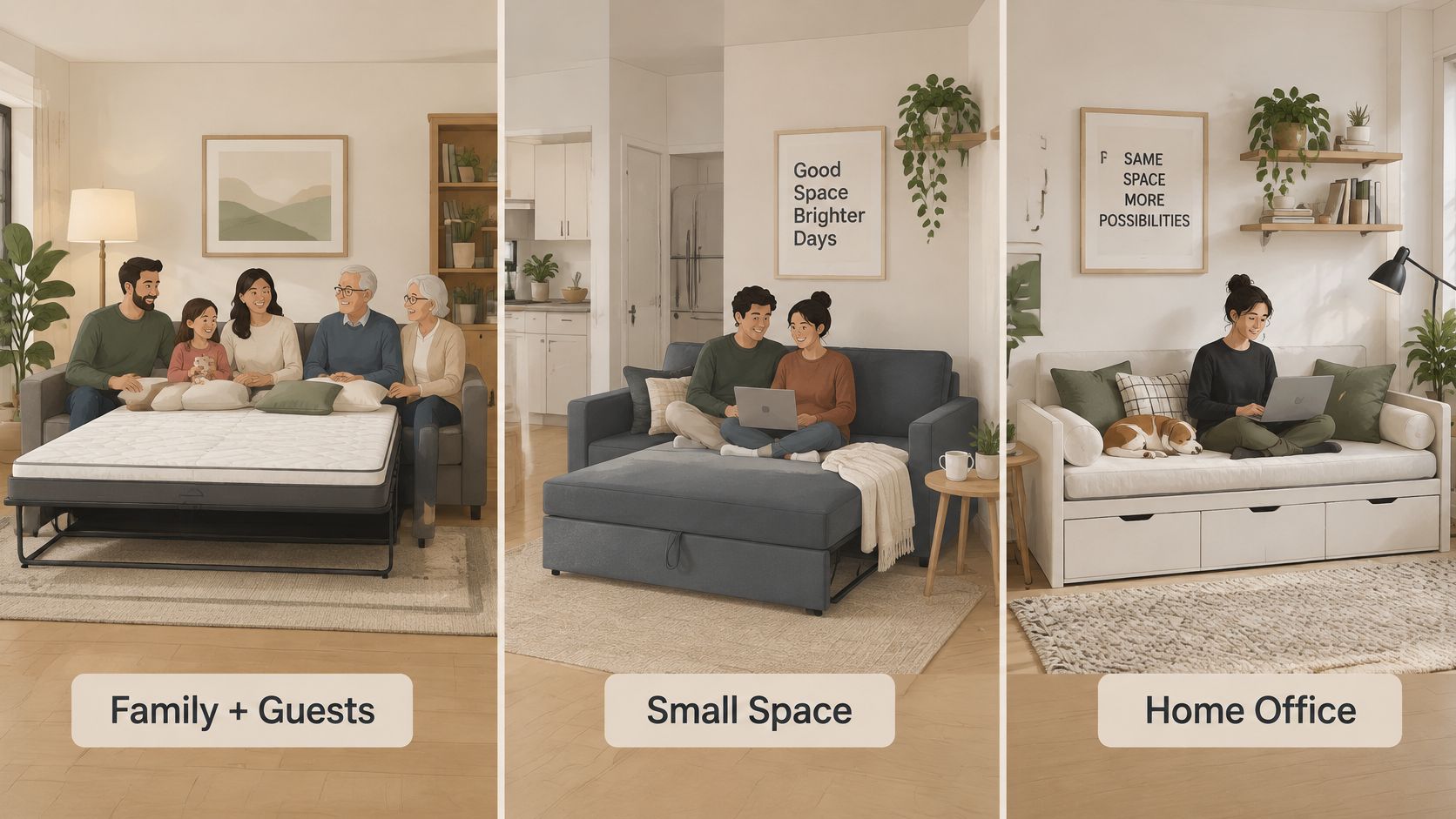
A young family with grandparents visiting. A pull-out sleeper in full or queen size, with its own mattress, keeps the guest room out of the living room and gives visiting grandparents something that feels like a bed rather than a folded couch. Look for a continuous deck and a mechanism that one person can manage.
A studio renter with occasional overnight guests. A compact fold-down or click-clack sofa bed sets up in seconds and disappears just as fast. Fewer moving parts also means less to maintain in a space where the sofa is the only seating.
A senior couple or a caregiver. Prioritize a stable, continuous sleeping surface and a conversion that doesn't require lifting and dragging. A level transition between sections is the detail that keeps a night from turning into a backache.
A decorator choosing for looks. Two pieces can be twins from the front and completely different underneath. Open each one before the fabric decision becomes final.
A den or home office used for seating most days. Weigh closed depth and cushion comfort above the sleeping length. The bed gets used a few nights a year; the seat gets used nightly.
Futon-style and platform sofa beds can offer more room for foam, springs or structural support because they convert by folding the seating surface rather than storing a separate mattress. Their trade-off is usually a firmer sit and a firmer sleep, and ergonomics guidance is blunt that performance depends less on mattress thickness alone than on the whole support system, with an even surface, natural spinal alignment and cushioning at the shoulders and hips (an ergonomics-focused sofa bed buying guide).
For frequent guests and for seniors, a stable, continuous support surface matters more than how the sofa looks when it's closed.
Our USA-made and Amish-made sofas are a good place to compare these pieces in person, because the frame and the mechanism are on display rather than hidden in a photo. If the room doubles as a guest space and a home office, our notes on multifunctional furniture for small guest rooms cover how sleeper sofas compare with daybeds for that exact squeeze.
A Buying Checklist for Guests and Daily Use
Seven checks turn a showroom visit into a decision you won't second-guess. Work through them in order on every piece on your list.
Ask for the mechanism by name. Pull-out, click-clack, fold-down or lift-and-pull. The product name on the tag won't tell you which one you're buying, and the mechanism is what you'll live with.
Measure the closed width and depth against the actual spot on the wall. Include clearance for the arms and the back, and account for a baseboard or a heat register that pushes the sofa forward.
Measure the opened depth and the length of the sleeping surface. Skipping this is the most common mistake shoppers make, because the label size hides a shorter sleeping surface than the bed of the same name.
Confirm the maximum mattress thickness the frame accepts. Frames are built around a specific folded thickness, and going over it stops the piece from closing properly.
Open and close the unit yourself, counting the steps. Two pulls and a lift is a different ownership experience than six moves and a shove, and lifting effort matters more with every year that passes.
Lie on the opened surface. Check for a center bar, dips, sagging at the hinge, and edges that give way under your hip when you sit on the side.
Walk the route a guest takes in the dark. Sofa to bathroom, around the opened bed, past the coffee table. A clear path matters as much as a comfortable mattress.
The most common slip is item three. People measure the wall, measure the doorway, then buy on the label and discover the sleeping surface runs shorter and reaches deeper than expected. If all seven checks pass, you've made a decision built on real measurements rather than on a name on a tag, and that decision holds up when the first guest arrives. For anyone hosting over the holidays, our guide to prepping your home for holiday guests puts these checks into a room-by-room routine.
Test Both Options in Our Greenfield Showroom
The decision comes down to four things: the mechanism, the sleeping size, the floor space it claims and the comfort of the surface. Nothing on a spec sheet settles those as quickly as opening a piece yourself, lying down on it, and feeling where the support sits.
That's the whole reason to visit our Greenfield showroom. Bring a tape measure and your room measurements, and spend an hour opening mechanisms, comparing decks and lying on sleeping surfaces until you know what your guests will feel. Our sales associates have over 400 years of combined experience and can walk you through the difference between a sleeper sofa and a sofa bed without any pressure to decide that day. We're closed on Sundays and Mondays so our team can be with their families, so plan around that. Since we don't sell online, seeing the furniture in person is how you choose, and there's no need to rush it. Come on down and see for yourself, and let us help you find the right piece for your home. We've been serving Metro Milwaukee shoppers since 1928, and this conversation is one of our favorites.
BILTRITE Furniture-Leather-Mattresses has furnished Metro Milwaukee homes since 1928, and the Greenfield showroom at 5430 West Layton Avenue keeps sleeper sofas, sofa beds, sectionals, recliners and lift chairs on the floor for exactly this kind of side-by-side comparison. Bring your room measurements and a tape measure, open a few mechanisms yourself, and let the team walk you through mattress options in the Mattress Center, which stocks more than 60 models. Visit BILTRITE Furniture-Leather-Mattresses to plan your trip, then come see the pieces in person.