OPEN MONDAY, NOVEMBER 23 10AM TO 6PM!
GREBE'S DONUT GIVEAWAY MONDAY, NOVEMBER 23 ONLY!
BLACK FRIDAY + SMALL BUSINESS SATURDAY DEALS ON NOW!
NO CREDIT CARD FEES!
1000's of Items IN-STOCK + 500 Mattresses!
Largest selection of USA Made Furniture & Mattresses + Amish Made!
FREE In-Store Design Services!
BUY LOCAL & LOVE YOUR HOME!
Tuesday-Thursday 10am to 6pm | Friday 10am to 7pm | Saturday 10am to 5pm | Sunday Closed To Be With Family & Friends | Monday Showroom Closed
5430 West Layton Ave, Greenfield - Metro Milwaukee
A sectional can look just right in the showroom and still create a surprise at home: the bed opens into the room, right where the coffee table and TV console live. Before choosing fabric or cushion feel, check the open-bed footprint and the route from the front door. Those two measurements are often what make a sleeper sectional work in real family life.
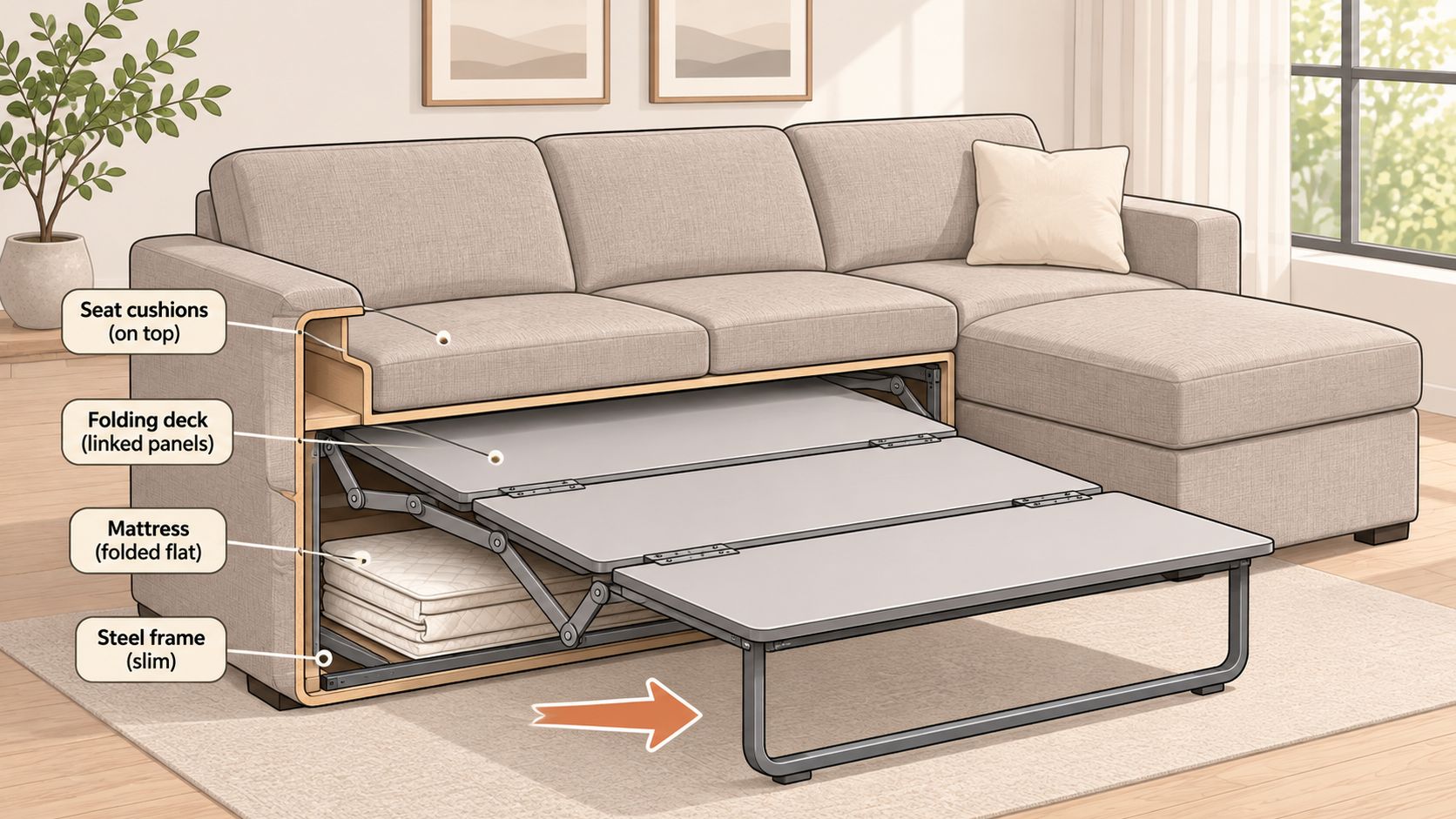
A sleeper sectional combines everyday seating with a bed that folds away beneath the cushions. Inside, a steel or wood frame supports a folding deck and a separate mattress. To open it, the seat cushions come off and the bed frame pulls forward, carrying the folded mattress into the room.
A sleeper sectional borrows room from the middle of the floor, not from the wall behind it.
That's why wall clearance usually isn't the main concern. The bed doesn't travel backward through the wall; it travels forward across the floor. Clear space between the sofa, coffee table, TV console and main walkway matters much more.
The tags can be confusing. Sleeper sectional and pull-out sofa usually describe a sectional or sofa with a separate mattress tucked beneath the seat. Convertible sectional is a broader label for seating that changes into a sleeping surface. Pop-up bed commonly describes a mechanism that raises a hidden platform to meet the seating surface. A click-clack style works differently: the back and seat fold flat, so the cushions themselves become the bed.
Consider a 12-by-14-foot family room with a 115-inch sectional. It might leave a 34-inch walkway in sofa mode, yet the open queen bed could reach within 20 inches of the TV console. The sofa fits the wall; the bed competes for the middle of the room. That's the difference between measuring the seating footprint and planning for the bed.
A sleeper sectional isn't only for occasional guests, either. Families may use the open bed for movie nights, sleepovers or a comfortable place to rest during recovery. The key is to check the mechanism, not just admire the upholstery: ask how the mattress is supported and whether replacement mattresses are available.
The Room Fit Check Before You Shop
The sectional looks right, but the guest bed has to open into the room. Start with a tape measure: allow roughly 60–70 inches from the sofa's front edge for the pull-out, then preserve a 30–36-inch walkway once the bed is open. Those are planning targets, not guarantees. Check the specific model's open dimensions before deciding.
Compare the open-bed footprint
Configuration
Pull-out mattress
Minimum walkway
Small L-shaped sectional
Twin or full
30 in
Standard L-shaped sectional
Full or queen
30 in
Large L-shaped sectional with chaise
Queen
36 in
U-shaped sectional
Queen
36 in
Reclining sectional with pull-out bed
Queen
36 in
Measure the wall run where the sectional will sit, then measure the room depth from that wall to the opposite side. Add the bed's open length to the sofa's position and mark where the mattress ends. Don't forget the space between the sofa and coffee table: if the table has to move every time the bed opens, decide where it will go and whether anyone can still walk through.
The door-to-corner diagonal matters, too. A sectional might fit along the wall but be difficult to position if a doorway, hall or tight turn blocks the route. For a more complete seating-area measurement, follow this guide to measuring a sectional sofa.
Try the outline at home
Tape the open-bed footprint on the floor with painter's tape and leave it there for a week. Walk around it, move the coffee table and check whether the remaining path still works during ordinary routines. Leave at least 30 inches beside the open bed so a guest can get up without squeezing past furniture in the dark.
A sectional's seating footprint and its open-bed footprint are different plans. A standard L-shaped sectional may sit in 85–95 inches of depth yet need 150–165 inches when a queen bed is open. If that leaves no practical route through the room, size down: consider a full or twin mattress, choose a shorter chaise, or put the sectional on a different wall instead of forcing a queen into a 10-foot room.
Sleeping Comfort That Holds Up Night After Night
A sleeper mattress has less room to work with than a regular mattress. It's often only 4.5–6 inches thick, so the support comes from the frame and deck as much as from the cushioning. If the deck flexes poorly or a crossbar sits beneath a thin mattress, a guest may feel the bar through the sleep surface.
Mattress type
Feel
Support
Best for
Watch out
Innerspring
Familiar bounce, cooler sleep
Good edge support when coils are dense
Guests who dislike sinking into foam
Thin coils can let the crossbar show through
Memory foam
Slow contouring, quiet motion
Contours pressure points
Side sleepers and couples
Can sleep warm and feel soft after years
Gel-infused memory foam
Cooler than standard foam
Similar contouring with less heat
Warm sleepers who still want foam
Weight and price go up
High-density foam
Firm and flat
Stable, less squish
Back sleepers and heavy use
Less cushioning for hips and shoulders
Air mattress
Adjustable firmness
Support depends on inflation
Occasional guests and adjustable comfort
Punctures, noise and temperature changes
A better-supported deck and a well-made foam core can reduce pressure from the frame. A topper can add cushioning, but it won't fix a bar that presses sharply through the mattress. For a closer look at one common mechanism, see this overview of an innerspring sleeper sofa.
Match comfort to the guest
Side sleepers often appreciate the contour of foam, while back sleepers may prefer a firmer, more level surface. Couples generally need at least a queen sleeping area to avoid feeling crowded. Older guests may have a harder time getting up from a low bed, or sitting down into a deep sofa seat, so test both the bed height and the regular seat.
Make the showroom test count. Open the bed, lie on it for at least five minutes, roll from side to back, then sit on the edge. Notice whether a support bar lands under the lower back, whether the mattress shifts and whether the edge feels stable. If the sectional will host the same guest often, ask whether the mattress can be replaced and how to store it between visits without bending or crushing it.
A pull-out sectional can make a thoughtful guest bed, but it isn't a substitute for a dedicated mattress for nightly use. If someone needs a permanent sleeping place, a regular bed and mattress are the more sensible choice.
Upholstery That Survives Real Life
A sectional can look right in the showroom and still be wrong for a family room. Kids, pets, snacks and sunscreen put upholstery through daily wear, while the folding bed mechanism can rub the fabric where it stores beneath the seat. Choose for how the room is used, then check how the material handles cleaning and friction.
Upholstery
Feel
Kid and pet test
Cleaning
Best for
Watch out
Performance woven
Soft to crisp, low sheen
Strong against spills and claws
Spot clean with water-based cleaner
Family rooms and high-traffic spaces
Can look less luxurious than natural fibers
Microfiber
Velvety and warm
Hides small scratches well
Usually water-cleanable
Budget-conscious families
Can pill and hold lint
Cotton or linen blend
Cool, natural, textured
Less resistant to stains and snags
Often water-cleanable, but blot fast
Adult living rooms and guest spaces
Wrinkles and shows every spill
Top-grain leather
Cool at first, softens with age
Wipes clean, but claws can mark
Damp cloth and leather cleaner
Busy homes that want easy cleanup
Cold in winter and higher cost
Faux leather
Smooth and consistent
Wipes clean, but can scratch
Mild soap and water
Rental spaces and low-maintenance rooms
May peel or crack over time
Boucle
Looped, cozy, design-forward
Poor with claws and toys
Professional cleaning often safest
Low-traffic sitting areas
Loops snag and stains are hard to lift
Check the details, not only the color
For a busy family room, start with performance woven fabric or microfiber, then compare the feel and care instructions. A performance fabric furniture guide can help you understand the options. If you prefer cotton or linen blends, expect to blot spills promptly and accept more visible wrinkles. Leather is easy to wipe down, though it can feel cool at first and costs more. Boucle adds texture, but its loops are vulnerable to claws and toys.
Ask the retailer or manufacturer how an abrasion rating relates to your intended use. The rating alone does not tell you how the upholstery will handle spills, pet hair or friction at the bed's fold points. Check the cleaning code too: W means water-based cleaning, S means solvent-based cleaning, and WS allows either, subject to the care instructions.
Inspect construction where the sectional's fabric meets the pull-out mechanism. If the design offers removable covers or reversible cushions, those features can make routine care easier. Consider the color against the room's everyday messes: dark fabric can hide crumbs but show pet hair, while a light performance fabric may disguise hair and make juice stains more noticeable.
Bring a fabric sample home and view it in daylight and evening light. Hold it beside the sofa's rug and the spot where pets settle; color and texture can look different outside the showroom. Check the sample's care instructions before choosing, so the upholstery suits both the room and the way you live.
Storage That Earns Its Footprint
Storage can make a sectional more useful, but it isn't free. A storage chaise or under-seat compartment can hold blankets, board games, spare pillows or guest bedding. The trade-off is extra weight and depth, and a hard lid may feel different from a fully cushioned chaise.
A lift-top chaise opens upward and keeps stored items close at hand. A pull-out drawer slides forward, which can be awkward if it opens into the same space the bed needs. A console with cup holders is for drinks and small items, not bulky bedding. Before choosing any of them, check whether the storage opening conflicts with the pull-out bed's path.
For a typical chaise, inspect the interior rather than judging from the outside. A storage area roughly 30–45 inches wide, 15–20 inches deep and 8–10 inches high may fit a modest bedding set, but the actual capacity depends on its shape. Ask what the storage is rated to hold, and don't assume the lid is meant for heavy items.
In an apartment, a storage chaise may replace both an ottoman and a blanket basket, which can save clutter. It may also make the sectional feel bulky in a small room. A practical rule: use storage for things needed weekly, not guest sheets that can live in a closet. For more ideas on the trade-off, see this overview of a sectional couch with storage.
Delivery Access Starts at Your Front Door
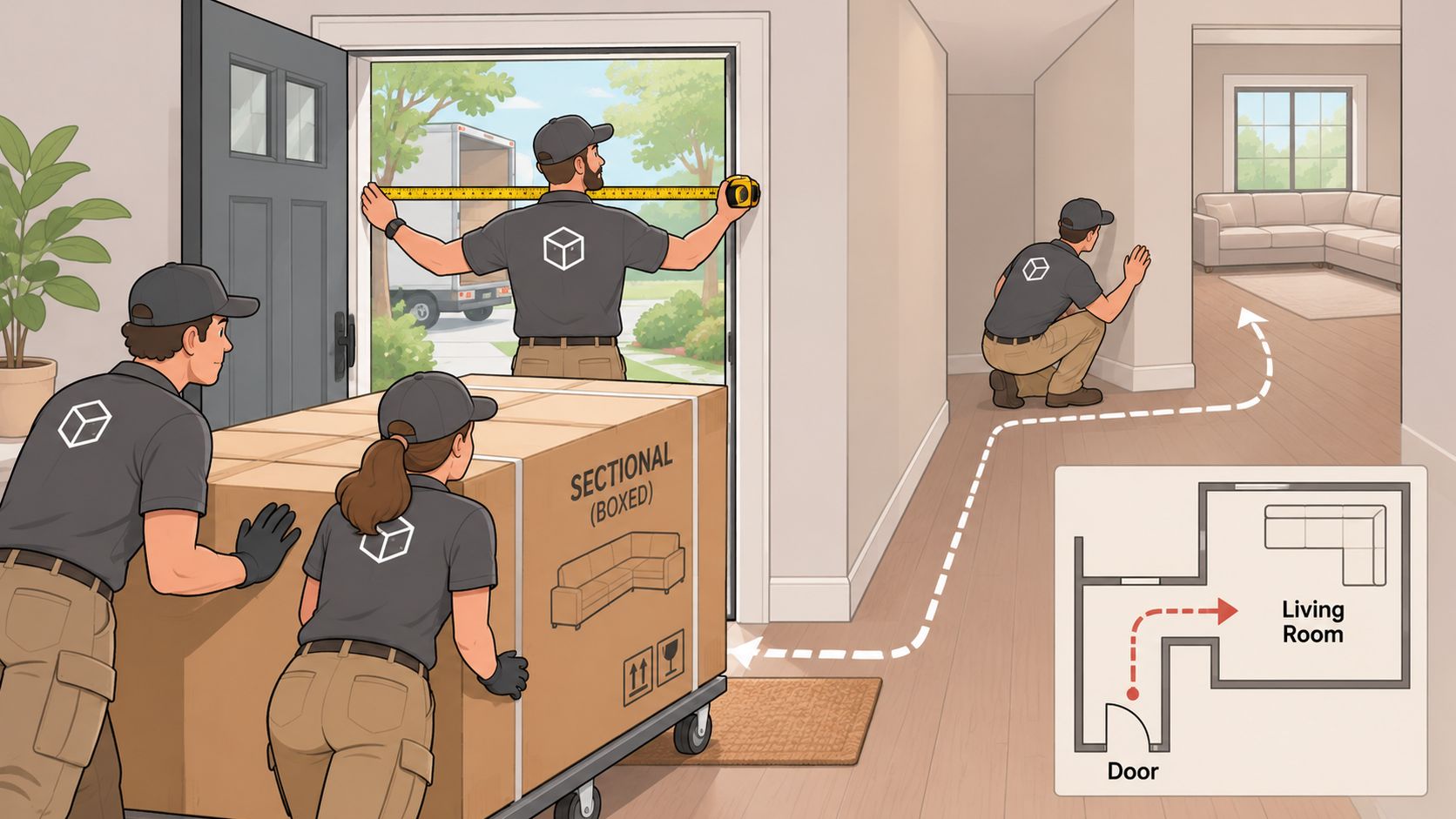
A sectional can fit the room and still fail at the doorway. Walk the route before scheduling delivery, from the curb to the spot where the sofa will sit. Measure the tight points rather than relying on the home's general layout.
Measure the clear door opening. Measure between the door and the opposite stop with the door open, not across the frame. A 36-inch door may provide only about 32–34 inches of usable width.
Check every narrow section. Measure the narrowest hallway, stair width and any landing. Include banisters, handrails and trim that reduce the usable space.
Check tight turns. At a corner, measure the diagonal space as well as the hallway width. A 40-inch-wide piece may clear a 36-inch hallway if the corner has enough turning room.
Record the whole route. Photograph the path from curb to room, including elevator openings, lobby rules and stair banisters.
Confirm how the sectional separates. A standard sectional may arrive in large assembled sections; a come-apart sectional breaks down into pieces for access. A 115-inch sofa could arrive in two or three pieces, so ask about the actual model.
Prepare the room. Clear the route, move fragile items and protect floors before delivery day.
A 90-degree turn at the top of the stairs, a narrow condo elevator, a low doorway or a sharp newel post can stop a delivery even when the sofa's room dimensions look fine. Packaging dimensions matter, too: they can be wider or taller than the furniture once assembled. BILTRITE Furniture-Leather-Mattresses offers come-apart sofas and sectionals, which can help when a home has tight access.
Bring photos and measurements to the showroom and ask the team to check the model's packaging dimensions, not just its floor dimensions. This guide to furniture for narrow doorways can help organize the measurements before delivery is arranged.
Choose Your Sectional by Room and Routine
Once you know the room and delivery route can accommodate the sectional, choose for the people who use it and how often guests will sleep over. Open-bed clearance deserves attention before fabric or cushion details: a stylish sectional is less useful if its bed blocks the room's main path.
For a family room used by kids and weekly overnight guests, a standard L-shaped sectional with a queen pull-out, performance fabric and a clear walkway may fit the routine. A storage chaise can keep bedding close at hand, as long as its lid or drawer does not interfere with the bed when it opens.
In a smaller apartment, a small-scale L-shaped sectional with a full or twin mattress may be more practical. Check that the bed opens without blocking the route through the room. A recliner can add comfort, but its moving parts may conflict with the open bed, so compare both layouts before choosing.
A multigenerational household may prefer a heavier-duty sectional, a firmer mattress, a higher seat and an aisle that stays clear. BILTRITE Furniture-Leather-Mattresses offers small-scale, heavy-duty, come-apart and senior living furniture, giving households options to consider for different needs.
BILTRITE is a fourth-generation, family-owned business serving Metro Milwaukee since 1928. Its showroom includes USA-made and Amish-made solid wood furniture, and its mattress department features over 60 models. Seeing the bed open and testing the mattress can help clarify whether the sectional works for both everyday gatherings and overnight guests.
A showroom visit also gives you a chance to discuss fit and delivery access with the team before choosing. Compare the open-bed footprint with the room's usable walkway, then consider fabric, mattress feel and storage.
BILTRITE Furniture-Leather-Mattresses offers sectionals, sleeper sofas, small-scale and come-apart furniture, with USA-made and Amish-made options. Visit BILTRITE Furniture-Leather-Mattresses in Greenfield to open the bed, test the comfort and discuss fit and delivery access.