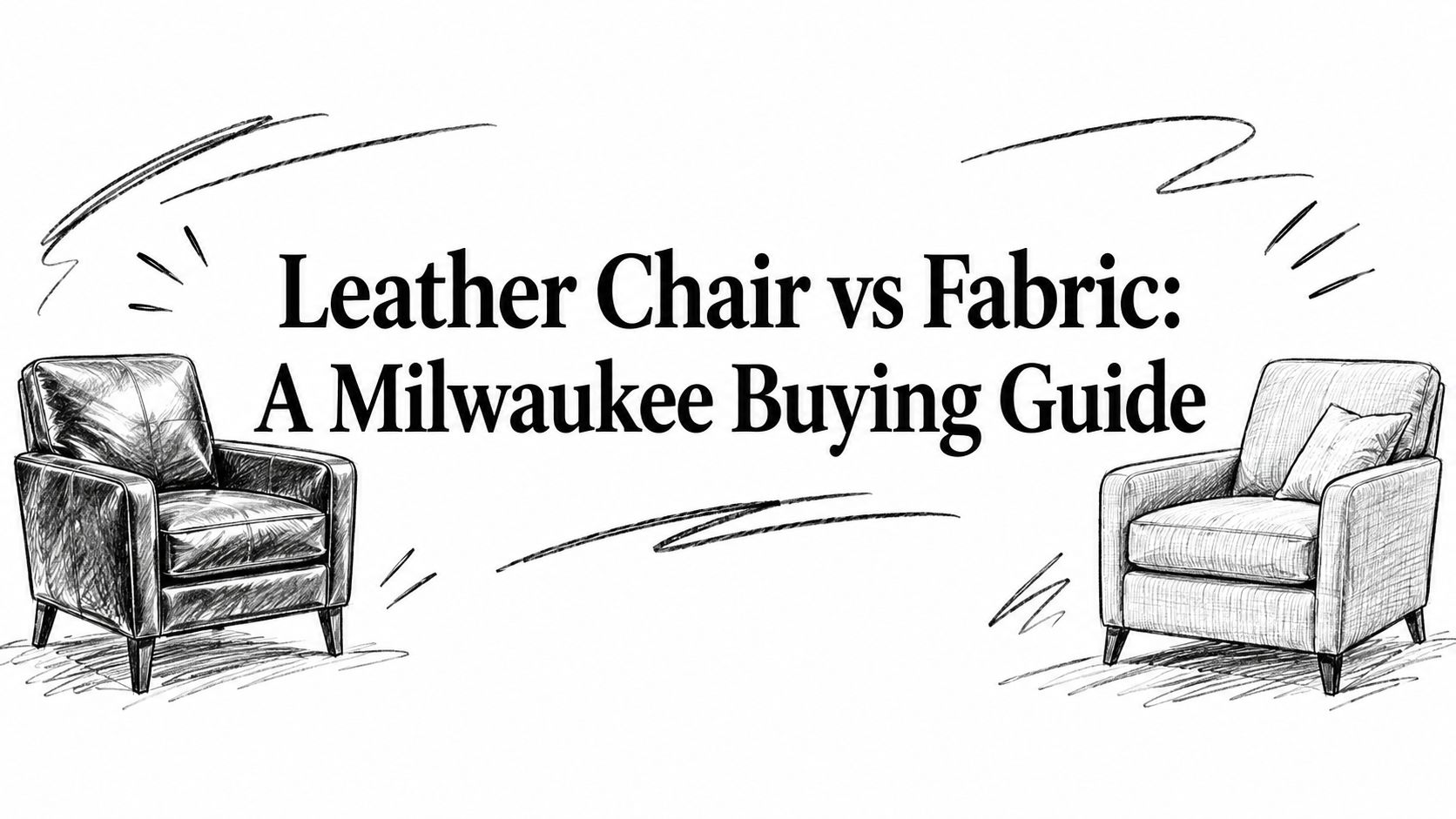
Leather Chair vs Fabric: A Milwaukee Buying Guide

A rainy Milwaukee weekend can turn a simple furniture trip into a surprisingly serious decision. One chair looks polished and structured, another feels soft and inviting, and both seem like they could work in the living room. Then the questions start: Which material handles children, pets, spills, long movie nights, and daily use? Which one will still feel like a smart purchase years from now?
For Metro Milwaukee households, the answer usually comes down to more than color or first impressions. Leather chair vs fabric is a decision about durability, comfort, cleaning, construction, and the way a home operates day to day. BILTRITE Furniture has helped local families sort through that choice since 1928, with affordable, better-quality furniture and a showroom team that knows the difference between a chair that looks good today and one that earns its place in the home.
Table of Contents
- Two Chairs, One Big Decision
- What Leather and Fabric Actually Are
- Side by Side on Durability, Comfort, and Care
- The Real Cost of Living With Each Material
- Which Material Fits Your Household Best
- Why Construction Matters as Much as Upholstery
- Our Honest Recommendation for Milwaukee Shoppers
Two Chairs, One Big Decision
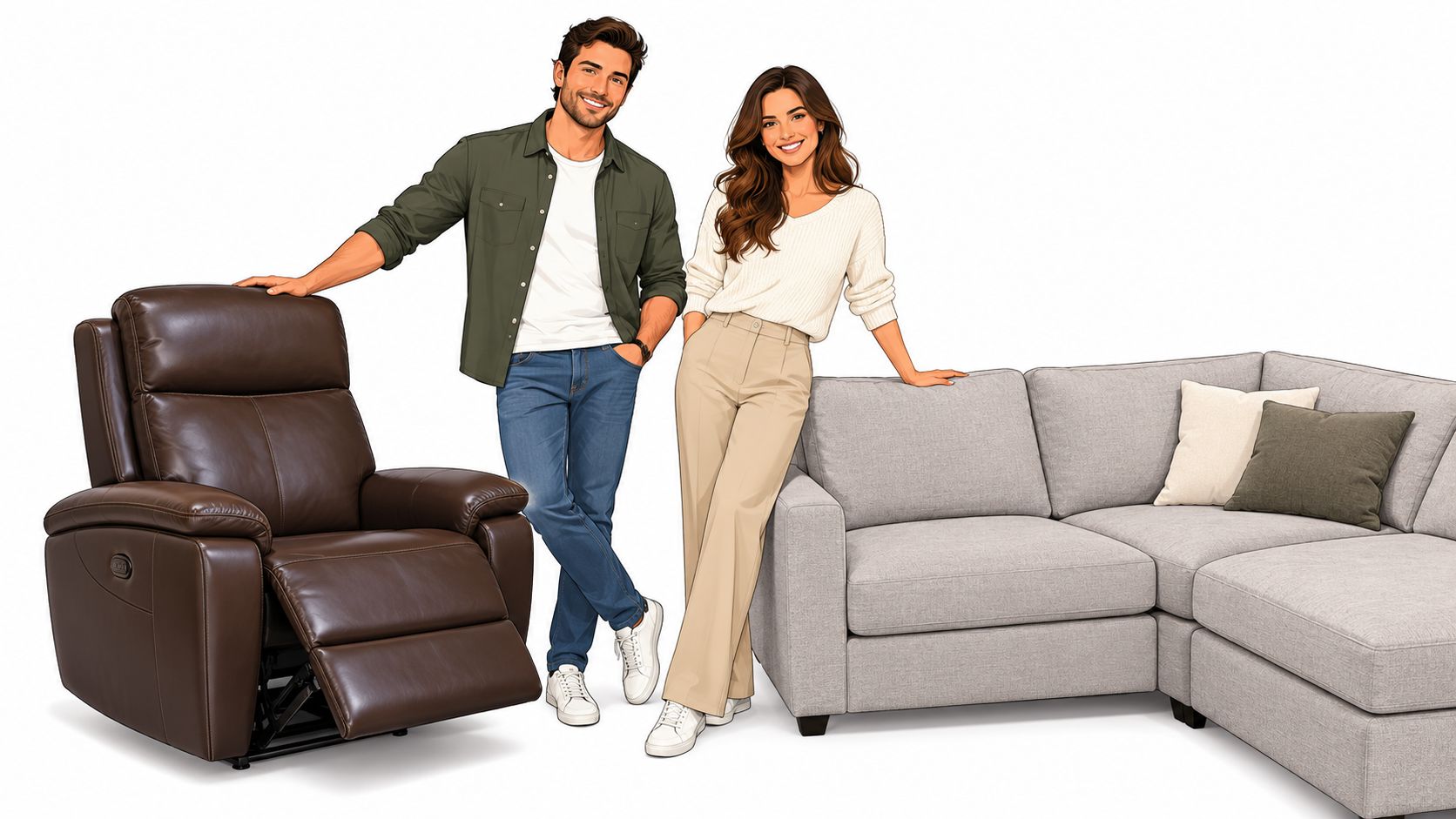
On a wet Saturday in October, a Milwaukee family stands in the Greenfield showroom with two hands testing two very different surfaces. One hand rests on a buttery brown leather recliner. The other presses into a plush gray performance-fabric sectional. The parents like the leather's sharp look, while the children keep returning to the fabric because it feels warm and cozy.
That conversation happens often in furniture stores, and the right answer rarely comes from choosing the material that looks most impressive under showroom lights. The better choice comes from asking how the chair will be used. Will the family eat snacks in it, nap in it, share it with a dog, or reserve it for quieter evenings? Will the chair sit near a sunny window, in a climate-controlled office, or in the busiest part of the family room?
The showroom questions that matter
A seasoned furniture advisor usually starts with six practical questions:
- Material identity: Is the leather full-grain, top-grain, split, bonded, or synthetic? Is the fabric a loose natural weave or a tightly made performance textile?
- Daily durability: Will the chair face repeated friction, pet claws, spills, sunlight, or constant reclining?
- Comfort feel: Does the household prefer a smooth, supportive surface or a softer, more breathable one?
- Maintenance reality: Will the family wipe and condition leather, or vacuum and spot-clean fabric?
- Ownership cost: Could a lower upfront price lead to earlier cleaning, repair, or replacement?
- Household fit: Does the chair suit the people, pets, room, and routine that will use it?
Leather has long held the edge in mainstream longevity comparisons. Properly maintained leather seating is commonly reported to last about 15 to 20 years, while standard fabric upholstery is often estimated at roughly 5 to 15 years, depending on construction and weave. That comparison comes from a historical upholstery guide on leather and fabric seating longevity.
Practical rule: The material should match the household before it matches the paint color.
BILTRITE's fourth-generation, family-owned approach fits this kind of decision. The sales associates bring over 400 years of combined experience, and their role is to help shoppers sit, compare, measure, and ask better questions. A family shouldn't have to guess from a tag alone.
What Leather and Fabric Actually Are
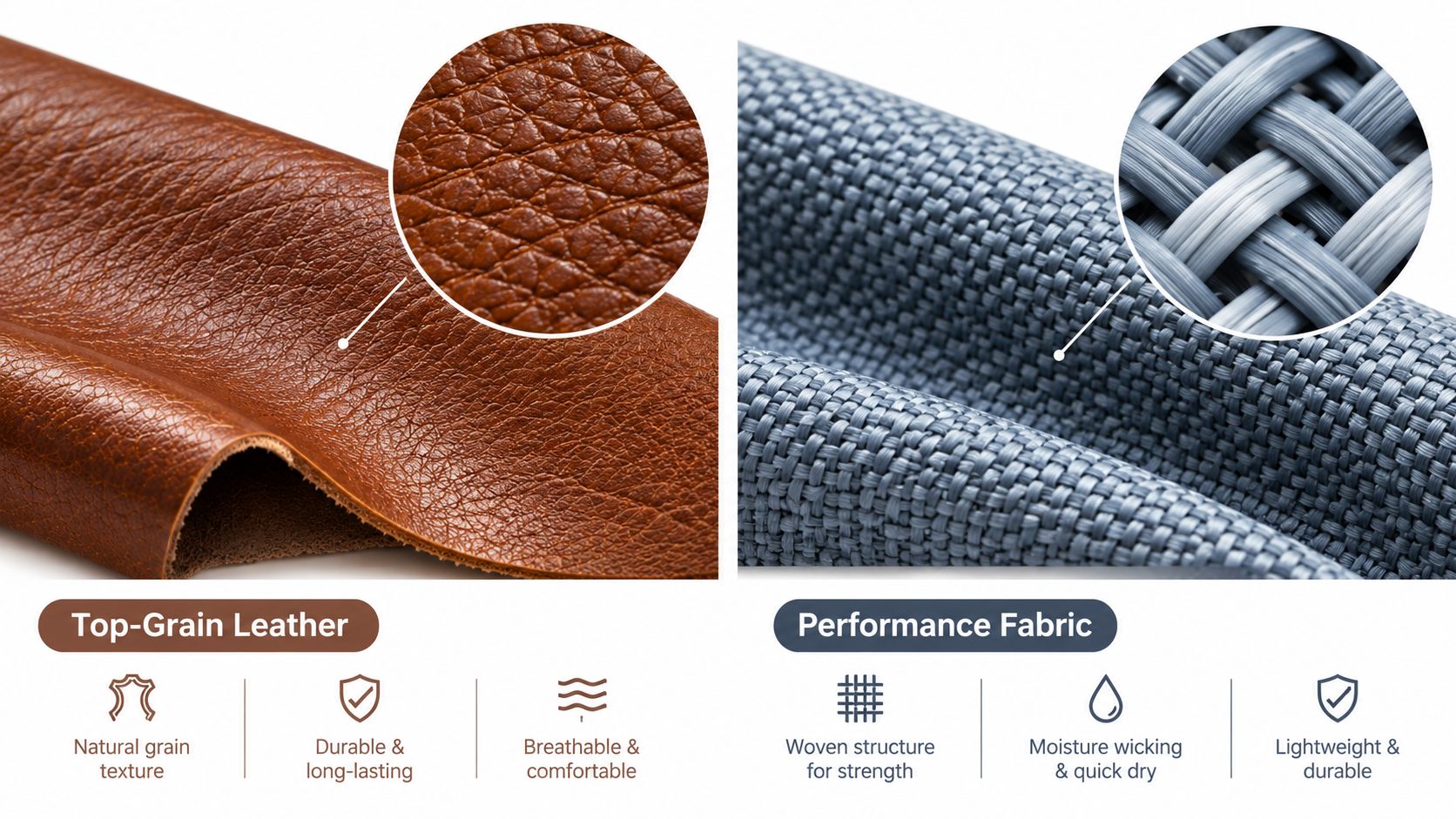
“Leather” and “fabric” each describe a broad family of upholstery materials. That distinction matters because a high-quality top-grain hide and a peeling bonded surface may both appear under a casual leather label, just as a tightly woven performance textile and delicate linen can both be called fabric.
Leather grades in plain language
Full-grain leather retains the natural outer surface of the hide. It can show natural markings and usually develops character as it ages. Top-grain leather has been lightly corrected or finished for a more uniform appearance while retaining a substantial leather surface.
Split leather comes from a lower layer of the hide after the stronger top portion has been separated. It can be finished attractively, but a shopper shouldn't assume that a split surface carries the same performance or aging characteristics as full-grain or top-grain leather.
Bonded leather contains leather fibers combined with a surface coating. It can offer a leather-like look at a lower initial price, but the surface may crack, peel, or separate as the chair flexes. A shopper comparing labels can use this guide to bonded leather and genuine leather before making a decision.
The phrase “genuine leather” doesn't automatically identify the highest grade. It describes leather content, not a complete quality ranking. The sales tag should answer the more useful questions: What portion of the chair uses leather? Which surfaces use split leather or another material? What finish protects it?
Fabric categories shoppers should recognize
Natural fibers such as cotton, linen, and wool offer distinct texture and character, but they can absorb spills and may respond differently to sunlight, friction, and cleaning. Performance fabrics use engineered fibers, tight weaves, or protective treatments to handle more demanding rooms. Microfiber and other performance textiles can provide a smoother, more practical surface, while specialized treated fabrics are designed to release stains more readily.
A double-rub rating gives shoppers a useful wear reference. High-traffic upholstery fabrics are commonly recommended to reach at least 30,000 double rubs, according to a fabric durability comparison. The rating doesn't answer every question, but it helps distinguish a fabric intended for decorative use from one built for repeated household activity.
The tag should also identify cleaning instructions, fiber content, and any limitations. A high abrasion rating won't make a loose weave immune to snags, and an attractive leather finish won't make bonded material equivalent to a substantial hide. The shopper's job is to compare the actual specification, not just the upholstery name.
Side by Side on Durability, Comfort, and Care
The leather chair vs fabric decision becomes clearer when each material is judged by the same daily events. A family room chair has to handle sitting, shifting, reclining, spills, body heat, and cleaning. A formal chair may face far less abuse, which changes the value of each surface.
Durability depends on grade and use
Leather generally wins the longevity contest when the shopper chooses a quality hide and maintains it properly. Historical comparisons commonly place well-maintained leather seating at 15 to 20 years, while standard fabric often falls within 5 to 15 years, with construction and use creating substantial variation. The Martindale abrasion method gives another way to think about fabric wear. It measures resistance by rubbing a specimen against an abrasive surface in a controlled rotating motion.
Fabric isn't automatically fragile. Performance upholstery intended for heavy domestic use commonly targets 25,000 to 30,000 or more rubs, while high-traffic guidance often points shoppers toward 30,000 double rubs. Leather and leather substitutes can also be evaluated through abrasion testing, but their failure may show up as surface damage, finish loss, cracking, or peeling rather than obvious fiber wear.
Comfort is personal, but breathability is practical
Fabric usually feels soft and welcoming right away. It also tends to breathe better and wick moisture more effectively, which can matter during long summer sessions. A 2026 comparison of leather and fabric seating comfort describes fabric as generally more breathable, while leather can hold more heat and encourage sweating during extended use.
Leather feels smooth and supportive, and many households appreciate how it becomes more distinctive with age. It can feel cool when first used in winter and warmer or stickier in summer, especially without suitable room climate control. The chair's padding, frame, seat depth, and recline mechanism still matter as much as the cover.
| Factor | Leather | Fabric |
|---|---|---|
| Spill response | Liquids tend to remain on the surface for quick response | Absorption varies by fiber, weave, and protective treatment |
| Long-term wear | Often the longer-life choice when properly maintained | Ranges widely from delicate decorative weaves to heavy-duty performance textiles |
| Breathability | Can retain more heat during long use | Generally more breathable and moisture-friendly |
| Visible damage | Can show scratches, gouges, or finish wear | Can show pilling, fading, thinning, snagging, or staining |
| Key specification | Grade, finish, and leather coverage | Fiber, weave, treatment, and abrasion rating |
Care routines reveal the real difference
Leather is easy to wipe after a spill, but it isn't maintenance-free. Published care guidance recommends a soft damp cloth, mild soap, and lukewarm water while warning against solvents, harsh cleaners, excess heat, and careless scrubbing. A structured leather routine also includes dusting with a soft dry microfiber cloth, periodic cleaning, and conditioning every 3 to 6 months, as outlined in this leather upholstery care guide.
Fabric requires a different kind of attention. Families should vacuum regularly, blot spills quickly, follow the cleaning code, and avoid assuming that every performance textile can be treated the same way. Treated fabric can approach wipe-clean convenience, but its stain release depends on the fiber and finish remaining effective.
For shoppers comparing fabric specifications, fabric durability ratings provide a useful starting point. The rating should be considered alongside the chair's frame and cushion construction.
The Real Cost of Living With Each Material
A sticker price tells only part of the ownership story. A lower-priced fabric chair may require more frequent spot treatment, deeper cleaning, or earlier upholstery work. A leather chair may cost more at the beginning, then ask for consistent conditioning and careful protection from sharp objects.
The honest approach is to build a household-specific cost picture rather than pretend that one universal price applies to every chair. Product grade, construction, cleaning access, pet behavior, sunlight, and repairability can change the outcome more than the word “leather” or “fabric” on a tag.
A useful ownership worksheet
A shopper can compare the likely cost lines before choosing:
| Cost Line Item | Top-Grain Leather | Bonded Leather | Performance Fabric | Natural Weave Fabric |
|---|---|---|---|---|
| Initial purchase | Often higher for substantial leather and stronger construction | Often lower, but surface durability requires close inspection | Varies by weave, treatment, and frame | Often varies with fiber and craftsmanship |
| Routine care | Cloth cleaning and periodic conditioner | Careful cleaning, with special attention to peeling or cracking | Vacuuming and approved spot cleaning | More stain-sensitive care may be necessary |
| Spill risk | Surface response can simplify immediate cleanup | Finish damage can complicate cleaning | Treatment can improve stain release | Absorption may make stains harder to remove |
| Pet exposure | Scratches and claw marks can be visible | Peeling or cracking can become a concern | Snags and stains depend on the weave | Loose weaves can catch claws |
| Repair outlook | Strong material may justify repair when the frame remains sound | Surface failure can limit repair value | Reupholstery depends on fabric and frame | Reupholstery may be worthwhile if the weave is suitable |
| Resale appeal | Intact, well-kept leather can retain strong visual appeal | Surface wear can reduce appeal | Clean, durable upholstery remains attractive | Condition and color strongly influence appeal |
The hidden costs deserve attention
Families should account for slipcovers, stain protection, professional cleaning, pet-related damage, and any warranty limitations. A chair that needs constant defensive measures may not feel like a bargain, even if the receipt looked attractive.
A better-built chair can also change the math. A durable frame, serviceable cushion, and upholstery that suits the room may postpone replacement. BILTRITE's USA-made leather furniture gives shoppers one place to examine leather options alongside construction and customization choices.
The point isn't that leather always costs less over time. It's that the cheapest chair on the floor is rarely the cheapest chair to own. A shopper should compare maintenance effort and expected service life instead of focusing only on the opening price.
Which Material Fits Your Household Best
The right choice depends on who uses the chair, how often they use it, and what the household can maintain. Milwaukee homes have different routines, so the best material changes from one family to the next.
The young family with a dog and a toddler
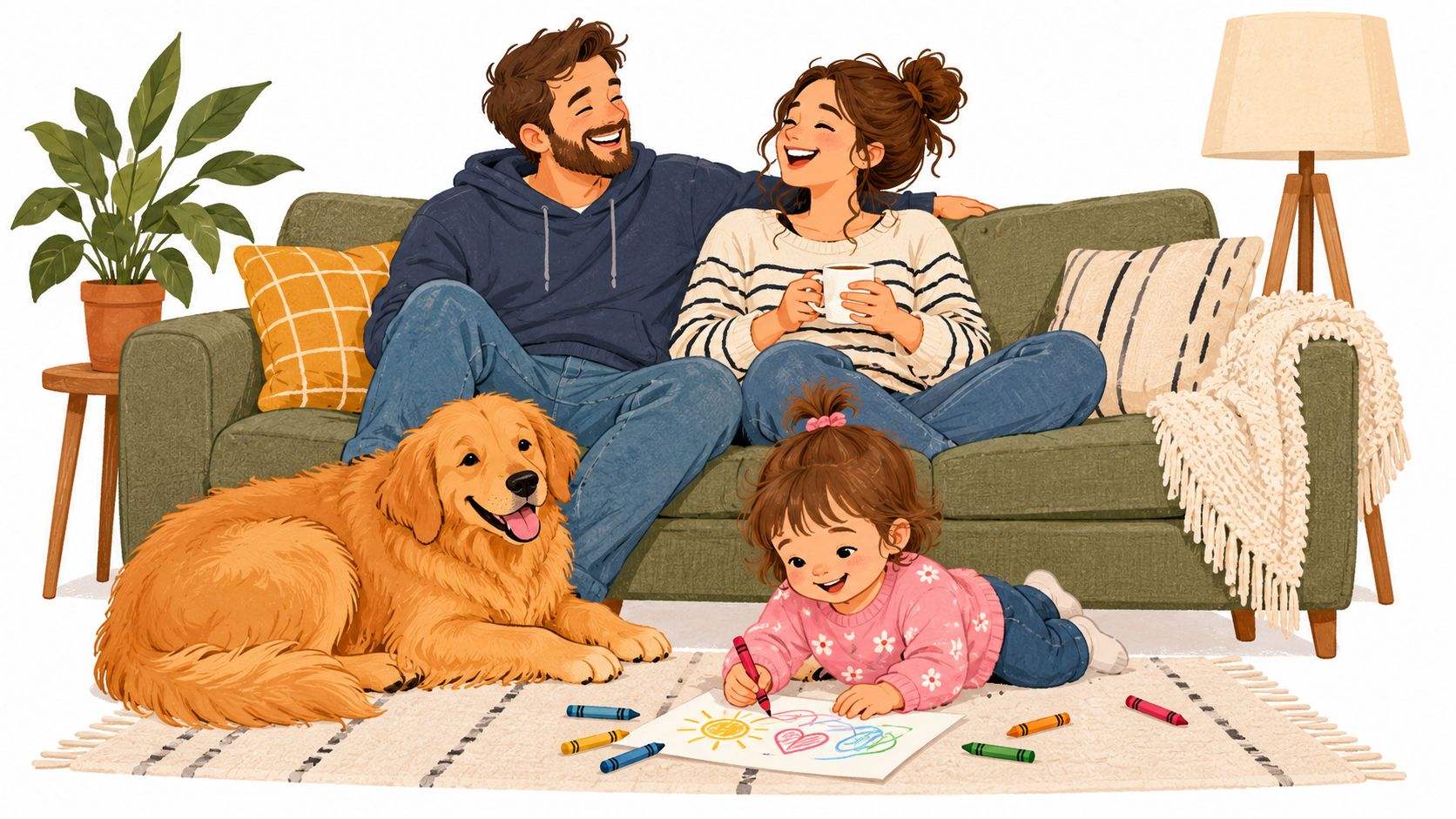
A Wauwatosa family with a Labrador, a toddler, and regular snack spills needs upholstery that supports quick cleanup. A tightly woven performance fabric brings softness, color choices, and a practical way to handle daily messes. Protected top-grain leather is also a sound option for adults who will wipe spills promptly and accept that pet claws can leave visible marks. For more guidance, see our guide to the best furniture for pet owners.
Delicate loose weaves and highly exposed leather finishes belong elsewhere, especially in the busiest part of the home. Red juice, muddy paws, and sharp toys still require household rules about food, pets, and cleaning, whatever upholstery covers the chair.
Verdict: Choose performance fabric for a softer family-room feel. Choose protected top-grain leather when quick wipe-downs matter more than scratch visibility.
The Waukesha empty-nester
An empty-nester furnishing a formal sitting room often values appearance, character, and manageable upkeep over maximum spill resistance. The room may receive measured use, making quality full-grain or top-grain leather a strong fit. Its less absorbent surface can also make everyday dust easier to remove than it would be from a heavily textured textile.
Aniline leather offers a natural, distinctive appearance, but marks and changes over time are part of the bargain. Before selecting a minimally protected finish, consider the room's light, humidity, and the owners' cleaning habits.
Verdict: Choose quality leather for a restrained room where long-term character matters and the owners will follow a regular care routine.
The downtown apartment dweller
A third-floor apartment brings delivery and space limits into the decision. The shopper may want a lighter-looking chair, more color flexibility, and upholstery that can adapt if the piece moves to another room. Performance fabric often suits that need, particularly when the chair must pass through narrow halls or fit a smaller footprint.
The frame size can matter more than the upholstery alone. BILTRITE serves apartment, condo, senior living, and smaller-home shoppers with furniture designed for limited space, including pieces that can come apart for difficult deliveries.
Verdict: Choose a performance fabric chair with a compact frame and a wear rating matched to the expected traffic.
A white aniline leather chair paired with a shedding husky is a poor match. A loose-weave linen chair in a home with a cat that claws furniture is equally impractical. The household's routine should decide the material before appearance makes the choice.
Why Construction Matters as Much as Upholstery
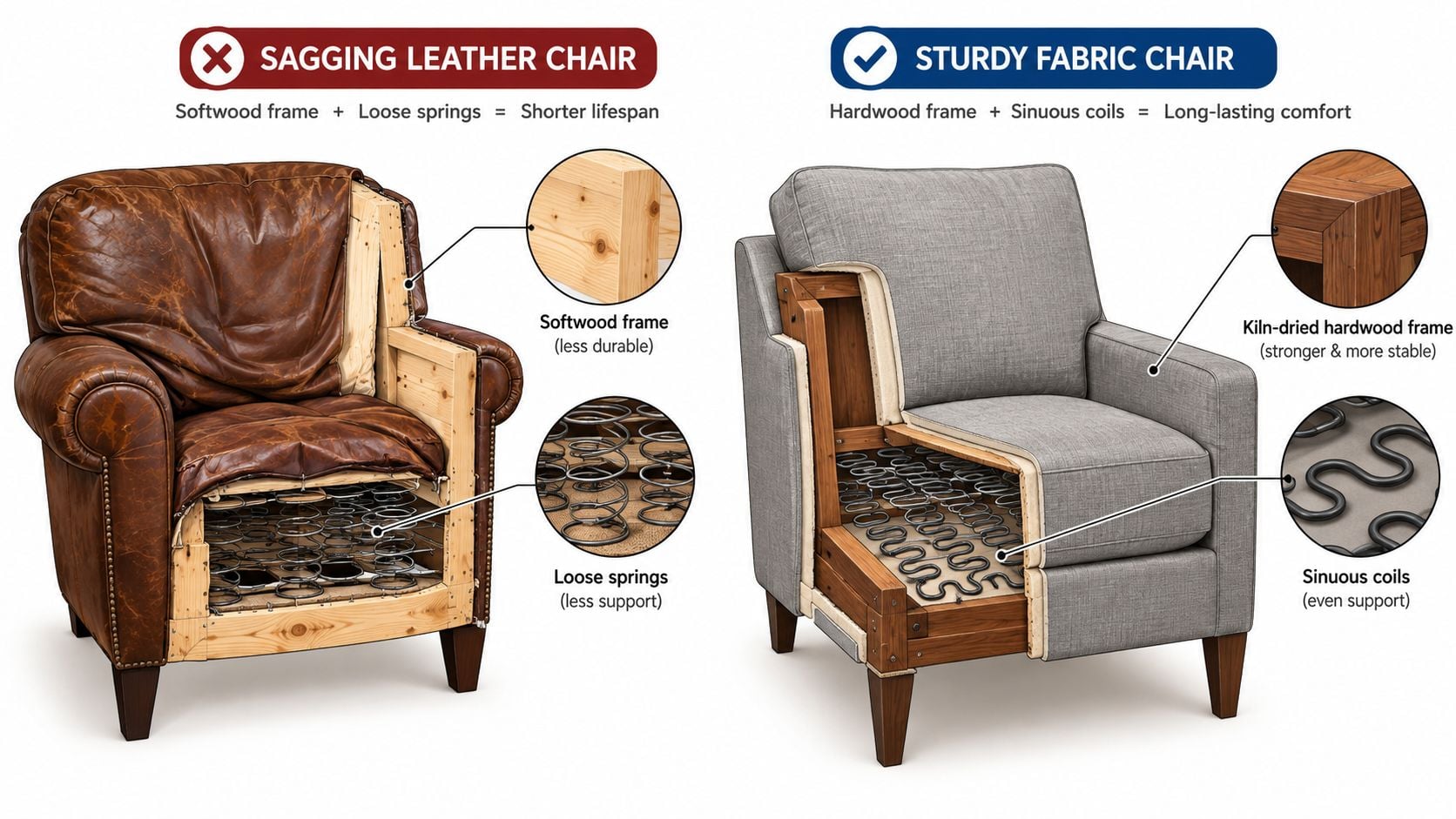
A beautiful cover can't rescue a weak chair. A substantial leather surface over an underbuilt frame may sag or loosen before a well-constructed fabric chair shows serious upholstery wear. The shopper should judge the skeleton, seat support, cushion design, and moving parts with the same attention given to the material.
Look beneath the surface
A strong frame may use carefully joined hardwood components, reinforced corners, and a design that keeps stress away from the upholstery. Seating support can come from sinuous springs, webbing, or hand-tied systems, and each approach should be evaluated by how it feels under the body and how the manufacturer stands behind it.
Shoppers interested in joinery can ask about dowel construction and other frame details. The point isn't to memorize woodworking terms. It's to make sure the chair has a credible structure beneath the surface.
American and Amish-made options change the conversation
BILTRITE specializes in USA-made, Amish-made, and solid-wood furniture, along with custom choices in fabric, leather, wood, finish, and hardware. Those categories give shoppers a chance to compare upholstery and craftsmanship together instead of selecting a cover first and discovering the construction later.
A shopper can ask whether a chair has:
- A durable frame: What wood or engineered material forms the main structure?
- Reliable seat support: Which spring or suspension system carries the load?
- Serviceable cushions: Can the cushions be rotated, replaced, or adjusted?
- Suitable scale: Will the chair support the household without overwhelming the room?
- A meaningful warranty: What parts receive coverage, and for how long?
The exact construction varies by piece, so sales associates should show the relevant specifications rather than make blanket promises. That's also why shoppers should sit in the actual frame, test the recline, check the return motion, and examine the underside or product documentation when available.
Good furniture advice: Ask to see the frame, not just the cover.
A strong frame extends the value of either material. Leather can deliver long service with the right care, and performance fabric can perform impressively when its abrasion rating and construction suit the room. Neither outcome is guaranteed by the upholstery label alone.
Our Honest Recommendation for Milwaukee Shoppers
For most active Milwaukee households, the strongest default is high-performance fabric or protected top-grain leather, not delicate upholstery and not a vague “genuine leather” label. Performance fabric wins when softness, breathability, color choice, and family use lead the decision. Protected top-grain leather wins when quick spill response, a refined appearance, and long-term material life matter more.
Match the chair to the household
| Household Profile | Top Pick | Why It Wins | BILTRITE Build Option |
|---|---|---|---|
| Children, pets, and daily family-room use | Performance fabric or protected top-grain leather | Balances cleanup, comfort, and resistance to routine wear | Explore USA-made or custom upholstery with a frame sized for heavy use |
| Formal room with measured traffic | Full-grain or top-grain leather | Offers a structured look and can develop character with care | Compare leather seating with solid-wood and Amish-made room pieces |
| Apartment or smaller home | Durable performance fabric | Offers broad color flexibility and works well with compact furniture | Ask about small-scale and come-apart seating |
| Budget-conscious first-time buyer | Mid-range fabric with a suitable abrasion specification | Controls the initial spend without ignoring daily wear | Compare fabric grade, frame construction, and cushion support together |
| Home requiring supportive seating | Material chosen after testing the chair | Comfort depends on fit, support, and mechanism as much as upholstery | Test recliners, lift chairs, and heavy-duty options in the showroom |
Families with young children and pets should avoid choosing based on appearance alone. A tightly woven performance fabric is often the most forgiving route, while protected leather remains a sound choice for households that prefer an easy-wipe surface and can manage scratch risk. Washable cushion covers, when available, add practical value.
Empty-nesters and formal-room shoppers can lean toward full-grain or top-grain leather. The material's long service potential makes more sense when the chair won't face constant spills, toys, and claws. A regular care routine still matters, because leather's durability depends on maintenance.
Apartment dwellers and first-time buyers should look at durable mid-grade fabric before assuming that a cheaper leather-like surface is the economical answer. Bonded leather may appear attractive at first, but the possibility of cracking or peeling makes the material grade worth careful inspection. The same budget should also be tested against frame quality, seat support, and delivery access.
BILTRITE Furniture-Leather-Mattresses offers showroom access to leather, fabric, recliners, living-room pieces, small-scale furniture, heavy-duty options, and a mattress department with over 60 models. The store is family-owned and operated in the Metro Milwaukee community, doesn't sell online, and remains closed on Sundays so the team can protect family time. That local, in-person model makes sense for a decision that depends on feel, scale, support, and honest answers.
The Greenfield showroom is located at 5430 West Layton Avenue. Shoppers should bring room measurements, doorway dimensions, photos of the space, and a clear description of who will use the chair. The sales team can then compare the materials in person rather than asking a household to make a high-use decision from a screen.
Leather is the better recommendation for a formal room, long-term character, and fast spill response. Performance fabric is the better recommendation for breathable comfort, color flexibility, and active family life. Construction determines how much value either choice delivers.
For Milwaukee shoppers comparing leather and fabric, BILTRITE Furniture-Leather-Mattresses offers in-store guidance across leather seating, performance fabrics, USA-made and Amish-made furniture, recliners, and supportive mattresses. Visit the Greenfield showroom with room measurements and family photos, sit in both materials, and let the local team help match the chair to the way the home is lived in.