3 Piece Sectional with Recliners Buying Guide

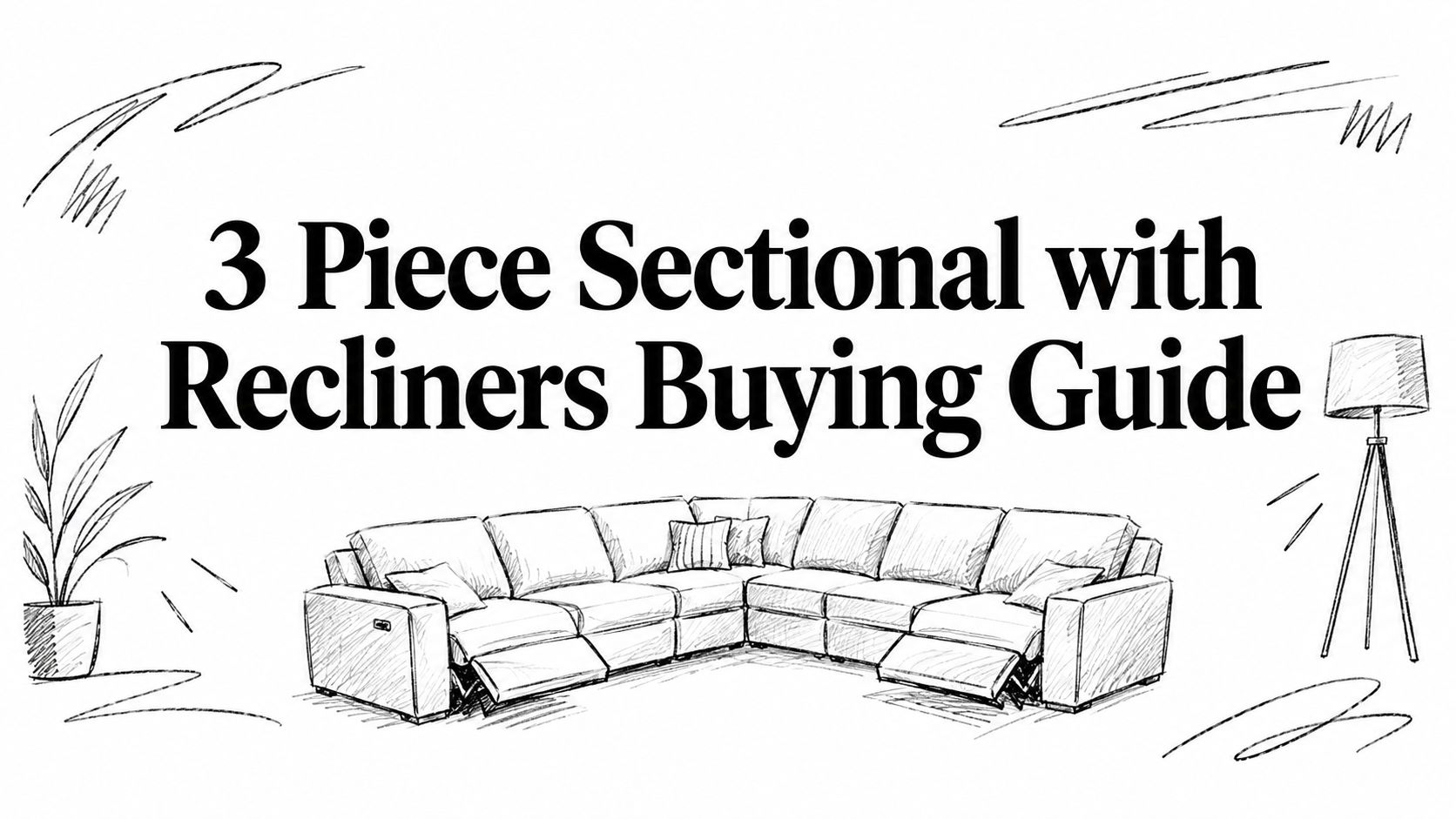
A Milwaukee family is settling in for movie night. One person wants to stretch out, another wants upright support, the kids are passing popcorn, and a guest will be stopping by later. A 3-piece sectional with recliners can handle all of those moments in one living room, but only if the pieces, moving parts, and delivery path work together.
That last point causes many furniture regrets. A sectional may look comfortable on a showroom floor and still create trouble if a doorway is too narrow, a recliner hits the wall, or the footrest blocks the main walkway. The smartest purchase starts with measurements and daily habits, then moves to mechanisms, materials, and style.
BILTRITE Furniture has helped Metro Milwaukee families make those decisions since 1928. As a fourth-generation, family-owned store, the team focuses on affordable, better-quality furniture, including USA-made, Amish-made, and solid-wood options. The goal isn't to push a particular configuration. It's to help each household understand what will work in its own home.
The guide below follows that same practical path. It explains how three-piece motion sectionals are built, how layouts change the way a room functions, what to measure before delivery, and how to compare manual, power, fabric, leather, and construction choices. For additional ideas, readers can explore this guide to reclining sectional sofas.
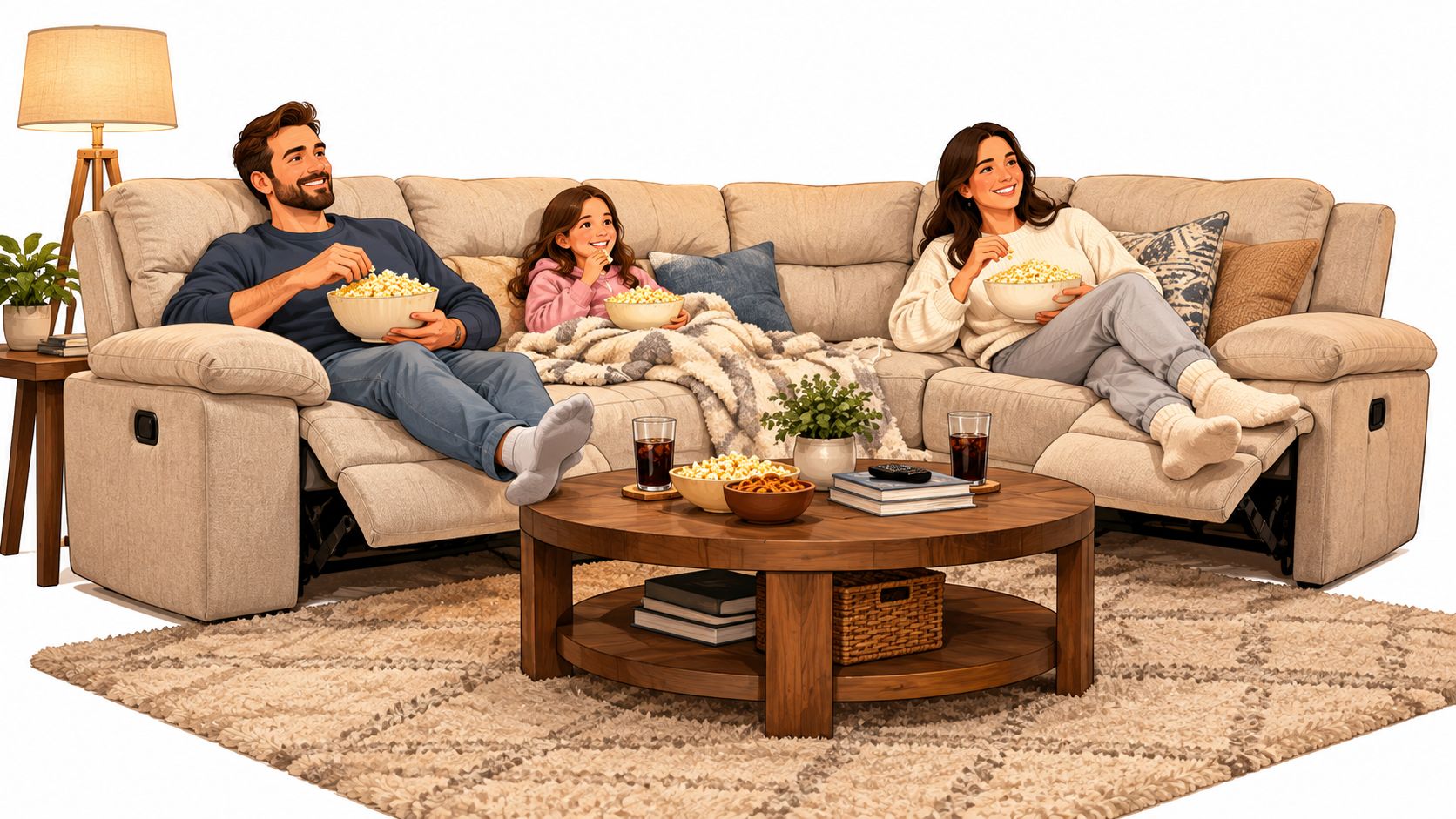
Before looking at colors or cup holders, a household should answer one simple question: How will the room be used on an ordinary day? Movie nights, visiting, naps, homework, and everyday lounging may call for different balances of open seating and reclining support.
Table of Contents
- Introduction to 3 Piece Sectionals With Recliners
- What Makes a 3 Piece Reclining Sectional Different
- Choosing the Right Layout for Your Room and Lifestyle
- How to Measure for Fit Delivery and Recline Clearance
- Recliner Mechanisms Power Options and Everyday Durability
- Fabric Leather Finishes and Style That Lasts
- Finding Your Fit at BILTRITE in Greenfield
Introduction to 3 Piece Sectionals With Recliners
A three-piece sectional with recliners sits at the intersection of two popular furniture ideas. A sectional provides a connected, flexible seating arrangement, while reclining seats add adjustable support for relaxing, reading, watching television, or resting after a long day.
Consumer-preference research shows that shoppers are configuring sectionals around more than a standard sofa footprint. In a 2025 study, 15% of sectional shoppers selected a sleeper sofa within the sectional, 22% added a chaise, and about 14% included a chair, recliner, or ottoman. That makes recliner-inclusive sectionals a meaningful choice within the broader category, not an odd specialty format. The same research identified the three-seat sofa with multiple cushions as the leading base configuration, helping explain why three-piece sets remain a familiar merchandising format in furniture markets. Furniture Today's sectional preference research provides that context.
Comfort has to fit the room
A reclining sectional can give several people different seating positions at the same time. One family member can sit upright for conversation, another can raise a footrest, and a third can use the corner as a roomy lounge spot. That flexibility is especially useful in family rooms where the furniture needs to support several activities instead of one carefully staged arrangement.
The tradeoff is movement. A stationary sectional mostly occupies the space shown in a floor plan. A reclining sectional occupies changing space as backs move backward and footrests extend forward. A three-piece configuration also creates seams, corner connections, and possible delivery challenges that a single sofa doesn't have.
Practical rule: A sectional should be judged by its opened-up footprint, not only by the dimensions printed for its upright position.
BILTRITE's showroom experience helps shoppers test those differences in person. Sitting in a recliner reveals whether the seat supports the thighs, whether the back feels natural, and whether the arm position works for the people who'll use it most. That matters more than choosing a style from a photograph.
A useful starting point is a quick household inventory:
- Daily lounging: Who reclines, and how often?
- Conversation: Will people face one another, or will most seats point toward a television?
- Traffic: Which doorway, hallway, or path must remain open?
- Household needs: Does the room call for compact seating, heavy-duty construction, easy operation, or serviceable components?
The best choice comes from those answers. A room that hosts neighbors may need open seating and a clear conversation angle. A room used mainly for family movie nights may give more space to motion seating. Either way, the room's real routine should guide the selection.
What Makes a 3 Piece Reclining Sectional Different
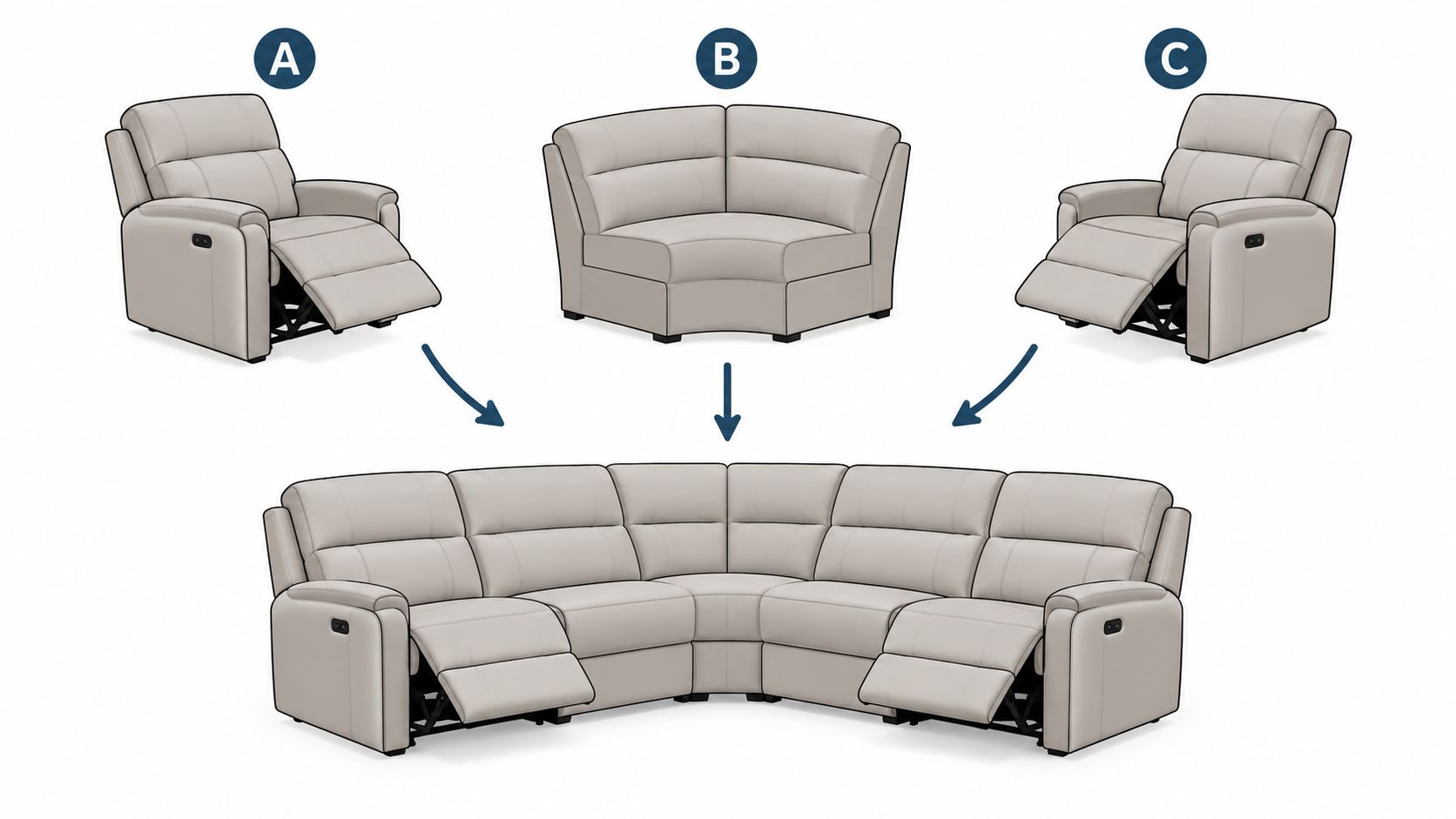
A three-piece reclining sectional is easier to understand as a set of connected building blocks. The blocks may include a sofa section, a loveseat section, a wedge, a chaise, or a console section. Connectors hold the pieces together, while the reclining seats are built into one or more sections rather than added as separate chairs.
Three pieces do three different jobs
A sofa section usually provides shared seating and may include reclining seats. A corner wedge turns the direction of the arrangement and creates the familiar L shape. A console loveseat or chaise section can add storage, stretching space, or another motion seat.
The exact pieces vary, so “three-piece” doesn't automatically describe one universal layout. It counts the connected components. A shopper should ask which components are included, where the arms face, whether a console counts as its own component, and whether the backs or sections come apart for delivery.
That last question matters in older Milwaukee homes, apartments, and houses with tight interior turns. BILTRITE offers come-apart sofas and sectionals for situations where a fully assembled piece may not travel easily through the home. A set that separates into manageable components can make the difference between a smooth delivery and a furniture project that stops at the entryway.
Stationary versus motion seating
A stationary sectional stays fixed while people change positions. A motion sectional adds mechanical movement, usually through manual handles or powered controls. Reclining seats may operate independently, allowing two people to choose different positions rather than sharing one fixed angle.
Piece count affects more than seating capacity. Each connection adds another boundary where the sectional meets the floor, and each reclining seat creates an area that must remain clear. A compact three-piece set can suit a smaller apartment, while a broader arrangement can anchor a family room. The right size depends on both the furniture and the circulation around it.
The market context supports the popularity of motion seating. One industry forecast estimated the global recliner sofas market at US$2.2 billion in 2024, with a projection of US$3.1 billion by 2030 and a 6.3% CAGR across that period. A separate study estimated US$10.4 billion in 2026, projecting US$17.4 billion by 2033 and a 7.6% CAGR. Those estimates differ because market reports use different definitions and methods, but both place recliner sofas in a multibillion-dollar category. The available recliner sofa market overview shows how motion furniture has moved into the mainstream.
For a household, the takeaway is simpler. A three-piece reclining sectional combines the flexibility of connected seating with the individual comfort of motion seating. It also requires more careful planning than a static sofa.
Choosing the Right Layout for Your Room and Lifestyle
Layout should follow the room's shape and the family's habits. A television-focused room may favor seats aimed toward the screen, while an open-concept room may need the sectional to define a living zone without closing off the rest of the space.
Common configurations at a glance
| Layout Option | Best For | Recliner Placement | Space Note |
|---|---|---|---|
| Sofa with recliners and wedge | Family movie rooms and shared lounging | Recliners in the sofa section | Needs room for footrests and a clear path near the open end |
| Chaise sectional with dual recliners | Stretching out while keeping motion seating | Recliners on the sofa or loveseat section | The chaise adds a fixed lounge zone, so measure the long side carefully |
| L-shape with console | Households that want storage, cup holders, or device access | Recliners on either side of the console section | The corner and console can make turns feel tighter in smaller rooms |
The sofa-and-wedge arrangement is the most familiar. It gives a straightforward viewing direction and a corner seat for lounging, but it can feel imposing if the open end points into a narrow walkway. A chaise arrangement offers a dedicated place to stretch out without opening another recliner, which can help balance motion seating with a calmer lounge area.
An L shape with a console puts shared storage near the people using the recliners. That can be handy for remotes, drinks, books, or charging accessories. The console also changes the visual rhythm of the sectional, so it should be considered as part of the room's traffic pattern rather than treated as a small add-on.
Match the shape to the room
A left-facing or right-facing label describes the arm position when viewed from the front. It shouldn't be guessed from a website image. The arrangement needs to be checked against windows, doors, fireplaces, television placement, and the direction of the room's main walkway.
For a small room, a compact three-piece configuration or a wall-hugger design may preserve more usable floor area. Apartment-sized sectionals can be about 75 to 85 inches long, and some can suit rooms as small as 10 x 12 feet, according to a residential sectional sizing guide. This sectional sizing resource also notes that typical residential sectionals can span 94 to 156 inches, so shoppers shouldn't rely on the phrase “three-piece” as a size guarantee.
A larger family room may support a deeper arrangement, but bigger isn't automatically more functional. Floating the sectional can define an open-concept seating area, while placing it near a wall may protect the center of the room. In either setup, the furniture should leave a comfortable route between seating, doors, and other major areas. More layout planning ideas are available in BILTRITE's sectional sofa layout guide.
How to Measure for Fit Delivery and Recline Clearance
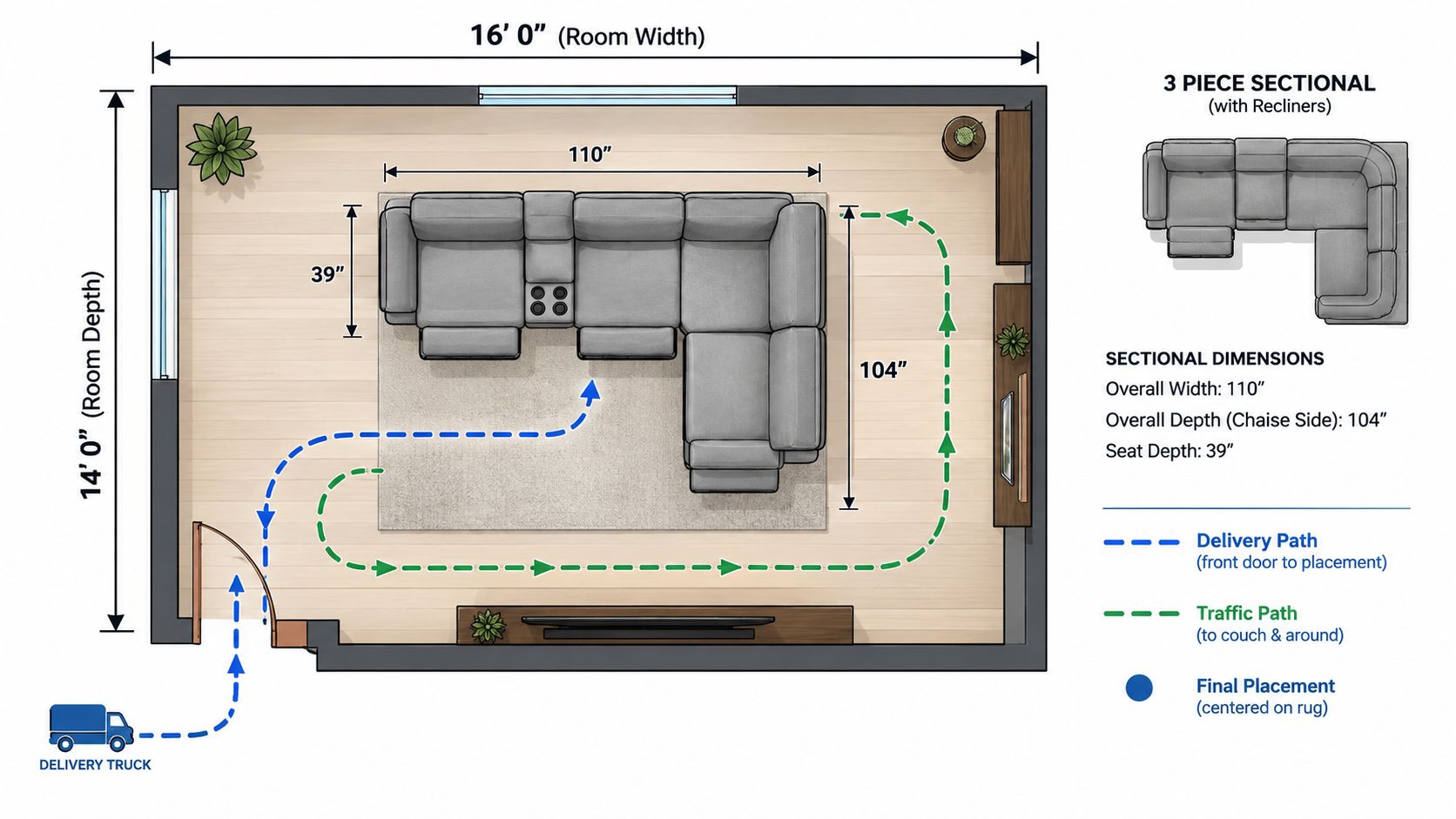
A sectional may fit the room and still fail at the front door. A stair turn can stop delivery, or an open footrest can block the path to the kitchen. Measure in three stages: the room, the delivery route, and each recliner's moving space. That logistics-first check should come before comparing colors or upholstery.
Start with the room
Record wall lengths, ceiling height, door and window locations, vents, and permanent fixtures. Use painter's tape to outline the sectional's upright footprint on the floor. Include the corner and the full length of every component, rather than measuring only the longest outside edge.
Traffic flow needs its own line on the plan. A practical target is 30 to 36 inches for major walkways around a sectional. This living-room measurement guidance offers a useful planning threshold, but household routines matter too. A route that looks fine on paper may feel tight when someone carries groceries, laundry, or a child through it.
Measure the delivery path
Measure every point from the delivery vehicle to the room:
- Exterior entry: Check the door opening, porch turns, steps, and any narrow approach.
- Interior doors: Measure the clear opening with each door fully open. Include trim that reduces usable width.
- Hallways: Record width and ceiling height, especially where a long piece must rotate.
- Stair landings: Measure the landing and the distance to the next turn.
- Tight corners: Note railings, light fixtures, low ceilings, and doors facing each other.
Packaged furniture can be larger than its finished listed dimensions. Ask whether the backs come off, whether the sections separate, and how the connectors join. Come-apart construction can make delivery easier in a narrow-entry home, but confirm that feature for the exact configuration you plan to order.
Before scheduling delivery: Photograph the tightest doorway and measure it twice. A clear image can help a furniture professional spot an obstacle that one width measurement misses.
Map each recliner's motion
Use one consistent clearance rule for planning. Most traditional mechanisms need roughly 12 or more inches of rear clearance, while wall-hugger designs may reduce that requirement to about 3 to 6 inches. The footrest still needs about 20 to 30 inches of front clearance, so a small wall gap does not create usable space by itself. Confirm the exact requirement for the specific mechanism before ordering.
A recliner's motion zone works like a swing path. Mark the space behind the back and in front of the footrest for every moving seat, not just the end recliner. This prevents a coffee table, ottoman, or walkway from occupying floor space the sectional needs when someone reclines.
One manufacturer lists an upright three-piece power reclining sectional at roughly 99.5 x 112 x 40.5 inches, with a fully reclined length of 64 inches. Those figures show why the open position belongs on the floor plan, alongside the delivery measurements, rather than being treated as a comfort detail.
For a detailed checklist, review BILTRITE's sectional sofa measuring guide. Then tape the upright footprint, mark each reclined zone, and walk the delivery route before ordering.
Recliner Mechanisms Power Options and Everyday Durability
Manual and power recliners can both provide comfortable movement, but they solve different household needs. A manual handle or push-back design keeps the operation simple and avoids electrical components. Power controls offer gradual positioning and can be easier for someone who has limited strength or mobility.
Compare the mechanism choices
A manual recliner generally suits shoppers who value straightforward operation and fewer parts to troubleshoot. A power recliner can make small adjustments easier and may include independent controls, charging, or adjustable head and foot support depending on the configuration. More features aren't automatically more useful. A household should select the controls that people will use every day.
Wall-hugger geometry is helpful when the sectional must sit near a wall. Traditional mechanisms may offer a familiar recline path but require more rear clearance. The clearance figures belong in the room plan, while the mechanism comparison belongs in the comfort and maintenance discussion.
Consoles add storage and a place for drinks or accessories. They also add structure between seats and can increase the visual and physical bulk of the arrangement. If the family prefers open conversation, an uninterrupted seat may feel more natural than a wide console.
For further background on power seating choices, readers can visit BILTRITE's power reclining seating guide.
Comfort depends on geometry
Ergonomics gives buyers useful ranges instead of vague promises. Furniture references place comfortable seat depth around 380 to 460 millimeters, seat height around 405 to 460 millimeters, and armrest height about 178 to 203 millimeters above the seat. Relaxed support commonly falls within a 105 to 120 degree torso recline range. These ergonomic furniture specifications help explain why one recliner may feel supportive to one adult and awkward to another.
A seat that's too deep can leave shorter users without proper thigh support. A low seat may make standing harder, while a shallow seat can limit relaxed lounging. Testing the chair with feet on the floor and back against the cushion tells more than an upholstery label.
Look beyond the showroom feel
Durability depends on the frame, cushioning, joints, upholstery, and reclining hardware. Lounge-seating standards such as ANSI/BIFMA X5.4 evaluate load capacity and recliner wear points, including legrest durability and pinch-point performance under a 275-pound test basis. The referenced ergonomic specifications describe those test expectations and their relevance to motion seating.
Families should ask about weight capacity per seat, replacement hardware, section connectors, and service if one module stops working. Powered individual seats can add flexibility, but they also introduce motors, wiring, and additional pinch points. Safety coverage has drawn attention to motorized reclining mechanisms after child-entrapment incidents, so homes with young children need clear rules about keeping hands, toys, and pets away from moving joints.
Fabric Leather Finishes and Style That Lasts
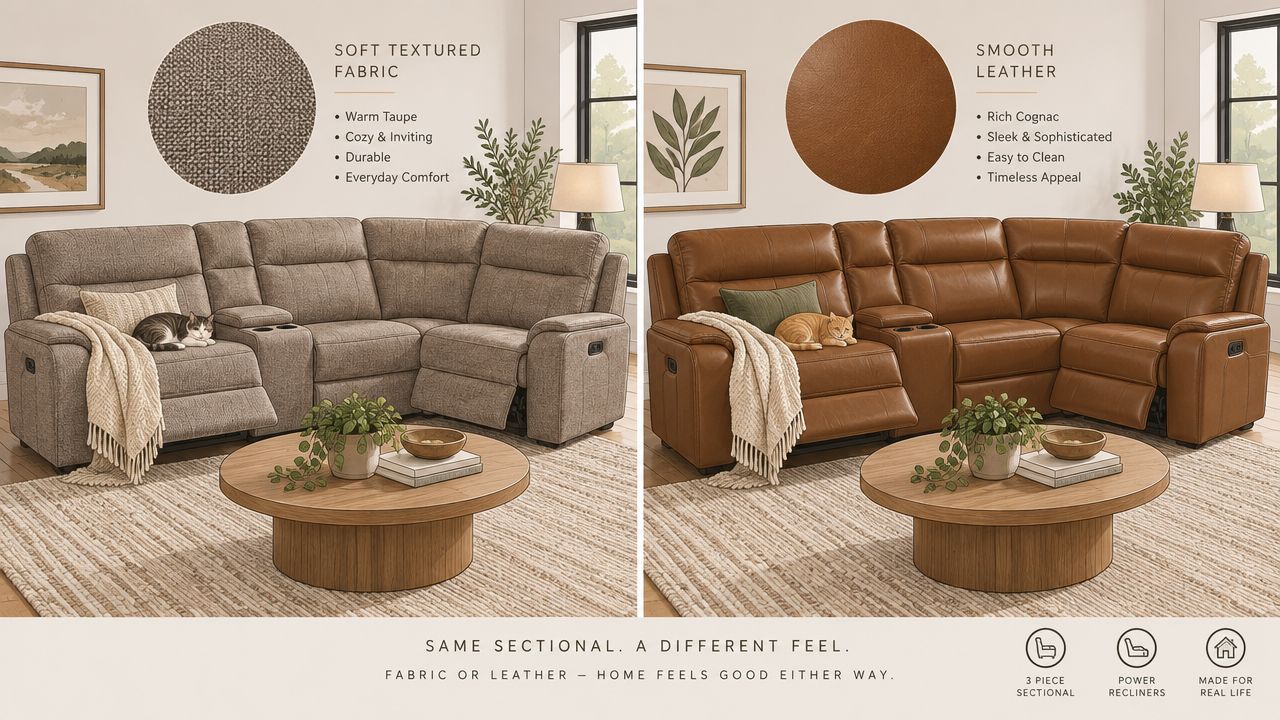
Materials shape the daily experience as much as the layout. Fabric can bring softness and texture, while leather offers a distinct surface that many households appreciate for its appearance and routine care. Neither choice removes the need to consider spills, pets, sunlight, cleaning habits, and the amount of use the sectional will receive.
Choose for the household
A textured neutral fabric can make a substantial sectional feel softer and less imposing in a smaller room. It may also coordinate easily with rugs and pillows. Leather can create a cleaner visual line and develop a different character over time, but households should ask about care requirements and the feel of the specific finish.
Families with children or frequent visitors may prioritize a durable, maintainable upholstery over a delicate texture. A senior or caregiver may place more weight on supportive cushions, easy-to-operate controls, and a seat height that makes standing comfortable. A heavy-duty room may call for stronger construction, while an apartment may benefit from a smaller-scale frame.
Color deserves a practical test. Neutral shades can work with changing accents, but the best choice is the one that looks right with the room's flooring, wall color, lighting, and existing pieces. Seeing a swatch under showroom lighting and near a window can reveal differences that aren't obvious on a screen.
Consider the surrounding finishes
A reclining sectional usually dominates the room, so supporting pieces should add balance rather than compete for attention. Solid-wood tables, shelving, or accent furniture can bring warmth around upholstered motion seating. BILTRITE specializes in USA-made and Amish-made furniture, including real solid-wood pieces identified in the showroom with clear icons for shoppers.
Custom options can also change the result. Depending on the piece, buyers may be able to choose fabric, leather, wood, finish, or hardware. That flexibility helps a three-piece sectional feel connected to the rest of the home instead of looking like a temporary addition.
Quality and price should be considered together. BILTRITE positions its furniture as affordable, better-quality, not as the cheapest option in every category. Seeing and feeling the upholstery, sitting in the cushions, and checking the operation in person can help a household decide where higher construction quality matters most. Readers can find more material guidance in BILTRITE's fabric selection guide.
Finding Your Fit at BILTRITE in Greenfield
A confident sectional decision brings together four checks: the room layout, the delivery path, the motion envelope, and the household's comfort needs. Shoppers should bring room measurements, doorway widths, photos of tight turns, and a short list of must-have features. That information gives a furniture professional something practical to work with.
BILTRITE Furniture is a fourth-generation, family-owned showroom serving Metro Milwaukee since 1928. The store offers a broad in-stock selection along with custom choices in fabric, leather, wood, finish, and hardware. Shoppers can also ask about small-scale furniture, heavy-duty options, come-apart sectionals, USA-made pieces, Amish-made furniture, and solid-wood construction.
The sales associates bring over 400 years of combined experience and are available to answer questions without pressure. In the same showroom, the BILTRITE Mattress Center carries over 60 models and 500-plus mattresses in stock, which can be useful for households furnishing more than one room.
BILTRITE doesn't sell online, so the showroom is the place to sit in different cushions, operate manual and power mechanisms, compare wall-hugger movement, and inspect upholstery in person. The store is located at 5430 West Layton Avenue in Greenfield, Wisconsin, and is closed on Sundays and Mondays for family time. A visit gives shoppers the chance to discuss delivery access before choosing a three-piece reclining sectional that looks good and works in real life.
Come on down to the showroom, bring those measurements, and say hello to the team. The right choice starts with a conversation about how the room gets used.
BILTRITE Furniture-Leather-Mattresses offers affordable, better-quality furniture, USA-made and Amish-made pieces, custom upholstery options, and practical come-apart sectionals for challenging delivery paths. Visit BILTRITE Furniture-Leather-Mattresses in Greenfield to test a three-piece sectional with recliners, compare comfort and mechanisms, and get helpful guidance for the home.