Mastering Your Interior Design Consultation

A Milwaukee homeowner stands in the middle of the living room, holding two paint swatches, staring at a sofa that suddenly looks too large, too dark, or just wrong. The rug looked good in the store. The chair seemed useful online. Then everything came home, and the room still didn't feel settled.
That's usually the moment people think interior design consultation must be something fancy, expensive, or meant for somebody else. It isn't. At its core, it's a conversation that helps a household make better decisions before spending more time and money on furniture, layout, and finishes.
That kind of help is becoming more common. The global interior design market was valued at $185.7 billion in 2025 and is projected to reach $298.0 billion by 2033, according to Grand View Research's interior design market report. More homeowners are looking for guidance that makes a space work better, not just look nicer.
For families around Metro Milwaukee, that's good news. A consultation doesn't have to begin with a full remodel or a designer sketching an entire dream house. It can begin with one room, one problem, and one honest question: what would make this home easier to live in?
That practical, neighborly approach matters to a family-owned business that has served this community since 1928. Helpful design guidance should feel clear, welcoming, and grounded in real homes. For readers who want a simple starting point, this guide on where home design begins is a useful next stop.
Table of Contents
- Introduction Your First Step to a Home You Love
- What an Interior Design Consultation Really Is
- Exploring Different Types of Design Consultations
- Your Consultation Journey From Start to Finish
- How to Prepare for a Great Consultation
- Key Questions to Ask and Friendly Red Flags
- Conclusion Let's Start the Conversation at BILTRITE
Introduction Your First Step to a Home You Love
A lot of homeowners don't start with a grand plan. They start with frustration. Maybe the sectional blocks the walkway. Maybe the bedroom looks nice but has nowhere to put a lamp, a book, or a phone charger. Maybe the dining set fits the room on paper, but the chairs scrape the wall every time someone sits down.
That's where an interior design consultation becomes useful. It gives shape to all those half-formed thoughts. Instead of asking, “What style should this room be?” a better first question is, “How does this room need to work every day?”
For Milwaukee families, that question is often tied to real life, not showroom fantasy. Homes need to handle winter boots at the door, movie nights, homework, overnight guests, pets, naps, and sometimes a parent or grandparent moving into the mix. Good design starts there.
A helpful consultation lowers stress. It doesn't raise it.
A friendly consultation also helps people slow down before making costly mistakes. A household may think it needs a bigger sofa when the true fix is a better layout. Someone may believe the room feels bland because of color, when scale or lighting is the actual problem.
That's one reason consultation-led selling makes sense in a home-focused business. A room rarely comes together because one item looked nice in isolation. It comes together when the room's size, traffic flow, comfort needs, storage needs, and budget all get considered at the same time.
For a Greenfield showroom that has worked with Milwaukee-area homes for generations, that kind of conversation fits naturally. It's not about pressure. It's about helping neighbors feel more confident in their decisions.
What an Interior Design Consultation Really Is

The phrase interior design consultation can sound formal, but the work itself is straightforward. It's a guided conversation where someone helps a homeowner sort through needs, priorities, room limitations, and possible solutions.
Globally, the interior design services market is estimated at USD 153.85 billion in 2026, and residential projects made up 57.39% of the market in 2025, according to Mordor Intelligence's interior design services market analysis. That matters because it shows this service isn't only for luxury projects. A large share of the work is tied to ordinary homes and everyday decisions.
A consultation is a planning conversation
A good consultation is not a high-pressure appointment where someone pushes a style or tries to rush a purchase. It should feel more like a smart planning session.
The homeowner talks about what's working and what isn't. The consultant asks questions that uncover underlying issues. Then both sides start narrowing down choices that fit the room and the family's routine.
A strong meeting might sound like this:
- Room use first: Is the space for hosting, lounging, working, sleeping, or more than one of those?
- Lifestyle next: Are there kids, pets, mobility concerns, frequent guests, or a need for easy-clean materials?
- Budget in plain language: What matters most right now, and what can wait?
That approach matches the way many shoppers move through the furniture buying journey from first research to final decision. Most households don't want random ideas. They want help making solid decisions.
What it usually includes
Not every consultation looks the same, but most include a few core topics.
| Part of the consultation | What it helps uncover |
|---|---|
| Room measurements | Whether pieces will fit comfortably |
| Traffic flow | How people move through the space |
| Seating needs | Who uses the room and for how long |
| Style direction | What feels like home to the client |
| Budget range | Which options make sense now |
Practical rule: If a consultation jumps straight to color and accessories before asking how the room functions, it's skipping the most important step.
People often get confused, thinking design starts with a “look.” In real homes, design starts with constraints. Doorways matter. Reclining clearance matters. Storage matters. So does whether a household wants something formal, casual, easy to clean, or built for daily wear.
That's why a consultation often saves more than time. It helps prevent the classic mistake of choosing attractive pieces that don't serve the people who live there.
Exploring Different Types of Design Consultations
Different homes call for different formats. Some people want somebody to see the room in person. Some want to begin with photos and measurements. Others need to sit on furniture, compare wood tones, and see fabric in real light before making any decision.
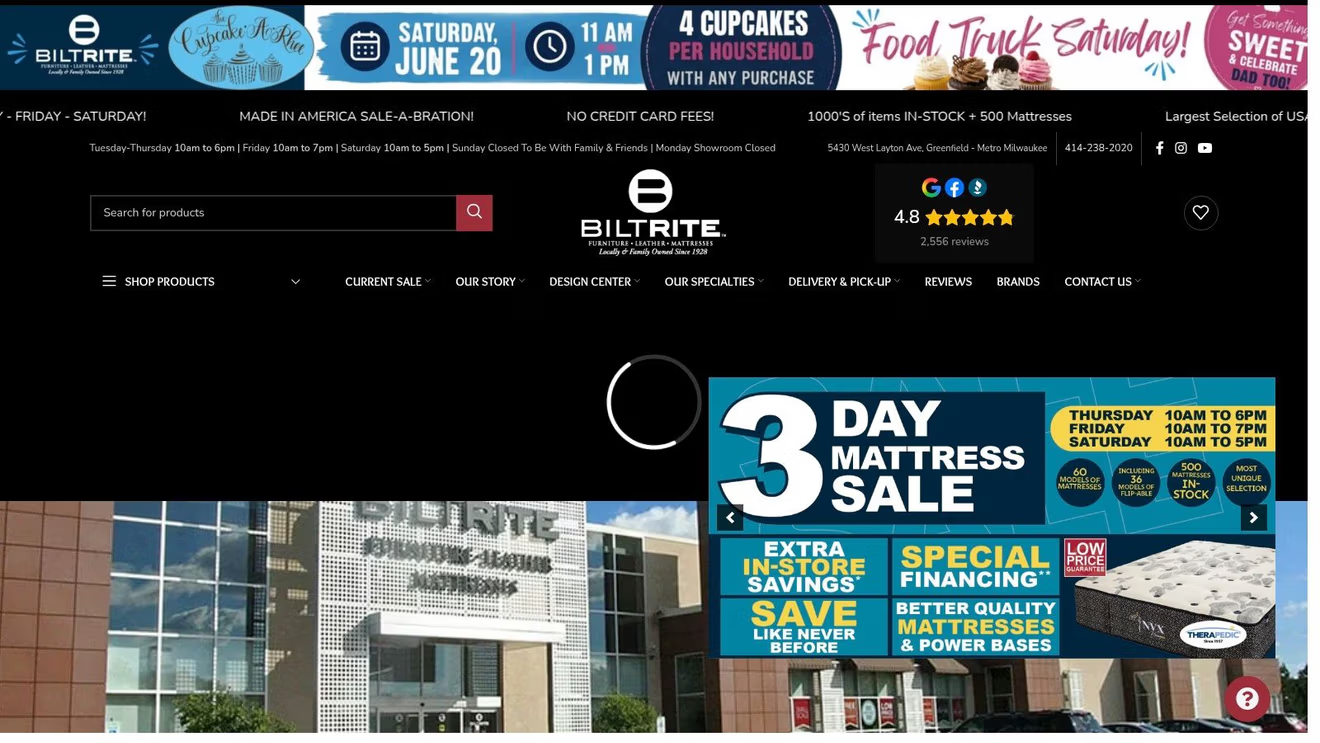
For homeowners exploring options, the design center is one example of a place where that process can happen in person with room details, materials, and furniture choices all considered together.
In-home consultation
This format brings the conversation directly into the room that needs help. That can make it easier to spot layout issues, window placement, lighting challenges, and traffic patterns.
An in-home meeting is especially useful when a space has awkward corners, several entry points, or existing pieces that need to stay. It also helps when a household is trying to blend old and new furniture.
The downside is simple. If a homeowner still isn't sure what styles, seat depths, wood finishes, or mattress feels they like, there may be fewer physical examples right there in the home to compare.
Virtual consultation
A virtual meeting can work well for a homeowner who already has basic measurements, photos, and a list of questions. It's often a comfortable first step for someone who wants direction without making a big commitment.
This format is helpful for:
- Early planning: Sorting priorities before shopping starts
- Single-room questions: Figuring out whether the room needs a sofa, loveseat, swivel chair, or a different layout
- Households with busy schedules: Keeping momentum without a special trip at the start
Virtual guidance can still be thoughtful and useful. The tradeoff is that texture, comfort, seat height, and construction details are harder to judge through a screen.
Showroom consultation
Many homeowners gain clarity fast. A showroom consultation combines planning with real-world testing. Instead of discussing scale in theory, a shopper can walk around the piece, sit in it, compare arm heights, open drawers, inspect wood grain, and feel fabric by hand.
That matters for rooms where comfort and durability are just as important as appearance. It also matters for smaller homes, condos, and apartments where a few inches can change whether a room feels open or cramped.
A showroom visit often helps answer practical questions such as:
- Will this chair feel supportive for long evenings?
- Does this table finish work with the floor sample from home?
- Can this sofa get through a narrow stairway or hallway?
- Is this solid wood piece the right fit for daily family use?
Sometimes the clearest design decision happens when a homeowner sees two options side by side instead of trying to imagine both from memory.
For Milwaukee-area households, that tactile part of the process can be the difference between guessing and knowing. It turns design advice into something visible, touchable, and easier to trust.
Your Consultation Journey From Start to Finish
A lot of the stress around design comes from not knowing what happens next. Once the process is broken into a few stages, it feels much more manageable.
A high-value consultation should start with a structured intake that captures lifestyle, room function, budget range, and constraints before aesthetic recommendations, according to this overview of the interior design process. That order matters. It keeps the conversation grounded in how the room needs to perform.
For homeowners who want a simple view of that flow, this room design starting guide lines up well with what a practical consultation should cover.
Before the meeting
Preparation doesn't need to be elaborate. A few photos, some rough measurements, and a short list of frustrations are enough to start.
The most useful prep often includes the basics:
- Room dimensions so scale can be discussed realistically.
- A list of must-keep pieces such as a recliner, family table, or inherited chest.
- A spending range so recommendations fit the household, not an imaginary project.
This phase is also when a homeowner should think about daily patterns. Does everyone gather in one corner? Does glare hit the television every afternoon? Is there nowhere to set drinks? Those details shape better decisions later.
During the meeting
This is the part many people overestimate. It usually isn't dramatic. It's calm, practical, and built around questions.
A useful consultation often moves through these topics in sequence:
| Stage | What happens |
|---|---|
| Needs | The room's job gets defined |
| Constraints | Measurements, access, layout, and existing pieces are reviewed |
| Options | Different furniture approaches are discussed |
| Priorities | The homeowner chooses what matters most |
The strongest consultants keep translating ideas into daily life. A narrow arm sofa may make more sense than a bulky one if the room is tight. A round dining table may improve flow where a rectangle keeps catching traffic. A taller seat may be easier for an older adult to use comfortably.
After the meeting
A good consultation should leave the homeowner with direction. Not pressure. Direction.
That may mean a short list of furniture categories, a suggested layout, finish ideas, fabric direction, or a phased plan that handles the room over time rather than all at once.
The meeting is successful when the homeowner can say, “Now the next step makes sense.”
In a showroom setting, the “after” stage can become very tangible. Instead of going home with only abstract notes, a household may have a clearer understanding of which dimensions fit, which materials feel right, and which pieces match the budget and the room's purpose.
That's the point of the whole journey. A consultation turns a vague decorating problem into a usable plan.
How to Prepare for a Great Consultation
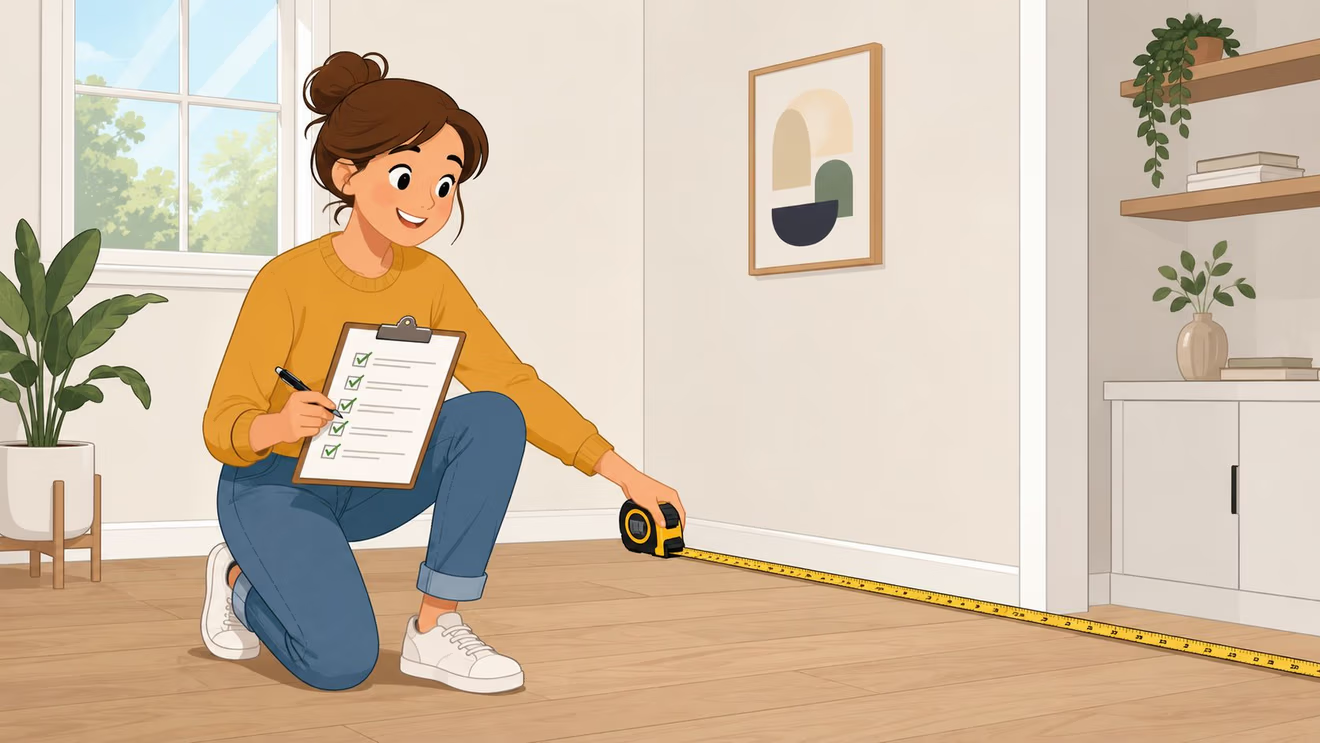
Preparation makes a consultation more useful, but it doesn't have to feel like homework. A homeowner just needs enough information to help the conversation stay grounded.
One gap in many design services is helping people with smaller homes, apartments, and aging-in-place needs in a practical way. Good consultation should support decisions about durable, small-scale furniture that fits the room and delivery constraints, as described in this discussion of furnishing smaller spaces thoughtfully.
The short prep list that saves headaches later
A little prep can stop a lot of second-guessing. The most helpful items are simple.
- Measure the room: Get wall lengths, window locations, and the distance between major features like radiators, doors, and fireplaces.
- Measure access points too: Hallways, stairwells, elevators, entry doors, and tight corners matter just as much as the room itself.
- Take a few honest photos: One wide shot from each corner is more useful than a polished close-up.
- Bring samples if possible: Paint chips, flooring pieces, fabric swatches, or even a pillow can help narrow finish choices.
- Know the room's real job: Is it for watching TV, reading, hosting, napping, working, or all of the above?
For households that aren't sure how to start, this furniture measuring guide can help organize the basics before a visit.
What people often forget
Most homeowners remember room size. Many forget the lived-in details that affect comfort.
A few examples come up often:
- Delivery realities: A sofa that fits the floor plan can still fail at the front door.
- Seat depth: Taller people and shorter people may want very different seating comfort.
- Storage habits: A household with blankets, toys, games, or medical items may need furniture that works harder.
- Future needs: A room for today may also need to serve visiting parents, a growing child, or easier mobility later.
One practical option in this category is BILTRITE Furniture-Leather-Mattresses, which offers in-store design help and carries categories such as small-scale furniture, senior living furniture, heavy-duty options, and come-apart sofas and sectionals that can help with access and fit concerns.
Bring the awkward facts to the consultation. The narrow doorway, the dog that sheds, the bad back, the toddler, the low budget, the heirloom table that has to stay. Those details lead to better answers.
The strongest prep is honesty. Not design vocabulary. A homeowner doesn't need to know what style label fits the room. It's enough to say, “This room feels crowded,” or “Nobody uses this chair,” or “Grandma needs a seat that's easier to get out of.”
That's the kind of information that makes a consultation useful.
Key Questions to Ask and Friendly Red Flags
An interior design consultation should make a homeowner feel more informed, not more intimidated. Asking a few direct questions helps reveal whether the process will be clear, respectful, and workable.
The U.S. Bureau of Labor Statistics projects about 7,800 openings per year on average for interior designers over the decade, and reports a 3% employment growth projection from 2024 to 2034 in the field, according to the BLS occupational outlook for interior designers. That kind of stability supports a simple point. A real professional should be able to explain the process clearly and answer practical questions with confidence.
Questions worth asking
These questions can keep the meeting grounded:
- How do recommendations stay within budget? The answer should sound specific, not vague.
- How do you learn how the room will be used? Function should come before style.
- How do you handle small spaces or tricky layouts? This reveals whether the person thinks in real dimensions.
- What should the homeowner bring to the first meeting? A clear process is a good sign.
- How do you balance comfort, durability, and appearance? Homes usually need all three.
A good answer doesn't have to sound polished. It just needs to be clear.
Friendly red flags
Some warning signs are subtle. They don't always sound rude or dramatic. They just make the process less useful.
- They skip questions about daily life: If nobody asks who uses the room, how often, or for what purpose, the advice may stay shallow.
- They dismiss constraints: Doorways, pets, aging parents, clutter, kids, and budgets are not side issues.
- They push a look too quickly: A room shouldn't be forced into a style that doesn't suit the household.
- They can't explain next steps: Confusion early on usually leads to more confusion later.
A consultation should feel like collaboration. If the homeowner leaves feeling talked over, something is off.
This doesn't mean every consultant needs the same personality. Some are chatty. Some are quiet. The key is whether they listen, clarify, and help the household make decisions that fit real life.
Conclusion Let's Start the Conversation at BILTRITE
Interior design consultation doesn't need a velvet rope around it. For most homeowners, it's a smart first conversation. It helps turn uncertainty into a plan, especially when a room has to do more than one job, the budget matters, or the space has quirks that make shopping harder.
That practical side of design is a natural fit for a long-standing Milwaukee-area showroom rooted in family and community. A home should feel comfortable, functional, welcoming, and suited to the people living in it. The process of getting there should feel the same way.
Since 1928, the family behind this Greenfield business has helped neighbors sort through real furniture decisions, not fantasy rooms. That includes helping shoppers compare small-scale options for tighter spaces, solid wood and Amish-made pieces for lasting use, supportive seating for changing needs, and mattresses for better rest. It also means keeping the experience personal. No online checkout. No rush. Just real conversation in the showroom.
The family-first values show up in the details too. The store is closed on Sundays and Mondays so families can be with their families. That says a lot about how people are treated there.
For a Milwaukee homeowner who feels stuck, that first step doesn't have to be complicated. It can begin with photos, a few measurements, and an honest talk about what the room needs next.
For anyone ready to turn a confusing room into a clearer plan, a visit to BILTRITE Furniture-Leather-Mattresses in Greenfield is a friendly place to start. The showroom gives Milwaukee-area homeowners a chance to talk through layout, comfort, scale, materials, and budget in person, while seeing furniture that fits real homes and real family life.