How to Choose a Mattress for Back Pain: Expert Tips

The alarm goes off. Before both feet even hit the floor, that familiar ache is already there. A tight lower back. Stiff hips. The little stretch at the side of the bed that's become part of the morning routine.
That's a story heard every week from families around Metro Milwaukee. A mattress can't solve every kind of back pain, but the wrong one can absolutely make sleep feel harder than it should. And when sleep goes bad, everything else tends to follow.
Choosing the right mattress is less about chasing a trendy material or a catchy label and more about finding a setup that keeps the body supported through the night. For anyone sorting out how to choose a mattress for back pain, a little guidance goes a long way, especially when showroom testing, body type, and sleep position all matter more than marketing language.
Table of Contents
- Tired of Waking Up Sore? We Can Help
- Start with Your Sleep Style and Body Type
- Decode Mattress Firmness for Your Back
- Explore Different Mattress Materials
- Come On In and Test Them Out the Right Way
- Special Solutions for Our Milwaukee Neighbors
- Ready for a Great Night's Sleep? Come Say Hi!
Tired of Waking Up Sore? We Can Help
A lot of people don't start mattress shopping because they're excited. They start because their back has finally had enough. They've tried sleeping on one side, then the other. They've added a pillow under the knees. They've blamed the weather, the yard work, or getting older. Then they wake up sore again and start wondering if the mattress is part of the problem.
That question is worth asking. A mattress affects posture for hours at a time, every single night. It isn't just bedroom furniture. It's part of a person's daily recovery.
For families trying to sort through the confusion, one helpful place to begin is this guide on why a high-quality mattress matters for long-term health. The basic idea is simple. Better sleep support usually starts with better fit.
A mattress should help the body settle into a natural position, not force it to fight the bed all night.
Milwaukee shoppers often come in thinking they need “the firmest one in the store.” Sometimes they do need more support. Just as often, they need a better match for how they sleep. That difference matters more than one might expect.
Start with Your Sleep Style and Body Type
Before looking at springs, foam, or fancy mattress names, it helps to look at the sleeper. That's where the useful clues are.
How sleep position changes the feel
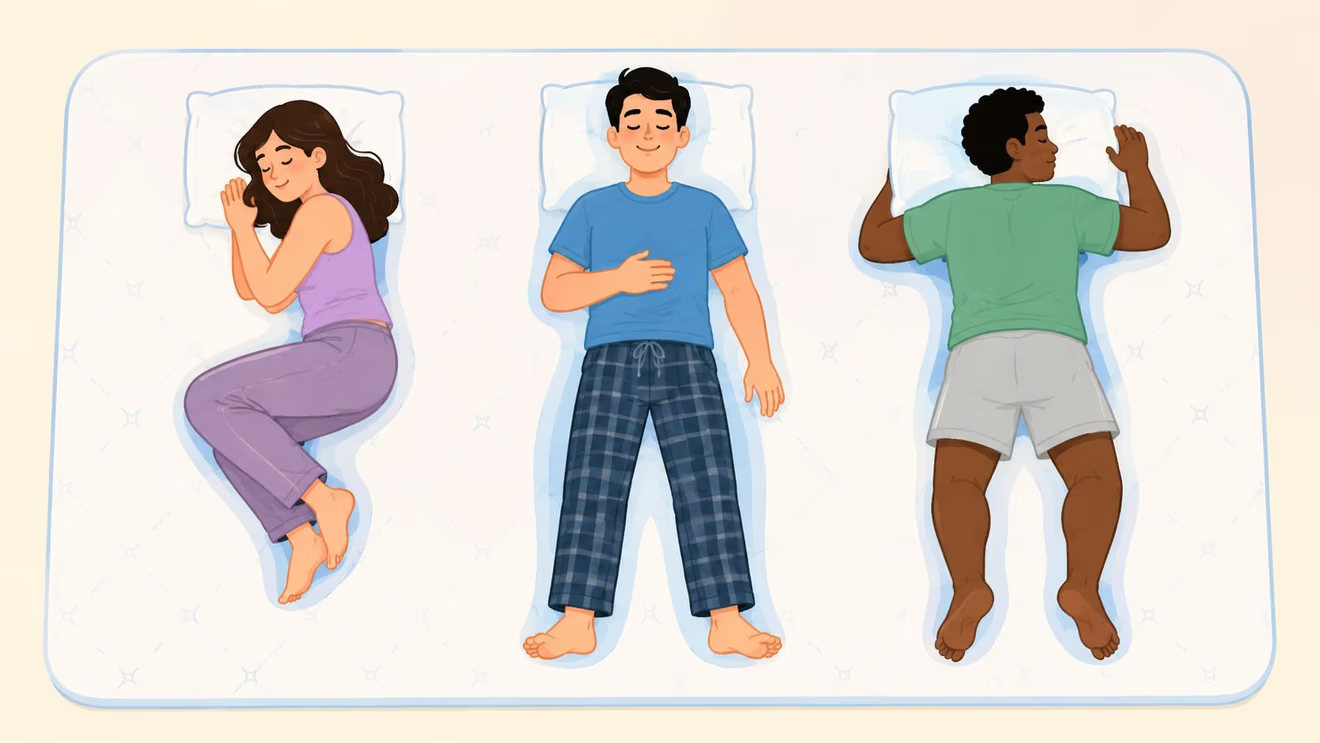
The same mattress can feel supportive to one person and uncomfortable to another. According to guidance from the National Council on Aging about mattresses for back pain, side sleepers often need a softer surface to cushion pressure points, while back and stomach sleepers typically benefit from a firmer foundation to maintain proper alignment. That same guidance also notes that body type changes how firmness feels, which is why one-size-fits-all mattress advice falls apart fast.
That lines up with what shoppers notice in person:
- Side sleepers usually need enough give at the shoulders and hips. If the surface is too hard, those areas can jam upward and throw the spine out of line.
- Back sleepers often do well when the mattress supports the lower back without letting the hips drop too far.
- Stomach sleepers usually need a flatter, more supportive feel so the midsection doesn't sink and strain the back.
- Combination sleepers need a surface that can handle movement without feeling stuck.
A shopper trying to narrow choices can also use this practical guide to the best mattress for your sleep position to compare what tends to work for each sleeping style.
Support and comfort are not the same thing
People often use the word “support” when they really mean “feel.” In mattress shopping, those are different jobs.
Support is what keeps the body from sagging out of alignment. Comfort is what cushions curves and pressure points. Back pain often shows up when one of those is missing.
A simple way to judge it:
- If the mattress feels hard on the shoulders or hips, it may have enough support but not enough pressure relief.
- If the body sinks too much, it may feel cozy at first but lose alignment over the night.
- If the spine feels neutral, the mattress is doing its job.
Practical rule: The right mattress should feel level and easy. It shouldn't make the sleeper brace, twist, or constantly reposition.
That's why fit beats brand talk every time. The label on the side of the bed matters less than how the sleeper's body settles into it.
Decode Mattress Firmness for Your Back
Firmness gets more attention than almost anything else in mattress shopping. It also gets misunderstood more than almost anything else.
Why ultra-firm is not the safe choice
A lot of back-pain shoppers still assume harder must be healthier. That sounds logical, but an overly hard mattress can create its own problems. If a mattress doesn't let the shoulders, hips, and curves settle naturally, the spine can get pushed out of its neutral position instead of supported in it.
Harvard Health notes, within the review discussed here, that a survey of 268 people with low back pain found that very hard mattresses were associated with the poorest sleep quality, and a 2021 systematic review on mattress firmness and chronic low back pain concluded that medium-firm mattresses improved comfort, sleep quality, and spinal alignment for people with non-specific chronic low back pain. The review also reported that this recommendation held regardless of age, weight, height, or BMI.
That makes medium-firm a strong starting point. It does not make it a magic answer for everybody.
What medium-firm actually means in real life
“Medium-firm” sounds precise, but on a showroom floor it can still feel different from one mattress to the next. Construction changes everything. A medium-firm hybrid may feel buoyant and lifted. A medium-firm foam bed may feel closer and more contouring.
That's where shoppers get tripped up. They hear a research-backed term and think they can buy by label alone. They can't.
A better approach is to ask a few direct questions while lying down:
- Does the lower back feel supported without feeling jammed up?
- Do the hips stay level, or do they sink?
- Are the shoulders able to settle comfortably?
- After several minutes, does the body feel relaxed or tense?
For anyone trying to sort out the difference between soft, medium, and firm in practical terms, this mattress firmness guide is a useful companion. The important thing isn't the sticker. It's the posture the mattress creates.
Explore Different Mattress Materials
Material changes the ride. Two mattresses can have a similar firmness label and feel completely different once a person lies down.

How each material tends to feel
Innerspring mattresses usually feel more traditional. They often have a little bounce, solid airflow, and a flatter sleeping surface. People who don't like the sensation of sinking into a bed often feel comfortable here.
Memory foam tends to contour more closely around the body. That can be appealing for sleepers who want pressure relief around shoulders, hips, and joints. The trade-off is that some people love the hug, while others feel it's harder to move around.
Latex usually feels more buoyant than memory foam. It can offer pressure relief without the same deep sink, which many sleepers describe as supportive but still comfortable.
Hybrid mattresses combine coil support with foam or latex comfort layers. For many back-pain shoppers, this category is worth serious attention because it often balances structure and cushioning in a way that feels familiar right away.
A lot of Milwaukee-area shoppers also want to compare cooling foam options with more traditional contouring. This side-by-side look at gel mattress vs. memory foam can help clarify what changes and what stays the same.
Some people don't need more firmness. They need a different response. That's often a material issue, not a firmness issue.
Mattress Material Quick Guide
| Material | Feel | Best For |
|---|---|---|
| Innerspring | Responsive, familiar, easier to move on | Shoppers who want lift, airflow, and a traditional feel |
| Memory Foam | Close contouring, pressure-relieving, quieter movement | Sleepers who like body-hugging comfort |
| Latex | Buoyant, supportive, gently cushioning | People who want contouring without feeling stuck |
| Hybrid | Balanced, supportive, cushioned with some bounce | Many combination sleepers and back-pain shoppers who want both support and comfort |
Material choice also affects edge feel, motion, and temperature comfort. Those details may sound secondary in the store, but they matter at home. If getting in and out of bed feels unstable, or if a mattress sleeps too warm for the person using it, that discomfort adds up night after night.
Come On In and Test Them Out the Right Way
Buying a mattress without lying on it long enough is one of the easiest ways to make an expensive mistake.

A quick lie-down is not enough
Harvard Health's guidance, referenced in the earlier discussion of research, makes an important point. A mattress that feels good for a few minutes in a store may not feel the same overnight. That's one reason in-person testing still matters so much. The shopper can slow down, change positions, and pay attention to what the body says instead of guessing from a product photo.
This is also where local showroom shopping has an advantage. A real mattress test is more than touching the top panel with one hand and saying, “That seems nice.”
The body usually tells the truth within a few minutes. If the shoulders tense up or the lower back starts searching for support, that's useful information.
What to do when testing in a showroom
A smarter showroom test looks more like this:
- Lie down in the actual sleep position used most often. Side sleepers should spend time on their side. Back sleepers should stay flat long enough to feel what the lumbar area is doing.
- Stay there for a while. A mattress can feel fine at first and then reveal pressure points after a little time.
- Roll and reposition. If turning feels awkward or the body fights the bed, that matters.
- Notice alignment, not just softness. The body should feel settled, not bent, twisted, or held up in the wrong places.
- Bring the pillow used at home if possible. Neck position affects the whole spine.
For shoppers who want a more detailed checklist before heading to the store, this guide on how to test a mattress gives a clear way to compare models without rushing. That kind of testing is hard to replace with a boxed mattress guess.
Special Solutions for Our Milwaukee Neighbors
Back pain rarely comes down to one simple variable. Sometimes the mattress is old. Sometimes the comfort layers aren't right. Sometimes the setup around the mattress is part of the issue too.
When the whole sleep system matters
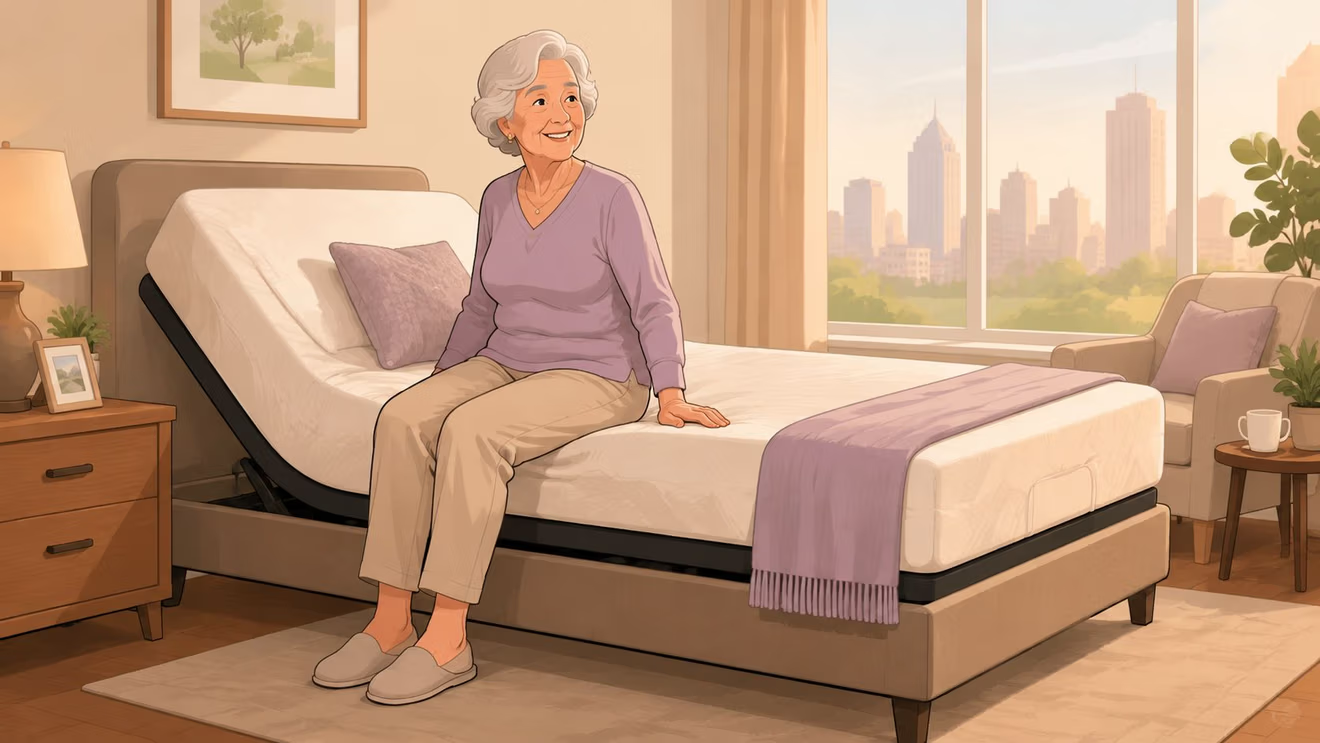
The NY Spine Institute's guidance on choosing a mattress for back pain says shoppers shouldn't delay replacing a mattress that's over nine years old if it may be contributing to back pain. That same guidance also points out that the whole sleep system matters, including features like zoned lumbar support, temperature regulation, and pairing a mattress with an adjustable base.
That matters for several groups in particular:
- Older adults often benefit from steadier edge support and easier entry and exit.
- Heavier sleepers may need stronger coil systems and denser comfort materials so support holds up properly.
- Couples with different needs may need to balance pressure relief, motion feel, and support in a way that works for both people.
- People with chronic discomfort may do better when the mattress is paired with an adjustable base or more thoughtful pillow alignment.
One practical option in this category is BILTRITE Furniture-Leather-Mattresses, which carries heavy-duty mattresses, senior-focused sleep options, and flip-able two-sided models in a local showroom setting.
Local service that solves real problems
In this context, buying local can make life easier in very tangible ways.
A flip-able mattress is a good example. Many shoppers don't even realize these still exist. Being able to flip and rotate a mattress can help it wear more evenly over time, which is a meaningful advantage for households that want durability and a more consistent feel.
Then there's delivery. White-glove setup, help placing the mattress correctly, and removal of an old mattress can make a big difference, especially for seniors, caregivers, or anyone replacing a bed because of pain. Those details aren't glamorous, but they matter on the day the new mattress arrives.
A mattress doesn't live in a vacuum. Foundation, pillow height, edge support, and ease of use all affect whether the sleeper feels better or worse.
For Milwaukee families, that's often the primary value of working with an experienced local team. The conversation can include the whole sleep setup, not just a firmness label on a tag.
Ready for a Great Night's Sleep? Come Say Hi!
Finding relief starts with choosing a mattress that fits the sleeper, not the trend. Sleep position matters. Body type matters. Materials matter. And for plenty of people with back pain, taking time to test a few options in person makes the difference between “good enough for now” and waking up feeling more supported.
That's why local mattress shopping still has a place. A family business that's served Metro Milwaukee since 1928 brings something useful to the process. Real conversation. Real testing. Real help from people who've worked with all kinds of sleepers and all kinds of comfort needs.
There's also something refreshing about doing business face to face. No pressure. No guessing from a screen. Just a chance to lie down, compare, ask questions, and find a setup that feels right for home.
Folks around Greenfield, Milwaukee, and the surrounding area are always welcome to stop in, say hello, and take their time. A better night's sleep often starts with one honest test drive.
If a sore back has turned bedtime into guesswork, visit BILTRITE Furniture-Leather-Mattresses in Greenfield and talk with a sleep specialist in person. The showroom offers a wide mattress selection, including flip-able, heavy-duty, and adjustable options, along with white-glove delivery and old mattress removal on qualifying purchases.