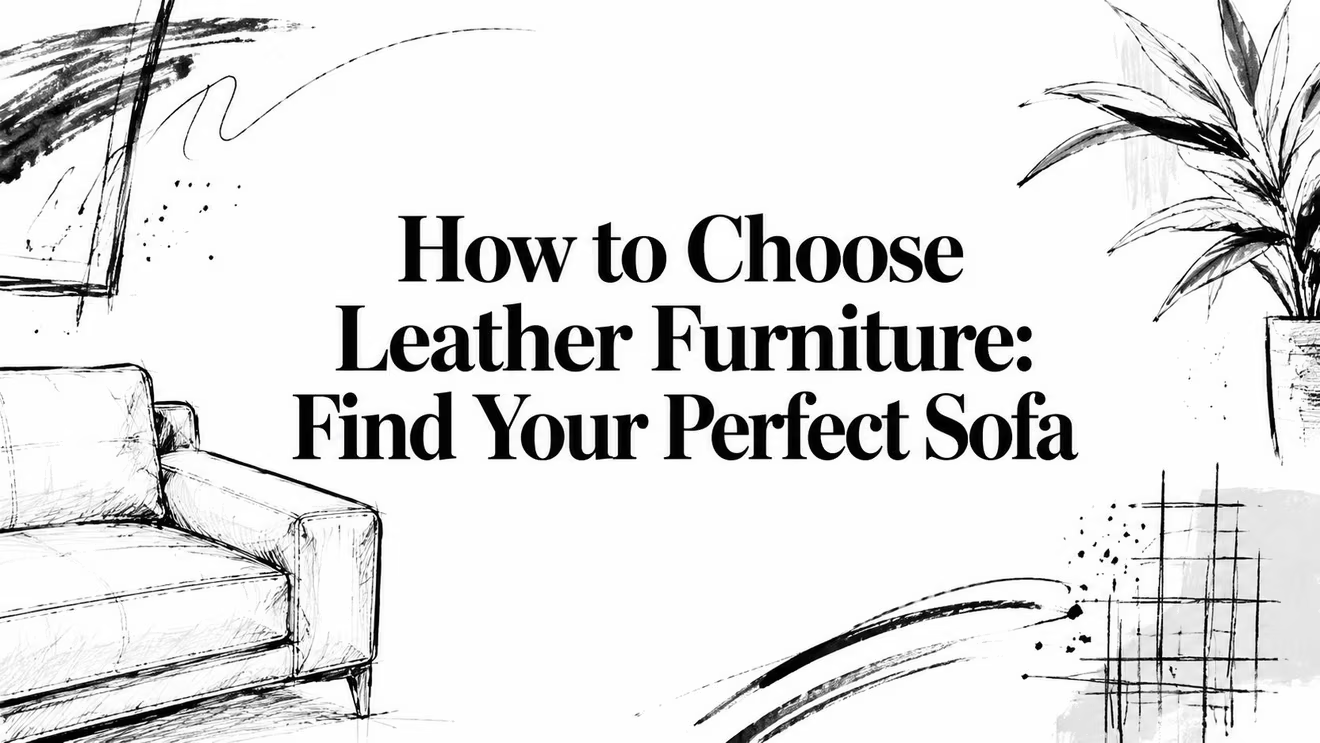
How to Choose Leather Furniture: Find Your Perfect Sofa

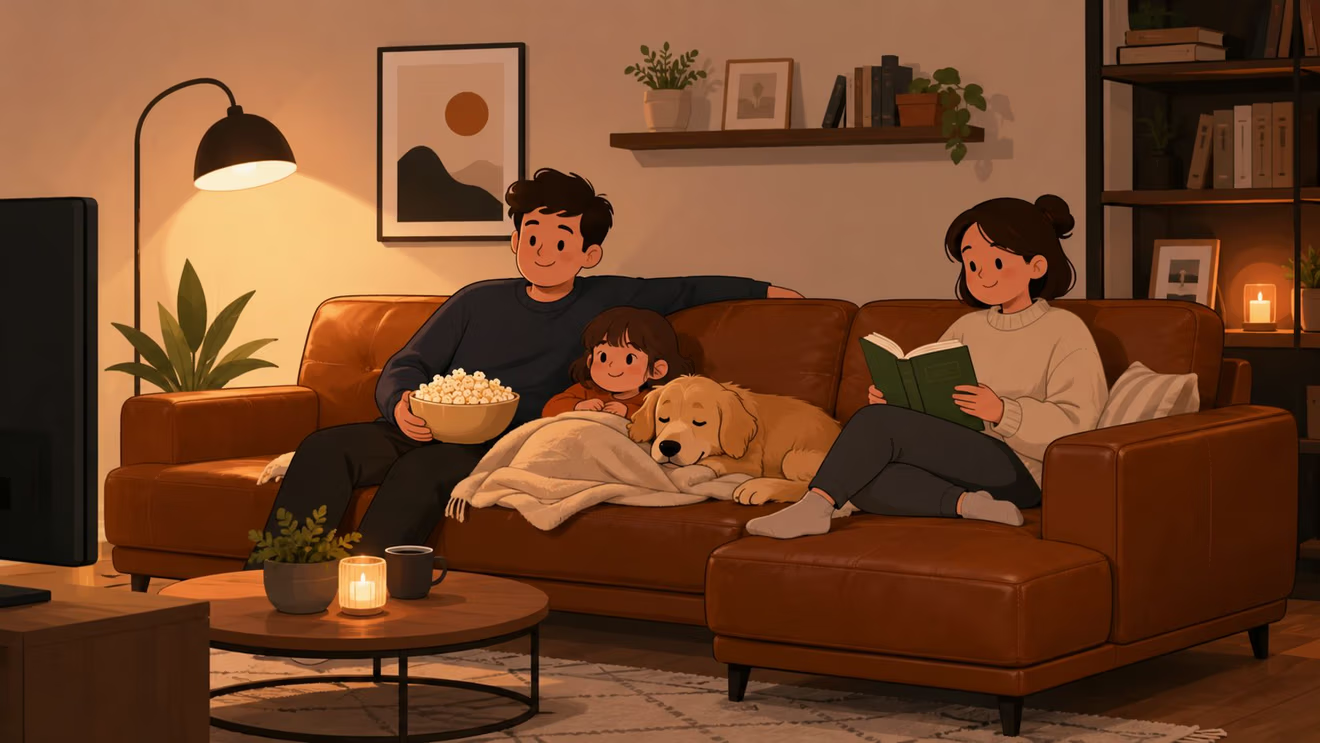
A lot of Milwaukee families start in the same place. They've been thinking about a new sofa for months, maybe longer. They want something comfortable, handsome, easy to live with, and strong enough for movie nights, naps, snack spills, and the dog who somehow thinks the corner cushion belongs to him.
Then they walk into a showroom and hear terms like top-grain, full-grain, protected leather, leather match, kiln-dried hardwood, suspension, and cushion cores. That's usually the moment the excitement gets mixed with a little confusion.
Since 1928, BILTRITE has helped Metro Milwaukee neighbors sort through those choices in a down-to-earth way. As a fourth-generation family business, the approach has always been simple. Help people understand what they're buying, speak candidly about trade-offs, and steer them toward furniture that fits real life, not just a pretty display floor. Learning how to choose leather furniture gets much easier once the jargon is translated into plain English.
Table of Contents
- A Warm Welcome to the World of Leather Furniture
- Decoding Leather The Good The Bad and The Comfy
- Looking Under the Hood What Makes Furniture Last
- Making It Work for Your Family and Your Home
- Your In-Store Showroom Checklist
- Let's Find Your Family's Next Heirloom
A Warm Welcome to the World of Leather Furniture
A leather sofa has a way of making a room feel settled. It can look refined without feeling fussy, and it often gets better-looking as family life happens around it. That's a big reason so many shoppers are drawn to leather in the first place.
Still, the wrong leather choice can be frustrating. A buyer may fall in love with a color, ignore the construction, and end up with a sofa that looks tired much sooner than expected. Another shopper may pay for a premium leather grade when a more practical finish would have served the family better every single day.
That's why the smartest way to shop is to treat leather furniture like a long-term household tool as much as a design choice. A family room sofa has a very different job than a formal office loveseat. One needs to handle motion, snacks, and constant use. The other may only need to look polished and feel welcoming a few hours a week.
Practical rule: Buy for the room's real job, not the fantasy version of the room.
That old family-store habit still matters. Ask enough questions, sit long enough to notice support, and pay attention to what's under the leather, not just how the surface looks under bright showroom lights. That's the difference between a piece that becomes part of the home and one that becomes a headache.
Decoding Leather The Good The Bad and The Comfy
Leather terms can sound more complicated than they need to be. Most shoppers don't need a tannery education. They need to know which kind of leather holds up, which kind feels the way they want, and which options deserve caution.
Start with the leather grade
Full-grain leather sits at the top of the ladder. It hasn't been buffed or sanded, so it keeps the hide's natural markings and its maximum strength. It's a beautiful choice for shoppers who like character and don't mind seeing a more natural look develop over time.
Top-grain leather is the workhorse choice for many homes. Its surface has been refined to smooth away flaws, and that processing often makes it more stain-resistant in daily life. It's also widely used. About 60% of premium leather upholstery sold in major markets uses top-grain leather, while bonded leather contains only about 17% leather fiber and often fails within 3 to 5 years, according to this top-grain and bonded leather durability reference.
Bonded leather is where shoppers need to slow down. It can look nice at first glance, especially under showroom lighting, but it doesn't behave like stronger leather grades over time. For busy households, it's usually the option that creates the most regret.
For a closer explanation of how the two premium grades compare, this guide on the difference between top-grain and full-grain leather is a useful companion.
Leather Type Cheat Sheet
| Leather Type | Best For | Feel & Appearance | BILTRITE's Take |
|---|---|---|---|
| Full-grain | Lower-traffic rooms, shoppers who love natural character | Rich, natural, shows markings and develops personality | Strong, handsome, and worth considering when the buyer wants authenticity over uniformity |
| Top-grain | Family rooms, everyday seating, homes with kids | Smooth, soft, more uniform, often easier to live with | Often the practical sweet spot for comfort, resilience, and easier care |
| Corrected-grain | Shoppers focused on a more consistent look | More processed surface, more uniform appearance | Can make sense when appearance consistency matters more than natural character |
| Bonded leather | Short-term use or very price-driven decisions | Can look appealing early, usually less durable | Usually the category to approach cautiously for long-term family use |
Comfort matters more than shoppers expect
Many people still assume leather feels cold all the time. That idea doesn't hold up well in everyday use. A consumer guide notes that leather quickly takes on body temperature, so it doesn't stay cold the way shoppers often fear. The same guide also notes that top-grain can be more stain-resistant than full-grain, which is why use-case matters so much when choosing among premium options. That guidance appears in this consumer leather furniture guide.
Leather isn't automatically the “formal” choice. In the right finish, it can be one of the easiest materials to live with every day.
That's where big-box-style shopping often misses the mark. A family with young kids may do better with a protected top-grain leather than a more delicate natural look. A quiet study or office may be the room where a more natural leather really shines. The better answer depends on who's using the furniture, how often they're using it, and how much maintenance they're willing to do.
Looking Under the Hood What Makes Furniture Last
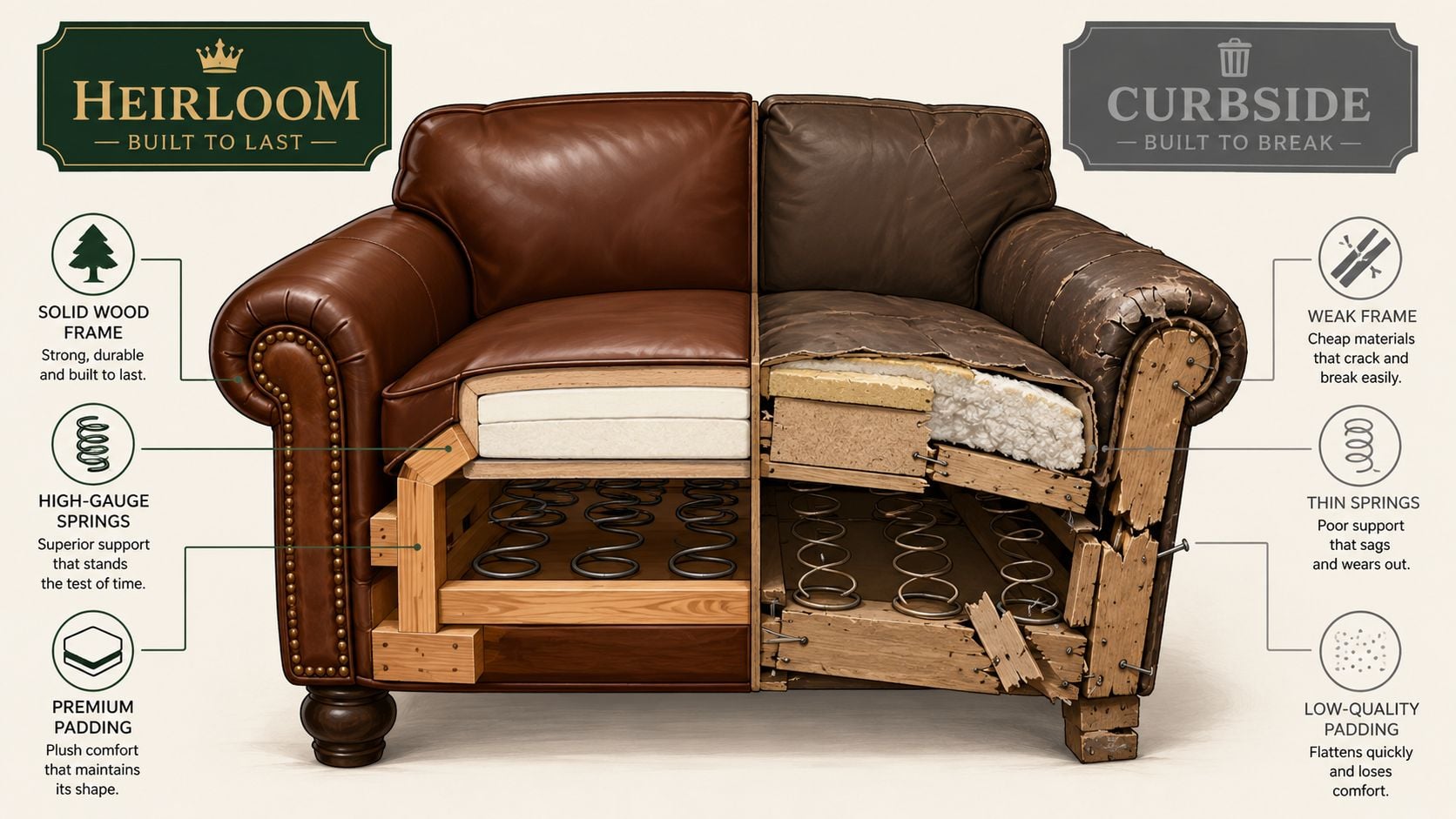
A good leather hide can only do so much if the furniture underneath it is weak. The cover gets the attention, but the frame, support system, and cushions decide whether that sofa still feels solid years from now.
The frame earns its keep
A strong frame matters because leather is a long-game material. High-end leather pieces can last 20 years or more, while fabric sofas typically need replacement within 5 to 10 years, creating a 4x longevity difference. The same verified guidance notes that leather often costs 30% to 50% more upfront, but that extra cost can make sense over time when it's paired with a sturdy hardwood frame. That benchmark is summarized in this leather versus fabric longevity reference.
That's why solid wood construction deserves attention. If the leather has the potential to stay in service for decades, the frame should be built with the same intention. Weak internal construction wastes the value of the leather on top.
Shoppers who want more detail on what to inspect can review this leather furniture quality buyer's guide.
A premium leather sofa with a flimsy frame is like good tires on a weak axle. The weak link wins.
USA-made and Amish-made construction often stands out here because the maker treats the frame as part of the value, not an invisible shortcut. That matters in homes where one sofa handles daily traffic from morning coffee through late-night streaming.
Suspension and cushions change everything
The second thing to check is the support under the seat cushions. Shoppers don't always ask about suspension, but they should. A well-built support system helps the seat feel even, keeps the profile from sinking too fast, and supports the cushion instead of forcing the foam to do all the work alone.
Then come the cushions themselves. A sofa can feel plush in a showroom and still break down too quickly if the cushion build is weak. Better cushions recover shape more reliably and keep the seat from developing that tired, collapsed look.
A quick in-store check helps:
- Sit for more than a minute: A fast test won't tell much. Stay seated long enough to feel whether the support is steady or squishy.
- Stand up and look back: Good cushions should recover well after normal sitting.
- Push on the arms and back: The piece should feel substantial, not hollow or wobbly.
- Lift the front corner slightly if allowed: Heavier, sturdier furniture often tells on itself in a good way.
That inside story is where durable furniture separates itself from throwaway furniture. Leather gets the spotlight, but the construction underneath decides whether the sofa earns a long life.
Making It Work for Your Family and Your Home
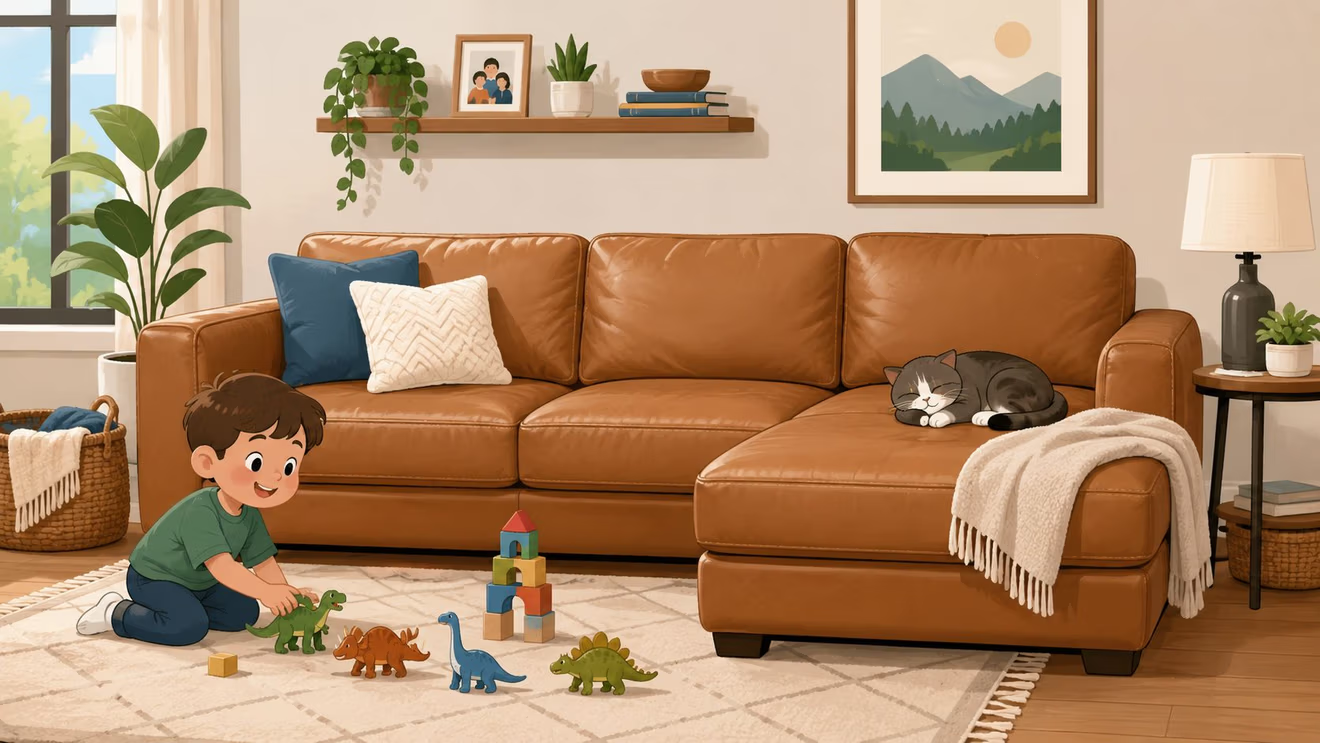
Most leather furniture decisions aren't made for a showroom. They're made for a living room with kids on the floor, a pet circling for a nap spot, and a coffee table that sees real use. That's where practical trade-offs matter.
Match the finish to the room
A busy family room usually benefits from a leather that's a little more forgiving. The previously cited consumer guidance points out that top-grain can be more stain-resistant than full-grain, and it also pushes back on the myth that leather is always cold because it adapts to body temperature. Those are real everyday advantages in a high-use room.
That doesn't mean every family should avoid more natural leather. It means the room's job should drive the decision. A recliner used every evening for reading may call for one feel. A sofa where kids climb, pets lounge, and guests pile in during holidays may call for another.
One common question is whether faux leather is a smarter family choice. It can be in some situations, but shoppers should understand the trade-offs in feel, aging, and longevity. This article on whether faux leather is durable helps sort through that decision.
Homes with kids and pets don't need delicate furniture. They need sensible materials and finishes.
A protected leather surface is often easier to live with than shoppers expect. Small spills are usually less stressful than they would be on many fabric surfaces, and day-to-day cleanup tends to be simpler. The key is picking the finish intentionally instead of assuming the highest leather grade is always the right household fit.
Size and layout can save a good decision
A well-chosen leather sofa can still become the wrong purchase if it's oversized for the room or impossible to deliver. This happens more often than people think.
Before buying, measure the wall, the walkway around the piece, and the path into the home. Tight stair turns, apartment entries, condo elevators, and narrow bungalows all deserve attention before anyone falls in love with a silhouette. In the Milwaukee area, that's especially important in older homes where charm and tricky doorways often arrive together.
A practical sizing check should include:
- Room scale: Leave enough space so the sofa doesn't dominate the room.
- Seat depth: Deep seats are wonderful for lounging, but not everyone likes climbing out of them.
- Arm width: Thick arms can dramatically change how much seating space the sofa really gives.
- Delivery path: Some shoppers need come-apart sofas or sectionals to make a smart layout possible.
That's one reason the showroom process still matters. BILTRITE Furniture-Leather-Mattresses offers small-scale, heavy-duty, and come-apart options, which gives shoppers different ways to solve fit problems without settling for furniture that feels temporary.
Your In-Store Showroom Checklist
A showroom visit should feel useful, not intimidating. Good leather furniture is tactile. People need to sit in it, lean back, touch the surface, and pay attention to details that photos can't show.
Questions worth asking in the showroom
Bring a simple list and use it. A strong shopping conversation often starts with the room, not the color.
An industry guide recommends defining the use-case first, such as a high-traffic family room versus a low-traffic office. That same guide notes that more than 60% of the cost of high-quality leather furniture can be the leather itself, which is why leather grade is a major value driver rather than just a cosmetic detail. That guidance appears in this definitive guide to buying leather furniture.
Questions worth asking include:
- What kind of leather is this: Ask whether it's full-grain, top-grain, corrected-grain, or another construction.
- What is the frame made from: Hardwood construction is worth discussing directly.
- How does the suspension support the seat: This affects long-term comfort more than many shoppers realize.
- What type of household is this built for: Some pieces are better for formal rooms, others for all-day family use.
- What does the warranty cover: It's smart to understand coverage before delivery day.
This related article on 5 things to look for in your new sofa or chair gives shoppers another practical set of checkpoints.
What to do before saying yes
Don't do a quick sit and call it good. Use the furniture the way it will be used at home.
- Sit upright first: This shows whether the seat height and support work for everyday conversation.
- Then lounge a bit: If the sofa is for long evenings, test it that way.
- Check seam consistency: Uneven seams and loose-looking details can signal shortcuts.
- Look at cushion recovery: Stand up and see how the seat responds.
- Touch several areas of the leather: The arm, seat, and back should all feel consistent.
The biggest mistake in leather shopping is rushing. Slow down, ask plain questions, and let the furniture answer them.
Let's Find Your Family's Next Heirloom
The right leather furniture decision doesn't come from chasing the fanciest label. It comes from matching the leather grade, finish, construction, and size to the way a family lives. That's the heart of how to choose leather furniture well.
For some homes, that means a top-grain sofa with a family-friendly finish and sturdy support underneath. For others, it means a more natural leather in a quieter room where the hide's character can really shine. Either way, the smart purchase is the one that fits the room, the routine, and the people using it every day.
Since 1928, BILTRITE has stayed focused on that kind of practical guidance. Better-quality furniture, much of it USA-made and Amish-made, still matters in a world full of quick decisions and short-term furniture. So does shopping locally, talking to knowledgeable people face to face, and buying from a family business that believes home should support family life. That's also why the showroom is closed on Sundays and Mondays. Family time counts.
Shoppers who want to keep exploring can take a look at these American-made sofa options, then bring questions into the store and talk through the trade-offs in person.
Ready to choose leather furniture that fits real life? Visit BILTRITE Furniture-Leather-Mattresses in Greenfield, walk the showroom, sit in the sofas, feel the leather, and have a relaxed conversation with a team that knows furniture and values family.