Leather Furniture Wax: Your BILTRITE How-To Guide

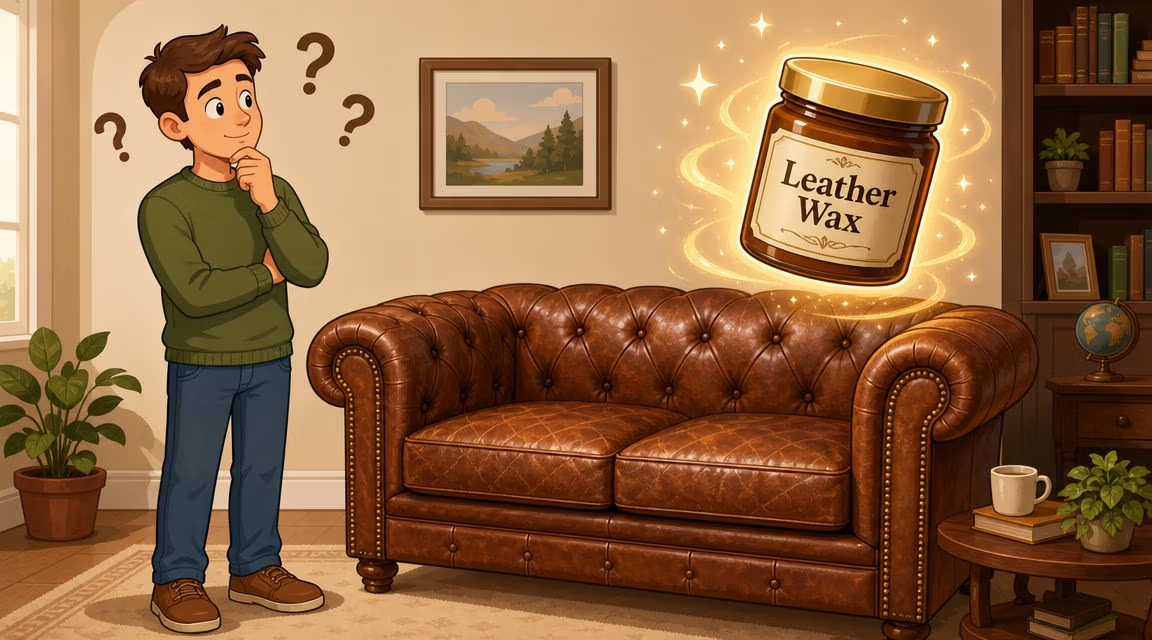
A lot of Milwaukee homeowners end up in the same spot. The leather sofa still looks handsome, but the seat cushions seem a little dull, the arms don't feel quite as lively, and there's a jar of leather furniture wax sitting nearby that promises to freshen things up.
That's where a little honest guidance helps. Since 1928, BILTRITE has helped local families choose furniture built to live with real life, and leather care comes down to one simple truth. Wax isn't always the answer. Sometimes it's the right finishing touch. Sometimes a cleaner, a conditioner, or no product at all is the smarter move.
Table of Contents
- What Is Leather Furniture Wax Anyway?
- Is Wax Right for Your Leather Furniture?
- Your Step-by-Step Guide to Applying Wax
- Common Mistakes and How to Avoid Them
- Long-Term Care Schedules and Wax Alternatives
- Still Have Questions? Come Say Hi!
What Is Leather Furniture Wax Anyway?
Leather furniture wax is a light surface treatment, not a heavy-duty repair product. When a leather chair or sofa starts looking a bit tired, wax can help restore a gentle sheen and add a little surface protection. It's meant to sit at the top layer, not to deep-clean grime, fix cracking, or reverse wear.
That idea is older than is commonly understood. Leather has been used since about 5000 BCE, and by the Middle Ages it was already being used for furniture such as dining chairs, according to this history of leather in furniture and finishing. That same source explains why modern waxes are used gently. Leather can react badly to heat and harsh treatment, and hot water exposure can shrink it, partly gelatinize it, and leave it rigid and brittle.
What wax does well
Wax is most helpful when furniture needs a little refresh at the surface.
- Adds a soft sheen: It can bring back a low-gloss look when finished leather seems flat.
- Offers light protection: It helps create a moisture-resistant surface layer.
- Supports regular maintenance: It works as part of care, not as a rescue plan.
Practical rule: If the goal is “make it look a little richer and help protect the surface,” wax may fit. If the goal is “remove built-up dirt or repair damage,” wax probably isn't the first step.
What wax does not do
Many people often stumble at this point.
Wax doesn't replace a proper cleaner. It also doesn't rebuild damaged finish, erase scratches, or solve deep dryness in every leather type. If dust, body oils, or spills are still on the surface, applying wax over them can trap that mess under a shiny layer.
For most households, the smartest way to think about leather furniture wax is simple. It's a finishing product. It helps preserve what's already in decent shape.
Is Wax Right for Your Leather Furniture?
This is the question that matters most. Two sofas can both be called “leather,” yet one may welcome a wax top coat while the other may react poorly with darkening or a changed feel.
The biggest source of confusion is finish type. Some leathers are more natural and absorbent. Others are protected with stronger top coatings. Public advice often lumps them together, but that's where mistakes start.
Leather Wax Compatibility Guide
| Leather Type | Okay to Wax? | BILTRITE's Tip |
|---|---|---|
| Aniline | Usually yes, with care | Test in a hidden spot first because color and feel can shift. |
| Wax pull-up | Usually yes | Wax is often used to restore sheen and feel on this type. |
| Semi-aniline | Sometimes, but cautiously | This finish already has protective qualities, so adding more may not always help. |
| Pigmented or heavily protected leather | Usually not the first choice | Skip generic wax advice and look for a finish-appropriate care product instead. |
A furniture care source focused on leather finishes notes that wax top coats are commonly used on aniline and wax pull-up leather, while the same advice doesn't generalize well to pigmented or heavily protected leathers. It also notes that semi-aniline already has a protective wax layer, so the answer depends on the finish, not just the word “leather” on a tag. That finish-specific guidance appears in this video discussion of leather finish suitability for wax.
A simple way to think about it
If the leather has a more natural look, a softer hand, and a finish that isn't heavily sealed, wax may be appropriate. If the leather has a more uniform color, a stronger protective top layer, and a more sealed surface, wax is often less useful.
Using the wrong product can alter the leather's color and feel.
That's why many Milwaukee shoppers do better by slowing down before opening the jar. A hidden test spot matters because leather can surprise people. One arm panel may react differently than expected, especially on lighter shades or more absorbent finishes.
A few clues can help:
- More natural variation in color: Wax may be more suitable.
- Very even, uniform color: The leather may be more protected and less likely to need wax.
- Already slick or sealed feel: A wax layer may sit on top without helping much.
- Concern about darkening: A test spot isn't optional.
If a homeowner isn't sure what type of leather is on the sofa, a quick in-person look is often the safest path. A showroom team can often tell whether the piece is a likely wax candidate or whether a conditioner or cleaner makes more sense.
Your Step-by-Step Guide to Applying Wax
A good wax job should feel almost boring while you do it. No heavy coating, no hard scrubbing, no glossy layer sitting on top. The best result is a leather surface that looks a little richer and still feels like leather.
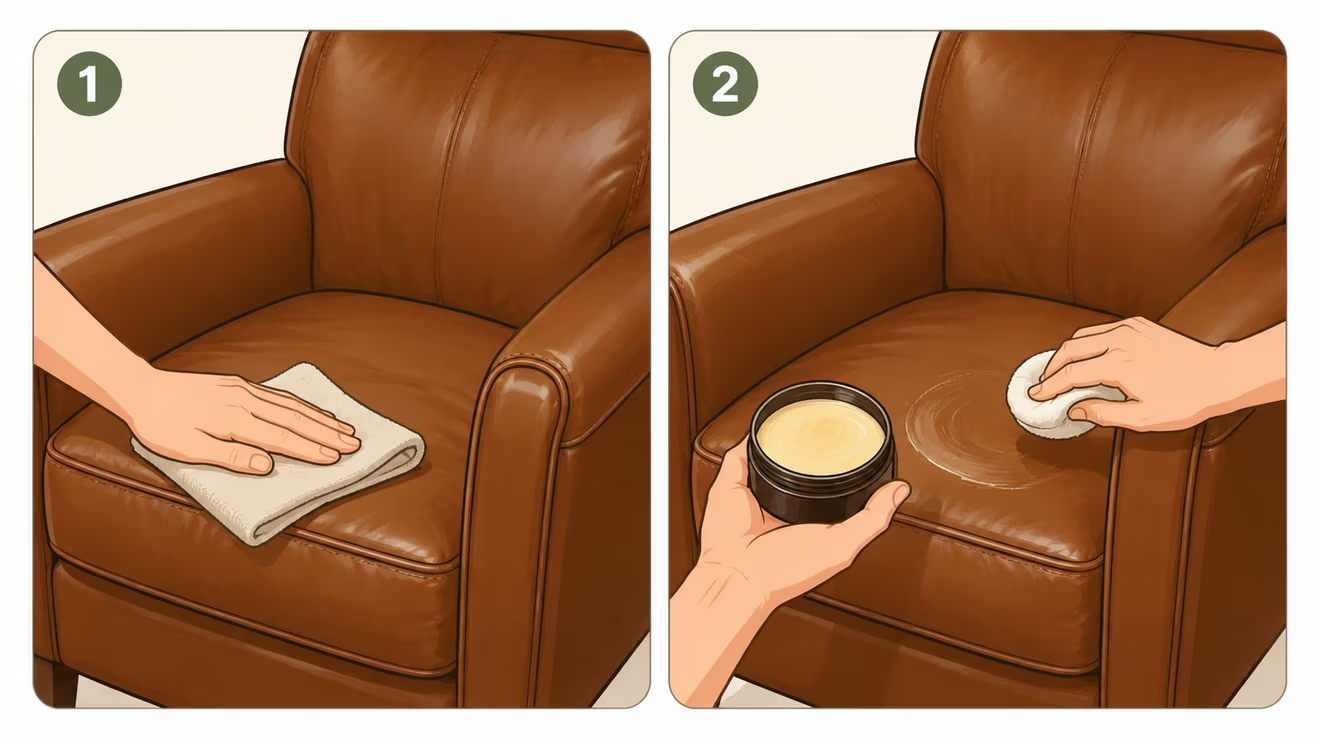
Families in Milwaukee often ask us whether they should wax the whole sofa in one afternoon. Usually, the safer approach is smaller and slower. Over four generations, our family has seen that leather rewards patience the same way a good cast-iron pan does. A light, careful coat helps. Too much product creates cleanup.
Start small and keep the surface clean
Begin with a dry microfiber cloth and lift off loose dust. That keeps grit from getting rubbed across the finish while you work.
Then do a hidden test spot. Use a back corner, the outside of a lower panel, or another area that does not catch the eye. Wait long enough to see the actual result before deciding. Some leathers darken right away. Others change after the wax settles in.
If the spot becomes patchy, greasy, or darker than you want, stop there. That usually means this leather would respond better to a conditioner or simple cleaning than to wax.
Apply less than you think you need
Wax is like seasoning in soup. You can add a touch more later, but fixing too much is a headache.
- Put a small amount on a soft cloth. Do not dab wax straight onto the furniture.
- Work on one small section at a time. An arm panel, cushion border, or seat front is easier to control.
- Rub it in with light, even pressure. The surface should not look wet or smeared.
- Let it dry on its own. Skip heaters, hair dryers, and sunny windows.
- Buff gently with a clean cloth. You are aiming for a soft, natural glow, not a shiny shell.
A thin, even coat gives you the best chance of helping the leather without changing its look too much.
That point trips people up. Wax is not furniture polish for wood, and it is not a shortcut for neglected leather. Leather bends, stretches, and absorbs differently across each panel, so a careful hand matters.
Watch the leather, not the calendar
There is no prize for waxing on a schedule if the furniture does not need it. Some protected leathers hold their finish well for a long time. Others show wear sooner on arm tops, headrests, and front rails where hands, hair, and daily friction do their work.
A simple home check helps. If the leather still looks even, feels comfortable, and is handling light everyday use well, leave it alone. If a compatible leather looks dry or tired and your test spot came out nicely, a very light application may make sense.
If you are unsure, pause before doing the whole piece. That is honest advice we give in our showroom all the time. For many Milwaukee homeowners, the better answer is not more product. It is identifying the leather correctly first, then deciding whether wax, conditioner, or no treatment at all is the right move.
Common Mistakes and How to Avoid Them
A lot of wax trouble starts with a good intention and the wrong diagnosis. The sofa looks tired, so wax feels like the answer. In our family's experience helping Milwaukee homeowners, that is often where things go sideways. The piece may need cleaning, a conditioner, or no product at all.
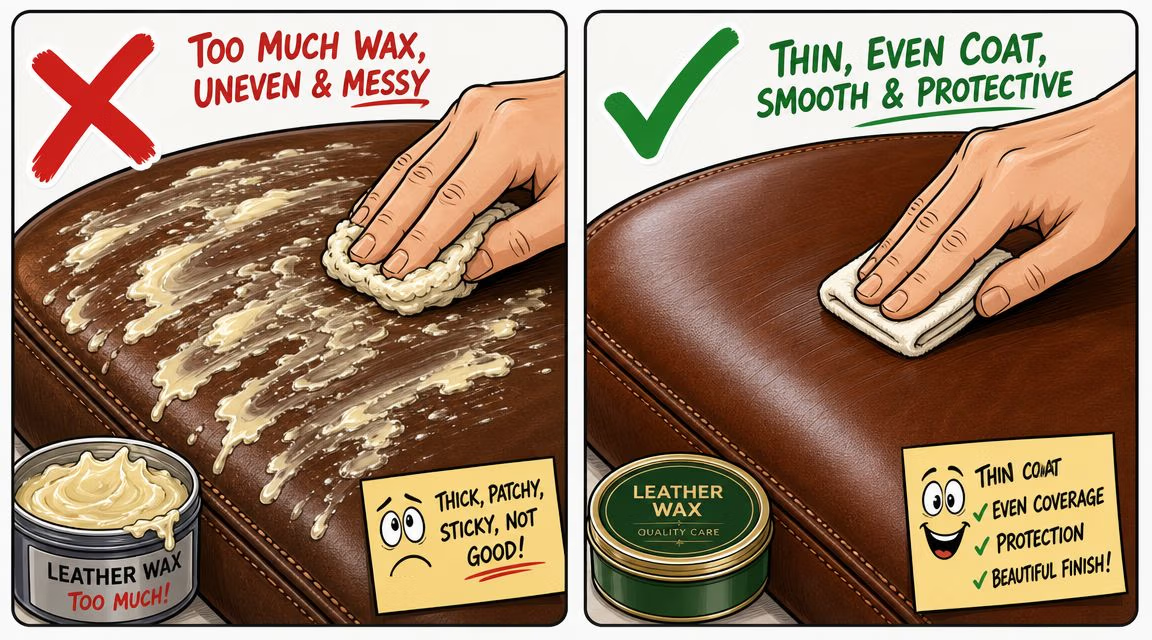
Wax works a bit like shoe polish on the right material. On the wrong leather, or in too heavy a coat, it can sit on the surface instead of helping it. That is why the biggest mistake is not just using too much. It is using wax before you are sure wax belongs there.
Mistakes we see most often
Using wax on the wrong leather type causes more frustration than almost anything else. Many protected or heavily finished leathers do not need wax. Some can end up looking streaky, darker, or slightly sticky.
Applying too much product is the next common issue. Leather should not look frosted, smeared, or greasy after care. A heavy coat can leave buildup in grain lines and make the surface feel less natural.
Scrubbing hard is another one. Leather responds better to patience than pressure. Aggressive rubbing can wear the finish on high-contact spots like arm caps, seat fronts, and headrests.
Treating spills like a stain on carpet leads to trouble too. Rubbing pushes the mess around and can rough up the finish. Blotting gives you a better chance of lifting moisture without spreading it.
Using heat to hurry the process can also create problems. Hair dryers, space heaters, and sunny windows may dry the surface unevenly.
How to avoid those problems
Start by asking one plain question. Does this leather need wax?
If you are not sure what kind of leather you have, stop there. That pause saves more furniture than any miracle product ever will. We tell customers in our Milwaukee showroom the same thing every week. Correct identification comes first.
Then keep your approach simple:
- Use the smallest amount that will do the job. A whisper-thin coat is easier to control than a heavy one.
- Test before treating the full piece. A hidden area tells you whether the color or feel changes.
- Use a soft cloth. Old towels with rough texture can act like sandpaper on delicate finishes.
- Blot spills. Press gently and lift. Do not rub back and forth.
- Let the leather dry at room temperature. Time is safer than heat.
A good rule from our family store: if the leather looks shiny, slick, or much darker right away, you probably used too much or picked the wrong product.
That can feel disappointing, but it is fixable. Slow down, wipe away any excess gently, and reconsider whether wax was the right choice in the first place. Sometimes the wiser answer is a conditioner. Sometimes it is leaving the leather alone. And sometimes it is bringing your questions to someone who can help you identify the finish before you do any more to it.
Long-Term Care Schedules and Wax Alternatives
Leather furniture wax isn't part of a weekly routine. In most homes, it's more of an occasional maintenance step that gets used when the surface starts asking for it.
How often Leather Furniture Wax makes sense
The simplest cue is how the surface behaves. If protected leather still repels a little moisture and looks healthy, it probably doesn't need more wax yet. If that repellency has faded and the finish seems flat, a light reapplication may help.
A good working rhythm looks like this:
- Routine dusting: Use a dry, soft cloth to keep debris from building up.
- Spill care right away: Blot quickly and gently.
- Wax only as needed: Think in terms of occasional refresh, not constant treatment.
- Watch the surface: If moisture no longer beads on a protected finish, it may be time to consider a care product.
When another product is the better fit
Wax isn't the only tool in the cabinet.
A cleaner is the better choice when the furniture is dusty, grimy, or marked by everyday messes. A conditioner can make more sense when the goal is to support suppleness rather than add surface sheen. And on heavily protected or pigmented leathers, leaving wax out of the routine may be the wiser move.
A lot of homeowners feel relieved to learn they don't need to wax just because they own leather. They need to match the product to the finish and the actual condition of the furniture.
Some families in Metro Milwaukee keep things very simple. Dust regularly, blot spills, use the gentlest product that fits the finish, and save wax for the pieces that most benefit from it.
Still Have Questions? Come Say Hi!
Good furniture care starts with good information. That's especially true with leather, because the right answer depends on the finish, the condition, and what the owner is trying to accomplish.
BILTRITE has been part of Metro Milwaukee since 1928, and that family-run approach still shapes how help is given. No pressure. No mystery language. Just practical guidance for local homes, whether someone is caring for a favorite leather chair, shopping for a new sectional, or comparing better-quality options for a busy household.
The showroom in Greenfield is built for that kind of conversation. Shoppers can see furniture in person, compare textures and finishes, and talk with a team that brings over 400 years of combined experience. There's also a strong focus on USA-made, Amish-made, and solid-wood furniture, plus small-scale options, heavy-duty pieces, and a mattress department with over 60 models for families who want choices they can try.
BILTRITE is also closed on Sundays and Mondays so team members can spend time with their families. That family-first mindset matters. It keeps the experience grounded and neighborly, which is exactly how furniture buying and furniture care should feel in the first place.
If leather furniture wax has raised more questions than answers, visit BILTRITE Furniture-Leather-Mattresses in Greenfield. Milwaukee-area homeowners can stop in, say hello, and get straightforward help with leather care, USA-made and Amish-made furniture, and mattresses from a fourth-generation family business that's been serving the community since 1928.