Platform Bed Styles: A Milwaukee Home Guide


A lot of Milwaukee-area shoppers land in the same spot. The old bed has started squeaking, the room feels dated, and a quick search for platform bed styles somehow creates more questions than answers. Low profile or higher profile? Wood or upholstery? Storage or simple frame? Will it fit an older bungalow bedroom, a condo elevator, or a smaller apartment?
That's where a local showroom still helps.
Since 1928, BILTRITE has helped Metro Milwaukee families sort through furniture choices in a way that feels calm and practical. Four generations into the family business, the conversation still sounds the same. What does the room need? Who's using it every day? What will still look good and hold up years from now? That neighborly approach matters, especially with bedroom furniture, because a bed isn't just décor. It's the piece that sets the tone for the whole room.
Platform beds are a good example. They look simple at first glance, but the style range is wide. Some lean mid-century and clean-lined. Some feel cozy and soft. Some solve storage headaches in tighter spaces. Some are built from real solid wood and have the kind of presence that makes a bedroom feel grounded the minute someone walks in.
This guide walks through platform bed styles step by step, with Milwaukee homes in mind. Older homes. Newer condos. Senior living spaces. Family homes where durability matters. No pressure, no jargon, and no guessing game.
Welcome to Your Bedroom Refresh
A bedroom refresh often starts with one small thought. Maybe the dresser still works, the nightstand is fine, but the bed no longer feels like the right fit. In many homes around Milwaukee, that moment comes after a move, a remodel, or living with “good enough” for too long.
A platform bed usually enters the conversation because people want a cleaner look. They also want something easier to live with every day. Lower visual bulk, simpler lines, and a style that can lean modern, rustic, classic, or relaxed without taking over the whole room.
For a family business that has served Metro Milwaukee since 1928, those conversations are familiar. Some shoppers come from a Wauwatosa bungalow with smaller bedrooms and wood trim that deserves furniture with character. Others are furnishing a Third Ward condo where scale and delivery access matter just as much as style. Others are helping a parent downsize and need something supportive, attractive, and easier to get in and out of.
A good bed frame should make the room feel more settled, not more complicated.
That's one reason platform bed styles have become such a useful category. They aren't one look. They're a whole family of looks built around one practical idea.
Why this choice feels bigger than it looks
A bed frame affects more than the mattress. It changes how open the room feels, how easy the bed is to make, and how the whole space comes together with lamps, rugs, and storage pieces.
Shoppers also tend to get stuck in a few common places:
- Height confusion: Some love the low look, but worry it may feel too low in daily use.
- Material questions: Wood, upholstery, and mixed-material designs each create a different mood.
- Longevity concerns: A bed can look sharp on day one and still disappoint if the construction isn't there.
That mix of style and function is exactly why seeing furniture in person still matters. Grain, finish, joinery, and overall scale are easier to understand in a real bedroom setting than on a screen.
So What Is a Platform Bed Anyway
A platform bed is a bed frame with built-in mattress support. That means the mattress sits on the frame itself instead of needing a separate box spring underneath. For many shoppers, that's the biggest difference and the easiest way to understand it.
A simple comparison helps. A platform bed works like a solid floor under the mattress. A traditional setup usually relies on a bed frame plus another support layer. With a platform bed, that support is already part of the design.
For a deeper look at the basics, this plain-language guide to what a platform bed frame is helps clear up the common questions.
What that means in real life
Because the support is built in, platform bed styles often create a cleaner silhouette. There's less visual bulk, and many designs sit lower to the ground than older, more traditional setups. That's a big reason they work so well in modern bedrooms and smaller spaces.
They also simplify the shopping process a bit. Instead of thinking through multiple layers, shoppers can focus on three main decisions:
- The style of the frame
- The material and construction
- The mattress that will sit on top
Why people sometimes get confused
The term “platform bed” describes the support system, not just the appearance. That's where many shoppers get tripped up. They see a bed with a headboard they like and assume it's a style category only. In reality, platform bed styles can look very different from one another while sharing the same built-in support idea.
Practical rule: If the frame is designed to support the mattress directly, it's in the platform bed family, even if the look is rustic, upholstered, or mid-century.
A second point of confusion is height. Many people hear “platform” and think “very low.” Some are low, but style, construction, and room needs all affect how that final height feels once the mattress is in place.
Here's a simple breakdown:
| Feature | Platform bed | Traditional bed setup |
|---|---|---|
| Mattress support | Built into frame | Separate support layer |
| Look | Often cleaner and lower-profile | Often taller and more layered |
| Room feel | Can look more open | Can feel more substantial |
That built-in support is the foundation. Once that clicks, the different platform bed styles start making a lot more sense.
Finding a Style That Feels Like Home
The fun part starts here. Once shoppers understand the structure, they can focus on the personality of the bed. That's where platform bed styles become much more than a practical choice.
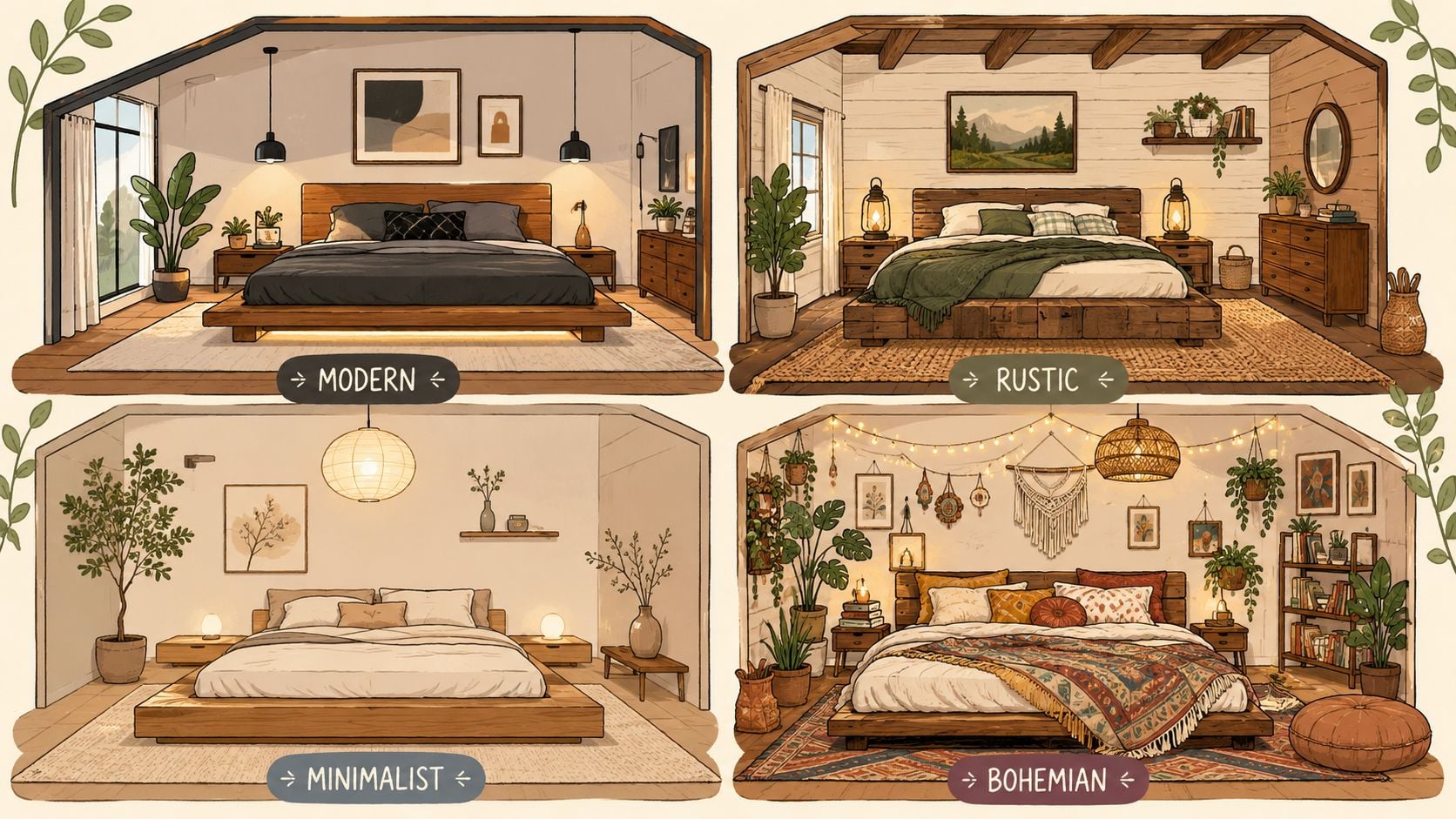
Wood remains the most popular material category in this space. Market projections note that wood platform beds are expected to generate $8.18 billion in 2025 and account for 38.2% of the market, and that the style rose strongly in Western interiors during the 1950s and 1960s alongside mid-century modern design. That history still shows up in today's bedrooms, especially in homes that want warmth without fussiness.
For anyone sorting out broader room aesthetics, this guide to furniture styles can help connect the bed to the rest of the space.
Four common looks seen in Milwaukee homes
Mid-century modern works beautifully in older homes with strong architectural character. Think tapered legs, crisp lines, and a low, airy profile that doesn't crowd the room. In a bungalow bedroom, that style can feel fresh while still respecting the home's age.
Upholstered platform beds soften a room fast. They're often the choice for condos, updated suburban bedrooms, or anyone who wants the bed to feel a little more layered and cozy. A padded headboard can also make evening reading more comfortable.
Storage platform beds solve real-life problems. In apartments, guest rooms, and smaller homes, built-in storage under the bed can reduce the need for extra case pieces. That matters when floor space is limited and every square foot needs to earn its keep.
Rustic or farmhouse-inspired wood beds bring visual weight in a good way. These are especially appealing for shoppers who want natural texture, visible grain, and a look that doesn't chase trends.
How to match the style to the home
Some bedrooms need contrast. Others need continuity. A sleek frame in a traditional room can look intentional if the wood tone relates to the flooring or trim. A heavier wood frame in a newer home can keep the room from feeling flat.
A helpful way to narrow choices is to ask what the room is missing most:
- Needs lightness: choose open-leg or slimmer-frame designs
- Needs softness: look at upholstered headboards
- Needs storage: prioritize drawer or lift-style options
- Needs warmth: start with solid wood looks
Some of the most lasting bedrooms don't follow one trend. They combine a simple platform silhouette with materials that feel settled and familiar.
Why wood keeps showing up
There's a reason wood platform bed styles hold attention across so many decorating tastes. Wood can lean mid-century, rustic, transitional, or even minimal depending on the finish and silhouette. It also connects easily to other pieces already in the room, especially dressers, nightstands, and flooring.
That flexibility is a big part of why so many Milwaukee shoppers keep circling back to wood after looking at other materials.
Why Real Solid Wood Is a Great Investment
Style matters on day one. Construction matters for the years after that.
That's why real solid wood keeps standing out in bedroom furniture. It doesn't just look substantial. It usually feels steadier, ages more gracefully, and gives the room a sense of permanence that lighter materials often can't match.
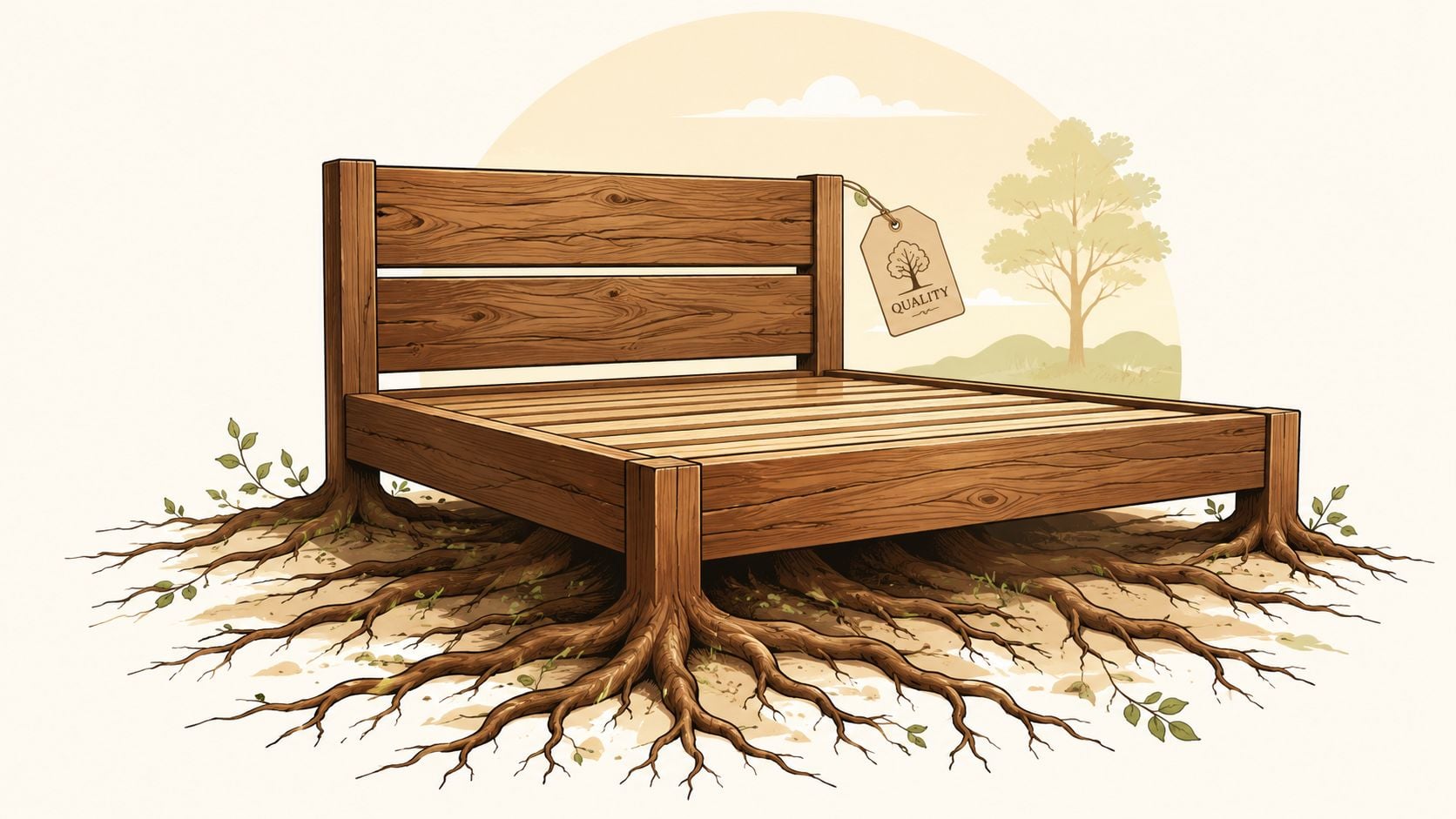
The long-term difference can be significant. According to this Milwaukee Magazine piece, platform beds with solid wood frames made by Amish artisans in the U.S. typically last 15–20 years due to tighter joinery and higher-density wood like maple or oak, compared with 7–10 years for mass-produced metal or composite frames.
For shoppers comparing materials and build quality, this overview of solid wood bedroom furniture is a useful next step.
What people notice right away
Solid wood often answers the hand-test. When someone touches the side rail, headboard, or footboard, the piece tends to feel grounded instead of hollow. The grain looks more natural, the finish has more depth, and the weight of the frame usually reflects the material.
That doesn't mean every room needs a massive bed. It means even a clean-lined platform design can still deliver substance if the underlying construction is strong.
Slats versus solid support
This is one of the most misunderstood parts of platform bed shopping. Many people hear “slatted base” and assume all slats are equal. They aren't.
Some slatted platform beds provide dependable support, especially when the frame itself is well built and the slats are sturdy. Others can become a weak point over time if the materials are lighter or less stable. Solid panel support can feel firmer, while slatted designs may offer more airflow. The right choice depends on the build quality, mattress type, and the user's priorities.
Worth remembering: A solid wood frame and a weak support system don't belong together. The whole bed should work as one unit.
Why American-made and Amish-made matter here
Shoppers looking for furniture that lasts often care about how it was built, not just where it fits in the room. That's where American-made and Amish-made pieces continue to earn trust. Better joinery, denser wood species, and straightforward craftsmanship tend to show up in ways customers can see and feel.
A fourth-generation store like BILTRITE Furniture-Leather-Mattresses focuses heavily on that category, including USA-made, Amish-made, and solid-wood bedroom pieces for shoppers who want to compare them in person rather than guess from a photo.
A simple way to think about the value:
- Short-term appeal: many frames can look good at first
- Long-term stability: fewer frames stay sturdy through years of daily use
- Timeless design: solid wood usually adapts better as paint colors, rugs, and décor change
For families furnishing a main bedroom, a guest room, or a downsizing move, that kind of staying power is often worth more than a lower opening price.
The Right Fit for Your Milwaukee Space
The right bed style still needs the right scale. That's where many good-looking choices fall apart. A frame can be attractive on the showroom floor and still feel wrong once it enters a narrow upstairs bedroom, a condo hallway, or a senior living apartment.
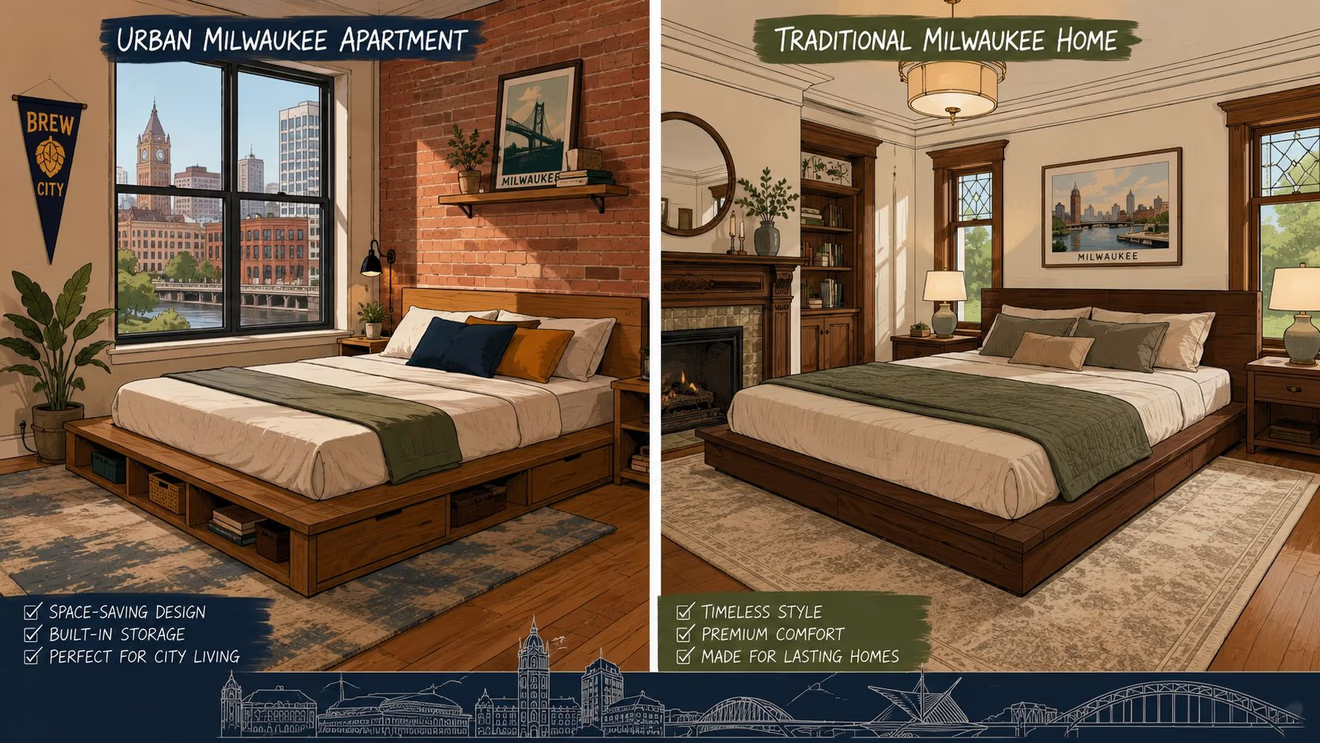
Height deserves more attention than it usually gets. This discussion of small-scale platform bed concerns notes that most platform beds are uniformly low at 18–20 inches total, which can create accessibility barriers for seniors, and it highlights the need for customizable heights and come-apart modular sections for narrow condo doorways.
For rooms that need smaller footprints and smarter proportions, this guide to furniture for small spaces helps narrow the field.
Smaller rooms need smarter choices
In East Side apartments, Bay View cottages, and condo bedrooms, the bed often becomes the largest object in the room by far. That doesn't mean it has to overpower the space.
A few details make a real difference:
- Open visual lines: legs or a lighter-looking frame can keep the room from feeling boxed in
- Built-in storage: useful when a second dresser won't fit
- Modular delivery options: helpful in tight stairways, elevators, and older door openings
Come-apart construction isn't just for living room furniture. The general idea matters in bedroom planning too. If access is tricky, the way a bed gets into the room matters almost as much as how it looks once it's there.
Accessibility is part of good design
A low bed can look sharp, but daily comfort matters more. Seniors, caregivers, and anyone with knee or mobility concerns should pay close attention to sitting height. A bed that feels too low can become frustrating quickly, even if the style is appealing.
That's why bed shopping should include a sit-test, not just a glance. The right platform bed styles for senior living or aging in place may include a slightly different profile, sturdier side rails, or a design that pairs well with a mattress height that makes entry and exit easier.
The best-looking bed in the room isn't the right choice if using it every day feels awkward.
Heavy-duty needs deserve their own category
On the other side of the spectrum, some households need more support, more durability, and more substance. Families with active homes, taller sleepers, or shoppers who prefer furniture with a stronger feel often do better with heavy-duty construction.
A quick checklist can help:
| Room need | What to look for |
|---|---|
| Tight bedroom | smaller scale and open frame |
| Narrow access | modular or easier-to-move construction |
| Senior use | comfortable overall height and sturdy support |
| Long-term family use | heavier construction and stronger materials |
Milwaukee homes vary a lot. The bed should answer the home, not fight it.
Pairing Your Bed with the Right Mattress
A platform bed frame does one job beautifully when chosen well. It supports the mattress and shapes the room. But sleep comfort still depends on what goes on top of it.
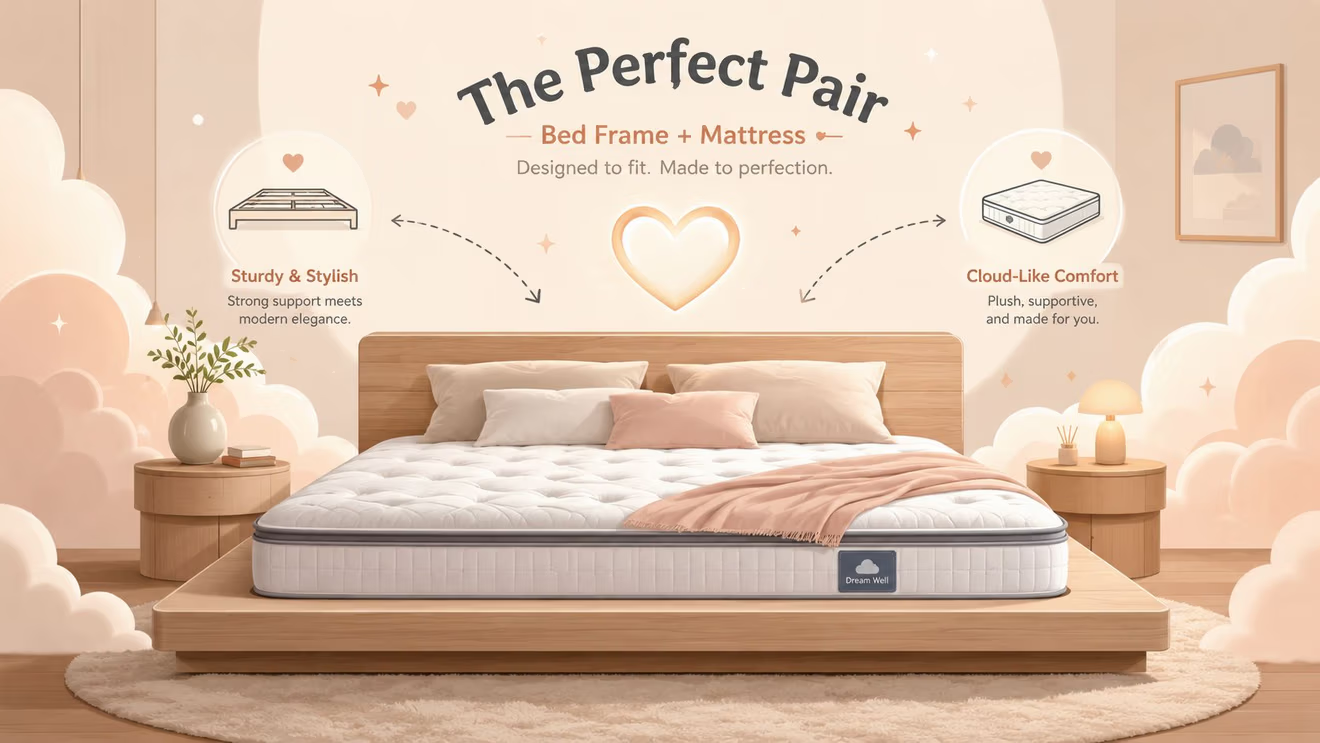
Platform beds have become widely adopted in part because they're flexible. One market summary values the global platform bed market at $14.2 billion in 2024, with North America holding 42.1% of revenue share, and links that growth to the ability of platform beds to accommodate various mattress types while fitting well in small spaces.
For anyone working through comfort options, this mattress selection guide is a good companion to the bed-frame decision.
Think of it as one sleep system
The frame and mattress shouldn't be chosen in isolation. A sleek low-profile frame paired with the wrong mattress height can create a bed that looks good but feels awkward. A sturdy wood platform paired with the right mattress can create a balanced setup that feels easy to use and easy to live with.
That's why in-store testing helps so much. Shoppers can sit, lie down, and judge the total height, edge feel, and overall support as a complete setup.
What to pay attention to in the pairing
Instead of chasing buzzwords, it helps to focus on a few practical questions:
- Sleeping position: side, back, and combination sleepers often notice comfort differently
- Bed height: the frame and mattress together should feel natural to get into and out of
- Support feel: some people want a more grounded sleep surface, others want more cushioning
- Longevity: two-sided, flip-able mattresses can appeal to shoppers who value extended use
The mattress department matters here. A showroom with over 60 models gives shoppers a better chance of finding a combination that feels right instead of settling for whatever happens to be attached to a display frame.
A handsome bed frame gets attention first. The mattress decides how the room feels at the end of a long day.
That pairing is where style becomes comfort. It's also where many shoppers gain confidence once they try a few combinations in person.
Come Say Hi and See for Yourself
Choosing among platform bed styles gets much easier once the decision moves from a screen to a real room setting. Finish color looks different in person. Bed height becomes obvious the moment someone sits down. Solid wood, upholstery, and support construction all make more sense when they can be seen and touched.
That local, face-to-face part of furniture shopping still matters in Metro Milwaukee. A family-owned store that has served the community since 1928 brings history, but it also brings perspective. After helping generations of homeowners, apartment dwellers, seniors, and growing families, the conversation tends to stay practical. What fits the room? What fits the household? What feels comfortable to use every day?
There's also real value in working with people who know the floor. The sales team brings more than 400 years of combined experience, and that experience shows up in simple ways. They can point out scale problems before delivery day, suggest better height options, and help shoppers compare quality levels without turning the process into a high-pressure event.
Another part of the story matters too. The store doesn't sell online, because bedroom furniture is one of those categories that benefits from a hands-on look. It's also closed on Sundays for family time, a choice that reflects the family-first values that have shaped the business for generations.
For Milwaukee-area shoppers, that means a platform bed search doesn't have to stay confusing. It can become a straightforward visit, a few honest conversations, and a clearer sense of what belongs in the room.
A visit to BILTRITE Furniture-Leather-Mattresses gives Milwaukee-area shoppers the chance to compare platform bed styles in person, explore USA-made and Amish-made solid wood options, and test bed-and-mattress combinations in a real showroom setting. The Greenfield location offers guidance for small spaces, senior living needs, and long-term quality-focused purchases, all with a no-pressure approach.