Your Guide to Living Room Rug Size

A living room can have a great sofa, comfortable chairs, and a coffee table that fits just right, yet the whole space still feels a little off. In many Milwaukee homes, that missing piece is the rug. The room doesn't need more stuff. It needs the seating area to feel connected.
That's where rug sizing trips people up. A rug can look roomy in the store, then land at home and suddenly seem skimpy, crowded, or awkward around the walls. For families in apartments, bungalows, condos, ranch homes, and open-plan layouts, the usual one-size-fits-all advice often doesn't help much.
BILTRITE has been helping Metro Milwaukee families furnish their homes since 1928, and that local experience matters. Some homes need small-scale solutions. Others need a rug that defines one zone without swallowing the whole room. This guide keeps it simple, practical, and easy to use at home. Readers who want more living room inspiration can also browse these living room styling ideas from BILTRITE.
Table of Contents
- Welcome to the Coziest Room in the House
- Why a Rug's Size Matters So Much
- Our Three Friendly Rules for Rug Placement
- Rug Sizes for Common Living Room Layouts
- Solutions for Tricky Spaces and Small Apartments
- Come On Down and Let's Find Your Rug Together
Welcome to the Coziest Room in the House
A common scene plays out like this. The sofa is in place. The chairs are set. The lamp is on, the throw pillows are fluffed, and everyone expects the room to feel finished. But instead, the furniture looks like it's drifting apart.
That's often a living room rug size problem, not a decorating problem.
For a lot of families, the living room has to do several jobs at once. It's where kids stretch out for movie night, guests gather during the holidays, and someone claims the corner chair with a blanket and a cup of coffee. The rug helps that room feel grounded, warm, and usable.
A rug doesn't just fill floor space. It helps the whole seating area read as one comfortable zone.
That idea matters in Milwaukee homes because layouts aren't always neat rectangles. Some rooms are narrow. Some have fireplaces in odd spots. Some open right into the dining area. Some apartments need every inch to work harder. A rug that looks good in a photo might not make sense in a real home with traffic paths, radiators, side tables, or a sectional that floats away from the wall.
BILTRITE has spent decades helping local families sort through these exact questions in Greenfield. As a fourth-generation, family-owned business, the focus has always been on making homes feel comfortable and functional, not fussy. That's one reason rug advice should stay simple.
What tends to confuse people
Most shoppers don't struggle because they can't spot a nice rug. They struggle because they're trying to answer a few very normal questions:
- How big is too big for the room?
- How small is too small for the furniture?
- Should every leg sit on the rug, or just some of them?
- What happens in a condo or apartment where the standard advice doesn't seem to fit?
Those are the questions this guide answers, step by step.
Why a Rug's Size Matters So Much
A rug sets the stage for the whole seating area. Without it, the sofa, chairs, and table can feel like separate pieces that happened to land in the same room. With the right size, those pieces feel connected and intentional.
That's why living room rug size has such a big effect on how a room feels. It isn't just about color or pattern. It's about proportion.
Retail and design guidance consistently warns that undersized rugs are a common mistake in living rooms, because they can make the room feel smaller and awkward. One guide notes that anything smaller than an 8' x 10' rug will often create that effect unless the room is very small, as explained in this living room rug sizing guide.
What an undersized rug does to a room
When the rug is too small, a few things usually happen at once:
- Furniture looks disconnected because the pieces don't share one visual base.
- The room can feel tighter because the eye stops at a small rug instead of reading the full seating area.
- The coffee table may look stranded in the middle of the room.
- The layout can seem accidental even when the furniture itself is attractive.
That's why shoppers often say, “Something feels off,” even when they can't identify the exact issue.
Why the rug acts like an anchor
A well-sized rug gives the room a center. It tells the eye where the conversation area starts and stops. That's especially helpful in open homes where the living room shares space with another part of the house.
Think of the rug as the quiet organizer in the room. The sofa, chairs, and table still matter, of course, but the rug helps them belong together. It also helps the floor show around the edges so the room still feels balanced instead of overfilled.
Practical rule: If the furniture seems to float around the room instead of gathering together, the rug is often too small or placed too timidly.
This is one of those decisions that changes the whole room without requiring a full redesign. A different rug size can make the same furniture arrangement feel calmer, cozier, and easier to use every day. Readers who want a quick visual overview can also check BILTRITE's area rug size guide.
Our Three Friendly Rules for Rug Placement
Rug placement sounds more complicated than it is. Most living rooms work well when shoppers pick one of three approaches and stick with it. Consistency matters more than trying to force every room into the same formula.
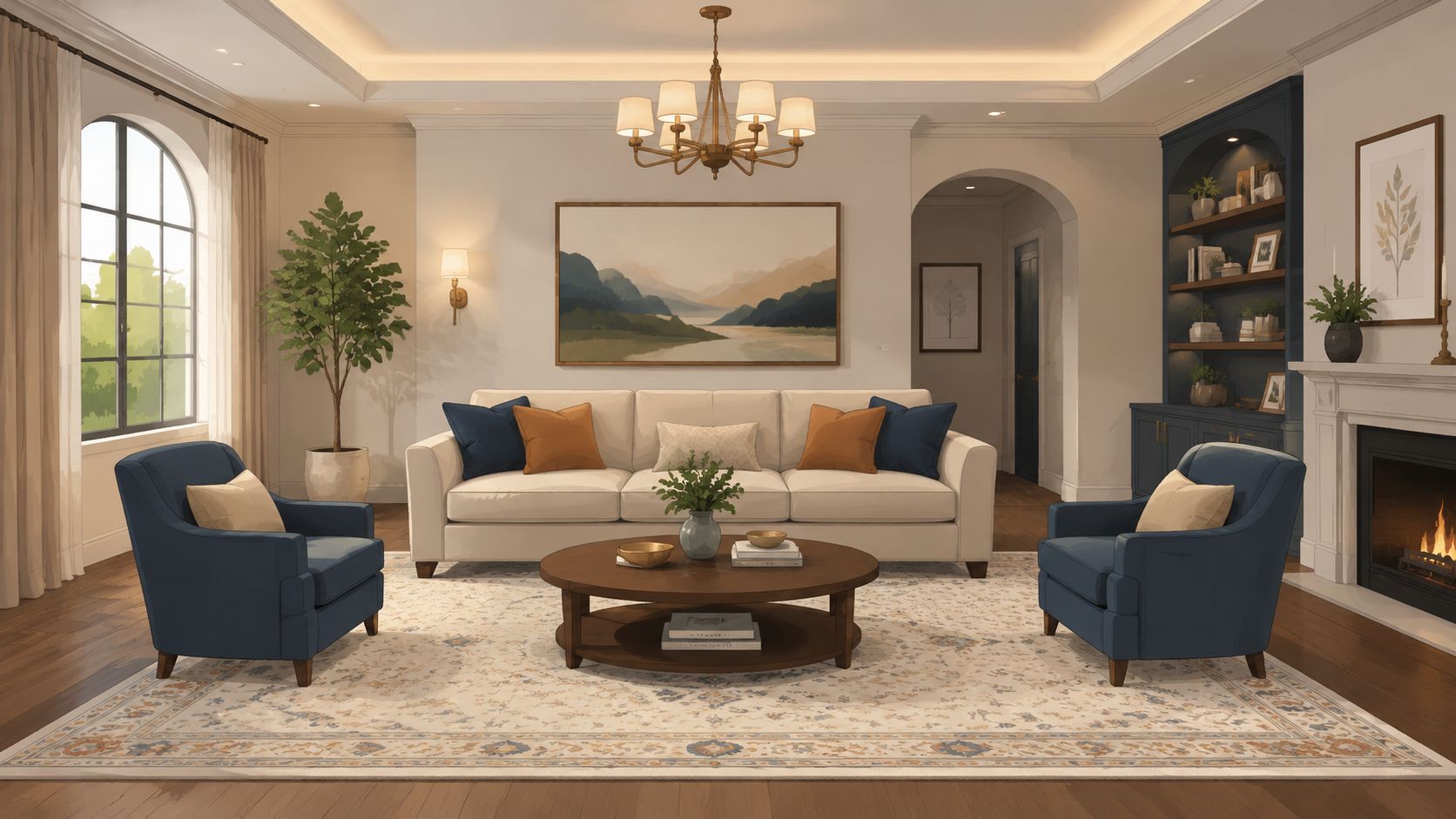
A foundational rule is to leave about 6 inches of visible floor between the rug and the wall, while keeping the rug at least 6 to 8 inches wider than the sofa on both sides, according to this room-by-room rug sizing reference. Those measurements help the seating area feel anchored instead of squeezed or adrift.
All legs on
This is the fullest look. The sofa, chairs, and coffee table all sit completely on the rug.
It works well in larger living rooms where the rug is meant to define the entire conversation area. This approach can feel calm and finished because everything shares one surface. It also helps when furniture floats in the room rather than sitting right against the walls.
This option usually needs a larger rug, and that's where people sometimes hesitate. But visually, it gives the room a broad foundation.
Front legs on
This is the most flexible choice for many homes. The front legs of the sofa and chairs rest on the rug, while the back legs stay off.
For many layouts, this strikes a nice balance. The seating still feels connected, but the rug doesn't need to cover as much floor. In rooms that aren't huge, this often looks natural and comfortable.
A lot of families find this is the easiest rule to use because it works with both classic sofas and many sectionals.
Just the coffee table
This approach places the rug under the coffee table and in front of the seating, rather than under the main furniture legs.
It can work in a tight room, an apartment, or a layout where traffic flow matters more than following a standard setup. It's the least anchored of the three rules, so it has to be handled carefully. If the rug is too tiny, the room can feel choppy. If it's proportionate to the visible seating zone, it can still look intentional.
A quick way to choose
Here's a simple shortcut:
- Choose all legs on if the room is large and the furniture floats in the space.
- Choose front legs on if the room needs balance between comfort and floor exposure.
- Choose just the coffee table if the room is compact or the walkway needs to stay open.
For readers who want more help visualizing placement, BILTRITE also shares guidance on how to place an area rug in a living room.
Rug Sizes for Common Living Room Layouts
Once the placement rule is clear, common rug sizes start to make more sense. For most living rooms, 8' x 10' and 9' x 12' are the benchmark sizes because they often allow at least the front legs of the sofa and chairs to sit on the rug, while design guidance also recommends leaving about 12 to 18 inches of exposed floor between the rug edge and the walls, as described in this rug size overview for living spaces.
That doesn't mean every home should automatically grab one of those sizes. It means those are strong starting points.
A sofa with two chairs
This is one of the most common living room setups. A standard sofa faces the coffee table, and two chairs complete the seating area.
In this layout, the rug usually needs to reach wide enough to connect all three main seating pieces. If the chairs sit outside the rug entirely, the room can split into separate zones by accident.
A sectional for family seating
Sectionals are popular because they seat a lot of people comfortably, but they also make rug sizing trickier. Their shape can fool the eye. A rug that seems large enough in the store may look undersized once it lands under a wide chaise or long return.
In many sectional rooms, the rug needs enough presence to support the main front edge of the sectional and still leave room for the coffee table.
Rug Size Recommendations by Layout
| Furniture Layout | Best Placement Rule | Recommended Rug Size |
|---|---|---|
| Sofa with two chairs | Front legs on | 8' x 10' or 9' x 12' |
| Sofa with two chairs in a larger room | All legs on | 9' x 12' |
| Large sectional | Front legs on | 9' x 12' |
| Large sectional in a roomy layout | All legs on | 9' x 12' or 10' x 14' |
A few practical notes help when using that table:
- Start with the seating group, not the whole room. The rug should relate to the furniture first.
- Check the wall spacing next. The room usually looks more balanced when some floor remains visible around the rug.
- Account for the coffee table. It should feel included in the zone, not pushed to the edge.
A good rug size doesn't make the room feel fuller. It makes the furniture feel calmer.
Milwaukee shoppers often bring in room measurements, sofa dimensions, or a quick phone photo to sort this out. That's smart. Homes vary, especially when dealing with older layouts, condos, or multi-use family rooms. Readers working through furniture placement can also explore living room arrangement ideas from BILTRITE.
Solutions for Tricky Spaces and Small Apartments
Small living rooms need different thinking. Standard rug advice can help, but it doesn't always answer the core question. In a tighter room, the goal isn't chasing an ideal number. The goal is making the room feel open, usable, and in proportion.
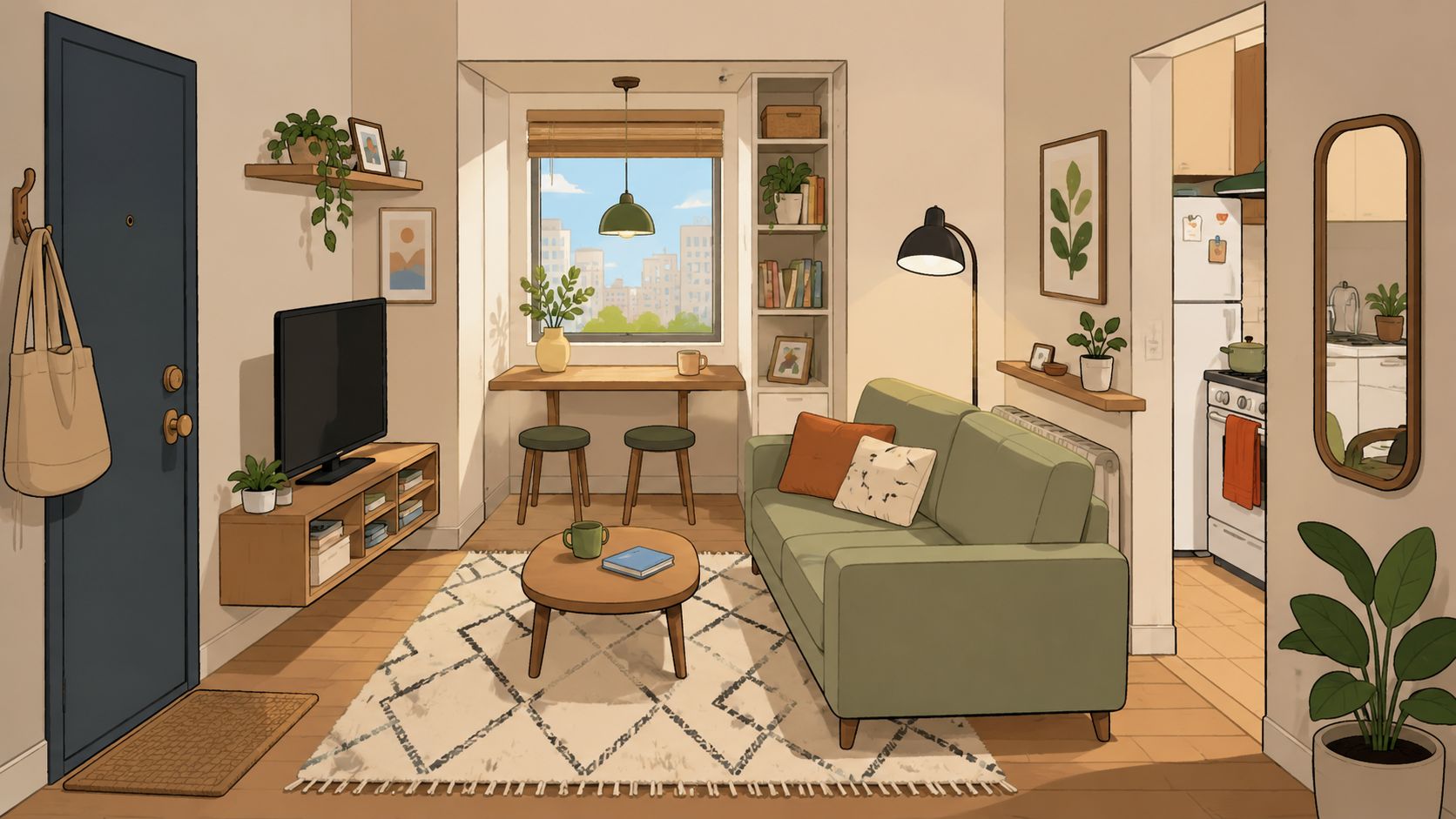
Most guides repeat the same 8' x 10' or 9' x 12' advice but rarely explain when a smaller rug is the better choice in tight spaces. For apartments and condos, proportion for the room's actual geometry is often more useful than standard dimensions, as noted in this discussion of living room rug formulas.
When a smaller rug makes sense
A smaller rug can work when the room is compact and the layout is simple. That's especially true if the sofa sits near the wall and the rug mainly supports the coffee table and the front edge of the seating zone.
In a narrow room, preserving walkway space matters. If a larger rug forces the room to feel crowded or awkward near a traffic path, smaller can be the smarter move. In such scenarios, local showroom help matters, especially for shoppers comparing small-scale pieces and rug placement at the same time.
One option available in-store is BILTRITE Furniture-Leather-Mattresses, which includes guidance and furnishings aimed at apartment and condo living.
How to handle open-plan rooms
Open layouts create a different challenge. The rug doesn't need to claim the whole combined area. It needs to define the living zone without bumping visually into the dining or entry area.
That often means thinking in terms of boundaries:
- Keep the rug tied to the seating area rather than stretching it toward the next zone.
- Respect traffic paths so people can move through the space naturally.
- Let the rug create one clear destination for conversation, reading, or TV time.
In open rooms, the rug should define the living area, not compete with the dining space or entry path.
A few Milwaukee homes also have odd corners, angled fireplaces, or off-center windows. In those spaces, rigid rules don't always help. The rug should support how the room works in daily life. That's more useful than forcing a standard size into a non-standard home.
Come On Down and Let's Find Your Rug Together
The big takeaway is simple. Living room rug size is really about proportion, comfort, and connection. A rug should help the seating area feel settled. It should support the way the room works for daily life, whether that means movie night with the family, hosting friends, or making a small apartment feel more organized.
That's why the right answer isn't always the biggest rug and it isn't always the most common size. Some rooms need a broad foundation under a sectional. Others need a smaller rug that protects walkway space and keeps the room from feeling crowded.
BILTRITE has been part of the Metro Milwaukee community since 1928, and that long view helps when homes don't fit a standard template. The team works with families furnishing first apartments, busy family rooms, senior living spaces, and open layouts that need smart, practical solutions. With over 400 years of combined experience on the sales floor, shoppers can expect guidance without pressure.
A rug is one of those finishing pieces that can change the feel of the whole room. Seeing it in person, talking through dimensions, and comparing it with the scale of real furniture makes the choice much easier. BILTRITE is proud to be family-owned, proud to serve Milwaukee-area homes, and proud to be closed on Sundays and Mondays so families can have time together too.
Visitors looking for friendly help with rugs, furniture, leather seating, Amish-made pieces, and mattresses can stop by BILTRITE Furniture-Leather-Mattresses in Greenfield and talk with a team that's been helping Milwaukee-area families furnish their homes since 1928.