A Friendly Guide to All Types of Mattresses

A lot of mattress shopping starts the same way in Milwaukee. A family walks into a store or starts searching online, sees a wall of labels, and suddenly every bed sounds the same. Plush, firm, cooling, supportive, hybrid, pillow-top. It's no wonder people feel stuck before they even lie down.
That confusion makes sense. A mattress is something a person uses every night, often for years, and the wrong choice can make bedtime feel like work. The right choice feels simple once the materials, construction, and real-life differences are explained in plain language.
That's where a family furniture store mindset still matters. BILTRITE has served Metro Milwaukee since 1928, and that long view changes how mattress advice gets shared. Trends come and go. New names show up. Old styles get updated. Families still ask the same core questions. Which mattress feels comfortable? Which one holds up? Which one makes it easier to sleep through the night?
This guide walks through the main types of mattresses step by step, with clear explanations and everyday examples, so shoppers can sort out what matters and what doesn't.
Table of Contents
- Sleep Well Live Better Let's Find Your Mattress
- The Classics Innerspring and Futons
- Modern Comfort Memory Foam and Latex
- The Best of Both Worlds Hybrid Mattresses
- Our Specialty Sleep Solutions
- Your BILTRITE Mattress Buying Checklist
- Why Shopping for a Mattress in Milwaukee Matters
Sleep Well Live Better Let's Find Your Mattress
A mattress can look fine in a photo and still feel all wrong at bedtime. That's usually the moment shoppers realize they aren't just picking a rectangle with fabric on top. They're choosing how support feels under shoulders, hips, backs, and knees night after night.
Families often arrive with one simple goal. They just want to sleep better. One person wants less pressure on the shoulder. Another wants less partner movement. A parent wants something durable for a growing teen. A caregiver wants a bed that's easier for a loved one to get in and out of.
That's why the different types of mattresses matter. Each type has its own feel, its own strengths, and its own tradeoffs. Some feel springy and familiar. Some contour closely. Some try to blend both ideas.
Practical rule: A shopper doesn't need the fanciest mattress. A shopper needs the one that matches sleeping position, body type, comfort preference, and long-term durability needs.
There's also a local piece to this that shouldn't get lost. Milwaukee families don't shop for mattresses in a vacuum. They shop around work schedules, school pickups, recovery from surgery, budget concerns, and the hope that a new bed will solve a problem that's been dragging on too long.
A good guide should calm the process down. It should separate mattress type from marketing language. It should explain what words like hybrid, latex, and pillow-top mean. And it should help shoppers tell the difference between a mattress that feels nice for two minutes and one that will still feel supportive years later.
The Classics Innerspring and Futons
Some mattress styles stick around for a reason. Innerspring beds are the classic example. They feel familiar to many shoppers because generations grew up sleeping on them, and that classic bounce still appeals to a lot of families.
The history is pretty remarkable too. The earliest known mattress dates back about 77,000 years, while the modern innerspring mattress arrived in the late 19th century. Spring mattresses are still the most common type in the U.S., used by 32% of people, and they're especially popular with adults ages 18 to 29, where usage reaches 37%, according to this mattress history and usage overview.
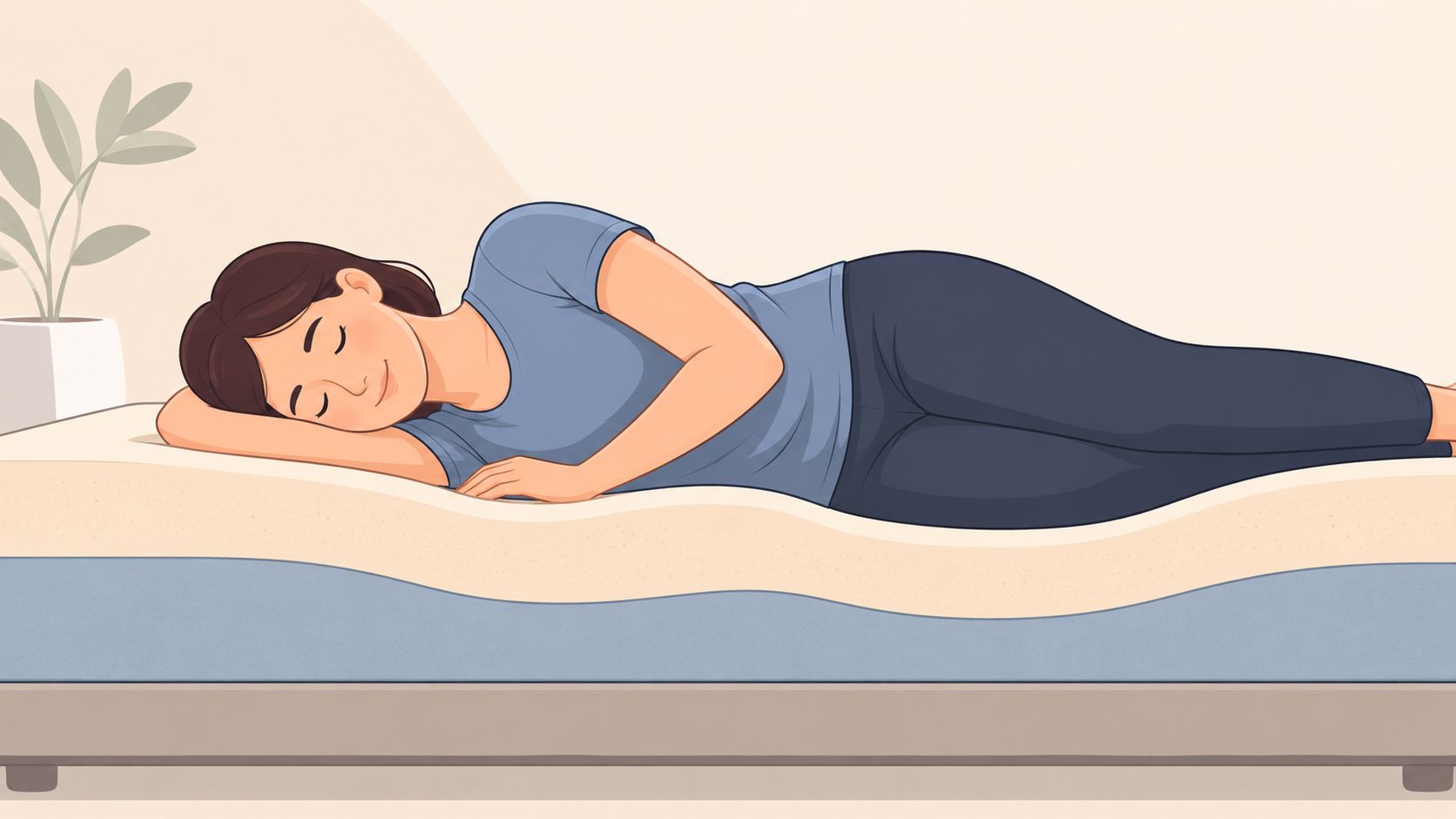
Why springs still make sense
An innerspring mattress uses coils as its main support system. The easiest way to think about it is this. The coils do the lifting, and the top layers add the surface comfort.
That creates a feel many people describe as easier to move on. It usually feels more buoyant than all-foam options. For someone who doesn't like that deep sink or wants a bed with a more traditional feel, springs can be a very comfortable choice.
A few traits make innersprings easy to understand:
- Bounce and response: They push back quickly when a sleeper changes position.
- Airflow: The open space around the coils can help the bed feel less stuffy.
- Familiar support: Many shoppers know right away whether this feel suits them.
Shoppers who want a deeper explanation of construction can read this guide to what an innerspring mattress is.
A good spring mattress shouldn't feel pokey or flimsy. It should feel supportive, steady, and balanced from the center to the edge.
Where futons fit in
A futon belongs in this conversation too, even though it lives in a different lane. Futons are usually chosen for flexibility more than luxury. They're practical in guest rooms, apartments, dens, and smaller homes where one piece has to do double duty.
They can be a smart fit when space matters most. A family setting up a teen hangout room or a spare room for occasional overnight guests might care more about versatility than deep cushioning.
Here's where shoppers get mixed up. A futon is not just another regular mattress type with a trendy name. It's usually part of a seating-and-sleep setup, so comfort expectations should match the job it needs to do. For everyday primary sleep, many people still prefer a more full-featured innerspring, foam, latex, or hybrid design.
Modern Comfort Memory Foam and Latex
Foam mattresses changed what many people expect a bed to feel like. Instead of sleeping on top of a surface with lots of bounce, a sleeper may feel more cushioned, more cradled, or more gently held in place. That can be a big relief for some bodies and a strange feeling for others.
Memory foam and latex often get grouped together because both fall into the foam family, but they don't feel the same at all.
Memory foam feels like a gentle hug
A memory foam mattress is the one many shoppers picture when they hear words like contouring or pressure relief. It responds to the body by compressing where weight lands, so shoulders and hips can sink in more than they would on a spring bed.
That creates a distinct feel. Some people love it because it reduces that hard pushback under pressure points. Couples often like it because movement from one side of the bed is usually less noticeable than on a very bouncy surface.
Memory foam often suits shoppers who say things like:
- “The shoulder gets sore on the current mattress.” A more contouring surface may feel gentler.
- “Partner movement keeps waking someone up.” Foam usually softens that ripple effect.
- “A cozy, tucked-in feel sounds nice.” Memory foam tends to create that sensation.
The tradeoff is feel. Not everyone enjoys sinking in. Some sleepers feel too enclosed or find changing positions less easy than on a springier bed.
Latex feels more lifted and lively
A latex mattress tends to feel more buoyant. Instead of that slow, close hug, latex usually gives a sleeper a more lifted sensation. Many shoppers describe it as floating more on top of the mattress than down inside it.
That difference matters a lot in a showroom. A side sleeper may try memory foam and say, “That feels pressure-relieving.” Then try latex and say, “That feels easier to move on.” Both reactions can be right. They're just reacting to two very different comfort personalities.
A simple comparison helps:
| Mattress type | Common feel | Often suits |
|---|---|---|
| Memory foam | Closer contouring, more body hug | Sleepers who want pressure relief and less motion transfer |
| Latex | Buoyant, quicker response, more lifted feel | Sleepers who want cushioning without as much sink |
Shoppers curious about this material can explore this overview of what a latex mattress is.
Some sleepers choose with their back. Others choose with their shoulders. Many choose with one sentence: “Do I want to sink in, or stay more on top?”
That's why in-person testing matters so much with these two types of mattresses. A shopper can read descriptions all day and still not know which feel fits until lying on both. The words help. The body makes the final call.
The Best of Both Worlds Hybrid Mattresses
A lot of shoppers land on hybrids after realizing they want some things from a spring mattress and some things from a foam or latex mattress. They want support underneath, cushioning on top, and a feel that doesn't go too far in either direction.
That middle ground is exactly why hybrid mattresses have become such an important category.
What makes a mattress a true hybrid
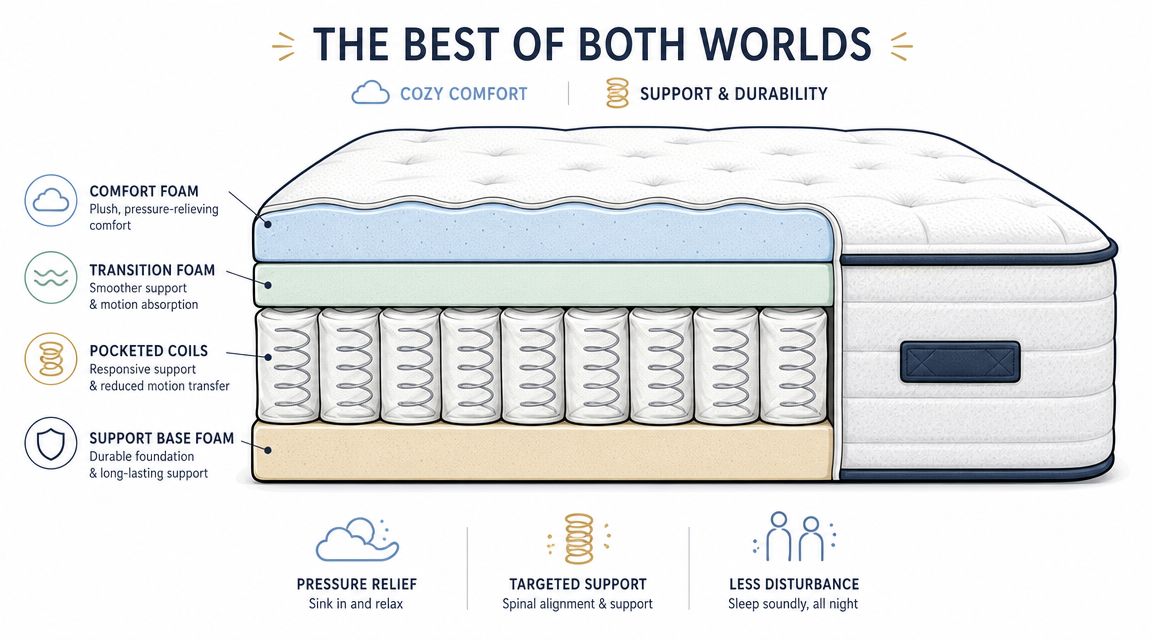
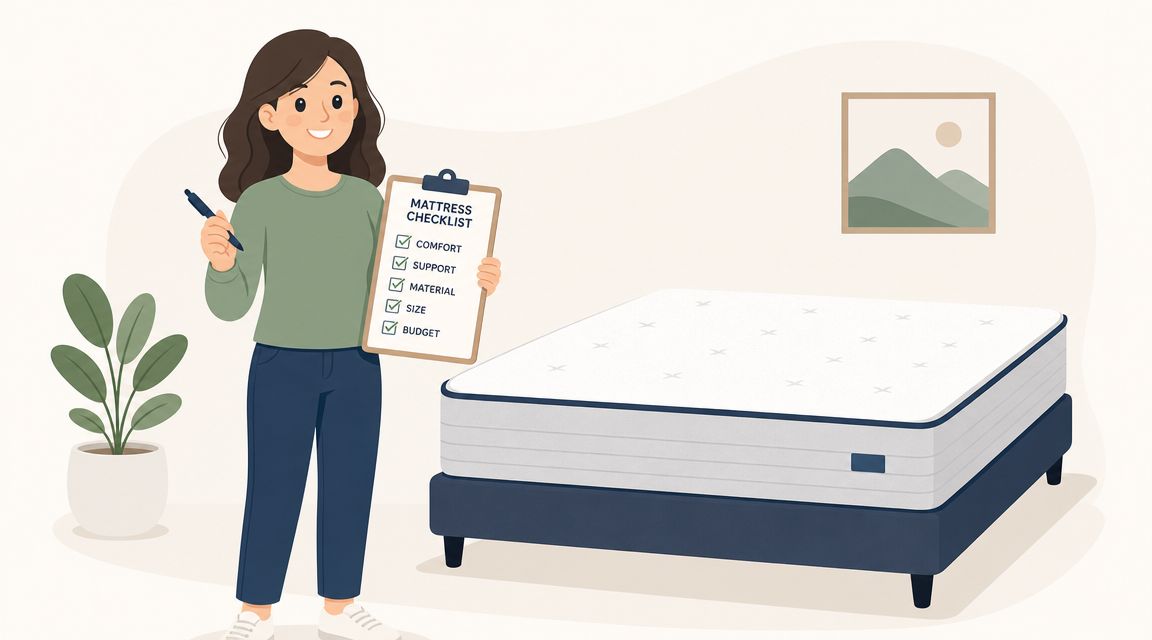
Not every mattress with a soft top gets to call itself a hybrid in the most useful sense. A true hybrid mattress has a coil support core plus foam or latex comfort layers, as explained in this hybrid mattress construction guide.
That construction matters because it changes how the bed performs. The coils bring support, responsiveness, and often stronger edges. The upper foam or latex layers add cushioning and pressure relief.
That same guide notes that hybrids tend to have an average lifespan of 10 to 12 years, compared with 8 to 10 years for many all-foam models. That doesn't mean every hybrid beats every foam mattress. It does mean the build itself can offer a durability advantage when the materials are done well.
For a closer look at the category, shoppers can visit this explanation of what a hybrid mattress is.
Why hybrids click with so many sleepers
Hybrids often work well for households where more than one person has to like the same bed. One sleeper may want cushioning at the shoulder. The other may want a little pushback and easier movement. Hybrid designs often split that difference nicely.
A hybrid may be a strong fit when a shopper wants:
- Better edge support: Useful for anyone who sits on the side of the bed often or sleeps near the edge.
- Balanced feel: Less sink than many all-foam beds, less bounce than a very traditional spring bed.
- Versatility: A construction that can appeal to many sleeping styles.
Some hybrids feel plush on top. Others feel more level and supportive. That's why the word hybrid alone isn't enough. Key clues are inside the build, especially the coil system and the comfort layers above it.
Our Specialty Sleep Solutions
Some mattress shoppers don't need another trendy label. They need a bed that holds up, stays supportive, and makes sense for real family life. That's where specialty sleep solutions stand out.
The biggest overlooked issue is durability. A mattress can feel comfortable on day one and still become frustrating if it develops body impressions, loses support, or feels weaker at the edge over time.
Why two-sided mattresses still matter
Long-term sag resistance is one of the biggest concerns shoppers have. Independent testing focused on mattress durability shows that people often look specifically for mattresses that “won't sag,” including designs with reinforced coils and, even better, a two-sided, flip-able design, according to this overview of mattress type durability concerns.
That point matters because many shoppers have never even been shown a two-sided mattress. They assume every modern mattress is one-sided and that softening over time is just part of the deal.
A flip-able mattress gives the sleeper another usable side. That can help distribute wear more evenly over time when combined with regular rotation. For families thinking beyond the first few months, that's a practical advantage, not a gimmick.
One local option in this category is BILTRITE Furniture-Leather-Mattresses, which offers flip-able and two-sided mattresses as part of its mattress selection.
The mattress that lasts better isn't always the one with the flashiest label. Often it's the one built to wear more evenly over time.
Helpful features that shoppers often mix up
Some terms describe a type of mattress. Others describe a feature added to different types.
A pillow-top is a feature, not its own mattress category. It refers to an added cushioned layer on top, and it can show up on different constructions. A shopper can have a pillow-top innerspring or a pillow-top hybrid, for example.
An adjustable base is different again. It's the foundation under the mattress that raises the head, the feet, or both. Many families find this especially useful for reading, relaxing, or helping a loved one get more comfortable in bed. Shoppers interested in that setup can learn more from this adjustable base health benefits article.
These specialty choices are often where a mattress purchase becomes more personal. A senior may value easier entry and exit. A couple may want less pressure at the lower back when watching television. A family may want a mattress designed with more long-term durability in mind.
Your BILTRITE Mattress Buying Checklist
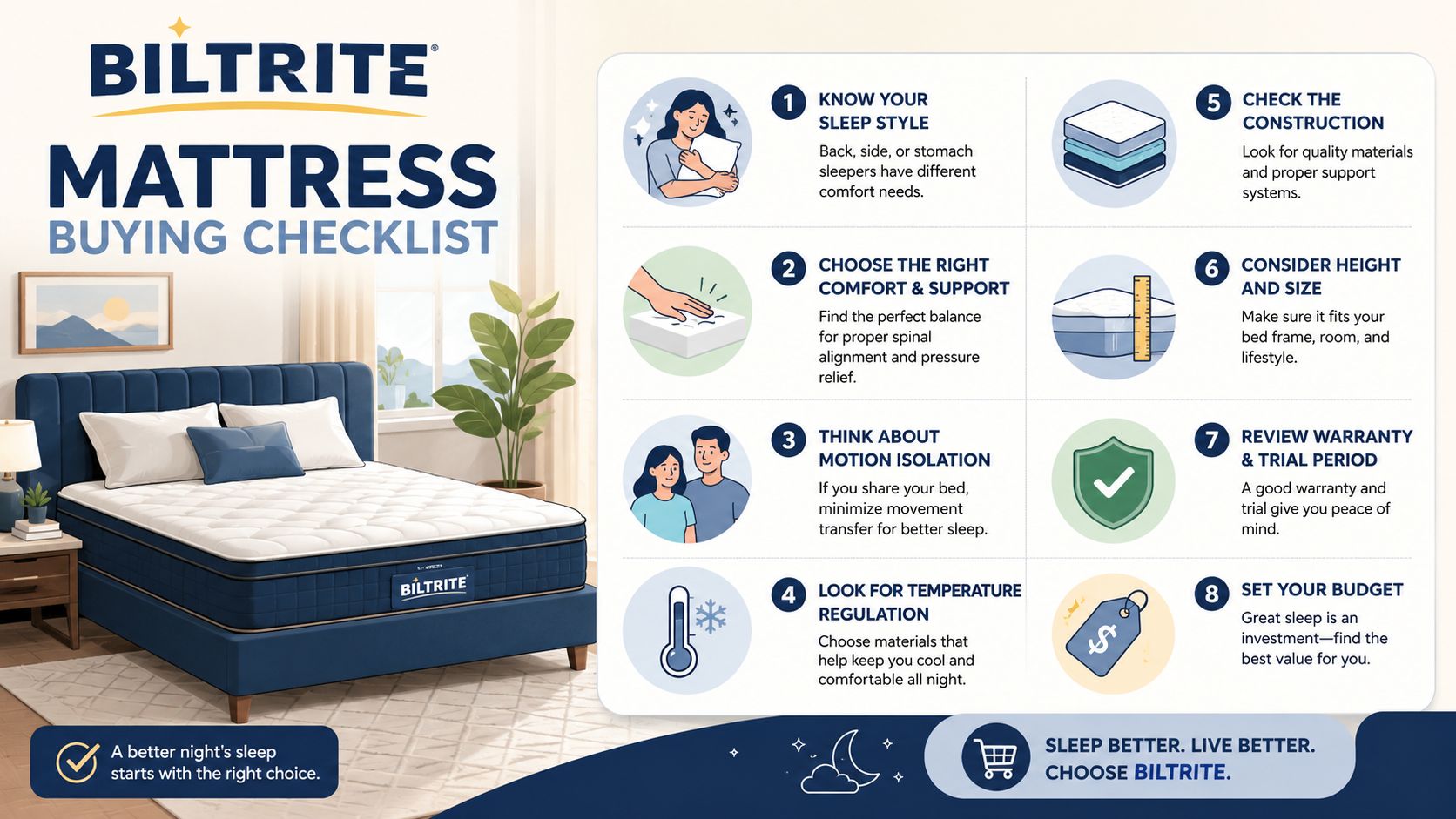
Once a shopper understands the main types of mattresses, the next step is knowing what to test and what to ask. A mattress label alone won't answer that. The body's reaction does most of the talking.
This works best as a real checklist, not a guessing game.
Questions worth asking before choosing
A shopper can walk into a showroom with these questions in mind:
- What feel sounds right? Some people want a mattress that hugs a bit. Others want one that feels level and easy to move on.
- What sleeping position shows up most often? Side, back, stomach, or a mix can change what feels supportive.
- Does partner movement matter? If one sleeper wakes easily, motion control becomes more important.
- Is edge support important? That matters for sitting, getting dressed, or sleeping near the perimeter.
- Is durability a top priority? If the goal is long-term value, it helps to ask how the bed is built and whether it's one-sided or two-sided.
A shopper who wants a broader prep guide can review these tips on how to choose the right mattress.
What to notice while testing a mattress
Trying a mattress in person goes better when the shopper slows down and pays attention to specific details.
A simple testing routine helps:
- Lie down in the usual sleep position. A side sleeper should test on the side, not just sit on the edge and press a hand into the top.
- Stay there for a few minutes. Fast impressions can be misleading.
- Roll and switch positions. This shows whether the surface feels easy or awkward to move on.
- Check the edge. Sit and lie near it if that matters at home.
- Notice pressure points. Shoulders, hips, and lower back usually speak up quickly.
“Comfort” should mean more than softness. It should mean the body feels supported in the positions it actually uses.
It also helps to mention body type and household needs. Some shoppers need heavier-duty support. Some need a lower-profile setup for safer entry and exit. Some want a guest room mattress that handles occasional use well. The more specific the conversation, the easier it is to narrow the field.
Why Shopping for a Mattress in Milwaukee Matters
Mattress shopping has shifted hard toward online buying. That's real. Consumer data shows 54% of people now buy mattresses online, and the U.S. sees nearly 36 million mattress sales annually, according to this mattress industry statistics summary.
But that same trend leaves out the biggest issue. A mattress is hard to judge without lying on it. Photos can't show whether the edge feels solid, whether the surface hugs too much, or whether a sleeper's shoulder finally relaxes after weeks of discomfort.
The limits of buying a mattress sight unseen
A mattress can sound ideal on a screen and still feel wrong in a bedroom. That's the gamble. The shopper has to guess how firm “medium” really is, how much sink feels comfortable, and whether support stays consistent across the whole bed.
That guess gets even harder when two people share the bed or when durability matters more than short-term showroom softness. Return policies may exist, but returns still mean time, effort, waiting, and frustration.
For many Milwaukee families, the better route is simple. Try the bed first.
What a local showroom adds
Shopping in person gives a family something online buying can't fully replace. They can compare different types of mattresses side by side. They can feel the difference between memory foam, latex, innerspring, hybrid, and specialty two-sided designs in one visit.
A local showroom also gives shoppers real conversation. Questions get answered in real time. Someone can say, “The current bed feels too hard on the shoulder,” or “The edge collapses when sitting,” and get guidance tied to that exact problem.
That's especially helpful in Greenfield and the broader Milwaukee area, where families often want more than a box at the front door. They want help choosing well the first time. They want to see durable options. They want a setup that works for apartments, larger family homes, senior living needs, or heavy-duty use.
A mattress is too important to buy with fingers crossed. Testing it in person makes the decision calmer, clearer, and a whole lot more human.
Families looking for guidance on the different types of mattresses can visit BILTRITE Furniture-Leather-Mattresses in Greenfield to compare materials, comfort levels, and specialty options in person. The showroom serves Metro Milwaukee with a large mattress selection, experienced staff, and a family-focused approach that keeps the process helpful and low pressure.