Are Mattress Toppers Worth It? A BILTRITE Family Guide

You know the feeling. You wake up, swing your legs over the side of the bed, and your back starts the morning before you do. Maybe the mattress feels too firm. Maybe there's a dip where you always sleep. Maybe you've started searching late at night for one simple fix and landed on the same question a lot of people ask.
Are mattress toppers worth it?
Around here, that question comes up all the time. Families want better sleep without making a bigger change than they need to. That's understandable. A topper sounds easy. Put one on the bed, make it softer, and call it solved.
Sometimes that works. Sometimes it doesn't.
The honest answer is that a topper can help with surface comfort, but it can't do the heavy lifting of a mattress with support problems. That's the part many shoppers don't hear until after they've spent money on a short-term fix. If you're trying to decide whether a topper is a smart move or just a delay, it helps to know where it shines, where it falls short, and how to tell the difference.
That Nagging Question Keeping You Up at Night
A lot of sleep problems don't start dramatically. They creep in. One morning your shoulder feels sore. A few nights later you're flipping your pillow, shifting to the cool spot, trying to settle in. Then you start wondering if the mattress is the issue, and if a topper could rescue it.
That line of thinking makes sense. The global mattress topper market was valued at US$918.6 million in 2022 and is projected to reach US$1.7 billion by the end of 2031, growing at a 7.2% CAGR from 2023 to 2031, according to mattress topper market research from Transparency Market Research. More shoppers are paying attention to sleep quality, and a topper feels like an affordable way to improve it.
But popularity and long-term value aren't always the same thing.
Why people look at toppers first
Many sleepers aren't trying to make a complicated decision. They just want relief. A topper promises a softer landing, a little pressure relief, maybe less tossing and turning. If your current bed feels too hard, that can sound like exactly the answer you've been hoping for.
A topper can also feel less intimidating than buying a new mattress. It's smaller, quicker, and easier to say yes to. That's why it often becomes the first move, especially when the mattress underneath still looks decent at a glance.
Neighborly advice: If you're waking up uncomfortable, start by asking whether the problem is the feel of the mattress or the support underneath you. Those are not the same thing.
The question under the question
When someone asks, are mattress toppers worth it, what they usually mean is this: “Will this help me sleep better, or am I throwing good money after bad?”
That's the right question.
If you want a broader look at what affects sleep beyond the mattress itself, good sleep habits and bedroom setup matter too. But when the bed is the problem, the smartest choice depends on whether you need a minor comfort tweak or a true support fix.
What Exactly is a Mattress Topper Anyway
Think of a mattress topper like a cozy sweater for your mattress. It changes how the bed feels on the surface. It does not rebuild what's underneath.
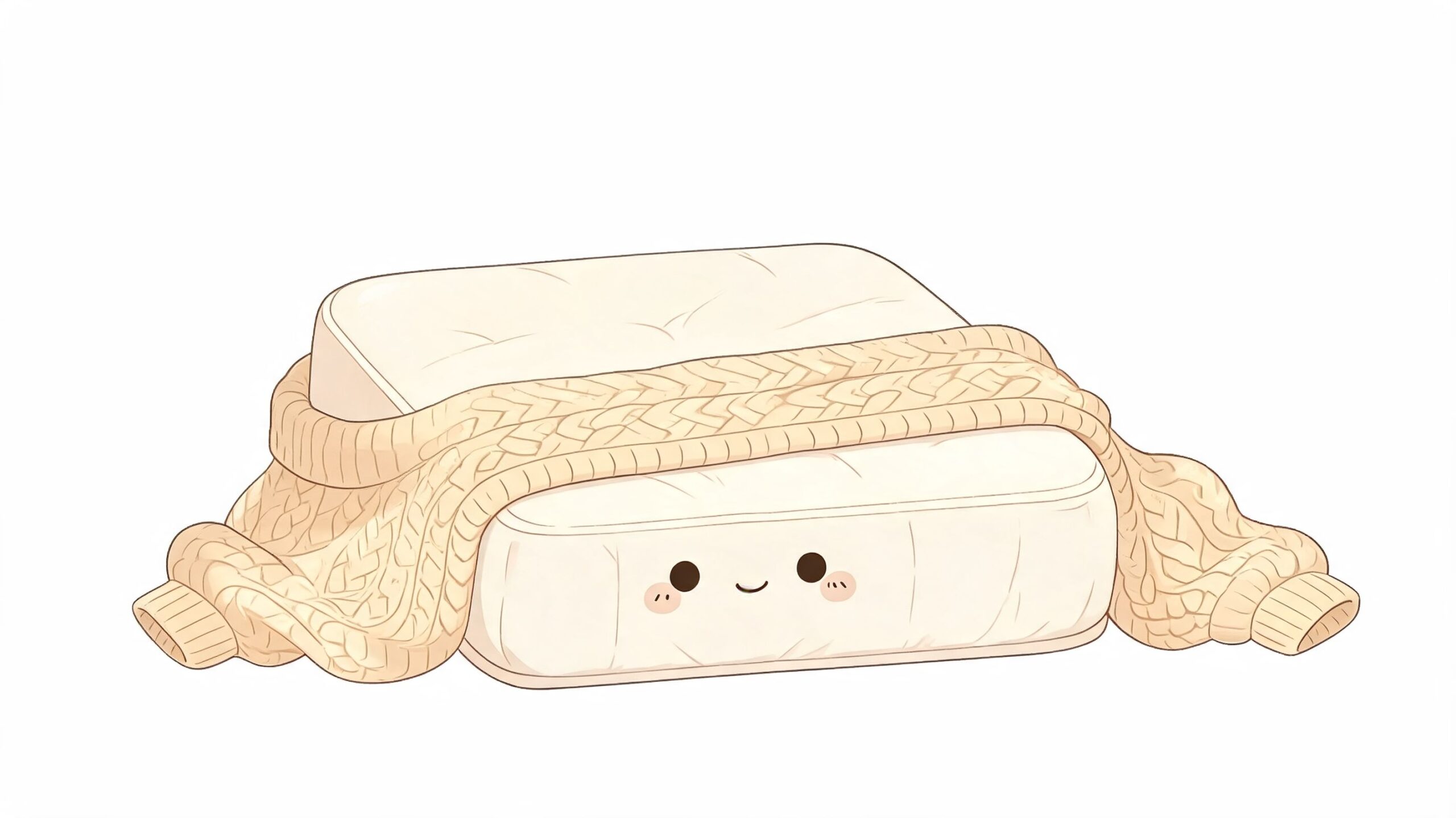
That distinction matters more than people think. If your mattress is in good shape but feels a little too firm, a topper may give you a more comfortable surface. If the mattress is sagging or breaking down, the topper is just riding on top of the same problem.
What a topper does well
A topper sits on top of your mattress and adds another layer between you and the bed. That layer can make the surface feel:
- Softer: Helpful if your mattress feels too hard at the shoulders or hips.
- More cushioned: Some materials contour around the body and reduce pressure points.
- Warmer or cooler: Depending on the material, a topper can affect temperature in either direction.
That's the basic job. It changes the comfort feel, not the structural support.
If you want a simple breakdown of that role, this guide on what a mattress topper does lays it out clearly.
The main types you'll see
You don't need a chemistry degree to sort through topper materials. A few plain-English categories cover most of what shoppers run into.
| Type | How it feels | Common trade-off |
|---|---|---|
| Memory foam | Close contouring, body-hugging feel | Can sleep warmer |
| Latex | Springy, responsive, less sink | Usually firmer-feeling than foam |
| Feather or down | Soft, lofty, plush | Can shift and flatten |
| Wool | Cushioned with a more natural feel | Feel varies by build and thickness |
Some people love that hugged feeling. Others want bounce, airflow, and easier movement. None of these are universally “best.” They're just different tools for different comfort goals.
A topper should be judged like a comfort accessory, not a structural repair. That one mindset change saves people a lot of disappointment.
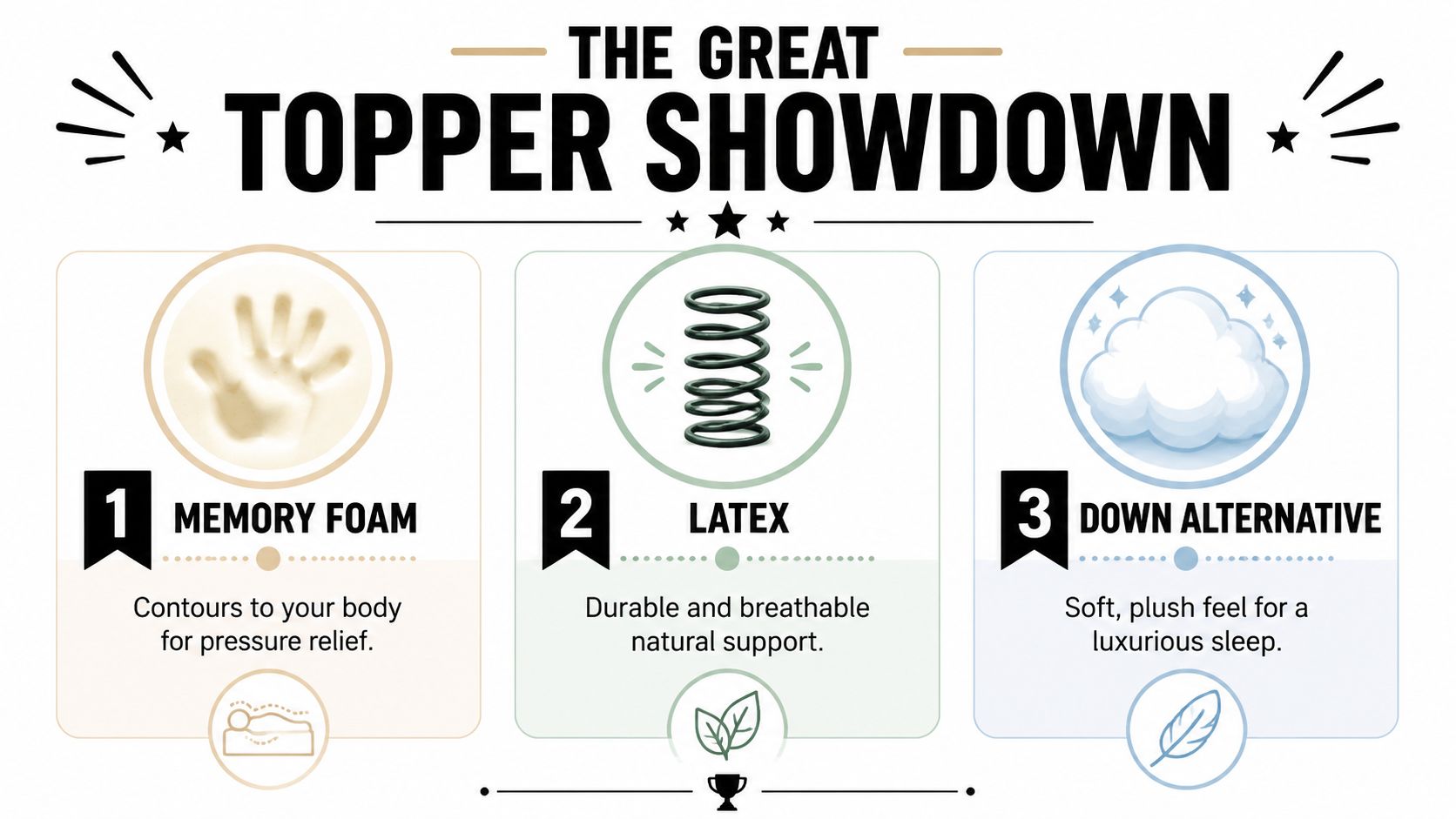
The Great Topper Showdown Different Types for Different Sleepers
A topper can feel wonderful or annoying depending on what you like when you lie down. Online descriptions often oversimplify things. “Plush” for one person can mean “stuck” to another. “Supportive” can mean “too firm” if the sleeper expected a pillow-soft feel.
Here's the practical version.
Memory foam for the sink-in crowd
Memory foam is usually the first thing people picture. It contours closely and can soften a bed in a noticeable way. If your mattress is firm and your hips or shoulders need more cushioning, memory foam may feel welcoming right away.
The trade-off is heat. Traditional memory foam can trap body heat and increase surface temperature by 5 to 10°F, and Consumer Reports testing found memory foam toppers felt 4 to 7°F warmer after just 30 minutes, as noted in Consumer Reports' mattress topper testing. For hot sleepers, that's a real issue, not a minor footnote.
Latex for people who want cushion without the quicksand feel
Latex tends to feel more buoyant. You get some pressure relief, but you don't usually feel swallowed by it. It's a good fit for sleepers who want comfort and easier movement when changing positions.
It's also often a better match for people bothered by overheating. Breathable materials like latex or wool are often a better choice for staying cool, especially compared with traditional memory foam.
Down alternative and feather styles for plushness lovers
These toppers lean into softness. They can make a bed feel fluffier and more cloud-like, which some sleepers love. They're often chosen by people who want to take the edge off a too-firm mattress without adding that dense foam sensation.
The downside is consistency. Lofty toppers can shift, compress, or need frequent fluffing. If you want a stable, anchored feel, these may not be your favorite.
Wool for sleepers who care about temperature balance
Wool toppers don't usually get the same attention as foam, but they appeal to shoppers who want a more natural feel and better temperature moderation. They're less about deep contour and more about a gentler comfort layer.
For some people, that balance is exactly right.
If you sleep on your side and want more targeted pressure relief, this look at toppers for side sleepers can help narrow the field.
Material match matters: The best topper isn't the one with the flashiest marketing. It's the one whose feel, warmth, and response fit the way you actually sleep.
The Real Deal When a Topper is a Band-Aid not a Solution
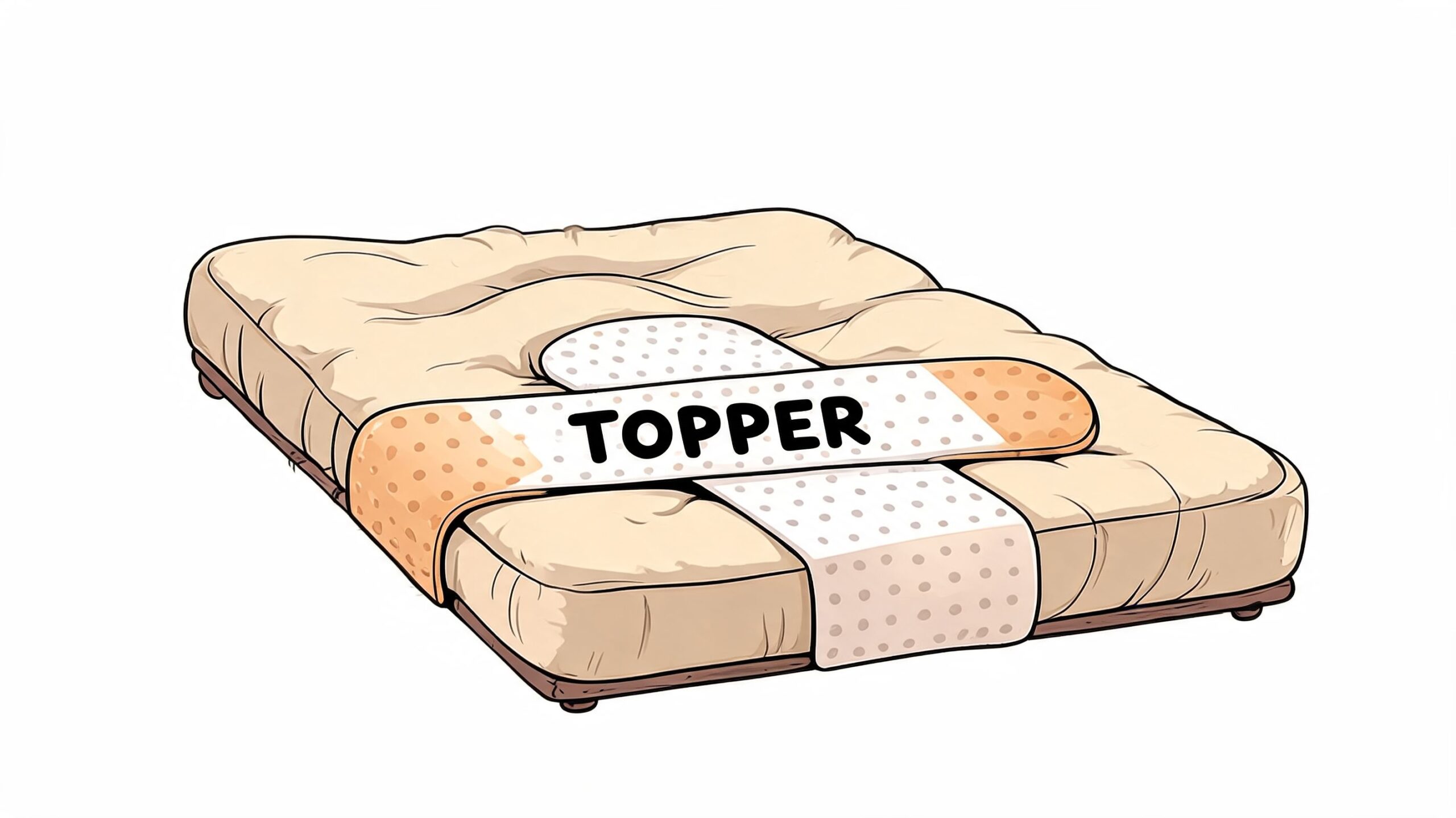
Bluntly put, if your mattress has lost its support, a topper is a band-aid.
It may make the first few minutes in bed feel nicer. It may soften the surface enough that you think you solved the problem. But if the mattress core is failing, that topper is resting on top of the same weak foundation.
What a topper cannot fix
A key thing to remember is that toppers provide superficial comfort. They cannot fix a mattress's core support, and on a degraded mattress base, they can even worsen alignment by letting the hips sink farther, according to Mattress Firm's discussion of topper limits. That same source notes that most toppers last only 1 to 3 years, which makes them a temporary fix rather than a lasting solution.
That short lifespan is a major part of the value question. If you keep replacing a temporary comfort layer every few years, you can spend a lot of money without ever solving the reason you're waking up sore.
Signs you're covering up a deeper problem
A topper probably isn't the answer if any of these sound familiar:
- You feel a dip or trench: The mattress pulls you toward one spot every night.
- You wake up achy: Especially in the low back, hips, or shoulders.
- The bed feels uneven: One side may seem softer or more broken down than the other.
- You sleep better elsewhere: A hotel, guest room, or newer mattress feels noticeably better.
If that sounds familiar, a mattress sinking in the middle usually points to a support issue, not a missing comfort layer.
You can soften a hard surface. You can't rebuild a worn-out mattress by adding a few inches on top of it.
When the “cheap fix” stops being cheap
This is the family-secret part nobody likes hearing in a flashy online ad. The low-commitment fix can become the expensive one if it keeps you circling the same problem.
A topper can be useful as a short-term adjustment. It is not the same as investing in a sleep surface built to hold its shape, support your body, and stay comfortable for the long haul. If your current mattress is breaking down, the topper isn't saving you money. It's delaying the next decision.
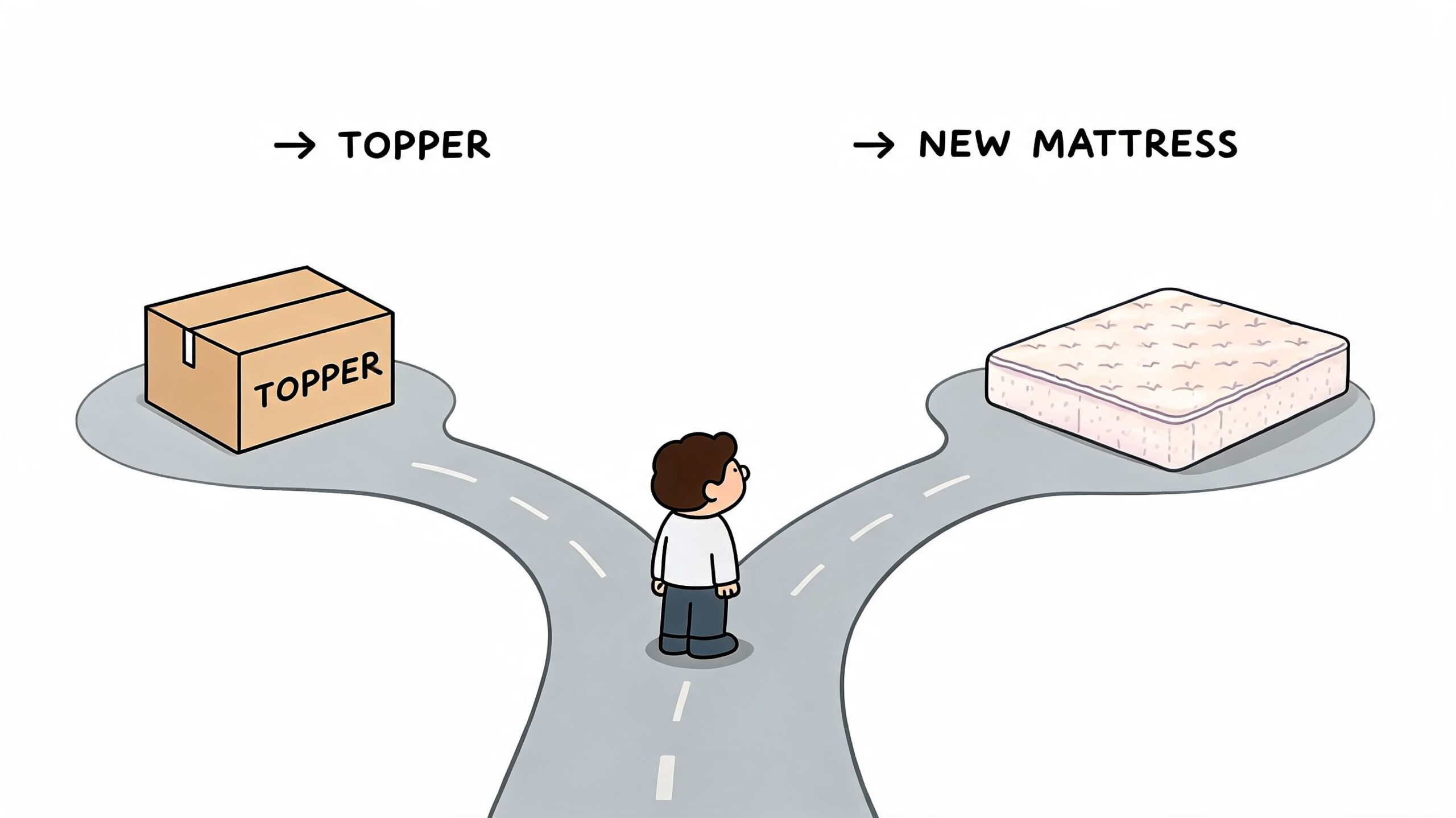
When a Topper Makes Sense vs When It Is Time for a New Mattress
A topper has a lane. It's just a narrower lane than many people hope.
If your mattress is supportive, level, and still in good shape, but feels a bit too firm, a topper can be a smart comfort adjustment. If the mattress underneath is sagging, unstable, or leaving you sore, that's a different conversation.
A topper makes sense if
These situations are where a topper tends to earn its keep:
| Situation | Better bet |
|---|---|
| Your mattress feels too firm but still supports you evenly | Topper |
| You want a temporary comfort change | Topper |
| The mattress is new and you misjudged the feel slightly | Topper |
In those cases, the topper is doing what it's supposed to do. It tweaks comfort. It doesn't pretend to be a rebuild.
It is time for a new mattress if
If the bed underneath is failing, skip the patch job. A topper can't compensate for a sagging core, and biomechanical analysis shows that on a degraded mattress, a topper can increase hip sinkage by 25% to 40%, which can create uneven pressure through the lumbar area and contribute to back pain, according to Texas Mattress Makers' explanation of topper limits.
Watch for these red flags:
- Visible sagging or body impressions: The surface doesn't look flat anymore.
- Morning pain that keeps showing up: Your body is telling you something.
- Roll-together or edge collapse: You feel pulled or unsupported.
- A topper sounds like your second or third workaround: That usually means the mattress itself is the issue.
If you're weighing that decision, this guide on when to replace your mattress can help you sort short-term discomfort from true mattress failure.
The practical rule
Buy a topper when you like your mattress but want to adjust the feel.
Buy a new mattress when you don't trust the support anymore.
That one rule cuts through most of the confusion.
Come On Down and Find Your Best Sleep
So, are mattress toppers worth it?
Yes, sometimes. They can be a solid short-term comfort adjustment when the mattress underneath is still doing its job. They can soften a too-firm bed, change the feel, and buy you some breathing room. That's the fair answer.
But they're not a cure-all, and they're not the family secret to great sleep for years. The optimal long-term outcome is matching your body to the right mattress in the first place, with support that holds up and comfort that doesn't disappear after a short run.
Some sleepers need more than a generic topper
This matters even more for households with specific needs. For seniors or heavy-duty users, a generic topper often falls short because toppers can shift, create a fall risk, or compress too quickly under more weight, as discussed in this overview of topper concerns for seniors and heavier sleepers. In those situations, stable support matters more than an extra layer of softness.
That's also why in-person testing matters. A bed can sound good on a product page and still be wrong for your body once you lie down on it.
Why local guidance beats an anonymous quick fix
A lot of people buy toppers because they're trying to avoid making the wrong mattress decision. Ironically, that can lead to more guesswork, not less. You end up layering fixes on top of a bed you never fully trusted.
There's a better way. Try the mattress. Feel the support. Check how easy it is to move, turn, and settle in. If you're shopping for a parent, a senior living space, or a heavier sleeper, test those needs thoroughly instead of hoping an accessory will make up the difference.
The right sleep setup should fit your body today and still make sense years from now. That's the standard worth aiming for.
A good topper can help in the right situation. A good mattress changes the whole night.
If you're ready for better sleep, we'd love to help at BILTRITE Furniture-Leather-Mattresses. We're a fourth-generation family business serving Metro Milwaukee since 1928, with a huge mattress department, over 60 models to try, and a team with more than 400 years of combined experience. We don't sell online because sleep isn't one-size-fits-all. Come visit our Greenfield showroom, lie down, ask questions, and let our family help your family find lasting comfort that makes sense.