Furniture for Small Home Office: Smart Solutions for 2026

The laptop is on the dining table. The charger snakes across the floor. A stack of mail is leaning into the keyboard, and the chair was never meant for a full workday. That scene shows up in homes all over Metro Milwaukee, especially when a “temporary setup” gradually becomes everyday life.
That change isn't going away. Remote work became a lasting habit, and a Stanford economist estimated that 42% of U.S. workers were working from home full-time in June 2020, a shift that pushed many households to carve out permanent work zones at home, as noted in BDI's overview of small home office trends. The answer isn't cramming the tiniest desk possible into a corner. The answer is choosing furniture for a small home office that respects the room, the body, and daily use.
A small office can work beautifully. It just needs smarter choices. That means enough desk depth, a chair that supports the body instead of punishing it, storage that climbs upward instead of sprawling outward, and materials that won't feel worn out after one busy season.
Table of Contents
- Creating Your Dream Home Office in a Small Space
- The Foundation Your Desk and Layout
- Smart Seating That Saves Your Back and Space
- Clever Storage Solutions to Conquer Clutter
- The BILTRITE Difference Quality in Small Spaces
- Your Small Office Checklist and Friendly Invitation
Creating Your Dream Home Office in a Small Space
A lot of small offices begin by accident. A spare bedroom gets split in half. A quiet corner in the living room turns into command central. A hallway nook starts holding a laptop, a lamp, and a coffee mug that never quite leaves. That doesn't mean the setup has to feel improvised forever.
The strongest small offices usually come from a simple shift in thinking. Instead of asking, “What can fit?” the better question is, “What can fit and still feel good to use every day?” That question changes everything. It pushes the focus away from gimmicks and toward comfort, movement, and furniture that earns its place.
For Milwaukee homeowners trying to make a compact room work harder, a little planning goes a long way. A dedicated workstation, even in a small footprint, creates better boundaries between work and home life. It also makes the room feel more intentional. Helpful planning ideas show up in these home office furniture arrangement ideas for small spaces, especially when the room has to do double duty.
A small office should feel settled, not squeezed.
That's the heart of it. The goal isn't to make the room look empty. The goal is to make it usable, calm, and durable enough to handle daily life.
The Foundation Your Desk and Layout
The desk is where most small office problems begin. Too shallow, and the screen gets pushed too close to the face. Too bulky, and the room turns into an obstacle course. Getting this piece right matters more than picking a trendy finish or a clever shape.
Start with the non negotiables
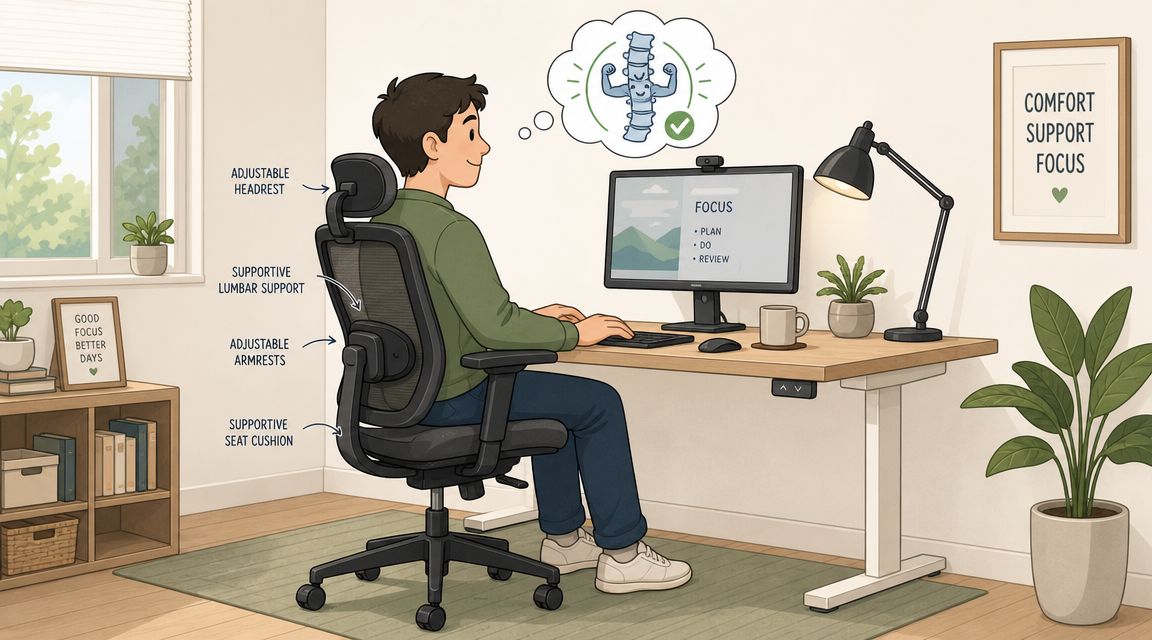
There are two measurements that shouldn't be treated as suggestions. For a functional home office, desk depth should be at least 24 inches and chair clearance should be roughly 30 to 32 inches, according to this small office planning guide. Those numbers protect monitor distance and basic movement.
That means a desk can be narrow in width if the room demands it, but it shouldn't be skimpy in depth. Shallow desks look neat in photos. In real life, they force compromises. The monitor sits too close. The keyboard crowds the edge. The whole setup starts feeling cramped before the workday even begins.
A simple measuring routine keeps mistakes from getting expensive:
- Measure the wall width where the desk will sit.
- Mark the desk depth on the floor with painter's tape.
- Add the chair zone behind it before buying anything.
- Test the pathway to doors, closets, and windows.
For anyone working through those dimensions, this desk measuring guide for a home office helps make the numbers easier to visualize.
Practical rule: If the chair can't pull back comfortably, the desk is too deep for the room or the room needs a different layout.
Pick the desk style after the measurements
Style comes second. Function comes first.
Here's a quick way to think about desk types in a small room:
| Desk style | Works well when | Watch out for |
|---|---|---|
| Writing desk | The room needs a clean, open look | Add storage elsewhere |
| Corner desk | The room has an awkward corner to use | Don't let it block movement |
| Secretary desk | The office shares space with a bedroom or den | Check door and drawer swing |
| Desk with hutch | Vertical storage is more useful than extra floor pieces | Make sure the upper section doesn't feel heavy in the room |
A writing desk often works best when the room already has a bookshelf or cabinet nearby. A corner desk can solve a layout puzzle, but only if it leaves enough room for the chair and traffic path. A secretary desk helps in multipurpose rooms where paperwork needs to disappear once work is done.
The mistake is choosing a desk because it looks small. The right choice is the desk that fits the body and the room at the same time.
Smart Seating That Saves Your Back and Space
Small office guides often obsess over tiny desks and fold-away surfaces. Fine. But the chair is where comfort is won or lost. Saving a few inches with a stiff, non-adjustable chair is a lousy bargain if the shoulders ache by lunch.
A small chair is not the same as a smart chair
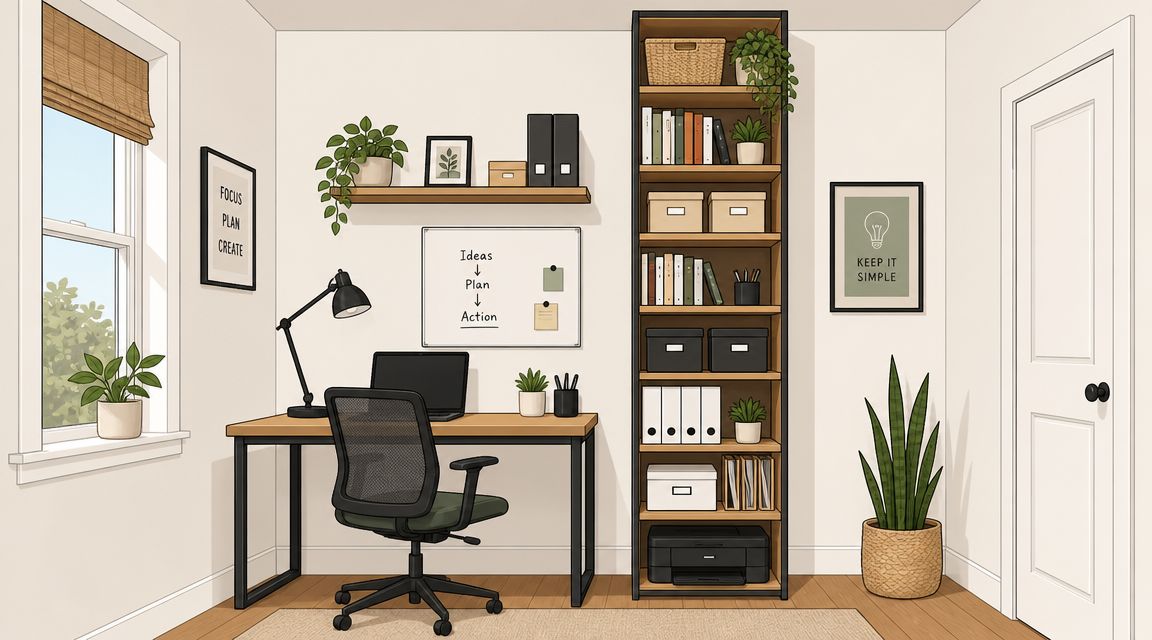
A common mistake in compact offices is prioritizing space-saving over ergonomics. Guidance on workstation comfort stresses that elbows should stay around 90 degrees while typing and the monitor should sit at or slightly below eye level. A chair that can't help create that position trades floor space for neck and back strain, as explained in this ergonomic setup guidance.
That's why the chair deserves serious attention. A dining chair, accent chair, or cute minimalist seat may look tidy, but it usually lacks the adjustments needed for a real work setup. In a room used every day, appearance alone doesn't cut it.
The better approach is to choose a chair that does three jobs well:
- Supports the lower back so the sitter isn't collapsing forward by midafternoon
- Adjusts to the desk height so the arms can work comfortably
- Fits the room visually without looking oversized or bulky
What to look for before buying
A good office chair for a compact room doesn't need to be huge. It needs to be right.
Here are the features worth caring about:
- Adjustability: Seat height matters because the desk and the body need to work together.
- Lumbar support: Built-in lower back support helps the body stay in a healthier posture.
- Compact footprint: Some chairs are scaled neatly without giving up support.
- Easy movement: A chair that glides and pivots well makes a small room feel less confining.
A useful place to compare supportive options is this collection of USA-made office chairs. The important point isn't the label. It's whether the chair can be adjusted to fit the person using it.
The right office chair doesn't make a small room feel smaller. It makes the room feel more usable.
That's the difference between furniture that merely fits and furniture that works.
Clever Storage Solutions to Conquer Clutter
In a small office, clutter doesn't stay quiet. One pile of papers turns into visual noise fast. A printer on the floor steals walkway space. Loose cords make the room feel unfinished, even when the furniture is attractive. Storage has to do more than hold things. It has to protect the room from chaos.
Build upward first
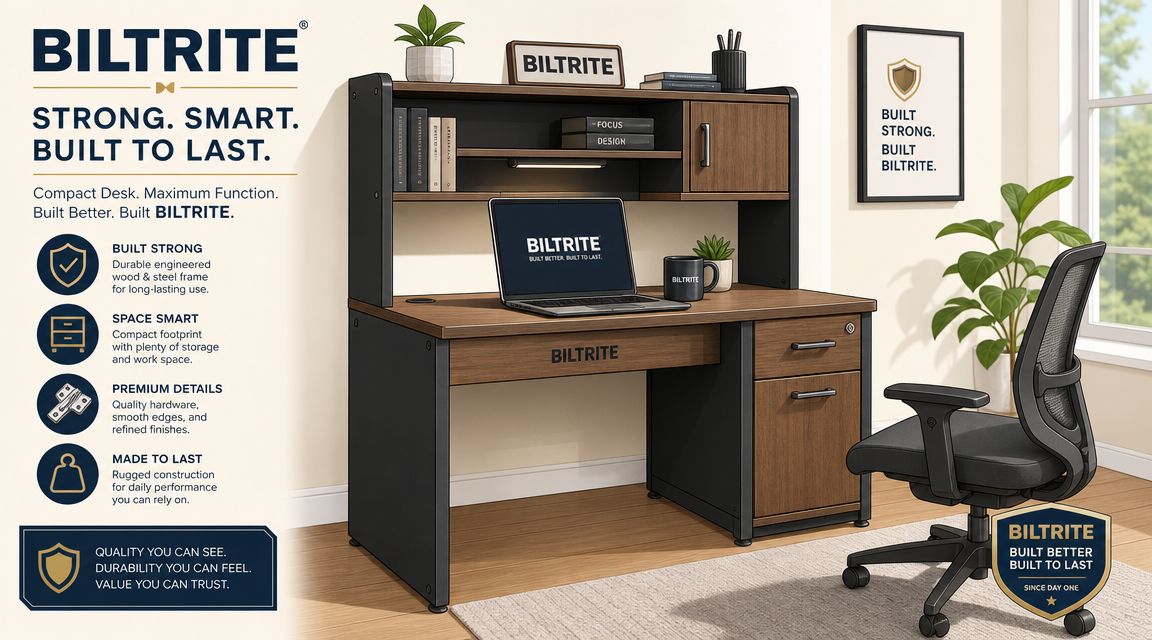
The smartest storage move in a tight office is usually vertical, not horizontal. Tall, narrow bookcases, hutches, and wall-adjacent cabinets keep supplies off the desktop without eating up the center of the room.
That matters because floor space does more than hold furniture. It carries movement. Once too many low pieces crowd the perimeter, the office starts feeling choppy and closed in.
A few vertical ideas work especially well:
- Tall bookcases: Good for binders, baskets, reference books, and display items.
- Desk hutches: Useful when paperwork and devices need to stay close to the workstation.
- Narrow cabinets: Handy for hiding printers, files, and less attractive office gear.
For homeowners who like a more built-in look, these corner and built-in cabinet ideas can spark better use of awkward wall space.
Choose storage that earns its footprint
Every piece in a small office should work hard. A compact credenza can store office supplies and hold a printer. A file cabinet can support a lamp or act as an extension of the desk. A bookcase can also anchor the room visually, especially when the desk itself has a lighter, simpler profile.
A smart storage plan usually follows this order:
- Keep daily-use items within arm's reach
- Move occasional-use items upward or behind doors
- Hide the ugly stuff, including paper stacks, cables, and extra accessories
- Leave some breathing room so the room doesn't feel packed
One overlooked detail is cable control. A desk may fit the room beautifully, but if cords spill down every side, the office still feels messy. A clear chair push-back zone also matters. Storage shouldn't sit where the chair needs to roll or pivot.
Well-chosen storage makes a compact office feel calmer. That's not decorating fluff. That's what helps a room stay workable on a Tuesday afternoon when deadlines, paperwork, and life are all happening at once.
The BILTRITE Difference Quality in Small Spaces
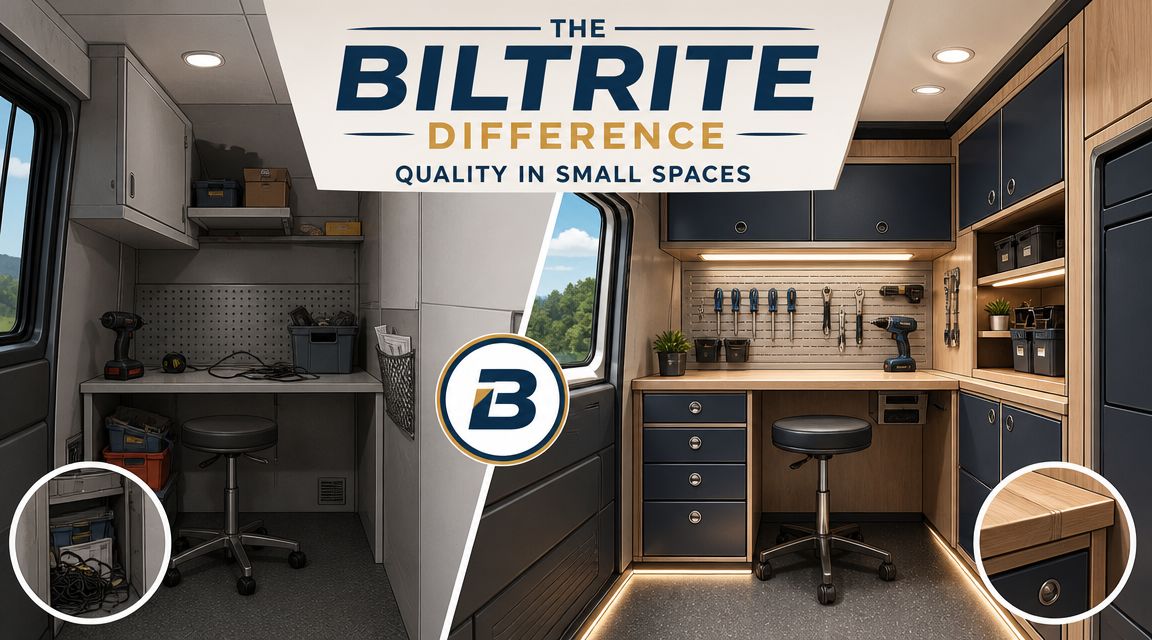
Small rooms expose weak furniture fast. A wobbly shelf feels wobblier. A sticky drawer becomes more annoying. A fold-away surface that seemed clever at first starts looking tired when it's used day after day. In a tight office, every piece gets touched more, bumped more, and relied on more.
Why quality matters more in a tight room
Durability often gets ignored in small-space advice. That's backwards. Compact spaces amplify wear on hinges and slides, which makes quality construction even more important, as noted in this small home office durability discussion. The better question isn't “What folds away?” It's “What stays sturdy and easy to live with for years?”
That's where solid wood, well-built joinery, and serviceable construction earn their keep. In a primary bedroom office, guest room office, or condo nook, the furniture isn't there for a season. It has to stay dependable through daily opening, closing, rolling, reaching, and shifting.
A few materials and construction choices deserve priority:
- Solid wood surfaces: Better for long-term use than flimsy tops that scratch and flex easily
- Smooth drawer function: Important in a room where storage gets opened constantly
- Stable shelving: A must when vertical storage does the heavy lifting
- Thoughtful delivery design: Especially helpful in apartments, condos, and tight stairways
Where long term value actually comes from
A lot of Milwaukee shoppers make a wise pivot. Instead of buying a temporary fix, they look for furniture that handles real life. That's a strong fit for Amish-made and USA-made construction, especially when the office needs to feel refined but still practical.
BILTRITE Furniture-Leather-Mattresses offers quality USA-made furniture along with Amish-made, solid-wood, and small-scale options that suit compact homes and condos. That matters because smaller rooms often need narrower proportions without sacrificing drawer quality, finish durability, or overall stability.
There's also a practical Milwaukee reality here. Some homes have tight corners, older staircases, or narrow hallways that punish bulky furniture during delivery. Pieces designed to come apart can solve access problems without settling for throwaway construction.
Good furniture for a small home office should survive daily life and still look settled years later.
That's the family secret in this category. Small-space furniture shouldn't be treated like disposable gear. In many homes, it works harder than the furniture in bigger rooms. It deserves to be chosen with the same care.
Your Small Office Checklist and Friendly Invitation
A small office comes together faster when the decisions stay simple. The room doesn't need dozens of clever tricks. It needs a few sound choices made in the right order.
Here's the shortlist worth keeping:
- Measure the full footprint: Get the wall width, usable depth, and traffic path before shopping.
- Protect desk depth: Don't go under the recommended working depth covered earlier.
- Save chair movement space: The chair needs room to pull back and pivot comfortably.
- Buy the chair like it matters: Because it does. Support beats novelty.
- Store upward, not outward: Tall pieces usually outperform extra low pieces in compact rooms.
- Choose construction with staying power: Daily use exposes weak hardware and cheap materials quickly.
That checklist works whether the office lives in a spare bedroom, living room corner, condo nook, or senior living apartment. It also helps prevent the most common regret in this category, which is buying for looks first and comfort second.
There's also a reason many homeowners still prefer shopping in person for home office furniture. Desks need to be opened. Chairs need to be sat in. Wood finishes need to be seen in real light. A small office is too personal to choose by guessing.
The showroom in Greenfield gives Milwaukee-area shoppers a chance to test proportions, compare support, and talk through room challenges with a team that's been helping local families furnish their homes since 1928. The store is closed on Sundays and Mondays for family time, and that family-first approach shows up in how the guidance is given. Calm, practical, and focused on what fits real homes.
Ready to make a small office feel comfortable, organized, and built for the long haul? BILTRITE Furniture-Leather-Mattresses welcomes Milwaukee-area shoppers to visit the Greenfield showroom, try desks and chairs in person, and get straightforward help from an experienced team that understands small spaces, solid wood furniture, and lasting value.