Find Your Forever Solid Wood Table Top

A lot of families start shopping for a table at the same moment. Breakfast feels cramped. The kids are spreading homework across every surface in the house. Holidays are coming, and suddenly that old table doesn't fit the way your life fits anymore.
We've seen that moment for generations in Metro Milwaukee. A table isn't just where you eat. It's where someone signs a first apartment lease, where birthday candles get blown out, where a grandparent teaches a card game, and where everybody drops their keys and mail even though they swore they wouldn't.
Our family has been helping local families choose furniture since 1928, and we still get excited about a well-built solid wood table top. Not because it's trendy. Because when it's made right, finished right, and chosen with care, it can stay in the family story for a long, long time.
Your Guide to Finding a Table That Tells Your Story
A Milwaukee family comes in on a Saturday afternoon and says, “We need a table that can handle everyday life and still look right when everyone comes over for Christmas.” That is a good question, because the right table has to do both.
Around here, a dining table rarely serves one purpose. It holds weeknight dinners, spelling lists, coffee mugs, elbows, card games, and the casserole dish that is still too hot for the placemat. A solid wood table top earns its keep in that kind of home because it is made for use, repair, and years of gathering, not just a quick first impression in a store.
That is one reason tables have stayed at the center of family life for so long. Styles change. Homes change. Daily routines change. Families still come back to the table.
In our family business, we have watched that play out for generations right here in Metro Milwaukee. One family is buying their first “grown-up” dining set. Another is replacing a table that got them through twenty busy years and now needs more seats for in-laws and grandkids. Another wants something made in America, built by Amish craftsmen, because they are tired of furniture that looks fine on delivery day and worn out a few years later.
A good table becomes part of the family rhythm. Over time, it also becomes part of the family memory.
That is why the phrase “solid wood table top” deserves a closer look. People use it loosely, but there is a real difference between a table that will age with your family and one that only copies the look of real wood. Wood species matter. Construction matters. Edge profiles, thickness, and finish matter too. Those details work together much like the foundation, framing, and roof on a house. If one part is poorly chosen, the whole piece feels it.
If you want a broader look at why so many families still choose this material, our guide to the benefits of solid wood furniture is a helpful place to keep exploring.
What 'Real Solid Wood' Actually Means
A lot of confusion starts with one simple question. What counts as real solid wood, and what only looks like it?
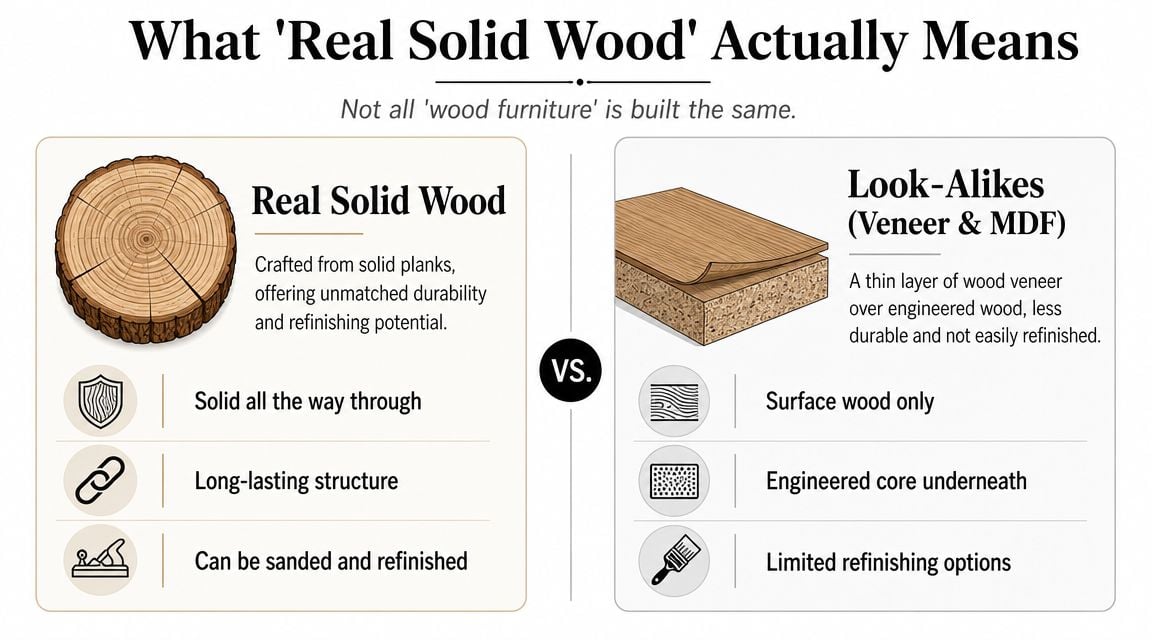
The easiest way to think about it is this. A solid wood table top is made from real lumber throughout the top itself. It isn't just a thin decorative skin on top of something else. When you look at the edge, the material continues through.
The simple comparison that helps most people
Consider it this way:
- Solid wood is like a real apple. What you see on the outside matches what's there all the way through.
- Veneer over engineered wood is more like a frosted cake. The outer layer may be attractive, but the inside is a different material.
- Printed wood-look surfaces are the farthest away. They can mimic the look from across the room, but they don't behave like real wood.
That difference matters most when life happens. Kids drag a backpack zipper across the top. Somebody drops a serving bowl. A ring from a wet glass sits too long. Real solid wood gives you more ways to respond.
Interior and furniture suppliers emphasize that solid wood is suitable for high-use furniture, is easy to maintain, and can be repaired when dents or scratches happen, which makes it cost-effective over time despite a higher upfront price, as explained in this wood table top guide from Inside Out Contracts.
Why shoppers care once they understand it
When people hear “solid wood,” they sometimes assume it only means “more expensive.” We'd frame it differently. It often means more recoverable.
Here's what that looks like in everyday terms:
- A scratch isn't always the end of the story. Solid wood can often be touched up, sanded, or refinished.
- Normal wear becomes part of the piece. Some marks blend into character instead of looking like failure.
- Maintenance is simpler to understand. You're caring for wood, not trying to protect a thin decorative layer from breaking through.
Practical rule: If you want a table that can age with your family instead of being replaced after the first rough season, start by confirming that the top is real solid wood.
In our showroom, we make that easier by marking genuine pieces with our Real Solid Wood icon. If you want a few easy ways to spot the difference before you buy, take a look at how to tell if furniture is real wood.
A Friendly Tour of Popular Wood Species
Once you know you're looking at a real solid wood table top, the next question is usually more fun. What kind of wood feels like your family?
Different species have different personalities. Some feel calm and clean. Some bring a lot of grain and movement. Some grow richer-looking with age. There isn't one right answer. There's just the wood that feels right in your kitchen, dining room, or open-concept space.
Oak feels grounded and familiar
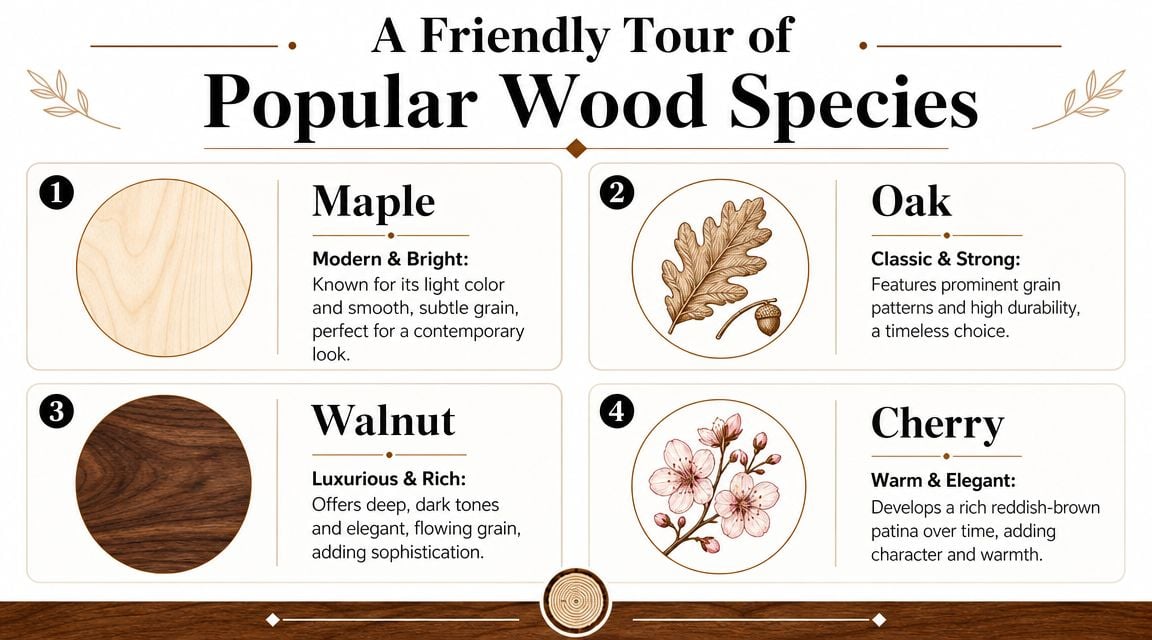
Oak is one of those woods people recognize almost instantly. It tends to show more grain, and that grain gives the top energy and texture. If you like a table that looks warm, sturdy, and full of character, oak often lands near the top of the list.
Commercial furniture guidance also points to oak as especially popular for its grain and visual appeal, which lines up with what we see in the showroom every day. Busy households often like it because the look already has movement, so daily life blends in naturally.
Maple keeps things lighter and cleaner
Maple usually gives off a smoother, brighter vibe. The grain is often more subtle, so the whole table can feel cleaner and more modern. If your room already has plenty going on, patterned rug, bold lighting, colorful chairs, maple can give your eye a place to rest.
It's also a wood people often choose when they want the shape of the table and the stain color to do more of the talking than the grain itself.
Cherry brings warmth that feels classic
Cherry has a softer elegance to it. Folks who like traditional styling often pause at cherry because it feels settled and refined without shouting for attention.
This is the wood for people who say things like, “I want it to feel timeless,” or “I want something that looks at home now and still looks at home later.”
Walnut makes a room feel richer
Walnut usually grabs attention fast. It's deeper in tone, more dramatic, and often chosen when someone wants the table to make a stronger visual statement.
In the right room, walnut can be stunning. It pairs beautifully with simple lines because the wood itself brings so much presence.
Some families choose wood for durability. Others choose it for mood. Most choose it for both, once they see the options side by side.
Here's a quick way to think about the four:
| Wood species | General look | Grain feel | Often loved by |
|---|---|---|---|
| Oak | Warm and traditional | More visible | Families who want character |
| Maple | Light and clean | More subtle | Shoppers who like a fresh look |
| Cherry | Warm and classic | Gentle movement | Homes with timeless styling |
| Walnut | Deep and dramatic | Rich and elegant | People who want more contrast |
If you want help narrowing it down, our article on what is the best wood for furniture can help match wood species to the way you live.
Understanding Your Table's Construction
Here's where showroom conversations get interesting. Two tables can both be real solid wood and still be built very differently.
Some shoppers fall in love with the idea of a single slab top. Others prefer a joined-panel top made from multiple solid boards. Both can be beautiful. The difference isn't just visual. It also affects how the top behaves over time.
Single slab and joined panel are not the same thing
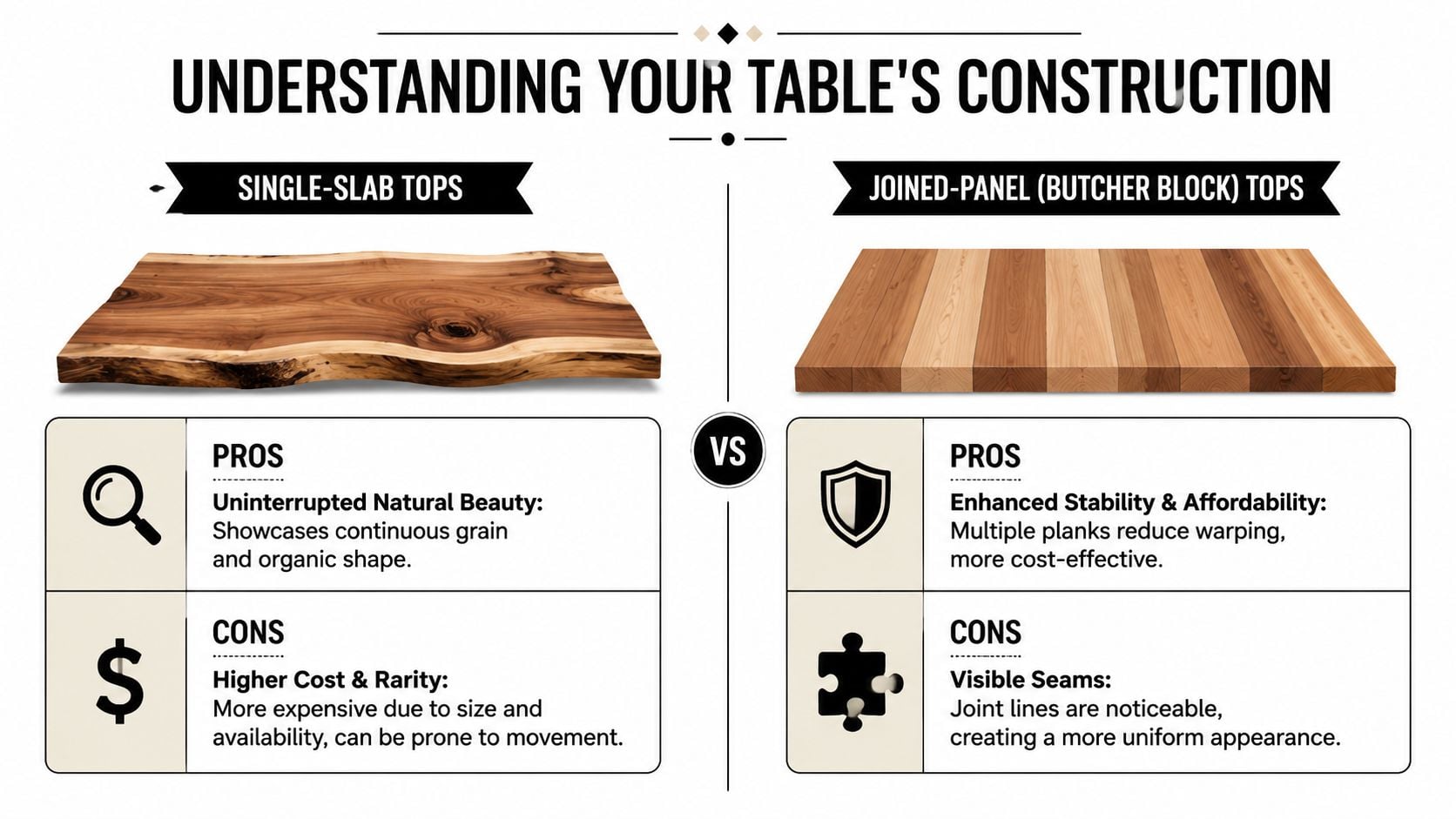
A single slab top is what it sounds like. One broad piece, or a large live-edge style cut, that showcases long continuous grain. It has a dramatic, natural look that many people love.
A joined-panel top uses several solid wood boards that are carefully joined together. Some people call this a plank top or butcher-block style look, depending on the design. It still uses solid wood, but the construction distributes the material differently.
Here's the practical comparison:
- Single slab appeal comes from uninterrupted grain and a more organic look.
- Joined-panel appeal often comes from a balanced appearance and a more everyday-friendly approach to large surfaces.
- Your room and climate matter because wood naturally responds to humidity changes.
Why stability matters in Wisconsin homes
Wood moves. That's normal. It expands and contracts with seasonal changes, and that's where craftsmanship matters more than showroom lighting ever will.
Most “solid wood table top” articles stop at wood type and edge shape, but shoppers usually want a clearer answer to a more important question. Will this top stay flat in everyday use?
Maker guidance emphasizes C-channel reinforcements as one way to help keep a top flat while still allowing the wood to expand and contract naturally, as discussed in Fine Woodworking's look at tabletop design details. That kind of thinking matters in homes with heating, air conditioning, and big seasonal swings.
A well-built table doesn't fight wood movement. It plans for it.
If you're comparing construction choices, keep these questions in mind:
- How large is the top? Bigger tops ask more from the build.
- How dry is your home in winter? Heated homes can be tough on wood.
- What support sits underneath? The base and reinforcement matter.
- How thick is the top? Proportion affects both look and confidence.
The joinery under the surface matters too. If you enjoy the craft side of furniture, our guide to what is mortise and tenon joint gives a closer look at one of the classic construction methods behind long-lasting wood furniture.
Choosing the Details That Make It Yours
This is where a table starts to feel personal. Two tops can be the same wood species and the same shape, yet look completely different once you change the thickness and the edge.
That's why these details matter more than many shoppers expect. They don't just decorate the table. They set its whole tone.
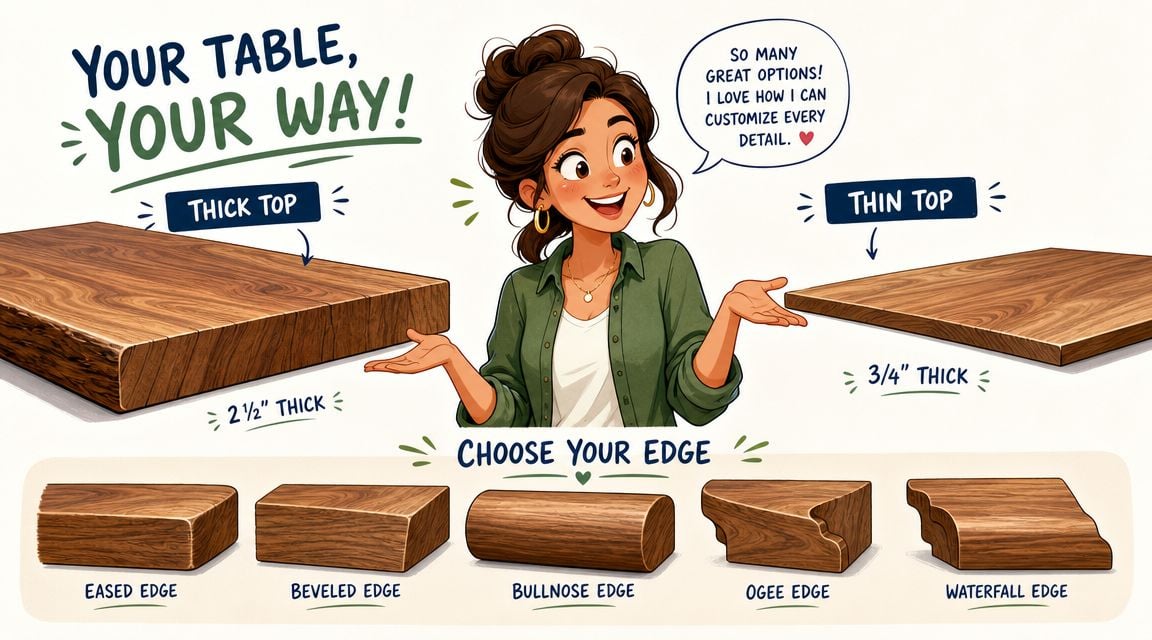
Thickness changes the mood fast
A thicker top usually feels more substantial. It can lean rustic, handcrafted, or bold depending on the base underneath. In a room with sturdy chairs and a strong trestle base, that extra visual weight can look right at home.
A thinner-looking top often feels more refined. It can read cleaner and a little lighter, which some people prefer in smaller dining rooms or more contemporary homes.
Fine Woodworking notes that underbevels can make a top look thinner, while bullnose or roundover edges can make it look thicker. That's a handy design trick because the actual build and the visual impression aren't always the same thing.
Edge profiles do more than trim the sides
A few common edge looks show up again and again for good reason:
- Bullnose or roundover softens the outline. Families with young kids often like the gentler feel.
- Beveled edges create a crisp, precise line.
- Square edges feel straightforward and honest.
- More shaped profiles can push the table toward a traditional or formal look.
If you're stuck, use the room as your guide. A farmhouse base can handle more thickness and softness. A sleek pedestal or modern leg set may look sharper with cleaner lines.
The small details are what make a table look like it belongs in your house, not just in a showroom.
Finishes Finishes and Caring For a Future Heirloom
Saturday night in a Milwaukee home often looks the same in the best way. Plates pass across the table. Someone sets down a cold glass without a coaster. A child drums a fork near the edge. A good solid wood table should be ready for real life, and the finish is a big part of that job.
Families usually ask us one simple question in the showroom. "Will this hold up?" That question makes sense, because the finish is the working coat your table wears every day. It helps the wood face spills, heat, sticky fingers, and the steady use that turns a dining table into part of the family story.
Some finishes leave the wood looking close to its natural self. Others build more of a protective shield on top. Neither choice is automatically right for every home. A busy house with school projects, holiday meals, and nightly dinners often benefits from a finish built for regular wear. A homeowner who loves a softer, hand-rubbed look and enjoys a little upkeep may prefer something with a more natural appearance.
If you want help sorting through those tradeoffs, our guide to the best wood finish for dining table explains the differences in plain language.
Care is simpler than many people expect.
You do not need special ceremonies or a cabinet full of products. You need a few steady habits that respect the wood and the finish protecting it.
- Wipe up spills soon. Water rings and sticky spots are easier to prevent than remove.
- Use a soft cloth for everyday cleaning. Gentle cleaning protects the finish instead of slowly wearing it down.
- Skip harsh sprays and abrasive scrubbers. If a cleaner sounds strong enough for tile or grease-cutting jobs, it is probably too strong for fine furniture.
- Set down trivets, pads, and coasters when it makes sense. Heat and moisture can stress even a well-finished top.
- Let the table show honest age. A well-made Amish or USA-made table is built to be lived with, not frozen in time.
That last point matters. Wood is a living material, even after it becomes furniture. Over the years, the top may pick up small marks, a little mellowing in color, and the quiet signs of birthdays, homework, Sunday breakfasts, and long talks after dinner. In our family, that is not a flaw. That is the beginning of an heirloom.
A future heirloom is not a perfect object. It is a table made from real solid wood, built with care, finished for the way your family lives, and maintained well enough to stay strong for the next set of hands around it.
Clean gently, protect the finish, and let the table gather memories along with miles.
Come See the Difference for Yourself
A Milwaukee family can do plenty of homework online, then still feel unsure until they stand in front of the table itself. That moment matters. You see how the grain moves across the top, how the color shifts in natural light, and how the whole piece feels in a real room instead of on a screen.
A solid wood table is a lot like a pair of work boots or a well-built front door. You can read the specs, but your hands and eyes tell you things a photo cannot. The edge profile feels different from one table to the next. The base can look light and graceful or steady and grounded. Two species with similar stain colors can still have completely different character once you are standing a few feet away.
That is why the showroom still helps so much, especially for families trying to choose a table that will host school projects, holiday meals, and ordinary Tuesday dinners for many years. When you compare Amish-made and USA-made pieces side by side, the differences start to make sense in a practical way. You can look underneath. You can check the top thickness. You can ask why one construction detail costs more than another and whether it matters for the way your family will use it.
At BILTRITE Furniture-Leather-Mattresses, those conversations are part of how we do business. Our family has spent generations helping neighbors sort through wood species, construction choices, and size questions without making the process feel stiff or confusing.
Come see us in Greenfield. Walk the floor, open a few leaves, study the grain, and ask every question you have. The right table should fit your home, but it should also fit your story, and that is easier to recognize when you are standing right in front of it.