How to Care for Leather Furniture


There's a special moment when leather furniture first lands in your home. The room feels warmer. The seat feels inviting. Even the family dog seems to know this is going to be a favorite spot.
Around here, we've seen that moment play out for generations. Our family has helped Metro Milwaukee homes get comfortable since 1928, and one thing stays true. Good leather can serve a family for a very long time if you treat it with steady, simple care.
A lot of people make leather care harder than it needs to be. They worry about using the wrong product, cleaning too often, or not doing enough. For those seeking how to care for leather furniture in a real house with kids, pets, snacks, blankets, and daily life, you don't need a complicated system. You need a routine that makes sense.
Welcome Your New Leather Furniture Home
A new leather sofa usually gets a grand welcome. Someone claims the corner seat. Someone else stretches out right away. Before long, it becomes the place for movie night, afternoon naps, and catching up as the day winds down.
That's why we always think of leather furniture as more than a purchase. It becomes part of the household rhythm. In our family business, we've watched quality pieces move with families from first homes to larger homes, from young kids to grandkids. That kind of longevity is one of the reasons we value well-made leather so much, especially in collections built for long-term comfort and everyday use.
If you're shopping and comparing materials, our guide to leather furniture quality is a helpful place to start. It gives you a good sense of what separates a piece that looks nice on the surface from one that's built to live well.
Leather rewards steady care
Leather doesn't ask for constant attention. It asks for the right attention.
Leather furniture is much like a good pair of boots or a favorite leather bag. If you ignore it completely, it can dry out, show wear faster, and lose some of its rich feel. If you clean and protect it the right way, it tends to age with character.
Practical rule: Leather furniture lasts longest when care becomes part of normal home upkeep, not a once-in-a-blue-moon rescue mission.
Busy homes need realistic habits
Most families don't live in museum conditions. They live with juice cups, blue jeans, pet paws, sunlight through the window, and people who flop down instead of gently sitting. That's normal.
The good news is that leather is often a very practical choice for active households. It can be durable, comfortable, and easier to stay ahead of than many people expect. The key is understanding what kind of leather you have first, because that changes how cautious or relaxed your care routine should be.
First Get to Know Your Leather
Before you buy a cleaner or reach for a conditioner, pause and identify the leather type. That one step clears up a lot of confusion.
Some leather is made to handle daily family life with less fuss. Some leather has a softer, more natural surface that looks beautiful but needs a gentler hand. If you treat every leather the same, that's when mistakes happen.
The three big categories
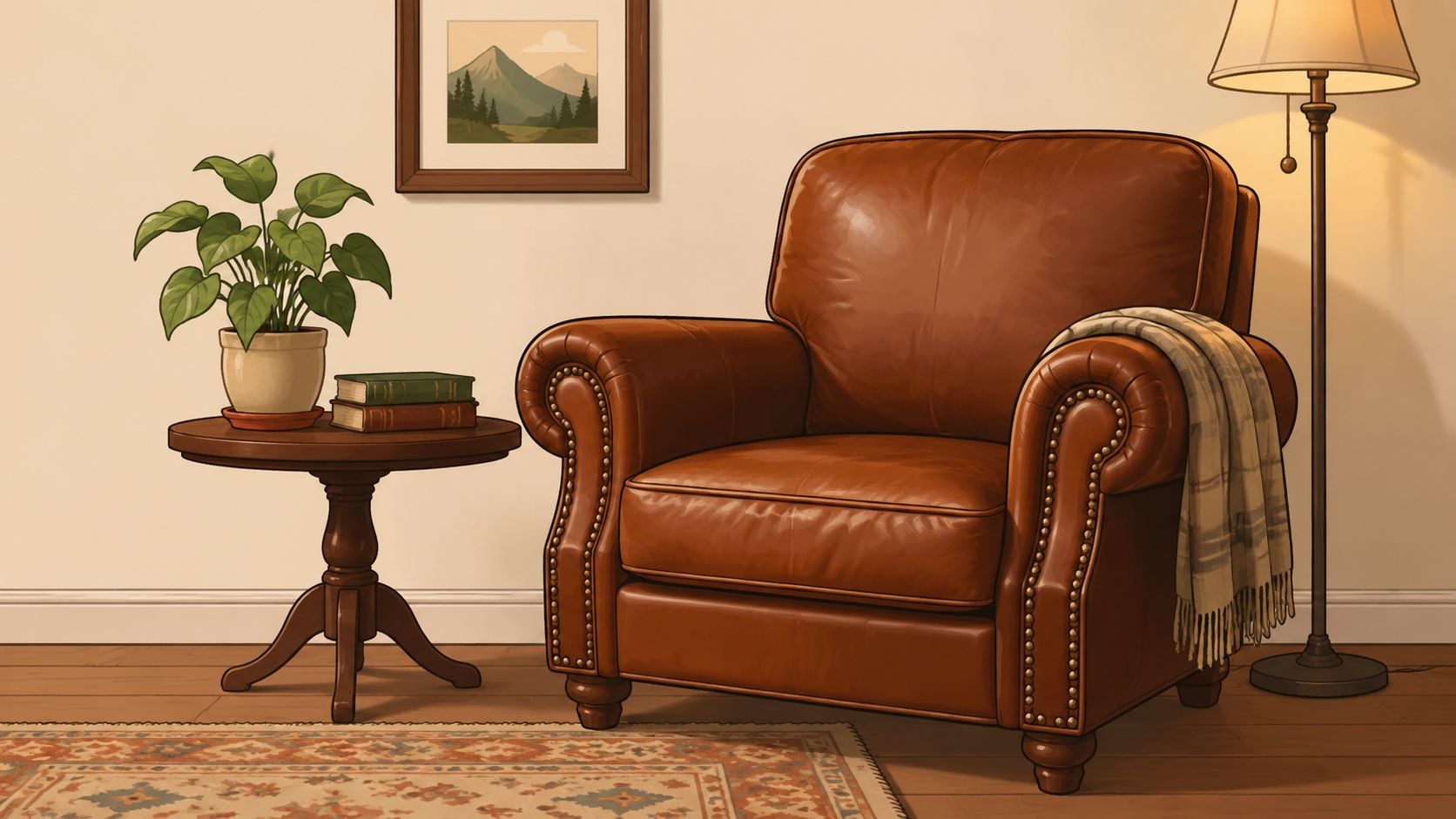
Here's the simplest way to think about the common types you'll see in furniture.
Protected or pigmented leather
This is often the most family-friendly option. It has a surface coating that helps resist everyday messes and makes routine care more forgiving.Aniline leather
This is the natural beauty of the group. It tends to feel soft and rich, and it shows more of the hide's natural markings. It also tends to need more thoughtful care because it has less surface protection.Semi-aniline leather
This sits in the middle. You still get a natural look and feel, but with a bit more protection than full aniline.
If you've ever wondered why one leather sofa seems easygoing and another seems touchier, this is usually the reason.
Why leather type changes your routine
Conditioning schedules aren't one-size-fits-all. One care guide notes that many care guides recommend conditioning every 3 to 6 months, although some brands specify longer intervals of 6 to 12 months or annually depending on use and leather type in this leather furniture cleaning guide.
That range tells you something important. The right timing depends on the finish, how much the piece is used, and what your home environment is like.
A protected leather sectional in a lower-traffic room may not need the same attention as an aniline chair in a sunny reading corner.
If you're not sure what you own
Check the tag or paperwork first. If that doesn't help, ask the store where you bought it. If you're still shopping and want a plain-English explanation of leather construction, our article on the difference between top grain and full grain leather can help you sort through the terminology.
Knowing your leather first saves you from over-cleaning, over-conditioning, and using the wrong product on a beautiful piece.
Your Simple Maintenance Routine
The best leather care routine is the one you'll stick with. In most homes, that means quick habits that fit into normal cleaning, not a big production.
One care guide recommends weekly dusting with a soft, lint-free cloth and vacuuming with a soft-brush attachment, plus deep cleaning and conditioning every 6 to 12 months in this leather furniture care article. That's a practical schedule because it focuses on prevention.
Leather Care at a Glance
| Frequency | Task | Why It Matters |
|---|---|---|
| Weekly | Dust with a soft, lint-free cloth | Removes surface dirt before it settles into the grain |
| Weekly | Vacuum seams with a soft-brush attachment | Lifts crumbs and grit from creases where wear often starts |
| As needed | Wipe with a slightly damp cloth | Freshens the surface without soaking it |
| Periodically | Deep clean | Removes buildup from body oils, daily use, and household dust |
| Every 6 to 12 months | Condition | Helps support softness and long-term appearance |
What this looks like in real life
If you already vacuum the living room each week, add the sofa seams while you're there. It takes a minute or two, and it helps remove the little bits of debris that can collect in stitching and corners.
For the visible surfaces, use a soft dry cloth for regular dusting. If the seat or arm looks like it needs a quick refresh, use a slightly damp cloth, not a wet one. You're freshening the leather, not washing it down.
The routine that works for families
In busy homes, the trick is to focus on the spots that get touched most often.
- Arms and headrests pick up body oils and everyday contact.
- Seat cushions collect crumbs, pet hair, and clothing friction.
- Seams and creases trap grit that can rub against the finish over time.
If you've got kids or pets, give these areas an extra glance when you tidy the room. Small upkeep beats aggressive scrubbing later.
For more gentle-care ideas, our post on how to clean leather furniture naturally offers another simple approach many homeowners find useful.
A little weekly attention is easier on your schedule and on the leather than waiting until the furniture looks tired.
Deeper Cleaning and Conditioning
Every so often, leather needs more than a quick wipe-down. This is the part that keeps it from feeling neglected.
A widely cited baseline for leather furniture is conditioning every 3 to 6 months, while a major retailer advises every 6 to 12 months, with about every 6 months for high-traffic areas and dry climates, according to this guide on how often to condition leather furniture. That wider range is why your room conditions matter. Dry air, winter heating, direct sun, and heavy daily use can all push leather to lose moisture faster.
The order matters
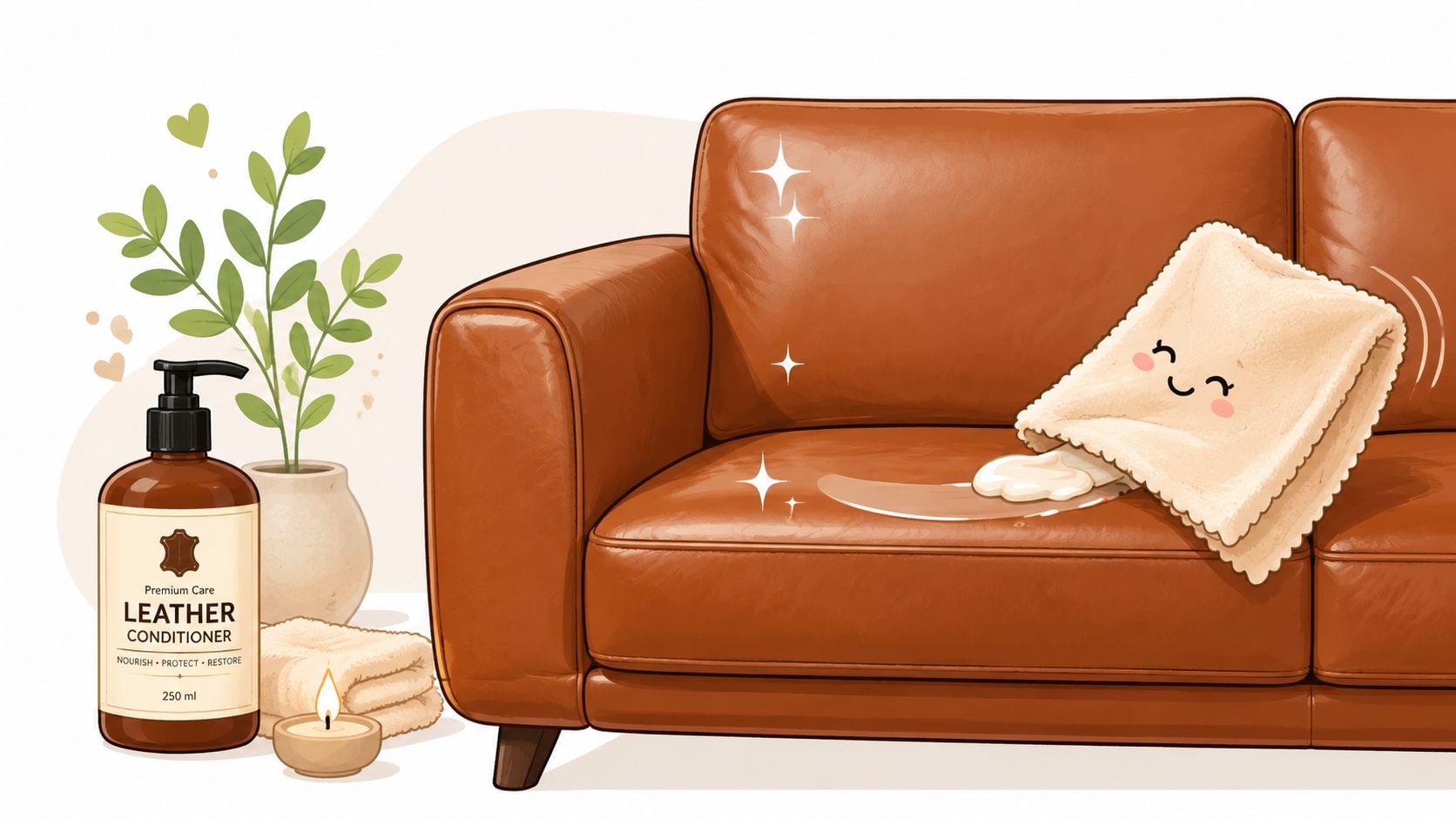
A lot of people want to jump right to conditioner. Don't.
Leather should be cleaned before it's conditioned. If you apply conditioner over dust, oils, or grime, you're not doing the leather any favors. You're just trapping buildup against the surface.
A safe step-by-step approach
Use a calm, gentle routine.
Remove loose debris first
Dust and crumbs should come off before any cleaner touches the leather.Test the product in a hidden spot
Under a cushion or along the back is usually a safe choice.Clean with a leather-safe product
Use a soft cloth and light pressure. No scrubbing.Let the surface dry fully
Don't rush this part.Apply a small amount of conditioner
More product isn't better. A light application is usually the smarter move.Buff gently with a clean cloth
You want the finish to feel cared for, not greasy.
Common mistakes to avoid
Don't apply a conditioner blindly just because the leather looks a little dull. Dirt, dryness, and product buildup can look similar at first glance.
Other mistakes are just as common:
- Using household cleaners that strip the finish
- Soaking the cloth instead of lightly dampening it
- Applying product directly to the leather instead of to the cloth first
- Using heat to speed drying, which can stress the material
If you want more detail on the conditioning side specifically, our how to condition leather sofa article walks through the process in a homeowner-friendly way.
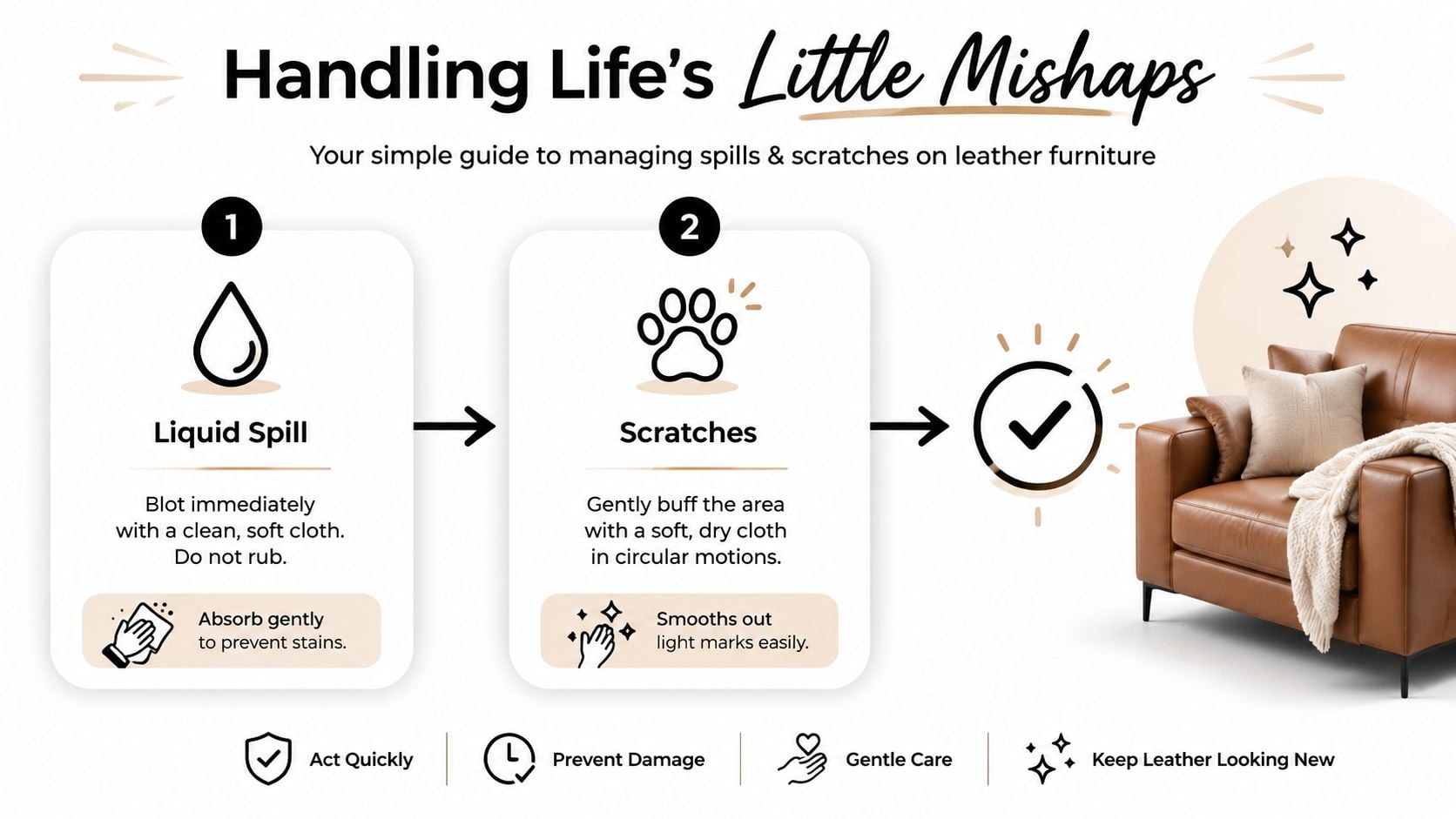
Handling Life's Little Mishaps
Real homes bring real surprises. A juice box tips over. Someone drops pizza sauce during the game. The cat decides one sofa arm is the ideal launch point. None of that means your leather furniture is ruined.
The biggest difference-maker is speed. Fast, gentle action usually gives you the best chance of keeping a small mishap from becoming a bigger one.
When something spills
If water, coffee, or another liquid lands on the cushion, blot it with a clean dry cloth right away. Press gently. Don't rub.
Rubbing can push the moisture farther into the leather or spread the mess outward. Blot first, then let the area air dry naturally.
When you spot a light scratch
Minor surface marks can look dramatic at first, especially on softer, more natural leathers. Sometimes they soften visually with very gentle buffing from clean fingertips or a soft dry cloth.
That said, restraint matters. If a mark doesn't improve quickly, stop experimenting. Deep scratches and unknown stains are often better handled by a professional than by a parade of internet remedies.
If a stain needs actual cleaning
When a spill leaves behind residue and simple blotting isn't enough, use a careful workflow. A sound process is to first vacuum, then spot-test any cleaner, then clean with a mild solution in gentle circular motions, and finally dry immediately with a clean microfiber cloth. Since that process was covered earlier from the leather care guidance, treat it as your go-slow model for spot cleanup.
Here are a few common household situations:
Sticky kid messes
Let the surface settle, then clean gently rather than scraping at it.Pet odor on a favorite seat
Address the source carefully and avoid masking it with random sprays. Our guide on how to remove odor from leather couch can help.Mystery marks
If you don't know what caused the stain, that's a good reason to move cautiously instead of trying three products in a row.
Some of the worst leather damage we see doesn't come from the original spill. It comes from panicked scrubbing afterward.
A Legacy of Quality and Your Invitation to Visit
Prevention is still the smartest form of leather care. Keep furniture out of harsh direct sunlight when you can. Give pets their own cozy throw or blanket on a favorite seat. Pay attention to high-wear spots before they start looking tired. Those small choices reduce the need for stronger cleaning later.
That matters even more in family homes. One useful insight for BILTRITE's audience is that a strong leather-care approach should translate generic advice into a practical plan for homes with kids or pets, including when to prioritize protection versus routine cleaning, as noted in this family-focused leather furniture care discussion. We agree with that completely. The “right” routine isn't the fanciest one. It's the one that matches how your household lives.
Why prevention wins
If a leather piece gets hammered by direct sun, rough debris in the seams, pet claws, and delayed spill cleanup, no conditioner in the world can undo all of that. Good care works best when it starts before visible trouble.
That's been part of our thinking for a long time. Since 1928, our family has believed that furniture should be comfortable, durable, and made for everyday living. We're proud to help Milwaukee-area families find affordable, better-quality pieces, many of them USA-made and Amish-made, that are built with the long haul in mind.
We're here if you want a second opinion
Sometimes the most helpful thing is talking it through with someone who sees furniture every day. If you're unsure what kind of leather you have, whether a spot needs professional help, or which style makes sense for your family, come visit us in Greenfield. Our team brings generations of hands-on experience, and we're happy to help without the pressure.
We don't sell online, and we're closed on Sundays so our families can be with each other. That's part of who we are. We'd love to help your family find furniture that feels right in your home and holds up beautifully over time.
Come see us at BILTRITE Furniture-Leather-Mattresses in Greenfield. If you've got questions about leather care, durable seating for kids and pets, USA-made options, Amish-made craftsmanship, or even mattresses for the whole household, we're here to help you sort it out in person. Stop in, say hi, and let our family help your family choose furniture built for real life.