Leather Furniture Quality: A Buyer’s Guide

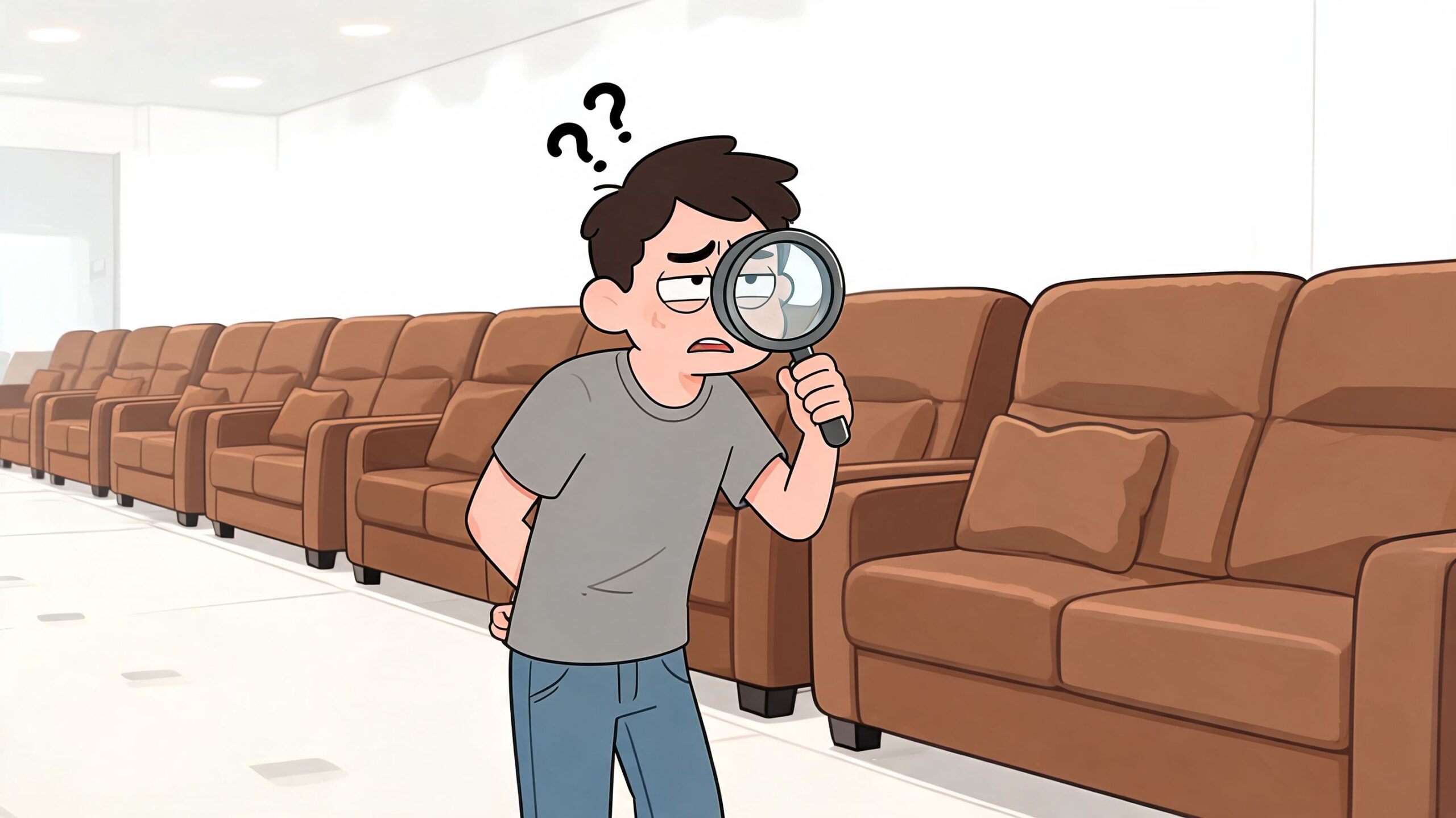
You're probably doing what most shoppers do. You open six tabs, compare a bunch of brown leather sofas, zoom in on the photos, read words like “genuine,” “top-grain,” and “premium,” and somehow feel less confident than when you started.
We see that every week in our showroom.
Our family has been helping Metro Milwaukee neighbors furnish their homes since 1928, and I'll tell you plainly. Leather furniture quality is not just about the leather tag. The leather matters, yes. But the frame, the cushions, the stitching, and the people explaining it to you matter just as much. Sometimes more.
A leather sofa can look rich on day one and disappoint you fast if what's underneath is weak. Another one can feel a little less flashy in the store and still be the piece your family loves for years. That's the difference between shopping by label and shopping by construction.
Why Trust a Local Family Not Just a Label
A young family came in not long ago after shopping online for weeks. They had screenshots on their phone, five nearly identical sofas, all described with the usual furniture buzzwords. Same color family. Same general shape. Same vague promises. They were frustrated because they couldn't tell which one was built to last.
That's the problem with shopping leather by label alone. A tag can give you a starting point, but it doesn't tell you how the seat feels after real use, whether the back cushions will hold shape, or whether the frame underneath has the backbone to support a busy household.
Why seeing it in person still matters
We're a fourth-generation family business in Greenfield, and we've learned something over decades of helping people furnish real homes. You can't judge leather furniture quality from a glamor shot.
You need to:
- Sit in it: A sofa can look terrific and still feel flat, bouncy, or awkward.
- Touch the leather: Some finishes feel natural and warm. Others feel overly coated.
- Check the details: Seams, cushion recovery, arm firmness, and overall weight tell you a lot.
A leather sofa is a long relationship. Don't choose it like you're swiping through photos.
Why local advice beats marketing language
We're proud to be a Milwaukee-area store that still believes in face-to-face help. Not pressure. Help. Our team has hundreds of years of combined experience, and that experience shows up in the questions we ask you.
Do you have kids? Pets? Is this for a formal room or the spot where everyone piles in for movie night? Do you want a leather that stays more uniform, or one that develops character with age?
Those answers matter more than fancy wording on a hang tag.
We're also proud of our USA-made and Amish-built roots because craftsmanship still means something. Good furniture isn't magic. It's honest materials, skilled hands, and construction you can trust when no one's looking underneath.
Decoding Leather Types and Grades
Let's clean up the leather language first, because the furniture industry doesn't always make this easy.
The short version is this. Full-grain leather sits at the top of the pile because the hide's top layer stays intact, which preserves natural strength and pore structure. Top-grain leather is the next tier. It's sanded and finished for a more even look, and that finish can improve stain resistance while giving up a bit of the hide's natural resilience, as explained in Bassett's leather furniture guide.
The four terms shoppers hear most
Think of leather a little like wood. Solid wood, veneer, engineered products. They're not all bad, but they're not all the same either. Leather works that way too.
| Leather Type | What It Means for You | Best For |
|---|---|---|
| Full-grain | Keeps the top layer intact, shows natural markings, wears beautifully over time | Buyers who want natural character, patina, and long-term durability |
| Top-grain | Sanded and finished for a more uniform appearance, often easier to live with day to day | Busy homes that want a balance of durability and a cleaner look |
| Genuine leather | A broad label, not a clear quality guarantee | Shoppers who are willing to ask more questions before deciding |
| Bonded leather | Made from leather remnants and other materials rather than a full hide surface | Lower-cost situations where long-term wear isn't the top priority |
My straight opinion on each one
Full-grain is for people who appreciate honesty in materials. You'll often see natural variation, and that's the whole point. It tends to age with personality instead of trying to stay frozen in time.
Top-grain is the practical workhorse for many households. If you've got kids, guests, snacks, and daily use, top-grain with the right finish can be a very smart choice. A lot of shoppers assume top-grain is somehow “second best” in a bad way. It isn't. It's often the sensible choice.
Genuine leather is where people get tripped up. The label sounds reassuring, but it can cover a wide range of materials and processing levels. So don't praise it and don't dismiss it automatically. Just verify what it is.
Bonded leather is where I tell folks to slow down and read carefully. If budget is the whole story, fine. But if you want long-term satisfaction, you need to know exactly what you're buying.
Practical rule: Don't buy leather furniture based on the word “leather.” Buy it based on the grain type, finish, and how the whole piece is built.
There's another wrinkle. Industry sources note there's no official universal grading standard, so manufacturers often use their own cosmetic grading systems rather than a true durability scale. That's one reason labels can sound more precise than they really are, according to this explanation of leather grades and grain types.
Looking Under the Hood at Furniture Construction
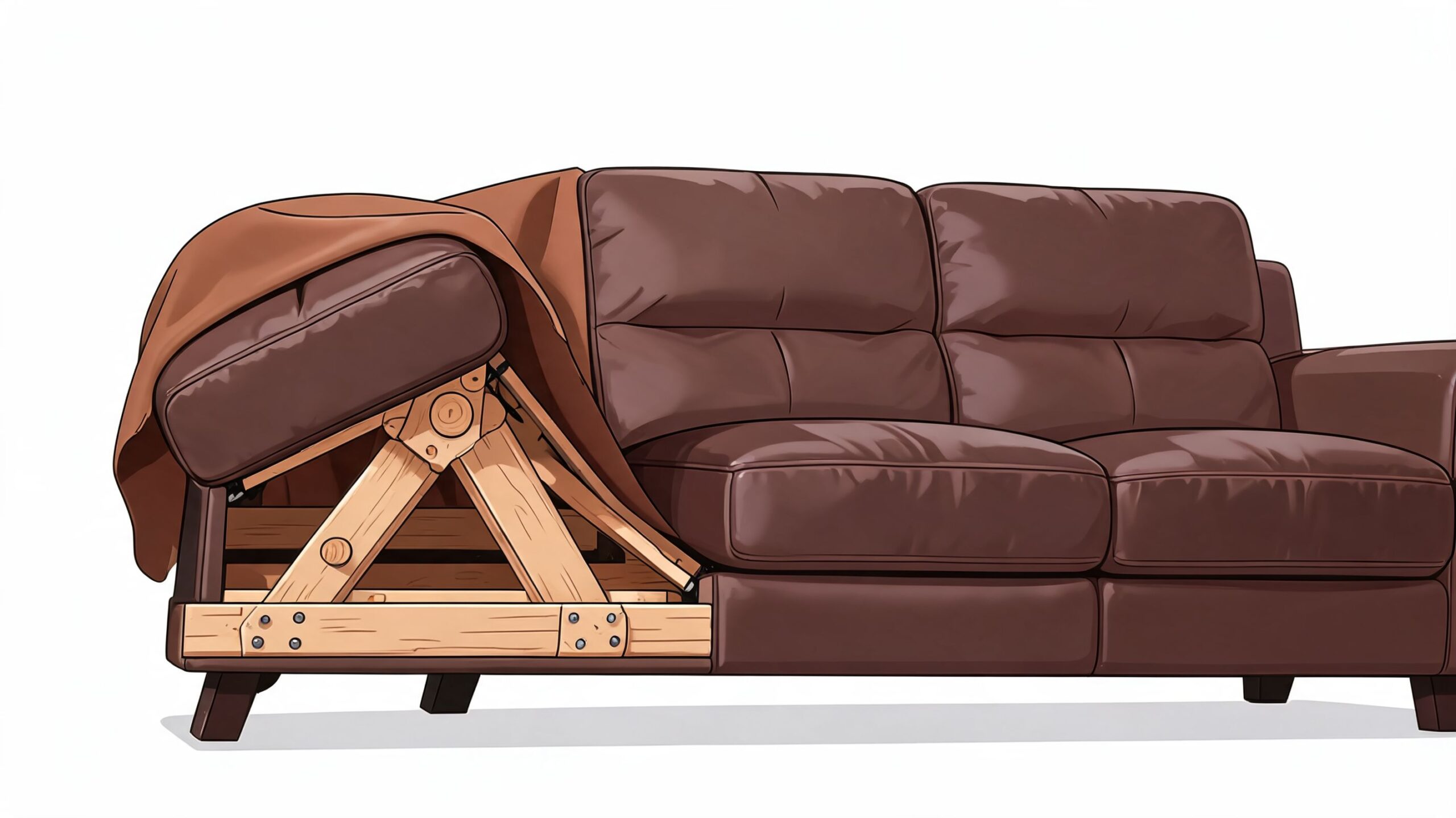
Here's the family-store truth that big marketing blurbs usually skip. The biggest quality risk in leather furniture often isn't the leather. It's the system behind it. A piece can fail early because the cushions compress, the frame weakens, or the whole upholstery job loosens up, even if the leather itself looks high-quality. That warning shows up clearly in this discussion of leather furniture wear and hidden construction issues.
That's why I tell shoppers to stop staring only at the upholstery and start asking what's underneath.
The frame matters more than most people realize
If the frame is flimsy, the sofa won't stay comfortable. It won't stay square. It won't age gracefully. You may see sagging, shifting, creaking, or cushions that never seem to sit right again.
When we talk up USA-made and Amish-built furniture in our store, this is a big reason why. Many of those makers still focus on the bones of the piece, not just the cover.
Here's what I want you to ask about:
- Frame material: Solid wood and quality plywood are worth your attention. Particle board is not where I'd want to place my bet.
- Joinery: Ask how the frame is connected. Strong joinery beats shortcuts every time.
- Seat support: Suspension affects comfort now and durability later.
If you want to understand why joinery matters, take a look at how mortise and tenon joints work in furniture construction. Old-school construction methods stuck around for a reason.
Don't ignore suspension and leather-match details
A handsome leather sofa can still be a disappointment if the seat support system is weak. You feel that over time, not always on the first sit. Some sofas start soft and then go dead. Others feel supportive from the start and stay that way.
And pay attention to leather-match construction. Some pieces use real leather on the touch areas and vinyl or another matching material elsewhere. That isn't automatically wrong, but it does come with a catch. Those materials can age differently, so the piece may wear unevenly over time.
That uneven aging surprises a lot of people because no one explained it clearly when they bought it.
My advice after years on the showroom floor
Pick the sofa with the stronger body, not just the prettier jacket.
If two sofas look similar and one has better frame construction, better support, and tighter upholstery work, that's the one I'd choose for my own home. Leather furniture quality starts below the surface. Always.
Checking Cushions Stitching and Finishes
Once you've sorted out the leather type and the construction, it's time to get hands-on. At this stage, smart shoppers separate sturdy furniture from showroom fluff.
Use your hands, not just your eyes
Press into the seat cushion and pay attention to what happens next. You want comfort, yes, but you also want recovery. A cushion that feels nice for five seconds and then acts tired isn't doing you any favors.
Look for these clues:
- Seat response: Press down, then watch how quickly it comes back.
- Arm firmness: Give the arms a gentle push. They should feel stable, not hollow or wobbly.
- Back support: Sit all the way back and see whether the support feels consistent or lumpy.
A lot of leather shoppers focus so hard on the hide that they forget they're really buying a seat. The cushion has to earn its keep.
Inspect the seams like a picky tailor
Good stitching looks boring. That's a compliment.
You want seams that are straight, tight, and consistent. Corners shouldn't look stressed. Pattern lines should meet cleanly. If the stitching already looks uneven on a new piece, time won't improve it.
Crooked seams on day one usually lead to bigger headaches later.
Finish and thickness tell you a lot
For durability, hide thickness and finish are key. Upholstery leather is often 0.9 mm to 1.6 mm thick, and a pigmented top-grain leather is often a smarter choice for heavy-traffic areas because it resists stains and scratches better, while full-grain is valued for the patina it develops over time, according to Decor-Rest's guide to leather furniture.
That's a useful reality check. The softest leather in the room is not automatically the smartest buy for a busy family room.
You can also ask about rub rating, which is one of the clearer durability benchmarks in leather upholstery. One industry guide explains that leather rub ratings run from about 9,000 for delicate leathers to more than 15,000 for heavy-duty use, and says 15,000 double rubs is sufficient for residential leather furniture. That same guide notes leather can last up to 20 years with proper care, while also warning that higher rub counts can come with less softness. It also lists full-grain leather at 15,000 to 30,000 rubs, top-grain and genuine leather at 12,000 to 15,000, and suede or bonded leather at 6,000 to 9,000, all in this overview of leather rub ratings.
If you want a few more practical inspection tips before you shop, these sofa buying pointers are a helpful companion.
Your In-Store Leather Furniture Checklist
You walk into a showroom, spot a handsome leather sofa, sit down, and immediately start picturing it in your living room. Stop right there. Before you fall for the color or the silhouette, check what's under the leather, how the seat is built, and whether the piece feels solid in the ways that matter after five or ten years of daily use.

Ask these questions before you buy
A good salesperson should answer these plainly. If the answers get fuzzy, move on.
What leather am I getting?
Ask for the specific type, not just “genuine leather.” You want to know whether it's full-grain, top-grain, corrected grain, or a leather-match product.What is the frame built from?
Look for hardwood or quality engineered plywood. Cheap, light construction shows up fast in wobble, noise, and sagging.How is the seat deck supported?
Ask what sits under the cushions. The support system does a big share of the work, and it has more to do with long-term comfort than shoppers are often told.What fills the cushions and backs?
Foam quality, density, and wrap matter. A beautiful leather cover cannot save a weak cushion.Where is this piece reinforced?
Corner blocks, strong joinery, and clean attachment points tell you the maker cared about the bones of the furniture, not just the cover.
Do these tests in the showroom
Use your hands. Use your eyes. Sit in the piece the way you will at home.
- Lift the front corner slightly: A sofa with some weight usually has more substance in the frame.
- Sit all the way back: Your hips should feel supported, not dumped into a hollow.
- Use the arm: It should feel firm and steady, not loose or crunchy.
- Press along the deck under the cushions: You're checking for even support, not soft spots.
- Study the seams at the corners: Straight stitching and tidy tailoring usually point to better workmanship.
- Check hidden areas: Under the cushions and along the outside back often reveal more than the sales tag does.
One more thing. Open the reclining mechanism if it has one. Listen for strain, feel for racking, and make sure the footrest closes cleanly. Motion furniture has more parts to get right, so sloppiness shows itself quickly.
Let construction break the tie
Two leather sofas can look nearly identical from six feet away. The better one is usually the one with the stronger frame, better support under the seat, and cushions that hold their shape. That local, hands-on inspection matters. Big box stores and online listings tend to sell the leather story first. A good furniture store starts with what's underneath.
Outside guides often make the same point in different words. Don't assume “genuine leather” tells you enough about quality. Materials and build details still need to be verified, as noted in this guide for spotting better leather.
If you want a practical set of questions to bring along, this leather couch buying guide for in-store shoppers is a good companion.
Caring for Your New Furniture and Our BILTRITE Promise
Once you bring home a good leather piece, don't overcomplicate the care. Most of the time, simple habits win.
Dust it regularly. Clean up spills promptly and gently. Keep it away from harsh sunlight and heat when you can. And use care products made for leather, not random household cleaners that were never meant for upholstery.
Small habits make a big difference
The nicest leather furniture I've seen age well usually belongs to owners who do the basics consistently. They don't scrub. They don't soak it. They don't ignore little spills for days.
If you want help with that part, this leather sofa conditioning guide gives a practical starting point.
Buy the right leather. Put it on the right frame. Give it simple care. That's the formula.
What our family believes
We've been serving Metro Milwaukee since 1928, and we still believe furniture shopping should feel human. You should be able to ask questions, get straight answers, and sit in the piece before you decide whether it belongs in your home.
We're proud of our family roots. We're proud of our USA-made and Amish-built furniture. We're proud that we focus on affordable, better-quality pieces instead of disposable stuff. And we're proud to be closed on Sundays and Mondays so our people can spend time with their families too.
That matters to us because homes matter. Family time matters. Furniture should support both.
If you're shopping for leather furniture quality and want honest, hands-on help, we'd love to see you in Greenfield. Stop by BILTRITE Furniture-Leather-Mattresses and sit in a few sofas, ask the tough questions, and let our family help yours find a piece that feels right for real life.