Shop daniels amish collection: BILTRITE Guide 2026


You know that feeling when a dresser drawer starts sticking, a table gets wobbly way too soon, or a bed frame starts making noise every time you roll over? Most of us have been there. You buy furniture hoping it'll carry your home for years, and instead it starts acting tired long before you are.
That's usually when people begin looking for something different. Not trendy for a season. Not “good enough for now.” Something made from real wood, built with care, and meant to stay in the family home for a long time. That's where daniels amish collection gets so much attention from shoppers who want substance, not shortcuts.
We've spent generations helping Milwaukee-area families sort through these choices, and one thing we've learned is simple. When furniture is built well, you can feel it right away. You see it in the grain, the weight, the joinery, and the way the piece sits firmly on the floor. Daniel's Amish is one of those names people ask about when they're ready to move beyond disposable furniture.
Your Search for Furniture That Truly Lasts
A lot of furniture shopping starts the same way. You're not hunting for “luxury.” You're trying to solve a real problem in your house. Maybe your dining table doesn't feel sturdy anymore. Maybe your bedroom set looked nice online, but it hasn't held up to everyday life. Maybe you're furnishing a first home and you'd rather buy once than keep replacing pieces.
That's why solid wood matters so much. It isn't just about appearance. It's about how a piece performs year after year. If you've been comparing materials and trying to understand why one dresser feels substantial and another feels hollow, our guide to the benefits of solid wood furniture is a helpful place to start.
What people are usually looking for
Most shoppers who ask about daniels amish collection are trying to find a few things at once:
- Durability for daily life so tables, beds, and dressers can handle regular family use
- A style that doesn't age quickly because nobody wants to redecorate around a passing fad
- Real materials that can be maintained and appreciated over time
- Choices so the furniture fits the room instead of forcing the room to fit the furniture
That last point trips people up. They assume “well-made” means “limited choices.” With Amish furniture, that often isn't the case.
Practical rule: If you want furniture that feels steady five or ten years from now, start by asking what it's made of and how it's joined together.
When shoppers first hear about Daniel's Amish, they're often relieved to find a brand built around those very questions. The appeal isn't mysterious. It's furniture for people who are tired of throwaway construction and want pieces that feel grounded, useful, and warm in a real home.
The Story Behind Daniel's Amish Craftsmanship
Some brands feel like they were created in a boardroom. Daniel's Amish has a different kind of story, and that's part of why people connect with it.
According to the company's own Daniel's Amish history page, the business began with Daniel Yoder, a humble Amish craftsman from Holmes County, Ohio. He first trained as a stone mason, then moved into woodworking after a family need arose. Over more than 20 years, that beginning in a one-room shop grew into a furniture company operating from two manufacturing facilities in central Ohio.
Why Holmes County matters
Holmes County is one of the places many people think of when they think about Amish woodworking. That location matters because it ties the furniture to a long-running craft tradition rather than a giant corporate production model.
If you've ever wondered what people mean when they talk about Amish-made furniture, our article on what Amish furniture is clears that up in plain language. It helps explain why shoppers often connect Amish furniture with patient craftsmanship, local hardwoods, and a slower, more deliberate way of building.
A brand that kept its roots
What stands out in Daniel's Amish story isn't just growth. It's the way the company describes that growth. The brand says it still focuses on hand-crafted products and locally sourced hardwoods from Ohio and Pennsylvania while producing from Holmes County.
That tells you something important. This isn't a brand trying to imitate handcrafted furniture with marketing language. Its identity starts with a working craft tradition and a regional furniture-making culture that people already trust.
Furniture feels different when it comes from a shop tradition instead of a volume-first mindset.
For many families, that story matters almost as much as the furniture itself. They want to know who's behind the piece in their bedroom or dining room. They want a sense that real hands, real skills, and real standards shaped what they're bringing home. Daniel's Amish gives people that connection.
Built to Last A Look at Materials and Construction
The biggest difference in daniels amish collection furniture shows up where many shoppers don't look at first. It's in the material choice and construction approach.
Daniel's Amish furniture is built from high-quality northern hardwoods, not engineered panel cores, according to Kloss Furniture's Daniel's Amish overview. That matters because hardwood construction offers higher screw-holding strength, better refinishing potential, and more stable joinery performance when compared with lower-density alternatives.
Why hardwood changes the conversation
Let's put that in everyday terms. When a dresser, table, or bed is made from solid hardwood, the hardware has more substance to grip into. That can make a difference in how the piece handles years of opening drawers, moving homes, tightening fasteners, and living through normal family wear.
Hardwood also gives you more options later. If the surface gets marked up over time, a solid wood piece has better refinishing potential than furniture built around thinner, less substantial materials. That doesn't mean every piece will need refinishing. It means the piece has more life in reserve.
What natural wood should look like
One point that confuses shoppers is variation. Real hardwood has differences in grain, color, pattern, and texture. Daniel's Amish describes those variations as inherent to the material, not defects.
That's an important mindset shift. If you're used to very uniform factory surfaces, natural variation can look unfamiliar at first. Then it becomes part of the charm. The grain isn't a printing effect. It's the wood itself.
A good way to understand this is to compare two dining tables side by side:
| Feature | Solid hardwood piece | Engineered-core lookalike |
|---|---|---|
| Surface character | Natural grain variation | More uniform appearance |
| Long-term repair potential | Better chance for refinishing | More limited |
| Hardware hold | Stronger screw retention | Often less robust |
| Feel in the room | Heavier, more grounded | Often lighter and less substantial |
Bed construction matters more than people think
Beds are where construction shortcuts show up fast. If a frame is underbuilt, you hear it. You feel it. Sometimes you even start adjusting your sleep habits around the noise.
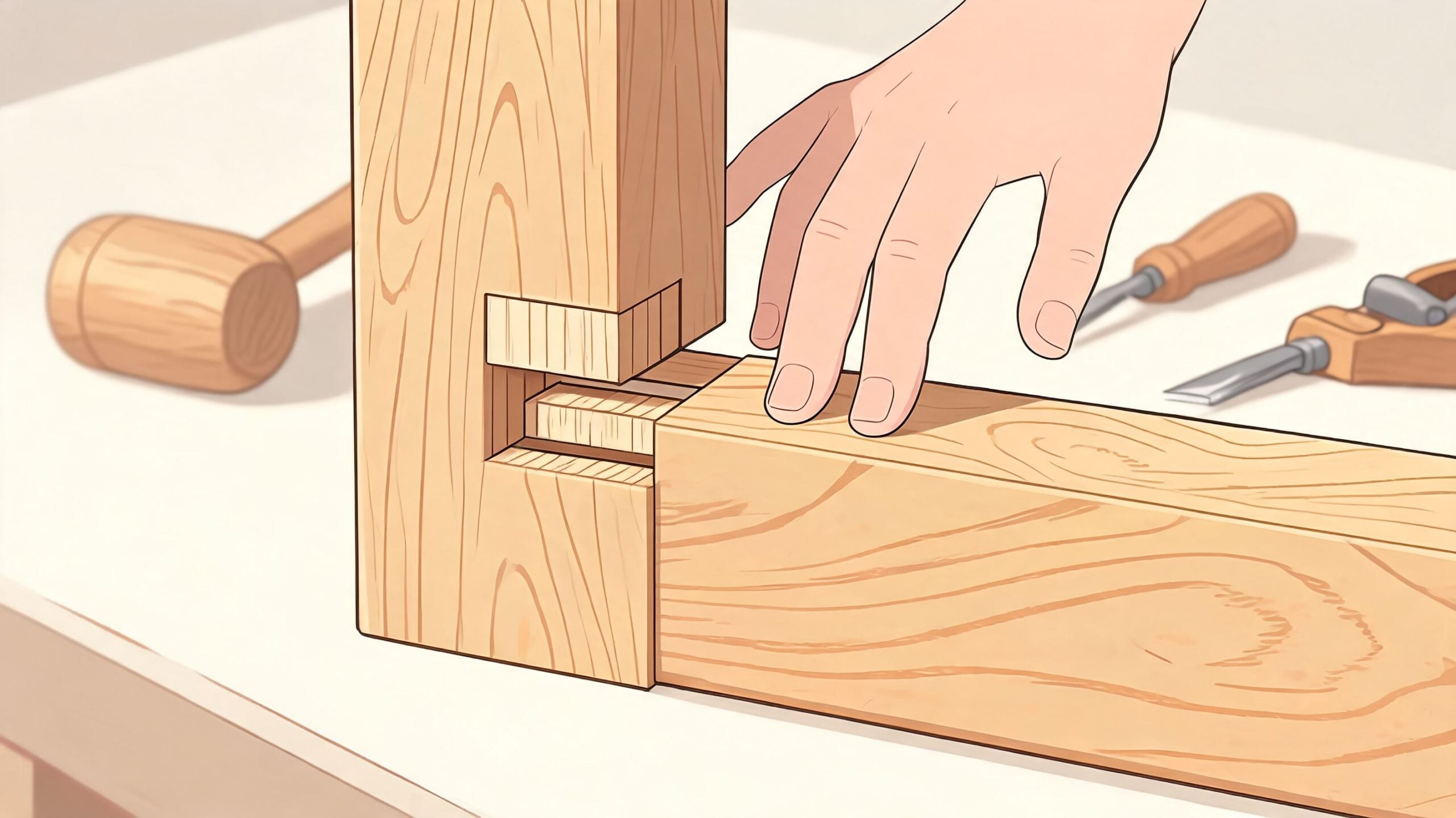
One useful detail to learn is the mortise and tenon joint, which has a long reputation in furniture making for strength and stability. We explain that more in our guide to the mortise and tenon joint, because it helps shoppers understand why some furniture feels tight and steady for years.
Here's the bigger takeaway. Daniel's Amish doesn't lean on surface beauty alone. The construction logic supports the look. That's what gives people confidence when they're buying for a main bedroom, a busy dining room, or any space where furniture gets used, not just admired.
Making It Your Own With Finishes Woods and Hardware
One of the most enjoyable parts of shopping daniels amish collection is realizing you're not locked into one exact showroom look. You're choosing a style direction, then shaping the details around your home.
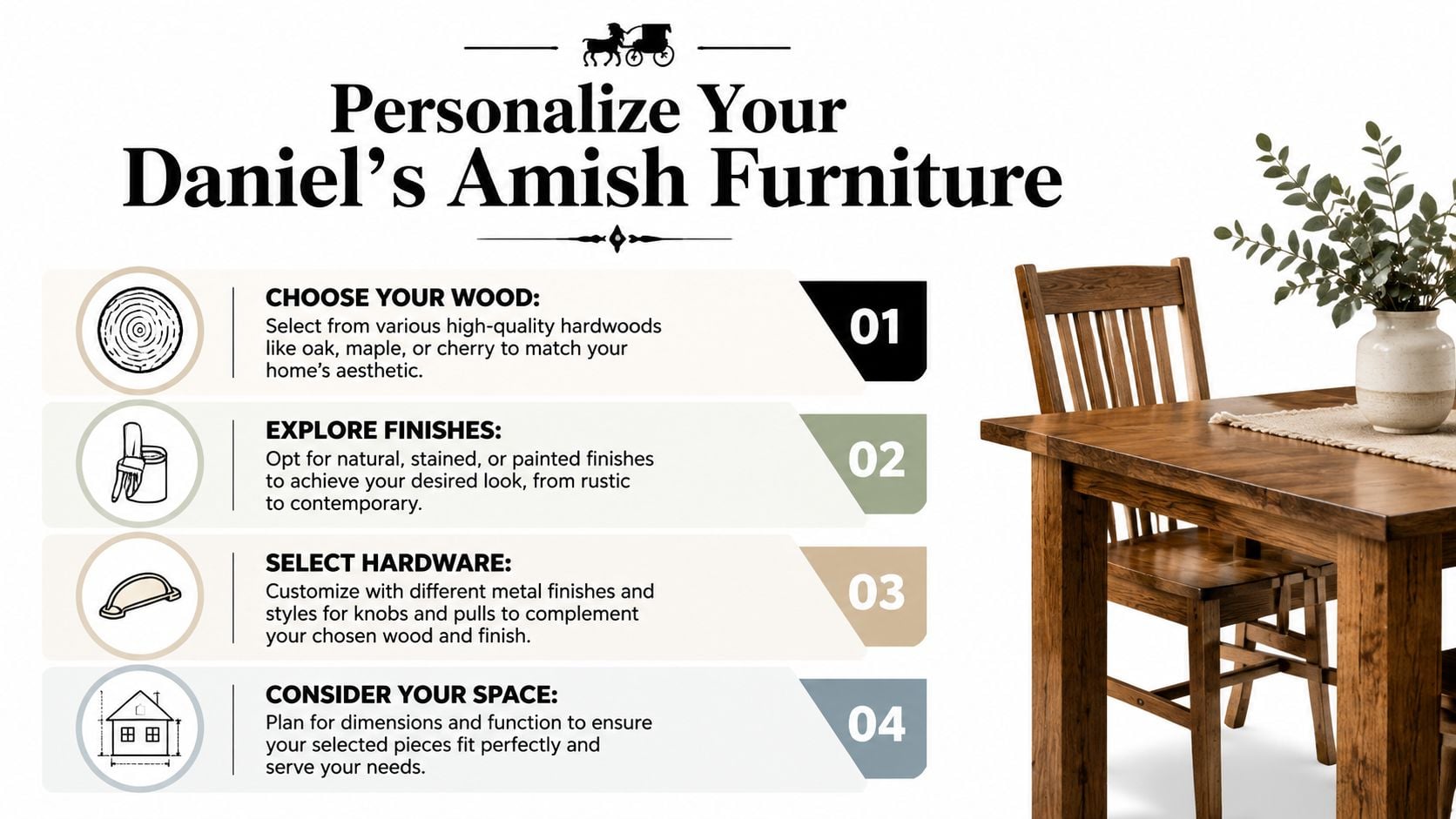
According to Prospeo's Daniel's Amish company profile, the brand offers over 50 finishes, 5 North American wood species, 70 hardware selections, 13 bedroom collections, and more than 20 dining table styles. That kind of range gives shoppers room to think beyond “Do I like this piece?” and move toward “How do I want this piece to live in my house?”
Start with the room, not the catalog
People often get overwhelmed by customization because they start with all the options at once. It's easier to begin with the room itself.
Ask yourself:
- What mood do you want? Warm and traditional, clean and simple, or somewhere in between
- What's already staying in the room? Flooring, wall color, rugs, or nearby pieces matter
- How much contrast do you want? Sometimes a lighter finish softens a room. Sometimes a darker finish anchors it
If you're deciding on a tabletop look, our guide to the best wood finish for a dining table can help you think through appearance and everyday use.
Four choices that shape the final look
Customization gets much easier when you break it into a few decisions.
Wood species
This affects grain character and overall personality. Some woods feel more casual and textured. Others read smoother and more formal.Finish color
This is often the biggest visual swing. A medium tone can feel cozy and classic, while a darker stain can add drama and depth.Hardware style Don't treat hardware like an afterthought. The pull or knob can nudge a piece rustic, transitional, or more polished.
Scale and function
A beautiful piece still has to fit the room and work for the people using it. Think about traffic flow, drawer access, chair clearance, and storage needs.
A custom furniture order usually goes more smoothly when you bring room measurements, a few photos, and one or two finish ideas instead of trying to decide everything from memory.
That's where this collection shines. You're not just picking furniture off a floor. You're building a piece that suits your home more closely, which is one reason customized Amish furniture feels so personal once it arrives.
Understanding the Value of Heirloom Furniture
A lot of neighbors who visit our Milwaukee showroom ask some version of the same question. Why would I spend more on a bedroom set or dining table when there are cheaper options all over the place?
That question makes sense. Furniture is a big purchase, and value is not just about the price on the tag. It is about how a piece lives with you year after year.
A Daniel's Amish piece usually costs more upfront than mass-produced furniture. The true comparison is what you get for that money over time. Solid wood construction, repairable parts, and classic styling often give you a piece that stays useful longer and looks at home through more than one season of life. If you want a fuller picture of that long-term math, our guide on how long furniture should last lays it out in practical terms.

Cost per year is often more useful than sticker price
Here is the simplest way to look at it. A lower-priced dresser that needs replacement sooner can cost more in the long run than a better-made dresser that keeps working beautifully for many years.
And the expense is not only financial.
You also spend time shopping again, arranging another delivery, clearing the room, and living with the frustration of hardware that loosened too soon or drawers that never worked quite right. Families feel that wear in daily life. A bedroom set is a little like a home's foundation trim. You may not focus on it every hour, but you notice quickly when it feels shaky, noisy, or out of square.
Kloss Furniture's bedroom overview for Daniel's Amish points to the same big idea behind heirloom-quality buying. The value shows up across years of use, not only on day one.
What “value” looks like in a real home
In our family at BILTRITE, we tend to talk about value in everyday terms. Does the table still feel solid after countless dinners? Do the drawers still glide well after years of socks, sweaters, and blue jeans? Does the bed stay quiet and sturdy instead of starting to creak after a short time?
Those are the moments that separate furniture you merely own from furniture you are glad you bought.
That is also why seeing Daniel's Amish in person matters. Online photos can show style, but they cannot fully show weight, steadiness, joinery, or how a drawer feels in your hand. In the showroom, you can test those details for yourself and decide whether the piece feels like something you want to live with for a long time.
Questions worth asking before you buy
If you are comparing Daniel's Amish with lower-priced alternatives, these questions usually bring the true value into focus:
| Question | Why it matters |
|---|---|
| What is the piece made from? | Material affects strength, repair options, and how the furniture ages |
| Can it be refinished or repaired later? | That gives the piece a longer useful life |
| Will the design still fit your home years from now? | Lasting style supports long-term satisfaction |
| How will it handle daily use? | Drawers, tops, and bed frames show weak construction quickly |
Worth remembering: Furniture that needs replacing every few years rarely stays the bargain it first appeared to be.
Heirloom furniture is not about putting a piece on display and being afraid to use it. It is about buying something dependable enough for real family life. That practical kind of quality is exactly why so many Milwaukee-area shoppers come to BILTRITE looking for Daniel's Amish in the first place.
How to Choose Daniel's Amish for Your Home
A good furniture choice starts with daily life, not with a showroom tag or a passing style. The piece that works beautifully for a quiet condo dining nook can feel too small in a busy family kitchen. A wide dresser that looks balanced in a suburban bedroom can overwhelm a tighter city space.
That is why I always suggest starting with the room's job. Ask yourself what happens there on an ordinary Tuesday. Do people gather around the table for dinner and homework? Is the bedroom mainly for sleep, or does it also need to store extra blankets, seasonal clothes, and all the little things that collect over time? Those answers usually point you toward the right size, storage needs, and construction details much faster than color alone.
Three ways to narrow your choices
A simple filter can make a big decision feel manageable.
Match the furniture to the room size
Measure more than the wall. Check walkway space, door swing, chair pull-out room, and how far drawers extend. Furniture works a lot like parking a car in a garage. Fitting inside is only the first test. You still need room to move around it comfortably.Choose for your busiest day, not your quietest one
If the table will host holiday meals, school projects, and weeknight takeout, choose the one built for that kind of traffic. If a bed will support a heavier mattress or get used hard every day, pay attention to the support system underneath, not just the headboard style.Compare the details that affect long-term comfort
As noted in Furniture Fair's explanation of Daniel's Amish bed construction, the company's frame beds include 12 proprietary cast-aluminum brackets and 5/4 dovetailed hardwood slats. Those are the kinds of hidden details that help a bed stay steady and quiet over time.
A few care habits go a long way
Solid wood furniture does not ask for fussy care, but it does reward steady habits.
- Dust gently and regularly so fine grit does not sit on the finish
- Use protection under hot or wet items on dining and occasional surfaces
- Lift instead of drag when moving pieces for cleaning or rearranging
- Watch direct sunlight if one side of the room gets stronger exposure than the other
For local shoppers, it also helps to compare different scales and wood looks in person before making a final call. A small-scale dining set, a deeper dresser, and a heavier bed can all be well made, but one will usually feel more natural in your home than the others.
The goal is simple. Choose a piece that fits your space, supports the way your family lives, and still feels right years from now. When those three things line up, Daniel's Amish tends to feel less like a purchase and more like part of the home.
Experience Daniel's Amish in Our Showroom
There's a limit to what a screen can tell you about furniture. You can read descriptions all day and still not know how a table feels under your hand, how a finish changes in the light, or how solid a bed frame sounds when you put weight on it.
That's one reason we still believe in the showroom experience. Families want to open the drawers. Sit in the chairs. Stand back and compare wood tones in real lighting. They want to ask, “Will this work with my floor?” or “Does this feel too large for our condo bedroom?” Those are easier questions to answer in person.
Why in-person shopping helps with Amish furniture
Daniel's Amish is especially worth seeing up close because so much of the value is tactile.
- You can study the wood grain instead of guessing from a photo
- You can compare finishes side by side and notice the warmth or depth of each one
- You can test construction feel by opening, closing, touching, and walking around the piece
- You can talk through customization with someone who understands room scale and everyday use
That kind of guidance matters when you're making a long-term purchase. It's also how confusion gets cleared up before an order is placed, not after.
What it's like to shop with us
We're a fourth-generation, family-owned business serving Metro Milwaukee since 1928, and that shapes how we do things. We're here to help people sort through options, not rush them. If you're comparing styles, trying to furnish a smaller room, or searching for a heavier-duty dining set for busy family life, we'll talk it through in plain English.
Our team brings over 400 years of combined experience, which means you can ask detailed questions and get real answers. That might be about wood character, finish direction, scale, delivery access, or how a piece may fit with what you already own.
Some furniture only makes sense once you've touched it, walked around it, and seen how the finish responds to light.
We're also proud of being a local showroom. We believe buying local keeps the process more personal and more accountable. If you've ever felt lost in the shuffle with a giant chain or an online-only seller, you already understand why that matters.
A family-first furniture store
We're closed on Sundays and Mondays so our team can spend time with family. We're proud of that. It reflects the kind of business we want to be in this community.
If you're shopping for more than one room, that visit can help in other ways too. Along with Amish and solid-wood furniture, our showroom includes small-scale options, heavier-duty pieces, and a mattress department with over 60 models and 500+ mattresses in stock. That gives families a chance to make thoughtful comparisons in one stop.
When you come in, you don't need a design degree or a finalized plan. Bring measurements, a few photos, and your questions. We'll help you sort out what fits your space, your style, and the way your household lives. That's usually the moment furniture shopping gets a lot less stressful and a lot more enjoyable.
We'd love to see you in Greenfield and help you explore daniels amish collection in person. Visit BILTRITE Furniture-Leather-Mattresses to learn more about our family-owned showroom, then stop in and say hi when you're ready to find beautiful, lasting furniture for your home.