Solid Wood Furniture Design: Elevate Your Home

You're probably in one of two spots right now. Either you've started shopping for furniture and every piece starts to blur together after the fifth showroom, or you've got a room at home that needs to work harder, look better, and hold up to real life.
That's where solid wood furniture design starts to matter.
For families around Milwaukee, furniture usually isn't just about filling a room. It has to survive weeknight dinners, kids doing homework at the table, guests dropping by, pets cutting corners too fast, and the daily wear that comes from living in your home. A good piece should feel good on day one, but it should also still make sense years from now.
Our family has been part of the Metro Milwaukee furniture world since 1928, and after generations in this business, we've learned something simple. People are happiest with furniture when they understand what they're buying. Not the fancy buzzwords. The core details. What it's made of, how it's built, why one dresser drawer feels sturdy and another feels flimsy, why one table gets better with age and another starts looking tired too soon.
Solid wood has staying power for a reason. If you want a friendly place to start, this guide on the benefits of solid wood furniture gives a helpful overview. In the sections below, we'll go deeper in plain English and keep it practical for real homes, real budgets, and real Milwaukee living.
Welcome to the World of Solid Wood Furniture
A lot of folks walk into a furniture store thinking they just need a table, a bed, or a chest. Then the questions start. Is this solid wood? Is that veneer? Why does one oak table cost more than another one that looks almost the same? Is solid wood too heavy for a condo, apartment, or senior living space?
Those are fair questions. We hear them all the time.
Solid wood furniture design is really the meeting point of material, craftsmanship, and everyday use. It's not just about the wood itself. It's about how that wood is chosen, shaped, joined, finished, and scaled for the home it's going into. A beautiful dining table that's too large for the room isn't good design. A dresser with nice color but weak construction isn't good design either.
Why people keep coming back to solid wood
Solid wood furniture has a long track record. Its history spans over 3,000 years, beginning with documented wood furniture in Ancient Egypt, and styles continued through major design periods including the Age of Oak from 1500 to 1660 and the Age of Walnut from 1600 to 1730, as described in this historical overview of wooden furniture eras.
That matters because it reminds us that solid wood isn't a passing trend. People have kept choosing it through changing styles because it offers warmth, repairability, and a sense of permanence that's hard to fake.
Solid wood often feels calmer in a room. It has visual weight, but it also has character. Grain, texture, and natural variation do a lot of the decorating for you.
What good design really means at home
Good solid wood furniture design should do three things well:
- Fit the room: The piece should suit the scale of the space, not crowd it.
- Handle daily life: It should stand up to use without feeling fragile.
- Still look right years later: Styles change, but strong proportions and honest materials age well.
That's the heart of it. Once you understand those basics, shopping gets much easier.
Understanding the Building Blocks of Great Furniture
The first step is knowing what you're looking at. Furniture labels can be confusing, and plenty of pieces look similar from across the room.
Here's the simplest way to think about it. Solid wood is wood all the way through. Veneer is a thin real wood layer over another material. Particle board is manufactured from wood particles and binders. Veneer has its place, and not every veneered piece is poor quality, but it doesn't behave the same way as a piece built from solid boards.
A neighborly comparison helps. Solid wood is like a real apple. Veneer is more like a sliced apple layered onto something else. Particle board is closer to an apple-flavored snack. They may all sit in the same category from a distance, but they're not the same thing once you look closer.

The wood species you'll hear about most
When shoppers talk about solid wood furniture design, they usually start with species. Each one has its own look and personality.
| Wood type | What it feels like in a room | Where it often shines |
|---|---|---|
| Oak | Strong grain, classic look, grounded feel | Dining tables, beds, storage pieces |
| Maple | Smoother, cleaner appearance | Casual modern pieces, dressers, bedroom furniture |
| Cherry | Richer tone, warmer personality | Formal dining, heirloom-style case goods |
| Hickory | Bold, rugged character | Heavy-use furniture and family-friendly pieces |
| Pine | Softer look, lighter character | Decorative or lower-impact use |
If you want a deeper species-by-species guide, this article on choosing the right hardwood for longevity and style is a helpful companion.
What grain means and why it matters
Grain is the natural pattern you see in the wood. Some boards have bold lines and visible movement. Others look quieter and more even. Grain changes the mood of a piece.
Oak often shows stronger grain, which gives furniture a more traditional or sturdy feel. Maple usually looks smoother and calmer. Cherry can bring warmth even when the design itself is simple.
Practical rule: If you want the wood to be the star of the room, pick a species with more visible grain. If you want a cleaner, simpler look, lean toward a smoother-grained wood.
A simple way to understand hardness
Wood hardness affects how a piece handles dents and daily bumps. The Janka Hardness Scale measures resistance to denting. Oak rates around 1,200 to 1,360 lbf, while Hickory can reach 1,820 lbf, which is one reason harder species are often chosen for heavy-use family furniture, as explained in this overview of the Janka Hardness Scale and wood durability.
That doesn't mean softer woods are bad. It means the best wood depends on the job. A busy kitchen table sees different wear than an accent chest in a guest room.
How Quality Wood Furniture Is Built to Last
Once you know what the furniture is made of, the next question is how it's put together. Quality often reveals itself quickly here.
You can spot a lot by opening a drawer, checking underneath a table, or feeling how a chair moves when you sit down. Strong furniture usually feels quiet and settled. Weak furniture tends to wiggle, rack, or rely too much on visible fasteners.
Why joinery matters more than people think
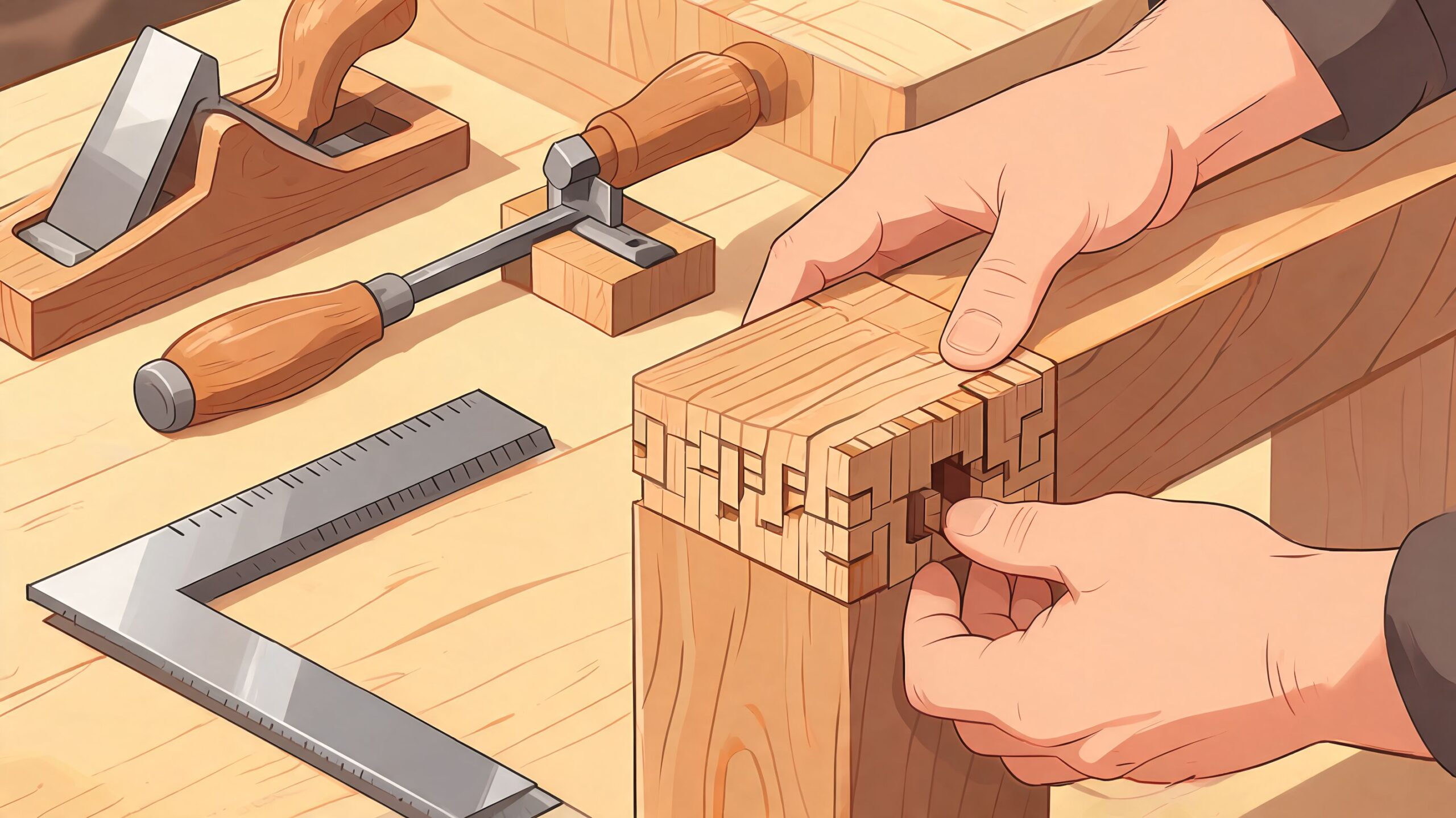
A lot of people focus on stain color first. That's natural. But the joinery often tells you more about the life of the piece than the finish does.
One of the best-known examples is the dovetail joint. It uses interlocking shapes that hold together mechanically, not just with glue or screws. A well-made dovetail joint can withstand over 1,000 psi of shear strength without adhesive, which makes it 4 to 5 times stronger than a simple butt joint, according to this guide to identifying genuine solid wood furniture and dovetail construction.
That's a fancy way of saying this. When you pull a drawer open over and over for years, good joinery helps it stay square and solid.
What to look for in a drawer, chair, or table
If you're standing in a showroom and want a quick quality check, start here:
- Open the drawers: Look for interlocking corners instead of plain stapled boxes.
- Grip the chair arms or back: A sturdy chair shouldn't feel loose when you shift your weight.
- Check under the top: Tables need support underneath, not just a nice-looking surface.
- Look inside the case piece: The interior should feel finished and intentional, not rough and rushed.
For another classic construction method, this explanation of what a mortise and tenon joint is is worth reading. It's one of those old-school building methods that still earns respect for good reason.
If a piece feels strong in the quiet moments, opening a drawer, sliding a chair, resting your hand on a table edge, it usually keeps earning that trust at home.
The connection to Amish and USA-made craftsmanship
Traditional American and Amish builders tend to keep these time-tested construction methods front and center. That approach has roots in the late 19th century and early 20th century, when the Arts and Crafts movement emphasized hand-joinery, solid wood construction, and respect for craftsmanship, as described in this history of furniture craftsmanship and the Arts and Crafts movement.
That heritage shows up in furniture that feels made by someone who expected it to be used, not just displayed.
Finding Your Family's Style in Solid Wood
Some people hear “solid wood” and think it locks them into one look. Maybe something formal. Maybe something old-fashioned. That's one of the biggest misconceptions in furniture shopping.
Solid wood furniture design can feel customized, cozy, crisp, relaxed, or even spare, depending on the lines, proportions, finish, and hardware. The material is timeless. The style can move in a lot of directions.
Four looks that work in real homes
A simple way to sort styles is to think about how the room should feel when you walk in.
Shaker furniture is calm and uncluttered. A Shaker dining table doesn't need extra fuss to feel elegant. It usually relies on clean lines, sensible proportions, and wood grain to do the work.
Mission style has more visual weight. You'll often see stronger posts, slats, and a grounded, honest feel. It fits well in bungalows and homes where you want furniture to feel sturdy and rooted.
Modern wood designs strip things back. The lines are cleaner, the shapes are simpler, and the wood often becomes a warm contrast to metal, upholstery, or lighter wall colors.
Rustic pieces lean into texture and personality. They can help a newer home feel more relaxed and lived-in.
Matching style to the way you live
Many people get stuck, often asking, “What style should I buy?” A better question is, “How do I want the room to function and feel?”
- For busy family dining spaces: Mission or simple Shaker styles often hide daily life well and still look sharp.
- For lighter, airier rooms: Modern maple or lighter oak can keep things open.
- For cozy gathering rooms: Rustic or warm cherry tones can add comfort fast.
- For mixed homes: A clean-lined solid wood piece often bridges traditional and newer décor without fighting either one.
A well-chosen wood piece doesn't need every other item in the room to match it exactly. It just needs enough honesty in shape and material to belong there.
Why these styles stay relevant
Solid wood furniture has stayed in use for over 3,000 years, and that long history matters because it shows how well wood adapts across changing tastes. The same historical review that traces furniture back to Ancient Egypt also notes major style periods like the Age of Oak from 1500 to 1660 and the Age of Walnut from 1600 to 1730, showing that good design in wood keeps evolving without losing its appeal.
That's why solid wood can work in a classic colonial home, a Wauwatosa bungalow, or a condo with a much newer look. The material has range.
Choosing Wood Furniture for Your Milwaukee Home
Around Milwaukee, one of the biggest mistakes people make is assuming solid wood only belongs in a large house with oversized rooms. That's just not true.
A lot of local homes call for thoughtful scale. Bay View apartments, Greenfield condos, older bungalows, and senior living spaces often need furniture that works hard without taking over the room. Good solid wood furniture design should fit those homes just as naturally as it fits a larger suburban dining room.

Small scale doesn't mean low quality
There's rising interest in small-space solutions in urban areas like Milwaukee, and solid wood remains a strong option. As noted in this discussion of small-scale USA and Amish-made furniture for tighter spaces, well-designed small-scale pieces can offer durability and style without overwhelming apartments, condos, or senior homes.
That's good news, because smaller rooms still deserve furniture with substance.
A narrow dining table in solid oak can work beautifully in a compact eat-in kitchen. A well-proportioned maple chest can add storage in a bedroom without making the whole space feel crowded. A come-apart sofa can solve delivery headaches in older Milwaukee buildings with tricky staircases and tighter doorways.
How to choose for your kind of home
Different spaces call for different priorities. Here's a practical way to think through it.
For apartments and condos
Look for pieces with cleaner lines and lighter visual mass. Raised legs, slimmer tops, and simpler profiles help a room feel less crowded. A smaller solid wood dining set often works better than one oversized statement table that dominates everything.
For family homes with heavy daily use
Focus on durability first. Dining tables, bedroom storage, and living room occasional pieces take more abuse than people expect. Harder species and sturdy construction usually pay off in these high-traffic zones.
For senior living and caregiving situations
Ease matters. Look for supportive seating, reachable storage, sensible heights, and pieces that don't ask too much effort from the user. Stable wood furniture can be a very smart choice when comfort and confidence matter just as much as style.
The best furniture for a Milwaukee home usually solves a room problem first. Style comes with it, but function should lead.
A quick room-by-room guide
| Room | Smart solid wood choice | Why it works |
|---|---|---|
| Dining nook | Small-scale round or narrow table | Easier traffic flow |
| Bedroom | Tall chest instead of wide dresser | Uses vertical space |
| Living room | Compact end tables with storage | Adds function without bulk |
| Entryway | Slim console or storage bench | Organizes tight spaces |
Solid wood doesn't need a giant footprint to make an impact. It just needs the right scale.
The Finishing Touches Finishes Hardware and Care
This is the part many shoppers enjoy most. Once you've found the right style and construction, the finish and hardware help make the piece feel like it belongs in your home.
A finish changes how the wood reads. The same maple frame can feel light and casual with a natural finish, more formal with a deeper stain, or softer and more transitional with a medium tone. Hardware matters too. Knobs and pulls can nudge a dresser toward farmhouse, traditional, modern, or classic American styling.
For a helpful look at finish choices for one of the hardest-working pieces in the house, this guide on finding the best wood finish for your dining table is a smart read.
Matching finish to function
Not every room asks for the same kind of finish.
A dining table for family meals needs a finish that can handle regular use and clean-up. A bedroom chest may be chosen more for visual warmth and touch. In heavy-duty or senior-friendly furniture, the finish and hardware play a practical role too. According to this discussion of solid wood customization and durable design choices, choosing the right durable finish and hardware on a solid maple or cherry frame can support over 400 lbs of use and help a piece last 20+ years.
That's a big reason customization matters. The right details aren't just decorative. They can support how the piece performs.
Simple care that goes a long way
Wood care doesn't have to be fussy. Most families do better with a few steady habits than with a cabinet full of specialty products.
- Dust gently: Use a soft, dry cloth for everyday care.
- Clean spills promptly: Don't let moisture sit longer than necessary.
- Use protection where it counts: Pads, trivets, and placemats help on hard-working surfaces.
- Avoid harsh cleaners: If a product feels aggressive, it usually is.
- Rotate use when possible: Seats, mattress surfaces, and frequently used spots wear more evenly when use is spread around.
Keep the routine simple. Furniture lasts longer when owners care for it consistently, not when they over-treat it once in a while.
Where shoppers often get confused
People sometimes think solid wood has to look rustic, dark, or high-maintenance. It doesn't. A lot of today's best solid wood furniture design feels clean, flexible, and easy to live with. The finish just helps steer the mood.
Why Buying USA-Made from Our Family Matters
Buying furniture is personal. You're bringing something into your home that your family will touch every day. That's why where it comes from still matters.
USA-made and Amish-made furniture often reflects a mindset that values materials, craftsmanship, and long-term use over quick turnover. You can feel that in the joinery, in the finish work, and in the way a piece settles into a room without feeling disposable. For many Milwaukee-area families, that kind of value still means something.
We're proud of that tradition because we've lived it. Our family has served Metro Milwaukee since 1928, and being a fourth-generation business shapes how we see furniture. We believe in helping people choose well, buy local when they can, and invest in pieces that make daily life easier and more comfortable. We're also proud to be closed on Sundays so our own families can be together. Those values are part of who we are.
If American craftsmanship is important to you, you can browse more about American-made furniture companies and then come see the materials, construction, and finish options in person. That hands-on part still matters.
Solid wood furniture design isn't only about style. It's about trust. Trust in the material, trust in the build, and trust that the piece you bring home will still feel right after years of use.
If you'd like to see real solid wood, Amish-made, USA-made, small-scale, and heavy-duty furniture in person, we'd love to help. Visit BILTRITE Furniture-Leather-Mattresses in Greenfield, say hello, and let our family help yours find furniture that fits your home and your everyday life.