Adjustable Lumbar Support Your Comfort Guide


You know that moment when you stand up after a long workday, a movie marathon, or an evening of scrolling on the couch, and your lower back complains right away? A common assumption is that this signifies aging, poor posture, or an unavoidable reality. A lot of the time, the bigger issue is simpler than that. Your chair or recliner isn’t supporting the way your body sits.
That’s where adjustable lumbar support comes in. It sounds technical, but the idea is simple. Your lower back has a natural curve, and support works best when the chair meets that curve in the right place and with the right amount of pressure. Too little support and you slump. Too much support and the chair starts poking you forward.
We’ve been helping Milwaukee-area families think through comfort questions like this since 1928. Over the years, one thing has stayed the same. People feel better when they understand the “why” behind the furniture, not just the fabric or the style. That’s especially true with back support, because the right solution for an office worker, a senior, and someone dealing with restless sleep at night often isn’t the same.
That Aching Back Feeling And How to Fix It
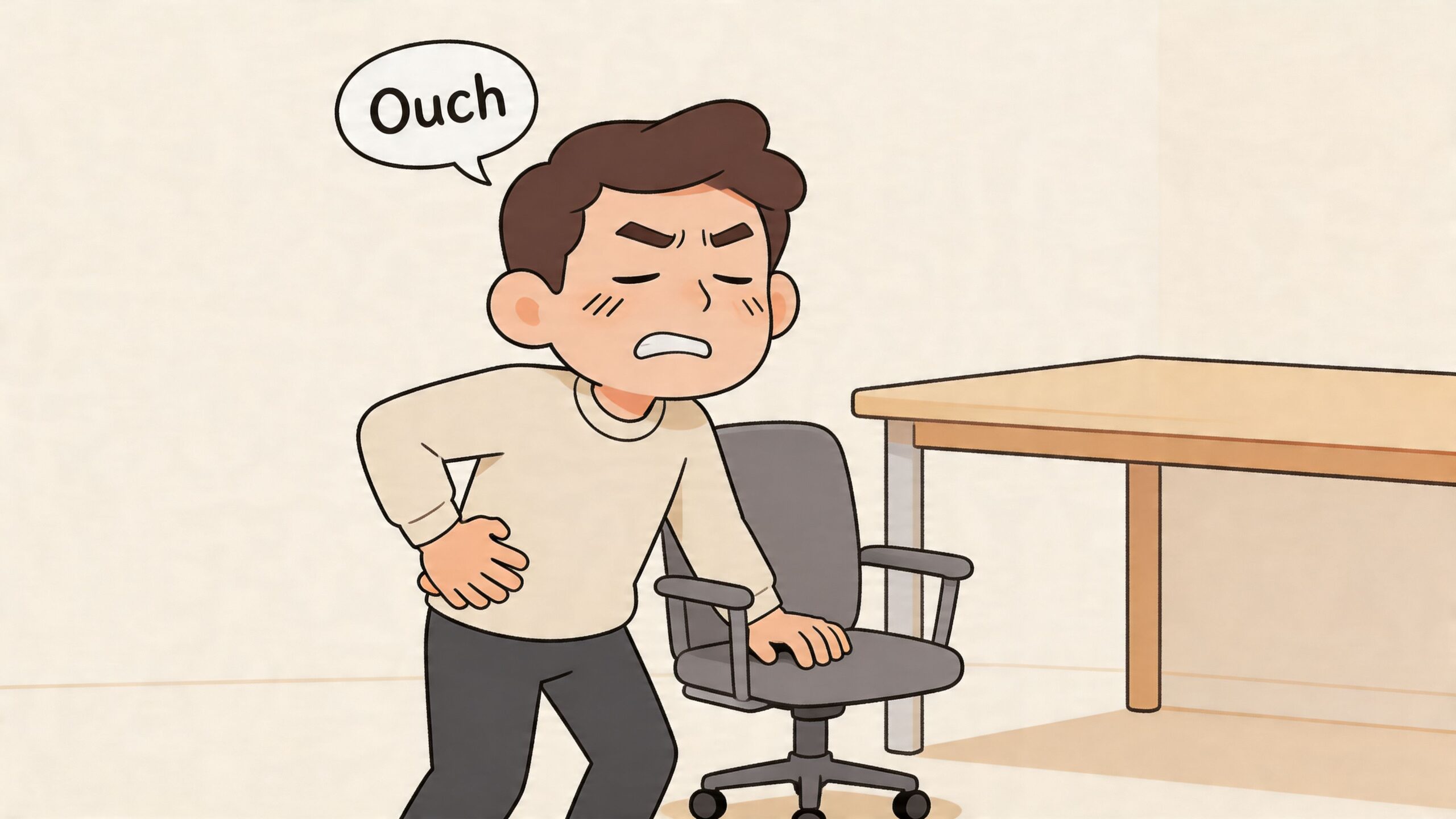
You finish a day at your desk, or an afternoon in your favorite recliner, and the message from your body is immediate. Your lower back feels tight, stiff, or worn out the moment you stand. For many people, that pain feels mysterious. In our showroom, it usually has a very plain cause. The seat is asking the back to do work the chair should be doing.
Here’s what tends to happen. As you sit, your hips can roll backward like a bowl tipping the wrong way. Once that happens, the natural curve in your lower spine starts to flatten, and your muscles stay on duty to hold you up. An hour here and two hours there adds up fast.
Adjustable lumbar support helps by meeting that lower-back curve so your body can settle into a healthier position. The word adjustable matters because bodies, habits, and rooms are different. An office worker who sits upright at a computer often needs a different feel than a senior who wants steady support while reading or watching TV. Someone waking up sore may need to look beyond the chair too, especially if their bed is part of the problem. That is why many families also read about mattress choices for back comfort.
At BILTRITE, our family has been helping Milwaukee-area neighbors sort this out since 1928. One lesson comes up again and again. Back pain is not always a sign that your back is weak. Very often, it means your furniture is a poor match for the way you live.
Why your back may not be the only issue
Lower-back discomfort often starts with the whole sitting system, not just one sore spot.
- Your chair may be too flat: Without support in the right place, the pelvis rolls backward and the spine follows it.
- Your seat may be too deep: If your back cannot reach the chair back comfortably, even good lumbar support ends up in the wrong spot.
- Your daily routine may point to a different solution: A task chair for work, a lift recliner for easier standing, and a supportive mattress for sleep solve different versions of the same comfort problem.
Good support should not feel like a hard bump. It should feel like the chair is helping you sit well.
That is where local, in-person shopping can make a real difference. Online advice often treats lumbar support like one simple feature. In a showroom, you can feel the difference between a firmer office chair, a recliner with gentler shaping, and a sleep setup that helps your body recover overnight. Once you connect the pain to the way you spend your day, the right furniture choice gets much easier.
How Different Lumbar Adjustments Work
The easiest way to think about adjustable lumbar support is to compare it to the driver’s seat in a car. You don’t just want “a seat.” You want the seat to fit you. Lumbar support works the same way.
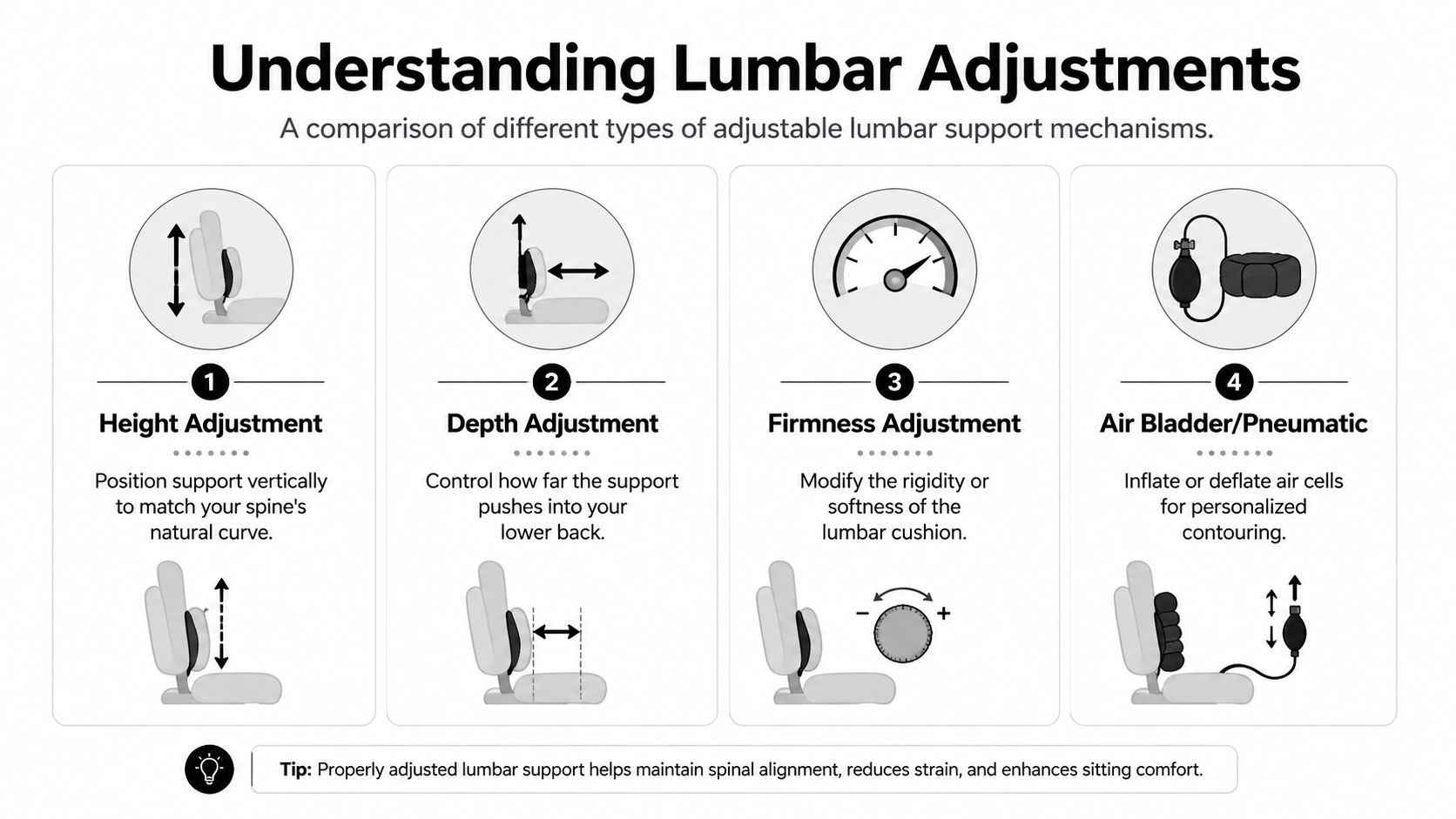
Height, depth, and firmness
The most common adjustments do different jobs.
| Adjustment type | What it changes | Why it matters |
|---|---|---|
| Height | Moves support up or down | Helps line support up with your lower back curve |
| Depth | Moves support farther in or out | Controls how much the chair pushes into your back |
| Firmness | Changes how soft or strong the feel is | Helps avoid a support point that feels too weak or too aggressive |
| Pneumatic or air-based | Uses air pressure for contouring | Lets you make smaller, more personal changes |
If a chair only has one setting, you’re stuck hoping that setting matches your body. If it has more than one kind of adjustment, you can fine-tune the fit.
That matters because high-quality systems don’t just push on one spot. Infinitely adjustable systems such as Schukra’s 4-way models are designed around what the source calls the “Three-Fold Effect”. They support the pelvis, help stabilize the lumbar vertebrae, and support the upper body vertically. According to Donmar’s technical overview of chiro lumbar systems, these supports can decrease intradiscal pressure by 30-50% compared to fixed-support chairs, with depth adjustment helping counter slouch and height adjustment helping target the L3-L5 area more precisely.
Manual systems and air systems
A manual system usually uses a knob, lever, ratchet, or sliding panel. It’s simple, mechanical, and often very durable. For many people, that’s enough.
Air or pneumatic systems add another layer of control. You may pump in a little more air to get more contour, then back it off if it feels too strong. That’s useful for people whose comfort changes during the day, especially if they alternate between upright sitting and leaning back.
Practical rule: If the support pushes you forward out of the chair, it’s too much. If you don’t feel any fill in your lower back at all, it’s probably too little.
Why more adjustment isn’t always more complicated
People sometimes hear “4-way lumbar” and think it sounds fussy. In real life, it often feels easier because it gives you a better chance of getting comfortable instead of settling.
For home offices, recliners, and long-use seating, many shoppers find that extra adjustability helps them get closer to a natural sitting position. If you want to compare chair styles built with comfort in mind, this guide to recliners that support your back well is a helpful next step.
Built-In Support vs Add-On Solutions
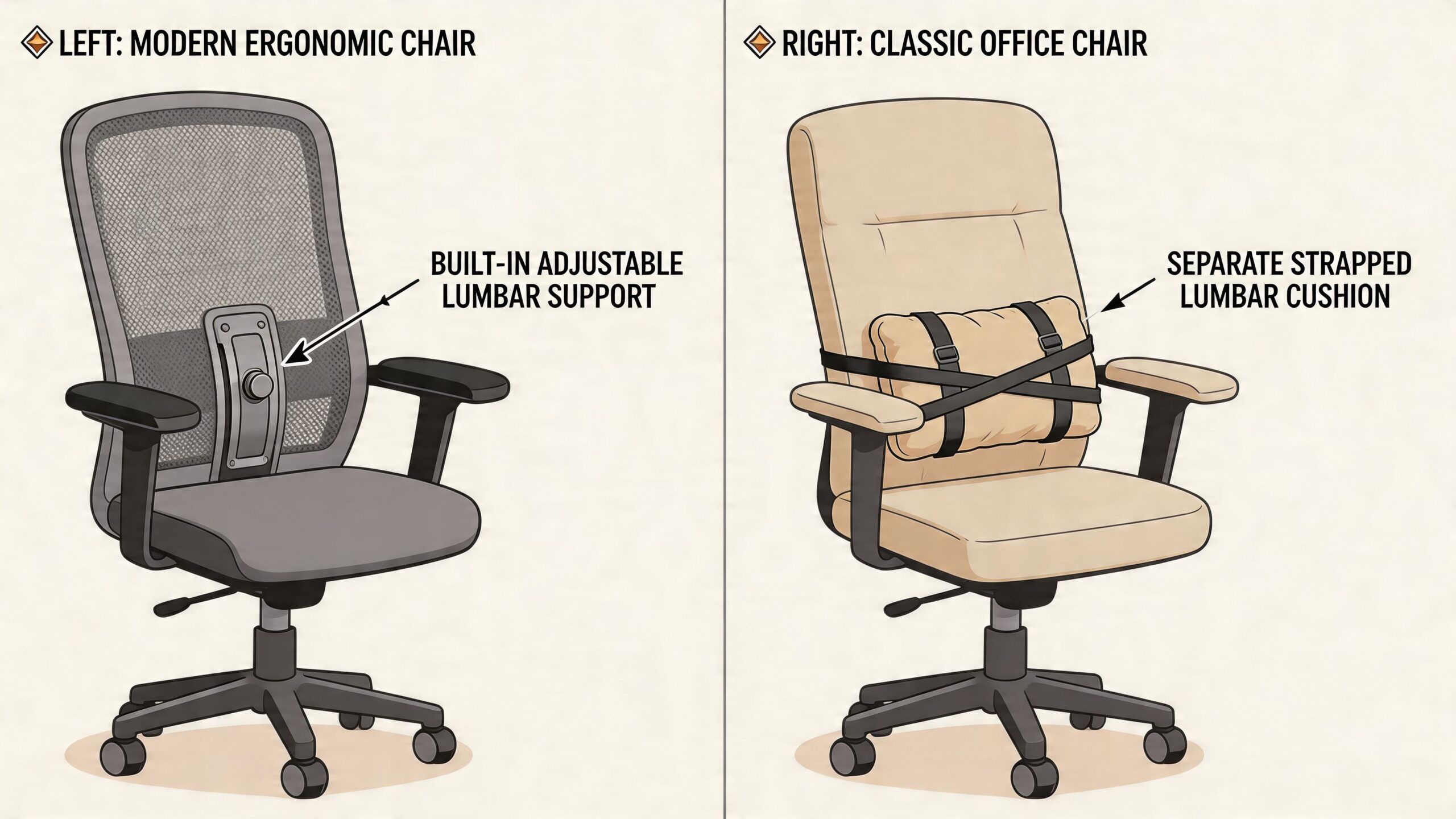
Some people are shopping for a new chair. Others like their chair just fine except for one problem. It doesn’t support their back. That’s why this decision usually comes down to two paths. Buy seating with adjustable lumbar built in, or improve what you already own with an add-on.
When built-in support makes more sense
Built-in lumbar support is part of the chair’s structure. That means the seat, back, recline, and support feature are all meant to work together. In many cases, that creates a more balanced feel because the support isn’t shifting around or strapped on after the fact.
Built-in systems can be a strong fit when:
- You sit for long stretches: Daily desk work, TV watching, or extended reading puts a lot of value on consistent support.
- You want a cleaner look: There’s no extra pad, strap, or cushion changing the shape of the chair.
- You’re replacing worn seating anyway: If the seat cushion is sagging, adding lumbar alone may not solve the whole issue.
When an add-on can be a smart fix
Add-on lumbar products can help when the chair itself is still in good shape. Many use removable polyurethane foam inserts or memory foam, often with hook-and-loop attachments. More advanced versions use dual pulley or FlexDial-style systems for separate upper and lower compression. According to this product and biomechanical overview of adjustable lumbar cushions, proper 2-to-4-way adjustability can lower muscle fatigue by 25-40% during static postures when the support is positioned correctly at the lumbar lordosis apex.
That sounds technical, but the takeaway is simple. A basic pillow isn’t the same as a cushion you can tune.
Here’s a quick comparison:
| Option | Best for | Watch out for |
|---|---|---|
| Built-in adjustable lumbar | New chairs, recliners, office seating, long-term daily use | Costs more upfront if you weren’t planning to replace the chair |
| Add-on lumbar cushion | Improving an existing chair, travel, temporary fixes | Can slide, feel bulky, or solve only part of the problem |
A cushion can help a good chair feel better. It usually can’t turn a badly fitting chair into a great one.
If your current sleep surface also feels a little lacking, some people ask whether a comfort layer could help before replacing the whole bed. This overview of what a mattress topper does explains where a topper helps and where it doesn’t.
The Secret to Real Comfort Is Pelvic Support
You sit down after dinner, lean back, and within fifteen minutes your lower back starts talking to you again. The strange part is that the chair feels soft enough. The problem often is not softness at all. It is the way the chair holds, or fails to hold, your pelvis.
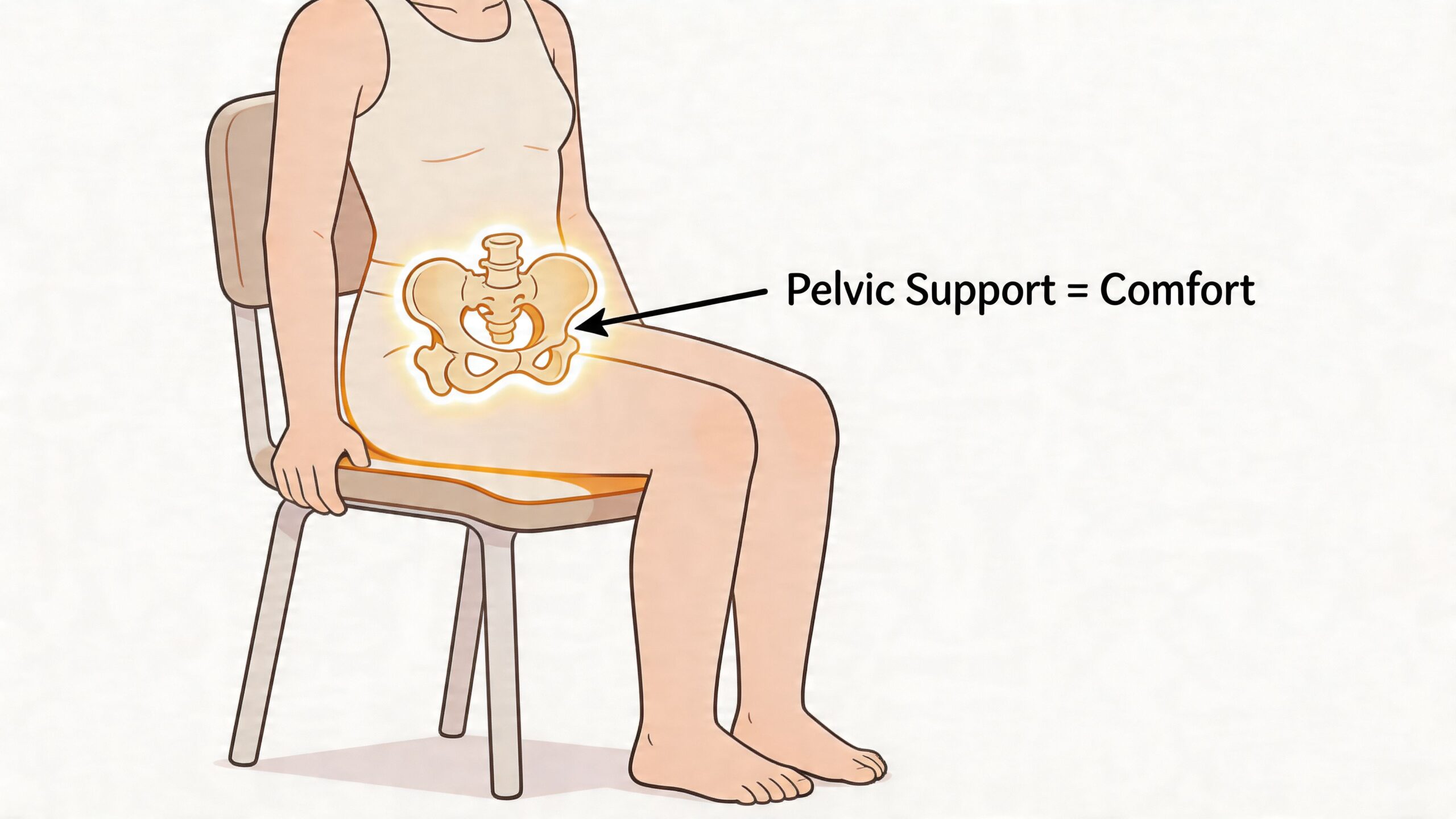
Your pelvis is the base of your seated posture. If it rolls backward, your spine usually follows into a C-shape slump. Then the lumbar support has to push against a posture that is already collapsing, which is why some people say, “I can feel the support, but I still don’t feel right.”
A good chair works like a house with a level foundation. Get the base right, and everything above it settles into place more naturally. In seating, that means the best comfort often starts lower than people expect, right at the hips and the very bottom of the spine.
That matters in different ways for different lives. An office worker may need a seat and back that keep the pelvis steady through hours of typing. A senior may need support that prevents sliding forward and makes standing up less tiring. A sleeper comparing recliners, lift chairs, or even bedroom seating may need a shape that keeps the low back and hips from folding inward during long periods of rest. Generic online advice tends to lump all of that together. In our showroom, we can see the difference in minutes once someone sits in the right piece.
What pelvis-first support looks like
Pelvic support usually shows up through the whole design of the chair, not one magic knob. Look for:
- A seat depth that lets your body reach the backrest without perching
- Support placed low enough to contact the sacrum and low back area
- A seat pitch that keeps the hips from rolling backward
- A backrest shape that supports an upright position without forcing it
This is one reason shoppers comparing USA-made office chairs with better lower-back and pelvic support often feel a clear difference in person. Two chairs can both claim “adjustable lumbar,” but one may steady the whole seated posture while the other only pokes at the waist.
Why families notice this most with seniors
In our family business, we hear a version of the same story all the time. A daughter comes in looking for “more cushion” for her dad. Then he tries a chair that supports him lower in the back and keeps his hips in a better position, and suddenly the problem was not a lack of padding. He needed the chair to hold him in a calmer, more balanced way.
That is why pelvic support matters so much for seniors and anyone with reduced mobility. If the pelvis stays more stable, the body spends less effort bracing, scooting, and correcting. Sitting feels easier. Getting back up often feels easier too.
Start at the base of the spine. The rest of the back usually has a much easier time.
Online reviews often chase visible features like thicker pillows or bigger lumbar bumps. Real comfort is usually quieter than that. It comes from a chair, recliner, or office seat that holds your body in the right place from the bottom up.
Finding Your Fit for Every Room and Reason
The right adjustable lumbar support depends on what you’re doing, how long you’re doing it, and what your body needs from the furniture.
For the person working at home all day
If your day includes emails, meetings, and hours at a desk, you’ll usually want a chair with more precise control. Height and depth adjustments matter because task seating keeps you in one position for a long time. A support setting that feels fine for twenty minutes may feel completely different by the afternoon.
Home office shoppers often do best when they test a chair sitting fully back with feet flat and shoulders relaxed. If the support fills the lower back without shoving the body forward, that’s a promising sign. For local shoppers comparing sturdier desk seating, this look at USA-made office chairs is useful.
For the senior who needs support and easier movement
A senior usually isn’t asking for “ergonomics” in so many words. They’re asking for a chair that feels safe, supportive, and easier to get in and out of. In that situation, powered recline and well-placed back support can matter as much as softness.
A lift chair with thoughtful support can help someone sit longer without that collapsed, tailbone-heavy posture that makes standing up harder later. The best feel is usually steady and low in the back, not puffy and vague.
For the family room and everyday lounging
Living room comfort is a different animal. People shift positions, lean back, watch movies, nap, and share seating with family members of different sizes. That’s where heavy-duty recliners, supportive sectionals, and well-built sofas can shine, especially when the back design keeps support present even when the posture is more relaxed.
A common mistake is buying for softness alone. Plush can feel nice in a showroom for a few minutes, but if the seat lets the hips sink too far without support, your back often notices later. Families also need to think practically. If a room has tight stairs or narrow doorways, come-apart seating can solve a delivery problem without forcing you into a smaller comfort choice.
For the sleeper whose back starts hurting before breakfast
Back support doesn’t clock out at bedtime. If your mattress isn’t holding your body in a steadier position overnight, you can wake up stiff before you even get to the chair. Sleep support and seated support work together.
That’s one reason some shoppers look beyond the living room and home office at the same time. A chair may solve the daytime strain, while the right mattress helps your spine recover at night.
Making Your Lumbar Support Work for You
You get the chair home, sit down, and wait for relief. Then your back still complains.
That usually does not mean you bought the wrong feature. It means the feature has not been fitted to your body yet. Adjustable lumbar support works a lot like a good pair of glasses. The correction can be right, but if it sits in the wrong spot, you still do not feel the benefit.
At BILTRITE, we see this every day in the showroom. An office worker may need the support a little higher for long upright sitting. A senior using a recliner may need gentler contact that does not push too hard when getting settled. Someone whose back feels worn out from poor sleep may need daytime support that feels steady, not aggressive. Same lower back. Different daily life.
A simple setup routine
Use this order so you can feel what each change is doing:
- Sit fully back in the chair. Your lower back cannot meet the support if there is space behind you.
- Set your feet flat on the floor. That gives your pelvis a steadier base, which helps your spine stack up more naturally.
- Adjust the lumbar height first. Raise or lower it until it fills the small curve of your lower back.
- Change depth or firmness in small steps. You want light contact that stays with you, not a hard spot pressing into one place.
- Test your real posture. Lean back, come upright, and sit for a few minutes the way you would at a desk, in a recliner, or while reading.
Small changes matter.
One reason people miss the benefit is simple. They set the chair once, then live with a setting that is close enough but not quite right. As noted earlier, researchers have observed that many people do not readjust chair settings even after those settings have been changed. That helps explain why a chair can have good support on paper and still feel disappointing in daily use.
A few habits make the adjustment process easier:
- Change one setting at a time. If you move everything together, you cannot tell what helped.
- Give it a little time. Better support can feel unfamiliar if your body is used to slumping.
- Check again after a few days. A setting that felt fine for five minutes may need a small correction after a full evening or workday.
Our family has been helping neighbors sort this out for generations, and the pattern is pretty consistent. People often blame the cushion first. The actual issue is often position. Once the back support lines up with the body and the seat lets you sit where you are supposed to sit, comfort usually makes a lot more sense.
If you want to compare how lumbar support works in everyday lounging, our guide to buying a recliner for your living room can help you connect these adjustment ideas to real furniture you can try in person.
Your Lumbar Support Questions Answered
Is more lumbar support always better
No. Too much support can feel like someone’s fist is pressing into your back. The goal is to support the natural curve, not exaggerate it. Good adjustable lumbar support should feel balanced.
Can lumbar support feel strange at first
Yes, especially if you’re used to slouching or sitting in a seat that offers almost no structure. Your body can need a little time to get used to a better position. Mild unfamiliarity is common. Sharp discomfort is not.
Do recliners need lumbar support too
Often, yes. People tend to think of lumbar support as an office-chair feature, but recliners matter just as much because many people spend long evening stretches in them. If your recliner lets your hips roll back and your lower spine flatten out, you may feel the effects after you stand up.
Are add-on pillows enough
Sometimes. If the chair already fits you well and just needs a little more lower-back fill, an add-on can help. If the seat depth is wrong, the cushion is worn, or the whole posture feels off, a pillow may only partly help.
What if my back pain is really coming from my hips or pelvis
That happens a lot. If your pelvis isn’t stable, your lower back often ends up compensating. That’s why the shape of the seat, the angle of the chair, and your ability to sit fully back matter so much.
How do I know whether a chair fits me
Use your body as the test.
- Sit back fully: You should be able to use the back support without scooting forward.
- Notice pressure: Support should feel even, not pokey.
- Check what happens when you stand up: A chair can feel soft while you’re in it and still leave you stiff afterward.
Is lumbar support enough if I sleep badly too
Usually not. If you wake up with pain and then sit in poor support all day, the discomfort can snowball. A better chair helps, but nighttime support matters too.
Is it worth trying in person
Absolutely. Adjustable support is personal. What feels great to one person may feel wrong to another. Sitting in different styles, changing the settings, and paying attention to how your back and pelvis feel is still the best way to sort it out.
If you’d like help sorting through adjustable lumbar support in real chairs, recliners, lift chairs, or mattresses, visit BILTRITE Furniture-Leather-Mattresses in Greenfield. We’re a fourth-generation, family-owned business serving Metro Milwaukee since 1928, and we love helping neighbors find comfortable, better-quality furniture that fits real life. Stop by the showroom, say hello, and let our experienced team help you test what feels right for your back, your home, and your everyday routine.