Find Solid Wood Furniture Wisconsin: Your Expert Guide


A young couple came into our Greenfield showroom not long ago, set their hands on a dining table, and said, “We just want something that won’t feel tired in a few years.” That’s usually where the main conversation starts.
In Wisconsin, furniture shoppers have plenty of options. But if you’re looking for solid wood furniture Wisconsin families can live with for years, the smartest move is still the old-fashioned one. See it in person, open the drawers, feel the finish, and ask someone who’s handled this stuff for a long time.
Our Family's Love Affair with Real Wood Furniture
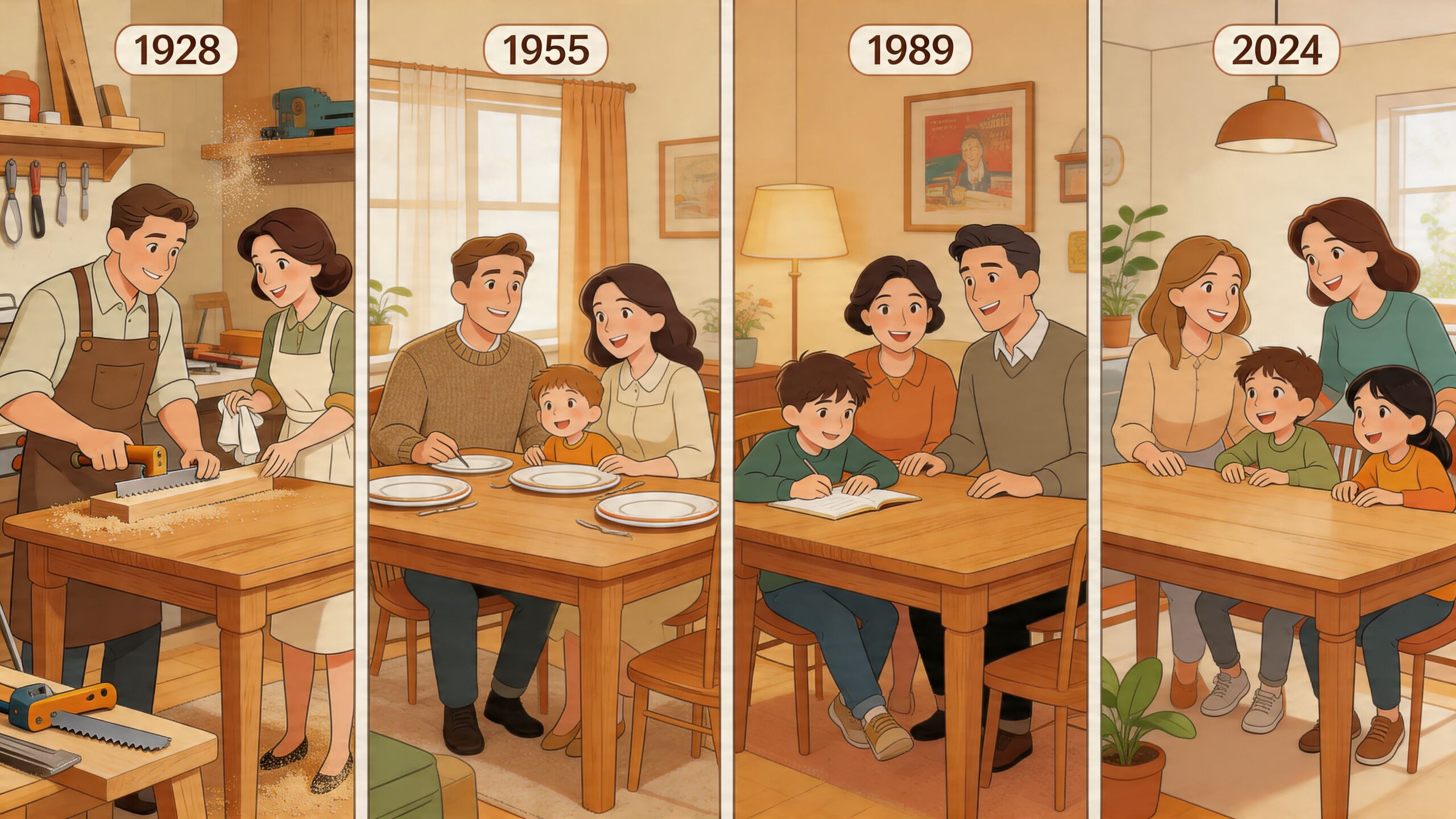
My great-grandparents opened our doors in 1928, and one lesson has held up better than any trend. Real wood furniture earns its place in a home over time.
Why real wood still matters to us
I have watched Milwaukee-area families walk our showroom and change their mind the moment they put a hand on a solid wood table or open a well-built drawer. Online, a lot of furniture can look similar. In person, the differences show up fast. Weight, grain, joinery, and the feel of the finish tell you more in thirty seconds than a product page usually can.
That is a big reason we have stayed committed to in-store shopping. We do not sell furniture online, and for solid wood, that is a strength. You should be able to see how boards are matched, how the stain sits in the grain, and whether the piece feels steady on the floor. You should also be able to ask a real person why one dresser costs more than another, and get a straight answer.
Families use these pieces hard. A dining table sees homework, holiday dinners, spilled coffee, and elbows dragged across the edge for years. A well-made wood dresser can move from a kid's room to a guest room and still do its job without feeling worn out or flimsy.
That kind of longevity matters to us.
Furniture with roots in the community
We have always believed good furniture should feel honest the day you buy it. Solid wood usually does. It has substance in the hand, cleaner construction in the case, and a finish that works with the material instead of hiding it.
There are trade-offs, and shoppers deserve the truth about them. Solid wood often costs more up front. It can show seasonal movement because wood is a natural material. It also tends to be repairable, refinishable, and better suited to long-term use than lower-cost pieces made with manufactured panels. For many Wisconsin households, that is the better value over a long stretch.
If you have been comparing materials, our guide to solid wood furniture vs. particle board gives a clear side-by-side look at what changes in daily use.
For our family, this has never been about chasing a style category. It is about helping neighbors in the Milwaukee area buy furniture they will still respect after the excitement of delivery day wears off.
What Does Solid Wood Furniture Actually Mean
A lot of shoppers hear “solid wood” and assume every wood-looking piece is basically the same. It isn’t. This is one of the biggest points of confusion in a furniture store, and it’s where in-person shopping helps most.
The plain-English version
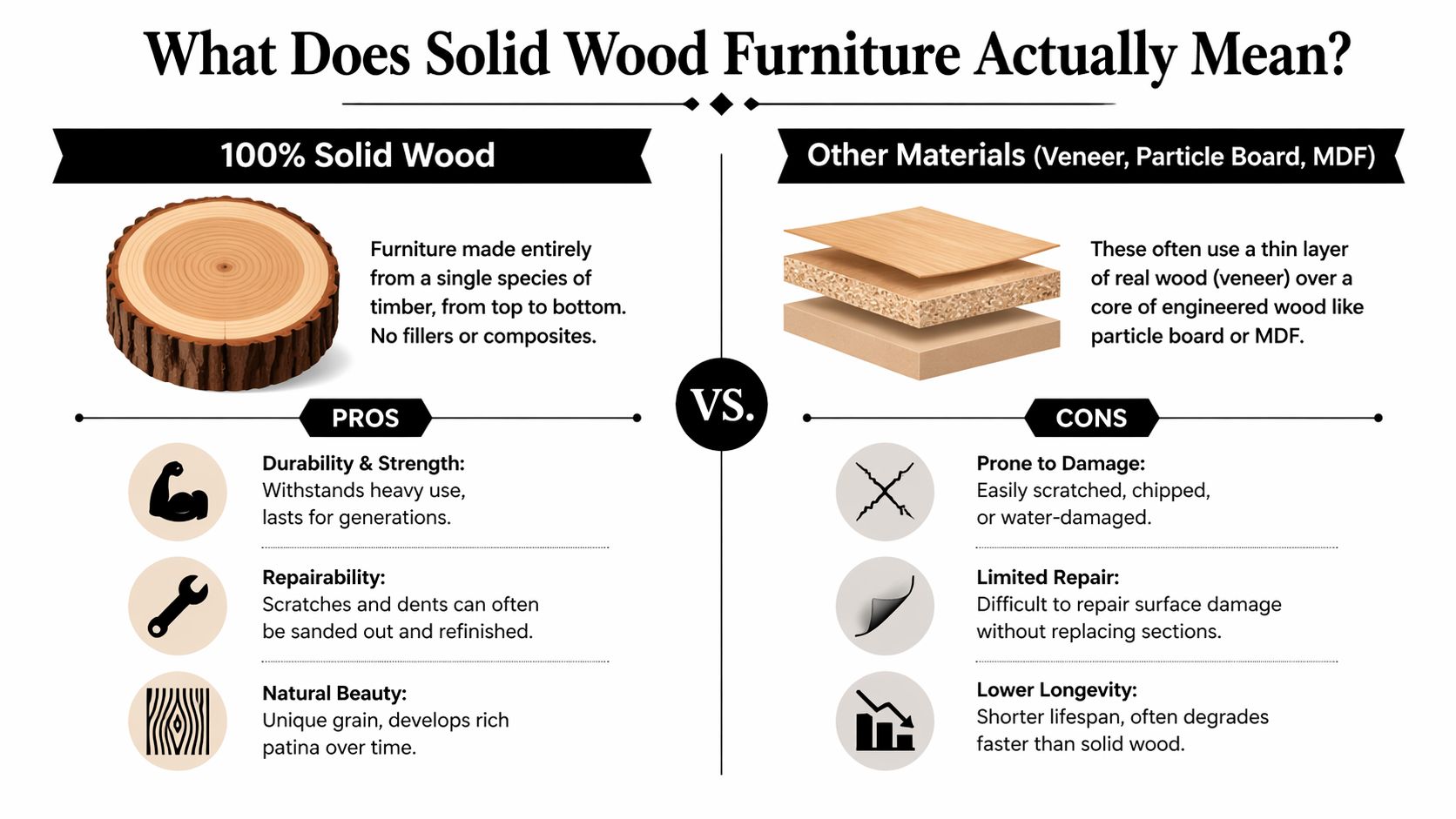
Solid wood furniture is made from actual lumber. If you’re looking at an oak table, the top and structural parts are wood, not a photo-finish layer over a manufactured core.
Veneer, MDF, and particle board are different animals. Veneer can use a thin slice of real wood on top, but the material underneath is engineered. MDF and particle board are manufactured panels. They can have a place in certain budgets and applications, but they do not behave like solid wood over time.
Consider this: A block of Wisconsin cheddar and a processed cheese slice may both be called cheese in conversation, but you know they’re not the same thing once you handle them, taste them, and cook with them.
Where shoppers get tripped up
The surface can fool you. A printed grain or a thin veneer can look nice under bright lights. The difference usually shows up later, when a top gets chipped, moisture finds an edge, or a drawer starts telling on itself.
Here’s the practical breakdown:
- Solid wood tends to have natural grain variation, visible end grain in the right places, and the ability to be repaired or refinished.
- Veneer over engineered core can offer a wood look, but deep damage is harder to fix because the wood layer is thin.
- Particle board and MDF are often used to hit a lower price point. They can work for some temporary needs, but they generally don’t give you the same long-term feel, repair options, or structural confidence.
If you’re unsure what you’re touching, look under the top, behind the drawer front, and along the edges. The hidden areas usually tell the truth faster than the showroom surface.
For a closer look at the difference, our guide on solid wood furniture vs. particle board walks through the materials in more detail.
What works and what doesn’t
What works is buying for the way you live. If you want a piece you can keep, move, refinish, and rely on, solid wood earns its keep. If you need a short-term fix for a starter space, engineered materials may cover the need.
What doesn’t work is paying solid-wood money for something that only looks like it from six feet away.
That’s why this category matters so much in the showroom. The label alone won’t help you nearly as much as your eyes and hands will.
Why Buying Solid Wood in Wisconsin Is a Smart Choice
A Milwaukee shopper can learn more in twenty minutes inside a real wood furniture showroom than in two hours of scrolling product pages. Open a drawer. Run a hand across the top. Look at how the finish sits in the grain under natural light. That kind of buying still matters here, and Wisconsin is one of the places where it pays off.
Wisconsin has a long, established furniture-making tradition, with a strong concentration of wood furniture jobs and manufacturing know-how, according to the Wisconsin wood furniture manufacturing overview. For shoppers, that shows up in practical ways. Better product knowledge on the sales floor. More familiarity with domestic hardwoods. More pieces built by people who understand how wood should look, feel, and hold up after years of use.
That local knowledge matters because solid wood is not a one-click category. A table can look great online and still feel light, flat, or overfinished in person. In the store, those differences show up fast.
Around Milwaukee, buying solid wood also means shopping in a market where people still expect furniture to last through Wisconsin winters, humid summers, moves across town, and daily family use. That changes the conversation. Instead of asking only whether a piece matches the wall color, shoppers can ask better questions. How will this top wear? Can this finish be repaired? Will these chairs stay tight after years of use?
Good store guidance helps with those decisions. So does seeing several woods side by side. Oak, maple, cherry, and walnut do not age the same way, and they do not all fit the same home or budget. Online guides often flatten those differences. In person, they are obvious.
That is one reason our no-online-sales approach at BILTRITE works in the customer’s favor. Solid wood furniture deserves a hands-on buying process. People in the Milwaukee area can compare construction, color variation, scale, and finish quality with their own eyes instead of guessing from studio photos.
Local buying has a second advantage. Service is closer to home. If you need help with delivery access, matching an existing dining set, ordering the right size for an older Milwaukee bungalow, or talking through how a piece will live in a four-season Wisconsin house, that conversation is easier face to face than through a checkout cart.
For a broader look at the long-term value, our article on the benefits of solid wood furniture covers what makes these pieces worth considering in the first place.
Buying solid wood in Wisconsin is a smart choice because the shopping experience is better here. You can see more, ask more, and leave with fewer surprises. That is how good furniture decisions get made.
Your Hands On Guide to Spotting Real Quality
Shopping can be fun. You don’t need a workshop background to recognize good furniture. You just need to slow down and inspect the piece like someone who plans to live with it.

Start with the joints
The fastest quality clue is often hidden in the corners. Traditional joinery matters because it affects how the piece handles years of use.
Mortise-and-tenon and dovetail joinery, common in Amish-made furniture, resist daily wear and tear 5 to 10 times more effectively than simple screwed or nailed joints found in mass-produced furniture, based on the details in this solid wood furniture joinery reference.
If that sounds technical, here’s the showroom version:
- Dovetail drawers have interlocking corners. Open the drawer and look at the side. If you can see those fitted joints, that’s a strong sign someone cared about construction.
- Mortise-and-tenon frames lock one wood member into another. On chairs and tables, that often means less looseness over time.
- Staples and basic corner blocking aren’t automatic deal-breakers in every category, but they don’t inspire the same confidence in heirloom-style wood furniture.
Use your hands, not just your eyes
A table can look sturdy in a photo and still disappoint in person. This is why online-only shopping leaves out so much useful information.
Try this short checklist in the showroom:
- Give the table a gentle wobble. A quality table should feel planted.
- Open every drawer. It should move smoothly and feel balanced.
- Run your hand over the finish. You’re looking for consistency, not rough patches or hurried sanding.
- Check the back and underside. Hidden areas often reveal whether the maker cut corners.
- Notice the weight and feel. Not every good piece has to be extremely heavy, but flimsy furniture usually announces itself pretty quickly.
A drawer is a great truth-teller. If it racks, sticks, or feels light and hollow, the rest of the case piece may follow the same pattern.
For more signs to watch for, our guide on how to tell if furniture is real wood can help you shop with more confidence.
Small details that pay off later
Look for full-extension drawer glides if you want practical access. Check whether doors hang square. See if the wood grain flows naturally instead of repeating like a printed pattern. None of these details seem dramatic in the moment, but together they tell you whether the piece was built carefully or just assembled to look good under store lighting.
That’s the advantage of seeing solid wood furniture Wisconsin shoppers are considering in person. You don’t have to guess.
Choosing the Right Wood and Finish for Your Wisconsin Home
Not every wood is right for every room. Some families need a dining table that can shrug off daily use. Others want a bedroom set with a warmer, softer look that deepens over time. Consequently, wood choice becomes practical, not just decorative.
Durability starts with species
One useful benchmark is the Janka hardness scale, which measures how resistant a wood is to dents and wear. White Oak has a Janka rating of 1360, making it a strong choice for a busy dining table or high-use family space, according to Southpaw Furniture’s wood hardness discussion.
That doesn’t mean every shopper needs white oak. It means harder species are often worth considering if your furniture is going to see plenty of action.
Here’s a simple comparison for common solid wood choices you’ll hear about in the showroom.
Common Solid Woods for Your Home
| Wood Type | Hardness (Durability) | Grain Pattern | Best For |
|---|---|---|---|
| White Oak | 1360 Janka | Prominent, classic grain | Busy dining rooms, family tables, high-use pieces |
| Maple | Hard-wearing feel, often chosen for everyday use | Smoother, cleaner grain | Casual styles, cleaner looks, homes that want subtle grain |
| Cherry | Durable for many home settings, with a warmer character | Fine, elegant grain | Bedrooms, dining rooms, traditional or richer styles |
| Walnut | Rich and substantial feel | Bold, luxurious grain | Statement pieces, home offices, accent dining or bedroom furniture |
Match the wood to the room
If kids do homework at the table, if bags get dropped on it, or if you host often, lean toward a tougher species. White oak is a strong candidate for that reason.
If your room is more about warmth and character, cherry and walnut often bring a softer visual feel. They can make a bedroom or dining room feel settled and inviting. Maple usually lands in the middle for shoppers who want a cleaner grain and a versatile look.
Practical rule: Don’t choose wood only by stain color under showroom lights. Choose it by how you’ll use it on a Wednesday night.
Finish matters in Wisconsin homes
Wisconsin homes go through real seasonal changes. Dry winter air and humid summer stretches can affect natural materials, and wood responds to its environment. That’s normal. A good finish helps protect the piece, and good construction allows the wood to move in a controlled way rather than fighting it.
When you’re comparing finishes, ask about:
- Sheen level. Lower sheen can hide fingerprints and minor marks a bit better.
- Touch-up friendliness. Some finishes are easier to live with if you expect years of use.
- Color change over time. Natural wood often develops more character as it ages.
You can also ask whether the top is meant for heavy dining use, occasional use, or bedroom use. That conversation matters more than chasing trendy finish names.
For a deeper dive into species and use cases, our article on what is the best wood for furniture is a good companion.
The right answer usually isn’t the fanciest wood. It’s the one that fits your home, your traffic level, and the way you live.
Your Milwaukee Buying Checklist and Why Visiting Us Is Worth It
A lot of Milwaukee shoppers arrive with screenshots, a few measurements on their phone, and one big question: how do I know which piece is worth the money? That question gets answered faster in a showroom than it does online.
You can learn a lot from a product page. You learn more when you put a hand on the table, open the drawer twice, step back six feet, and ask someone who knows why one piece costs more than another.
A practical local checklist
Bring these questions with you when you shop:
- Start with the fit in your home. Measure wall space, doorways, stair turns, and elevator depth before you fall in love with a piece.
- Test how it works. Open every drawer, check how the doors hang, and give the table or bed a light shake to feel for movement.
- Ask what parts are solid wood. A good retailer should answer plainly, without hiding behind vague terms like "wood construction."
- Ask who made it and where. American-made, Amish-made, and small-shop construction often come with different lead times, price points, and customization options.
- Ask what can be changed. Size, wood species, stain, hardware, edge profile, and storage layout can make the difference between "close enough" and "right for the room."
- Ask how delivery is handled. White-glove delivery, setup, and removal of packing matter, especially in older Milwaukee homes with narrow entries.
- Ask direct questions about sourcing. If sustainability matters to you, ask where the wood comes from and what the maker can document about its practices.
That last point does not need a trend report to matter. Good stores should be able to tell you what they know, what they do not know, and why.
Why we still believe in the showroom
We do not sell online, by choice. Solid wood furniture is a touch-and-compare purchase. Finish color shifts under different light. Chair comfort changes once you sit in it. Drawer action, top thickness, grain variation, and the scale of a dining table are easier to judge in person than on a screen.
That matters even more in the Milwaukee area, where customers often shop for homes with older floorplans, tighter staircases, mudrooms, and multipurpose dining spaces. A piece can be beautifully built and still be wrong for your house. In the showroom, that conversation happens before the order is written.
For shoppers who want made-to-order options, our custom solid wood furniture collection is a helpful place to start comparing styles and possibilities. In our own showroom, BILTRITE Furniture-Leather-Mattresses displays solid wood, Amish-made, USA-made, small-scale, and heavy-duty options side by side, so shoppers can compare construction details with their own eyes instead of guessing from photos.
One more drawer opened in person can save you years of annoyance at home.
If you’re ready to find solid wood furniture that feels right in person, come visit BILTRITE Furniture-Leather-Mattresses in Greenfield. We’d be glad to walk you through the differences, answer the practical questions, and help you choose a piece that fits your home, your family, and your budget.