Area Rug Sizes: A Fun and Friendly BILTRITE Guide


You know that feeling when a room has good furniture, nice lamps, and a coffee table you really like, but the whole space still feels a little unsettled? We hear that question all the time from Milwaukee families. Usually, the missing piece is not another chair or more wall art. It is the rug.
A well-sized rug does a quiet but important job. It helps furniture feel connected, softens the room, and gives your eye a clear sense of where the space begins and ends. When the rug is too small, even beautiful furniture can look like it is floating. When the rug is sized well, the room relaxes.
Area rug sizes confuse a lot of people because the right answer depends on the room, the furniture, and how you live every day. A condo, a family room with active kids, and a senior living apartment should not all be treated the same way. That is why it helps to think about rugs in practical, real-life terms instead of just memorizing a list of standard sizes.
The Secret to a Perfectly Pulled-Together Room
A rug is not just floor décor. It is the foundation that helps everything else make sense.
We have seen this happen over and over in homes across the Milwaukee area. A sofa is centered. The chairs are in place. The wood tones work together. But the room still feels scattered. Then the right rug goes down, and suddenly the space feels finished.
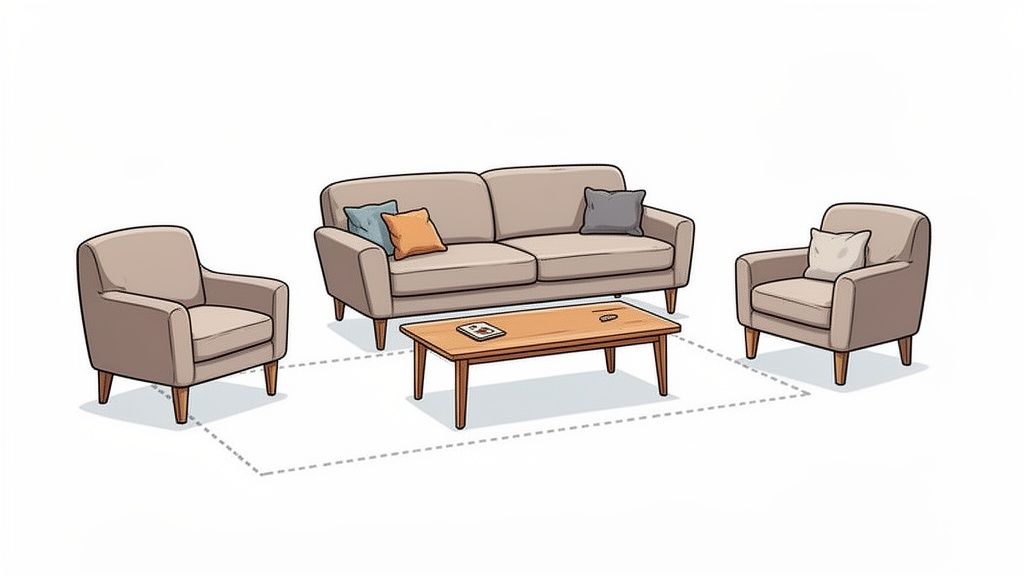
Rugs have always done more than warm the floor
That is not a new idea. The Pazyryk Carpet, considered the world’s oldest surviving complete area rug, dates to the 5th century B.C. and measures about 6 feet by 6.5 feet, showing that rugs have been symbols of artistry and status for more than 2,500 years according to this history of the Pazyryk Carpet.
That little bit of history matters because it reminds us that a rug is not just an add-on. People have used rugs for comfort, beauty, and identity for a very long time.
Why size changes everything
A rug does three jobs at once:
- It anchors furniture so pieces feel like they belong together.
- It adds warmth both visually and physically.
- It shapes the room by outlining where people gather.
If you have ever walked into a room and thought, “Why does this look off?” there is a good chance the rug was either too small or placed awkwardly.
Tip: Before you choose color or pattern, decide what job the rug needs to do. Anchor a seating group? Soften a bedroom? Help define a dining area? Size comes first.
If you enjoy seeing how one design choice can change the whole feel of a room, this guide on how to create an eye-catching room is a helpful companion.
Understanding the Basic Rules of Rug Placement
People often ask for a magic size chart. Those can help, but placement matters just as much as dimensions.
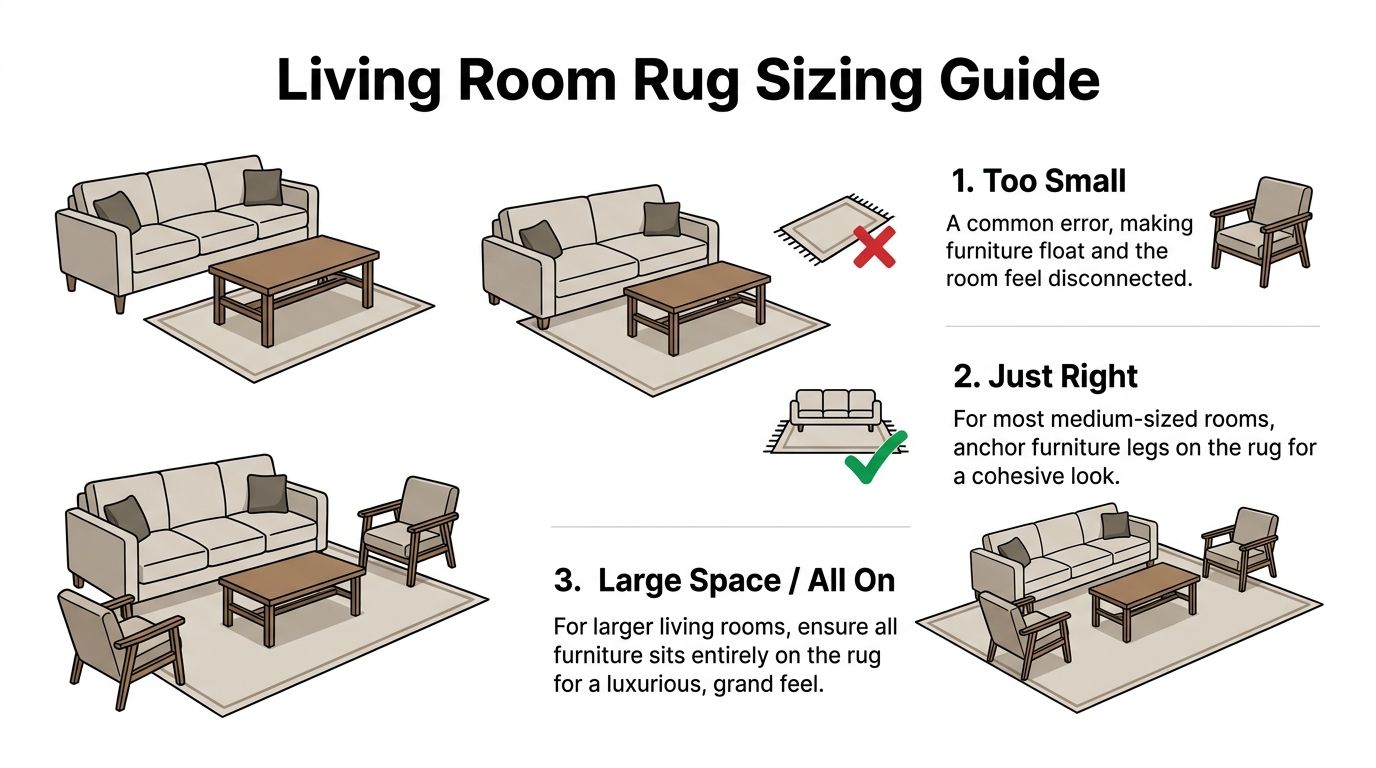
Most living spaces come down to three simple rug placement rules. Once you know them, area rug sizes start to feel much less confusing.
All legs on
This look works best in a larger room.
Every major piece in the seating area sits fully on the rug. Sofa, chairs, coffee table, all of it. The room feels generous and unified.
This approach is useful when you have extra floor space and want the rug to define a large gathering zone instead of just highlighting the coffee table.
Front legs on
This is the most practical choice in many homes.
The front legs of the sofa and chairs sit on the rug, while the back legs stay off. That small overlap is often enough to visually connect the whole seating area.
For many families, this is the sweet spot between style, function, and budget.
No legs on or coffee table only
This setup uses a smaller rug in the middle of the room.
It can work in tighter spaces, but it is the easiest placement to get wrong. If the rug feels isolated and none of the surrounding furniture touches it, the room can look disconnected.
That does not mean it is never useful. In a compact room, a smaller rug can still define a zone if everything around it is scaled carefully.
A quick way to remember the three rules
| Size (Feet) | Best For | BILTRITE Pro-Tip |
|---|---|---|
| 4×6 | Small-scale seating areas | Let the front legs of a loveseat or apartment sofa touch the rug so it looks intentional |
| 5×8 | Compact rooms or layered looks | Good when you need definition without covering too much floor |
| 8×10 | Average living rooms | Often the easiest size for the front-legs-on layout |
| 9×12 | Large living rooms or under beds | Useful when you want a broader frame around bigger furniture |
| Runner or accent rug | Hallways, bedside, entry spots | Keep traffic paths clear and edges flat |
Key takeaway: The rug should connect furniture, not drift in the middle of the room like an island.
One more thing trips people up. They choose a rug by room size alone, not by furniture placement. That is how you end up with a rug that technically fits the room but does nothing for the furniture.
Your Guide to Living Room Rug Sizes
The living room is where rug mistakes show up fastest.
A sofa, a couple of chairs, and a coffee table need a visual anchor. Without one, the room feels chopped up. With the right one, the seating area becomes a clear place to gather.
The most reliable starting point
For an average living room, an 8×10 ft rug is the benchmark. It lets the front legs of the main furniture rest on the rug and leaves about 6 to 18 inches of floor showing around the perimeter for balance, according to Home Depot’s rug sizing guide.
That combination is why designers and furniture people return to 8×10 again and again. It usually looks grounded without swallowing the room.
What too small looks like
A small rug under only the coffee table is one of the most common living room mistakes.
The furniture around it looks unrelated. The eye reads each piece separately instead of as one group. Even nice furniture can look a little temporary this way.
Signs your rug is too small:
- The sofa does not touch the rug at all
- Accent chairs sit completely outside the rug’s footprint
- The rug feels centered under the table, not the seating area
- The whole room looks like separate islands instead of one zone
The best fit for a sofa and chair layout
If you have a standard sofa with one or two chairs, the front-legs-on rule usually gives you the best result.
That means:
- The sofa’s front legs sit on the rug
- The chairs’ front legs do too
- The coffee table sits comfortably in the middle
- The rug extends enough to frame the whole conversation area
This layout feels welcoming because it visually pulls everyone toward the same center.
What about sectionals
Sectionals need a little more attention because their footprint is wider and deeper.
Sometimes an 8×10 still works, especially if the sectional is smaller in scale. Other times, a 9×12 gives better balance and keeps the rug from looking skimpy under a larger arrangement.
A helpful rule is to think less about the room itself and more about the actual seating zone. The rug should support the shape of the sectional, not just sit under the coffee table in front of it.
When a larger rug makes sense
A larger rug can be the right move if:
- Your room is open concept and the rug needs to define one zone within a bigger space
- You have a deep sofa or large sectional
- You want all the furniture fully on the rug
- You have enough floor left around the edges so the room still feels framed
If the rug reaches wall to wall with barely any floor showing, it usually starts to feel heavy rather than helpful.
Tip: In a living room, measure the furniture grouping first. Do not start by measuring empty floor from wall to wall.
For more placement ideas that pair rug size with actual furniture arrangements, take a look at how to place area rug in living room.
Sizing Rugs for Dining Rooms and Bedrooms
These rooms ask different questions than the living room does.
In a dining room, the rug needs to cooperate with moving chairs. In a bedroom, the rug needs to feel good underfoot and frame the bed well.
Dining rooms need function first
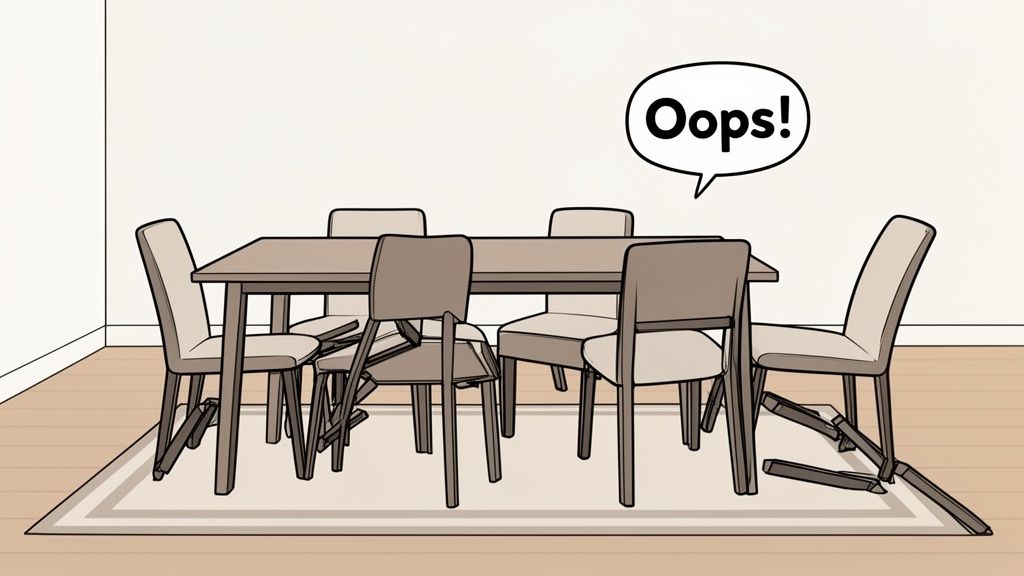
The biggest dining room rule is simple. When someone pulls out a chair, the chair should stay on the rug.
If the back legs catch the edge every time someone sits down, that rug is too small for the table. It gets annoying fast.
A practical way to plan for this is to measure the table and then allow extra room all the way around for the chairs in use. This matters even more with substantial dining chairs and solid wood tables, because heavier furniture is less forgiving when it bumps or drags at the edge.
Look for these green flags:
- Chairs can slide back without snagging
- The rug still looks centered when all chairs are pushed in
- The rug shape matches the table shape nicely
- There is enough room for daily use, not just for a staged photo
Bedrooms give you more flexibility
Bedrooms are softer spaces, so you have options.
A large rug can sit under most of the bed and stretch out on the sides and foot. That gives you a soft landing when you get up in the morning and helps the bed feel framed.
But not every bedroom needs a very large rug. If you have a heavy-duty bed frame or want a more durable arrangement, there is a practical alternative. While 9×12 rugs are often recommended for queen beds, a 6×9 or 5×8 oval under the front two-thirds of the bed can reduce stress on the rug’s edges, according to this standard rug sizes guide.
That is a nice option when you want softness where it counts without putting unnecessary wear on the entire rug.
Three bedroom layouts that work well
Full framing
A larger rug sits under the bed and extends on both sides and at the foot. This creates a more dressed, complete look.
Front two-thirds placement
The rug begins under the lower portion of the bed and extends outward. This keeps softness where your feet land and avoids overloading the rug under the headboard area.
Side rugs or smaller accents
If the room is tight, smaller rugs beside the bed can still make the room feel comfortable and finished.
Tip: In a bedroom, think about the first place your feet touch the floor. That is often the best clue for rug placement.
Solutions for Small Spaces and Senior Living
Small rooms are where people get nervous about rugs.
They worry a rug will crowd the room, block walking paths, or make everything feel tighter. In reality, the right rug often makes a smaller room feel calmer because it gives the furniture a clear home.
A smaller rug can still work well
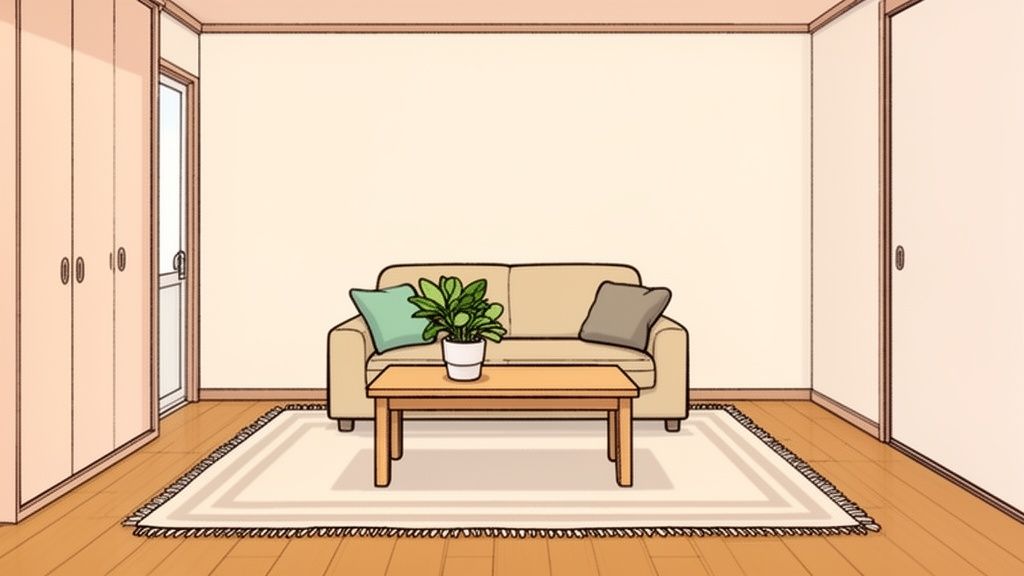
For small-scale furniture, such as a 60 to 70 inch sofa, a 4×6 rug can anchor the piece well if the front legs sit on the rug and 12 to 18 inches of floor remain exposed, according to this apartment-friendly area rug size guide.
That is good news for apartments, condos, and senior living spaces where every inch has a job to do.
The trick is proportion. A petite sofa paired with an enormous rug can feel off just as easily as a large sofa paired with a tiny one.
What works in compact homes
A rug helps a small room when it does one of these things:
- Defines the seating area without cutting into the main walking route
- Adds softness while keeping the floor visible around it
- Supports scaled-down furniture so the room feels intentional, not crowded
A compact room often benefits from cleaner outlines and fewer competing elements. A rug with a manageable footprint helps organize the space instead of taking it over.
Senior living needs a safety mindset
In senior living, function moves to the front of the line.
A rug should feel comfortable and look nice, but it should also support easier movement. Low-pile rugs are often easier for walkers, canes, and everyday foot traffic than thick, lofty options. Edges should lie flat. Main travel paths should stay open.
That is one reason smaller, well-placed rugs often make more sense than oversized ones in these spaces. You still get warmth and definition, but you avoid putting extra material where people need a clear path.
A few practical checks help:
- Leave clear space around lift chairs and recliners
- Avoid placing rug edges where feet pivot during transfers
- Keep high-traffic walking paths simple and open
- Choose a rug size that supports the furniture, not the whole room
Families looking at mobility-friendly room planning may also find this page on furniture for assisted living facilities useful.
Key takeaway: In small spaces and senior living, the smartest rug is often the one that does less, but does it very well.
How to Measure Your Space Like a Pro
Confidence begins here. Not in the store. Not while scrolling. On your floor, with a tape measure in hand.
People often measure the room and stop there. That misses the most important part, which is how the furniture sits inside the room.
Start with furniture placement
Put the furniture where you want it to live first.
That means the sofa, chairs, bed, dining table, or loveseat should already be in position before you decide on rug dimensions. A rug should support the layout you have, not force a new one after the fact.
Use painter’s tape on the floor
This is one of the easiest tricks in the book, and it works.
Take painter’s tape and outline the rug size directly on the floor. Try one size. Step back. Walk through the room. Open doors. Sit in the chair. See how it feels.
You will notice things on the floor that measurements on paper never reveal.
Check these four things before you buy
Furniture contact
Make sure the rug reaches the legs you want on it. In many living rooms, that means at least the front legs.Floor showing around the edges
In many rooms, some visible floor around the rug helps frame the space and keeps it from feeling cramped.Traffic flow
Walk the route people use. Entry to sofa. Bed to bathroom. Table to kitchen. The rug should support that movement, not interrupt it.Door clearance
If a door swings over the rug, check that it clears comfortably.
Common measuring mistakes
- Measuring an empty room instead of the furnished layout
- Guessing based on photos online
- Forgetting to account for chair movement in dining spaces
- Choosing the smallest rug that technically fits
Tip: Live with the tape outline for a day if you can. That quick test can save you from a rug that looks right in theory but wrong in daily life.
If you want a refresher on measuring furniture and room dimensions, this guide on how to measure furniture is worth keeping handy.
Choosing Shapes and Materials to Match Your Style
Once size is sorted out, shape and material help fine-tune the look and function.
Here, rugs become more personal. The shape affects how the room feels. The material affects how the rug lives with your household.
Shape changes the mood of a room
Rectangular rugs are the standard choice because they fit most room layouts easily. They work especially well under sofas, beds, and dining tables with straight lines.
Other shapes can solve very specific design problems.
Round rugs
A round rug softens a room filled with square corners and straight furniture. It can also pair nicely with a round dining table or a reading nook.
Square rugs
Square rugs help create symmetry in square rooms or under furniture groupings that feel balanced on all sides.
Runners
Runners are useful in hallways, entry areas, kitchens, and along the sides of a bed. They add softness without taking over the whole room.
Oval rugs
An oval rug can take the edge off a room full of hard lines while still giving you more coverage than a small accent rug.
Material should match daily life
A rug under a formal sitting area and a rug under a busy family dining table do not need to do the same job.
Wool is a strong choice when you want lasting quality, a comfortable feel, and a material that can stand up well over time. Synthetic options can be a practical fit in busy areas where easy upkeep matters.
The room should help decide the material:
- Living rooms often benefit from comfort plus durability
- Dining rooms need something that handles chair movement well
- Bedrooms invite softer texture
- Entry spaces and high-traffic areas often do better with simpler, tougher surfaces
Match the rug to the furniture, not just the paint
A rug should relate to the scale, shape, and feel of the furniture around it.
A clean-lined room may benefit from a softer shape. A substantial wood table may call for a rug with enough visual weight to hold its own. A grey sofa might look warmer or cooler depending on the rug color you place under it.
If that last one is on your mind, this guide on what color rug goes with a grey couch can help spark ideas.
Come Find Your Foundation at BILTRITE in Milwaukee
The right rug does more than fill floor space. It helps a room feel settled, useful, and welcoming.
That is why area rug sizes matter so much. A rug that is too small can make good furniture feel disconnected. A rug with the right scale can make the whole room click into place. In living rooms, that often means anchoring the seating area. In dining rooms, it means making chair movement smoother. In bedrooms, it means giving your feet a comfortable landing spot. In apartments and senior living, it means balancing comfort with clear movement.
We have been helping Milwaukee-area families furnish their homes since 1928, and we still believe the best home decisions are made in person, with real conversation and honest guidance. As a fourth-generation family business, we care about how a room works for everyday life, not just how it looks for a minute.
Our Greenfield showroom lets you compare rugs next to furniture, see scale with your own eyes, and talk with a team that has over 400 years of combined experience. We do not sell online, and we are proud of that. We want you to sit, walk, measure, ask questions, and feel confident before you bring something home.
We are also closed on Sundays so our team can spend time with family. That family-first approach is part of who we are.
If you are stuck between two area rug sizes, bring in your room measurements and a few photos. We would love to help you think it through.
If you’re ready to pull your room together with better-quality furniture, rugs, and mattresses, visit BILTRITE Furniture-Leather-Mattresses in Greenfield. Come see the styles in person, talk with our experienced team, and let us help you build a home that feels comfortable, practical, and beautifully put together.