OPEN MONDAY, NOVEMBER 23 10AM TO 6PM!
GREBE'S DONUT GIVEAWAY MONDAY, NOVEMBER 23 ONLY!
BLACK FRIDAY + SMALL BUSINESS SATURDAY DEALS ON NOW!
NO CREDIT CARD FEES!
1000's of Items IN-STOCK + 500 Mattresses!
Largest selection of USA Made Furniture & Mattresses + Amish Made!
FREE In-Store Design Services!
BUY LOCAL & LOVE YOUR HOME!
Tuesday-Thursday 10am to 6pm | Friday 10am to 7pm | Saturday 10am to 5pm | Sunday Closed To Be With Family & Friends | Monday Showroom Closed
5430 West Layton Ave, Greenfield - Metro Milwaukee
Knowing how to clean wood furniture safely comes down to one rule: be gentle. For everyday care, a soft microfiber cloth and a mild soap-and-water solution will handle nearly everything. Skip the harsh chemicals, dry surfaces immediately, and your finish can outlast generations. This guide gives you the exact weekly routine, the spill-cleanup decisions, and the products to leave on the shelf — all tested on the sealed, finished pieces we've sold since 1928.
How We Judge Safe Wood Furniture Cleaning Methods
This advice applies to sealed and finished everyday furniture — dining tables, coffee tables, end tables, dressers, and chairs with stable lacquer, polyurethane, or wax finishes. It does not cover unfinished raw wood, antiques with cracking or lifting veneer, or pieces needing structural restoration; those belong with a conservator or refinisher.
A method earns our recommendation when it meets three criteria: it removes soil without dissolving or abrading the topcoat, it introduces minimal moisture that we can dry off immediately, and it leaves no residue that attracts more dust later. A cleaner is disqualified if it contains ammonia, vinegar, or strong solvents, if it requires soaking or sitting time on the surface, or if it relies on abrasives like scrub pads or abrasive pastes. We consistently rank finish protection above aggressive stain removal — a faint mark you can live with beats a stripped finish you can't undo. Where a technique carries real risk, we say so and point you to a professional instead.
Gathering Your Gentle Cleaning Toolkit
Before you touch that beautiful wood surface, let's pull together a few simple tools. The good news is, you almost certainly have everything you need already tucked away in a cabinet. You don't need a basket full of expensive, specialized products to get fantastic results.
The key lies in using the right gentle materials that clean effectively without harming your furniture's finish. It's the same straightforward, honest advice we've been giving our Metro Milwaukee customers for decades!
What You'll Need
Here are the essentials we always recommend for a proper wood furniture care kit.
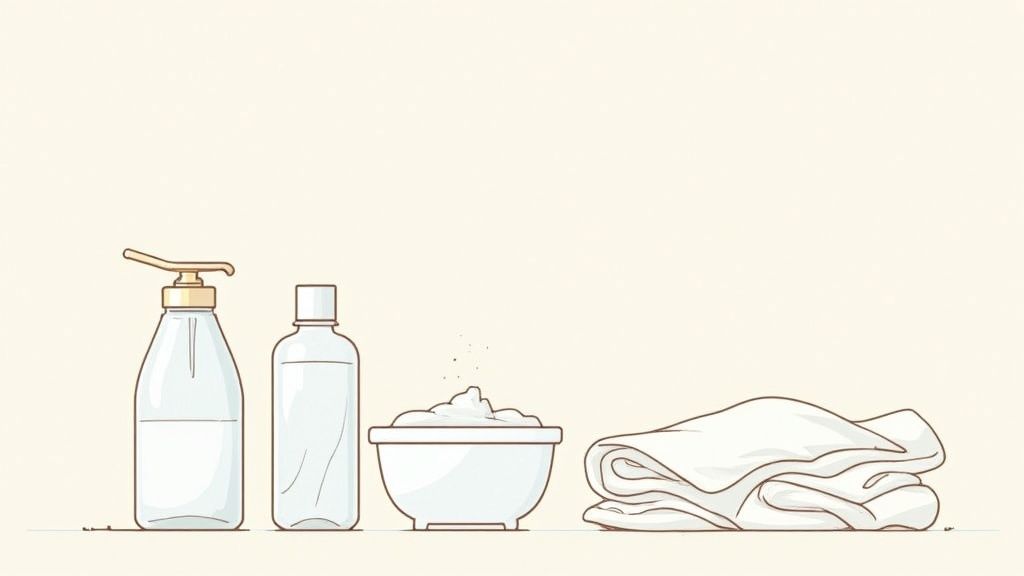
Soft Microfiber Cloths: These are the absolute best for dusting and cleaning. Microfiber is brilliant because it traps dust particles instead of just pushing them around, and it's gentle on delicate wood surfaces. We always keep at least two on hand—one for cleaning and a separate one for drying and buffing.
Mild Dish Soap: Just a few drops of a gentle, non-citrus dish soap mixed with some warm water is all you need. It creates a simple, effective cleaning solution that cuts through everyday grime without being harsh.
Water: Simple as it sounds, clean water is a key player. You can use a small bowl or a spray bottle to lightly dampen your cloth.
A Soft-Bristled Brush: An old, clean paintbrush or even a soft-bristled toothbrush is great for getting into those intricate carvings or tight corners where dust loves to hide.
That's it! Using soft materials is the most important part. It helps you avoid those tiny, hairline scratches, which is especially critical when you're caring for the stunning finishes on quality Amish solid wood furniture. These are heirloom pieces, and they deserve the gentlest touch.
At BILTRITE, we know that better-quality furniture is an investment in your home. Protecting that investment starts with simple, effective care using tools you can trust not to cause damage.
Item
Why We Recommend It
Where to Find It
Microfiber Cloths
Ultra-soft and designed to trap dust without scratching the finish.
Grocery stores, home goods stores, online
Mild Dish Soap
A gentle, non-citrus soap cuts through grime without harsh chemicals.
Your kitchen sink!
Spray Bottle or Bowl
Helps you control the amount of water and avoid over-saturating the wood.
Dollar stores, home goods stores
Soft-Bristled Brush
Ideal for cleaning detailed carvings and crevices where dust accumulates.
Hardware stores, craft stores, art supply
With this minimal toolkit on hand, you're all set to clean your wood furniture safely and bring back its natural glow.
How to Clean Wood Furniture Properly Without Removing the Finish
The finish is a thin, sacrificial layer protecting the wood underneath — and it's far easier to remove by accident than to restore. Before any wet cleaning, spot test in an inconspicuous spot like the back leg or underside of a leaf: dampen your cloth, wipe a two-inch area, dry it, and check for dulling, clouding, or color change. If the finish reacts badly, stop and use dry methods only.
The core principle is low-moisture cleaning. Your cloth should be wrung out until it's barely damp — it should never leave visible wet streaks, and water should never be allowed to sit on the surface. Museum conservation guidance makes the same point: for furniture with a stable, non-permeable finish like wax or polyurethane, a sponge may be only slightly moistened with water, and wet-cleaning polished surfaces should be avoided entirely (see the Western Australian Museum's wood care guidance).
Just as important is what never touches the finish: ammonia-based cleaners, vinegar-heavy DIY mixes, all-purpose sprays unless explicitly labeled safe for sealed wood, abrasive scrub pads, and any product that instructs you to let it soak. Each of these can dull, cloud, or chemically strip the topcoat in a single session.
Your Simple Weekly Cleaning Routine
Best way to dust wood furniture? Here's the routine we follow. It takes about five minutes per piece.
1. Dust Dry or Barely Damp
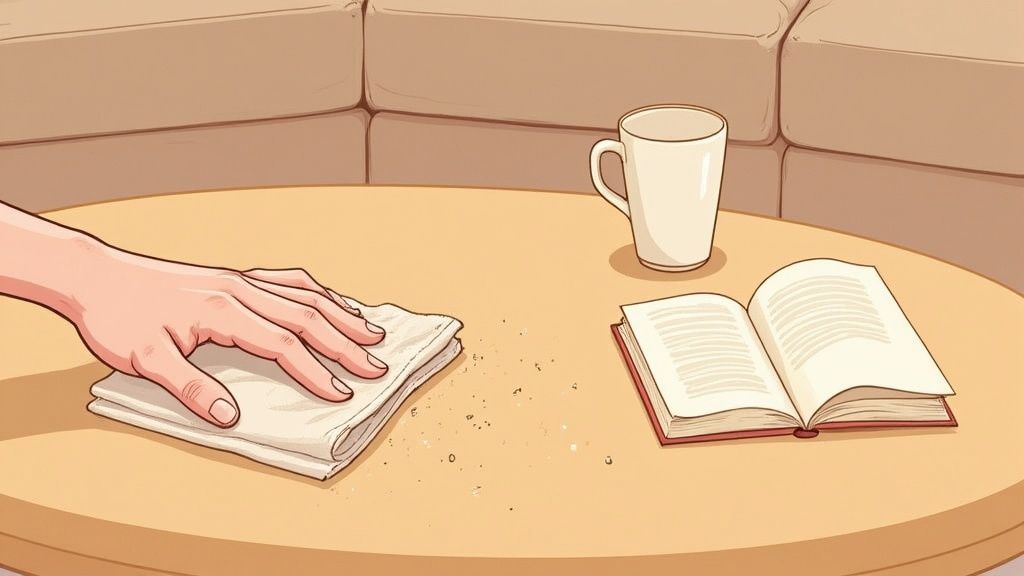
Use a soft, clean microfiber cloth, folded so you always have a fresh surface to fold to. Dry dusting traps particles in the fibers; if dust is heavy, dampen the cloth slightly with water so the fibers grip everything. Skip feather dusters — they mostly launch dust back into the air to resettle on the same table — and skip paper towels, which are rough enough to leave hairline marks over time. Conservators recommend exactly this approach: a soft, lint-free cloth or soft brush to lift loose dust before any liquid is involved (Western Australian Museum conservation manual). Wipe with the grain, and wash microfiber cloths separately from cotton so they stay lint-free.
2. Finish-Safe Wipe-Down for High-Touch Surfaces
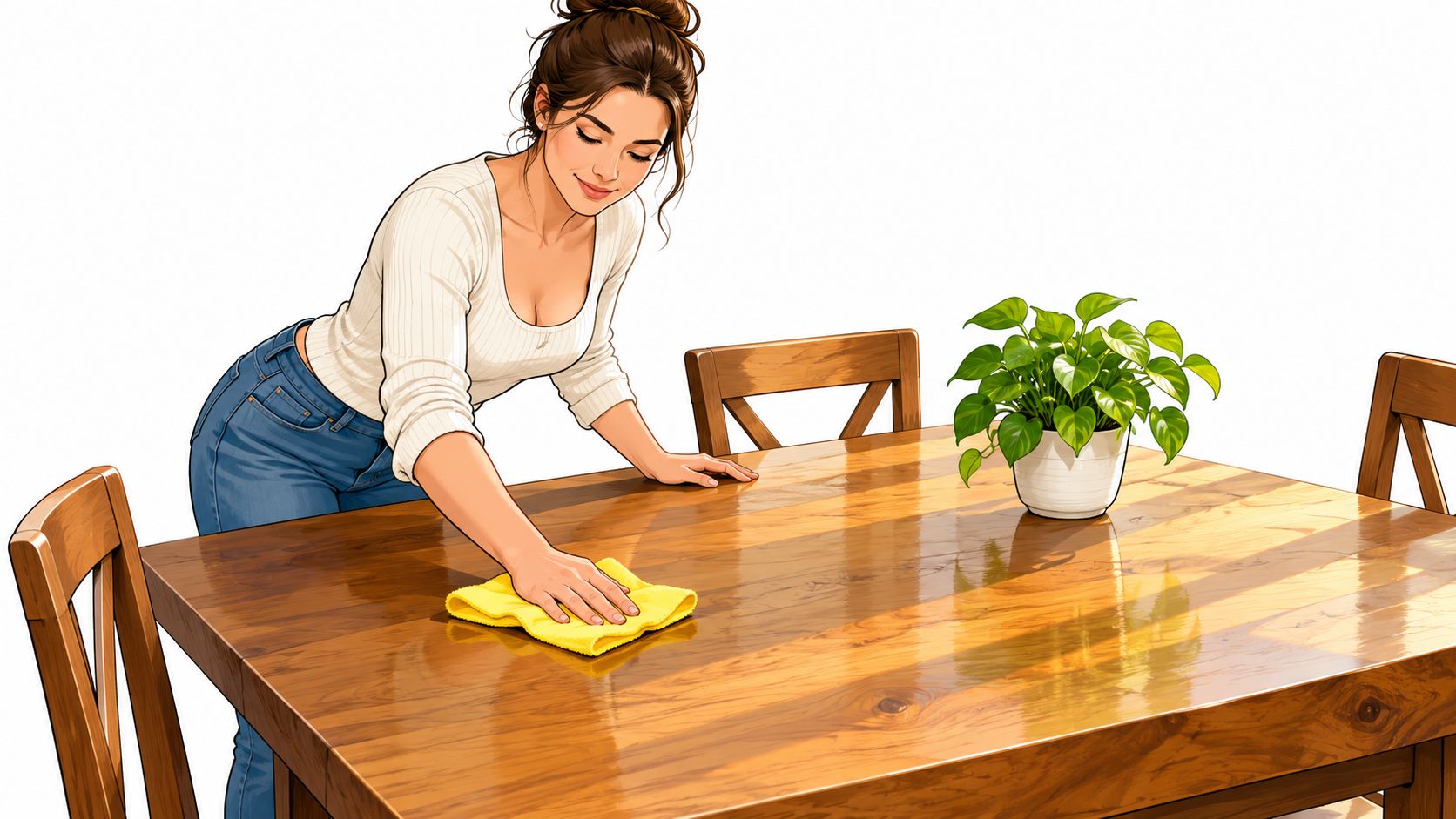
Once a week on pieces that get handled constantly — table tops, armrests, drawer pulls — follow up with a damp wipe. Mix a few drops of mild, non-citrus dish soap in warm water, dampen a separate cloth, and wring it hard until it's barely damp. Wipe in long strokes with the grain, then immediately buff dry with a third cloth. Never spray directly onto the wood; spray the cloth instead so nothing pools.
3. Your Maintenance Cadence
Weekly: dry or barely-damp microfiber dusting on all exposed surfaces.
As needed: the mild-soap wipe-down for fingerprints, food residue, and smudges — plus the spill guidance below when accidents happen.
Occasionally: polish only when cleaning stops restoring the sheen, typically a few times a year.
For dining tables, end tables, and coffee tables specifically, a wood table cleaning habit matters more because food oils and skin contact build up invisibly. A weekly soap wipe-down followed by immediate drying keeps the surface from developing the dull, slightly tacky film we see on neglected tables.
One more environmental note: wood constantly exchanges moisture with the air, and extremes harm both joints and finish. The National Park Service targets about 50% relative humidity (45–55%) for wooden objects and warns it should never exceed 65%; below 30%, glue can desiccate and finishes turn brittle, so aim for the Museum of Florida History's household guidance range of roughly 35–65%.
Our Family Tip: Fingerprints on a tabletop? Huff on the spot like you're cleaning glasses — that light condensation is often enough — then buff with a dry microfiber cloth.
How to Handle Spills and Sticky Spots
The right move depends on what you're dealing with. Work through this sequence:
Fresh Spills (coffee, juice, wine)
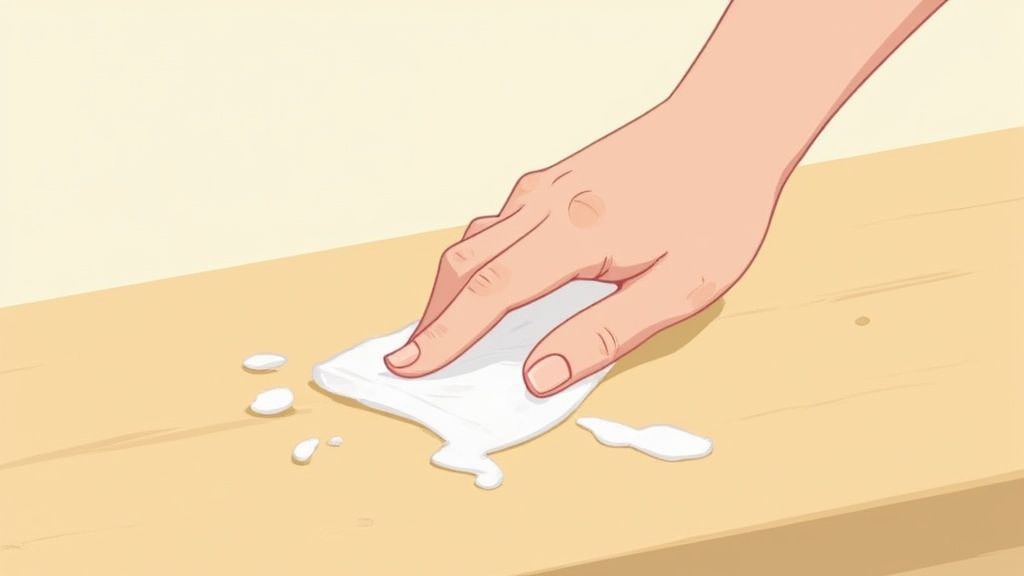
Blow or blot immediately — never wipe, which spreads liquid into a wider film. Blot with a dry microfiber cloth until no moisture transfers, then wipe once with a barely-damp soapy cloth if anything sticky remains, and dry the area at once. Minutes matter: a spill dried within a few minutes rarely leaves a mark on a sound finish.
Sticky Residue (syrup, stickers, handprints)
Dampen a microfiber cloth with your mild soap solution, wring it nearly dry, and lay it over the spot for thirty seconds to soften the residue. Gently wipe in the direction of the grain, then dry. If tape or sticker gunk resists, repeat the compress rather than scrubbing — repeated gentle passes protect the finish; one aggressive rub can cloud it.
Greasy Buildup
Kitchen-adjacent furniture collects an invisible oil film. use slightly more soap concentration (a drop or two extra in your water), wipe with the grain, then do a clean-water wipe and dry. Never reach for degreasing kitchen sprays; most are formulated for sealed counters, not wood finishes.
Years of Grime on Finished Wood
Built-up grime plus old polish is Cleaner's most common failure case. Start with repeated barely-damp soap wipes over several sessions rather than one aggressive attempt — lifting grime in layers is how to remove years of buildup from wood furniture safely. If the surface stays tacky, cloudy, or streaked after two or three gentle sessions, stop: the residue is probably in the finish itself, and that's the point to call a refinisher rather than escalate to solvents.
Wood tables deserve special care because they take food acids, plate heat, and constant hand contact. Wipe food-contact areas after every meal, dry them, and check for early white rings — caught fresh, they're reversible (a hairdryer on low heat, kept moving several inches away, often releases trapped moisture; a tiny dab of non-gel white toothpaste on a soft cloth, rubbed along the grain, can lift stubborn haze).
Historical care guidance backs our caution here: the Iowa Historical Society / Local History Network warns against commercial dust sprays and polish on wood furniture because they build up on the surface and attract more dust, while water left standing leaves rings and heat softens finishes — see its wooden objects care toolkit. Before any cleaning, check that the finish isn't cracked, flaking, or lifting; unstable finishes tolerate dry dusting only.
When and How to Polish Your Wood Furniture
Polishing your furniture isn't something you need to do every week. Think of it as a treat for your wood! An occasional polish brings back that gorgeous, warm glow and adds a much-needed layer of protection against daily life.
It's important to remember that cleaning removes dirt, while polishing adds shine and protection. If your furniture looks a little dull or dry even after a good cleaning, that's your cue—it's probably time for a polish!
Getting That Great Sheen
Here at BILTRITE, we've seen it all, and we always steer people toward a polish that nourishes the wood. Be wary of products loaded with silicones or waxes. Over time, they can create a sticky buildup that attracts more dust and grime. Instead, look for polishes with natural oils that feed the wood and make its beautiful grain pop.
Applying polish is a breeze. Just put a small amount on a clean, soft cloth—never pour it directly onto the furniture itself. Then, gently wipe the surface, always following the direction of the wood grain. Use long, even strokes to get a consistent finish.
Once you've applied the polish, grab a second clean cloth and buff the surface until it has a beautiful, even luster. This is the final touch that makes the incredible craftsmanship of our USA and Amish-made furniture sing.
Polishing is like the finishing touch that brings out the soul of the wood. It's not just about shine; it's about highlighting the natural beauty that families have loved for generations.
If you want a sense of how large this category has become, the global furniture polish market was valued at USD 22.9 billion in 2023 and is projected to keep growing through 2030 — you can dig into the trend in this furniture polish market report.
Common Wood Care Questions Answered
These are the questions we hear most in our Greenfield showroom, with the specific answers we give face to face.
What Should You Not Clean Wood With?
Never use ammonia-based cleaners (they cloud and soften many finishes), vinegar or vinegar-heavy DIY solutions, abrasive scrub pads or powders, all-purpose sprays unless labeled safe for sealed wood, or silicone polish sprays that leave a film. Historical conservators reach the same conclusion we have after decades in the showroom: commercial dust sprays and excess water do more damage than ordinary household dust ever will (see the Iowa Historical Society / Local History Network's wooden furniture guidance).
Wait — applying polish more often to "fix" dullness is the wrong instinct if the dullness is polish buildup; buff the surface dry and reassess before adding another layer.
How Do You Remove Built-Up Grime Without Damaging the Finish?
Work in layers: barely-damp mild-soap wipes, always with the grain, always followed by drying, over two or three short sessions. Never soak the surface, never scrub harder to compensate for slow progress. If grime persists or the finish looks disturbed underneath, that's a job for a professional refinisher, not a stronger chemical.
How Often Should I Dust and Polish My Wood Furniture?
Dust weekly with a dry or barely-damp microfiber cloth — this prevents the fine hairline scratches that accumulated dust particles cause. Spot-clean with mild soap whenever something is spilled or sticky. Polish only occasionally, a few times a year at most, when a good cleaning no longer restores the sheen; more frequent polishing risks buildup rather than benefit.
Can I Use an All-Purpose Cleaner on My Wood Table?
We strongly advise against it! All-purpose cleaners almost always contain harsh chemicals, ammonia, or acids that can strip the protective finish right off your furniture. It's a fast track to discoloration, dullness, or even permanent damage to the wood underneath. When in doubt, always stick with a simple solution of mild soap and water.
At BILTRITE, we believe that simple is almost always better. Caring for quality, solid wood furniture doesn't require a cabinet full of expensive chemicals—just a little consistency and a gentle touch.
Ready to find your new favorite piece of furniture? The friendly team at BILTRITE Furniture-Leather-Mattresses is here to help! Come on down to our showroom in Greenfield—we're proudly closed on Sundays to be with our families, but we'd love to see you any other day of the week. Let us show you the incredible craftsmanship of our solid wood furniture.