How to Remove Water Stains from Your Wood Furniture


Oh no! It’s that heart-sinking moment when you spot a milky white ring on your beautiful wood table. But don't panic just yet! Acting fast is the key, and the good news is that a white ring usually means moisture is only trapped in the top finish layer, not deep in the wood itself. Phew!
First, Identify the Stain Type
As a 4th generation, family-owned business that’s been around solid wood furniture since 1928, we've seen every kind of mark you can imagine here in our Metro Milwaukee community. Before you try any removal method, you've got to know what you're dealing with. Water stains on wood really boil down to two main types: light or dark.
This simple flowchart helps you see the difference at a glance.
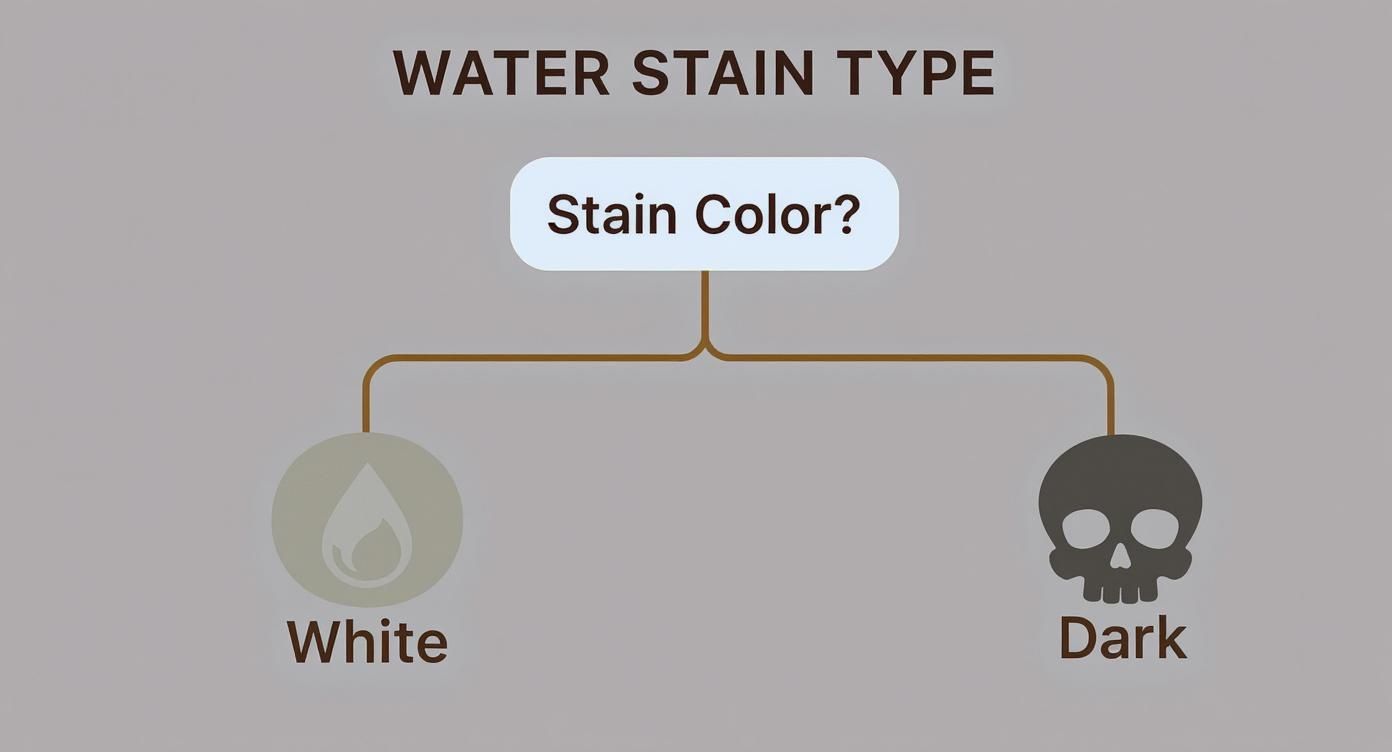
As you can see, a white stain is a surface-level issue. A dark stain, on the other hand, signals deeper trouble. This guide will focus on those more common—and much more fixable—white rings.
What the Stain Color Means for You
That cloudy, milky look of a white stain is actually a good sign! It means the moisture hasn't soaked through the protective finish and into the wood grain. This makes it so much easier to handle, often with things you probably already have in your pantry.
To help you figure out what you're up against, here's a quick reference table.
Quick Guide to Identifying Your Water Stain
This table helps you quickly figure out what kind of stain you're dealing with and what it means for your repair job.
| Stain Color | What It Means | Difficulty to Fix |
|---|---|---|
| White/Cloudy | Moisture is trapped in the top finish layer only. | Easy |
| Black/Dark Brown | Water has penetrated the finish into the wood. | Difficult |
A white stain is a straightforward fix, while a dark stain often means you're looking at a more involved project, possibly even needing to sand and refinish the piece.
Interestingly, some of the most effective methods for white rings are old-school tricks. Believe it or not, about 70% of DIY restorers have successfully used household items like mayonnaise or petroleum jelly to fix minor water rings. The oils in these products gently work their way into the finish and displace the trapped moisture.
Treating these little spots is a great weekend task. If you're getting your home in order, you might also be interested in our spring cleaning tips for your entire home.
Dealing with a water stain is all about having a little patience and using the right technique. You can do this, and your treasured Amish-made or solid wood piece will be looking great again in no time.
Gentle Fixes for Light Water Stains
For those newer, lighter-colored water stains we talked about, there’s often no need to bring out the heavy-duty stuff. Let's start with the gentlest tricks from our family playbook—the kind of advice we’ve shared with our Metro Milwaukee neighbors for decades.
You’d be surprised what a few common household items can do!
The Hairdryer Trick
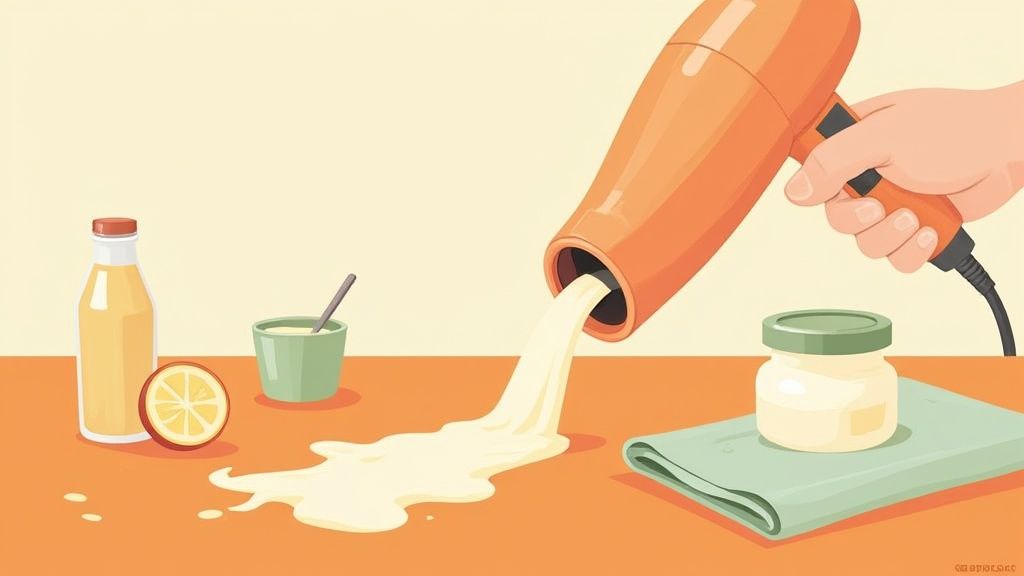
One of the easiest first moves is to grab a hairdryer. The idea here is pretty simple: gentle heat helps evaporate the moisture that’s trapped just under the finish.
- Set your hairdryer to its lowest heat setting. You're trying to coax the moisture out, not cook the finish.
- Hold it about six inches from the stain, moving it back and forth gently.
- Keep this up for about 10 minutes, checking on your progress as you go. You should see that white mark start to fade away!
The Classic Mayonnaise Method
This might sound like an old wives' tale, but trust us, it really works! The oil in the mayonnaise is fantastic at displacing that trapped moisture and nourishing the wood’s finish at the same time.
Mayonnaise isn’t just for sandwiches! Its oils can gently penetrate a wood finish, displacing the water molecules that cause those cloudy white rings. It's a simple, effective fix that has been used for generations.
To try it yourself, just dab a small amount of full-fat mayonnaise onto a soft cloth and apply it directly to the stain. Let it sit for a few hours—or even overnight for a particularly stubborn mark.
When you're ready, just wipe it away with a clean, dry cloth and buff the area. The stain should be gone!
These gentle methods are all about preserving the integrity of your furniture. For more tips on keeping your pieces in great shape, you might also be interested in our guide on how to clean wood furniture. It’s this kind of care that ensures your solid USA-made furniture will last for years to come.
Using a Warm Iron on Stubborn White Marks
So, the hairdryer or mayonnaise trick didn't quite cut it for that stubborn white ring. Don't worry, it's time to bring out another household hero—the iron.
We know what you're thinking. Taking a hot iron to your beautiful wood furniture sounds a little terrifying! But trust us on this one. When you do it carefully, it works wonders on those tougher spots that have really settled into the finish.
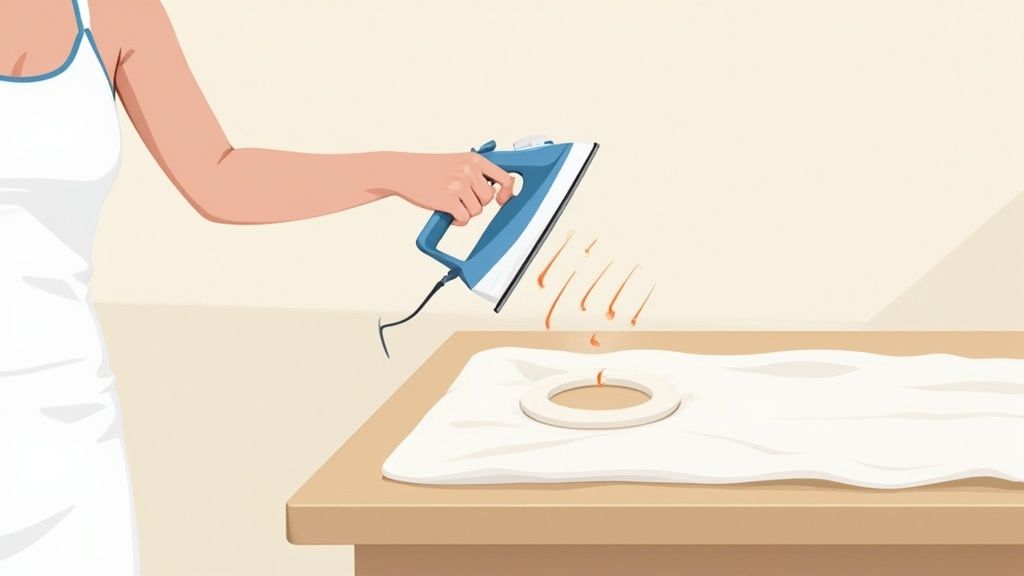
The secret here is using gentle, even heat to draw that trapped moisture out of the wood's finish and into a protective cloth. It’s a fantastic technique for those deeper white marks that have made themselves at home.
How to Safely Use the Iron Method
Let’s walk through how to do this safely. This is the kind of hands-on advice our awesome team would give you if you stopped by our Greenfield store for a chat.
- Prep Your Iron: First things first, empty all the water out. You want a completely dry iron, so make absolutely sure the steam function is turned OFF. Set it to its lowest heat setting—you can always go up, but you can't undo a burn mark.
- Create a Barrier: Grab a clean, dry cotton cloth. An old t-shirt or a tea towel works great for this. Lay it flat over the entire water stain. This cloth is your all-important barrier, so don’t even think about skipping it!
- Apply Gentle Heat: Press the warm iron onto the cloth for just a few seconds, then lift it. Keep the iron moving slowly over the area. It's critical that you do not let it sit in one spot, as that's how you risk damaging the finish.
- Check Your Progress: After a few passes, lift the cloth and take a peek at the stain. You should see it starting to fade. Just keep repeating the process in these short bursts until the white mark is completely gone.
This technique works because the gentle warmth encourages the trapped moisture to turn back into vapor. The cotton cloth then absorbs this vapor, pulling the stain right out of the wood’s finish. It’s a little bit of science in action!
Patience is your best friend here. This isn’t a race, and going slow ensures you protect the beautiful finish on your furniture. It's this type of careful approach that keeps affordable, better-quality pieces looking fantastic for generations.
Knowing When to Call a Professional
We love a good DIY fix as much as anyone, but after being in the furniture business since 1928, our family knows it's just as important to recognize your limits. Not all water stains are created equal, and some are best left to the experts.
It all comes down to the color of the stain. While a white ring means moisture is trapped in the finish, a dark or black stain is a warning sign. This means water has soaked past the finish and into the wood itself. Unfortunately, no amount of mayonnaise or ironing can fix that.
Signs You Need an Expert
If you see any of the following, it’s time to step back from the DIY project and pick up the phone:
- A Dark Stain: Black or dark brown marks indicate deep water penetration into the wood fibers.
- Bubbled or Peeling Finish: This suggests the damage has compromised the entire protective layer.
- Warped or Raised Wood: If the wood itself has changed shape, it's a structural issue.
Trying to fix these deeper issues without the right tools and expertise can often make the problem much worse. This is especially true for high-quality, American-made or Amish pieces that are meant to be family heirlooms. You don't want to risk causing permanent damage to a treasured piece of furniture.
Protect your investment! If you're dealing with a stubborn stain on a piece you purchased from us, our team can help assess the situation. Feel free to fill out a service request and we can offer some friendly advice. For severe damage, we'll honestly recommend consulting a professional furniture restorer. They have the skills to sand, refinish, and bring your piece back to life correctly.
Preventing Water Stains on Wood Furniture
Now that your furniture is looking great again, let's talk about keeping it that way! As our family has said for generations here at BILTRITE, an ounce of prevention is worth a pound of cure. Taking a few simple steps now can protect your beautiful solid wood furniture for years to come.
The easiest habit to start? Use coasters and placemats. It sounds almost too simple, but it’s the single best way to stop those dreaded rings before they even have a chance to form. Think of them as stylish little shields for your tables!
Maintain a Strong Protective Finish
Regular care also makes a huge difference. By keeping the protective finish on your wood strong and intact, you create a much more resilient barrier against spills and moisture.
- Dust Regularly: Grab a soft, dry cloth to remove dust. Those little particles can be abrasive and wear down the finish over time.
- Clean Gently: When you need to clean, stick with products specifically designed for wood. Apply it with a clean cloth and always wipe in the direction of the grain.
- Polish Periodically: Applying a quality furniture polish does more than just shine—it helps nourish the wood and adds another layer of defense against moisture.
For a deeper dive into protecting your pieces, check out our ultimate guide to protecting wood furniture from scratches and stains for more of our family tips.
Taking care of high-quality furniture is a growing priority for homeowners. In fact, the broader stain remover market was worth about $17 billion in 2024 and is expected to keep growing, showing just how much people value keeping their homes looking great. Find out more about stain remover market trends.
A little bit of care really does go a long way. It ensures the affordable, better-quality furniture your family makes memories around will continue to be a source of pride. We love helping our neighbors find pieces that last, and we’d be happy to show you our USA and Amish-made collections in our Greenfield showroom.
Your Top Questions About Water Stains
Working in our Greenfield showroom, we get a lot of questions about furniture care. It makes sense! After helping families in the Metro Milwaukee area since 1928, our team has pretty much seen and heard it all.
Here are a few of the most common questions that come up when dealing with those dreaded water rings.
Will These Methods Work on My Amish Furniture?
Yes, most of the time they will! The DIY tricks we've covered are generally safe for the kind of tough, durable finishes you'll find on high-quality solid wood—and that definitely includes the beautiful Amish-made pieces we love.
The trick is to always start with the gentlest method first (like the hairdryer) and to test any product or technique on a hidden spot before going all-in on the visible stain.
For more general furniture questions, from delivery to financing, you can always find answers on our frequently asked questions page.
What if I Make the Stain Worse?
It's a totally valid concern, and it's why patience is your best friend here. The key is to be gentle. Never scrub hard, and don’t crank up the heat on your iron or hairdryer.
If a stain isn’t budging after a few light tries, it’s much smarter to stop than to risk burning or stripping the finish. At that point, it might be time to call in a professional.
The biggest mistake we see is people using too much heat or pressure. Remember, you're just trying to gently coax the trapped moisture out of the wood's finish, not force it out. Slow and steady wins this race every time.
How Can I Tell if My Furniture Has a Wax or Oil Finish?
This is a great question because different finishes absolutely react in different ways.
Here’s a quick test you can do:
- Find an out-of-the-way spot on the furniture.
- Place a single drop of water on the surface.
- If the water beads up nicely, you likely have a hard, sealed finish like varnish or polyurethane.
- If it soaks in right away or darkens the wood, it could be an oil finish, which often needs more specialized care.
At BILTRITE Furniture-Leather-Mattresses, our team has over 400 years of combined experience and is always ready to help you find and care for your furniture. We’d love to see you in our store! Come say hi and let us help you find the next great piece for your home. https://www.biltritefurniture.com