Green Boucle Chair Ideas: Room Styles and Colors That Work


Say a homeowner in Greenfield keeps walking past an empty corner by the living room window, knowing it needs a chair but not another beige one. A green boucle chair can fill that spot with color and texture, as long as the shade, size, and fabric suit real family life.
Table of Contents
- Why Green Boucle Keeps Showing Up in Modern Rooms
- Room Styles and Green Shades That Pair Well
- Placing Your Chair Where Light and Greenery Do the Work
- Sizing a Green Boucle Chair for Small Rooms
- Checking Boucle Durability Before You Buy
- Sourcing a USA-Made Green Chair and Visiting Our Greenfield Showroom
Why Green Boucle Keeps Showing Up in Modern Rooms
In 1929, Irwin Kerns' upholstery shop sold custom-made sofas for $1000. Nearly a century later, a green boucle chair still brings together two practical questions: does its texture suit the room, and will the upholstery stand up to everyday use?
Boucle takes its name from the French word for “curled” or “ringed.” The yarn's small loops create a soft, irregular surface with visual depth, giving rounded chairs texture without relying on a printed pattern. Designer Eero Saarinen's Womb Chair, upholstered in Classic Bouclé, debuted in 1948, according to Elle Decoration's history of boucle in interiors.
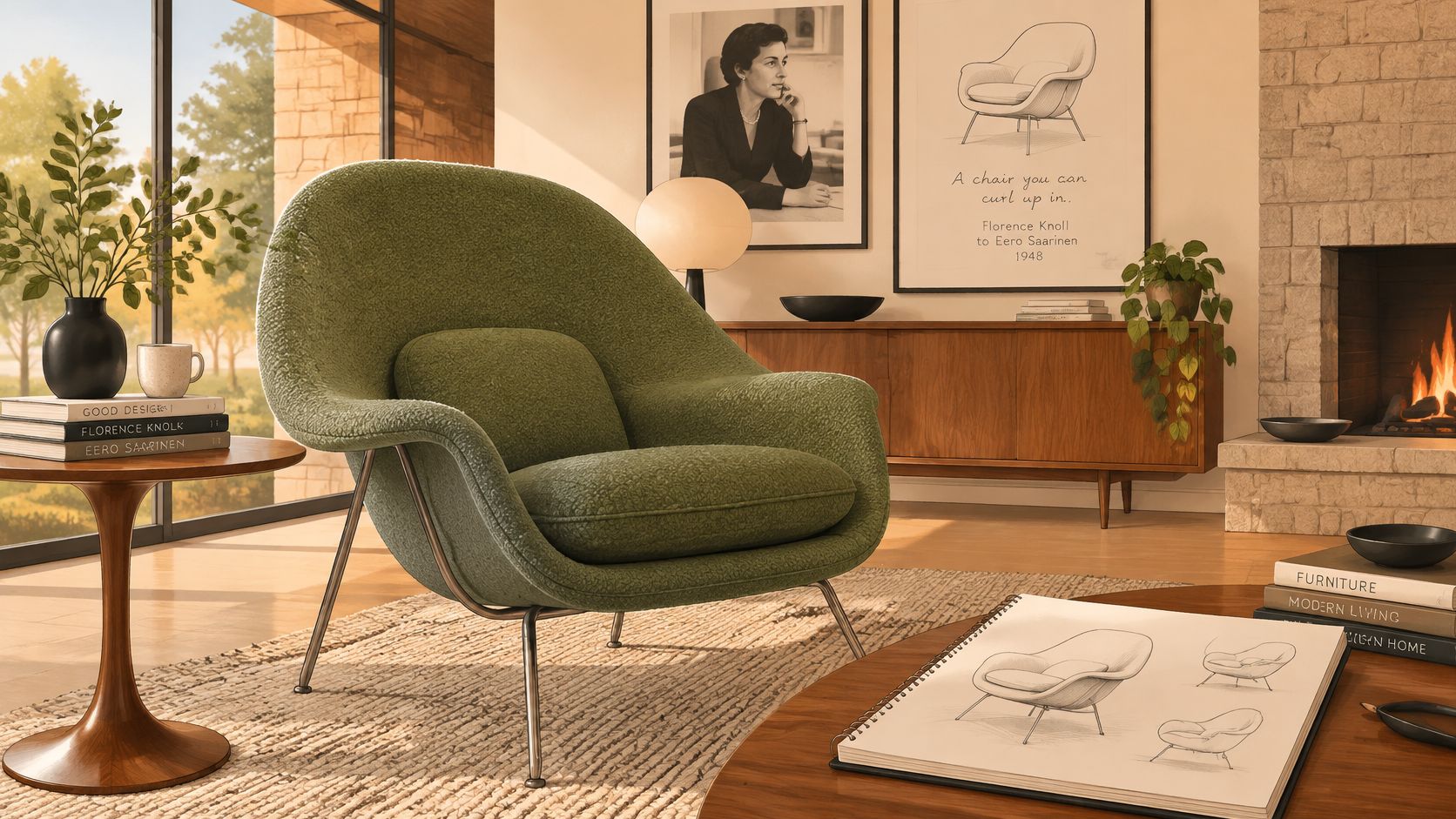
For a chair used every day, appearance is only part of the decision. Check the fabric's feel and construction, and consider how it will fare with the household's routine. A soft, looped surface brings inviting texture to a room, while a green shade can echo wood and plants or provide a stronger color accent.
BILTRITE Furniture-Leather-Mattresses, a fourth-generation, family-owned showroom serving Metro Milwaukee since 1928, offers furniture and custom options. A chair's suitability for years of family use depends on its materials and care, so inspect the specific piece before choosing.
Room Styles and Green Shades That Pair Well
In a mid-century living room, a moss-green boucle chair beside walnut furniture and a cream rug can add color without pulling focus from the room's warm materials. Choose a shade by looking at the colors and finishes it will sit beside every day.
| Room style | Typical green shades | Pairings that work |
|---|---|---|
| Mid-century modern | Olive or moss | Walnut, cream walls, tapered legs |
| Scandinavian or minimal | Soft sage | Pale oak, white walls, linen throws |
| Bohemian | Deep forest green | Rattan, jute, terracotta and plants |
| Glam | Emerald | Brass, mirror, marble side tables |
| Traditional or cottage | Muted olive or hunter green | Painted wood, plaid or floral pillows |
How Each Shade Behaves in a Real Room
Soft sage suits a Scandinavian or minimal room with pale oak, white walls, and linen. Its quiet color lets the boucle loops add texture without introducing a strong contrast. In a compact sitting area, a sage chair can bring color beside a light sofa and pale rug while keeping the palette calm.
Olive and moss work naturally with walnut, cream walls, and tapered legs. A moss chair beside a walnut side table and cream rug gives the room a warm, connected palette; a green accent elsewhere can echo the chair.
Deep forest green gives a Bohemian corner weight among rattan, jute, terracotta, and plants. Emerald brings a bolder note to a Glam room, where brass, mirror, and marble side tables can complement its depth. For traditional or cottage rooms, muted olive or hunter green fits painted wood and plaid or floral pillows.
Simple rule: Choose one green accent, then let larger pieces and walls stay neutral so the boucle texture remains a clear feature.
BILTRITE Furniture-Leather-Mattresses offers style guides to help customers identify design styles such as Bohemian, Glam, and Midcentury Modern. Naming the room's style can narrow the shade options, especially if you are also considering a green sofa or loveseat for another part of the home.
Green shades also vary in their staying power as design preferences change. A flexible forest or olive can work with a range of wood tones and furnishings, while a brighter lime or blue-green may call for a more specific palette. If emerald is your favorite, compare a large swatch with the rug, wall paint, and nearby wood. Check that the color still feels right in the room's different settings, then consider how the chair's upholstery will stand up to years of family use.
Placing Your Chair Where Light and Greenery Do the Work
A reading corner facing a television wall with no window can make a green boucle chair look different from the shade you chose. Nearby greenery and a well-placed lamp can add visual depth and make the corner feel considered.
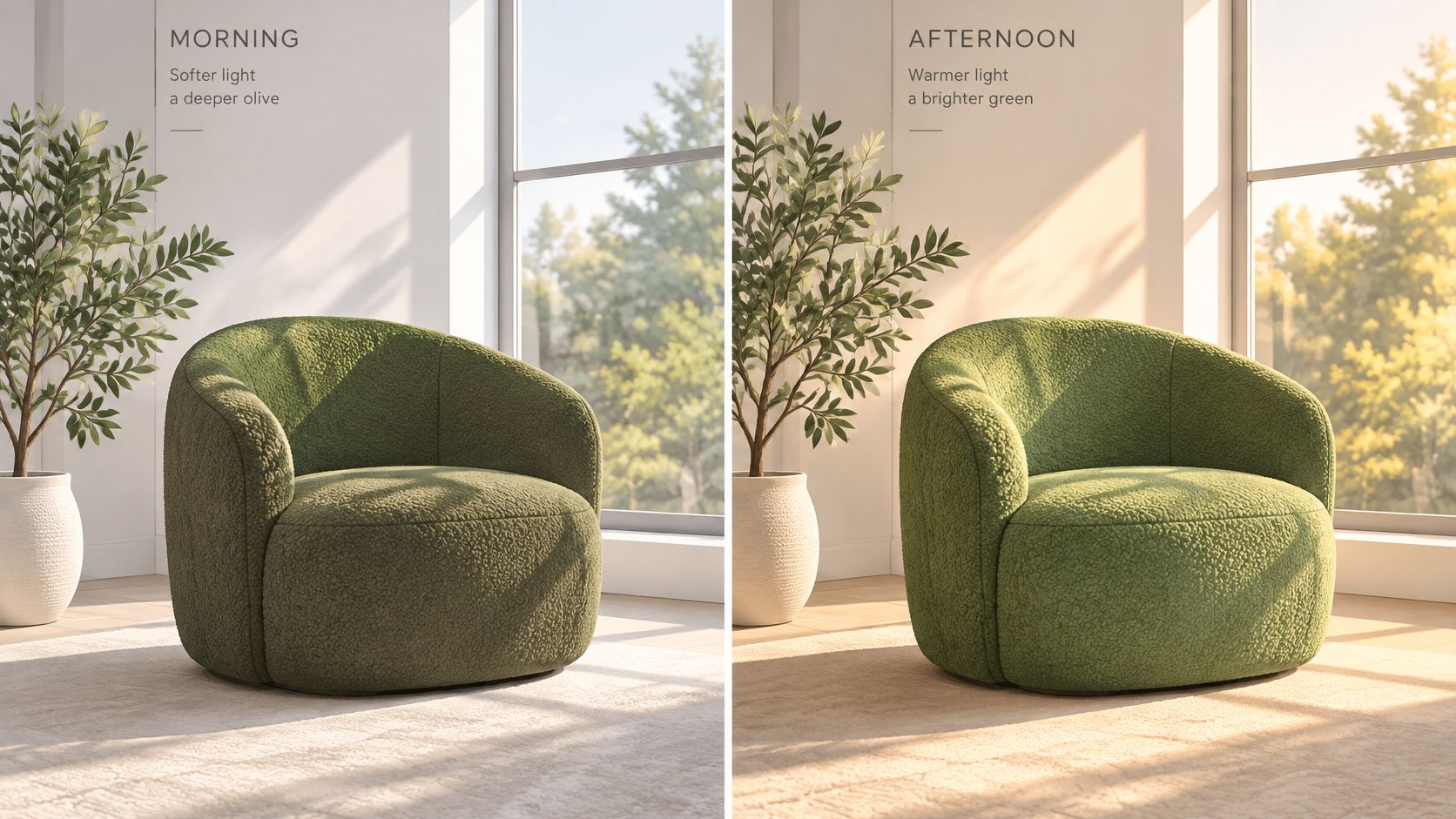
A biophilic workplace design study discusses how greenery, nature views, daylight, and visual comfort can support a pleasant indoor environment. At home, try placing the chair where a plant or a view outdoors is part of the scene. Let the chair complement those details, rather than asking its color alone to define the room.
A Three Step Placement Test
- Set the chair in the planned corner. Angle it toward a window, a greenery view, or the room's main seating area.
- Check the surrounding light. Look at whether the chair reads clearly beside the wall, rug, and nearby furniture. The shade itself is best assessed alongside the room's colors, as described in the section on green shades.
- Adjust one supporting piece. Bring a lamp, plant, or wood side table closer if the boucle looks flat against the wall. Sit in the chair and check whether the arrangement feels comfortable from that spot.
For a corner that faces a television wall, a plant beside the chair can soften the view, while a reading lamp can make the seat useful after dark. Turn the chair slightly toward the room rather than pressing it flat against the wall. Small changes in angle and nearby furnishings can help the chair feel connected to the rest of the space.
Shoppers weighing how light affects the room can consult this guide to putting a living room in the best light. Then judge the chair by practical signs of everyday use: whether family members choose it, whether its color works with the room, and whether the fabric remains in good condition with care.
Sizing a Green Boucle Chair for Small Rooms
A tape outline can reveal a tight fit before a chair arrives. For example, use a hypothetical chair measuring 29.25 inches wide by 35 inches deep by 39 inches high. Mark its footprint on the floor, then check how it sits beside the rug, doorway, and walking route.
| Chair | Width | Depth | Height |
|---|---|---|---|
| Hypothetical chair | 29.25 in | 35 in | 39 in |
| Your planned spot | Measure wall to nearest obstruction | Measure wall to walking path edge | Measure floor to lowest wall fixture |
The Room Check in Order
Measure the wall space, including baseboards, vents, outlets, and the swing of a nearby door. Mark the chair's footprint with painter's tape and leave it in place for a day. The outline makes it easier to spot a blocked vent or a side table squeezed against the arm.
Then check the walking route. A planning allowance of 30 to 36 inches beside a chair can help people pass comfortably. Adjust it to the room, and walk the route carrying laundry baskets, grocery bags, or a walker.
In a compact condo, a chair tucked beside a balcony door may leave the center of the room open. A deeper lounge chair placed farther out can make the same route feel cramped, especially when paired with a floor lamp.
Seat height matters, too. A seat around 17 to 19 inches can make sitting down and standing up easier than a low, deep cushion. For older adults or anyone who needs help transferring, stable arms offer a firm place to push from.
Browse small-scale upholstered chairs while considering how the chair will get into the room. Measure doorways, turns, and stair railings before choosing a size.
Leave the tape outline down overnight. If family members keep cutting across it or squeezing past it, the chair is too large or the spot is wrong.
Shape affects how a chair feels in a small room. A higher back can provide a substantial look without a deep seat, while visible legs leave more floor in view. With the hypothetical example, depth deserves particular attention: a few inches can determine whether a side table fits and whether the chair crowds the rug.
Checking Boucle Durability Before You Buy
A cat kneading a green boucle swatch can reveal more than a glance across a showroom. Run a fingernail lightly over the loops, then check whether any catch or pull. That quick check helps show how the fabric may respond to claws, jewelry, and rough clothing over years of family use.
Boucle describes the fabric's looped surface, not its durability. Fiber, backing, weave density, seams, and cushion construction all affect how a chair wears. Ask for the specific fabric's abrasion result rather than relying on a general claim about the upholstery.
| Use case | Martindale guidance | What it means |
|---|---|---|
| Occasional reading chair, light use | Around 10,000 cycles | A general benchmark for normal daily use |
| Family room, pets, daily sitting | More than 20,000 cycles | A practical target to discuss for harder wear |
| Public or senior-living settings | More than 80,000 cycles | A general benchmark for demanding environments |
These figures are general industry guidance, not a guarantee of how a particular chair will perform. For a family room or daily reading chair, ask whether the exact fabric has a result above 20,000 Martindale cycles and what that rating means for your household.
What to Ask for in Writing
- Exact Martindale result: Request the result for the specific fabric, not a general durability claim.
- Fiber composition: Ask what the yarn and backing contain. Boucle describes construction, not fiber content.
- Pilling grade and lightfastness rating: Request both when choosing a green chair that will sit near daylight.
- Cleaning code and warranty terms: Confirm the care instructions, cover construction, and what the warranty covers.
The guide to fabric durability ratings can help you start that conversation with the right vocabulary. Ask how each rating applies to the chair's intended room and daily use.
A Swatch Test That Tells the Truth
Rub a large swatch with a jewelry clasp, denim seam, or rough clothing edge. Watch for loops that catch or pull. Press the fabric firmly, then see whether the loops recover or stay crushed. Check the seams with a gentle pull, and view the green in daylight and warm indoor lighting to see how its color changes.
For a senior who uses the arms to stand, consider the chair's arm stability and seat height alongside the upholstery. Cleanability matters, too. A green boucle chair should suit both the room and the person who uses it.
Tightly woven performance fabrics may resist snags better, while leather is easier to wipe clean but can scratch. Boucle brings a warm, tactile look and can soften tonal variation, though its loops may catch on claws, jewelry, and rough clothing.
Choose the fabric with its setting in mind. A reading chair or bedroom accent may see less rough contact than a family-room seat used throughout the day. If toddlers regularly eat snacks in the chair, a tighter weave or leather may be easier to live with. A swatch check and a fabric-specific wear result help make the choice practical, not just attractive.
Sourcing a USA-Made Green Chair and Visiting Our Greenfield Showroom
A café owner setting up a quiet reading corner might bring a green paint chip, a photo of the wood floor, and the room's measurements to a furniture showroom. Those details help narrow the chair's shade and scale. For a USA-made piece, the origin label deserves its own questions.
The Federal Trade Commission guide to the Made in USA standard explains that an unqualified “Made in USA” claim generally requires that all or virtually all of a product be made in the United States. Final assembly, significant processing, and nearly all components and materials must be domestic. American assembly alone does not automatically meet that standard.
Three Questions for Any Seller
- Where is the frame made? Ask about the frame separately from the finished chair.
- Where are the upholstery and fabric sourced? Ask about the fabric, foam, and major components.
- Where does final assembly happen? Find out whether domestic work includes significant processing or only the final stage.
Shoppers comparing USA-made furniture stores can use those questions for a green boucle chair, a solid wood side table, or an Amish-made piece. Clear answers make it easier to judge what an origin label means for the particular item.
BILTRITE Furniture-Leather-Mattresses is a fourth-generation, family-owned showroom serving Greenfield and Metro Milwaukee since 1928. Its specialties include affordable, better-quality furniture, with an emphasis on USA-made, Amish-made, and solid wood pieces. The store also offers small scale furniture suited to apartments, condos, smaller homes, and senior living residences.
Custom furniture options let customers choose fabric, leather, wood, finish, and hardware. For a green chair, that means considering how the chosen shade works with the room's wood tones and other finishes, as well as how its upholstery will handle everyday use.
Before visiting, gather the details that will make comparisons useful:
- Bring measurements and photos: Note the wall width, walking path, and doorway dimensions. A room photo taken in daylight can help with color decisions.
- Bring a swatch if possible: A paint chip, rug sample, or pillow cover gives you a reference for comparing green shades.
- Sit, stand, and test the arms: Check comfort and how the chair feels when sitting down and getting up.
- Ask about related needs: The living room category includes chairs, recliners, and lift chairs, alongside sofas, sectionals, loveseats, and sleeper sofas.
A green chair should suit the room and the people who will use it. In the Greenfield showroom, compare the chair's scale with your measurements, consider how the green looks beside your samples, and ask about the specific fabric and construction. For questions before a visit, call 414-238-2020.