Low Profile Mattress Foundation: A Complete Buyer Guide

A thicker mattress can change a familiar bedroom overnight. The bed that once felt easy to climb into may suddenly leave shorter sleepers dangling their feet, children needing a boost, and the top of the mattress sitting uncomfortably close to a headboard or ceiling fan. The issue may not be the mattress at all. It may be the foundation underneath it.
A low profile mattress foundation lowers the finished bed without giving up the firm, level support a mattress needs. The important distinction is choosing the right height for the mattress, frame, room, and person using the bed. A foundation that looks slim but doesn't fit those pieces can create more trouble than it solves.
Table of Contents
- What a Low Profile Mattress Foundation Is
- Standard Heights, Measurements, and What Changes in Your Bedroom
- How a Low Profile Foundation Is Built and Why That Matters
- Matching a Low Profile Foundation to Your Mattress and Bed Frame
- Real Benefits and Honest Drawbacks to Think About
- When a Low Profile Foundation Is the Right Choice for You
- Common Questions and How BILTRITE Can Help You Decide
What a Low Profile Mattress Foundation Is
A thick hybrid or pillow-top mattress can change a familiar bedroom overnight. The mattress may feel comfortable, yet the sleeping surface can sit high enough to make sitting on the edge awkward. A shorter foundation lowers the whole mattress stack and can make getting in and out of bed feel more natural.
A low profile mattress foundation is the supportive layer between the bed frame and mattress. It distributes weight across the frame, keeps the mattress level, and absorbs some impact when someone sits down or climbs into bed. In the U.S. market, low profile foundations commonly measure about 4 to 6 inches, while traditional foundations are often close to 9 inches. Retail foundation guidance also describes a five-inch foundation as a low-profile option.

Shorter does not mean weaker
“Low” describes height, not the foundation's ability to support a mattress. A purpose-built foundation may use a rigid wood frame, steel struts, or closely spaced slats. Its performance comes from the materials, joints, frame design, and spacing. Extra inches above the bed frame do not automatically create better support.
A low profile foundation is designed from the start to provide support at a reduced height. Cutting down a standard foundation can weaken its joints and may affect warranty coverage. The mattress, frame, and foundation must work together, much like the parts of a shelf system: changing one part can alter how the whole structure performs. For a broader explanation of mattress support, see whether a mattress needs a box spring.
Low profile versus ultra-low
A low profile foundation and an ultra-low bunkie board serve different setups. A low profile foundation generally falls within the 4-to-6-inch range. Ultra-low options are commonly around 1.5 to 2 inches, making them useful for bunk beds, trundles, and platform frames with limited clearance. Foundation guidance on low and ultra-low support explains that the thinner option preserves space rather than creating a traditionally raised bed.
At BILTRITE, the in-store mattress team can help shoppers match support height to the mattress and frame. Bring the frame details, mattress type, and available clearance into the conversation. The right choice depends on mattress warranty requirements, slat spacing, frame construction, and the finished height you want.
Standard Heights, Measurements, and What Changes in Your Bedroom
Bed height is a stack, not a single measurement. The finished height comes from the frame, foundation, and mattress working together. A useful starting point is the foundation and mattress combination, followed by the height of the frame's rails or legs.
Low profile foundations sit in the middle of the common range. Ultra-low boards can be about 2 inches, low profile foundations generally measure 4 to 6 inches, and standard foundations are often close to 9 inches. Mattress thicknesses vary, so a shorter foundation becomes especially useful beneath a thick mattress. Mattress measurement guidance helps shoppers account for the actual mattress rather than relying on a general label.
| Foundation Type | Foundation Height | Typical Mattress Thickness | Approximate Total Bed Height |
|---|---|---|---|
| Ultra-low bunkie board | About 2 inches | About 8 inches | About 10 inches, before adding frame height |
| Low profile foundation | About 4 to 6 inches | About 8 to 14 inches | About 12 to 20 inches, before adding frame height |
| Standard foundation | Close to 9 inches | About 8 to 14 inches | About 17 to 23 inches, before adding frame height |
Use the numbers as a planning tool
A bed with an 8-inch mattress and a 4-inch foundation creates a lower mattress stack than the same mattress on a 9-inch foundation. A thicker mattress can make the difference more noticeable, especially when the frame already has tall legs or built-in storage.
The shopper's body matters, too. A lower combination can help a shorter adult, a child, or a pet reach the mattress more easily. A taller sleeper may prefer more elevation because sitting down and standing up can feel easier when the mattress edge is higher.
Look beyond the mattress edge
The foundation height also changes the room. A shorter base can leave more visual space around a tall headboard and reduce the heavy, crowded appearance created by a thick mattress. It can help in a room with a sloped ceiling, low windows, or a ceiling fan that hangs close to the bed.
The trade-off is clearance beneath the frame. If under-bed drawers or storage bins are part of the plan, lowering the foundation can reduce the available space. The right calculation includes the mattress, foundation, frame, headboard, footboard, and anything intended to slide underneath.
How a Low Profile Foundation Is Built and Why That Matters
Two foundations can stand at nearly the same height yet support a mattress very differently. One may have a rigid frame and well-secured supports. Another may flex, shift, or weaken under the load. Upholstery hides much of that work, so the useful question is simple: what is underneath the fabric?
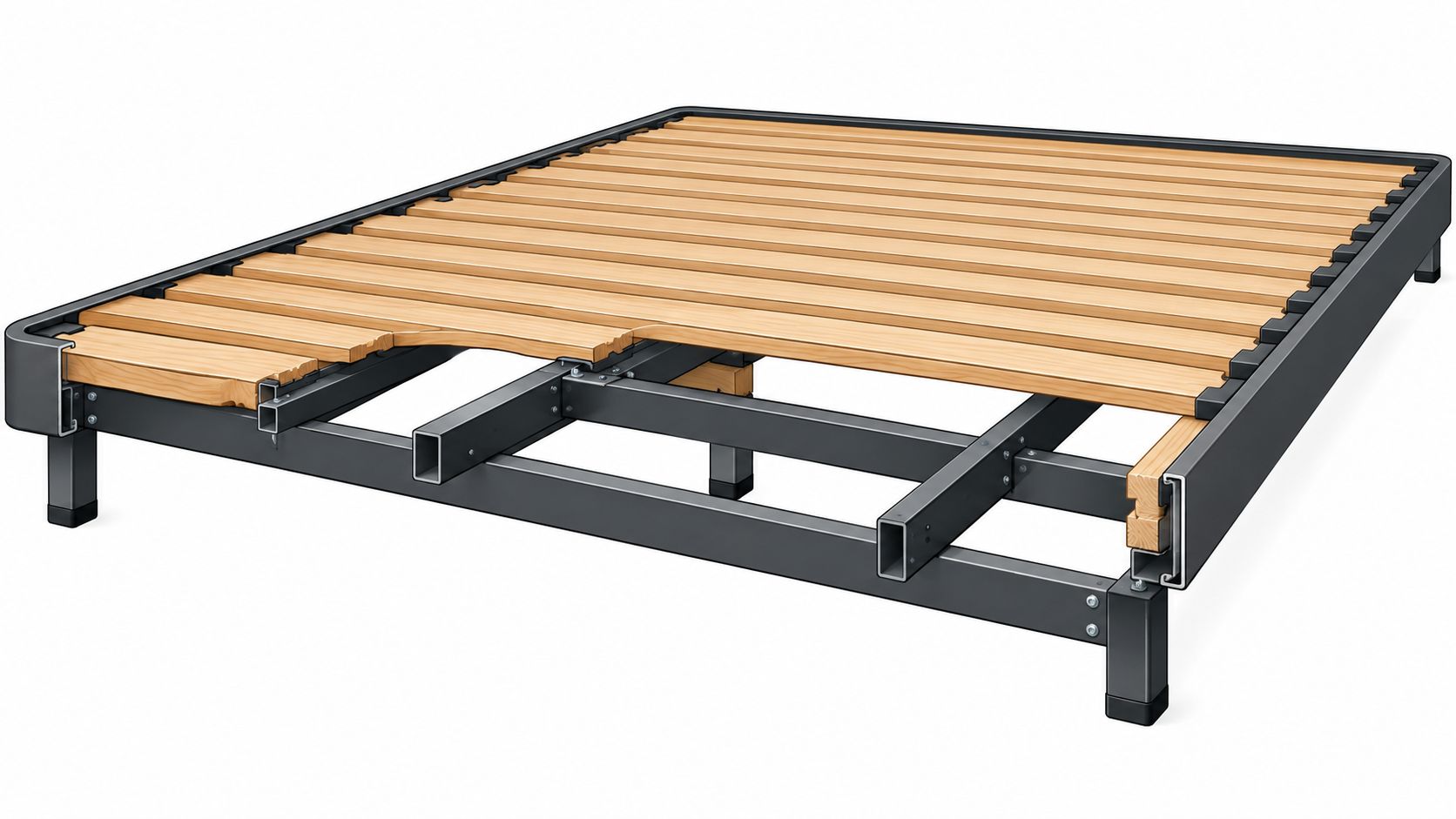
A well-built low profile foundation commonly combines a wood or steel frame, internal slats or a wire grid, a fabric-covered top, and reinforced corners or stitching. These parts work together like the frame of a small platform, keeping the mattress level while distributing weight. Manufacturer specifications for foundations around 5 to 5.5 inches high list shipping weights from the mid-20s to about 80 pounds, depending on size and construction, as shown in Foundation construction specifications.
Slat spacing carries the load
Support spacing matters as much as the foundation's outer height. Slats should hold the mattress evenly instead of letting sections sink into the spaces between them. A commonly used guideline sets the clear gap at no more than 3 inches, with many support guides recommending 2 to 3 inches for dependable support. Slat spacing guidance explains this spacing limit.
Foam and latex mattresses usually need closer support because their layers respond directly to the surface below. Many guides recommend gaps of 3 inches or less for foam, latex, and many hybrids, while some innerspring mattresses can accept wider spacing. Mattress and slat compatibility guidance outlines why mattress construction changes the requirement.
Practical rule: A thinner foundation still needs a rigid frame, secure supports, suitable spacing, and compliance with the mattress warranty.
Materials matter more than the label
Ask whether the frame stays firm under weight, whether the support pieces are fastened securely, and which mattress types the manufacturer approves. Two fabric-covered foundations can look alike while performing differently for years.
A foundation must also fit the mattress and frame accurately. Queen units are commonly about 60 by 80 inches. Split king foundations come in two pieces, while split California king units are commonly about 35.5 to 36 by 83 to 84 inches. Measure the mattress, frame opening, and delivery path before ordering.
A low profile foundation is also different from an ultra-low bunkie board. A bunkie board adds only a thin support layer, while a low profile foundation provides a taller, structured base with more separation from the frame. BILTRITE's in-store mattress team can inspect the mattress and frame with you, then help match the support height instead of assuming the lowest option is best. Flat box spring and foundation information offers further context on flat support systems.
Matching a Low Profile Foundation to Your Mattress and Bed Frame
The mattress should lead the decision. An innerspring mattress needs a stable base, while foam and latex models generally need a firm, even surface that won't allow the comfort layers to fall into wide gaps. Hybrid mattresses combine foam with coils, so they also need strong support and careful attention to the manufacturer's requirements.
| Setup | Compatibility | Notes |
|---|---|---|
| Innerspring mattress | Often compatible | Use a sturdy foundation and follow the mattress warranty requirements. |
| Memory foam mattress | Commonly compatible | Choose a firm, flat base or closely spaced slats. |
| Latex mattress | Commonly compatible | Consistent support and narrow gaps are important. |
| Hybrid mattress | Often compatible | Select a rigid foundation that can carry the mattress weight. |
| Platform frame | May need no separate foundation | Check the built-in deck, slats, and mattress warranty first. |
| Adjustable base | Depends on the system | The adjustable base may already provide the required support surface. |
Match the foundation to the frame
A traditional metal frame with cross rails can often accept a foundation designed to sit between the rails. A solid wood platform may already provide the mattress support, although an ultra-low layer can sometimes add separation and protection. Sleigh beds and storage beds may use a ledge or recessed compartment, so the foundation must fit inside the furniture rather than just rest on top.
Queen and wider frames generally need center support in addition to perimeter rails and slats. One support guide recommends a head-to-foot center rail with at least one leg carrying the load to the floor, because the wider span increases the chance of flex and sag. Center support guidance for wider beds gives shoppers a useful frame check.
Know when a bunkie board takes over
A bunkie board makes sense when every inch matters. A bunk bed needs mattress clearance beneath its guardrails, a trundle needs enough room to roll underneath another bed, and a low platform frame may already sit close to the floor. In those cases, a 1.5-to-2-inch ultra-low support board can be more suitable than a regular low profile foundation.
A 4-to-6-inch foundation is the better fit when the goal is to lower a conventional bed without turning it into a floor-level setup. Shoppers considering a specific mattress and foundation combination can also review foundation guidance for a memory foam mattress before making a decision.
Real Benefits and Honest Drawbacks to Think About
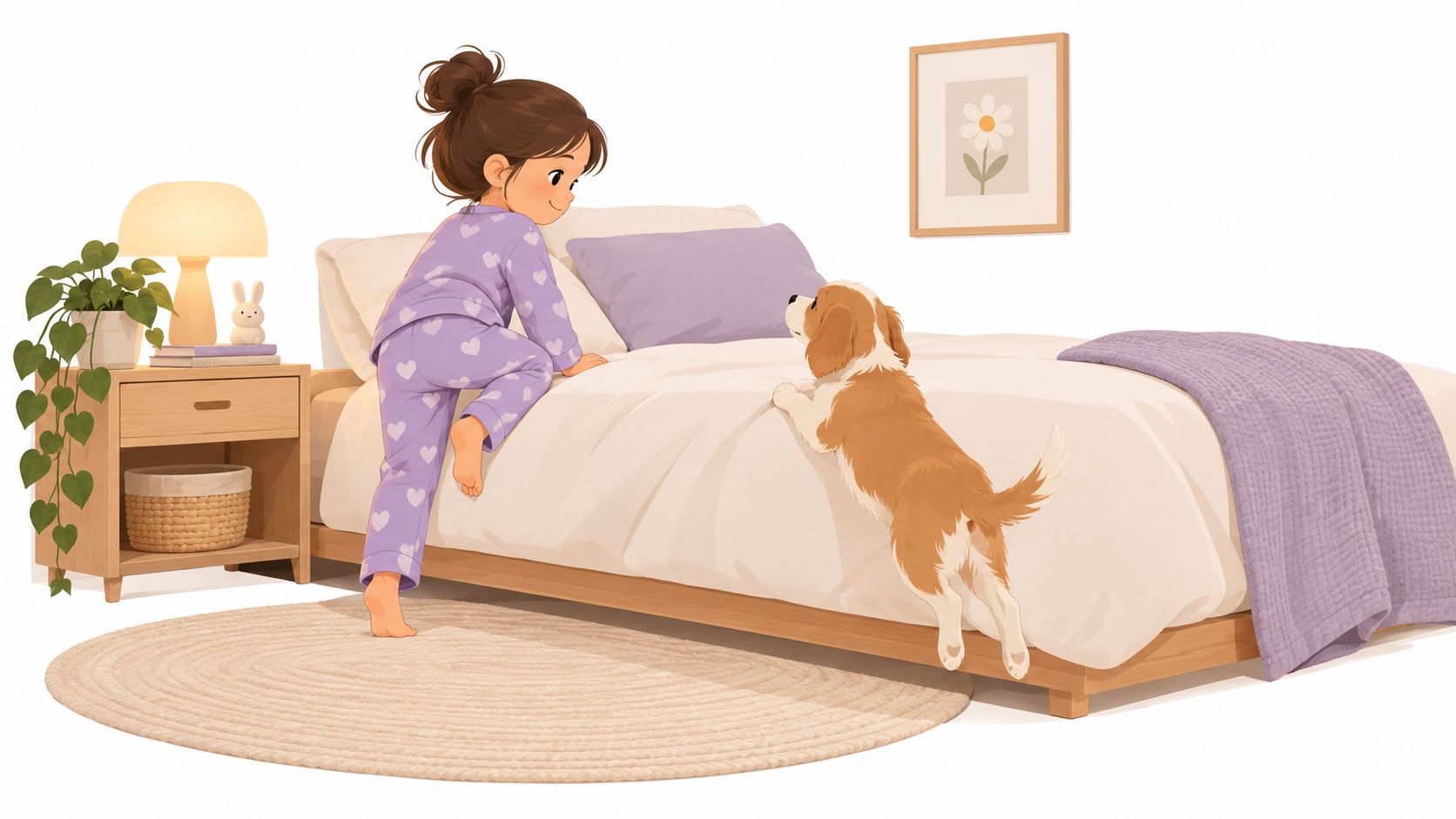
The main benefit is straightforward. A low profile mattress foundation reduces the total bed height, which can make the edge easier to reach for shorter sleepers, children, and older adults. A dog or cat may also find it easier to climb up without jumping as far.
The lower line can improve a room's proportions. It works well with modern low-line furniture, low windows, sloped ceilings, and headboards that should remain visually prominent. Apartments and studio spaces may also benefit when overhead clearance is limited.
The compromises belong in the conversation
A shorter foundation can reduce space beneath the bed, particularly when the frame's storage area depends on the mattress stack sitting high enough above a drawer or bin. A very low combination may also feel less comfortable for a tall sleeper who uses the mattress edge to sit before standing.
Warranty coverage is another consideration. A foundation that doesn't meet the mattress maker's support requirements can create a problem if the mattress develops sagging or impressions. The foundation should be firm enough, appropriately sized, and compatible with the specified slat spacing.
Airflow deserves attention
Lowering a bed isn't automatically better for mattress hygiene. A mattress placed directly on the floor has less airflow beneath it, and trapped humidity can contribute to mold risk over time. A low profile foundation provides some separation from the floor, but a frame that allows air to move underneath can offer better ventilation.
A lower bed improves access and proportion, but the lowest possible base isn't automatically the healthiest choice for every room.
The decision comes down to the household's priorities. A slightly taller low profile foundation may offer a better balance of access, airflow, cleanliness, and storage than an ultra-thin board.
When a Low Profile Foundation Is the Right Choice for You
A low profile foundation earns its place when the mattress is thick, the sleeper prefers easier access, or the room looks crowded with a taller bed. It's especially useful in children's rooms, loft-style spaces, cabins with low ceilings, and modern bedrooms built around a low-slung profile.
Shorter sleepers often notice the difference first. Lowering the mattress edge can make sitting down feel less like climbing onto a platform. Families may also appreciate a more manageable height for children who get in and out of bed independently.
A quick decision guide
A low profile foundation is worth considering when:
- The mattress is thick: A shorter base can offset the height of a substantial foam, latex, or hybrid mattress.
- The room has limited clearance: Low windows, sloped ceilings, and nearby ceiling fans leave less room for a tall bed.
- The style is contemporary: A lower mattress edge supports a clean, low-line bedroom look.
- The sleeper is shorter: A reduced sitting height can make daily use more comfortable.
- The frame accepts a foundation: The rails, ledges, center support, and interior dimensions all need to fit.
A standard foundation may make more sense for a tall sleeper who wants a higher sitting position, or for a bedroom that depends on under-bed drawers. A very thick mattress can also make a low profile foundation worthwhile, since a standard base would create an unwieldy total height, but the complete stack still needs to be measured.
See the height before deciding
The mattress team at the Greenfield showroom can place foundation options beside mattresses and help shoppers compare the finished heights in person. Staff can discuss the height math, check whether a frame's ledge or rails will accept the foundation, and help identify whether a standard low profile option or an ultra-low board fits the setup.
The store has served the Metro Milwaukee community since 1928, and its mattress department includes over 60 models. Its sales associates bring over 400 years of combined experience across the team, giving shoppers a place to ask practical questions without pressure.
Common Questions and How BILTRITE Can Help You Decide
Does a low profile foundation work with memory foam?
Usually, yes, provided the foundation offers firm, even support and follows the mattress requirements. Foam mattresses shouldn't rest across wide gaps that allow the material to dip. Closely spaced slats or a suitable solid support surface can provide the consistency the mattress needs.
Can it be used with an adjustable base?
An adjustable base generally serves as the mattress support itself, so a separate foundation may not be necessary. Compatibility depends on the base and mattress design. A shopper should verify whether the foundation can sit inside the adjustable frame, whether it would block movement, and whether the mattress warranty allows that arrangement.
How can shoppers check an older frame?
Measure the inside width and length, the ledge depth, the rail height, and the distance between supports. If the frame uses slats, measure the clear gaps. Queen and wider frames should also be checked for a head-to-foot center rail and floor support. A helpful bed frame selection guide can provide another checklist before a foundation is chosen.
The mattress center in Greenfield lets neighbors compare standard, low profile, and ultra-low heights side by side. Staff can discuss mattress warranty terms, examine the frame dimensions a shopper brings in, and explain delivery arrangements, including free local delivery on qualifying purchases.
Before visiting, a shopper should bring or record:
- Mattress size: Note the labeled size and measure the actual length and width.
- Mattress height: Measure from the bottom edge to the top surface.
- Frame interior: Record the inside width, length, ledge depth, and rail height.
- Slat details: Measure the clear gaps and note any center rail or legs.
- Room limits: Check headboard clearance, ceiling fixtures, windows, and storage needs.
- Warranty information: Bring the mattress paperwork or a clear photo of its support requirements.
The right foundation is the one that fits the mattress, fits the frame, and feels comfortable for the person who uses the bed. The fourth-generation, family-owned showroom offers affordable, better-quality furniture, USA-made and Amish-made solid-wood pieces, and a mattress department where shoppers can compare support options in person. Visit BILTRITE Furniture-Leather-Mattresses in Greenfield to measure the setup, talk with the mattress team, and find a low profile foundation that suits the whole bedroom.
Come on down to the Greenfield showroom and see the foundation heights for yourself. The family-owned team can help match a low profile mattress foundation to the mattress and frame, and the store is proud to serve Metro Milwaukee with a local, family-first approach.