Mattresses for Snoring: What Really Helps You Sleep Quiet

A quiet Tuesday night can turn into a long negotiation with sleep. One partner is out cold, the other is staring at the ceiling, counting the seconds between snores and wondering whether an elbow nudge will help or only start an argument. By morning, the couch, guest room, earplugs, and guilty insistence that “there's no way that was me” have become part of the household routine.
Snoring isn't only annoying. Broken sleep can leave both partners tired, irritable, and less patient with each other. It can also raise a more important question: is this ordinary snoring, or is breathing repeatedly becoming restricted during sleep?
The mattress won't solve every cause. Still, it's one of the few parts of the sleep setup that a household can change immediately. The right surface can make side sleeping easier, support better head and neck alignment, or work with an adjustable base to create a gentle incline. The wrong one can encourage rolling onto the back, sinking into poor alignment, or waking a partner every time someone moves.
When the Bedroom Gets Loud
The snorer often doesn't know what's happening. The sleeping partner does. A quiet room becomes a cycle of rumbling, silence, a sharp inhale, and another burst of noise. After enough nights, small coping strategies appear: an elbow to the ribs, a pillow over the ears, a night on the sofa, or a careful request to turn over.
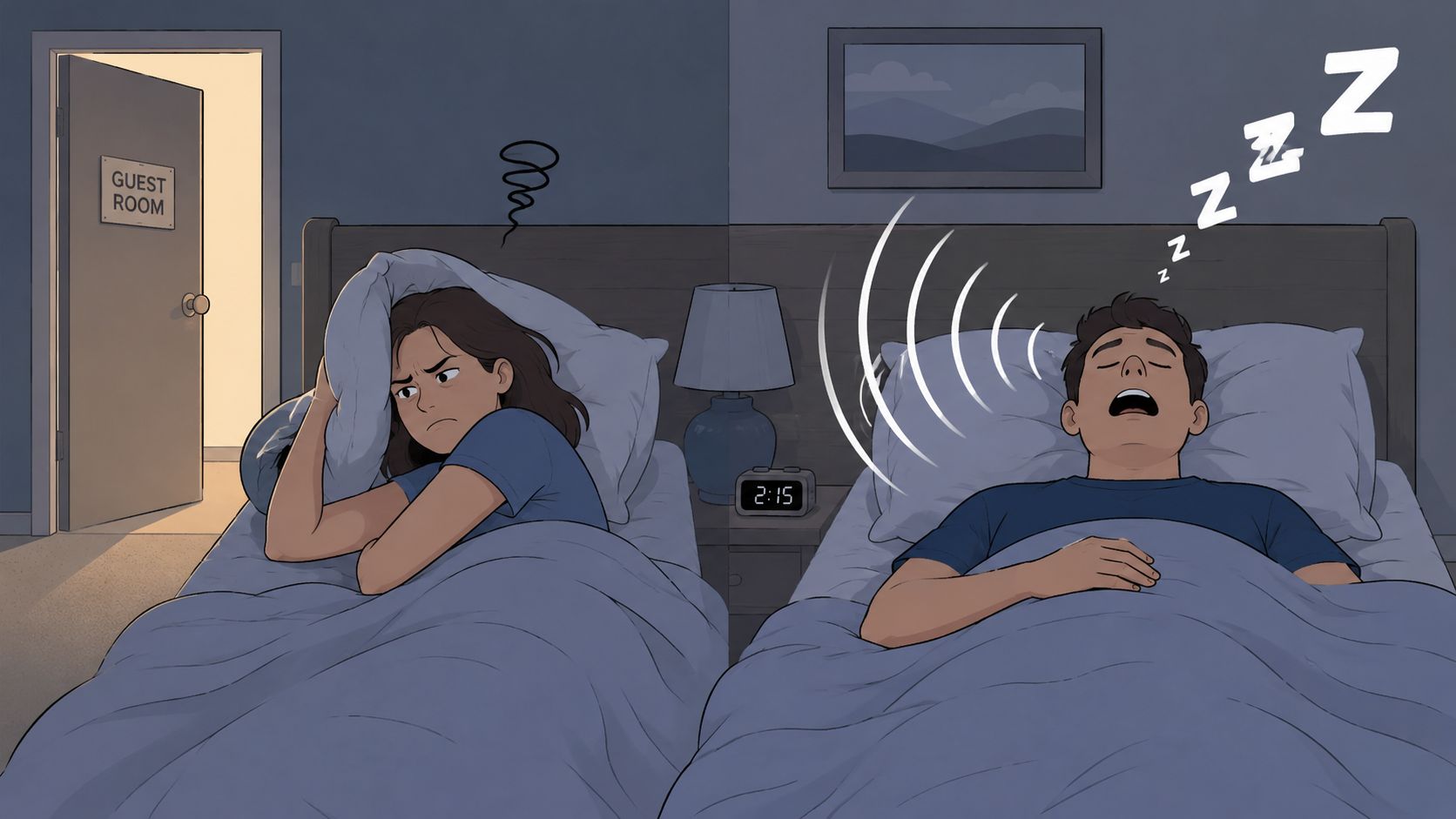
The next morning rarely feels restful. The person who snored may feel accused, while the partner who was awake half the night may feel forgotten. That pattern can strain a relationship, especially when fragmented sleep leads to daytime fatigue and short tempers.
The mattress is part of the equation
A mattress doesn't make throat tissue vibrate by itself. It does influence the position a sleeper can maintain. A surface that supports comfortable side sleeping may help a person avoid the back position that worsens snoring. A base that gently raises the upper body may also change how the head, neck, and chest sit during sleep.
That distinction matters. Mattresses for snoring are most useful when snoring changes with position, particularly when it becomes louder on the back. They're less relevant as a standalone answer when congestion, anatomy, alcohol, or a sleep-related breathing disorder drives the problem.
A practical starting point
The most useful shopping questions aren't “Which mattress cures snoring?” There isn't a universal cure in a mattress showroom. Better questions are:
- Does the sleeper stay on the side comfortably?
- Does the mattress keep the spine supported without forcing the chin toward the chest?
- Can the sleep surface work with an adjustable base or full-torso wedge?
- Have gasping, breathing pauses, morning headaches, or severe daytime sleepiness appeared?
The answers point toward different solutions. Some sleepers need pressure relief. Others need stable elevation. Some need a conversation with a doctor before buying anything.
Why Snoring Happens in the First Place
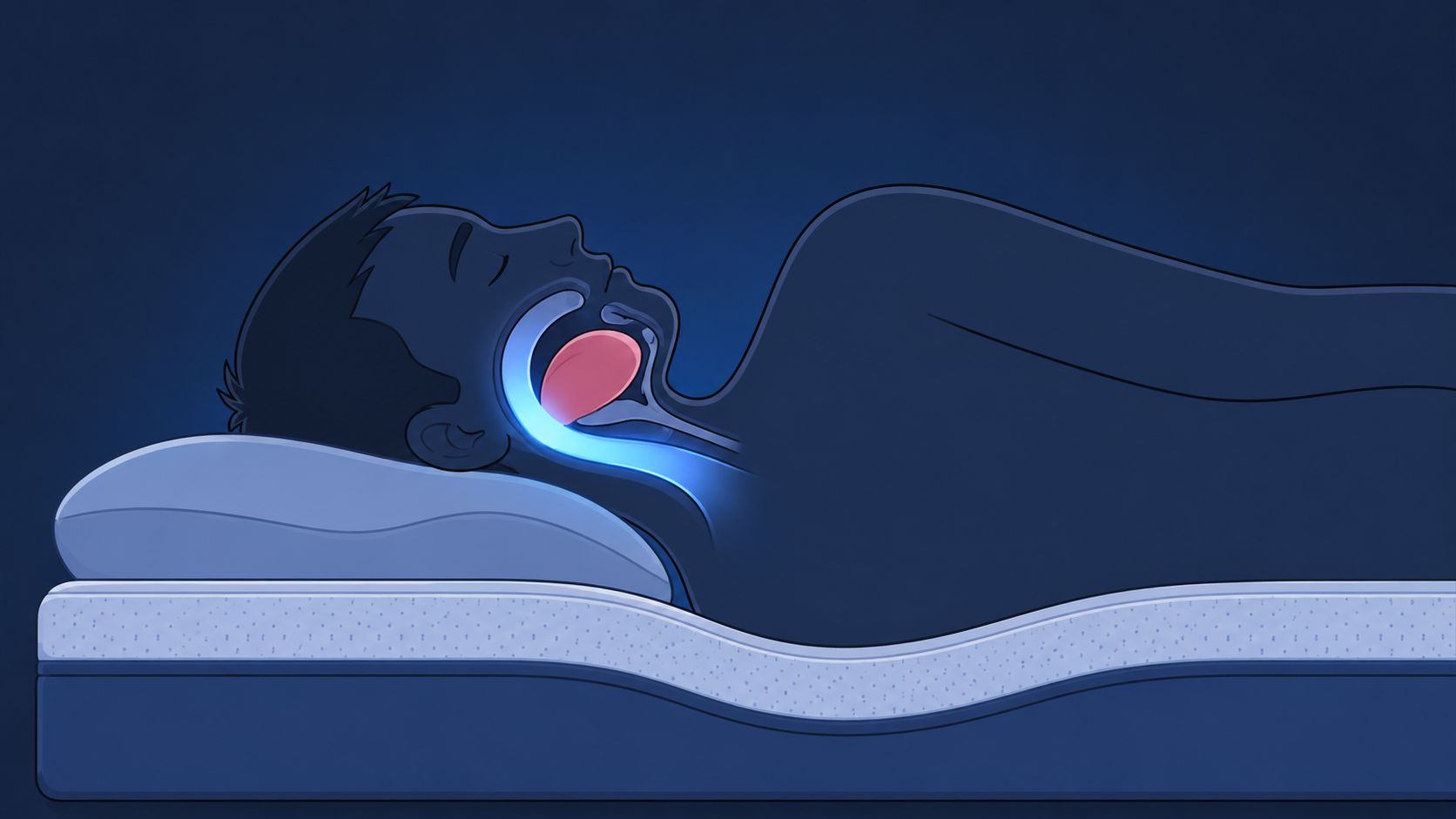
Snoring happens when relaxed tissue in the upper airway vibrates as air moves past it. During sleep, the tongue, soft palate, and muscles around the jaw lose some of their waking tone. If the passage narrows, airflow becomes noisy.
A garden hose makes the idea simple. Lay part of the hose flat or pinch it slightly, and the water struggles and gurgles. Lift and straighten the hose, and the flow steadies. Sleep position doesn't work exactly like a hose, but the comparison shows why head and chest position can affect airflow.
Position changes the airway
Back sleeping can let the tongue and soft tissue move backward toward the throat. Side sleeping generally keeps the upper airway more open, which is why positional changes matter so much for many snorers. A 2012 review found that an average of 56% of people with obstructive sleep apnea had position-dependent OSA, commonly defined as a major difference between supine and non-supine sleep, as reported in this review of positional obstructive sleep apnea.

Common amplifiers
Position is only one piece. Snoring may become worse with:
- Late-night alcohol, which can increase relaxation of throat muscles.
- Nasal congestion, which makes comfortable breathing harder.
- Weight around the neck, which can narrow the available airway.
- Aging tissue, as muscle tone and tissue firmness change.
- Anatomical features, such as a deviated septum or other structures that restrict airflow.
A mattress can't remove those causes. It can help maintain a more favorable posture, but the benefit depends on why the person snores in the first place.
Simple snoring versus possible OSA
Occasional snoring after congestion or an unusually tiring day isn't the same as loud, nightly snoring with breathing interruptions. Obstructive sleep apnea is a medical disorder, and a mattress isn't a substitute for screening, diagnosis, or treatment. The clinical review of positional therapy and obstructive sleep apnea explains that positional approaches can help some people, while medical treatments can provide stronger results for diagnosed OSA.
The sensible view is straightforward: a mattress may soften ordinary, position-related snoring, but it shouldn't be used to explain away warning signs.
Elevation and Adjustable Bases That Take Pressure Off Your Airway
A slight upper-body incline can change the way gravity acts on the tongue and soft tissue. Instead of settling straight backward, those tissues may rest in a position that leaves more room for airflow. Raising the torso can also make the chest feel less compressed, but the incline needs to support the whole upper body rather than fold the neck forward.
Research gives elevation a credible place in the conversation. In a 2022 home-based study of 25 nonclinical snorers, an adjustable bed incline produced a 7% relative reduction in objectively measured snoring duration across 1,181 monitored nights, according to the home-based inclined-sleep study. A separate pilot found snoring stopped successfully in 22% of interventions at a small angle and 67% at a larger angle, although it didn't find a significant reduction in the overall snoring index. The result supports positioning as a useful experiment, not a guaranteed cure.
Three ways to raise the upper body
A stack of pillows is the least dependable choice. It can lift the head while bending the neck, which isn't the same as creating a gradual incline from the upper back.
A full-torso foam wedge creates a broader slope and doesn't rely on several loose pillows. It's simpler than a powered base, but the angle is fixed and some sleepers dislike the feeling of sliding.
An adjustable base offers the most control. It lifts the head section while allowing a slight leg raise for comfort, and it can be adjusted until the sleeper finds an angle that feels sustainable. Clinical head-of-bed studies have examined 7.5° and 30° elevations, with reported improvements in apnea measures at those positions, as summarized in this clinical review of head-of-bed elevation.
| Option | Typical Incline | Best For | Limitations |
|---|---|---|---|
| Firm pillow arrangement | Variable | A short-term position test | May bend the neck or shift during sleep |
| Full-torso foam wedge | Fixed | Sleepers who want a simple, nonpowered incline | Less flexible and may feel restrictive |
| Adjustable base | User-controlled | Positional snorers who want repeatable elevation | Requires a compatible flexible mattress and a base purchase |
Some summaries report stronger snoring reduction around 20° to 30°, while lower inclines may feel easier to maintain. Shoppers shouldn't chase a steep setting automatically. The useful angle is the one that opens the airway without creating neck strain, sliding, or partner discomfort.
Mattress construction matters. Memory foam, latex, and hybrid designs can respond differently when bent, and a mattress must be approved for adjustable-base use. Before pairing products, shoppers should confirm compatibility because an unsuitable combination can create comfort problems or affect warranty coverage. BILTRITE's adjustable-base health benefits offer more background, but an in-store test remains the better way to judge how a particular body responds.
Firmness, Support Zones, and Mattress Feel
Firmness isn't a competition. The firmest mattress in a showroom isn't automatically the quietest choice for a snorer. The right feel keeps the body supported while allowing the sleeper to stay in a position that doesn't narrow the airway.
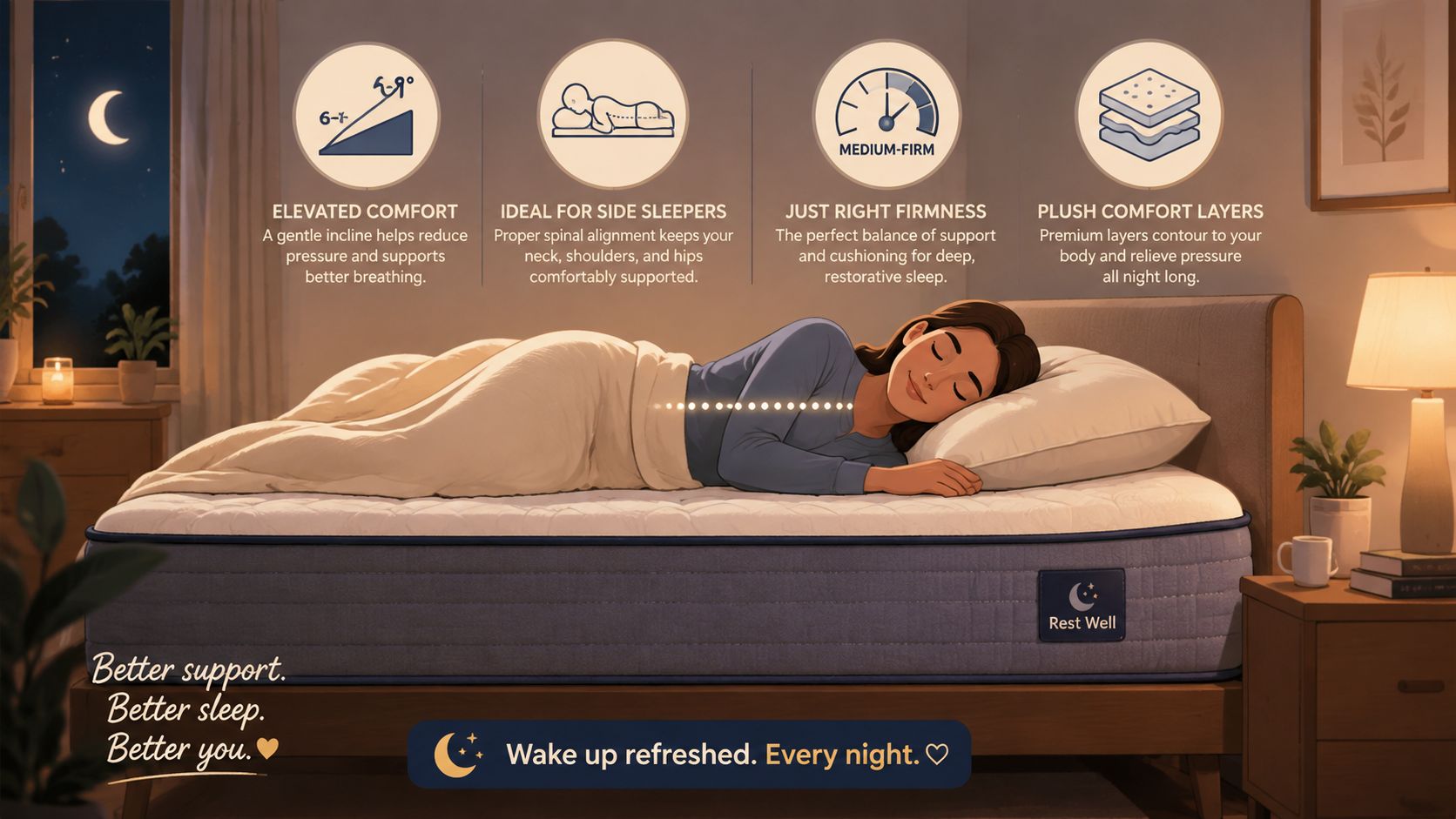
A practical medium feel often gives side sleepers enough shoulder and hip cushioning without letting the torso sink excessively. A very firm surface may create pressure at the shoulder, making side sleeping hard to maintain. A very soft surface may allow the midsection to dip and disturb alignment.
Match the feel to the sleeper
Support zones can help keep the lumbar area from dropping too far while giving the shoulders and hips room to settle. They don't open the airway directly. Their value is indirect but practical, they help the sleeper maintain a stable posture instead of twisting, sinking, or rolling onto the back.
| Sleep Style | Snoring Pattern | Best Firmness | Recommended Material |
|---|---|---|---|
| Side sleeper | Snoring worsens on the back | Medium with shoulder relief | Memory foam, latex, or a pressure-relieving hybrid |
| Back sleeper | Snoring appears mainly when flat | Medium-firm with stable torso support | Hybrid or responsive foam that works on an adjustable base |
| Stomach or combination sleeper | Position changes throughout the night | Firmer feel that limits midsection sink | Responsive latex or hybrid construction |
Heavier back and stomach sleepers often need a firmer, more stable feel to prevent excessive sinking. Side sleepers generally need more give at the shoulder and hip. Couples with different patterns may do better with a responsive, zoned hybrid that balances movement control with individual support.
Material feel matters
Memory foam can cradle pressure points and reduce partner disturbance, but some sleepers dislike a slow, enveloping feel. Latex responds quickly and helps the body feel lifted rather than trapped. Hybrids combine foam comfort with coil support, giving many sleepers a middle ground between contouring and ease of movement.
No material wins for every sleeper. The better choice is the one that supports a neutral neck, keeps the spine from sagging, and makes the quieter sleep position comfortable for hours. BILTRITE's mattress firmness guide can help shoppers understand the basic feel categories before they test beds in person.
Practical rule: A mattress should make the recommended sleep position comfortable enough to survive the entire night, not merely the first few minutes in a showroom.
Sleep Position Tricks That Pair With the Right Mattress
Side sleeping is usually the first position worth testing for a snorer. It helps limit the backward movement of the tongue and soft tissue, while back sleeping can allow those structures to narrow the airway. The mattress matters because a person won't stay on the side if a shoulder aches, a hip feels jammed, or the edge feels unstable.
Build a sustainable side position
A side-friendly mattress needs enough comfort at the shoulder and hip, plus enough support to keep the spine from bending sideways. Edge support helps a sleeper reposition without feeling as if the bed is collapsing near the perimeter. Motion isolation can also reduce the secondary disruption when a partner shifts or gives a gentle nudge.
A practical test can happen tonight. The sleeper can use a pillow between the knees, which may make the side position feel more stable. A tennis ball sewn into the back of a sleep shirt can discourage rolling onto the back, but it's a temporary experiment, not a comfortable long-term sleep system.
Be careful with stomach sleeping
Some people snore less on the stomach because gravity pulls the tongue forward. That position can force the neck to rotate for breathing, though, and it may create strain. A responsive mattress that limits midsection sink can make the position less awkward, but stomach sleeping shouldn't be treated as the default answer.
A combination sleeper needs a surface that allows easy movement without losing support. Too much sink can make turning difficult. Too much bounce can disturb the partner. The guide to choosing a mattress for sleep position gives shoppers a useful way to connect sleep habits with surface feel.
At BILTRITE, sleep specialists can watch how a shopper's shoulders, hips, and spine settle in a side position. That in-person check is more useful than guessing from a firmness label.
When a Mattress Is Not Enough
A mattress can influence posture. It can't diagnose a breathing disorder, clear a blocked nose, or replace treatment prescribed for obstructive sleep apnea. That boundary should stay clear, especially when snoring happens loudly and regularly.
A bed partner may notice warning signs before the snorer does. Gasping, choking, or witnessed pauses in breathing deserve medical attention. So do persistent daytime exhaustion, morning headaches, and high blood pressure, particularly when sleep never feels restorative.
Compare the roles honestly
A sleep study or clinical screening looks for the underlying breathing pattern. CPAP is designed to keep the airway open with positive pressure. A mandibular advancement device changes jaw position, while nasal valves or allergy treatment may help when nasal airflow contributes to the noise. These approaches address medical or anatomical factors that furniture cannot correct.
Positional therapy has a narrower role. Reviews describe moderate improvements in clinical apnea measures, with one summary reporting improvements of 16% to 40% compared with no treatment, as detailed in the American Family Physician review of positional therapies. The practical point isn't that a mattress treatment is useless. It's that the effect depends on the phenotype and shouldn't replace appropriate care.
Track the pattern before the appointment
A simple sleep log can help:
- Record frequency: Note whether snoring appears occasionally or most nights.
- Ask the partner: Write down gasping, choking, or pauses that someone else observes.
- Track morning symptoms: Record headaches, dry mouth, and unrefreshing sleep.
- Notice triggers: Mark congestion, alcohol late in the evening, and changes in sleep position.
A topper may change surface comfort, but it won't turn a flat bed into a medical treatment. BILTRITE's guide to whether mattress toppers are worth considering can help with comfort decisions, while a physician should handle possible OSA.
Why Talking to a Sleep Specialist Beats Guessing
Online mattress descriptions can't see a sleeper's shoulder alignment. They don't know whether the snoring starts after rolling onto the back, whether the neck bends forward, or whether a partner has noticed breathing pauses. Those details change the recommendation.
A knowledgeable sleep specialist asks practical questions. How often does the snoring occur? Does it worsen with congestion or certain positions? Does the sleeper wake with a headache? Does daytime fatigue persist? What does the bed partner hear and observe?
Turn symptoms into showroom tests
At BILTRITE's Greenfield showroom, a shopper can test the connection between symptoms and features rather than relying on a label. The person can lie on an adjustable base at different inclines, try side sleeping on beds with different shoulder support, and compare the feel of latex, hybrid, and memory constructions.
The showroom's mattress department includes over 60 models, giving couples room to compare rather than settle on the first bed that feels comfortable for a few minutes. BILTRITE's sales associates bring over 400 years of combined experience, and their role is to help shoppers understand the differences without pressure.
A useful consultation starts with the snoring pattern, then chooses the mattress feature that supports a better position.
Why in-person testing earns its place
A mattress can feel pleasant on the back while failing the side-sleep test. Another can feel firm at first but provide the shoulder relief needed to prevent a restless return to the back. An adjustable base can feel helpful at one angle and awkward at another.
The BILTRITE article about insomnia and practical sleep changes provides broader sleep guidance, but the showroom adds something a page can't provide, direct physical feedback. The goal isn't to promise silence. It's to find a sleep surface and base that address the mechanical part of the problem while keeping medical concerns in view.
BILTRITE is a fourth-generation, family-owned business serving the Metro Milwaukee community since 1928. The store focuses on affordable, better-quality furniture, including USA-made, Amish-made, and solid-wood pieces, alongside its large mattress selection. That local, family-first approach is useful for shoppers who want a conversation, not a rushed online decision.
Quiet Nights Start With the Right Next Step
The most sensible plan connects several small decisions. Elevation can help a back sleeper test whether upper-body position changes the noise. Side-sleeping comfort can make a quieter posture easier to maintain. Firmness and support zones can keep the spine from collapsing into an awkward shape.
The bed partner's observations matter just as much as the sleeper's preferences. A person may say the snoring is occasional, while a partner hears it every night. A person may not remember waking, while someone nearby notices gasping or pauses.
Use a simple shopping checklist
Before visiting a showroom, shoppers can write down:
- The usual position: Side, back, stomach, or a mix.
- The noisy position: Whether snoring becomes worse after rolling onto the back.
- The comfort problem: Shoulder pressure, hip pressure, heat, sinking, or difficulty turning.
- The medical signals: Gasping, morning headaches, excessive daytime sleepiness, or witnessed pauses.
At the BILTRITE showroom in Greenfield, shoppers can spend real time on adjustable bases set at 7° to 10° of head incline as an initial comfort test. They can also compare medium-firm hybrids in a side-lying posture and ask sleep specialists to connect the observed problem with the relevant feature.
Keep the medical line firm
Loud nightly snoring with gasping, breathing pauses, morning headaches, or excessive daytime sleepiness deserves a sleep clinic conversation. No mattress replaces a sleep evaluation, CPAP when prescribed, an oral appliance when appropriate, or treatment for nasal and allergy problems.
For ordinary positional snoring, the next step is more manageable. Test the elevation, test the side-sleeping support, and choose a feel that keeps the body aligned without pressure points. A better bed won't promise silence, but it can remove one preventable reason a sleeper keeps returning to a noisy position.
BILTRITE Furniture-Leather-Mattresses offers over 60 mattress models, adjustable bases, and in-store sleep guidance for shoppers working through position-related snoring. Visit BILTRITE Furniture-Leather-Mattresses in Greenfield to test the angles and mattress feels in person, then let the local team help find a supportive setup for quieter nights.