Best Sleeping Position for Lower Back: A Practical Guide

A sore lower back can turn bedtime into a nightly negotiation. Someone shifts from the left side to the right, tries the back, gives up and rolls onto the stomach, then finally settles down only to wake with stiffness before the day has even started. The answer usually isn't one magical pose. The best sleeping position for lower back comfort is a supported position, where posture, pillows, and mattress feel work together.
Why Your Lower Back Aches in the Morning
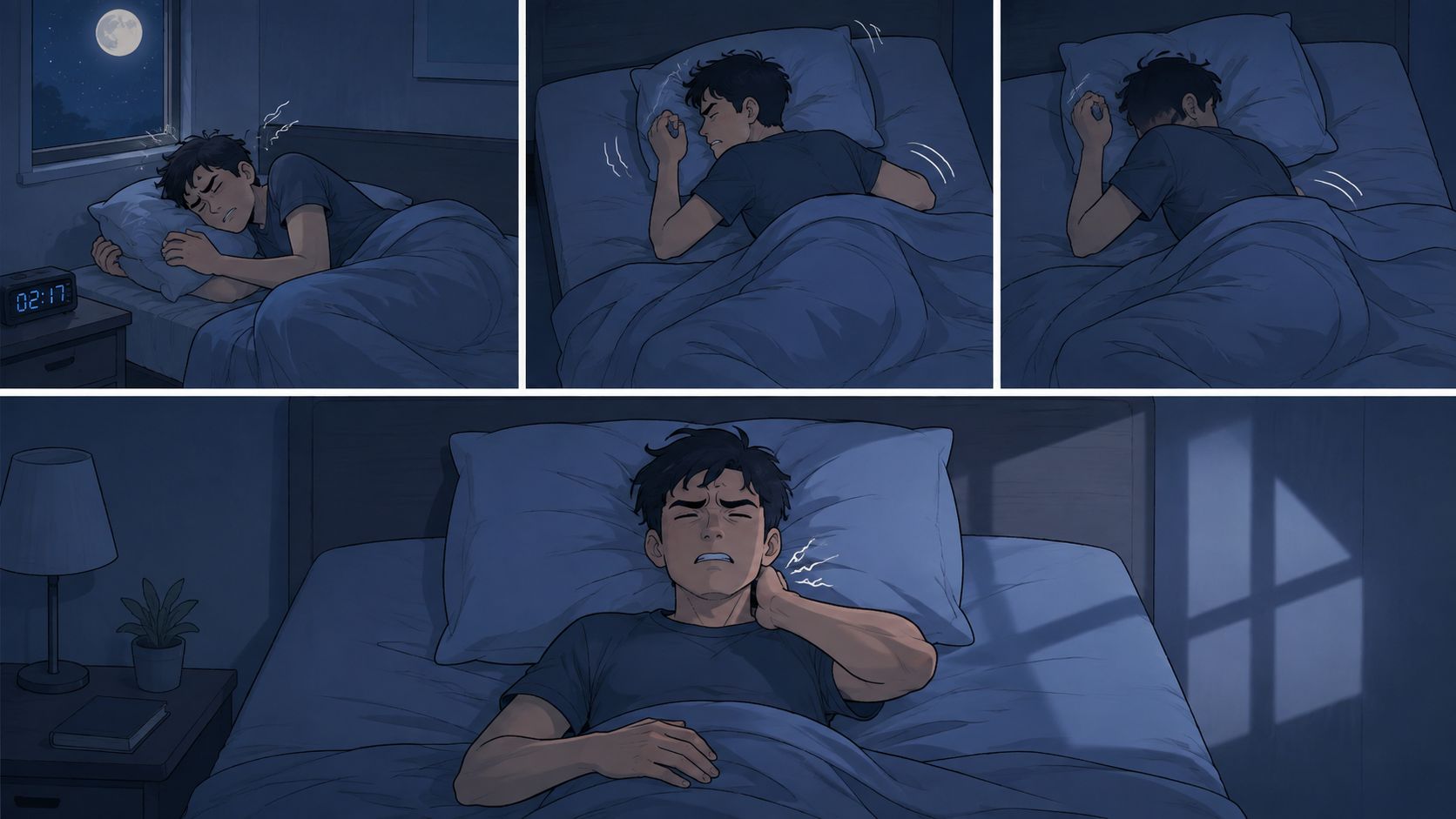
Morning soreness often begins with the way the spine was loaded for hours, not with one dramatic movement during the night. While sleeping, the muscles, discs, and joints should have a chance to relax after the day's activity. If the lower back stays twisted, flattened, or pushed into an exaggerated arch, those tissues may keep handling pressure instead of recovering comfortably.
A person can also lose alignment without realizing it. A shoulder or hip may sink deeper into a soft mattress, while the upper leg drifts forward and rotates the pelvis. That small twist can tug on the lumbar area for hours. On a surface that's too firm, the opposite problem may appear, with pressure at the hips and shoulders creating gaps and forcing the waist to support itself.
The overnight loading problem
A 2024 cross-sectional study of 375 people with chronic low back pain found that side-lying was the most common sleep posture, with 87% reporting it as their primary position. The same study found that 47% also reported sleeping on the back, while prone and supine positions were the most likely to provoke symptoms, showing that alignment and support matter more than posture alone. Read the full study on sleep posture and chronic low back pain
That finding can feel confusing. Back sleeping is often recommended, yet some people hurt in that position. The difference is usually what happens to the lumbar curve, hips, and knees once the body meets the mattress.
Practical rule: A sleeping position should let the lower back rest, not make it hold the body in place.
The useful question isn't, “Which pose is best?” It's, “Does this position keep the spine comfortably supported from the shoulders through the pelvis?” That question leads to a much more practical plan, one that includes knee support, pillow height, and mattress response.
What Neutral Spine Actually Means at Night
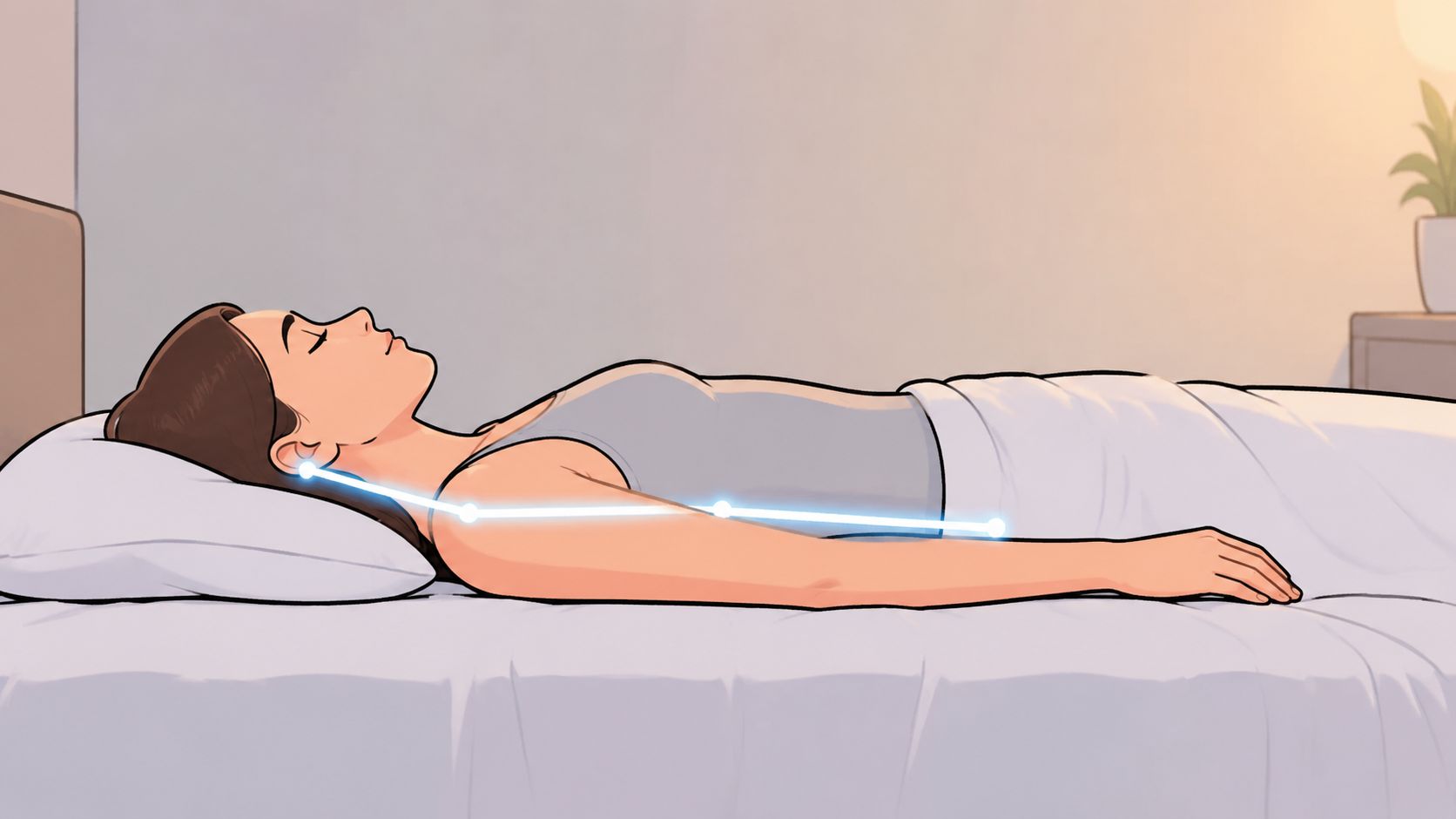
Neutral spine sounds technical, but the idea is simple. Think of a book balanced gently on the head while standing. The head, shoulders, hips, and feet stay organized rather than leaning or twisting to one side. Lying down doesn't erase that principle. It changes how the mattress and pillows need to support it.
The lower back naturally has a gentle inward curve. Neutral alignment doesn't press that curve completely flat, and it doesn't exaggerate it. The hips and shoulders should feel stacked, with the pelvis facing forward rather than rolling toward the mattress or ceiling.
A quick alignment check
When lying down, a person can look for a few straightforward signs:
- The lumbar curve feels easy: The waist isn't hanging unsupported, but the lower back also isn't being forced flat.
- The pelvis stays level: The hips don't roll forward because one knee or leg is positioned higher.
- The neck continues the line: The pillow keeps the head from tipping up, dropping down, or turning sharply.
- The body can relax: Muscles aren't continuously tightening to prevent a twist or sag.
When neutral alignment disappears, muscles may stay contracted, discs can receive uneven compression, and joints may carry loads that aren't comfortable for them. That doesn't mean every unusual position is harmful. It means the position needs to be judged by the body's response and the support underneath it.
How the major positions affect the curve
Back sleeping can preserve a balanced line when the knees have support. Without it, straight legs may increase the lower-back arch for some people. Side sleeping can keep the spine neutral when the hips and shoulders stay stacked, but the top leg may rotate the pelvis if it falls forward.
The fetal position adds comfort for some sleepers by gently opening the joints at the back of the spine. A tight curl can also round the lower back too much, particularly when the neck lacks support. Stomach sleeping tends to create the most difficult setup because the head turns to one side and the middle of the body may sink, increasing the lumbar arch.
The practical takeaway is consistent across all four choices: the lower back needs to keep its gentle S-shaped resting curve. A position that allows that curve to settle is more useful than a position chosen because it works for someone else.
Comparing the Four Main Sleeping Positions
No single pose suits every body. A person with broad shoulders may need different side support than someone with a narrow frame, while a back sleeper with a pronounced lumbar curve may need more knee elevation than another back sleeper. The following comparison helps match each position with its likely strengths and cautions.
| Position | Spine Effect | Best For | Watch Out For |
|---|---|---|---|
| Back sleeping | Can distribute weight evenly and support the head and neck, but straight legs may increase the lower-back arch | People who relax comfortably on the back and can maintain the natural lumbar curve | Flat legs, a pillow that's too tall, or a mattress that doesn't support the waist |
| Side sleeping | Can preserve alignment when the shoulders, hips, and knees stay stacked | People who prefer side sleeping, including those who find it easier on breathing or pregnancy pressure | The top leg drifting forward, a waist gap, or a pillow that leaves the neck tilted |
| Fetal sleeping | A gentle curl may open the facet joints and feel soothing | Sleepers who feel better with a mild forward curl | Curling too tightly and rounding the lower back or neck |
| Stomach sleeping | Often increases neck rotation and may push the lower back into hyperextension | People who cannot settle in another position, with careful modifications | Head turning, hip sinking, and prolonged lumbar arching |
Back sleeping
Back sleeping is often a strong starting point because the body can rest on a broad surface instead of placing most pressure on one shoulder and hip. It tends to work best when a pillow under the knees reduces the pull on the lower back. A head pillow should support the neck without pushing the chin toward the chest.
Side sleeping
Side sleeping is common among people with chronic low back pain, and it can feel natural when the pelvis remains neutral. The main challenge is the upper leg. If it drops toward the mattress, the pelvis follows, and the lower spine twists. A pillow between the knees can make the position steadier.
Fetal sleeping
A loose fetal curl can feel comforting because it reduces the sensation of an exaggerated back arch. The word “loose” matters. Pulling both knees tightly toward the chest may leave the spine flexed for too long and can create new discomfort.
Stomach sleeping
Stomach sleeping is generally the least favorable choice for lower-back comfort. The head usually has to turn to one side, while the hips and abdomen can sink into the bed and increase the lumbar arch. If changing positions feels impossible, a thin support under the pelvis is a gentler modification than adding height beneath the head.
For more detail on matching mattress construction with a preferred pose, readers can review this guide to choosing a mattress for a sleep position.
Pillow and Knee Tweaks That Change Everything
A pillow can either protect neutral alignment or undo it. The right adjustment usually doesn't require a complicated setup. It needs to fill a gap, reduce a rotation, or support a joint that would otherwise pull the pelvis out of line.
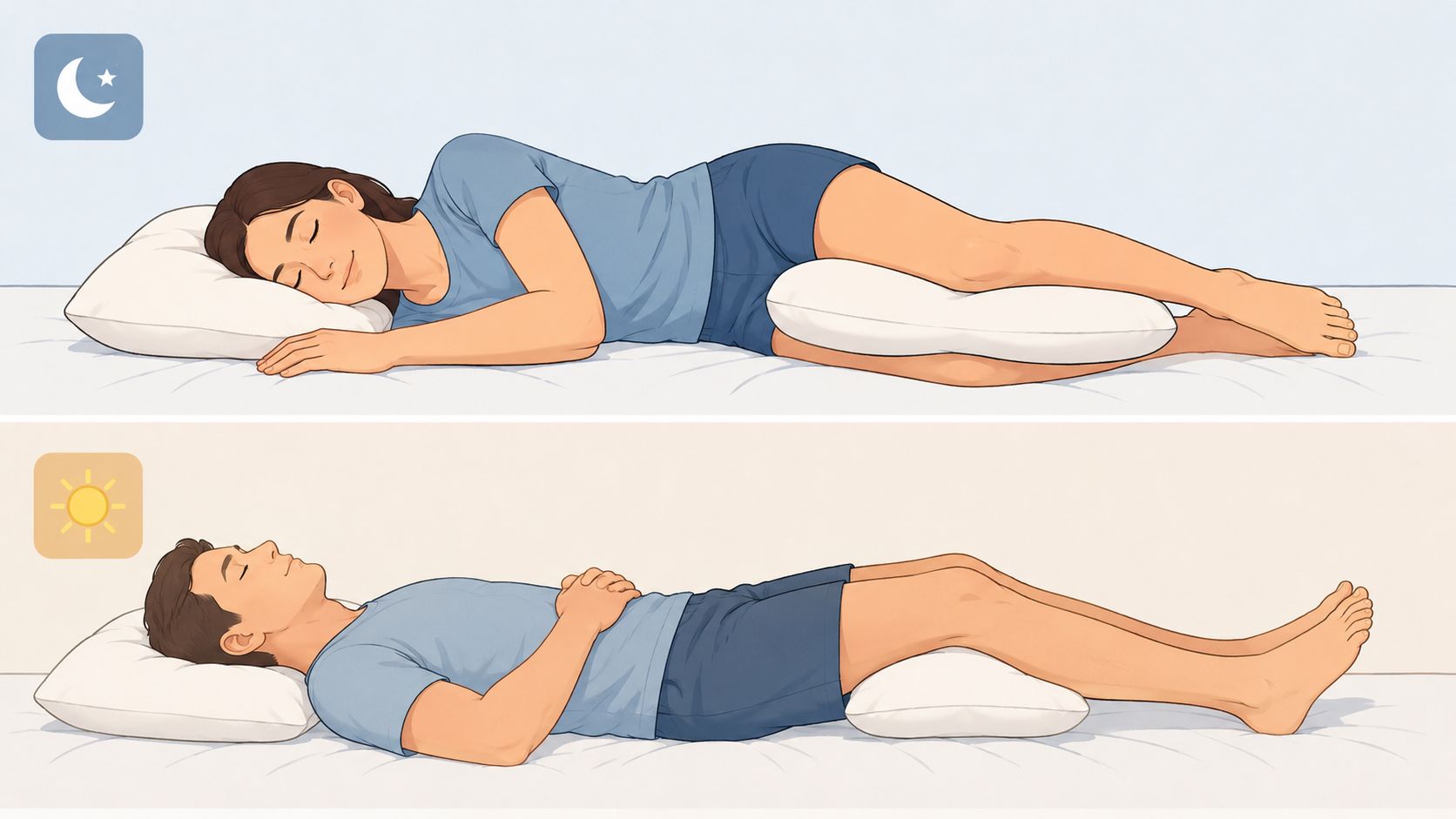
Back sleepers
A small pillow or rolled towel under the knees can reduce the lower-back arch and help the muscles relax. The head pillow should be lower than many people expect if it causes the chin to tuck. Mayo Clinic recommends a pillow under the knees to help maintain the natural lower-back curve, and notes that a small rolled towel under the waist can provide extra support for some back sleepers. See Mayo Clinic's guidance on sleeping positions for back pain
Side sleepers
The top hip often needs help staying over the bottom hip. A pillow between the knees can prevent the upper leg from dropping forward, while hugging a body pillow can give the shoulders and upper body a stable place to rest. The head pillow should fill the space between the ear and mattress without lifting the head away from the spine.
A person can check the setup by lying down and asking whether the nose points straight ahead or angles toward the mattress. If the neck bends, the pillow height needs adjustment. More practical guidance is available in BILTRITE's pillow selection guide.
Fetal sleepers
The fetal position works better as a relaxed curl than a tight ball. A pillow between the knees keeps the pelvis from rotating, and a supportive head pillow prevents the neck from bending toward the mattress. The goal is comfort without pulling the knees so close that the entire spine rounds.
Stomach sleepers
A thin pillow under the pelvis or lower abdomen can reduce the depth of the lower-back arch. A thick head pillow usually makes the neck angle worse, so a very low pillow may be preferable. Even better, shifting partly toward the side can preserve some familiar comfort while reducing the strain of lying fully on the stomach.
Try one change at a time: Keep the position familiar, adjust one support, then notice whether the lower back feels freer when lying down and less stiff on rising.
A useful checklist includes four questions:
- Does the waist feel supported without pressure?
- Are the hips and shoulders stacked?
- Can the neck stay level?
- Do the muscles feel relaxed after several quiet minutes?
How Mattress Firmness Shapes the Equation
A pillow can only do so much if the mattress lets the body sag or creates sharp pressure points. Firmness influences how the shoulders, hips, and waist settle, so it helps determine whether a chosen sleeping position can keep the spine in a comfortable, neutral line. Position and mattress support work together, like a frame and its foundation.
For many people with chronic low back pain, the middle range appears more useful than an extremely firm or soft surface. A 2026 review covering 25 years of research found that evidence most consistently favored medium-firm mattresses, with reported benefits including better pressure distribution, improved sleep quality, less morning stiffness, and lower low-back-pain intensity. Review the evidence on mattress firmness and low back pain
A separate systematic review of six studies published between 2005 and 2024 found that support and spinal alignment interact with sleep position. One controlled mattress study involving adults with chronic low-back pain reported that a mattress designed to promote spinal neutrality during side sleeping reduced pain while lying by 18% and improved comfort by 25%. Read the systematic review and mattress findings
Mattress firmness at a glance
| Firmness Level | Best For | Watch Out For |
|---|---|---|
| Soft | Sleepers who need more cushioning at pressure points | Hips may sink and pull the lumbar area out of line |
| Medium-firm | Many people seeking a balance of support and pressure relief | Personal body shape and sleep position still determine the response |
| Firm | Sleepers who prefer a steadier feel or need less sink | Gaps under the waist and pressure at the hips or shoulders |
HSS says a medium-firm mattress is probably better for people with back pain. For a closer look at how firmness levels differ, read our mattress firmness guide. Read HSS guidance on sleep and low back pain
A simple showroom test
Test a mattress in the position you use most often, rather than judging it while sitting on the edge. Lie down for several minutes. Ask a partner to check for visible sagging around the waist or hips, then slide a hand beneath the lumbar curve. The hand should meet gentle support, without tight pressure or a large unsupported gap.
Body shape and sleep style affect the result. Heavier sleepers may need a firmer support response, while lighter side sleepers may prefer more give beneath the shoulder and hip. BILTRITE's mattress department includes over 60 models, giving shoppers an opportunity to compare feels in person instead of relying on a firmness label alone.
Special Considerations for Seniors and Specific Conditions
The neutral-spine idea needs to fit the person, not the other way around. Age, mobility, pregnancy, nerve symptoms, and joint history can all change which setup feels manageable. Comfort matters, but so does getting safely into bed, turning, and standing up in the morning.
Older adults
Reduced muscle tone, arthritis, and a history of hip replacement can make a supported side position feel forgiving. A pillow between the knees can help keep the pelvis organized, while a stable mattress edge and an accessible bed height may matter more than chasing a theoretically ideal pose.
For caregivers and older adults, the bed should support the entire routine. A surface that's comfortable but difficult to exit may not be a practical choice. BILTRITE also offers guidance on mattresses for older adults alongside senior-friendly furniture and mattresses.
Sciatica
Someone with sciatica may find it easier to lie on the unaffected side, with a pillow between the knees and a small cushion supporting the waist if a gap appears. The goal is to reduce pelvic rotation and avoid adding tension to the irritated nerve pathway. Symptoms that spread farther down the leg or change in character need professional assessment rather than repeated pillow experiments.
Herniated discs
A slightly reclined back position can feel more comfortable for some people with a herniated disc. Pillows beneath the knees may reduce the pull on the lower back, but the position should be guided by symptoms. Increased leg pain, numbness, or weakness changes the situation.
Pregnancy
Side sleeping with a pillow between the knees and another supporting the belly can help maintain a more neutral line as the body changes. Many people prefer the left side, but comfort and medical guidance should lead the decision, particularly when pregnancy symptoms are unusual or persistent.
These are starting points, not diagnoses. A person who wakes with worsening pain, neurological symptoms, or difficulty moving should ask a qualified clinician for individualized advice.
When a New Position Is Not Enough
Changing position can help, but it can't solve every source of lower-back pain. A neutral setup won't override a worn mattress, an undiagnosed disc problem, or daytime habits that repeatedly load the lumbar region. Persistent symptoms deserve more attention than a new pillow arrangement.
A clinician should evaluate warning signs such as:
- Radiating pain: Pain travels down the leg rather than staying in the lower back.
- Numbness or tingling: Sensations reach the feet or persist after changing position.
- Weakness: Climbing stairs, standing, or moving the leg becomes noticeably harder.
- Disruptive night pain: Pain repeatedly wakes the sleeper.
- Long-lasting symptoms: Pain continues for more than six weeks.
- Bladder or bowel changes: Any loss of bladder or bowel control needs urgent medical attention.
A mattress also deserves inspection. Visible sagging deeper than one inch, waking sore after a full night, or coils that have softened beyond their useful life can all signal that the sleep surface is part of the problem. Those signs don't prove that a mattress caused the pain, but they make the posture-plus-support system worth reassessing.
The mattress can be treated like any other household tool. It needs a careful look, an honest comfort test, and occasional decisions about rotating, replacing, or adding a topper. For a practical buying framework, readers can use this guide to choosing a mattress for back pain.
BILTRITE Furniture-Leather-Mattresses offers a large mattress department with over 60 models, plus supportive furniture options for different body types, rooms, and family needs. Visit BILTRITE Furniture-Leather-Mattresses in Greenfield to test mattress feels, talk with experienced associates, and find a posture-plus-support setup that feels right in person.