Hypoallergenic Mattress Guide for Milwaukee Shoppers

Waking with a blocked nose, itchy eyes, or a scratchy throat can make the bedroom feel like the problem, especially when those symptoms ease after leaving the room. The mattress may be part of the picture because bedding and mattress materials can become reservoirs for allergens over time.
A hypoallergenic mattress aims to reduce that exposure through choices such as dense materials, low-emission components, tightly woven covers, and compatible allergen barriers. At BILTRITE, a fourth-generation, family-owned Greenfield showroom serving Metro Milwaukee since 1928, sleep specialists help local families sort through those details without turning the process into a guessing game. The right choice depends on the trigger, the construction, and how the mattress will be maintained.
Why Your Mattress Might Be Making You Sneeze
A Milwaukee homeowner might wake up congested, change clothes, drink coffee, and notice that breathing gradually feels easier after leaving the bedroom. That pattern doesn't prove the mattress is responsible, but it's a useful reason to inspect the entire sleep environment, including pillows, bedding, flooring, pets, humidity, and the mattress itself.
Dust mites are a central concern because mattresses can collect substantial amounts of mite allergen during ordinary use. In one PubMed study, allergen levels in several mattress types exceeded the 10 micrograms per gram dust symptomatic threshold after six months, and measured levels reached 20.2 to 32.2 micrograms per gram dust by twelve months, depending on mattress material. The same study found that Der f 1 represented 86.7% of group 1 allergens in mattress dust, which makes dust-mite control a major part of hypoallergenic mattress design. Read the PubMed study on mattress allergen accumulation
What a hypoallergenic mattress is designed to do
The label doesn't mean a mattress contains no allergens or that every sleeper will experience symptom relief. It generally points to construction choices intended to make the bed less welcoming to mites, limit allergen movement, or reduce irritating emissions.
A practical design may combine:
- A dense core, such as latex or memory foam, with fewer open spaces where moisture and debris can collect.
- A tightly woven cover that limits allergen passage.
- A dedicated encasement that surrounds the mattress and creates a continuous barrier.
- Low-emission materials for sleepers who react to chemical odors or VOCs.
Practical rule: A mattress label is only the starting point. The useful question is, “Which trigger is this feature meant to address?”
BILTRITE's team can help shoppers compare those features in person, along with comfort, support, temperature, and bedroom fit. A family looking for allergy-conscious sleep may need a different solution than someone seeking relief from foam odors or irritation from a particular fabric. The showroom experience makes it possible to feel the cover, inspect seams, ask about care, and test whether the mattress supports the sleeper comfortably.
For additional bedroom habits, BILTRITE also shares essential tips for maintaining a dust and allergen-free bedroom. Maintenance matters because even a thoughtfully built mattress can collect particles if the surrounding sleep system receives little attention.
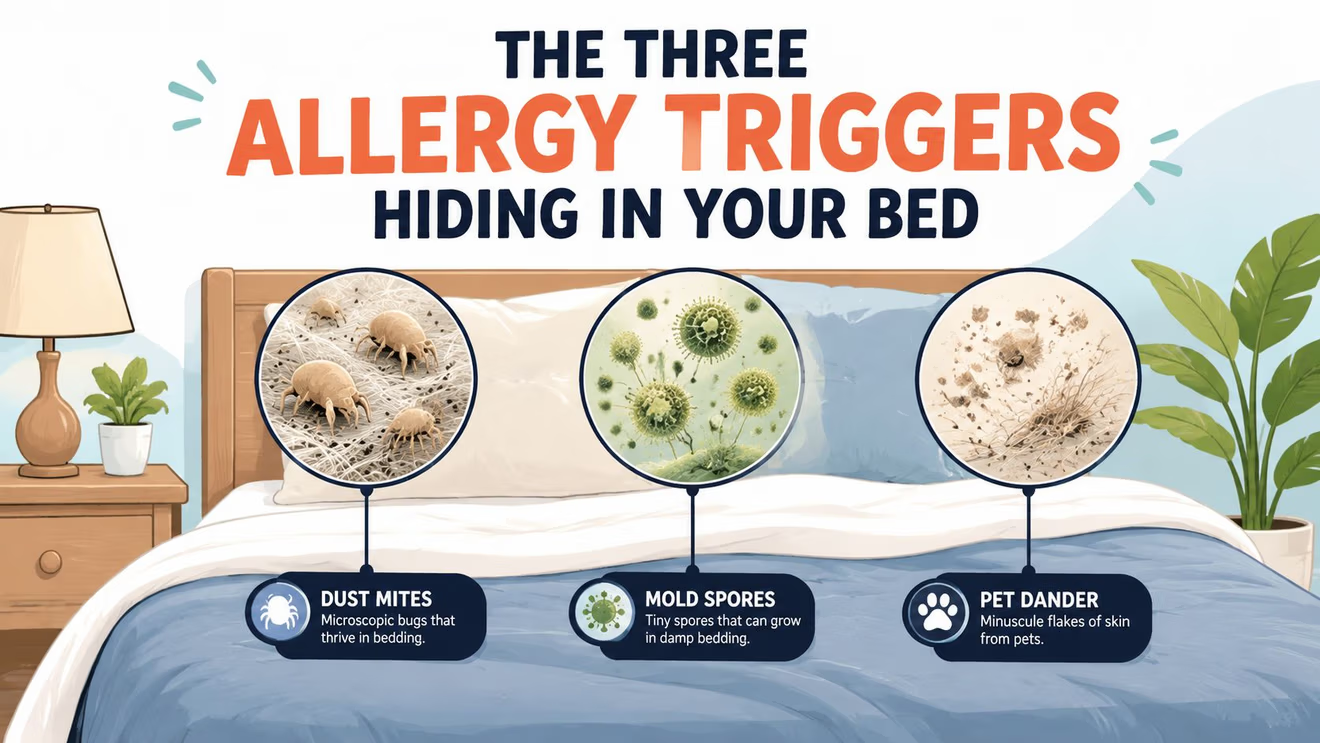
The Three Allergy Triggers Hiding in Your Bed
“Hypoallergenic” can sound like one broad promise, but sleepers may be dealing with different irritants. The three useful categories are dust-mite allergens, volatile organic compounds, and textile irritants. Each calls for a different buying question.
Dust mites and their waste
Dust mites feed on shed skin and thrive where warmth and moisture collect. Their waste and body particles can become airborne when bedding moves, which is why a sleeper may notice morning congestion or itchy eyes.
Mattress age and maintenance influence the reservoir. A long-running study cited in the same PubMed evidence found that allergen concentrations above the proposed 2 micrograms per gram risk level were common across mattress types, and its authors concluded that mattresses accumulate allergen rapidly. Review the research on allergen levels across mattress types
For this trigger, shoppers should focus on barrier performance, dense construction, moisture control, and washable bedding. Material names alone don't tell the whole story.
VOCs from foam and adhesives
Some sleepers are more concerned about odor, asthma, or chemical sensitivity than mite waste. Foam and adhesives can emit VOCs, especially when a new mattress is unpacked. A low-emission certification may be more relevant for this shopper than an organic claim or a general hypoallergenic label.
A complete, assembled mattress tested for emissions provides more useful information than a claim about one foam component. The certification section below explains how shoppers can separate those claims.
Textile irritants and skin sensitivity
The cover touches the sleeper for hours, so fabric, dyes, finishes, and surface treatments may matter to people with skin sensitivities. A textile-safety certification can help narrow the search, but it doesn't automatically establish resistance to dust mites or low VOC emissions.
That distinction keeps the decision practical: dust-mite concerns point toward barriers and dense construction, chemical sensitivity points toward emissions testing, and textile sensitivity points toward fabric safety and a comfortable, non-irritating cover.
Allergy-Friendly Mattress Materials Compared
Four constructions appear often in allergy-conscious mattress shopping: natural latex, memory foam, innerspring with an encasement, and hybrids. None is automatically right for every sleeper. The useful comparison considers the core, cover, seams, airflow, moisture, emissions, and cleaning routine as one system.
Natural latex has a dense structure that can make it less attractive to dust mites, while also offering a resilient feel and airflow characteristics many sleepers enjoy. Memory foam can create a low-moisture interior environment that mites tend to dislike, although shoppers who react to new-product odors should ask about emissions testing and ventilation guidance.
Innerspring mattresses allow air movement through the coil area, but the open interior doesn't replace an allergen barrier. A tightly woven cover or full encasement does much of the protective work. Hybrids combine coils with foam or latex, so their allergy profile depends on the exact layers and the quality of the outer barrier.
| Material | Dust Mite Resistance | Low VOC Options | Maintenance Ease |
|---|---|---|---|
| Natural latex | Dense structure can limit mite-friendly spaces; a barrier cover still matters | Available in options with relevant emissions or material certifications | Usually straightforward with a protector and surface care |
| Memory foam | Low-moisture construction may be less favorable to mites | Look for tested low-emission foam and complete-mattress certifications | Avoid soaking; use a washable protector |
| Innerspring with encasement | Coils alone don't create a complete allergen solution; the encasement is central | Low-emission components may be available depending on the model | Strong when the cover is removable or protected |
| Hybrid | Combines the qualities of its coil, foam, or latex layers | Must be evaluated as an assembled mattress | Depends on cover design and layer accessibility |
A shopper with dust-mite concerns may lean toward dense latex or foam paired with a dedicated barrier. A sleeper with chemical sensitivity may prioritize tested emissions before choosing between those cores. Someone with a fabric concern should spend time examining the cover rather than relying on the core material.
BILTRITE's guide to latex versus memory foam mattresses can help shoppers compare feel and construction before visiting the showroom. The final decision should also include sleeping position, pressure relief, temperature preference, and whether the bed needs to support more than one person.
Certifications That Actually Mean Something
Certification names can make mattress shopping feel more complicated than it needs to be. The simplest approach is to match the label to the suspected trigger instead of treating every certification as proof of complete allergy protection.
Match the certification to the concern
CertiPUR-US focuses on foam emissions and content requirements. It can help a shopper evaluate the foam component, but it doesn't certify every part of the finished mattress or guarantee dust-mite resistance.
GREENGUARD Gold addresses VOC emissions from the complete, assembled mattress through chamber testing. Its limits relate to indoor-air-quality thresholds, so it's especially relevant for people concerned about chemical odors, asthma, or sensitivity to emissions. Learn how GREENGUARD Gold applies to complete mattresses
OEKO-TEX Standard 100 applies to textile safety. It's the more relevant question when the sleeper is concerned about dyes, finishes, or direct skin contact with the cover.
GOTS and GOLS relate to organic material standards and verification. Organic sourcing may matter to a shopper's values or material preferences, but it doesn't automatically establish that the mattress blocks mite allergens or suits every sensitive sleeper.
Certification advice: Choose the label that addresses the suspected irritant, then inspect the mattress barrier and care instructions separately.
Certification isn't a universal allergy guarantee
Independent guidance notes that “hypoallergenic” has no federal definition, so the word can remain vague without supporting details. A mattress can meet a textile-safety standard and still need a strong encasement for dust-mite control. It can also contain certified foam while lacking the construction or maintenance features a mite-sensitive sleeper needs. Compare American-made mattress options and their construction details
A useful showroom question is, “What exactly has been tested?” The answer should identify the material or assembled product, the type of testing, and the feature intended to reduce exposure. That level of specificity gives shoppers something more useful than a broad label.
Keeping Your Mattress Allergen-Free Over Time
A new hypoallergenic mattress can support a cleaner sleep environment, but daily habits determine how well that advantage lasts. Allergens can collect in sheets, blankets, pillows, flooring, and the mattress surface, so the bed needs a coordinated care routine.
Build a barrier first
A dedicated allergen-proof encasement surrounds the mattress and helps block new mites from entering, limits access to skin flakes, and traps particles already inside. Physical barriers are especially important because a mattress core can't be cleaned as easily as a sheet.
Clinical evidence supports that approach. In one study, active mattress encasings reduced allergen levels more effectively than placebo encasings, and after twelve months, mattresses with active encasings had about half the Der 1 found in the placebo group. Review clinical evidence on active mattress encasings
Make cleaning part of the routine
- Wash bedding in hot water: Follow the care label and wash sheets, pillowcases, and blankets regularly.
- Use a HEPA vacuum carefully: Vacuum the mattress surface and nearby floor rather than aggressively grinding debris into the fabric.
- Control bedroom humidity: A drier room can make the sleep environment less favorable to moisture-loving mites.
- Protect the cover: A washable protector adds a removable layer between the sleeper and mattress.
- Inspect seams: Gaps, damaged zippers, and loose stitching weaken a barrier's performance.
A review of mattress interventions found that a vapour-permeable waterproof cover reduced Der p 1 in mattress dust to about 1% of control samples after twelve weeks, while woven covers with pore sizes up to 6 micrometres are described as effective at controlling mite-allergen passage. The same review cautions that lowering allergen exposure alone doesn't always improve symptoms when used in isolation. Read the review of mattress encasements and allergen barriers
BILTRITE shoppers can also ask about removable and washable covers, flip-able and two-sided mattresses, and select sets that include a complimentary protector. Two-sided designs allow more even wear and make it easier to clean both sleeping surfaces during the mattress's service life. A protector and sensible care plan remain useful regardless of the core material. For more detail, see BILTRITE's guide to the benefits of a mattress protector.
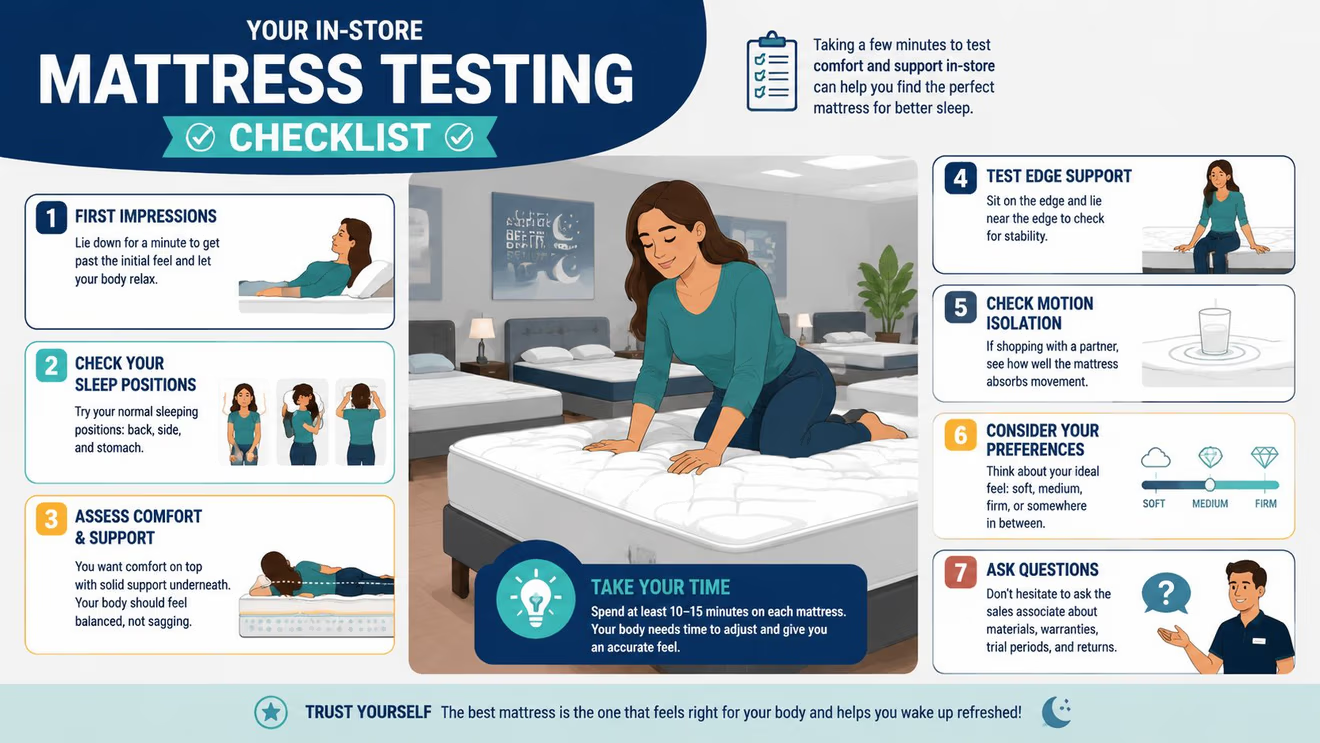
Your In-Store Mattress Testing Checklist
Online descriptions can identify materials, but they can't tell a shopper how a cover feels, whether a mattress traps heat, or how well the edges support a shared bed. At BILTRITE's Greenfield Mattress Center, shoppers can take a practical approach and test the features that matter for allergy-conscious sleep.
Start with the trigger
Before lying down, the shopper should identify the main concern. Is the priority dust-mite exposure, chemical odor, or skin contact with a particular textile? That answer helps the sleep specialist recommend relevant construction and certification questions instead of presenting every option as equally suitable.
BILTRITE's sales associates have over 400 years of combined experience, and their role is to help shoppers compare choices without pressure. The Mattress Center carries over 60 models and more than 500 mattresses in stock, giving families room to compare support and surface feel.
Inspect the details
A useful visit includes these checks:
- Read the label: Ask which materials form the core, comfort layers, cover, and flame barrier.
- Check certifications: Confirm whether the certification applies to foam, textiles, organic inputs, or the complete assembled mattress.
- Feel the cover: Run a hand across the fabric and examine the weave, seams, zipper, and stitching.
- Test support: Lie in the usual sleeping position long enough to notice pressure at the shoulders, hips, and lower back.
- Assess movement: If two people share the bed, have both test turning, sitting, and edge support.
- Ask about care: Confirm whether the cover is removable, washable, spot-clean only, or intended to stay under a protector.
- Clarify delivery: Ask whether qualifying purchases include free white-glove delivery, and whether old-mattress removal is available when the old mattress is in donatable condition.
BILTRITE is closed on Sundays and Mondays for family time, so a weekday or Saturday visit works best. The showroom at 5430 West Layton Avenue in Greenfield, Wisconsin serves families throughout Metro Milwaukee, including shoppers seeking small-scale furniture, heavy-duty options, and American-made pieces alongside mattresses. Before visiting, readers can review how to test a mattress so the appointment feels focused and productive.
Common Hypoallergenic Mattress Myths Debunked
Myth one: all hypoallergenic mattresses are the same. They aren't. One model may focus on low-emission foam, another on a tightly woven cover, and another on organic material standards. The shopper still needs to identify the trigger and examine the feature designed to address it.
Myth two: organic always means allergy-safe. Organic standards can verify material sourcing and processing requirements, but they don't automatically prove dust-mite resistance, textile suitability, or low emissions from every component. A shopper with a specific sensitivity should ask what the certification covers rather than assuming the broadest possible benefit.
Myth three: a hypoallergenic mattress never needs an encasement. A barrier remains useful because it limits new contamination and helps contain allergens already inside the mattress. Clinical and laboratory evidence has established that covers can reduce mite-allergen exposure, but the barrier must fit securely and remain intact.
Myth four: allergies only come from the mattress surface. Sheets, pillows, blankets, bed frames, floors, pets, and room moisture can all influence the sleep environment. Replacing the mattress without changing heavily exposed bedding or ignoring the surrounding room may leave important sources untouched.
The word hypoallergenic should therefore be treated as a design description, not a medical promise. Shoppers can make a more informed choice by pairing a suitable construction with the right certification, a fitted encasement, washable bedding, and realistic care habits.
That practical, family-focused approach reflects how BILTRITE has served Metro Milwaukee since 1928. The fourth-generation, locally owned showroom offers affordable, better-quality furniture, USA-made and Amish-made pieces, solid wood options, and a large mattress selection for different households and budgets.
BILTRITE Furniture-Leather-Mattresses offers a broad in-store mattress selection, including allergy-conscious constructions, washable-cover options, two-sided designs, and helpful value extras on select sets. Visit BILTRITE Furniture-Leather-Mattresses in Greenfield to test the feel, inspect the barrier details, and speak with the experienced team about a mattress suited to the household's specific needs.