Cooling Sheets Queen: A Shopper’s Guide to Better Sleep

You've had the fan on, the windows cracked, and still woken up damp at 3 a.m. That's the moment when cooling sheets queen stops being a nice idea and starts feeling like a bedtime rescue mission. For hot sleepers in Milwaukee, the right queen set can make the bed feel calmer, drier, and a lot less frustrating by morning.
Why Hot Sleepers in Milwaukee Need the Right Queen Cooling Sheets
A queen bed looks simple from the showroom floor, but the sleep problem usually isn't simple at all. One person runs warm, the other wants more coverage, the room holds heat, and the bedding that felt fine in April turns sticky in July. Queen cooling sheets are for that exact mess, because they're meant to help the bed breathe better without making the whole setup feel flimsy.
That matters for couples, for people dealing with hormonal temperature swings, and for anyone who feels the bedroom run warm year-round. The queen size is its own decision, too, because fit, pocket depth, and sheet construction can make or break the experience. A sheet that looks cool on the package can still bunch, pull loose, and trap heat once the sleeper turns over.
Practical rule: if the fitted sheet keeps slipping, the fabric never gets a fair chance to do its job.
BILTRITE's sleep team talks about bedding the same way they talk about mattresses, as part of one sleep system. That starts with the room, the mattress, and the sheet together, not just a flashy fabric name on a box. Creating a sleep sanctuary means the bed has to work as a unit, and hot sleepers feel that difference fast.
What Makes a Sheet Actually Feel Cool
The word cooling gets abused a lot in bedding marketing, so the buyer needs a simple filter. A sheet can feel cool because it moves heat away from skin quickly, or because it lets moisture evaporate instead of trapping it. Those are different effects, and the best queen sets usually do both.
The two mechanisms that matter
Q-max is the quick-hit measure of how strongly a fabric pulls heat at first contact. Rest's Evercool®+ fitted sheet reports a lab-tested Q-max of 0.445 W/cm², and the brand says the sheet uses a nylon-spandex blend with silver yarn. The same brand cites cotton at 0.11 and silk at 0.19, which helps explain why some fabrics feel cooler right away on bare skin. Rest's Evercool fitted sheet details
The second piece is breathability and wicking, which control whether sweat and body heat can keep moving out of the sleep microclimate. A summer T-shirt versus a plastic rain jacket demonstrates this. The T-shirt lets air and moisture move, the rain jacket traps them.
Thread count matters, but only in context. For hot sleepers, a practical range is usually 200 to 400 thread count, because denser constructions often trap more warmth than they release. Queen sheets also need the right fit depth, because a loose fitted sheet bunches, and folds become little heat pockets.
Cooling sheets don't refrigerate the room. They help heat leave the skin and moisture escape faster.
Performance fabric basics matter here because the right hand feel, weave, and fiber blend often matter more than marketing copy.
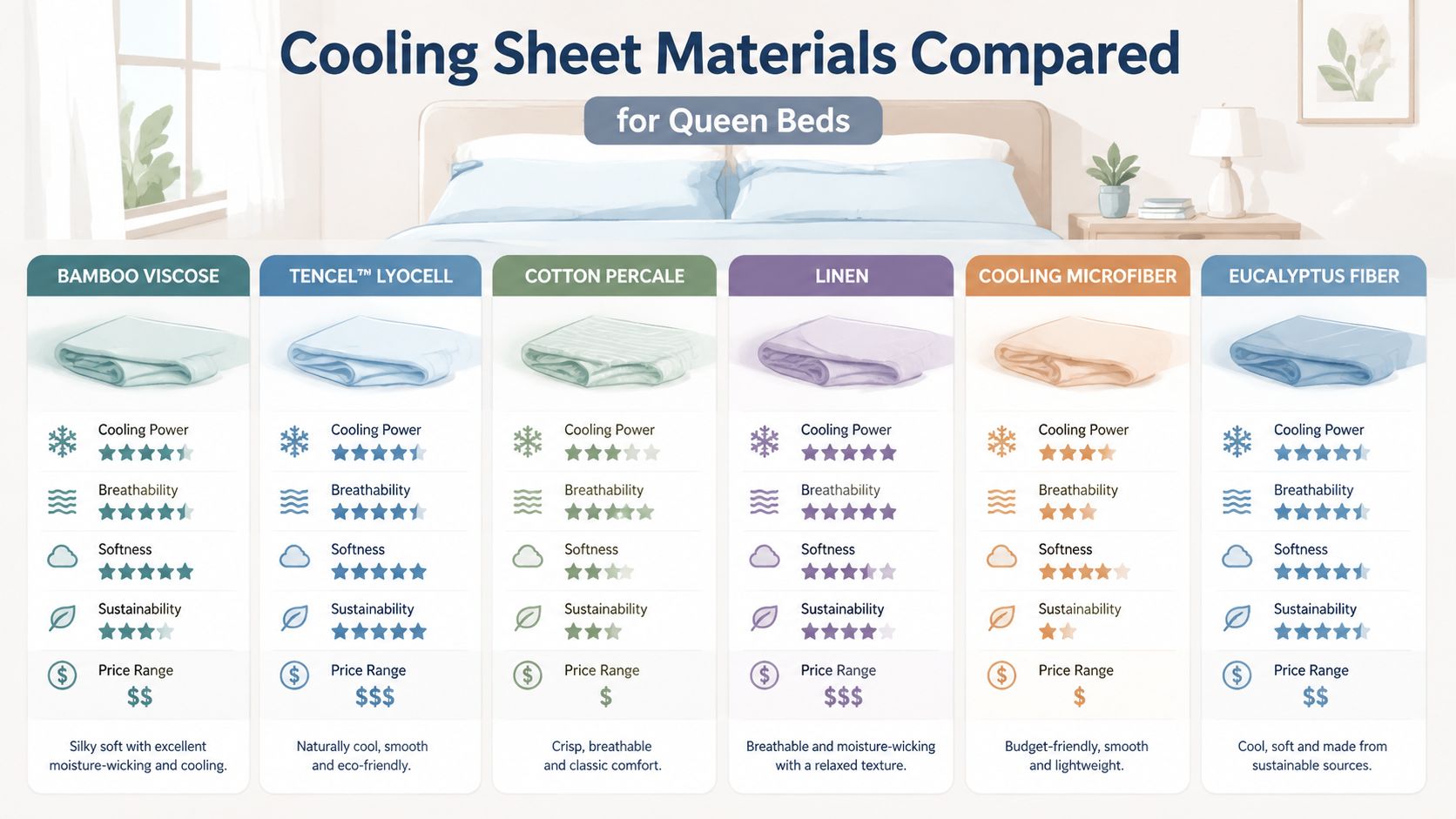
Cooling Sheet Materials Compared for Queen Beds
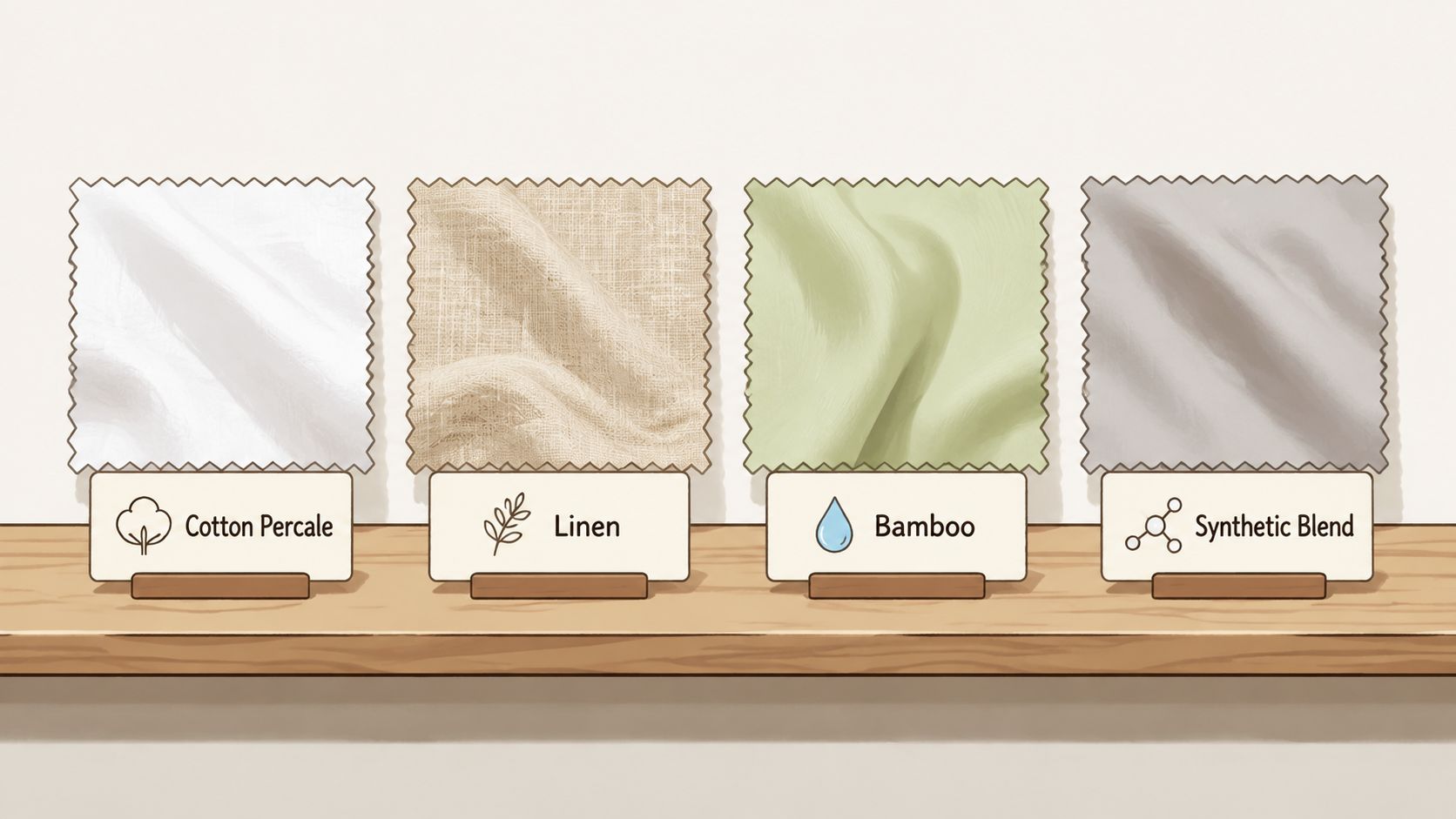
The fabric choice decides most of the feel. Queen buyers usually end up choosing between a crisp cotton percale, a loose linen weave, a bamboo or Tencel-style knit, or a synthetic performance blend that leans hard into cool-to-touch behavior. Each one solves the hot-sleeper problem a little differently.
| Queen Cooling Sheet Materials at a Glance | |||
|---|---|---|---|
| Material | Feel & Cooling Mechanism | Typical Specs | Best For |
| Cotton percale | Crisp, airy, dependable. It cools by staying open and breathable. | Often around 270 thread count in a strong cooling build, with a percale weave. | Everyday hot sleepers who want a classic feel. |
| Linen | Dry, textured, very open. It cools by allowing airflow and releasing heat fast. | Usually a looser weave with a relaxed hand. | Very warm bedrooms and people who like a less polished feel. |
| Bamboo or Tencel lyocell | Smooth, soft, moisture-friendly. It cools by wicking and drying faster than heavier fabrics. | Often found in knit constructions and mid-range thread counts. | Sleepers who want a silkier drape and strong sweat management. |
| Performance nylon blend | Slick, cool-to-touch, tech-driven. It cools by fast initial heat transfer and light stretch. | Blended construction, often paired with fitted-sheet depth details. | Shoppers who want the most immediate cool feel at contact. |
Where each fabric wins
Cotton percale is the safest recommendation for a lot of queen shoppers. Forbes called a queen-size Brooklinen Classic Percale Core Sheet Set its best overall cooling pick, and that set uses 100% long-staple cotton, a percale weave, and 270 thread count. That combination makes sense because it's crisp without feeling heavy. Forbes on cooling sheets
Linen gives the loosest, most breathable hand, but it's not for everyone. It feels more relaxed than polished, and some sleepers love that while others want something smoother.
Bamboo and Tencel lyocell usually win on softness and moisture handling. They're the fabrics a lot of hot sleepers choose when they want less crispness and more drape. Forbes also included a queen-size Tencel lyocell option among its top cooling performers, which lines up with how well those fibers manage heat and sweat.
Synthetic performance blends are the “feels cool immediately” option. Rest's lab numbers show why that category gets attention, but the trade-off is simple, the feel can be slicker and more technical than natural fibers. That works well for some sleepers and feels odd to others.
Getting the Queen Fit Right So Your Sheets Actually Stay Cool
Queen fit is the quiet hero of this whole category. A sheet can have the right fiber and the right weave, then fail completely because the fitted corners pop off, the flat sheet rides up, or the mattress is deeper than the sheet can handle.
Measure the bed before buying
A standard queen mattress is designed around a specific footprint, but the more important question is whether the sheet matches the actual mattress in the room. BILTRITE's queen mattress sizing guide is useful because shoppers often assume queen means one universal fit, and it doesn't. Mattress depth is the hidden variable.
The quick at-home check is simple.
- Measure the mattress height. Grab a tape measure and check from the base to the top of the mattress, including any topper.
- Compare that number to pocket depth. Premium queen cooling sets often list 13-inch to 18-inch pocket construction, and the sheet needs to clear the mattress without fighting the elastic.
A 60" x 80" x 13" queen fitted sheet, like the TEMPUR-Breeze example, is built for a different profile than a deeper bed. TEMPUR-Breeze cooling sheet set A buyer with a thicker mattress should not gamble on a shallow pocket and hope for the best.
Good fit protects cooling. Tight corners keep the sheet flat, and flat fabric sleeps cooler than bunched fabric.
That's why in-store measuring still matters. A shopper can bring mattress dimensions into the showroom, compare them against pocket depth, and avoid the headache of a set that looks right but behaves badly.
Caring for Cooling Sheets So They Keep Working
Cooling sheets don't stay cooling by accident. Wash them wrong, and the fibers start holding onto residue, the weave loses life, and the surface stops feeling as crisp or smooth as it should.
The laundry routine that actually helps
The safest routine is boring, and boring wins here.
- Wash in cool water. Hot water is hard on fibers and can shorten the useful life of performance textiles.
- Use a gentle detergent. Heavy additives build up and interfere with moisture release.
- Skip fabric softener. It coats fibers and can reduce wicking.
- Dry on low heat or line dry. Low heat is easier on the fabric, while line drying is the gentlest option if the room and weather allow it.
- Don't overdo the cycle. Regular washing is fine, but harsh treatment is not.
BILTRITE's sheet care guide pairs well with that routine because a good sleep setup starts with habits, not just purchases. Percale cotton and linen can hold up for years when cared for properly. Performance blends can lose some of that cool-to-touch feel sooner if they're washed hot or dried too aggressively.
Tape this inside the laundry cabinet, cool water, gentle detergent, no softener, low heat.
That small routine protects the hand feel, the breathability, and the reason the set was bought in the first place. A queen sheet set that still feels good after multiple summers is usually the result of decent fabric and steady care, not luck.
Sleep Habits That Make Cooling Sheets Work Even Harder
Cooling sheets are one part of the answer, not the whole answer. A warm bedroom, heavy pajamas, and a mattress that holds heat can overwhelm even a good set of sheets.
Pair the sheets with smarter bedroom habits
A moving ceiling fan, a cracked window when the weather allows, or a small thermostat adjustment can make the bed feel less stuffy. Breathable sleepwear helps too, especially cotton or a moisture-wicking blend that doesn't cling once the body warms up.
A cooling sheet also works better when the mattress underneath isn't fighting it. That's where a mattress-center conversation matters, because a hot sleeper needs to think about the whole sleep surface, not only the top layer. BILTRITE's team talks through sheets, mattress feel, and bedroom conditions together, which is a more honest way to solve the problem than treating bedding like a standalone fix.
When the sleeper deals with severe night sweats or medical sleep issues, cooling sheets can still help, but they won't solve everything. The goal is a cooler, drier sleep environment, not a magic trick.
If the room stays warm and the bed traps heat, the sheet is only doing part of the job.
The smartest move is to combine bedding choice with airflow, lighter pajamas, and a mattress that doesn't cook the sleeper from below. That mix tends to matter more than chasing one flashy fabric label.
Common Cooling Sheet Myths Worth Forgetting
Three myths send shoppers in the wrong direction all the time. The first is that cooling means active refrigeration. Wirecutter is blunt about this, saying there's no such thing as sheets that cool like an ice pack or an air conditioner, and that most cooling claims really mean breathable fabric or a brief cool-to-touch sensation. Wirecutter on cooling sheets
The second myth is the thread-count trap. Higher is not automatically better, and for hot sleepers, ultra-dense construction can work against airflow. That's why the practical cooling range usually lands around 200 to 400 thread count, not the tallest number on the shelf.
The third myth is that all queen cooling sheets are basically interchangeable. They're not. Fabric, weave, and pocket depth change how a sheet feels at first touch and how it behaves at 2 a.m. when the sleeper moves around.
Price gets misunderstood too. The National Council on Aging's 2026 queen roundup placed reviewed sets at $99 to $239 for a queen, with examples at $99, $150, $205, and $239. NCOA cooling sheets roundup That range says a lot, quality cooling doesn't live only at luxury pricing.
Trying Cooling Sheets in Person at the BILTRITE Showroom
Sheets feel different in the hand than they do in a product photo. Percale has a crisp, drier touch. Linen feels looser and more textured. Tencel-style fabric has a smoother glide. A shopper can read specs all day and still miss the one that feels right on skin.
That's where a showroom visit pays off. BILTRITE's mattress center pairs bedding guidance with a large sleep selection, and the same team that helps shoppers test mattresses can also help them compare how a sheet works with the bed underneath. How to test a mattress is a good reminder that comfort is a combination, not a guessing game.
The store also gives people a chance to think through the whole setup with real products in front of them. That matters when the buyer wants cooling sheets that match a deeper mattress, a heavier sleeper, or a room that runs warm. The right fit can be checked in person instead of hoped for online.

BILTRITE Furniture-Leather-Mattresses also has a mattress department built for shoppers who want guidance, not guesswork, and that includes value extras on qualifying purchases. For anyone in Greenfield or the Milwaukee area trying to solve a hot-sleeping problem, the smartest next step is to come in, feel the fabrics, check the fit depth, and talk through the full bed setup with a real sleep specialist.
If hot nights keep wrecking sleep, visit BILTRITE Furniture-Leather-Mattresses in Greenfield and let the team help narrow down a queen cooling setup that fits the mattress and the way the sleeper sleeps. We'd love to see you in the showroom, where the fabrics can be felt in person and the whole bed can be matched up the right way.