Furniture Protection Plan: Is It Worth It for Your Family?

A family finally finds the sofa that fits the room, the budget, and the way life happens at home. Kids will sprawl on it. A dog may claim one corner. Someone will eventually balance a cup of coffee a little too confidently. Then, right at checkout, a small question pops up. Would a furniture protection plan be a good idea?
That question feels simple, but it usually isn't. Most shoppers aren't wondering whether furniture matters. They're wondering what they're really buying, what's already covered, and whether the extra cost will help later or just sit unused. For families in Metro Milwaukee, that's a smart question to ask before making a decision.
Table of Contents
- That Little Question at Checkout
- Warranty vs Protection Plan What Is the Difference
- What a Good Furniture Protection Plan Actually Covers
- Understanding Common Exclusions and Costs
- The Claims Process Demystified
- The BILTRITE Difference Our Promise to Your Family
- Your Protection Plan Questions Answered
That Little Question at Checkout
A lot of shoppers know this moment. The living room piece is picked out. The fabric is chosen. Delivery is on the calendar. Then someone asks about a Furniture Protection Plan and the brain goes in two directions at once. One side says, “That might be useful.” The other says, “Maybe that's just an add-on.”
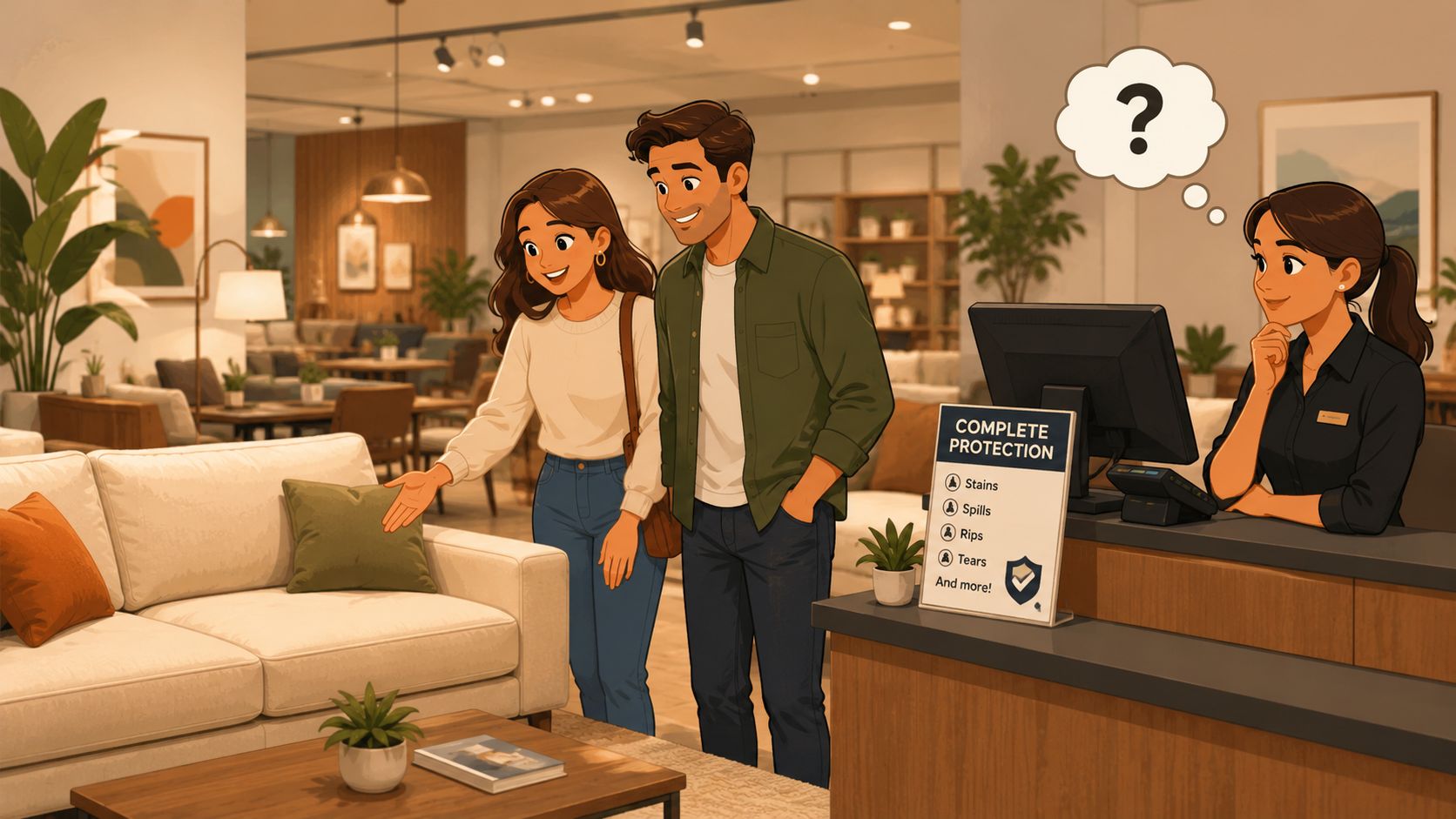
That hesitation is normal. Furniture isn't a small purchase for most families, and the plan itself can sound vague if nobody slows down and explains it in plain English. Before deciding, it helps to understand the difference between “something could go wrong with how it was made” and “something could happen in everyday life.”
A useful clue comes from shopper regret. According to a 2022 Slickdeals survey, 26% of online shoppers regretted not purchasing a product protection plan, as noted in this product protection plan survey summary. That doesn't mean every family should buy one. It does show that many people look back after the purchase and realize they misunderstood the risk.
Why that moment feels so uncertain
Shopping for furniture isn't an every-week occurrence. They might replace a sofa after years of use, buy a recliner for a parent, or furnish a first house after moving into a Milwaukee-area neighborhood. In each case, the furniture is tied to real daily life, not just style.
A protection plan question lands at the end of that process, when attention is already split between delivery timing, room measurements, and budget. That's why many shoppers need a calm explanation more than a quick yes-or-no pitch.
Practical rule: If a plan can't be explained in plain language at checkout, it's too easy to misunderstand later.
Another good move is to review a few buying basics before falling in love with a piece. Guidance like these furniture shopping dos and don'ts can help shoppers think through lifestyle, wear, and long-term use before the final paperwork starts.
A simple example from everyday family life
A new sectional arrives. For the first few months, everything looks spotless. Then a guest spills red sauce during a game night, or a child leaves a pen uncapped on an armrest. Those aren't factory defects. They're life events.
That's where many shoppers realize the checkout question mattered more than it first seemed. A furniture protection plan isn't automatically right for every home, but it deserves a real explanation, especially when the furniture is expected to handle busy family routines.
Warranty vs Protection Plan What Is the Difference
This is the part that confuses more people than any other. A manufacturer's warranty and a Furniture Protection Plan may be offered around the same purchase, but they usually address different problems.
A warranty is generally about how the furniture was made. A protection plan is generally about what happens after the furniture is in the home and real life starts happening around it.
Why people mix them up
Shoppers often assume a warranty covers everything. It usually doesn't. In fact, fewer than half of consumers, 48%, were aware that furniture protection plans were even available, according to the SquareTrade EU furniture protection awareness survey. That helps explain why so many people use the words “warranty” and “protection plan” as if they mean the same thing.
A simple way to remember it is this. A warranty usually speaks to defects. A protection plan usually speaks to accidents.
For shoppers who want to see how store warranty information is typically presented, this warranty information page gives a useful frame of reference.
Warranty vs Protection Plan at a Glance
| Feature | Manufacturer's Warranty | Furniture Protection Plan |
|---|---|---|
| Main purpose | Covers defects in materials or workmanship | Covers certain accidental damage or other covered incidents |
| What it responds to | Problems tied to manufacturing | Problems tied to everyday mishaps, depending on the plan |
| When it matters most | If something fails because it was made improperly | If something happens in the home after delivery |
| Typical examples | A component fails due to workmanship | A spill, stain, rip, or other covered accident |
| Mindset | “Was it built right?” | “What if life happens?” |
That side-by-side view helps because the two products solve different worries. A family might trust the quality of the furniture and still want coverage for accidents. Another family may decide their household habits make the extra protection unnecessary. Both can be reasonable decisions.
A smart shopper asks two separate questions. Is the furniture well made, and what happens if someone spills on it six months later?
One more detail matters. A protection plan is only useful if the shopper understands where its line is drawn. Coverage terms, claim rules, and exclusions matter just as much as the sales conversation. Clear language beats broad promises every time.
What a Good Furniture Protection Plan Actually Covers
Once shoppers understand that a furniture protection plan is mainly about accidents, the next question is more practical. What kinds of accidents are usually included?
The answer depends on the plan, but the strongest plans tend to focus on the kinds of messes and mishaps that happen in active homes. That's why reading the covered events carefully matters more than reacting to a broad headline.
The everyday accidents many shoppers care about
A good plan often speaks clearly about specific incidents, not vague “damage.” Shoppers should look for language that spells out situations like these:
- Food and drink mishaps that leave a visible stain on upholstered seating
- Accidental punctures or tears from a single event, such as a snag or sharp object
- Surface marks from common household use when the plan specifically lists those events
- Seam or fabric issues tied to a covered incident rather than general long-term wear
- Unexpected messes from daily family life, if the plan names those situations directly
That last point matters because the wording provides the full picture. If the contract names the event, the shopper has something concrete to work with later. If the language feels broad and fuzzy, the plan may be harder to interpret when a claim is filed.
The pet damage detail that trips people up
Pet owners run into one of the biggest misunderstandings in this category. Some shoppers hear that pet damage can be covered and assume that includes ongoing scratching or chewing over time. It often doesn't.
A 2024 Safeware FAQ says that “Jaws, Claws, and Beaks” coverage applies only to a single accident occurrence, not accumulated damage from repeated clawing or chewing over time, as explained in this pet damage coverage FAQ. That distinction is small on paper and huge in real life.
Here's a simple perspective:
- Single incident: A one-time event, such as one sudden bite or scratch, may fit covered language if the plan says so.
- Repeated behavior: Ongoing clawing at the same armrest over weeks or months is usually treated differently.
- Documentation matters: If damage happens, shoppers should note when it occurred and what caused it.
Pet coverage often turns on one question. Was this one accident, or was it gradual behavior over time?
That's why families with pets should ask direct questions before buying. Not “Are pets covered?” but “Is a single pet incident covered, and is repeated damage excluded?” Those are different questions, and they get different answers.
Understanding Common Exclusions and Costs
Honest advice about a furniture protection plan has to include what the plan usually does not cover. That's where expectations get set the right way.
A plan can be helpful and still have firm boundaries. In fact, clear exclusions are often a sign that the shopper is looking at the details instead of relying on a quick summary.
What usually isn't covered
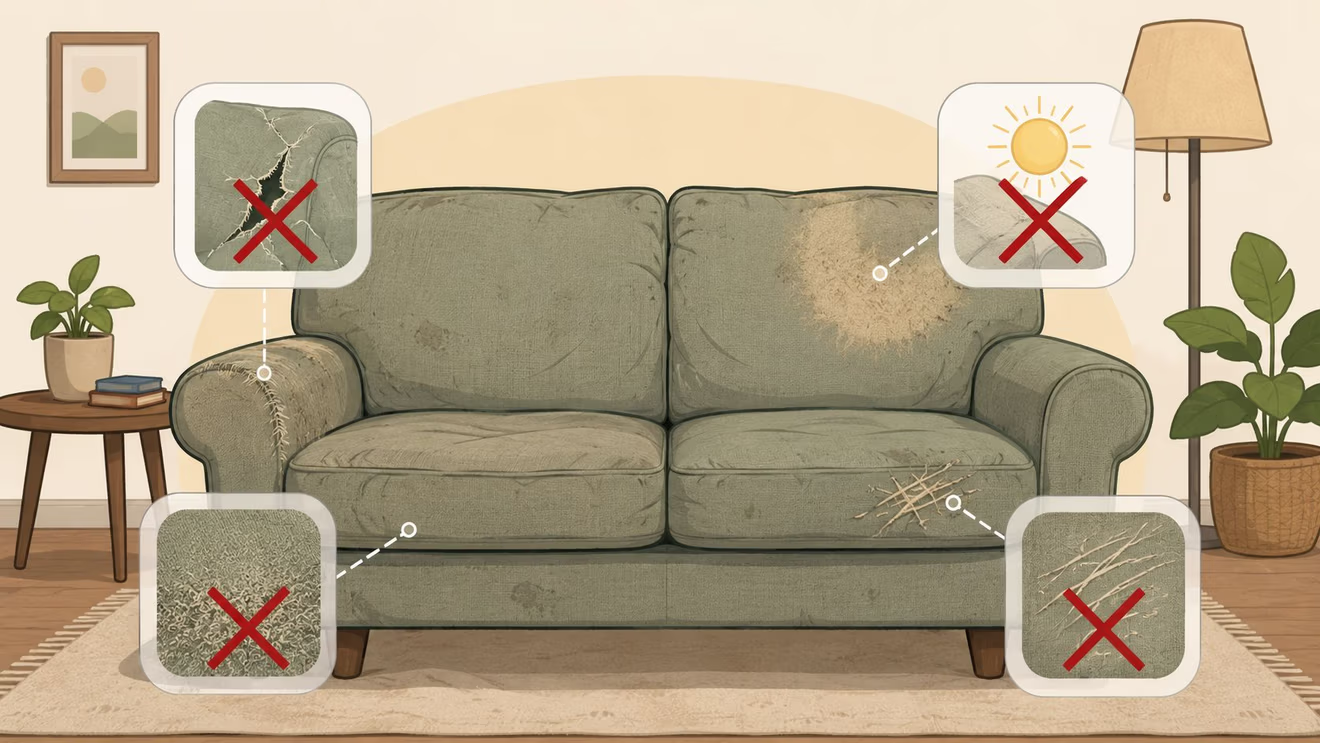
Many exclusions make sense once they're said out loud. A protection plan is not a promise that furniture will stay brand new forever. It's usually designed for certain accidental events, not natural aging.
Common exclusions often include:
- Normal wear such as the softening, flattening, or gradual aging that comes with use
- Repeated damage rather than one distinct covered incident
- Fading or change over time when sunlight, routine friction, or age causes the issue
- Improper use or handling such as damage during moving or misuse outside normal household use
- Pre-existing problems that were already there before the claim event
For wood furniture owners, separate daily care still matters a lot, even with a plan in place. Articles like this guide to protecting wood furniture from scratches and stains help fill the gap between covered accidents and routine prevention.
How shoppers can think about the cost
There isn't one universal price because plans are usually tied to the furniture purchase and the kind of item being protected. That's why the better question isn't “What does a plan cost?” It's “What risk would this plan help this household manage?”
A family with small kids, frequent guests, and an upholstered sectional may view the value differently than someone furnishing a formal sitting room that sees very light use. Neither approach is wrong. The right choice depends on how the furniture will be used.
A useful checklist is short:
- How hard will this piece work?
- Would a stain or tear create real stress at home?
- Does the plan clearly explain covered events and exclusions?
- Would the household rather self-insure and accept the risk?
The fine print isn't the enemy. Hidden assumptions are.
That's why it helps when shoppers slow down and read the terms before checkout ends. A protection plan should feel clear enough that the family knows what they're buying, what they're not buying, and how they'd use it if something happened.
The Claims Process Demystified
A furniture protection plan only feels useful if the claims process makes sense. Most shoppers don't want a long script or industry jargon. They want to know what happens after the spill, tear, or mechanical issue.
In many cases, the path is fairly straightforward. Something happens. The damage gets documented. A claim gets submitted. Then the provider decides whether repair, replacement, parts, or another remedy fits the plan terms.
What usually happens after the accident
The best first step is simple. Act quickly and keep records.
A typical process looks something like this:
- Notice the issue and document it. Take photos, save paperwork, and write down when the event happened.
- Review the plan terms. Confirm that the event sounds like a covered incident rather than wear or gradual damage.
- Contact the claims line or provider. Most plans have a formal claim channel and specific timing rules.
- Follow care instructions. Some plans may ask the customer not to attempt a major repair before the claim review.
- Wait for the resolution. That may involve a technician visit, a repair authorization, replacement parts, or another plan-defined remedy.
This is one place where everyday habits can help. A family that keeps the receipt, delivery paperwork, and plan details in one folder will have a much easier time than a family hunting through drawers six months later.
For pet households and leather owners, prevention is still important even when a plan exists. Guidance like how to protect a leather couch from cats can help reduce the chance that a claim question comes up at all.
Repair or replacement is not always the same thing
Many shoppers assume every approved claim ends with a full replacement. That isn't always how it works. Sometimes a repair is the main remedy. Sometimes a part is replaced. In some cases, a credit may be offered instead.
That's especially important with motion furniture. When a mechanical failure occurs, like on a recliner, the average out-of-pocket repair cost is about $180, according to this discussion of recliner repair costs and coverage questions. A good plan should say whether labor is covered, whether only a part is covered, or whether another type of remedy applies.
Before buying, ask one direct question. If the mechanism fails, does the plan cover the repair work itself, or only the part or a credit?
That single question can clear up a lot of confusion. It also helps shoppers compare the plan to the risk they'd otherwise take on themselves.
The BILTRITE Difference Our Promise to Your Family
For Milwaukee-area shoppers, a protection plan conversation feels different when it happens in a local showroom with people who've served generations of families. Trust changes the tone.
Local history matters here
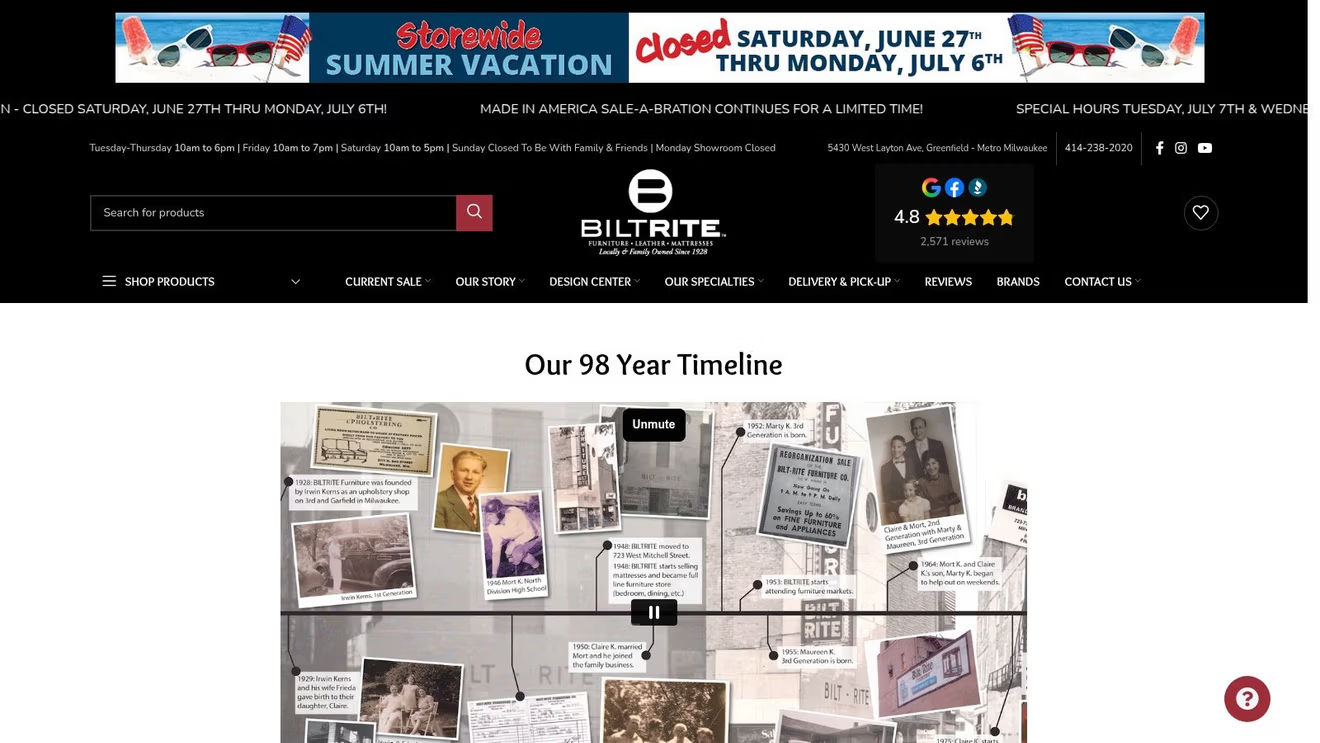
BILTRITE Furniture was founded in 1928 by Irwin Kerns and his wife Frieda Kerns as an upholstery shop in Milwaukee, making custom furniture, and has operated continuously as a fourth-generation, family-owned business, as shared on the BILTRITE history page. That kind of history matters because it points to something bigger than one transaction. It reflects a long relationship with Metro Milwaukee families and the homes they live in.
That local connection also shapes how advice is given. Families in this area shop for many different needs. Some want small-scale pieces for tighter spaces. Some need heavy-duty seating for busy households. Some are investing in solid wood, Amish-made, or USA-made furniture they plan to keep for years.
Why local guidance changes the experience
A generic protection conversation often feels rushed. A local one can be more grounded. The shopper can ask plain questions and get plain answers.
That matters because a protection plan isn't just paperwork. It's part of a larger buying decision that includes:
- How the furniture will be used in the home every day
- What material was chosen, whether that's fabric, leather, or solid wood
- Whether the piece is high-traffic or more occasional
- What level of risk feels acceptable for that family
There's also value in dealing with a business that's open about what makes it different. BILTRITE doesn't sell online, values the in-store experience, and is proud to be closed on Sundays for family time. Those choices signal that the store isn't built around rushing people through a checkout funnel.
For shoppers who want to understand BILTRITE's specific approach on this topic, this article on why BILTRITE doesn't sell extended warranties or protection plans provides helpful context.
One more local detail stands out for mattress shoppers. The store carries over 60 mattress models and more than 500 mattresses at its Mattress Center, according to this GoodBed retailer profile describing BILTRITE's mattress selection. That broad in-stock selection is part of the same larger idea. Better guidance starts when shoppers can see, touch, compare, and ask questions in person.
Your Protection Plan Questions Answered
Quick answers for Milwaukee shoppers
Does solid wood or Amish-made furniture still need a furniture protection plan?
Sometimes yes, sometimes no. Durable construction and quality materials matter a great deal, but a protection plan addresses covered accidents, not craftsmanship alone. The right decision depends on the item, the room, and the household.
Can a plan be added later?
Many plans are offered at the time of purchase or within a limited purchase window. Shoppers should ask before checkout is finished so the rules are clear.
Is a plan more useful for upholstered furniture than for wood furniture?
It often feels more relevant for upholstery because spills, stains, and punctures are easy to picture. But wood buyers should also think about how the piece will be used and what kinds of accidents worry them most.
Should every family buy one?
No. Some families prefer the peace of mind. Others would rather accept the risk and skip the extra cost. The smart move is making that choice with clear information, not pressure.
Families looking for better-quality furniture, real guidance, and a friendly in-store experience can visit BILTRITE Furniture-Leather-Mattresses in Greenfield. Since 1928, this fourth-generation family business has helped Metro Milwaukee shoppers find affordable, well-made furniture, Amish and USA-made options, and a huge mattress selection with over 60 models. Come on down to the showroom, say hi, and let the team help your family choose furniture that fits real life at home.