The Difference Between Twin and Full Size Bed Explained

A lot of shoppers stand in an empty bedroom and hit the same wall. The room might be for a child moving out of a crib, a teenager who suddenly wants more space, a guest room that has to do double duty, or a first apartment in Milwaukee where every inch matters. The bed seems like the obvious starting point, but one question usually decides everything else. Twin or full?
That question sounds simple until real life joins the conversation. Will the bed leave enough room for a dresser? Can a desk still fit? Will a single adult feel cramped on a twin? Will a full make a small room feel stuffed? Those are the questions families ask every day in a mattress department.
Since 1928, BILTRITE has helped Metro Milwaukee families sort through exactly these choices. A fourth-generation furniture business sees the same pattern again and again. People don't just need dimensions. They need help picturing how a bed will live in an actual room, with actual furniture, and actual daily routines.
Table of Contents
- Welcome to the Great Bed Debate Twin vs Full
- The Nitty Gritty Numbers A Quick Comparison
- Beyond the Tape Measure Who Is Each Bed For
- Will It Fit Planning Your Milwaukee Room Layout
- Finding Your Foundation Frames and Bedding
- Come On Down and Try Them Out The BILTRITE Way
Welcome to the Great Bed Debate Twin vs Full
A twin and a full can look surprisingly similar at first glance, especially when they're dressed up with pillows, quilts, and a nice headboard. That's where people get tripped up. They assume the difference is minor, then get the bed home and realize the whole room now feels different.
This choice comes up in all kinds of everyday situations. A parent wants to leave room for toys and books. A grandparent is fixing up a guest room. A college grad is trying to make a compact apartment feel comfortable without giving up all the floor space. The bed size shapes every other decision in the room.
A bed isn't just where someone sleeps. It's the biggest piece in the bedroom, so it also decides how the room works.
That's why the difference between twin and full size bed choices isn't really about labels. It's about how much sleeping space one person needs, and how much open room the bedroom can give up.
For many Milwaukee-area homes, that tradeoff feels familiar. Bungalows, older homes, condos, apartments, and multipurpose guest rooms often ask furniture to work harder. A smart bed choice can make a room feel calm and useful. The wrong one can make it feel crowded every single day.
The Nitty Gritty Numbers A Quick Comparison
The core difference is width. Both mattresses share the same length, so a shopper who expected a full to feel longer is usually surprised. It won't. It gives one sleeper more side-to-side room.
Here's the clean side-by-side look.
| Feature | Twin Size | Full (Double) Size |
|---|---|---|
| Width | 38 inches | 54 inches |
| Length | 75 inches | 75 inches |
| Width difference | Standard baseline | 16 inches wider |
| Sleeping surface area | About 2,850 square inches | About 4,050 square inches |
| Main takeaway | Narrower footprint | More room for one sleeper |
A standard U.S. twin mattress measures 38 inches wide by 75 inches long, while a full measures 54 inches wide by 75 inches long. That means the full is 16 inches wider but not longer. In total surface area, the twin offers about 2,850 square inches and the full offers about 4,050 square inches, so the full gives roughly 42% more total surface area, according to this twin and full dimension guide.
What the numbers mean in real life
On paper, 16 inches may not sound dramatic. In a bedroom, it changes a lot. That extra width can feel like elbow room, turning room, and less edge-of-the-bed feeling for a single sleeper.
It also changes how the room functions. A twin usually leaves more floor open for storage, a toy area, a nightstand, or a desk. A full asks for more room around it, even though it doesn't add any extra length.
For shoppers who want a quick visual of where different mattress sizes fit in the lineup, BILTRITE's mattress size chart is a helpful planning tool.
Practical rule: If the sleeper wants more room, the full helps. If the room needs more open floor, the twin usually wins.
One common point of confusion
A lot of people still use the term “double bed.” In this case, full and double mean the same size. That naming twist confuses shoppers all the time, especially when older family members use one term and younger shoppers use the other.
So the simple version is this. Twin is narrower. Full is wider. Length stays the same.
Beyond the Tape Measure Who Is Each Bed For
The measurements matter, but people don't sleep like tape measures. Age, habits, room purpose, and daily routines all shape the right choice.
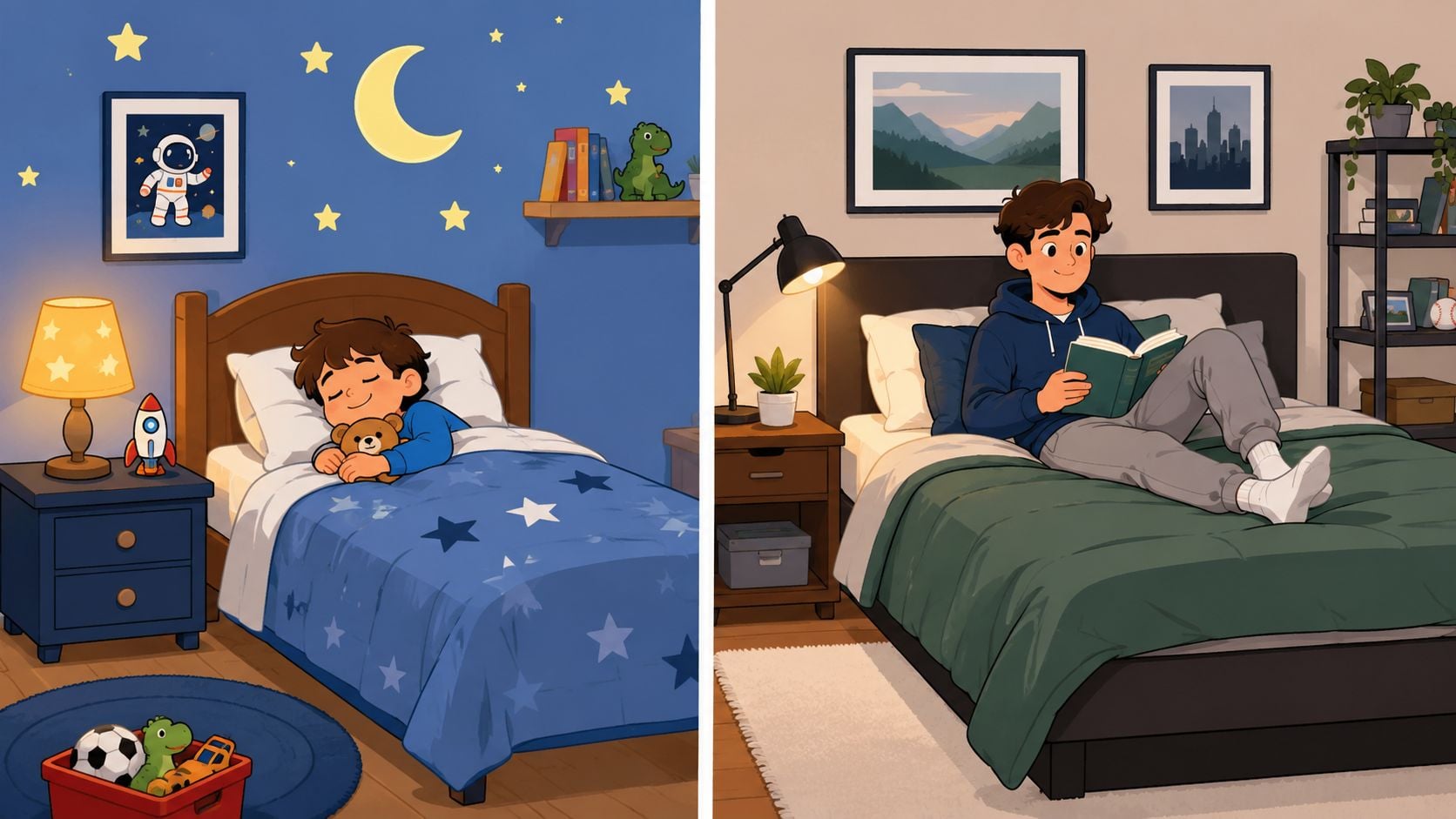
Twin makes sense when floor space matters most
A twin is often the easy answer for a child's room. It leaves more open area for toys, bookshelves, bins, or just plain play space. It also fits naturally in bunk beds and works well for a child's first “big kid” setup.
Twin beds also make sense in small guest spaces where the room has another job. A home office with an occasional overnight guest often works better with a twin because the bed doesn't dominate the room.
Some adults choose a twin too, especially in compact apartments or very small bedrooms. That choice isn't about settling. It's about using the room wisely.
A few situations where a twin often fits well:
- Kids' bedrooms: More floor space usually matters as much as sleep space.
- Bunk bed setups: Twin is the standard choice for many shared-kid-room layouts.
- Small multipurpose rooms: A twin leaves breathing room for a desk, reading chair, or storage.
- Tight guest rooms: It can make an occasional-use room feel more flexible.
Shoppers comparing compact options can also browse BILTRITE's ideas for beds for small spaces.
Full works better when one sleeper wants room to move
A full usually makes more sense for a growing teen or a single adult who wants more sleeping room without stepping up to a larger mattress category. The bed feels less narrow, which matters to sleepers who change position often, read in bed, or just don't like feeling boxed in.
Guest rooms are another strong match for a full. One overnight guest usually feels more comfortable with the extra width. The room feels more welcoming too, especially if family visits often.
A full can sometimes fit two people, but comfort is limited. It works far better as a roomy bed for one than as a long-term bed for two.
That's an important point because many shoppers hear “double” and assume “good for two.” It can technically serve that role in a pinch, but for everyday comfort, a full is often treated as a generous one-person bed.
A simple way to think about it:
- Choose twin when the room has to protect floor space.
- Choose full when a solo sleeper wants more comfort and the room can handle a wider bed.
- Pause and rethink if the bed must regularly serve two adults.
Will It Fit Planning Your Milwaukee Room Layout
The choice of bed size often dictates the success or failure of a purchase. A mattress can sound right in the store and still feel wrong once it lands between the closet, radiator, dresser, and doorway at home.

Typical minimum room guidance rises from about 7' x 9.5' for a twin to 9' x 9.5' for a full, which shows why the practical tradeoff of a full bed is room layout, as outlined in this room-planning discussion of twin versus full.
A small bedroom needs a layout plan not a guess
In Metro Milwaukee homes, that matters a lot. Older bungalows may have cozy secondary bedrooms. Apartments may need one room to handle sleeping, working, and storage. Condos may have guest rooms that also house exercise equipment, hobby tables, or nursery items.
That's why a tape measure helps more than a hunch. A shopper can mark the bed footprint on the floor with painter's tape and then walk the room as if the bed were already there.
That test answers practical questions fast:
- Door swing: Does the closet or bedroom door still open freely?
- Walk path: Can someone move around the bed without sidestepping furniture?
- Other furniture: Is there still room for a dresser, desk, or crib?
- Visual feel: Does the room seem calm, or does the bed swallow it?
Room by room decision rules
A studio or compact apartment bedroom often benefits from a twin if the sleeper values open floor and a less crowded layout. A full may still work, but only if the room's main job is sleeping and the furniture list stays short.
A guest room usually depends on how often it gets used. If guests stay often and the room allows it, a full can feel more accommodating. If the room doubles as an office or hobby room, twin often keeps the space more flexible.
A multipurpose bedroom needs the strictest editing. If a family needs to fit a desk, crib, or larger storage piece beside the bed, the twin often solves more layout problems.
Try the room in real life before buying the bed in theory. Tape the footprint, open every door, and walk every path.
For readers trying to map furniture placement more carefully, BILTRITE's guide on how to arrange bedroom furniture can help turn rough measurements into a workable plan.
Milwaukee shoppers often discover that bed size is less about “which mattress is better” and more about “which room works better after the bed arrives.” That's the key decision.
Finding Your Foundation Frames and Bedding
Once the mattress size is settled, the support underneath it starts to matter just as much. A bed frame changes the room's look, the bed's height, the storage options, and the overall feel of the space.
The frame changes how the room feels
A twin frame can keep a child's room airy and manageable. A full frame can make a guest room or primary solo-sleeper room feel more grounded and finished. Style matters, but scale matters too.
That's especially true in smaller homes and apartments. A bulky frame can eat up visual space even if the mattress technically fits. A simpler frame, lower profile bed, or storage-conscious design can help the room stay useful.
Many shoppers also care about construction. Solid wood frames, USA-made pieces, and Amish-made bedroom furniture appeal to families who want something durable and timeless rather than disposable.
A few smart frame questions to ask:
- How thick is the frame visually? A heavy-looking frame can make a modest room feel tighter.
- Does the bed need storage? Under-bed or built-in storage can replace extra furniture.
- Will the frame last through life changes? A child's room may become a teen room, then a guest room.
- Does the support match the mattress requirements? That part is easy to overlook.
Bedding and support matter too
Twin bedding is often easy to style for children's rooms, vacation homes, and practical guest setups. Full bedding tends to open the door to more mature looks for teens and adults. The bed size can subtly shape the room's personality.
Support matters as much as style. Some mattresses need a certain kind of base or foundation to perform properly and wear evenly. Families sorting through that question can review BILTRITE's guide on whether a mattress needs a boxspring.
A mattress choice doesn't end at the mattress. The frame, support, and bedding all affect comfort, appearance, and how well the room functions.
For shoppers exploring local options, BILTRITE Furniture-Leather-Mattresses carries bedroom furniture with an emphasis on USA-made, Amish-made, solid-wood, small-scale, and heavy-duty options. For a room that has to work hard, that combination can be useful because the frame choice often solves as many problems as the mattress size itself.
Come On Down and Try Them Out The BILTRITE Way
Reading dimensions helps. Standing beside both sizes helps more. Lying on both usually settles the question.

That's one reason some families still prefer shopping in person for a mattress. A twin can sound perfectly reasonable until a tall teen stretches out on it. A full can sound comfortably modest until it's clear how much more floor it claims in a small bedroom. The body notices things the spec sheet can't.
Why testing in person clears up confusion fast
A real showroom lets shoppers compare more than width. They can notice edge feel, sitting height, frame style, support, and how easy it is to picture each option at home. That matters when the room has odd corners or when the bed must share space with desks, dressers, or nursery furniture.
Since BILTRITE has served Metro Milwaukee since 1928, the store's day-to-day approach is centered on conversation, room fit, and practical guidance. The showroom in Greenfield doesn't push online checkout because the focus is on helping people see and feel the choices in person.
The mattress department includes over 60 models, and the team brings over 400 years of combined experience. Those are the kinds of details that help a family ask better questions and narrow the options with more confidence.
What families usually learn after lying on both sizes
A child often looks just right on a twin. A teen often immediately likes the feel of a full. A single adult furnishing a smaller bedroom may discover that the full feels better for sleep, but the twin leaves the room easier to live in. Neither answer is wrong.
That's the point. The difference between twin and full size bed choices isn't just a category difference. It's a comfort-and-layout decision, and one makes that decision more confidently when able to test both.
A good mattress test is simple:
- Lie down in a natural sleep position. Don't just sit on the edge.
- Turn once or twice. Movement usually reveals whether the width feels limiting.
- Picture the room at home. A comfortable bed still has to leave room for living.
- Ask about support options. The right frame or foundation can change the whole setup.
Shoppers who want to prepare before visiting can check BILTRITE's article on how to test a mattress.
BILTRITE is also proud to be family-owned, local, and closed on Sundays and Mondays for family time. That kind of schedule says something honest about how the business operates. It's built around real homes, real families, and long-term relationships in the Milwaukee area.
If choosing between a twin and a full still feels like a toss-up, a visit to BILTRITE Furniture-Leather-Mattresses can make the choice a lot clearer. The Greenfield showroom gives Milwaukee-area shoppers a chance to compare sizes in person, explore small-scale and solid-wood bedroom options, and talk with an experienced team that's focused on fit, comfort, and everyday practicality.