3 DAY MATTRESS SALE! TUESDAY - WEDNESDAY - THURSDAY!
LABOR DAY SALE EXTENDED ENDS SATURDAY, OCTOBER 3RD AT 5PM!
NO CREDIT CARD FEES!
1000's of Items IN-STOCK + 500 Mattresses!
Largest selection of USA Made Furniture & Mattresses + Amish Made!
FREE In-Store Design Services!
BUY LOCAL & LOVE YOUR HOME!
3 DAY MATTRESS SALE! TUESDAY - WEDNESDAY - THURSDAY!
LABOR DAY SALE EXTENDED ENDS SATURDAY, OCTOBER 3RD AT 5PM!
NO CREDIT CARD FEES!
1000's of Items IN-STOCK + 500 Mattresses!
Largest selection of USA Made Furniture & Mattresses + Amish Made!
FREE In-Store Design Services!
BUY LOCAL & LOVE YOUR HOME!
OPEN LABOR DAY | Tuesday-Thursday 10am to 6pm | Friday 10am to 7pm | Saturday 10am to 5pm | Sunday Closed To Be With Family & Friends | Monday Showroom Closed
5430 West Layton Ave, Greenfield - Metro Milwaukee
A lot of mattress shoppers are in the same spot right now. They've tried one bed that feels like a marshmallow, another that feels like a board, and after a while every label starts to blur together. Plush. Cushion firm. Luxury firm. Medium. Medium-firm. It's enough to make anyone feel a little like Goldilocks.
That confusion is exactly why mattress comfort levels deserve a simple, plain-English explanation. Comfort isn't just a marketing word. It's the mix of softness, support, pressure relief, and overall feel that decides whether someone wakes up refreshed or already reaching for the coffee.
At BILTRITE, that kind of conversation has been happening with Milwaukee-area families since 1928. As a fourth-generation, family-owned business in Greenfield, the store has helped generations of neighbors sort through the noise and focus on what actually matters. The goal isn't to make mattress shopping feel more complicated. It's to make it less stressful, more hands-on, and a whole lot easier to understand.
One doesn't typically start mattress shopping because it sounds fun. One starts because something hurts, sleep feels broken, or the current mattress just isn't cutting it anymore. Then, walking into a showroom, one sees row after row of options, and wonders how anyone is supposed to choose.
That “too soft, too firm, not quite right” feeling is common. Mattress comfort levels sound simple on the surface, but they get confusing fast because comfort isn't only about softness. A mattress can feel soft at first and still fail to support the body well through the night. Another can feel firmer in the first few minutes and end up being much more comfortable after several hours of sleep.
Why shoppers get stuck
A few things trip people up over and over:
Labels sound clearer than they are. “Medium” sounds precise, but it often isn't.
First impression can fool people. A mattress that feels cozy for thirty seconds may not feel so good by morning.
Different bodies feel the same bed differently. One person's comfortable support is another person's pressure point.
Online descriptions can only go so far. Words like “hugging,” “responsive,” or “supportive” help, but they don't replace lying down.
A mattress isn't judged by hand pressure in a showroom aisle. It's judged by how the body feels after settling into it.
That's where a slower, more practical approach helps. Mattress shopping gets easier when shoppers learn how firmness scales work, how materials change the feel, and how sleep position affects comfort. Once those pieces click into place, the choices stop looking random.
For Milwaukee families who'd rather talk to a real person than gamble on a boxed mattress from a screen, that hands-on process still matters. It's hard to know what “comfortable” means until the body gets a vote.
Decoding the Mattress Firmness Scale
The most common starting point in mattress shopping is the 1-to-10 firmness scale. Many guides place the broad comfort sweet spot in the 4-to-7 range, and 6.5/10 is commonly treated as the medium-firm benchmark, as noted in this firmness scale guide.
What the numbers really mean
The number isn't a grade. It's a shorthand for feel.
A lower number usually means a mattress has more give and more cushioning at the surface. A higher number usually means it pushes back more and lets the sleeper sink in less. Most shoppers aren't choosing between the far ends of the scale anyway. Very soft options and extra-firm options are less common than those middle-range models.
A simple way to think about it is this:
Lower numbers usually feel plusher and allow more sink
Middle numbers often balance cushioning with support
Higher numbers usually feel flatter, sturdier, and more resistant to body weight
Many shoppers get frustrated when one brand's “6” may not feel like another brand's “6” at all.
There isn't one universal firmness standard across every mattress maker. Testing methods can vary, and mattress construction varies even more. A mattress can earn a similar firmness label while using different materials, different support systems, and different comfort layers. That changes what the sleeper experiences.
Practical rule: Treat the number as a map, not a promise.
That's why the firmness scale helps most when it's used to narrow the search, not finish it. If someone says they usually like something around medium or medium-firm, that's useful. But they still need to lie down and see whether the mattress feels buoyant, contouring, flat, springy, or cushioned in the places that matter.
The number gets the shopper into the right neighborhood. The body decides the exact address.
Why Comfort Is More Than Just a Number
Two mattresses can share the same firmness score and still feel completely different. That's one of the biggest reasons shoppers get confused by mattress comfort levels. The number tells part of the story. The construction tells the rest.
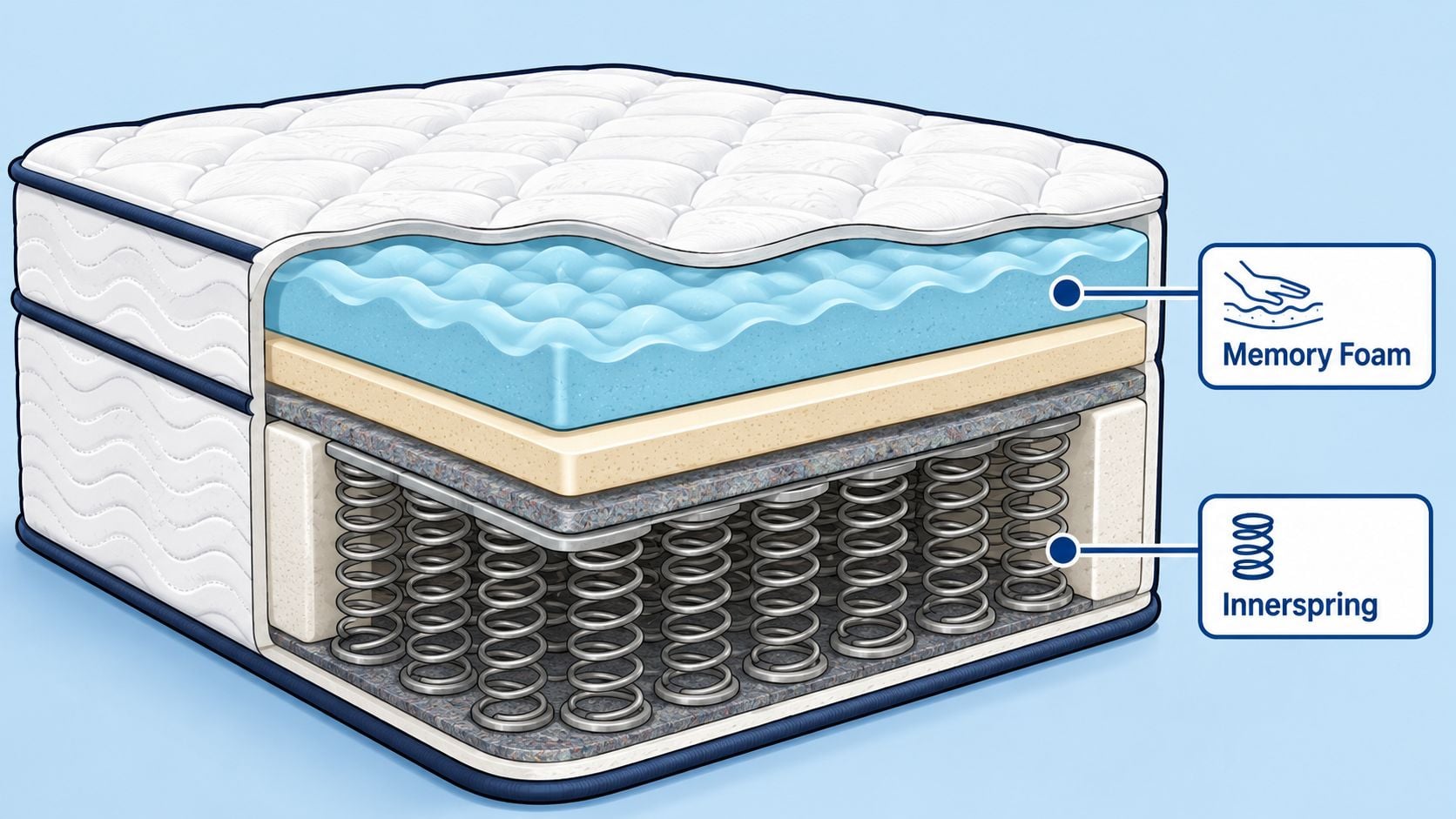
How a mattress is built matters because memory foam, hybrid, and latex designs handle pressure and movement differently. As explained in this comfort scale article, one mattress may create more of a hugging sensation, while another feels more buoyant and easy to move around on.
The feel of the materials matters
A shopper might lie on two medium-firm mattresses and react to them very differently.
One may contour closely around the shoulders, hips, and lower back. Another may feel springier and keep the sleeper more on top of the bed instead of in it. Neither one is automatically right or wrong. They're just different kinds of comfort.
Here's a plain-language way to think about common constructions:
Memory foam often feels closer-fitting and more cradling
Latex often feels more buoyant and easier to move on
Hybrid designs often blend contouring comfort with a more lifted, responsive base
Innerspring styles often feel more traditional and less body-hugging
Someone who says, “This bed feels too soft,” may not mean it lacks support. They may mean they dislike that slow, close contouring feel. Another person may say, “This one feels firm,” when what they really mean is that it doesn't cushion the shoulders enough.
People sometimes talk about comfort and support like they're opposites. They aren't. A good mattress needs both.
Pressure relief is what helps the sharper parts of the body, like shoulders and hips, settle in without feeling jammed. Support is what helps the spine stay in a healthier position rather than dipping too much or staying unnaturally flat.
Some sleepers want to feel “hugged.” Others want to feel gently held up. That preference can matter just as much as the firmness number itself.
This is why trying mattresses in person tells shoppers so much more than a label can. A medium-firm foam mattress and a medium-firm hybrid may sit in the same firmness category, but they can create very different sleep experiences. Once shoppers notice that difference for themselves, the whole topic of mattress comfort levels starts making a lot more sense.
Matching a Mattress to Your Body and Sleep Style
A mattress doesn't meet the body the same way for every sleeper. Sleep position and body type change where pressure shows up and how far someone sinks into the surface. That's why mattress comfort levels should match the person, not just the label.
This guide to mattress firmness levels notes that lighter people and side sleepers often do better on softer to medium surfaces in the 3-6/10 range, while back and stomach sleepers and heavier people often need more firmness in the 6-8/10 range to reduce excessive sinkage and lower-back strain.
A simple way to narrow the field
The table below gives shoppers a useful starting point before they ever test a mattress in person.
Sleep Position
Recommended Firmness (1-10 Scale)
Why It Works
Side sleeper
3-6
Softer to medium surfaces can cushion shoulders and hips and reduce pressure buildup.
Back sleeper
6-8
A bit more firmness can help keep the torso from sinking too deeply and support more even alignment.
Stomach sleeper
6-8
Firmer support can help keep the midsection from dipping too far, which may strain the lower back.
Combination sleeper
Usually middle ranges, then adjusted by feel
A balanced feel often helps with changing positions, but material response matters too.
That table doesn't replace testing. It narrows the field.
A side sleeper with shoulder tenderness usually notices pressure first. A stomach sleeper usually notices sag first. A back sleeper often notices whether the lower back feels supported or strained. Those patterns make in-store testing much more efficient because the shopper already knows what to look for.
Body weight affects firmness perception more than many people expect. A mattress that feels medium to one person may feel quite firm to someone lighter and noticeably softer to someone heavier.
That's why a couple can disagree about the exact same mattress without either person being wrong. One partner may sink in enough to feel pressure relief. The other may stay too much on the surface and feel stiffness instead.
A few practical examples make this easier:
Lighter sleepers often don't compress the mattress as much, so a softer surface may feel more comfortable.
Heavier sleepers usually engage deeper layers more quickly, so a firmer build may feel steadier and more supportive.
Side sleepers with curves at the shoulders and hips often need more surface cushioning than flatter back sleepers.
Combination sleepers often care less about deep contouring and more about easy movement.
The “right” comfort level often shows up when the sleeper's main pressure points relax and the spine doesn't feel forced into an awkward position.
This is one reason online-only mattress shopping can be so hit-or-miss. Descriptions can't fully predict how a specific body will interact with a specific mattress. A short in-store test in a real sleeping position often reveals more than a page of product copy ever could.
Signs Your Current Mattress Is Wrong for You
The body usually gives clues before the eye does. A mattress can look mostly fine and still be the reason someone wakes up stiff, sore, or strangely tired.
Some signs are obvious, like sagging or lumps. Others are easier to miss because people get used to them over time. They assume waking up achy is normal, or they blame stress, age, or a bad pillow when the mattress is part of the problem.
What the body usually notices first
A mattress may be the wrong fit when these patterns keep showing up:
Morning aches that ease up after moving around for a while
Tossing and turning because no position stays comfortable for long
Numbness or pressure at the shoulders, hips, or lower back
Rolling toward the middle or feeling stuck in one spot
Sleeping better somewhere else, then feeling worse again at home
Visible wear matters too. If the surface looks uneven, dips under the sleeper, or feels less supportive than it used to, the comfort level may have changed over time even if the original choice was decent.
When comfort and sleep quality aren't the same thing
This part surprises a lot of people. The mattress that feels plushest at first touch isn't always the one that supports better sleep through the night.
Research on sleep quality found that a medium-firm mattress produced better objective sleep quality, higher efficiency, and was rated most comfortable on average compared with softer or firmer options in that study, as described in this sleep research article.
That doesn't mean every person should buy the same feel. It does mean shoppers should be careful about judging comfort too quickly.
A mattress should feel good after the body settles in, not just during the first few seconds.
If a current mattress feels cozy when someone first lies down but leads to fidgeting, pressure, or back strain overnight, that comfort level may be wrong for that sleeper. Lasting comfort usually feels balanced, not dramatic.
The BILTRITE Way to Find Lasting Comfort
Comfort is the top priority for many shoppers. In one consumer roundup, 89% of respondents said comfort was important when choosing a mattress, according to this mattress statistics roundup. That helps explain why mattress comfort levels are so personal, and why guessing from a screen can be risky.
Why in-store testing still matters
A mattress is one of those products that really needs body time, not just browser time.
Reading descriptions can help shoppers learn the language. It can't tell them whether a mattress presses on the shoulder, supports the lower back, feels too slow to move on, or gives that floating-on-top sensation they either love or hate. Only lying down can do that.
That's why an in-store test works so well:
The body gives immediate feedback. Pressure points show up quickly.
Real sleep positions reveal more than sitting on the edge. Side, back, and stomach positions feel very different.
Material differences become obvious fast. Foam, latex, and hybrid designs don't feel the same.
Questions can be answered on the spot. A shopper can compare models instead of guessing.
BILTRITE Furniture-Leather-Mattresses offers a showroom setting where shoppers can compare more than 60 mattress models, including flip-able and 2-sided options, with guidance from experienced sleep specialists. That kind of side-by-side testing matters because mattress comfort levels are easier to understand when someone can feel the differences instead of trying to decode marketing terms.
The in-store experience also gives shoppers room to slow down. They can test a softer surface, then a firmer one. They can notice whether they like more contouring or more lift. They can ask what changed between two mattresses that looked similar on paper but felt totally different in person.
That hands-on approach fits the way BILTRITE has done business since 1928. Family-owned, local, and closed on Sundays and Mondays for family time. No rushed guesswork. Just real mattresses, real guidance, and a chance to find comfort that fits the sleeper.
If mattress shopping has started to feel like a guessing game, a visit to BILTRITE Furniture-Leather-Mattresses in Greenfield can make it simpler. Milwaukee-area shoppers can stop in, try different comfort levels for themselves, and talk with an experienced team that's been helping local families since 1928.