What Is a Platform Bed Frame? A BILTRITE Guide


A platform bed is a type of bed frame with a built-in foundation, usually slats or a solid surface, that supports your mattress directly so you don't need a box spring. Most platform beds have a lower profile, and published guides place many of them in the 6 to 18 inch height range, which is a big part of their clean, modern look.
If you're shopping for a new bed right now, you're probably running into the same question we hear all the time in our Greenfield showroom. Is a platform bed just a style choice, or is it built differently?
We've been helping Milwaukee families sort through questions like this since 1928, and the answer is simpler than the furniture industry sometimes makes it sound. A platform bed isn't just a frame that looks low and modern. It's a frame that does part of the support job itself.
That matters because the right bed setup depends on your room, your mattress, and how you live every day. A young couple in a Bay View apartment may want to save space and skip the extra bulk of a box spring. A family furnishing a larger bedroom may care more about durability and storage. An older adult may want to think carefully about bed height before choosing a lower profile frame.
Welcome to the World of Platform Beds
You get home after a long day, step into your bedroom, and realize the bed takes up more visual space than you want. Maybe the room feels tight in a Milwaukee bungalow. Maybe you want easier cleanup under the bed in a condo. Maybe you are furnishing a guest room for family and want something sturdy without adding extra pieces.
That is usually when platform beds enter the conversation.
A platform bed is a bed frame built to support a mattress on its own. The frame does the job that used to be split between a bed frame and a separate foundation. For many families, that simpler setup holds considerable appeal. It can save height, reduce bulk, and make the room feel more settled.
The easiest way to picture it is to compare it to a dining table with the top already attached to a strong base. You do not need another layer underneath to make it usable. A platform bed works in a similar way. The mattress rests on the frame's support surface, and the frame carries the weight.
That support can come from wood slats, metal slats, or a solid panel. The details matter, especially if you care about mattress performance, long-term durability, or storage under the bed, but the big idea is simple. A platform bed is built as a complete support system, not just a holder for other pieces.
Why the term "platform" throws people off
A lot of shoppers hear "platform" and assume it only describes the look. Low profile. Clean lines. A more modern feel.
Those style cues are common, but they are not the whole story.
Platform describes how the bed is built and how it supports the mattress. The lower height is often a result of that design, not the definition itself. That distinction helps Milwaukee households make a better choice. A lower bed can open up a smaller apartment visually, while a taller setup may feel easier to get in and out of in a primary bedroom.
Why so many families consider them
Platform beds fit a wide range of homes because they solve practical problems, not just style questions. In a smaller room, they can help the bed feel less bulky. In a larger bedroom, they can create a cleaner furniture layout and sometimes add storage underneath or in built-in drawers. In a busy family home, fewer separate parts can also mean fewer things to shift, squeak, or replace over time.
We have seen that firsthand at BILTRITE in Greenfield. Some shoppers want a simple, American-made wood bed that will hold up for years. Others want smart storage for blankets, kids' rooms, or guest spaces. Platform beds can serve both needs, but only if the construction is solid and the height works for the people using it.
If you want to compare platform beds with other setups before you decide, our guide to different types of bed frames is a helpful place to start.
Platform Beds Versus Traditional Beds
A good way to compare these two setups is to look at where the support lives. In a platform bed, the support is part of the bed itself. In a traditional setup, the frame usually holds a separate box spring or foundation, and the mattress rests on that extra layer.
That one construction choice affects more than looks. It changes bed height, how many pieces you need to buy, and how the bed fits daily life in your home.

The core difference
With a platform bed, the mattress sits on a built-in support surface. With a traditional bed frame, the mattress usually sits on a box spring or foundation that sits inside the frame. The Sleep Foundation explains that platform beds are designed to support a mattress on their own, while traditional frames often rely on that separate layer for height and support (Sleep Foundation's platform bed guide).
It helps to picture a dining table with the top attached to a sturdy base versus a tabletop balanced on another piece underneath. Both can work. One has fewer layers.
For Milwaukee families, that trade-off matters in practical ways. A platform bed can make sense in a smaller apartment, bungalow bedroom, or guest room where you want the bed to feel less bulky. A traditional setup can be a better fit if you like a taller bed, want a more formal look, or need easier step-in height for knees and hips.
Material quality matters too. A well-built American-made platform bed, especially one made from solid hardwood with proper center support, can feel steady for years. A lower price frame with thin slats or weak hardware is a different story. That is one reason we always tell shoppers to compare construction, not just the silhouette.
| Feature | Platform Bed | Traditional Frame (with Box Spring) |
|---|---|---|
| Support system | Built into the frame | Separate box spring or foundation usually needed |
| Overall look | Lower, simpler, more streamlined | Taller, more layered, more classic |
| Parts to buy | Fewer components | More components |
| Mattress setup | Mattress goes directly on frame | Mattress sits on box spring |
| Feel in room | Visually lighter | Visually taller |
Platform beds usually work best for households that want a simpler setup, built-in support, and a bed that may open up the room visually.
If you are still sorting out whether your current mattress needs that extra layer, our guide on whether you need a box spring for your mattress can help you choose with more confidence.
A Look Inside Slats Solid Surfaces and Support
A platform bed may look simple from across the room, but the important part is under the mattress. That hidden support system does the daily work, and it has a big say in how the bed feels in a Milwaukee condo, a kids' room, or a primary bedroom you expect to use for many years.
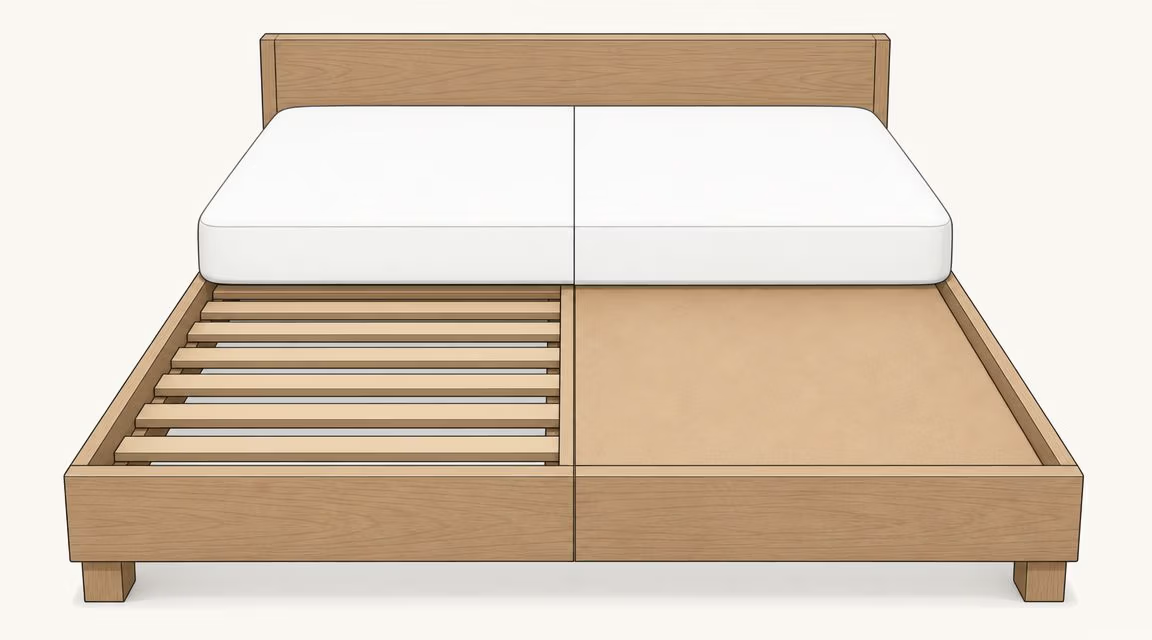
Platform beds are built with a rigid base that holds the mattress directly. That base is usually made with slats, a closely spaced deck, or a solid panel. The easiest way to picture it is like the floor under your feet. If the floor is flat and well built, everything above it feels steadier.
Slats and why they matter
Slats are the support style many shoppers know best. They are the boards that run across the frame and carry the mattress from side to side.
Good slats should be thick enough to resist bowing, close enough together to support the mattress evenly, and anchored well enough that they do not slide around or start talking back with squeaks. On larger sizes, center support matters just as much. A queen or king needs help through the middle so the frame is not carrying all the weight only at the outer rails.
Here's what we tell neighbors to check before they buy:
- Slat spacing: Wide gaps can let parts of the mattress sink lower than they should.
- Center support: Bigger beds need support legs or a strong center rail beneath the slats.
- Attachment method: Slats that are screwed in place or fitted securely tend to stay quieter and steadier over time.
- Wood quality: Solid wood or well-made engineered components usually hold up better than thin, flexible boards.
Solid surfaces and when they make sense
Some platform beds use a solid panel or nearly continuous surface instead of open slats. That can appeal to families who want a very even base and a simpler look underneath the mattress.
There is a trade-off. A solid surface gives broad support, but slats often allow more airflow under the mattress. In a humid season or a room that tends to run warm, that extra air movement can be helpful. In a guest room that sees lighter use, either option can work well if the frame is built properly.
For many households, the better question is not which support style sounds fancier. The better question is how the bed will live in your home. A child who jumps into bed every night, a couple sharing a king mattress, or a downsized homeowner furnishing a smaller bedroom all put different demands on the frame.
Check the support system the same way you'd check the foundation of a house. The finish is what you notice first. The structure is what keeps everything working.
Why craftsmanship matters
This is one area where American-made and Amish-made construction often stands out. In our store, we see the difference in rail thickness, joinery, hardware, and center support design, especially in solid wood bedroom sets built for everyday family use.
That matters in practical ways. A stronger support system can mean fewer squeaks, less shifting, and a frame that still feels dependable after years of getting in and out of bed, rotating mattresses, and moving furniture around the room. If you are furnishing a smaller Milwaukee apartment, a sturdy platform bed can also help you keep the setup simple without settling for a flimsy frame.
If you want to compare support styles more closely, our guide to a slatted bed frame walks through how slatted construction works and what to look for in a well-built design.
Will My Mattress Work A Guide to Compatibility
This is one of the biggest concerns shoppers have, and it's a fair one. Nobody wants to buy a new bed frame and then find out their mattress isn't a good match.
The good news is that platform beds are generally suitable for most mattress types, including coil, latex, polyfoam, and memory foam. Current buying guidance also notes that prices for platform beds can start around $200 and rise to $3,000 or more, depending on size, materials, and design, which shows just how broad the category has become (Mattress Warehouse on platform bed types and pricing).

The short answer for most shoppers
If you have a modern mattress, there's a good chance a platform bed will work well. Foam, latex, hybrid, and many coil mattresses all commonly pair with this type of support.
The main thing to avoid is assuming every frame is automatically right for every mattress. The frame still needs the proper support layout. That means paying attention to how the mattress sits and whether the base feels stable across the whole sleeping surface.
A simple way to think about compatibility
A mattress needs support from below. A platform bed is designed to provide that support directly.
That's why this style is such a common choice for foam and hybrid mattresses. These mattresses typically do better on a firm, even surface than on a springy old-style box spring.
A few practical questions help:
- Are you keeping your current mattress? Bring the mattress details with you when you shop.
- Is the mattress all-foam or hybrid? These often pair especially well with a rigid platform surface.
- Do you like two-sided mattresses? A strong, even platform can also work well with flip-able designs when the frame is built properly.
At our Greenfield store, shoppers often compare frame support and mattress feel at the same time, which makes the decision much easier. If you're still narrowing it down, our guide on how to choose the right mattress can help you match the sleep surface to the frame underneath.
Styles Materials and Smart Storage Solutions
A platform bed can solve very different problems depending on the home. In a Milwaukee apartment, it might help a bedroom feel less crowded and give you a place for extra blankets. In a larger family home, it might be the bed that grounds the whole room with solid wood, a taller headboard, and storage that keeps the floor clear.
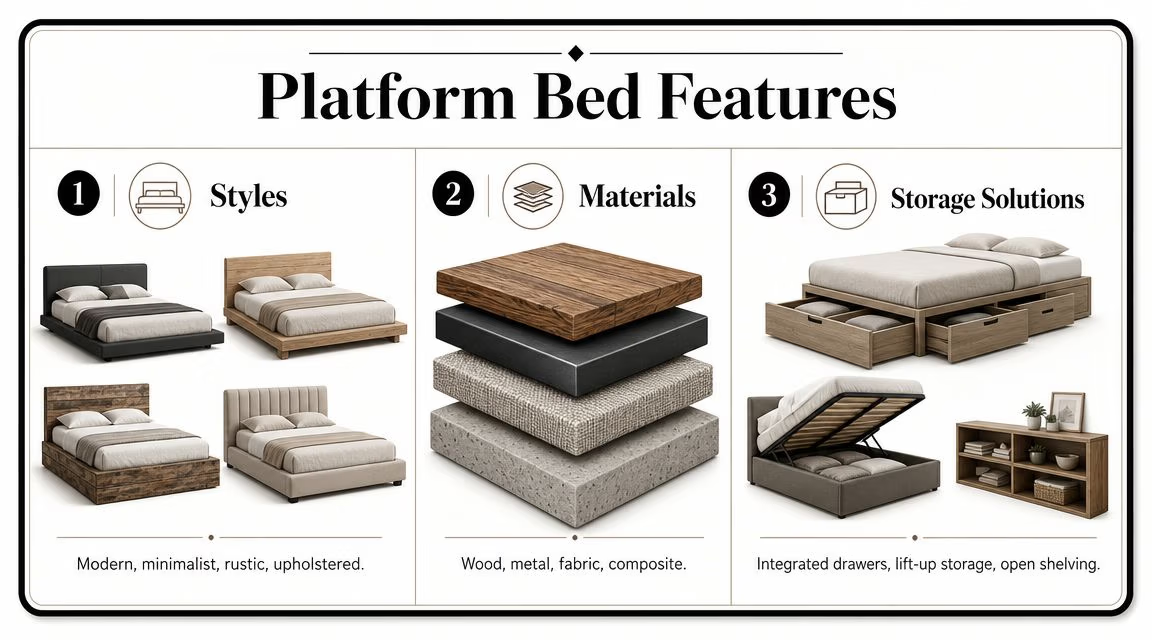
That range is part of the appeal. A platform bed is a support system first, but it can wear a lot of different looks.
Different looks for different homes
Platform beds often get labeled as modern, but that is only one branch of the family tree. You will find them in:
- Solid wood styles: A strong choice for shoppers who want warmth, visible grain, and the kind of durability that holds up to everyday family life.
- Upholstered beds: Softer around the edges, both visually and physically, which many people like in a primary bedroom.
- Metal designs: Usually lighter in appearance and helpful in rooms where you want the bed to take up less visual space.
- Amish-made pieces: Especially appealing for families who care about joinery, long-term build quality, and furniture made here in the USA.
As a fourth-generation Milwaukee furniture family, we see this every day. Some shoppers want a bed that just does its job. Others want the bed to be the piece the whole room is built around. Both can be platform beds.
Materials change how the bed feels over time
Material is not just about style. It affects weight, durability, maintenance, and even how the room feels to live in.
Solid wood tends to feel warmer and more permanent. It works like a well-built dining table. It has presence, and if it is made well, it can serve a family for many years. Upholstered frames soften the look of a room, though they may need a little more care if you have pets, kids, or a household that snacks in bed. Metal can be a smart pick when you want a lighter visual feel or a price point that stays more modest.
That is why American-made construction matters. The details you do not see at first glance, such as joinery, hardware, drawer guides, and the thickness of real wood parts, often determine whether a bed still feels solid years later.
Storage can be smart, or it can get in the way
Storage is where many families decide whether a platform bed really fits their lifestyle.
In a smaller condo or apartment, built-in drawers can take pressure off the closet and dresser. In a kid's room, they can hold extra sheets, pajamas, or off-season clothes. In a larger bedroom, open space under the bed may be enough if you just want room for baskets or occasional storage.
A few common setups each solve a different problem:
- Drawer storage: Best for rooms short on furniture space, especially when every square foot has to work hard.
- Open under-bed clearance: Useful for bins and easier seasonal storage, as long as you do not mind seeing containers below the frame.
- Low-profile frames with little clearance: Good for a calmer, cleaner look, though they give you less hidden storage.
If you want to see how that can come together in a real room, a queen platform bedroom set with coordinated storage-friendly styling gives a good example of how the bed, case pieces, and overall scale can work as one plan.
The trade-offs people should think about
Every benefit comes with a question to answer at home.
A lower bed can make a small room feel more open, but some adults prefer a taller sitting height for getting in and out comfortably. Drawers can be very useful, but they need clearance to open, which matters in tighter bedrooms. A beautiful upholstered bed can add softness, while a solid wood frame may make more sense for a busy household that wants easier upkeep.
The best platform bed is the one that matches the way your family lives. If you want storage, ask how much you need. If you want durability, look past the finish and ask how it is built. If American-made quality matters to you, pay attention to where the bed was made and who made it. That is often the difference between a bed that fills the room and one that earns its place in the home.
Find Your Bed at BILTRITE A Family Guide
By this point, the definition is clear. A platform bed gives you mattress support through the frame itself, which can mean fewer parts, a lower profile, and useful options for storage and style.
The better question is whether that setup fits your home. If you live in a smaller apartment, want a simpler mattress setup, or like the look of a lower bed, a platform style may be a strong fit. If seat height is a concern, or you prefer a more traditional taller bed, you may want to compare it with other bedroom options before deciding.
What to check before you buy
One published dimensional drawing for a popular platform bed lists a platform height of 7.5 inches (19 cm), which is a useful reminder that mattress thickness changes the final sitting height in a big way. That same source recommends checking slat spacing, center support, and total height relative to mattress thickness so the bed feels supportive and comfortable in daily use (Dimensions on platform bed measurements).
A simple in-store checklist helps:
- Sit on the edge: Does the height feel comfortable when your feet touch the floor?
- Ask about support: Look at the slats, center rail, and overall construction.
- Think about the room: Measure walkways, storage needs, and visual scale.
Why seeing it in person helps
Photos don't tell you everything. The height can feel different than you expected. The wood tone can read warmer or cooler in real life. The support system underneath can be much more substantial on one frame than another.
That's one reason many Milwaukee shoppers still prefer to test bedroom furniture in person. At BILTRITE's queen platform bedroom set page, you can preview one style category, but in-store comparison is where details like height, finish, and build quality become easier to judge.
We're a fourth-generation family business, and we've been helping local families furnish their homes since 1928. We're proud of our American-made and Amish-made furniture, proud to be part of the Milwaukee area, and proud to keep things personal. No pressure. Just honest help from people who know furniture and enjoy helping neighbors make a confident choice.
If you're thinking about a platform bed, we'd love to help you compare styles, check mattress compatibility, and find a setup that fits your space and your daily routine. Visit BILTRITE Furniture-Leather-Mattresses in Greenfield, say hello, and let our family help your family choose furniture built for real life.