Leather Furniture Dogs: How to Keep Both Happy

You're standing in a showroom, running your hand across a handsome leather sofa, and then the thought hits you. “This is nice. Too nice for my dog.”
We hear that all the time in our Greenfield store. A family falls in love with the look and feel of leather, then immediately pictures zoomies, muddy paws, scratchy nails, and a guilty face on the cushion. Fair concern. Dogs are family, and family furniture has to work for real life.
At BILTRITE, we've been helping Metro Milwaukee families furnish their homes since 1928. We're a fourth-generation family business, and we've seen one truth hold up decade after decade. You can absolutely have a beautiful home and a dog. You just need to choose with your eyes open and buy the right kind of leather for the way your household lives.
Can You Really Have Nice Things and a Dog
A lot of dog owners assume leather is delicate. They picture one excited leap onto the sofa and the whole thing is ruined. In real homes, that's usually not how it goes.
More often, the trouble starts when someone buys leather based only on looks. It feels soft in the store, it has that rich color everyone loves, and nobody asks the practical questions. What finish is on it? How will it handle claw scuffing? Will this surface wipe clean, or will every little mark show up right away?
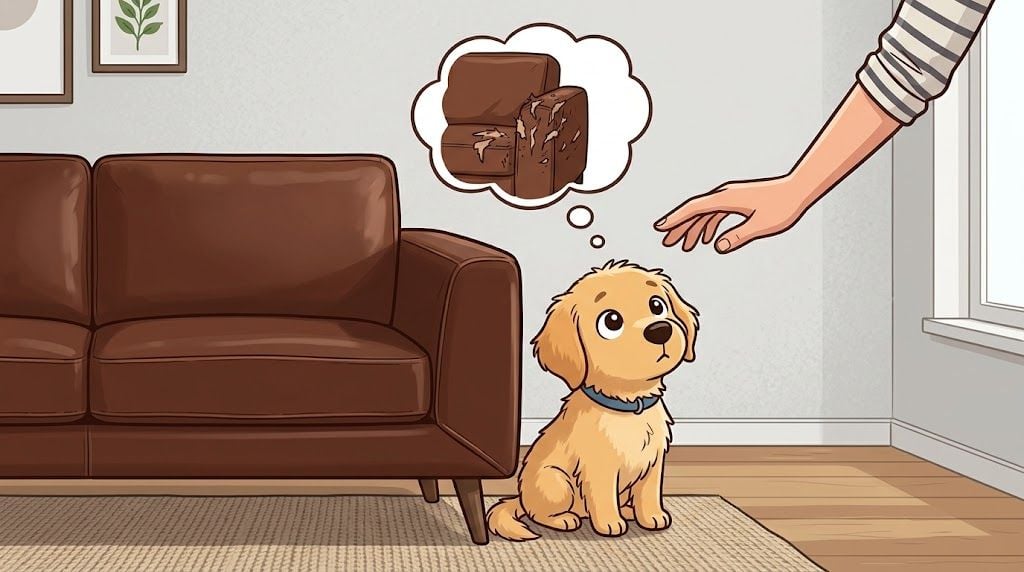
That's why dog households do better when they shop with a little guidance instead of guessing. We've helped plenty of local families sort through that decision, and the conversation usually gets calmer once they learn that leather furniture dogs can be a very workable combination. If you want a broader look at practical household materials, our guide to kid-friendly and pet-friendly furniture is a good place to start.
What people usually worry about
- Scratches: “My dog jumps up fast. Won't claws tear it up?”
- Messes: “What happens when there's drool, mud, or an accident?”
- Hair: “I'm tired of vacuuming fur out of fabric.”
- Regret: “I don't want to spend good money on the wrong sofa.”
Nice furniture doesn't require a dog-free house. It requires honest material choices.
That's the heart of it. Not every leather sofa belongs in a dog home, but the right one often handles daily life better than people expect.
Why Leather is a Surprising Hero for Dog Owners
A dog races in from the yard, shakes off by the sofa, and leaves you about thirty seconds to deal with the mess before it becomes part of the room. That is where leather earns its keep.
Leather handles dog life differently than woven upholstery. Hair, dust, and a lot of everyday grime stay on the surface instead of working their way down into the fabric. In a busy house, that means less digging, less vacuuming, and fewer moments where the couch starts to smell like the dog bed.
The cleanup advantage
This is the first thing dog owners notice after they live with leather for a while. Fur does not weave itself in. A damp cloth or soft brush usually takes care of the daily mess, and quick cleanup matters when you are dealing with drool, paw prints, or the dirt your dog tracked in without asking permission.
Leather also tends to hold onto less of that stale pet odor that can settle into fabric over time. It still needs regular care, of course. If mud or an accident sits too long, you can still end up with a problem. But in day-to-day family life, leather gives you a head start.
That is a big reason our family often tells dog owners to stop assuming leather is the risky choice. In many homes, it is the easier material to live with.
The long-game advantage
Good leather also ages in a more forgiving way than many fabrics. Instead of pilling, fuzzing, or trapping years of pet hair in the weave, quality leather usually shows wear more gradually. You may see light scuffs or a softer, broken-in look, but the piece often stays attractive and useful for much longer if the frame and leather are both well made.
That trade-off matters. Leather asks for a higher upfront investment, and some dogs will still leave marks, especially if they launch themselves onto the same cushion every night. But a well-built sofa with the right hide usually stands up to real family use better than a lot of upholstered pieces that look tired fast.
If you are comparing hides, it helps to understand the difference between top-grain and full-grain leather. That is one of those details that sounds technical until you have a dog and need the sofa to keep looking good.
Three reasons dog owners often stick with leather
| Benefit | Why it matters in a dog home |
|---|---|
| Hair stays on the surface | You can wipe it away instead of pulling it out of the upholstery |
| Less everyday odor buildup | Leather usually absorbs fewer pet smells than many fabrics |
| Better wear over time | Quality leather often handles repeated jumping, turning, and lounging with less visible breakdown |
Families with dogs do not need to give up on a beautiful living room. They need materials that match real life.
That is the part we get to help with in person. A lot of folks come into our Milwaukee-area showroom expecting bad news, then realize they can have the dog and the nice sofa if they choose the right leather from the start.
Choosing Your Dog-Friendly Leather Armor
A smart decision acknowledges that not all leather is built the same, and in dog homes that difference shows up fast.
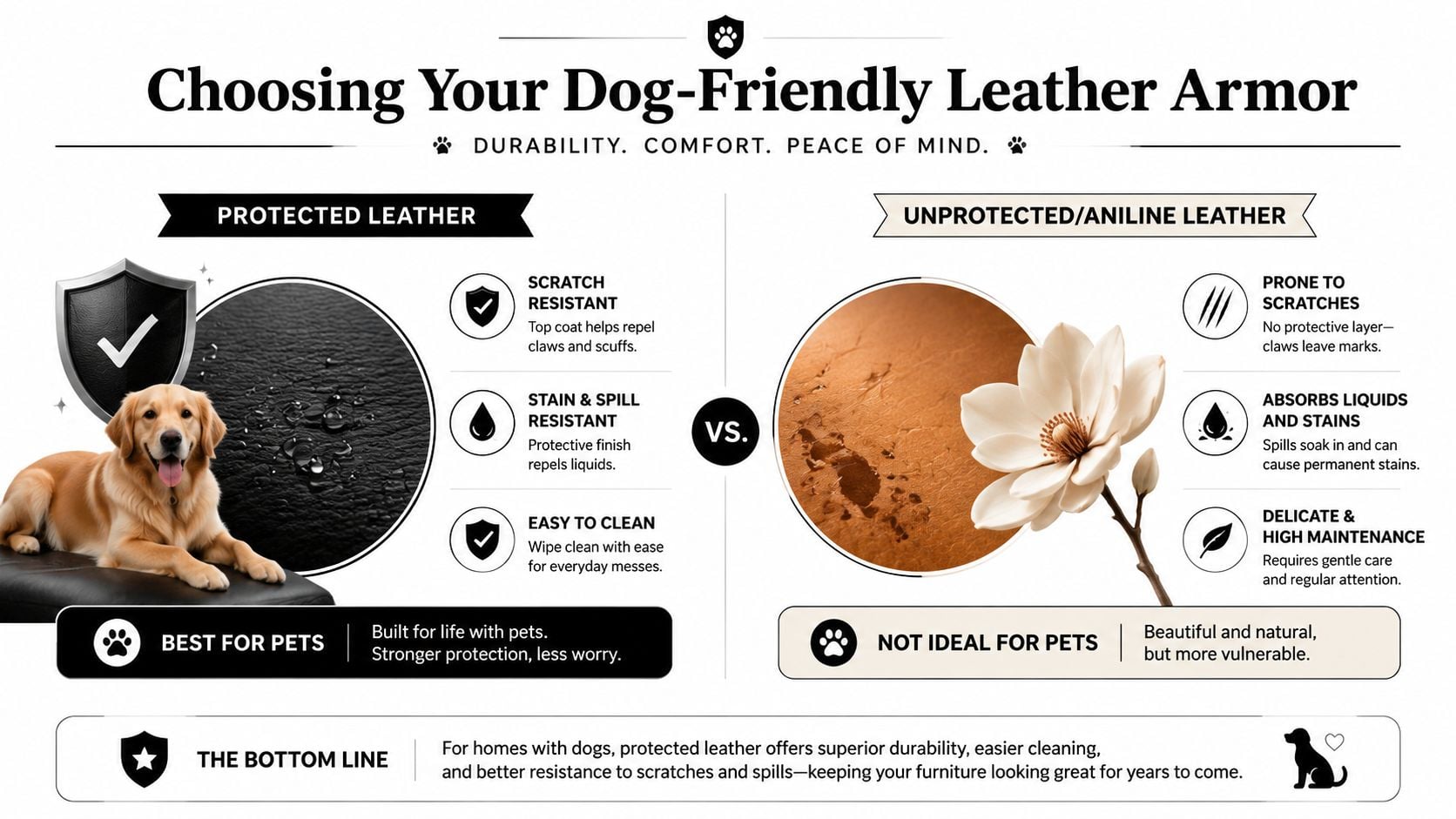
The safest bet is full-grain or top-grain leather with a protective, pigmented finish. That combination is more resistant to claw punctures and helps conceal scratches. By contrast, unprotected aniline leather tends to show scratches and stains much more easily, as explained in this guide to leather couches and dogs.
The simple version
If you want the neighbor-over-the-fence explanation, it goes like this.
Protected leather has a tougher outer finish. That finish helps with everyday family life. It's the leather we steer dog owners toward most often because it gives you some forgiveness.
Aniline leather is beautiful, soft, and natural-looking. It's also the kind that can make a dog owner nervous after the first scratch or paw print.
What to look for in the showroom
When you shop in person, focus on these decision points:
- Start with the grade: Full-grain and top-grain are the heavy-duty choices most dog owners should look at first.
- Ask about the finish: Protected or pigmented finishes are usually the more practical route for active homes.
- Look at color depth: If the leather's underside contrasts strongly with the surface color, scratches may show more clearly.
- Check the household pattern: One older dog who naps all day creates a different kind of wear than a young dog who launches onto the cushions.
A lot of confusion disappears once you can feel the difference between surfaces. That's one reason in-store shopping matters so much with leather. If you want a plain-English primer before you visit, our article on the difference between top-grain and full-grain leather helps sort out the terms.
What works and what doesn't
| Leather choice | How it usually performs with dogs |
|---|---|
| Top-grain or full-grain with protective finish | Strong everyday choice for most pet homes |
| Natural-looking, unprotected aniline | Better for low-risk households, not ideal for muddy paws or visible scratch worry |
| Thin or lightly finished leather | More likely to show wear fast in busy rooms |
Buy for the dog you actually have, not the calm dog you wish you had.
In our experience, this is also where better-made furniture earns its keep. Strong leather matters, but so do the bones underneath it. In our showroom, we spend a lot of time helping families compare heavy-duty options, including USA-made and Amish-made pieces, because construction and leather quality need to work together.
Your Game Plan for a Scratch-Free Friendship
Once the right leather is in your home, the job changes. You're not trying to make the sofa untouchable. You're setting up a few habits that keep normal dog life from turning into visible wear.
The big thing to remember is this. The most visible pet damage on leather is often claw scuffing and finish wear, not staining, and that's why practical guidance about protected finishes matters so much for buyers who want a piece that holds up over time, as noted in this discussion of leather couches with dogs.
The habits that do the most good
Some advice sounds fancy but doesn't move the needle much. These habits do.
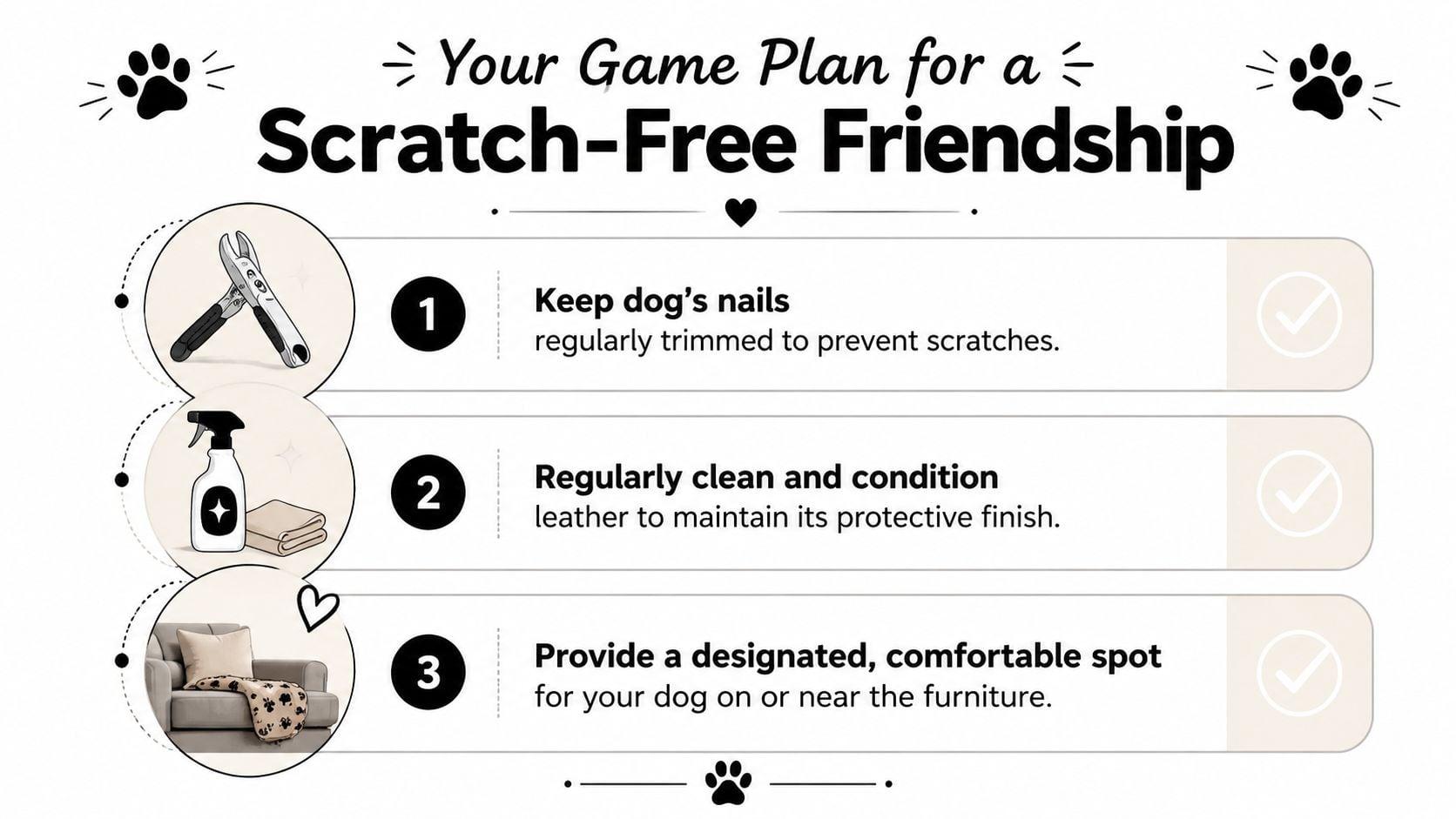
Keep nails trimmed.
This is the first line of defense. Sharp nails leave sharper marks. Shorter, smoother nails reduce the chance of visible scuffs every time your dog hops up or circles before lying down.Give your dog a regular spot.
A washable throw or blanket on the favorite cushion helps in two ways. It protects the highest-use area, and it teaches your dog where to settle.Wipe down the leather routinely.
Dirt, oils, drool, and outdoor grime wear on the finish over time. A simple wipe with a soft cloth keeps that buildup from sitting there.
A calm routine beats constant worry
Here's the kind of routine that works in busy homes:
- After walks: Check paws if it's wet or muddy out.
- During grooming: Keep nails from getting sharp enough to catch.
- During regular house cleaning: Give the sofa a quick wipe instead of waiting for it to look dirty.
- When you notice dryness: Condition the leather if the finish and manufacturer guidance allow it.
Practical rule: Most leather trouble in dog homes starts with small neglect, not one big disaster.
When households need more protection
Some homes need a little extra honesty.
- High-energy jumpers: Choose tougher finishes and don't skip nail care.
- Multiple dogs: Expect more repeated wear in the same areas.
- Large breeds: Pay attention to seat construction and cushion support, not just the leather.
- Owners who like a pristine look: Choose a more protected finish and a color that forgives use.
If your household includes cats too, some of the prevention mindset overlaps. Our article on how to protect leather couch from cats covers similar finish-protection habits.
The main idea is simple. Don't babysit the sofa all day. Build a handful of routines that fit the way your family already lives.
Oops Quick Cleanup and Simple Scratch Repair
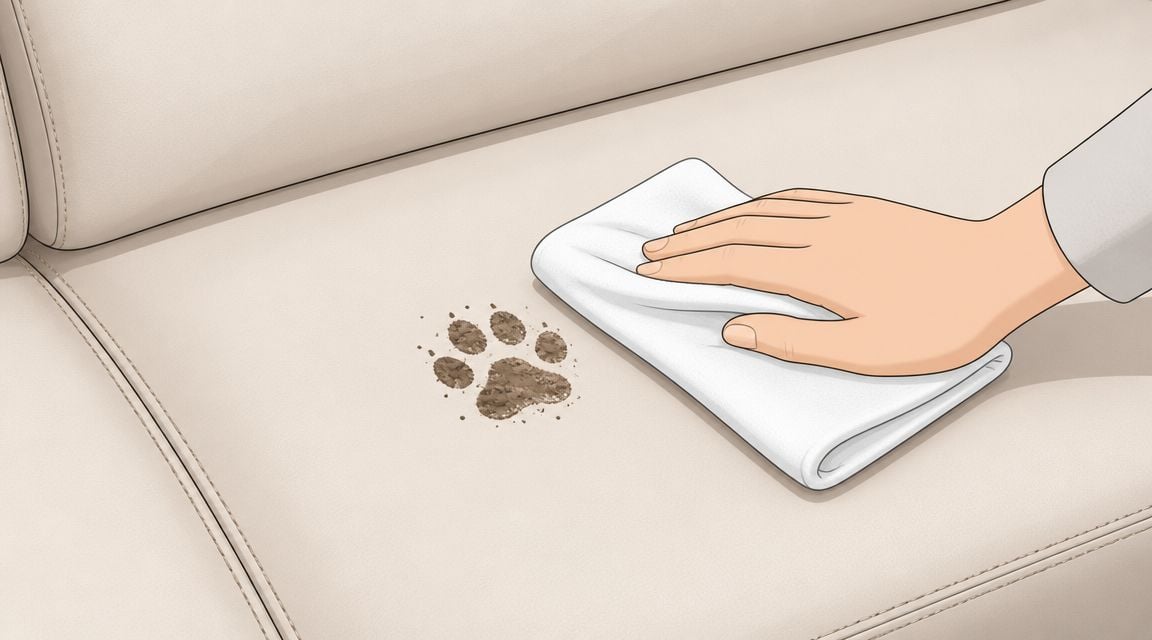
Saturday afternoon. The dog jumps up after a wet trip outside, and now you have a paw print on the seat before guests arrive. This is the moment leather usually earns its keep. In most homes, cleanup is faster and less fussy than it would be on fabric.
That said, quick action matters. The longer mud, drool, or an oily spot sits, the more likely it is to leave a mark, especially on lighter colors or softer, more natural leathers.
What to do first
Start simple.
- Blot instead of rubbing. Rubbing spreads the mess and can grind grit into the finish.
- Use a clean white cloth. It helps you see what is coming off and avoids dye transfer.
- Try the mildest approach first. A lightly damp cloth is often enough for fresh dirt or drool.
- Test any cleaner in a hidden spot. Leather finishes vary, and one product does not fit every sofa.
For more stain-by-stain guidance, our article on how to remove stains from leather furniture covers the basics.
For light scratches and scuffs
Here's the good news from years on the sales floor. A lot of dog marks look worse right away than they do an hour later. On many protected leathers, a light scuff can soften with a gentle buff using a dry, soft cloth. Sometimes the warmth from your hand and a little patience are enough to settle a surface mark.
Use restraint. Strong cleaners, random internet repair kits, and heavy scrubbing cause more trouble than the original scratch in plenty of cases.
If the leather allows it, a manufacturer-approved conditioner can help even out a minor surface mark. If the scratch cuts through color, feels rough, or catches your fingernail, stop there. That is usually the point to ask about a proper leather repair instead of experimenting on your own sofa.
A lived-in leather piece can handle family life with a dog. The trick is knowing which marks are part of normal use and which ones need a careful fix. That's the kind of practical judgment we help people with every week.
A Great Couch Starts With a Great Store
The honest question today isn't just “Is leather good with dogs?” It's “What kind of leather, for what kind of dog, in what kind of home?”
That's where many shoppers get stuck. Recent trends show that pet owners want more specific guidance than “leather is best,” and they're comparing leather against newer performance fabrics based on lifestyle, nail care habits, and how much patina they're comfortable with, as discussed in this pet-friendly leather buying guide.
Why in-person guidance still matters
You can't judge leather well from a thumbnail photo. You need to sit on it, touch it, and ask questions that match your real home.
At BILTRITE Furniture-Leather-Mattresses, that's what the showroom is for. We're a fourth-generation family-owned business serving Metro Milwaukee since 1928, and we don't sell online because this category benefits from real conversation and side-by-side comparison. Our team helps shoppers sort through questions like finish type, visible wear tolerance, heavy-duty construction, room size, and whether a given sofa suits a quieter dog or a more active one. If you want a smart starting checklist before you come in, our guide on what to look for when buying a leather couch is worth a read.
What we tell neighbors all the time
- Buy better, not flashier: The right leather and the right frame matter more than a trendy surface.
- Be honest about your dog: Age, energy level, and nail care habits should shape the choice.
- Expect a lived-in home: Good leather can age gracefully, but it still needs sensible care.
We're proud to be local. We're proud to offer affordable, better-quality furniture, including many USA-made and Amish-made options. And we're proud to be closed on Sundays so our family can be with family, just like yours.
If you're ready to find leather seating that fits real life with a dog, we'd love to help. Visit BILTRITE Furniture-Leather-Mattresses in Greenfield, walk the showroom, feel the leather for yourself, and talk with a team that's been helping Milwaukee-area families choose lasting furniture for generations.