Your Guide to Small Lift Chairs

A lot of people start looking for small lift chairs after the same frustrating moment. Someone sits down to rest, then has to scoot forward, push hard on the arms, and struggle just to stand back up. Or the chair itself fits the person, but not the room. It feels oversized, bulky, and out of place in a condo, apartment, or smaller living room.
That's where a well-fitted lift chair can make daily life easier.
At our family store, we've been helping Metro Milwaukee families furnish their homes since 1928, and we've learned something simple. Comfort furniture has to do two jobs at once. It has to support your body, and it has to belong in your home. Small lift chairs do both when they're sized correctly and chosen with care.
Finding Your Fit Small Lift Chairs Explained

A small lift chair is a power recliner designed for a shorter user and built to help that person move from sitting to standing with less strain. In many cases, that means a chair intended for someone under 5'4" tall, with dimensions scaled to support a petite frame rather than swallowing the user in extra depth or height. Small lift chairs are part of a growing category. The global lift chair market was valued at USD 3,954.2 million in 2024, according to Cognitive Market Research's lift chair market report.
That “small” label matters more than many people realize.
If a chair is too deep, your lower back may not get the support it needs. If the seat is too high, your feet may dangle instead of resting flat on the floor. If the arms sit too wide apart, pushing up becomes awkward. A smaller chair isn't just about taking up less room. It's about helping the body sit naturally.
Who usually benefits most
Small lift chairs tend to make sense for people in a few common situations:
- Shorter adults and many seniors: A scaled-down chair can support the knees, hips, and back more naturally.
- People in senior living, condos, or apartments: A smaller footprint often works better in tighter rooms.
- Anyone recovering comfort at home: If standing from low seating has become difficult, a lift chair can add support during everyday transitions.
Practical rule: If a recliner looks roomy but makes the person using it look tucked inside it, there's a good chance it's too large.
Why they feel different from a standard recliner
A small lift chair still looks and feels like a recliner, but it adds a powered lifting motion. That motion tilts the user forward in a more supported way when it's time to get up. For many families, that means less dependence on a spouse, adult child, or caregiver for a basic daily task.
That's a big change from an ordinary sofa or recliner that asks the user to do all the work.
And when the chair is the right scale, it can feel less like a mobility aid and more like the favorite seat in the house.
Getting the Right Fit A Guide to Measuring
Buying a lift chair without measuring first is a little like buying shoes by eye. You might get lucky, but you probably won't get the comfort you hoped for.
The good news is that measuring for small lift chairs is easier than it sounds. You're not trying to solve a puzzle. You're matching the chair to the body that will use it every day.
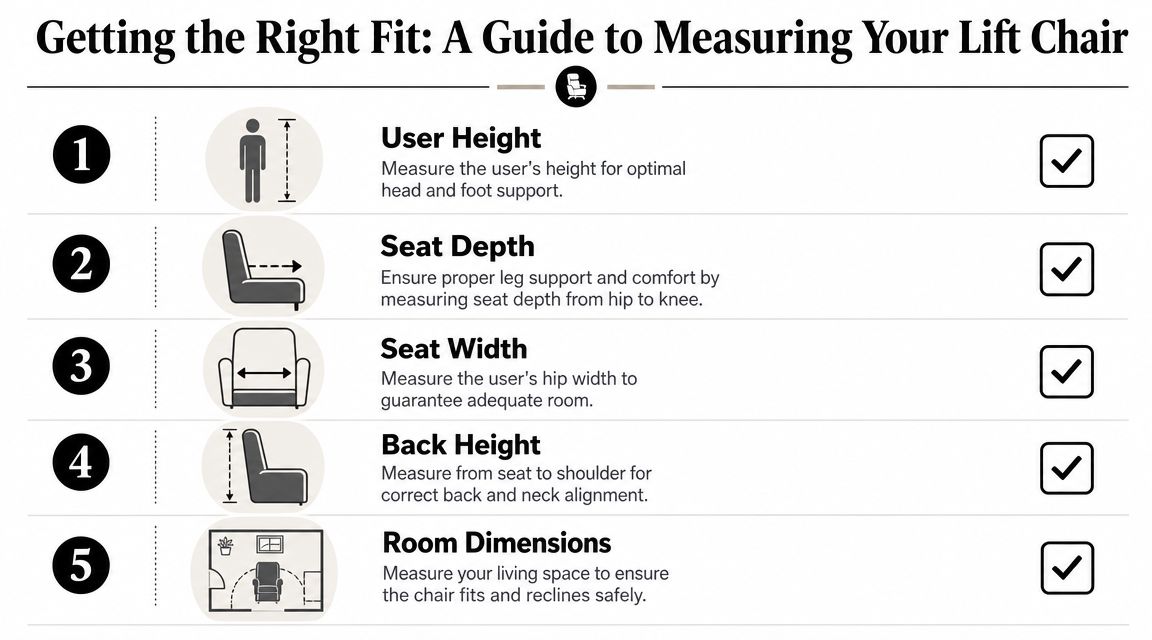
Experts recommend a few simple fit checks. Seat width should equal your lap measurement plus 1 to 2 inches. Seat depth should let you sit all the way back while leaving 2 to 3 fingers between the front edge of the cushion and the back of your knees. Seat-to-floor height should allow your feet to rest flat on the floor. Those measurements are especially important for people with back or knee discomfort and arthritis, as noted by Zion Market Research's lift chair report.
The four measurements that matter most
Seat width
Sit naturally and measure across your lap or hips at the widest point. Then allow a little extra room so the chair doesn't feel tight. Too narrow feels restrictive. Too wide can reduce arm support.Seat depth
Measure from the back of your hip area to the bend in your knee. This one gets overlooked all the time. If the seat is too deep, you'll slide forward and lose back support.Back height
Measure from the seat to the top of your shoulders or head, depending on the support you want. If the back is too tall or too short, neck support can feel off.Seat-to-floor height
This tells you whether your feet will rest flat. That matters for comfort, circulation, and confidence when getting in and out.
Sit all the way back when you measure. If you measure while perched on the edge, you'll end up choosing the wrong depth.
Don't forget the room
The chair has to fit the person, but it also has to fit the home. Measure the spot where the chair will live. Check nearby tables, walkways, and walls. Reclining furniture needs breathing room, and smaller homes often need smarter planning.
If you'd like help with the basics before you visit a store, this guide on how to measure furniture is a useful starting point.
A quick fit check when you sit down
Use this simple checklist when testing chairs:
- Feet flat: Both feet should rest comfortably on the floor.
- Knees easy: The front edge shouldn't press into the backs of your knees.
- Back supported: Your lower back should meet the chair, not hover away from it.
- Arms natural: Your forearms should land on the armrests without reaching.
A good fit feels calm right away. You shouldn't have to wrestle with the chair to get comfortable.
Understanding Your Options Lift Chair Features
After the size is confirmed, features begin to take priority. Many shoppers feel overwhelmed at this stage since every chair can sound similar on paper. In person, though, the details make a real difference.
Some people need a basic lift and recline. Others want more adjustability, more support, or a chair that can handle heavier daily use. The key is to match the feature set to the person, not to chase every extra.
Start with the chair's engineering
Lift chairs are built in standardized weight capacity tiers such as 325 lbs, 375 lbs, and 500 lbs. A petite chair for a user under 5'5" and 325 lbs uses different frame geometry, motor specifications, and a lower seat-to-floor height of around 19 inches than a standard model. Matching the chair's engineering to the user's weight is important for safety and durability, according to SpinLife's lift chair sizing guidelines.
That point is easy to miss, so here's the plain-language version. A small lift chair is not just a standard recliner made narrower. It is built differently.
What features deserve the most attention
Here's a simple way to sort the options.
| Feature | Why it matters | Who often cares most |
|---|---|---|
| Lift function | Helps with sit-to-stand movement | Seniors, caregivers, post-surgery users |
| Recline positions | Changes how you rest, read, or nap | Daily users |
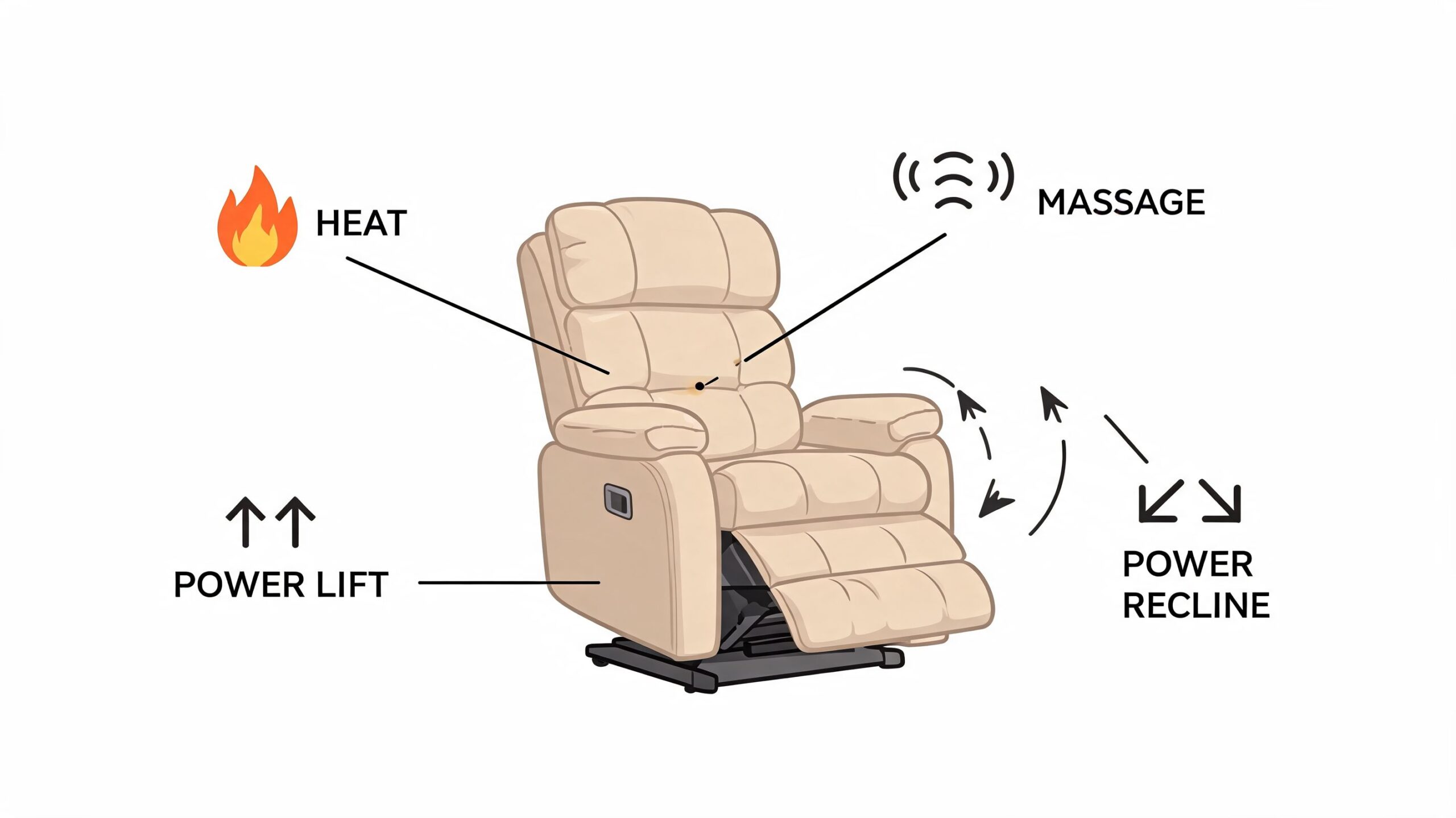
| Heat and massage | Adds comfort for longer sitting periods | People wanting extra relaxation |
| Upholstery choice | Affects look, feel, and cleanup | Style-conscious households |
| Battery backup | Adds peace of mind during outages | Anyone relying on the chair every day |
Positioning and comfort extras
Some lift chairs have simpler controls, while others offer more than one resting position. If the chair will be used for long stretches, more positioning flexibility can be worth considering. For a person who mainly wants easier standing, a simpler control may be easier to live with.
Heat and massage are often treated like bonus features, but many people appreciate them because they make the chair feel inviting, not clinical.
A chair that helps someone stand is useful. A chair that also makes them want to sit, rest, and stay comfortable is usually the better long-term choice.
Upholstery and power details
Fabric and leather aren't just style choices. They affect temperature, texture, maintenance, and the overall feel of the room. Families with pets or frequent visitors often think about cleanability first. Others care more about softness or how the chair coordinates with existing furniture.
Power source details matter too. Ask how the remote works, where the buttons are located, and whether there's a battery backup option for added reassurance.
For a broader look at motion seating styles and controls, types of power reclining seating can help you compare what different setups feel like in daily use.
More Than a Chair Our USA-Made and Custom Options
One of the biggest mistakes people make with small lift chairs is treating them like they only belong in a medical catalog. That mindset leaves a lot of homeowners stuck with a chair that solves one problem but creates another. It works physically, but it doesn't feel like it belongs in the room.
A lift chair can be both supportive and attractive.

Most online information about small lift chairs focuses on function and dimensions, while giving very little attention to aesthetics. That leaves a real gap for shoppers who want customized upholstery, wood stain choices, and design guidance. As noted by lift-chairs.com's small lift chair page, that gap creates room for a more design-conscious approach.
Why appearance matters
For many families, the lift chair sits in the main living room. It's next to the sofa, near the coffee table, and in view every day. If it clashes with everything around it, the room starts to feel pieced together instead of comfortable and welcoming.
That's why customization matters so much with small lift chairs. You may want:
- A fabric that blends in: Something soft, durable, and closer to your existing seating.
- A leather look: For a cleaner, more refined appearance.
- Wood accents or finishes: Helpful when the room includes other wood furniture.
- Design guidance: Sometimes the hard part isn't choosing a chair. It's choosing the version that looks at home.
Why USA-made and Amish-made options appeal to careful shoppers
People who value solid construction often want to know where the furniture comes from and how it's built. That's one reason shoppers who are already interested in better-quality home furnishings tend to look closely at the advantages of buying furniture made in the USA.
There's also a practical side to this. A chair used every day needs dependable materials, thoughtful construction, and comfort that lasts. Those things matter even more when the chair serves both a mobility role and a style role in the home.
One local option families can compare in person is BILTRITE Furniture-Leather-Mattresses, which offers lift chairs along with custom upholstery choices and a broader focus on USA-made and Amish-made furniture. That combination can be useful for shoppers who don't want the chair to look separate from the rest of their room.
The best-looking lift chair is usually the one that doesn't announce itself. It simply looks like it belongs there.
Before You Buy A Showroom Checklist
Reading about small lift chairs helps. Sitting in one tells you much more.
That's especially true with petite sizing. Two chairs can look nearly identical online and feel completely different once you sit down, recline, and use the lift. That's one reason we've always believed furniture should be tried in person. We don't sell online, and we're comfortable saying that. A chair this important deserves a real sit test.
What to do during the sit test
Bring the person who'll use the chair. Then slow the process down.
- Sit all the way back: Check whether the lower back feels supported without scooting.
- Place both feet on the floor: They should rest naturally, not stretch or dangle.
- Test the arm height: Your elbows and forearms shouldn't feel stranded too high or too low.
- Run the lift motion: Notice whether the movement feels smooth and reassuring.
- Try the recline control: Buttons should feel easy to understand and easy to reach.
- Stay seated for a few minutes: A chair can feel fine for thirty seconds and uncomfortable after five minutes.
Questions worth asking in the store
A quick conversation can save a lot of second-guessing later. Ask things like:
| Ask this | Why it helps |
|---|---|
| Does this model come in petite or small sizing? | Confirms the chair is scaled correctly |
| What upholstery choices are available? | Helps you match the room |
| How much space does it need to recline? | Prevents layout problems at home |
| Are there heavier-duty versions? | Important if weight capacity is a concern |
If you want a helpful pre-visit refresher, how to shop for furniture smartly lays out a practical way to compare pieces without feeling rushed.
Trust your body more than the tag
A product card can tell you dimensions. It can't tell you whether a chair feels easy.
That part only shows up when someone sits down, rests their arms, plants their feet, and tries standing up again. If that experience feels natural, you're on the right track.
Bringing Comfort Home Delivery and Our Promise
Once you've chosen a chair, the job isn't done. Delivery matters a lot with lift chairs because placement, setup, and explanation all affect how comfortable the experience feels from day one.
Few individuals want a large chair left in a box at the front door. They want it brought in, set where it belongs, and made ready to use. That's where white-glove service makes a real difference.
What good delivery should include
A thoughtful delivery experience usually means more than transportation. It should include bringing the chair into the home, placing it in the chosen room, assembling it if needed, and making sure the user understands the controls before the team leaves.
If you're comparing service levels, it helps to know what white-glove delivery service typically involves and why families often prefer it for larger comfort furniture.
A lift chair shouldn't create a new problem at the front door. Delivery should remove stress, not add to it.
The promise behind the chair
Families also want to know there's support after the sale. That means clear communication, honest answers about setup, and guidance if questions come up later.
For a chair that may become part of someone's daily routine, that reassurance matters just as much as the fabric or the motor. It's one more reason many people prefer buying from a local showroom where real people can help before and after delivery.
Your Small Lift Chair Questions Answered
A few questions come up again and again when people shop for small lift chairs. Here are the answers we give most often in plain language.
Is petite the same as small
Often, yes, but not always. Some manufacturers use “petite,” others use “small.” The important part isn't the label. It's the actual fit. Check the seat dimensions, the user height range, and how the chair feels in person.
How much space does a small lift chair need
That depends on the specific model and how it reclines. Some chairs need more room behind them, while others are designed to work in tighter areas. If space is limited, ask about wall-hugger styles or models intended for smaller rooms.
Can a small lift chair still feel roomy
It should feel supportive, not cramped. A well-sized chair gives you enough width to sit comfortably while still keeping your arms, back, and legs in the right position. “Small” should mean scaled correctly, not squeezed down.
Are lift chairs covered by Medicare
Some lift chairs may qualify under Medicare Part B durable medical equipment rules in the United States, but coverage details depend on the situation and the qualifying requirements. It's smart to ask your healthcare provider and insurance contact for the current specifics before you buy.
Should I choose function first or style first
Start with fit and safe use. Then choose the style, fabric, and finish that make the chair feel like part of your home. You shouldn't have to choose one or the other if you shop carefully.
What if I still feel unsure
That's normal. This isn't a small purchase, and it often involves a loved one's comfort and independence. The easiest next step is to sit in several chairs and compare how each one feels during the full motion, not just at first glance.
If you're ready to compare small lift chairs in person, BILTRITE Furniture-Leather-Mattresses is a local Greenfield showroom where you can sit, recline, test the lift, and talk with an experienced team that's been helping Metro Milwaukee families since 1928. Come in, say hi, and let us help you find a chair that fits your body, your room, and your everyday life.