Why Mattress Edge Support Matters for Your Best Sleep

You know that feeling when you sit on the side of a bed to put on your socks, and the mattress squishes so much you feel like you're sliding off? Or when two people share a bed, but somehow both end up crowded in the middle? That's usually not just a comfort issue. It's often an edge support issue.
We talk about this a lot in our showroom because mattress edge support affects daily life in ways people don't always expect. It changes how stable the bed feels when you sit down. It changes whether you can sleep near the side without feeling a little roll-off sensation. And over time, it can change how well the whole mattress holds up.
Our family has been helping Milwaukee-area shoppers since 1928, so we've had a long time to see which mattress features matter after the “new mattress excitement” wears off. Edge support is one of those unsung heroes. It may not sound flashy, but it can make a very real difference for couples, seniors, caregivers, kids climbing into bed, and anyone who wants their mattress to feel supportive from side to side.
Welcome From Our Family to Yours
A lot of folks come in thinking they need a softer mattress, a firmer mattress, or a cooler mattress. Those things matter, of course. But sometimes their actual complaint sounds more like this: “I feel like I'm falling off when I sit on the edge,” or “Why does my bed feel smaller than it should?”
That's where mattress edge support enters the conversation.
At our store, we've watched this play out in all kinds of homes around Metro Milwaukee. A couple shares a mattress and stops using the outer few inches because the sides feel unstable. A parent sits on the edge to read bedtime stories and notices the mattress dipping hard. A senior wants a bed that feels steady when getting up in the morning. Same topic, different lives.
Why this small detail matters so much
The edge of a mattress does more work than people realize. It supports you when you sit. It steadies you when you stand. It helps the bed keep its shape. And when that edge is weak, the whole mattress can feel less useful.
Good mattress edge support doesn't just help the sides feel firmer. It helps the whole bed feel more dependable day after day.
We're a fourth-generation family business, and that practical, real-home thinking has always shaped how we help people shop. We care about the stuff that holds up in everyday life, not just what feels nice for thirty seconds in a quick test. If you'd like to learn a little more about who we are, you can read our family story at BILTRITE.
That's the spirit we're bringing here. Neighbor to neighbor. No jargon storm. Just useful advice from people who've been helping Milwaukee families sleep better for a long time.
So What Is Mattress Edge Support Anyway
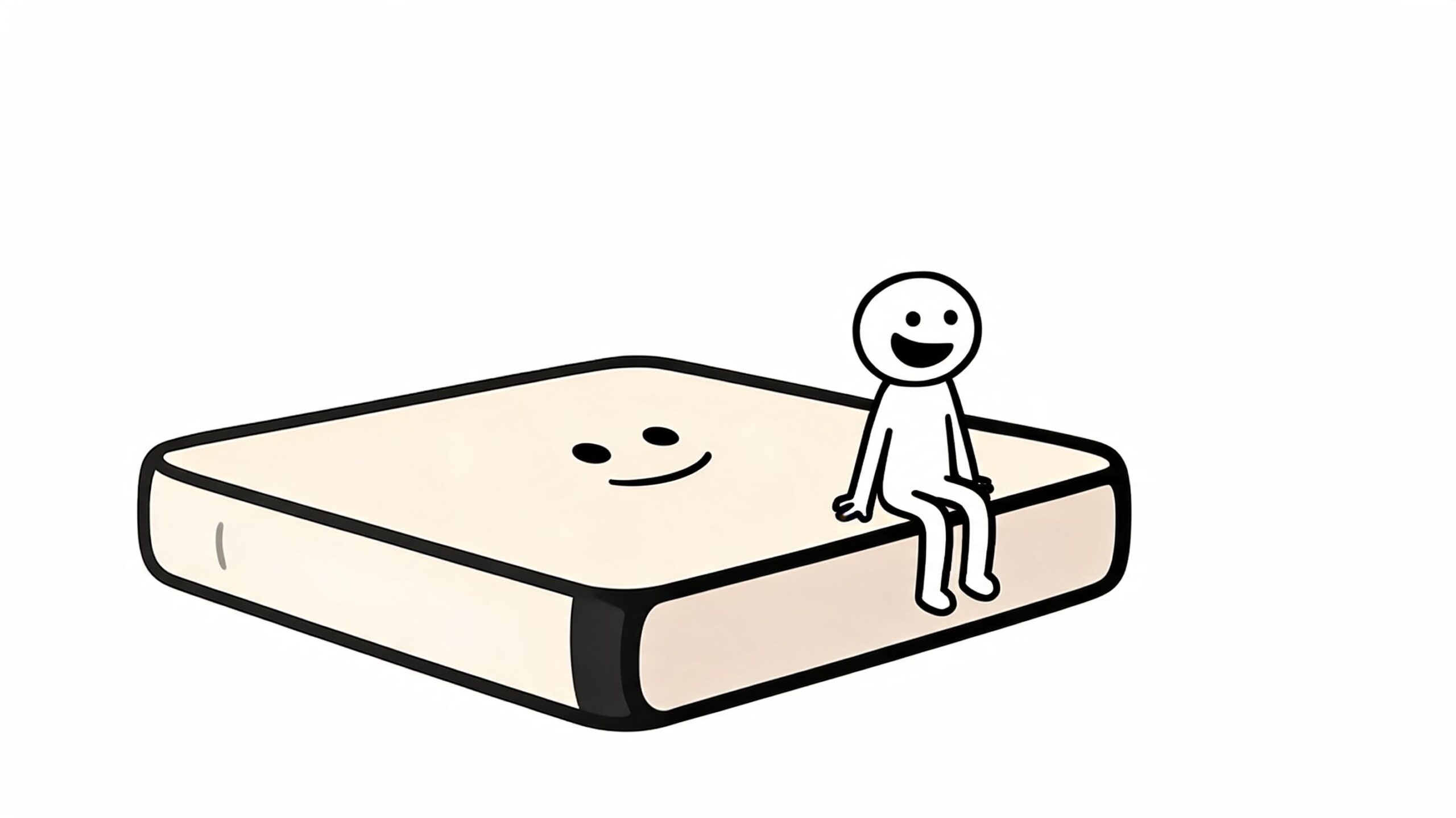
Mattress edge support is the strength and stability built into the outer perimeter of the mattress. In plain language, it's what keeps the sides from folding, sagging, or collapsing too easily when weight gets close to the edge.
Consider the sturdy frame around a porch. The middle matters, sure, but the border helps everything hold its shape. Without that support around the outside, the mattress can feel soft in spots where you need steadiness the most.
What edge support does in real life
You don't need to memorize mattress engineering terms to understand this feature. Just think about the moments when you use the outer part of the bed:
- Sitting down to dress means your weight lands on a small area near the side.
- Sleeping near the perimeter means you need the mattress to feel stable, not sloped.
- Getting in and out of bed takes a firmer edge than many people expect.
- Sharing a mattress means every inch matters.
That's why edge support isn't the same thing as overall firmness. A mattress can feel plush on top and still have a supportive edge. Another mattress can feel firm in the center and still get squishy around the perimeter.
Why shoppers sometimes get confused
Many people test only the center of a mattress. That's understandable, but it misses a big part of daily use. The side of the bed tells you a lot about structure, materials, and durability.
If you've ever wondered how construction details like springs and support layers affect the feel of a mattress, our guide on what coil count means in mattresses helps explain part of that bigger picture.
Simple rule: Edge support is about stability at the perimeter, not just whether the mattress feels soft or firm overall.
Once you understand that distinction, mattress shopping gets a whole lot easier.
Why Strong Edges Make a Happier Home
Saturday morning in Milwaukee, one person is tying shoes on the side of the bed, a kid climbs up to chat, and the family dog claims the corner. The outer few inches of a mattress do a lot of work in homes like ours. When that perimeter stays steady, the whole bed is easier to live with and easier to keep longer.
More room to sleep
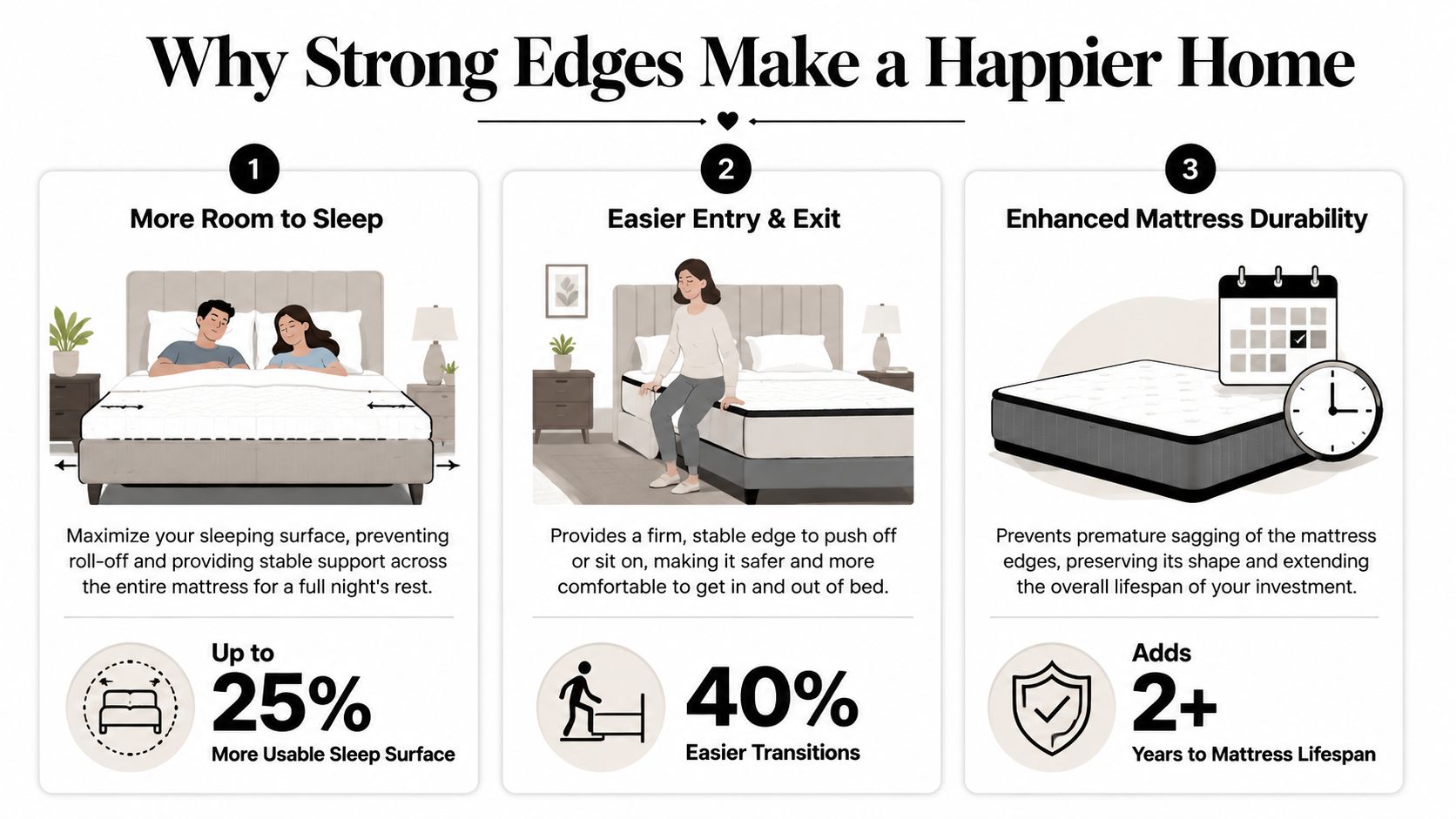
A mattress can measure the right width on paper and still feel smaller at night. That happens when the outer sides compress so much that sleepers avoid them and drift toward the middle.
Edge support testing from Mattress Review Authority shows how that loss adds up on a full-size mattress. If the outer 6 inches on each side feel too unstable to use, the practical sleeping width drops from 54 inches to 42 inches. That cuts usable space by about 22% in their edge support testing.
For couples, that change feels a lot like a crowded couch. The dimensions have not changed, but the usable area has.
| Situation | What it feels like |
|---|---|
| Strong perimeter | More of the mattress feels available, so each sleeper can spread out naturally |
| Weak perimeter | The sides feel less trustworthy, so both sleepers bunch toward the center |
Easier everyday movement
The edge of a mattress is also a work surface. It is where people sit to put on socks, steady themselves before standing, or pause at the end of a long day.
That matters for older adults, caregivers, and anyone who wants a bed to feel secure during those small daily motions. A firmer perimeter gives you a steadier place to sit and shift your weight. It does not replace proper medical support or mobility aids, but it can make getting in and out of bed feel more controlled.
At BILTRITE, we see families focus on comfort first, which makes sense. Then they sit on the side for ten seconds and realize the edge changes the whole experience.
A good mattress should support sleep and the many small movements that happen before and after sleep.
A smarter long-term buy
Here is the part many online guides skip. The perimeter is often the first area to show wear because families use it constantly. Sit here every morning, sleep close to the side every night, then repeat that for years, and weak edges usually soften sooner.
Strong edge support helps the mattress keep its shape longer. Pair that with a two-sided, flippable mattress, and you give those heavily used areas a chance to rest and recover instead of taking all the pressure in one direction year after year. It works a bit like rotating the tires on a family car. You spread out the wear, which helps the whole product last longer.
That is one reason Milwaukee families who care about long-term value often end up liking our flippable designs. The edge support helps protect the most heavily used parts, and the two-sided construction helps the comfort layers wear more evenly over time.
You can see that same practical, built-to-last mindset in other handcrafted products too, including the advantages of Amish-made furniture. Good construction is not flashy. It just keeps doing its job, year after year.
A Look Inside USA and Amish-Made Quality
Once you know what mattress edge support does, the next question is simple. How do manufacturers build it?
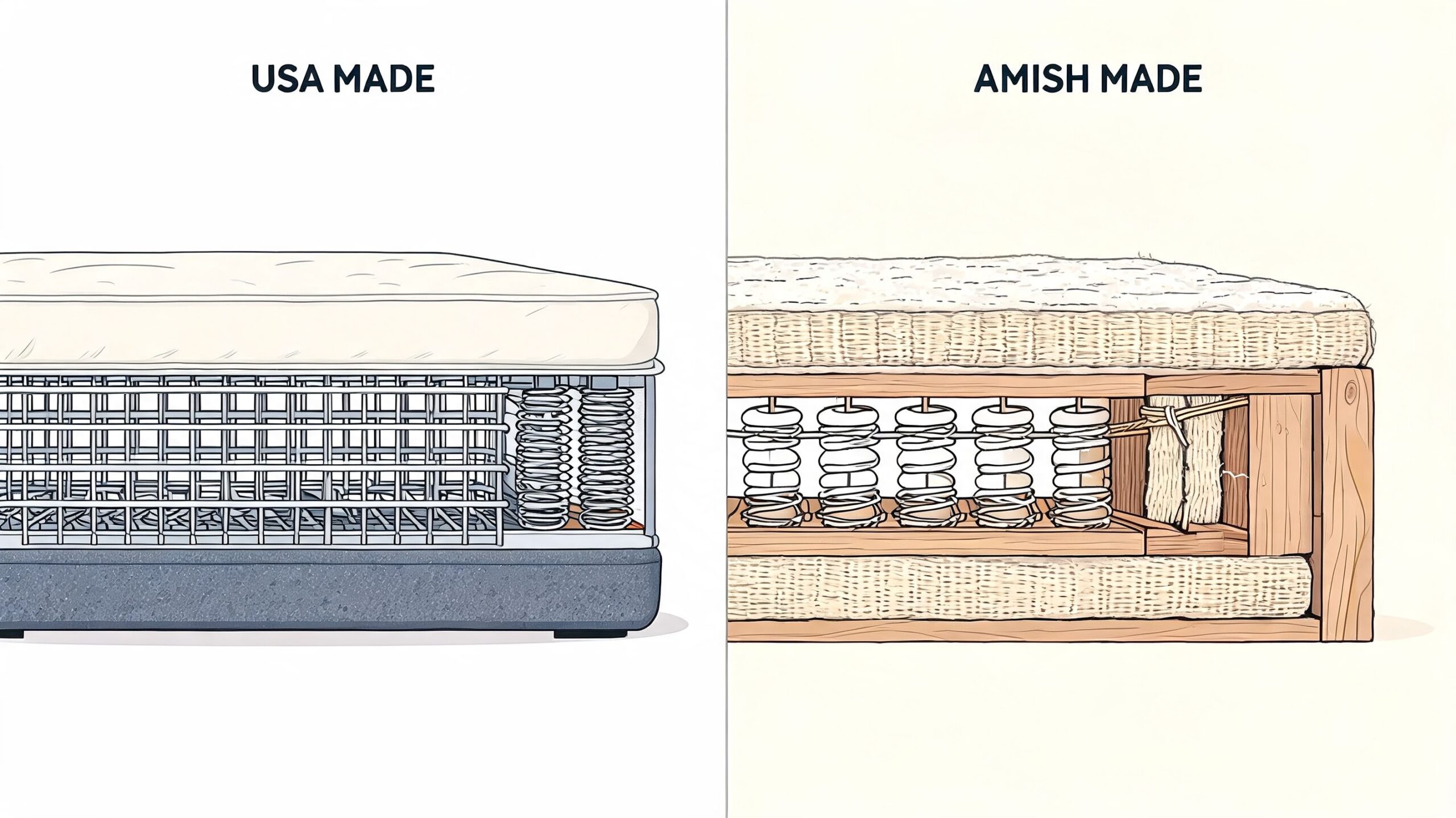
There are two common approaches. One uses firmer foam around the perimeter. The other uses stronger coils along the outer edge. Some mattresses combine both ideas.
Foam rails around the outside
In foam-encased designs, the mattress has a denser foam border that acts like a firmer rail. Premium all-foam models often use high-density perimeter foam of at least 1.8 lbs/ft³ to make that edge feel steadier, according to Sleep Foundation's edge support methodology.
This approach can help a lot, especially compared with softer, unreinforced foam edges. But foam still has a naturally conforming feel. That means it can do a decent job, yet still feel less rigid than steel support systems.
Reinforced coils at the perimeter
Hybrid and innerspring mattresses often use stronger coils around the border. Those coils push more vertically than soft foam does, so the edge tends to feel steadier when you sit or sleep near it.
The same Sleep Foundation research notes that hybrids and innersprings with reinforced coils often score 8/10 or higher in stability tests, while all-foam mattresses often score 4 to 6/10. That difference comes down to how the materials react under weight.
A quick comparison
| Construction style | What it usually offers |
|---|---|
| All-foam with foam rails | Quieter feel, contouring comfort, but often softer perimeter response |
| Hybrid with reinforced coils | Stronger sit support and more stable edge feel |
| Innerspring with firm border support | Traditional sturdy perimeter and easier push-back |
If you tend to sit on the side of the bed often, or if you sleep close to the edge, construction matters as much as comfort.
That's one reason we pay attention to build quality in the mattresses we bring into the showroom. We've always had a soft spot for durable, practical craftsmanship, whether that shows up in mattress construction, solid wood furniture, or handmade details that hold up over time. The same values people appreciate in Amish-made furniture construction also show up in how they think about durability, support, and long-term use.
In our mattress department, that usually means looking closely at the hidden parts, not just the cover fabric and the showroom feel.
Your Mission How to Test Edge Support in Our Showroom
A mattress can sound good on paper and still feel wrong once you try it. That's why testing edge support in person matters.
When you visit a showroom, don't just lie in the center for a few seconds and call it done. Give yourself a simple little assignment. Try the edge the way you'd use it at home.
Start with the sit test
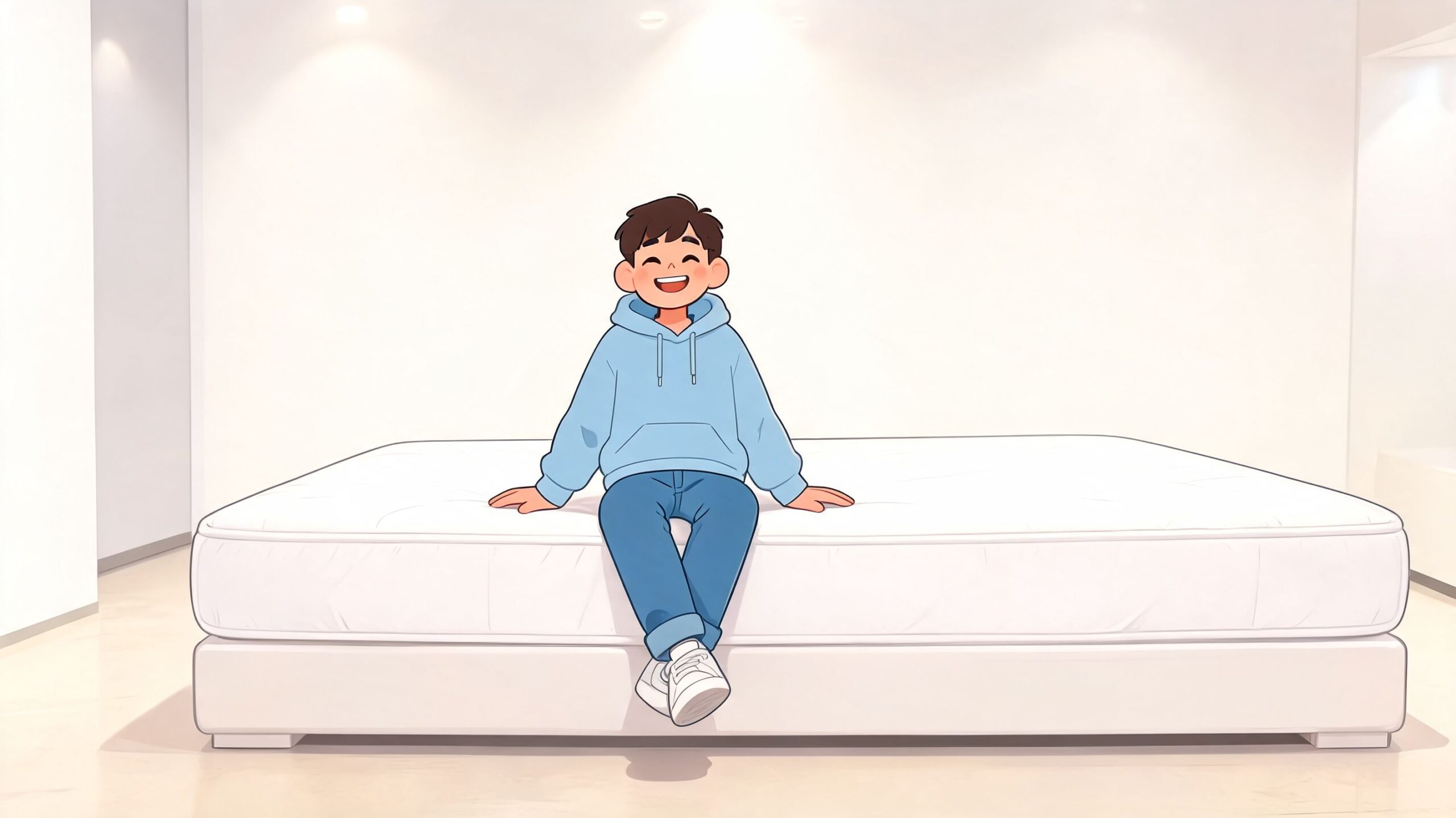
Sit on the side of the mattress the way you would when putting on socks or tying your shoes. Let your weight settle naturally. Don't brace yourself with your arms at first.
Ask yourself:
- Do you feel stable or like the edge is flattening out underneath you?
- Can you sit comfortably without sliding forward?
- Does the edge hold you up in a way that feels steady and controlled?
If the mattress collapses more than you'd like under a seated position, that's useful information. You're not being picky. You're learning how it behaves in one of the most common real-life uses.
Then try the lie-down test
Scoot near the outer portion of the mattress and lie in your usual sleep position. You don't need to hang halfway off the side. Just get close enough to notice whether the edge feels trustworthy.
Look for these signals:
- Secure support. You feel held up, not tipped outward.
- No roll-off feeling. The mattress doesn't make you drift inward or feel pulled down.
- Consistent comfort. The side feels reasonably similar to the main sleep surface.
Don't rush this part. A mattress that feels fine in the middle can tell a very different story at the edge.
If you want a few more practical tips before you visit, our guide on how to test a mattress in person walks through the process.
And here's the nice part. In a store setting, you can compare one mattress against another right away. That side-by-side feel is often what makes edge support finally click for shoppers. One bed feels secure. Another feels wobbly. Suddenly the feature stops being abstract.
The BILTRITE Difference Flippable Mattresses and Proper Frames
One of the most overlooked parts of mattress edge support is this. It's not only about how the edge feels on day one. It's also about how well that edge holds up after years of use.
That's where two-sided mattresses have a real advantage.
Why flipping helps the perimeter last
Industry durability tests show that 70% to 80% of one-sided mattresses develop significant perimeter sagging within 5 to 7 years, while a two-sided flippable design can extend the lifespan of the edge support and the full mattress by 30% to 50% because wear is distributed more evenly, according to MLILY's edge support guide.
That makes practical sense. If the same top surface and same edges take the same pressure year after year, those areas wear sooner. If you can flip and rotate the mattress, you spread that wear around.
The feature many online guides skip
A lot of mattress content talks about foam rails and reinforced coils, and that's useful. But many guides stop there. They don't spend enough time on what repeated use does to the perimeter over time.
That's one reason our store pays attention to two-sided designs. BILTRITE Furniture-Leather-Mattresses offers flippable mattress options, and that construction can make sense for shoppers who want a mattress that stays more balanced with regular rotation and flipping.
Worth remembering: Strong edge support and even wear work together. Good materials help, and good mattress design helps those materials last.
Don't forget the frame underneath
The support system under the mattress matters too. A mattress can only perform as well as the base holding it up. If the frame or foundation isn't doing its job, the perimeter can wear unevenly and the mattress won't feel as stable as it should.
A sturdy frame helps the mattress stay level and supported across the whole footprint, including the sides. That's especially important for heavier-duty mattresses and homes where the bed gets hard daily use.
So when people ask us about edge support, we don't look only at the mattress. We think about the full sleep setup. Mattress, construction, flip-ability, and proper support underneath. That's the combination that tends to serve families well over the long haul.
Come On Down and Say Hi
Mattress edge support may sound like a small detail, but it touches a lot of daily life. It can help you use more of your sleeping surface. It can make sitting and standing feel steadier. It can also help a mattress stay useful longer, especially when the design spreads wear more evenly over time.
That's why we take it seriously in our Greenfield showroom. We've been part of this community since 1928, and we've always believed that better-quality, practical products matter. We're proud of our USA-made and Amish-made focus, proud of our Milwaukee roots, and proud that we still do business in a family-first way.
That also means we're closed on Sundays so our own families can be together. We think that says something about how we do things. We want to help people furnish their homes with care, not rush them through a transaction.
If you're mattress shopping, come in and try the edges for yourself. Sit down. Lie near the side. Ask questions. Compare a few builds. Our team is here to help you make sense of it all in a relaxed, neighborly way.
We'd love to see you in Greenfield and help your family find a mattress that feels supportive where it counts.
Come on down and visit BILTRITE Furniture-Leather-Mattresses. If you're shopping for a mattress in the Milwaukee area, we'd love to help you test edge support in person, compare different constructions, and find a comfortable, durable fit for your home.