How To Buy Quality Furniture: Lasting Value & Tips

You’re standing in your living room, staring at a sofa on your phone that looks terrific for the price. Then you spot another one that costs more, and now the question gets serious fast. Will the cheaper piece save you money, or just send you back shopping again in a few years?
That’s how smart furniture buying starts.
Our family has been helping Milwaukee-area neighbors furnish their homes since 1928, and we’ve learned something the hard way over nearly 100 years. The secret to buying quality furniture has less to do with color, trend, or a flashy sale tag, and a lot more to do with how the piece is built, how it performs in daily life, and what it costs you over time.
That last part matters. A well-made sofa, table, or bed usually asks for more upfront and less later. You get fewer repairs, fewer replacements, better comfort, and a piece that still works for your family after kids, pets, guests, and Wisconsin winters have all taken their turn. That’s total cost of ownership, and it’s one of the biggest differences between furniture that serves your home and furniture that drains your budget.
Online photos won’t tell you enough. You need to sit in the seat, open the drawer, feel the fabric, and ask how the frame is joined. If you’ve ever wondered why details like mortise and tenon joinery matter in long-lasting furniture, you’re asking exactly the right questions.
Good furniture earns its keep. Cheap furniture keeps charging rent.
Look Under the Hood What Quality Construction Really Means
The outside sells the furniture. The inside tells you whether you made a smart choice.
If you’re shopping for a dresser, table, bed, or sofa, start with the bones. Ignore the finish for a minute. Ignore the fabric. Ask what it’s made of and how it’s put together. That’s where quality lives.
Solid wood beats shortcuts
For case goods like dressers, dining tables, and nightstands, solid wood is the standard I’d want in my own home. It can handle daily use, it can often be repaired, and it ages with character instead of just falling apart.
Particle board and similar lower-cost materials have their place in temporary furniture, but if you want something that can stick around, solid wood wins. That’s especially true for families, busy households, and anybody who’s tired of replacing the same category of furniture over and over.
A quick way to judge construction:
- Check drawer joints: Dovetail joinery is a strong sign that somebody cared how the piece was built.
- Open and close everything: Drawers should move smoothly and feel stable, not loose or scratchy.
- Grab and gently wiggle: A dining chair or table shouldn’t wobble before it even gets home.
- Look underneath: The underside often tells the truth faster than the front does.
Frames matter more than fabric
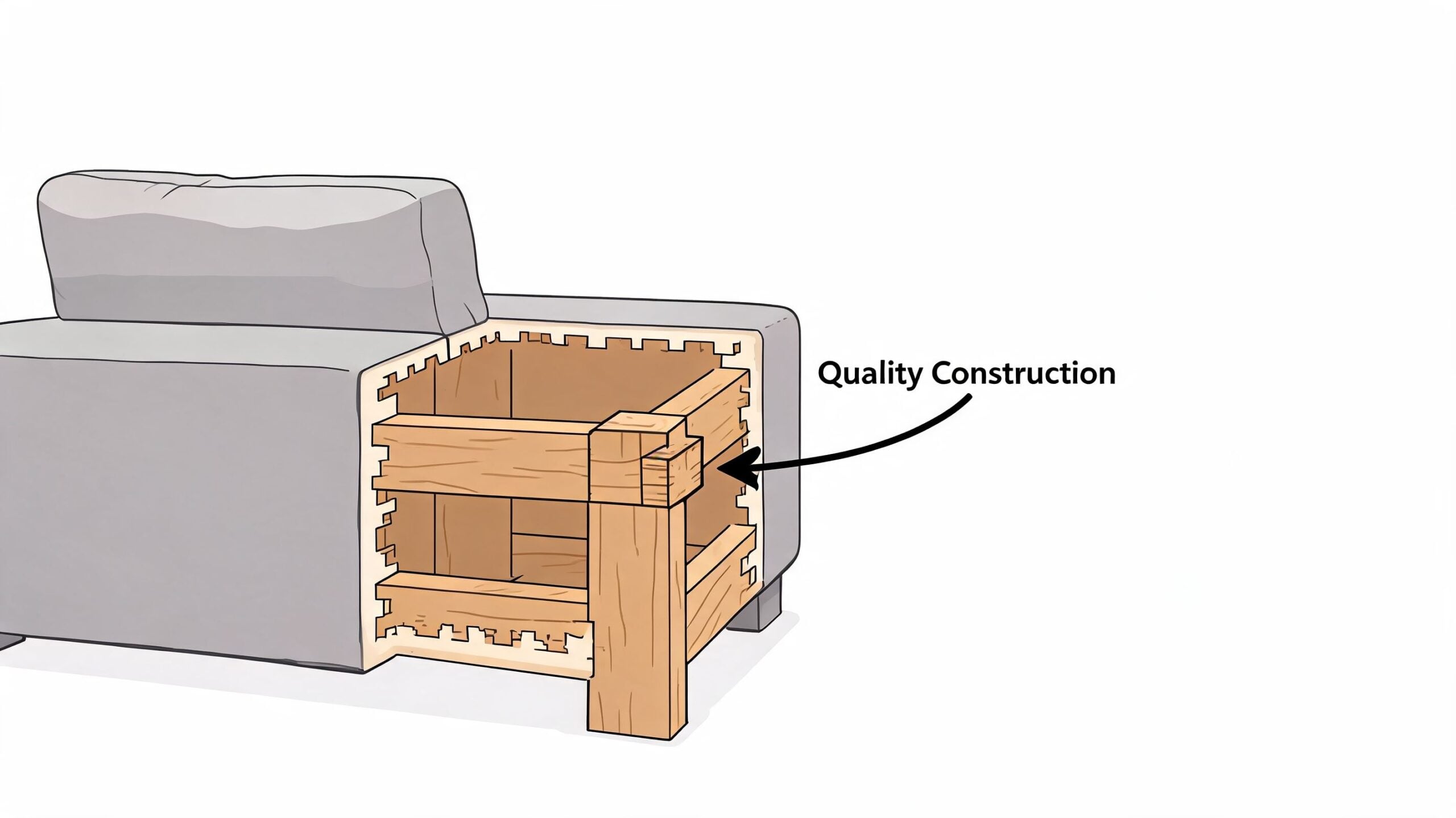
For sofas and chairs, the frame is the foundation. It's comparable to your house. If the foundation is weak, the nice paint on the walls doesn’t save it.
Look for a kiln-dried hardwood frame when you can. That matters because properly dried wood is less likely to warp and loosen up over time. Soft, cheap framing can feel acceptable on day one and tired not long after.
Then check how the parts are joined. Screws, blocks, and proper wood joinery beat flimsy fasteners every time. Staples alone are not what you want carrying the load of family movie nights, afternoon naps, and kids launching themselves onto the cushions.
Practical rule: If a salesperson can’t tell you what the frame is made of or how the joints are built, slow down.
One wood joint we love because it has real staying power is the mortise and tenon joint. It’s old-school for a reason. It works.
What to do in the store
Don’t be shy. Touch the furniture. Open it. Sit in it. Lean on it.
Use this short test:
| What you check | What you want |
|---|---|
| Drawer box | Solid feel, good joinery |
| Chair legs | No wobble |
| Tabletop | Smooth, substantial, not hollow-feeling |
| Sofa arm | Firm attachment, not shaky |
| Underside | Clean construction, not a mess of weak materials |
A lot of bad furniture is built to photograph well. Good furniture is built to live well.
Decoding Sofas and Chairs Cushions and Upholstery
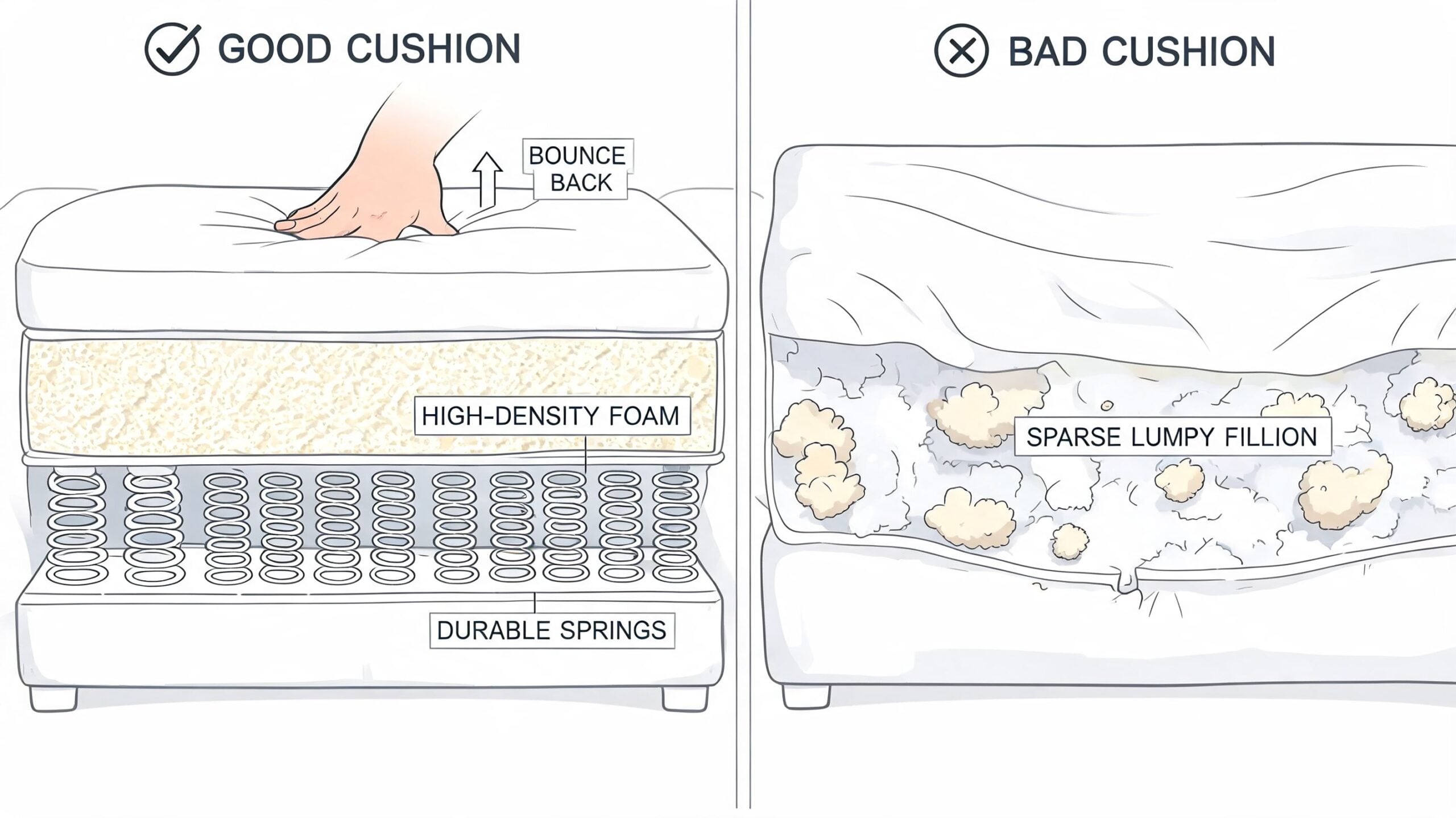
A sofa can fool you fast. It looks plush. It feels soft for thirty seconds. You sit down and think, “Nice.” Then a year later, the seat has a crater in it and everybody in the house fights over the one cushion that still has some life left.
That’s why cushion quality matters so much.
The number you should ask for
Here’s one of the most useful technical specs in upholstery. For quality upholstered furniture, look for foam density of at least 1.8 pounds per cubic foot. Premium pieces typically use 2.0 to 2.5 pounds, and lower-density foam can start to sag in as little as one year of heavy use, according to Amish Craftsman Furniture’s guide to picking high-quality furniture.
That number isn’t visible from the outside, which is exactly why you should ask for it.
If you’ve got kids, pets, or a sofa that gets used every single day, don’t settle for mystery foam. Ask the question. A well-made cushion holds its shape, keeps its support, and saves you from replacing a sofa just because the seating gave out.
Do the sit test like you mean it
Don’t perch. Sit the way you live.
Try this in the showroom:
- Sit all the way back: Your lower back should feel supported.
- Stay there for a minute: Good cushions don’t flatten instantly.
- Press the seat cushion with your hand: It should push back, not collapse.
- Test the edge: Weak edges break down sooner because that’s where people sit to stand up.
A sofa isn’t a decorative prop. It’s a tool your family uses every day.
Springs, fabric, and leather
The cushion isn’t working alone. The support system underneath matters too. Sinuous springs are common and can perform well when the piece is built properly. Higher-end construction may use more elaborate spring systems. What you want to avoid is furniture that feels hollow, unstable, or uneven when you sit down.
Then there’s upholstery. If your house is busy, choose fabrics that can handle friction, spills, and repeat use. Tightly woven fabrics tend to be practical. On leather, ask direct questions. “Is this top-grain leather?” is a useful one. “What kind of maintenance does it need?” is another.
If you want a plain-English breakdown, our guide on upholstery materials helps sort through the confusing stuff.
Here’s my opinion. Buy the sofa for the seat, not the selfie. If it feels great and stays that way, you bought well.
Getting the Best Value Not Just the Lowest Price
A Milwaukee family buys the bargain sofa, feels pretty good at checkout, and then pays for it again in sagging seats, a wobbly frame, and the hassle of shopping for another one way too soon.
That’s not saving money. That’s renting discomfort.
Think in total cost of ownership
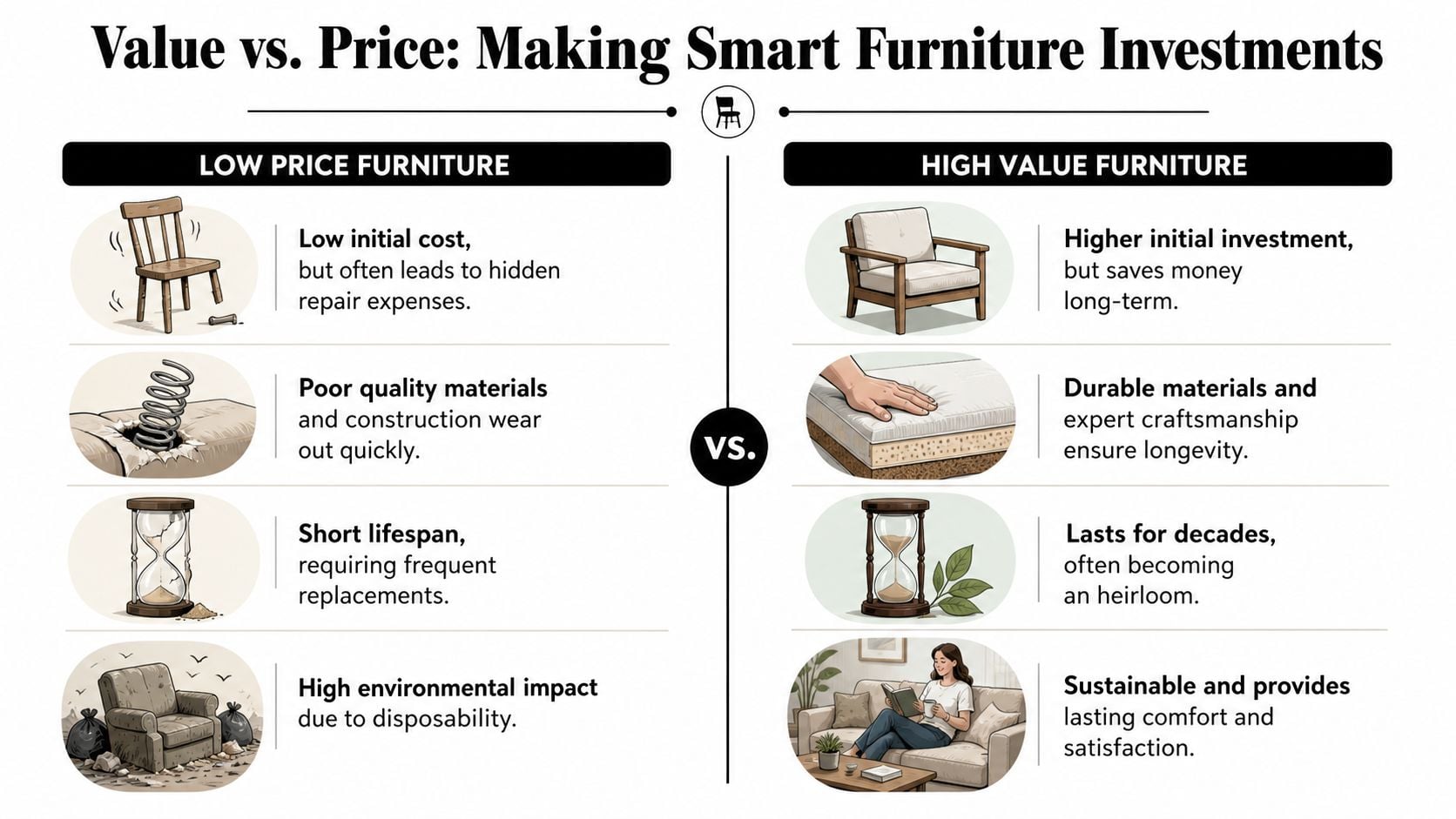
The price tag is only one number. The ultimate cost is what that piece costs over the years you live with it.
A cheaper dresser that chips, loosens, or ends up on the curb after a few moves often costs more than a better-built piece that stays solid, looks good, and can be repaired if life happens. That is total cost of ownership, and it’s how smart furniture buyers protect their budget.
Ask these questions before you buy:
- How many years do I reasonably expect this piece to serve my family?
- Can it be repaired, refinished, or reupholstered instead of replaced?
- Will it still function well after kids, pets, guests, and everyday use?
- If I buy the lower-priced version twice, what did I save?
That last question matters.
What value really looks like
Good value usually comes from furniture with a longer useful life, fewer problems, and better comfort over time. Low upfront price often brings the opposite. Earlier wear. More frustration. Faster replacement.
Here’s the comparison that matters:
| Buying mindset | What usually happens |
|---|---|
| Lowest upfront price | More wear, more repairs, earlier replacement |
| Better construction and materials | Longer service, fewer headaches, lower cost over time |
That applies across the house, but wood furniture makes the point especially well. If you want a plain-English example, the benefits of solid wood furniture show why stronger materials can keep paying you back long after the receipt is gone.
Spend where daily use is hard on furniture
If you’re watching the budget, don’t spread your dollars evenly. Put more money into the pieces that get used hard and used often.
Start here:
- Sofas and sectionals: Daily seating gets punished fast.
- Mattresses: Bad sleep is expensive in its own way.
- Dining chairs: They get scooted, leaned back in, and climbed on.
- Bed frames and dressers: These should survive years of use and a move or two.
Accent tables, occasional chairs, and decorative pieces can give you more room to ease up.
My advice is simple. Buy fewer throwaway pieces. Milwaukee homes work hard, and your furniture should too.
Remember: The best value is the piece that still looks good, still feels right, and still does its job years from now.
Planning for Your Room and Your Life
A family finds a sectional they love. The size works on paper. The color works. The seat depth works. Everybody’s excited.
Then delivery day shows up, and halfway up a tight Milwaukee staircase, the whole plan falls apart.
We’ve seen versions of that story for years in older homes, apartments, condos, and upper units around our area. The room measurement was right. The delivery path was wrong.
Measure the path, not just the space
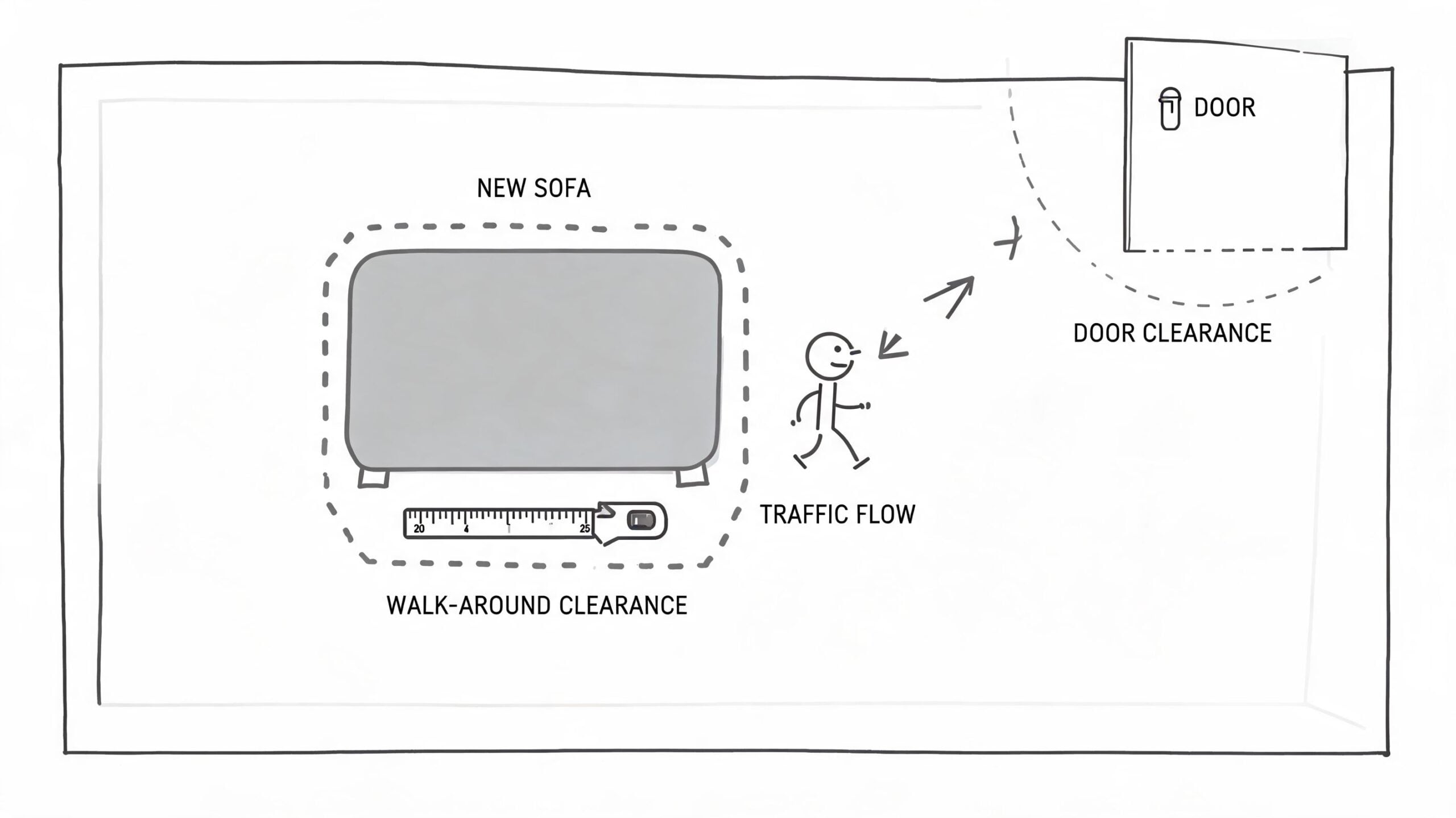
This gets missed all the time. Buying guides often tell you to measure your room but ignore delivery logistics like narrow doorways, stairwells, and assembly needs, which is highlighted in Extra Space Storage’s furniture buying tips.
So before you buy, measure:
- Room dimensions: Length and width still matter.
- Doorways: Front door, apartment door, interior doors.
- Hallways and turns: Tight corners can stop a large piece cold.
- Staircases: Width, ceiling height, and landings.
- Elevators: If you’re in a condo or apartment, don’t guess.
Match the furniture to your real life
A quality piece also needs to fit how you live.
A young family might need heavier-duty upholstery and a forgiving finish. A condo owner might need smaller-scale seating that doesn’t overpower the room. A senior living setup may call for supportive seating, easier access, and simpler movement around the space.
That’s why “will it fit” means more than a tape measure. It means:
- Can you walk around it easily
- Can people use it comfortably
- Can it get into the home without drama
- Can it keep up with your household
For folks dealing with tighter entries or awkward layouts, come-apart seating and smaller-scale options can solve a problem before it starts. Our article on choosing furniture for your home layout is a helpful place to start if your room feels tricky.
Buy for the house you have, not the one in your head. That’s how you avoid expensive mistakes.
Becoming a Smart Shopper in Our Showroom
Online research is useful. We’re not against homework. But furniture is one of those categories where your eyes, hands, and backside still do the heavy lifting.
That lines up with how people shop. Despite e-commerce growth, 76% of furniture shoppers still prefer to buy in a physical store, according to Nationwide Marketing Group’s report on furniture shopping habits. That makes sense. You can see the scale, feel the support, and ask questions on the spot.
Bring this question list with you
If you want to feel confident in a showroom, use this checklist as your secret weapon:
- What is the frame made of: Ask specifically whether it’s solid wood, hardwood, or something else.
- How are the joints built: You want a real answer, not a vague sales phrase.
- What’s in the cushions: Ask for foam density and cushion construction.
- Where is it made: USA-made and Amish-made pieces often appeal to shoppers who care about craftsmanship and repairability.
- What care does it need: Some fabrics and finishes are easygoing. Others need more attention.
- What does the warranty cover: Not just “it has a warranty.” Ask what’s included.
- How will delivery work in my home: Especially if you have tight stairs, older doorways, or apartment access.
Test furniture like you live in it
Don’t do the polite showroom sit. Use the piece.
Sit in the recliner with your feet up. Lean into the sofa arm. Open every drawer in the dresser. Pull the dining chair out more than once. If something feels flimsy in the store, it won’t get stronger at home.
Ask annoying questions. Good furniture should survive them. Good salespeople should welcome them.
We’re proud of our team in Greenfield because they know the details and they don’t need to pressure anybody. That’s one of the advantages of shopping local with experienced people who’ve spent years helping neighbors compare what’s inside the furniture, not just what’s on the tag.
What in-store shopping does better
A showroom visit helps you catch things a screen can’t:
| In-store check | Why it matters |
|---|---|
| Sit comfort | You feel support immediately |
| Scale in person | You see if it feels too bulky or too small |
| Finish and grain | Photos often flatten the real look |
| Construction details | You can inspect drawers, frames, and stitching |
If you’re serious about how to buy quality furniture, the showroom isn’t optional. It’s where guesswork goes to die.
Why Buying Local Matters More Than Ever
Three years after delivery, the cheap sofa stops feeling cheap. The seat sags. The fabric pills. One drawer on the matching end table starts sticking every morning. Now you are pricing a replacement sooner than you planned, and that low sticker price looks expensive.
That is the fundamental math of furniture ownership.
Milwaukee families do not live with furniture for a weekend. You live with it through Packers parties, homework at the table, winter boots by the entry, kids climbing on the sofa, and moves from one house to the next. A piece that lasts, stays comfortable, and still looks right after years of use usually costs less to own than a bargain piece you replace early.
That is why buying local matters.
A local showroom gives you facts you can use before you spend the money. You can sit on two sofas and feel the difference between cushions that will hold their shape and cushions that will quit early. You can open drawers, check the finish in normal light, ask how the frame is built, and get a straight answer about warranty coverage and replacement parts. That is a much better way to buy than hoping a filtered photo and a few online reviews tell the whole story.
We see the better questions every day in Greenfield. Families want to know how a sectional will hold up with kids. They want to know whether a dining set can take daily use without looking worn out in a few years. They want to know if the bedroom set they buy now will still make sense after the next move. Those are smart questions because they get to total cost of ownership, not just the sale price.
Our family has been serving Metro Milwaukee since 1928, and that long view shapes how we help people shop. We want you to buy once and buy well. If a manufacturer issue comes up, if your delivery needs extra planning, or if you want to match another piece later, you know exactly where to find us. That kind of follow-through has real value.
If you want furniture with staying power, start with our selection of USA-made furniture. American-made and Amish-made pieces often give you better materials, stronger construction, and a better chance of keeping that piece for decades.
We do not sell online. That is deliberate. Furniture is a sit-on-it, open-the-drawer, see-the-color-in-person purchase.
We are also closed on Sundays and Mondays because family matters here, too. You will feel that in the store. No rush. No mystery. No vanishing after the sale.
Buy from people who will still answer the phone later. Buy the piece that gives your family better years, fewer problems, and a lower cost over time. That is how Milwaukee shoppers win.