Best Accent Chairs for Living Room | Milwaukee’s Top Picks


Your sofa is in place. The rug is down. The TV wall looks fine. But there’s still that one corner that feels empty, or worse, accidental. That’s usually where an accent chair earns its keep.
A good accent chair doesn’t just fill space. It balances the room, gives someone a comfortable place to land, and adds personality without forcing you to replace everything else. In a real Milwaukee home, that matters. We see it every day. Families want a living room that looks pulled together, but they also want furniture that can survive kids, pets, guests, movie nights, and years of regular use.
We’ve been helping local families furnish their homes since 1928, and after four generations in this business, we’ll tell you plainly. The best accent chairs for living room spaces are the ones that match your room’s scale, fit the way you live, and are built with better bones than the average big-box piece. Style matters. Construction matters more.
The Finishing Touch Your Living Room Needs
Most living rooms don’t need more furniture. They need the right furniture.
A lot of folks start with the sofa, add a coffee table, maybe a lamp, and then stop because the room is technically done. But it still doesn’t feel finished. One empty corner stays awkward. The seating layout feels one-sided. Guests come over and everybody crowds the same cushion.
That’s where an accent chair changes the whole room. It can turn a dead corner into a reading spot, soften the look of a large sectional, or give the room a little backbone if everything else feels too flat or too matchy. If you want a living room that feels welcoming instead of just furnished, this is usually the missing piece.
Practical rule: If your sofa looks like it’s doing all the work, add a chair that balances the room instead of another decorative item that just sits there.
We’ve also seen people make the same mistake over and over. They pick a chair for looks alone. Then it ends up too delicate, too deep, too stiff, or too bulky for the room. A living room chair should earn its floor space.
What an accent chair should do
Here’s what I’d want it to handle in a real home:
- Add useful seating without making the room feel crowded
- Break up a big sofa or sectional so the layout feels balanced
- Work with your daily habits, whether that means reading, watching TV, or talking with company
- Hold up over time, especially if it becomes the seat everyone fights over
If you’re staring at your room and thinking it needs “something,” you’re probably not looking for more stuff. You’re looking for the chair that makes the whole space click. We shared more layout ideas in our guide on how to style a living room.
Discover Your Perfect Accent Chair Style
A lot of Milwaukee families walk into the store with one goal. Find a chair that looks good next to the sofa. Fair enough. But style is never just about looks. The shape you choose affects how the room feels, how people sit, and how well that chair will hold up when kids, guests, and grandparents all claim it as their spot.
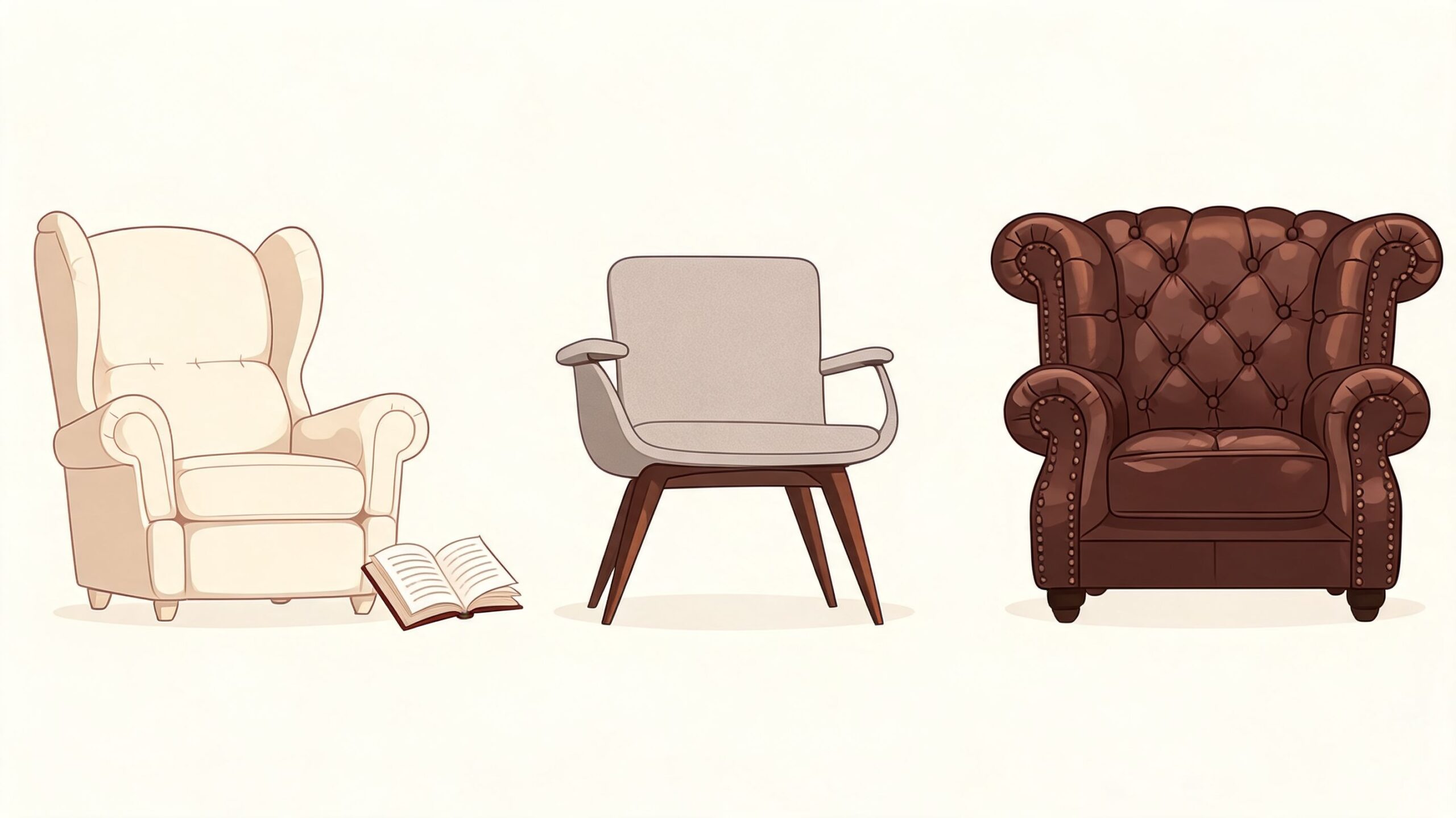
Some styles have stayed around for generations for a reason. Wingbacks date back to the early 1700s. Mid-century chairs from the 1950s still show up in plenty of homes. That kind of staying power matters. If a chair style has been worth keeping for decades, it usually has something real going for it beyond a showroom trend.
The styles worth knowing
| Style | Best for | My honest take |
|---|---|---|
| Wingback | Reading corners, quiet seating areas | Best pick when you want support, height, and a chair with real presence |
| Club chair | Conversation areas, TV rooms, daily use | One of the smartest family choices because it usually offers the best mix of comfort and durability |
| Slipper chair | Apartments, condos, tighter layouts | Useful in smaller rooms, but skip flimsy versions that are all fashion and no frame |
| Barrel chair | Cozy corners, softer layouts | Comfortable and inviting, especially when you want to soften a room full of straight lines |
| Mid-century chair | Lighter-looking rooms, cleaner designs | Looks sharp, but check the seat depth and frame strength before you bring one home |
Which style fits your room
The wingback earns its keep in homes where people actually sit and stay awhile. The higher back gives better support for reading, visiting, or just getting a little separation from the rest of a busy room. For older adults, it is often easier to get in and out of than those low, scooped chairs that look sleek online and feel awkward in person.
The club chair is the workhorse. If a family asks me for one accent chair style that rarely disappoints, this is the one. It has enough substance for everyday use, it usually wears well in leather or tightly woven fabric, and it fits the way real people live. Big-box stores often cheap out on the inside of this style, so pay attention to frame quality and cushion density.
The slipper chair makes sense in older Milwaukee bungalows, condos, and rooms where every inch counts. It keeps sightlines open and traffic moving. Just don’t expect every slipper chair to be a long-haul comfort piece. Some are better as occasional seating than as the chair everybody fights over on movie night.
A good accent chair should match the life of the room. If your house is busy, choose a style with sturdy arms, a solid frame, and a seat people can use for years.
The barrel chair has a friendlier, more wrapped shape. It works well when your sofa is square and a little stiff-looking. In family rooms, I like a barrel chair with a strong hardwood frame and durable upholstery because the curved shape invites people to drop in and stay.
The mid-century chair keeps a room looking open because you can see more floor around it. That is the upside. The downside is that many cheaper versions trade comfort and durability for the look. If you like this style, choose one with a substantial seat, good joinery, and enough support for adults, not just a photo.
If your taste runs classic and you want a useful point of comparison, look at a traditional accent chair. It gives you a clear read on scale, arm shape, back height, and whether a more timeless silhouette fits your home better than a trendier one.
How to Choose the Right Size and Placement
You notice size mistakes the minute a family sits down. Dad’s knees are too high. Grandma can’t push herself up easily. The chair jams the walkway between the sofa and the coffee table. A living room feels wrong fast when the chair is the wrong scale.
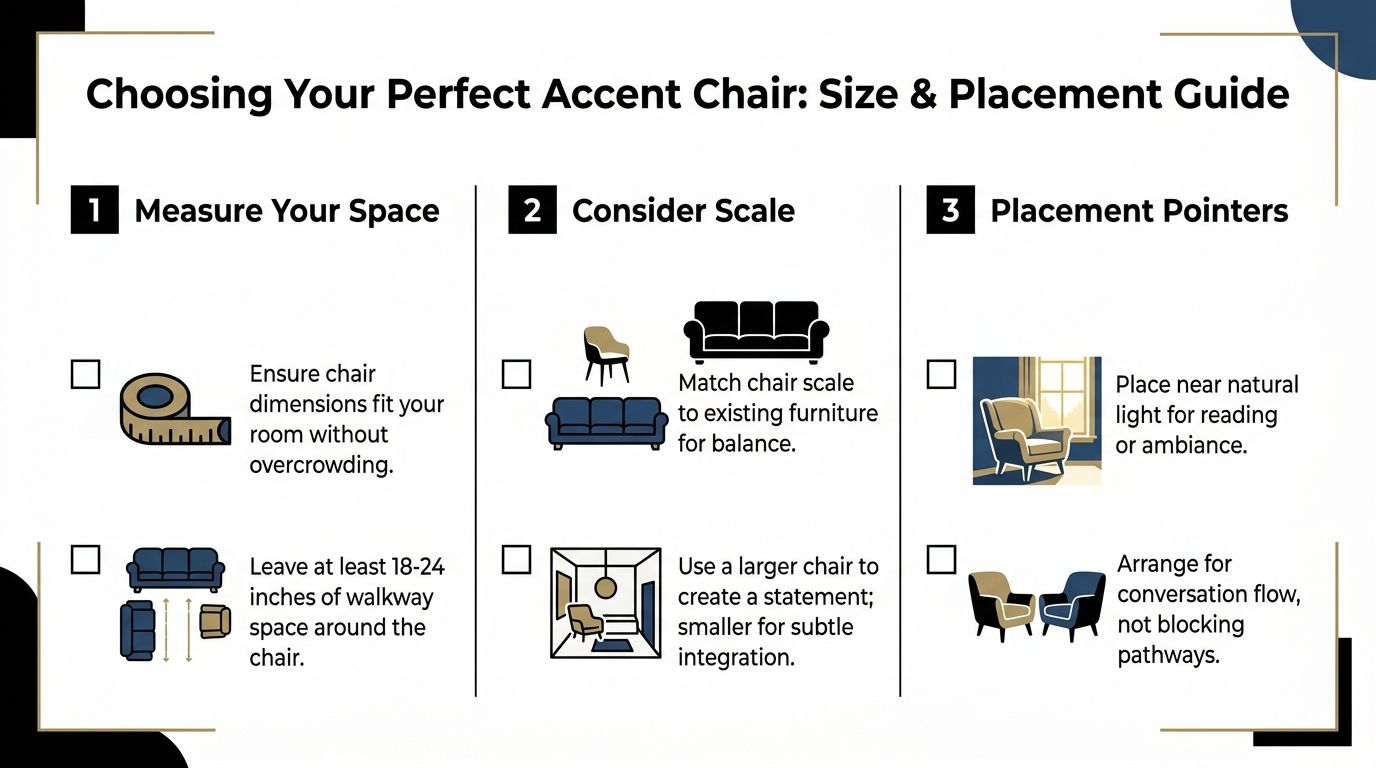
Start with the people in your house, then size the chair to the room. If the chair is for everyday use, the seat should let adults sit back comfortably with both feet planted and stand up without a struggle. That matters even more in Metro Milwaukee homes with multi-use living rooms, older floor plans, and families who expect one chair to handle years of real use.
Start with proportion, not style
Look at your sofa first. The chair should relate to it in height, width, and visual weight. A deep, overstuffed sectional usually needs a chair with some substance. A lighter sofa with exposed legs pairs better with a chair that keeps the room open.
Use this quick checklist:
- Match the scale of the sofa. Big upholstery needs a chair that can hold its own.
- Watch the arm and back height. Close is good. Exact matches usually look stiff.
- Choose for the actual user. If a senior uses the chair often, skip low seats and soft, sink-in cushions.
- Leave enough room to enter and exit easily. That is one of the first things big-box floor sets get wrong.
If you’re unsure about width, this guide to standard chair width for living rooms gives you a practical starting point.
Placement that works in a real house
A good accent chair supports the room instead of clogging it up. You need clear walking space between the chair, table, and sofa, especially in family rooms where people pass through all day. In tighter bungalows, condos, and split-level layouts around Milwaukee, slimmer chairs with open arms or visible legs usually place better than bulky lounge pieces.
Start with one of these spots:
- Across from the sofa for conversation and everyday seating.
- Near a lamp or window for reading.
- At the end of a sectional to finish the seating area cleanly.
- In a corner on a slight angle to add depth without making the room feel boxed in.
Keep the chair close enough to the main seating group that it feels invited into the conversation. If it sits off by itself, it turns into a catch-all for laundry, not a seat people use.
Common sizing mistakes I’d avoid
These show up in showrooms and living rooms all the time.
- An oversized barrel chair in a narrow room. It eats floor space and makes traffic awkward.
- A tiny accent chair next to a large sectional. The room looks off-balance.
- A low, deep chair for an older adult. It may look cozy, but it is frustrating to get out of.
- A chair pushed flat against the wall. Pulling it slightly into the room usually creates a better seating zone.
If your family is hard on furniture, choose a size and placement that people can live with for the next ten years. That often means a heavier-built chair with usable arms, a sensible seat height, and enough space around it for easy movement. Those practical details are exactly where well-made USA-built and Amish-crafted chairs tend to earn their keep.
Understanding Materials for Lasting Durability
Saturday night in a real Milwaukee living room tells you more about chair quality than any showroom tag. A kid drops pizza crust in the seat, the dog claims the corner cushion, Grandpa pushes off the arms to stand up, and somebody flops down after shoveling snow. By spring, a well-built chair still feels tight and supportive. A cheap one already looks tired.
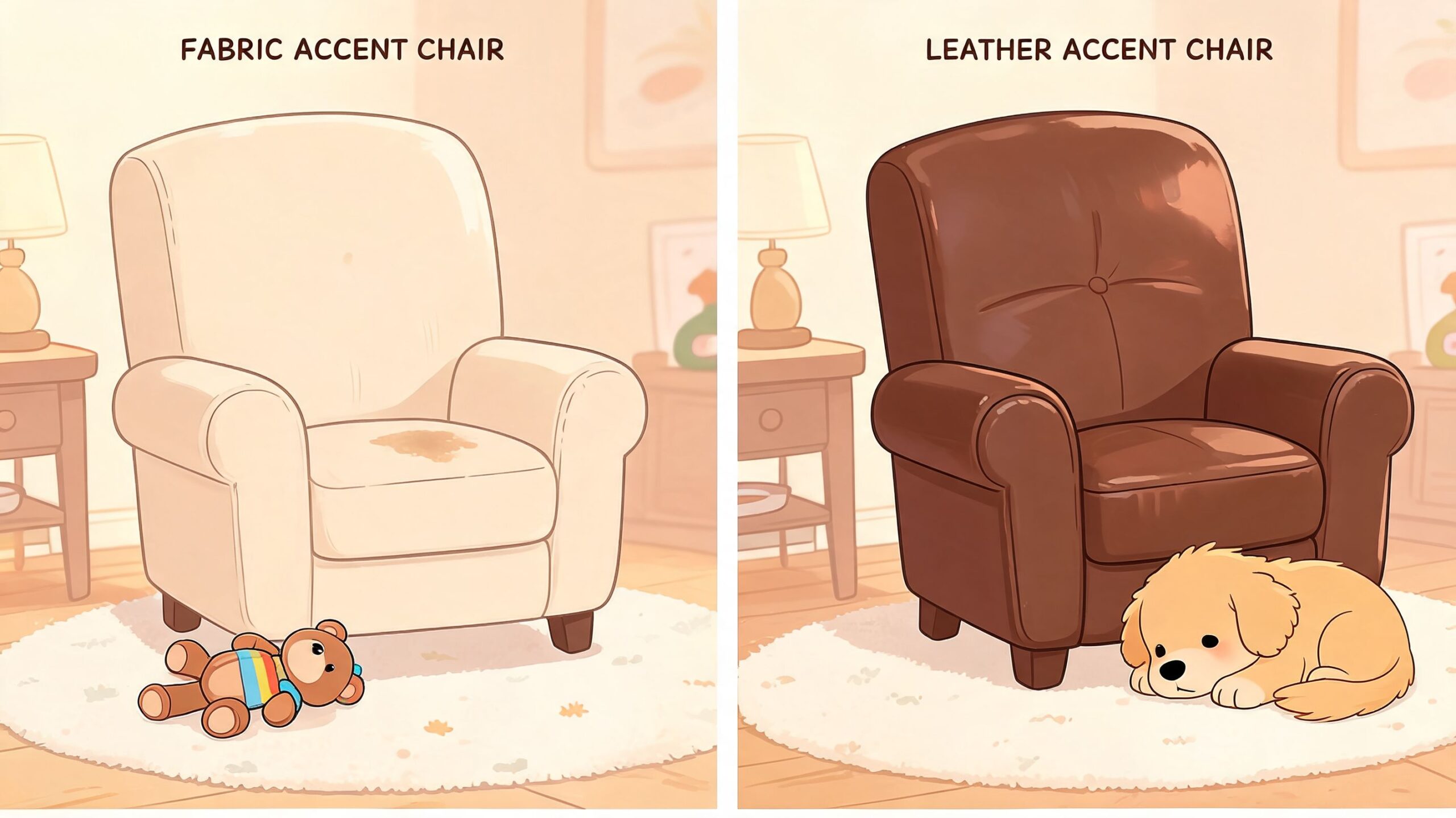
If you want an accent chair that earns its place, quit judging it by silhouette alone. Ask what the frame is made of, whether the cushion will hold its shape, how the fabric cleans up, and how the chair feels after you sit in it for ten minutes instead of thirty seconds.
Leather versus fabric in a real house
For busy family rooms, leather is usually the smarter buy.
It wipes clean fast, does not hang onto the same daily mess as many fabrics, and it tends to look better with age instead of worse. Full-grain and top-grain leather are the options I’d look at first if the chair is going to get real use.
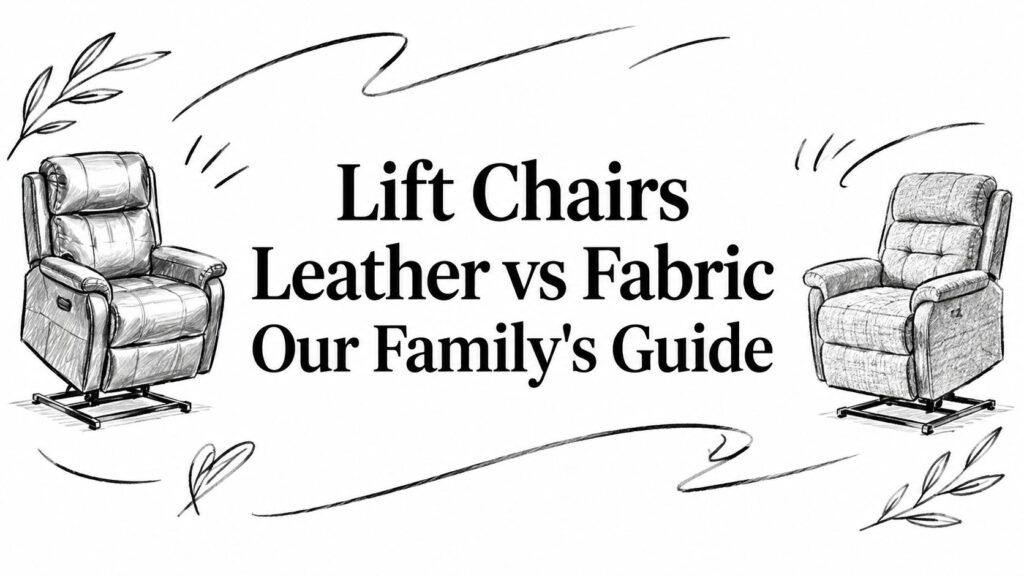
Fabric still has a place. It gives you more freedom with color, pattern, and texture, and it often feels softer right away. But not all fabric is built for family life. If you want fabric, choose one that is made for regular use and easy care. Our guide to upholstery materials for different homes and lifestyles breaks that down in plain English.
Here’s the plain advice I give neighbors:
- Choose leather for heavy everyday use, easier cleanup, and better aging
- Choose fabric for a softer feel or a more layered, colorful room
- Choose performance upholstery if you want fabric without signing up for constant worry
The frame matters more than the cover
The frame decides whether a chair still feels solid five or ten years from now.
I’d take a plain chair with a strong hardwood frame over a stylish chair with lightweight internals every time. Good construction feels steady when you sit down, does not creak when you shift, and keeps its shape under the kind of daily use families dish out. That is why so many USA-made and Amish-crafted chairs feel different the minute you sit in them. The joinery is better, the wood is better, and the chair is built to be lived in, not just photographed.
Cushions matter too. Look for supportive seat cores that bounce back instead of collapsing into a permanent dip. If the seat already feels flat in the store, it will not improve at home.
What I’d buy for my own family: hardwood frame first, supportive cushion second, upholstery third, trend appeal last.
What I’d skip
I pass on chairs that look good from across the room but feel light, hollow, or shaky up close.
Watch for these warning signs:
- Composite or low-grade internals under pretty fabric
- Spindly legs with a heavy seat that feels tippy
- Loose arms or side-to-side wobble on the showroom floor
- Overstuffed cushions that already feel sloppy
- Low, sculptural seats that are hard for older adults to get out of
Big-box stores rarely talk about these details because they are selling speed, price, and looks. Families in Metro Milwaukee usually need something else. They need a chair that can handle kids, guests, pets, and winter months spent indoors. That is where heavier-built American-made pieces, especially Amish-crafted wood chairs and better upholstered frames, tend to justify every extra dollar.
Finding Chairs for Every Member of the Family
Saturday night in a Milwaukee family room tells you what an accent chair is really made of. A grandparent wants a chair that is easy to stand up from. A teenager drops into it after practice. A kid climbs on the arm. The dog claims the seat by halftime. If a chair cannot handle that mix, it does not belong in a busy living room.
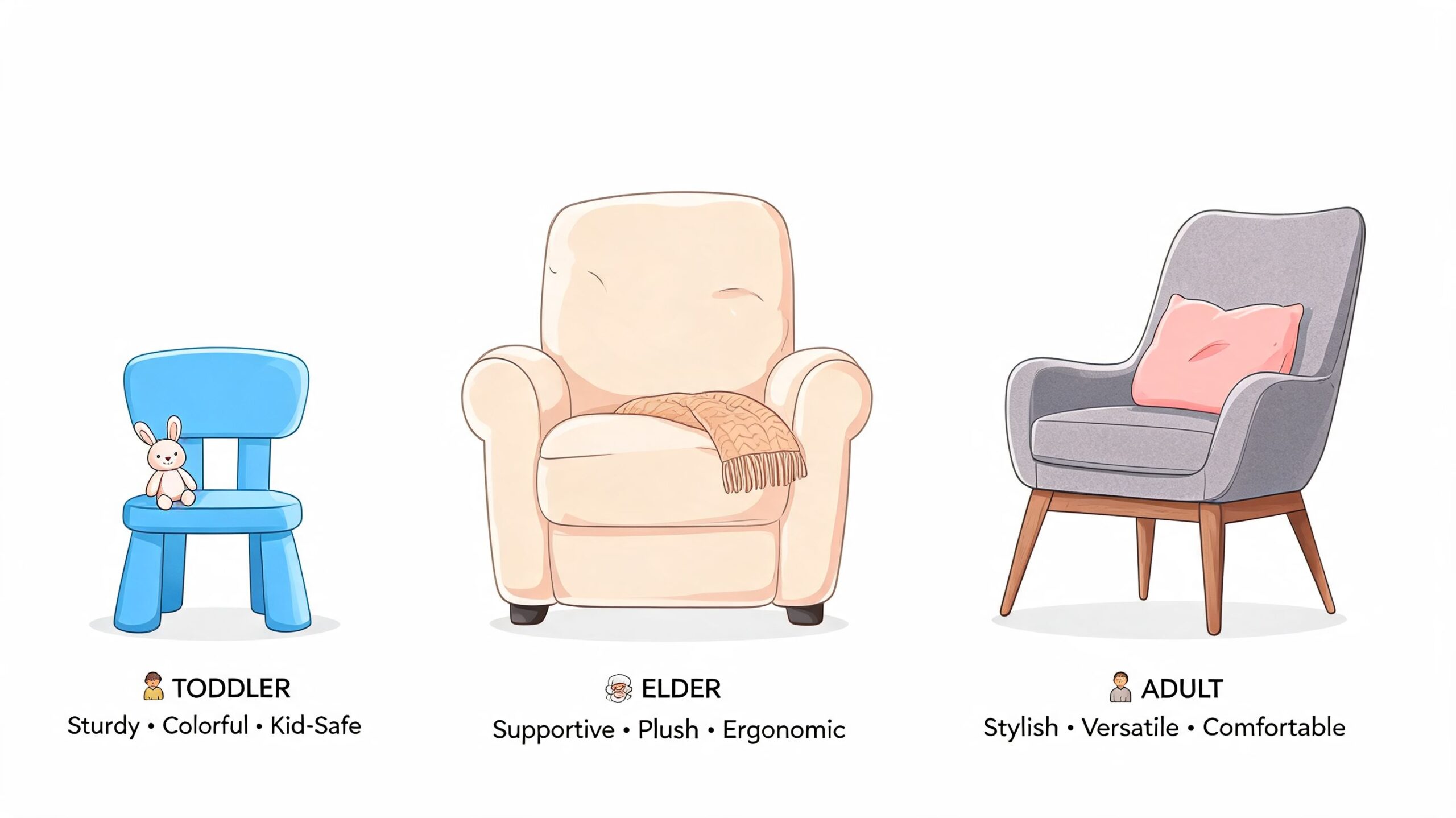
Families do not all need the same chair. They do need one that fits the people who will use it every day.
For households that use furniture hard
Buy for the toughest user in the room, not the lightest one. If a chair will see constant use, look for a broader seat, a steady stance, thick arm support, and a frame that feels planted when you sit down. Heavy-duty chairs and senior-friendly designs get ignored by big-box retailers, but they matter in real homes across Metro Milwaukee.
I steer busy households toward USA-made upholstered chairs with stronger internal construction, or Amish-crafted wood chairs with a properly built seat and back. Those options usually hold up better under repeat use than lighter imported pieces built to hit a price point.
The chair near the TV usually becomes everybody’s chair. Choose accordingly.
For parents, grandparents, and guests
A low, soft chair can feel cozy for thirty seconds and frustrating for years. Older adults usually do better with a seat height that lets their feet stay flat, arms sturdy enough to push off from, and a back that supports the whole sit, not just the lower spine.
That is not a small comfort issue. It affects confidence and independence every single day.
For homes with kids and pets, cleanability belongs on the checklist right alongside comfort. Look for fabrics that wipe down well, cushions that keep their shape, and construction that does not loosen up after a season of rough use. If your house sees that kind of wear, this guide to choosing kid-friendly and pet-friendly furniture will help you narrow the field fast.
Three situations I’d shop for differently
Movie-night family room
Pick a heavier-built chair with dependable arms, a seat that does not sag, and upholstery that can take repeated use without looking tired.Grandparent’s everyday chair
Prioritize easy entry and exit, supportive arms, a stable base, and a seat height that feels natural the first time they try it.Small living room with frequent guests
Choose a compact chair with real substance. Good small-scale chairs exist, especially from American makers who build for daily use instead of showroom looks.
The best family chair is usually the one that keeps working year after year. Around here, that often means passing on the flashy piece and buying the better-built one.
Your Guide to Shopping for Chairs at BILTRITE
Saturday afternoon, the kids are sprawled on the floor, the dog is circling for a nap spot, and you finally have a minute to test that accent chair you almost ordered online. The photo looked great. The chair itself feels too shallow, the arms hit wrong, and the fabric color is off the second it lands in your living room.
That mistake gets expensive fast.
Accent chairs are one of those pieces you should sit in before you buy, especially if you want something built for daily family use instead of a quick style update. Around Metro Milwaukee, I see shoppers come in looking for a chair that fits a Bay View bungalow, a Greendale ranch, or a condo with tighter rooms and older doorways. Those homes need smart scale, sturdy construction, and finishes that still look good after years of real use.
Why sitting in the chair matters
A good chair has to work with your body and your room. You need to feel the seat support, check the arm height, and see the fabric or leather in normal light. Screens miss all of that.
In the showroom, pay attention to a few simple things:
- Sit for more than 30 seconds. A chair that feels fine at first can turn hard or awkward after a few minutes.
- Stand up without bracing or twisting. That matters for older adults and anyone who wants a chair that is easy to use every day.
- Check the arms and back together. Good support comes from the full sit, not one feature in isolation.
- Look at the color next to other furniture finishes. Leather, wood, and woven fabrics often read differently in person than they do online.
That hands-on test matters even more with USA-made and Amish-crafted chairs, because the build quality is usually the point. You are paying for better joinery, heavier frames, better tailoring, and longer wear. You should inspect it up close.
What to look for on the floor
Do not start with what is trendy. Start with what will hold up in a busy house.
| What to check | Why it matters |
|---|---|
| Tight, solid frame | Keeps the chair from loosening, wobbling, or feeling tired too soon |
| Even cushions and tailored upholstery | Better shape retention and a cleaner look after years of use |
| Wood species and finish quality | Important on Amish-made chairs where the frame is part of the value |
| Seat height and arm strength | Easier for seniors, safer for everyday sitting and standing |
| Size choices and customization | Helps you fit smaller Milwaukee-area rooms without settling for flimsy furniture |
Some families need a compact chair that still feels substantial. Others need a heavier-built chair for a family room that gets used every night. Big-box stores usually do a poor job on both ends of that spectrum. They chase quick looks and broad price points. They rarely do the careful middle ground well.
BILTRITE Furniture-Leather-Mattresses gives shoppers a place to compare those details in person, including small-scale chairs, custom upholstery, Amish-made options, and better-built American pieces. That matters if you want one chair that serves the room well for the next ten years, not one season.
Buy with your hands as much as your eyes. Press on the arms. Check the stitching. Sit twice. That is how you find lasting value.
A Pre-Shopping Checklist for Your Showroom Visit
A little homework makes chair shopping a lot easier. You don’t need a design degree. You just need a few basics before you walk in.
Bring these with you
- Room photos from a few angles. Wide shots help more than close-ups.
- Measurements for the wall, the open floor area, and nearby furniture.
- Doorway sizes if access is tight.
- Fabric, flooring, or paint samples if you have them.
- A short priority list so you know whether comfort, scale, leather, or durability comes first.
Know your non-negotiables
Maybe you need a chair that’s easy for a parent to stand up from. Maybe you need one that won’t get swallowed by a sectional. Maybe your building has a narrow stairwell and access is the whole game.
Write down the two or three things that matter most. That keeps you from falling for a chair that looks good but misses the job.
Bring the doorway measurement. People remember the room size and forget the path the chair has to travel.
If delivery is tricky, ask about pieces built for tighter access. Come-apart designs can make a big difference in condos, apartments, and older homes with narrow entries.
Bring your notes, bring your photos, and don’t overthink it. We’d rather help you sort through real options than have you guess from memory.
Come see us at BILTRITE Furniture-Leather-Mattresses in Greenfield at 5430 West Layton Avenue. We’ve been serving Metro Milwaukee since 1928, and we still believe the best way to choose a chair is to sit in it, feel the materials, and talk it through with someone who knows furniture. Stop in, say hi, and let our family help your family find a living room chair that looks right, feels good, and lasts.