Ashley Furniture TV Console: Buyer’s Guide


A lot of families hit the same moment at about the same time. The new TV arrives, everyone’s excited for movie night, and then somebody looks at the old stand and says, “Well… that’s not going to work.”
Maybe it’s too narrow. Maybe it rocks a little when you touch it. Maybe it was fine for the last television, but now the whole setup looks off. That’s usually when people start searching for an ashley furniture tv console and trying to sort out what’s worth buying, what will fit, and what will hold up in a real living room.
Around Milwaukee, we’ve had this conversation with neighbors for generations. Some shoppers want a quick, budget-friendly solution. Others are trying to buy once and keep it for a long time. Both are reasonable goals. The key is knowing what you’re looking at before you bring a console home.
Your Guide to Finding a Great TV Console
A young family buys a larger television for the living room. The kids want space for game systems, the parents want doors to hide the clutter, and the dog has a habit of bumping into furniture corners at full speed. On paper, shopping for a TV console sounds simple. In real life, there are a few moving parts.
The first surprise is usually size. People focus on screen size, but the console has to work with the whole setup. It needs enough width to look balanced, enough depth for the base or legs of the TV, and enough storage for the devices that seem to multiply under every screen.
The second surprise is construction. Two consoles can look similar in photos and feel very different in person. One might be a practical mass-market piece built for value and style variety. Another might be a heavier, longer-term piece made with more substantial materials and joinery. Neither is automatically right for everybody, but the difference matters.
Practical rule: A TV console isn’t just décor. It’s a working piece of furniture that has to support weight, manage cables, and keep electronics usable day after day.
Then there’s the room itself. Milwaukee homes come in all shapes and sizes. Some living rooms need a compact stand that won’t crowd a walkway. Others have a long wall begging for a bigger entertainment setup. Families in condos, bungalows, ranch homes, and apartments all run into different spacing issues.
That’s why a good TV-console decision usually comes down to four things:
- Fit in the room so the console doesn’t overpower the wall or block traffic
- Support for the TV so the stand is stable and sized appropriately
- Storage that matches real life for remotes, consoles, routers, soundbars, and media
- Material expectations so you know whether you’re buying for the short term or the long haul
Once you know how Ashley approaches this category, the choices get much easier to sort through.
Understanding Ashley Furniture TV Consoles
Ashley is one of the first names many shoppers see when they start looking at entertainment furniture. That makes sense. They offer a broad range of styles, a range of sizes, and familiar features that work for many homes.
What sizes and styles look like
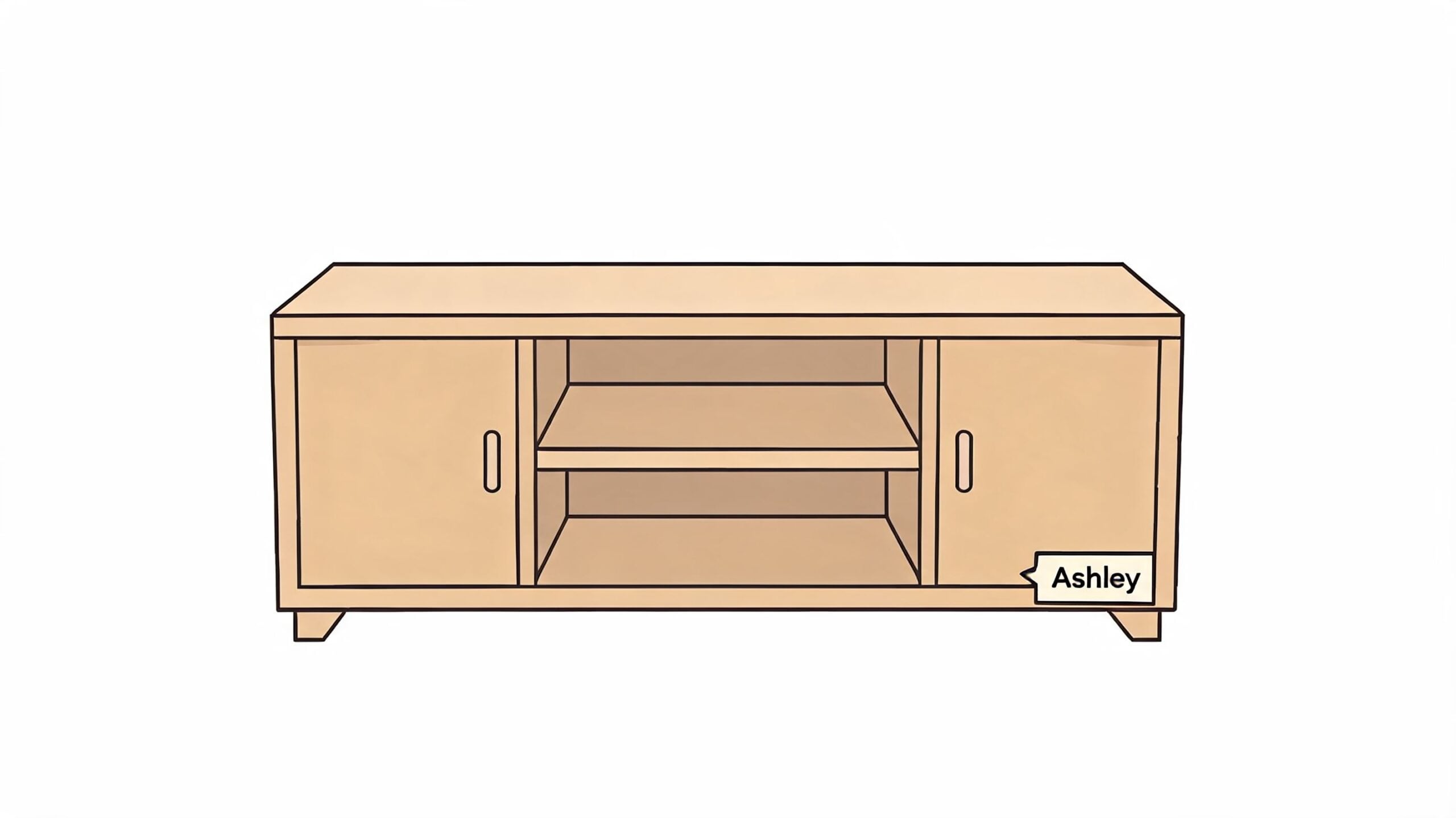
Ashley Furniture’s TV consoles are built to support televisions from 32" to 75" screens, and models such as the Havalance 67" TV Stand use distressed two-tone finishes with pine wood and veneers, a look tied to farmhouse styling in Ashley’s product lineup since 2010, according to the Ashley Furniture TV stand collection.
That range helps explain why the brand shows up so often in casual searches. A shopper with a smaller guest-room TV and a shopper with a larger family-room screen can both find something in the same product family.
Common style directions include:
- Farmhouse looks with weathered finishes, softer rustic character, and visible wood tone contrast
- Contemporary designs with cleaner lines and a simpler profile
- Traditional options that feel a little more formal in shape and trim detail
If you’re outfitting a smaller setup, it can help to compare proportions against something like a TV stand for a 36 inch TV so you can get a better sense of what scale looks balanced in a room.
What materials usually mean
A lot of Ashley TV consoles use engineered wood, often combined with veneers or laminate surfaces. This is one of the biggest points of confusion for shoppers, so let’s keep it plain.
Engineered wood isn’t the same thing as solid wood. It’s made from wood-based components formed into panels, then finished to create a specific look. That approach allows brands to offer many styles at accessible price points and in shapes that would be more expensive in solid hardwood.
What does that mean in everyday use?
| Material question | What it usually means for the shopper |
|---|---|
| Engineered wood core | Built for value, consistency, and common household use |
| Veneer or laminate exterior | Gives the piece its finished appearance and style |
| Mass-market construction | Often offers lots of design choices and practical features |
Features people tend to want
The reason many shoppers consider an ashley furniture tv console isn’t just the look. It’s the combination of visual style and household function.
You’ll often see features such as open center shelving for components, side cabinets for hidden storage, and layouts that leave room for soundbars or streaming gear. Some collections also include fireplace-style entertainment pieces or coordinating larger wall units.
The right question isn’t just “Do I like this finish?” It’s “Will this piece work with the way my family uses the room?”
That’s the baseline. The next step is making sure the console fits your television, your room, and the equipment you’re using.
How to Measure and Choose the Right Console
The measuring part isn’t glamorous, but it saves people from the most common buying mistakes. If a console is too small, the room looks awkward and the TV setup can feel top-heavy. If it’s too deep or too wide, the room starts feeling cramped.
Start with the TV, not the furniture photo
People often shop from a product photo and forget to measure the actual television base. That’s where trouble starts. Two TVs with the same screen size can have different stand footprints.
Here’s the simplest order to follow:
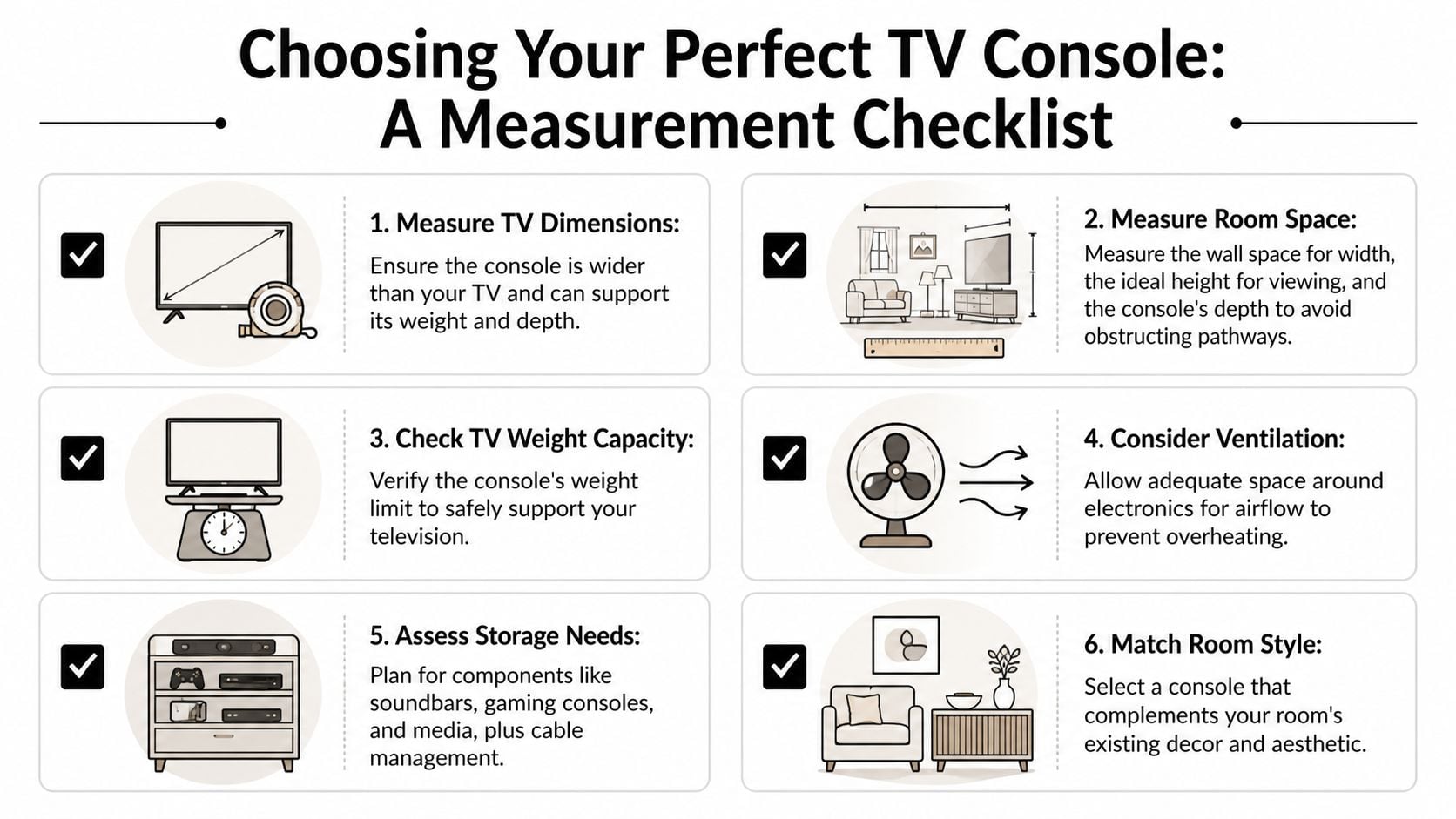
Measure the TV width
The console should be wider than the television so the setup looks grounded and stable.Measure the TV base depth
This tells you whether the top surface has enough room from front to back.Check the TV weight
A console has to support the television safely, not just visually.Measure the wall space
Leave room so the piece doesn’t swallow the wall or crowd nearby furniture.
If you want a broader room-planning walkthrough, this guide on how to measure furniture is a useful way to think through width, depth, and pathway clearance before you shop.
Weight capacity matters more than many people think
Support is one of those details shoppers skip until they have to move the TV later. A larger screen can be surprisingly heavy, especially with accessories, sound systems, and gaming gear nearby.
Engineered wood construction like the Ashley Thadamere TV Stand is designed for load-bearing, with a structural density of around 23.2 lbs per cubic foot and typical support in the 80-100 lb range, which makes it suitable for many 55-65" TVs without sagging, based on the specifications discussed in the Thadamere TV stand listing.
That doesn’t mean every engineered wood stand is the same. It means you should treat weight support as a real buying factor, not a footnote.
If your TV is near the upper end of a stand’s capacity, stop and double-check the specs before you commit.
Think through everything that lives under the TV
A TV console usually ends up holding more than a TV. That’s why people get frustrated after purchase. The stand looked good, but nobody planned for the cable box, game system, router, soundbar, remotes, and the pile of charging cords.
A quick living-room inventory helps:
- For movie households think about where the soundbar sits and whether doors will block a remote signal.
- For gamers check shelf height and airflow around consoles that run warm.
- For tidy rooms look for closed storage so the visual clutter disappears.
- For mixed-use spaces make sure the top and interior shelves can handle both décor and equipment.
Don’t forget airflow and cable routing
Electronics need breathing room. If a shelf is packed tightly with components and cords, heat builds up and the area becomes harder to clean and maintain. Open shelving helps, but even enclosed cabinets can work if the design leaves enough space for cables and air movement.
A good console makes daily use easier. You can reach plugs without dragging the whole unit forward. You can swap devices without a complete rewire. You can clean under and around it without turning it into a Saturday project.
A quick decision table
| If your priority is | Pay closest attention to |
|---|---|
| Big-screen stability | Width, top-surface depth, and weight support |
| A cleaner look | Doors, drawers, and cord access points |
| Gaming or AV gear | Shelf openings and ventilation space |
| Small-room fit | Overall depth and walkway clearance |
| Family durability | Construction quality and how firmly it sits on the floor |
Most regrets happen because people buy based on finish first and function second. It’s better to reverse that order. Once the size, support, and storage work, then you can choose the look you like.
An Honest Look at Quality and Assembly
Mass-market furniture has a real place in the market. Many families want something stylish, useful, and reasonably priced. That’s a fair goal. An ashley furniture tv console often fits that need because it offers recognizable design and practical features without moving into premium handcrafted pricing.
Still, it helps to go in with open eyes.
Where value shows up
Modern consoles often include features shoppers appreciate right away. Many have full-extension ball-bearing drawers and adjustable shelves, and particleboard can dissipate heat from electronics 15-20% more efficiently than some solid hardwoods, which is useful in AV setups, according to the Ashley green TV stand collection page.
That’s one of the trade-offs people don’t always hear about. Engineered materials aren’t only about reducing cost. In some applications, they support consistency and function, especially around electronics.
But there’s another side to the story.
Where expectations need to stay realistic
If you compare engineered wood and laminate construction to heavier solid-wood furniture, the long-term ownership experience is different. Surface wear, edge wear, moisture exposure, repeated moves, and assembly stress tend to matter more over time with mass-market pieces.
That doesn’t mean the furniture is “bad.” It means the buyer should match the product to the household.
Here's a useful way to consider it:
- For starter spaces or shorter-term use a mass-market console can make a lot of sense
- For high-traffic family rooms sturdier construction becomes more important
- For buyers who move often assembly style and material resilience matter a lot
- For long-term ownership it’s worth thinking beyond appearance
If you’re weighing those trade-offs, this article on how long furniture should last is a helpful lens for comparing short-term value with longer-term durability.
Good furniture buying starts with honesty. Ask not only “How does it look today?” but also “How will it behave after years of use?”
Assembly is part of the ownership experience
Another thing shoppers sometimes overlook is setup. A console may arrive looking simple in the photo, but assembly can still take time and patience. Doors need alignment. Hardware needs to be tightened correctly. Shelves and drawer glides need to sit squarely.
That matters because even a decent console won’t feel solid if it’s poorly assembled. The opposite is true too. Careful assembly can make a mass-market piece perform much better in daily use.
For many people, the best approach is to treat assembly as part of the product, not an afterthought. If you know you don’t enjoy that process, factor it into the decision from the beginning.
The BILTRITE Difference Better Quality Local Options
There comes a point where some shoppers stop asking, “What’s available right now?” and start asking, “What do I want to live with for a long time?” That’s a different question, and it usually leads people toward better materials and better construction.

The local advantage is about more than hometown pride
Buying local isn’t just a slogan around Milwaukee. It changes the shopping experience. You can touch the wood, open the doors, look at the back construction, and judge whether the furniture feels steady and substantial.
That matters even more with entertainment furniture because these pieces do a lot of work. They hold expensive electronics. They anchor a room visually. They take bumps from vacuums, kids, pets, and everyday living.
Ashley entertainment centers can span from 54" to 88" in width and use materials such as pine wood and veneers selected for greater resistance to warping in that product category, as shown in the Ashley entertainment centers collection. For some homes, that broad sizing is useful. But many shoppers eventually decide they want something with the feel and staying power of solid wood.
Why better-quality construction changes the experience
Solid wood furniture gives you a different kind of ownership. It feels heavier. It often ages more gracefully. Small marks can blend into a lived-in character rather than looking like damage to a printed surface.
That’s one reason so many Milwaukee-area homeowners lean toward USA-made and Amish-made entertainment furniture when they’re thinking long term.
A well-built solid wood console can offer:
- More substantial feel when you open drawers and doors
- A finish with depth instead of a surface-only appearance
- Repairability that’s often better than what you get with lower-cost composite materials
- A style that lasts even when trends change around it
Customization helps real homes, not just showrooms
One of the biggest advantages of shopping locally is flexibility. Maybe you need a narrower case for a bungalow living room. Maybe you want extra height, a different wood species, or hardware that leans more modern than rustic. Those details can matter more than people expect.
That’s where customized TV stands become especially appealing. Instead of trying to make a standard piece work, you can look for a console that fits your room and your habits much more closely.
A TV console should fit the way your family lives, not force your family to work around the furniture.
For some households, a mass-market piece is the right call. For others, spending more for stronger materials and better craftsmanship pays off every day the furniture is in use. Neither choice needs guilt attached to it. The smart move is knowing which category you’re buying from and why.
Come See the Difference for Yourself
Reading about furniture helps. Standing in front of it helps more. You can spot the difference between a printed finish and real wood grain in seconds when the piece is right in front of you. You can feel whether a drawer glides smoothly, whether a cabinet door shuts cleanly, and whether the whole console feels planted on the floor.
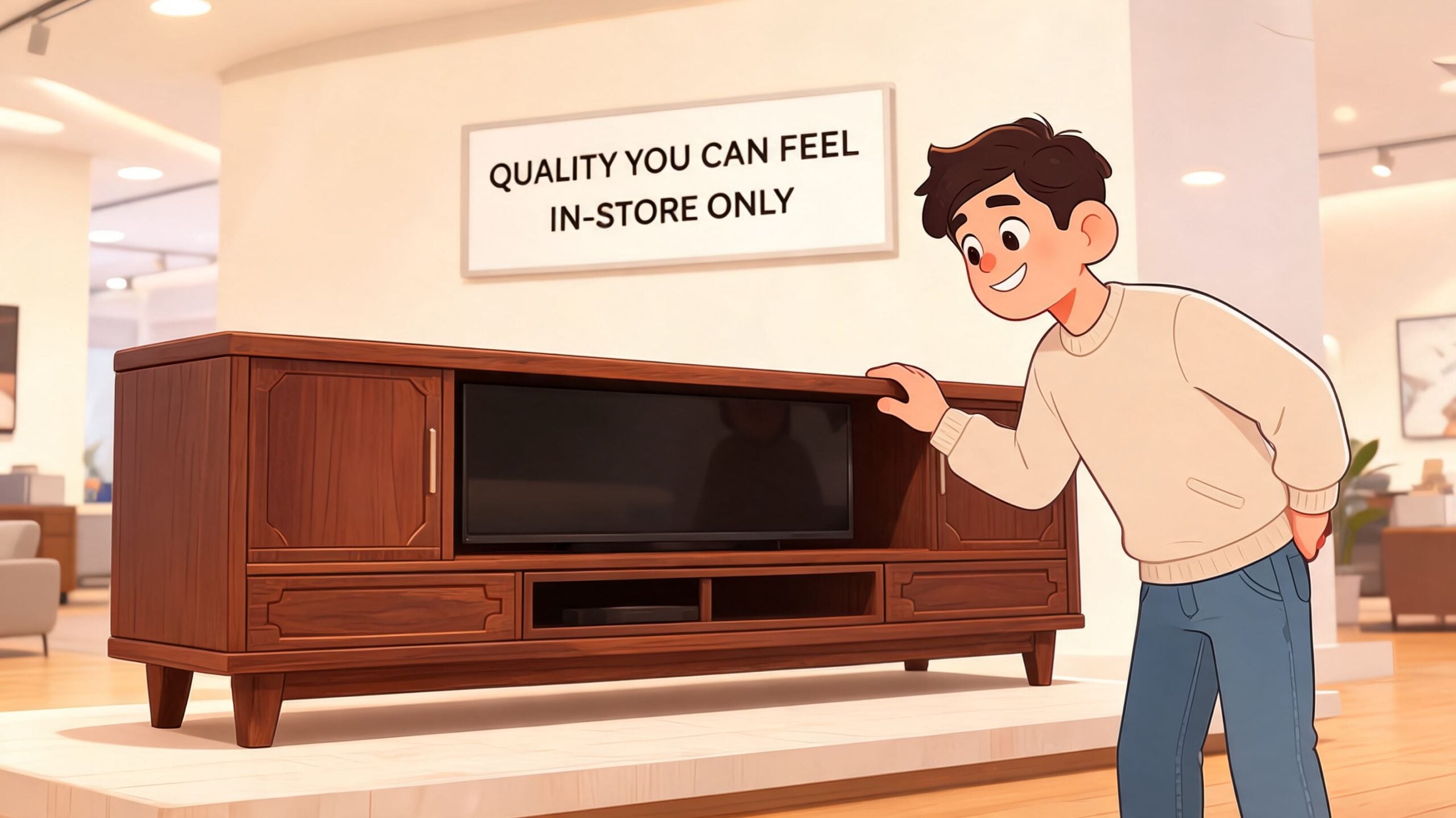
That in-person part matters, especially if you’re comparing a budget-conscious option with a better-built local alternative. Photos can flatten everything. Showrooms don’t. They let you test scale, storage, finish, and function with your own eyes.
For families who care about setup, delivery, and getting a piece into the house without headaches, it also helps to understand what white glove delivery service includes and why that can make ownership easier from day one.
There’s also something nice about shopping with people who aren’t rushing you through a transaction. A good furniture conversation should feel like advice from someone who wants your room to work well, not someone trying to push the next item on the floor.
If you’re in Metro Milwaukee, stop in, ask questions, bring your measurements, and take your time. A TV console might seem like a small purchase compared to a sofa or bedroom set, but it’s one of those pieces your family uses constantly. It’s worth getting right.
If you’d like friendly help sorting through better-quality entertainment furniture, solid wood options, Amish-made craftsmanship, or delivery questions, visit BILTRITE Furniture-Leather-Mattresses. We’re a fourth-generation, family-owned Milwaukee-area business, and we’d love to help you find a console that fits your home, your style, and the way your family lives.