Prices on Futons: A Friendly Guide to Value


Futon prices can run from about $159 to $194 for a basic full-size frame in past listings, while high-end futon sofa chair bed combinations have reached $2,478. However, the question isn’t just what the price tag says. It’s what that futon will give you over time.
If you’ve been shopping lately, you’ve probably seen the same thing we hear from neighbors in our Greenfield showroom all the time. One futon looks “cheap enough,” another is way higher, and both photos seem nice enough on a screen. That’s where prices on futons get confusing fast.
We’ve been helping Milwaukee-area families furnish their homes since 1928, and one thing hasn’t changed. The lowest sticker price doesn’t always mean the lowest cost to live with. A futon you use once in a while for guests is one thing. A futon that has to handle movie nights, sleepovers, apartment living, or everyday use is a whole different story.
Why Are Futon Prices So Different
A lot of shoppers start the same way. They search online, scroll through a few listings, and wonder why one futon costs about as much as a basic chair while another is priced more like a serious furniture purchase.
That price spread exists for a reason. Futons now cover a wide range of uses, from simple space-saving pieces to more substantial living room furniture. The category itself keeps growing, too. The global futon market is projected to continue growing from 2025 through 2033, according to Cognitive Market Research’s futon market report. That tells us more households are still turning to futons for flexible living.
One word means many different products
When someone says “futon,” they might mean:
- A simple guest-room frame with a basic mattress
- A small-space sofa-bed for an apartment or condo
- A heavier-duty wood-frame piece meant for regular sitting and sleeping
- A more design-focused model with upgraded fabric, arms, and better construction
That’s why comparing prices on futons can feel like comparing apples to casseroles. The word is the same. The build isn’t.
Practical rule: Don’t compare futons by photo first. Compare them by how often you’ll use them.
The price tag is only the first layer
At our store, we’ve always leaned toward affordable, better-quality furniture instead of throwaway furniture. That doesn’t mean every shopper needs the most expensive option. It means you should know what you’re paying for.
A futon meant for a college spare room may be just fine at a lower price. But if you want solid support, smoother operation, and a frame that doesn’t feel tired after repeated use, the math changes. The right question becomes, “Will this still work well for me a few years from now?”
If you want a closer look at how low-price options fit into the bigger value picture, our guide to cheapest futon beds and what quality really means is a helpful place to continue.
Decoding Futon Price Tiers
Some shoppers feel better once they stop looking at futons as one giant category. A simpler way is to group them into a few broad tiers based on use, materials, and expectations.
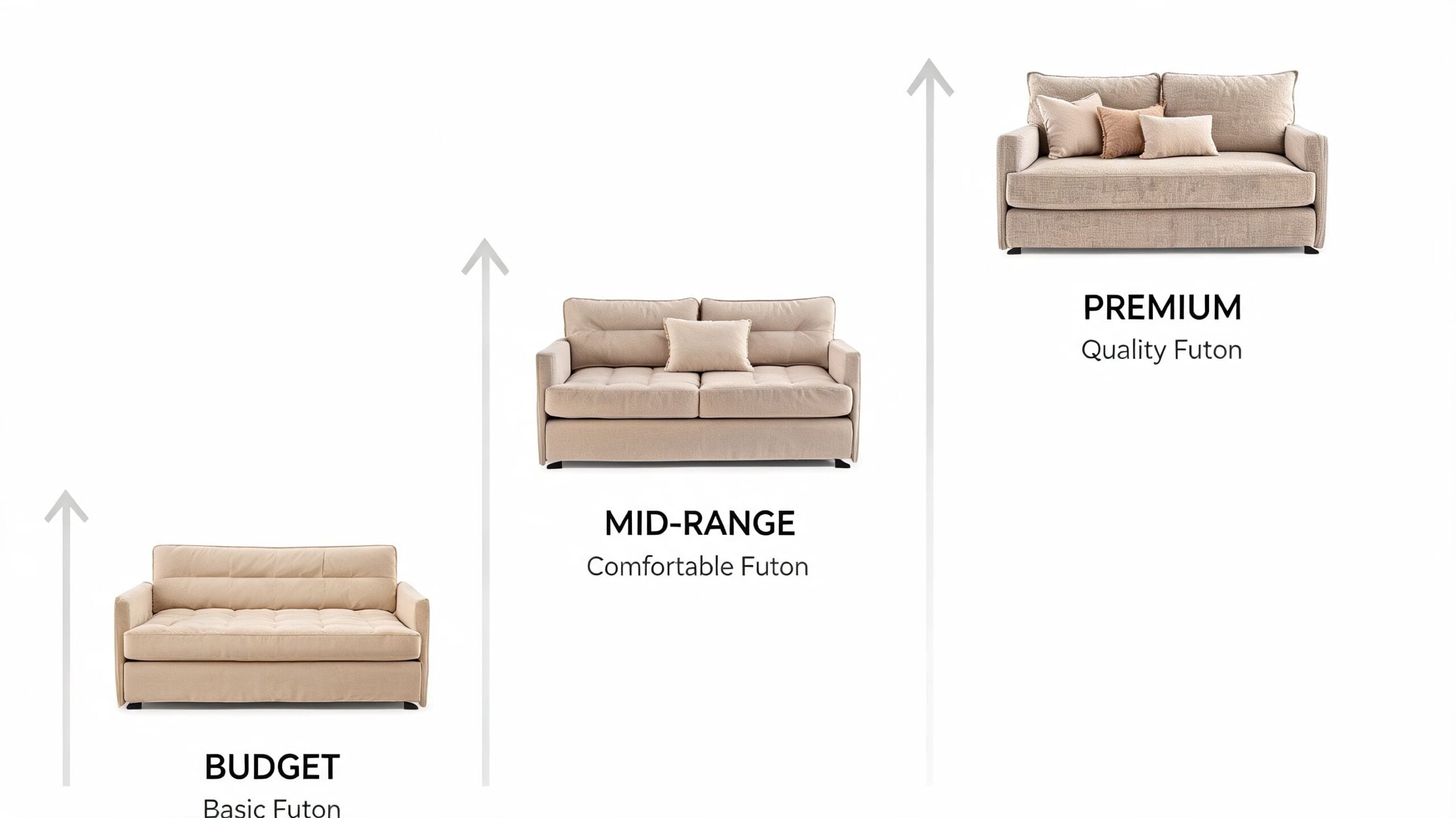
Historical pricing shows just how wide the range can be. A basic full-size futon frame has appeared around $159 to $194, while a premium futon sofa chair bed set reached $2,478, as shown in CamelCamelCamel pricing history for a futon product example.
The quick-fix tier
This is the “we need something functional” level. These futons usually fit shoppers who need a simple sleeping or sitting solution without expecting it to carry daily household life.
They often make sense for:
- A rarely used guest room
- A temporary setup
- A first apartment with a tight budget
At this level, you’re often paying for basic function first. Comfort, style details, and long-term durability usually come second.
The everyday-use tier
This middle ground is where many families land. These futons are usually a better match for a bonus room, den, office, or apartment living room where the piece will be actively used, not just looked at.
You’ll usually notice better balance in a few areas:
| Tier | What you’re usually paying for | Best fit |
|---|---|---|
| Quick-fix | Basic frame and basic conversion | Light use |
| Everyday-use | Better comfort, steadier construction, nicer styling | Regular sitting and occasional sleeping |
| Quality investment | Stronger materials, improved craftsmanship, longer service life | Frequent use and long-term ownership |
A lot of confusion happens when someone shops in the quick-fix tier but expects quality-investment performance.
The quality-investment tier
Past the initial concern for cost, the conversation shifts from “How cheap can I get one?” to “How well is this built?” A higher-end futon usually brings stronger materials, a more substantial frame, upgraded upholstery or finishes, and a more dependable everyday feel.
A futon can be inexpensive to buy and expensive to replace. It can also cost more up front and be easier to live with for years.
That’s why timing the purchase matters less than understanding the piece itself. If you’re trying to shop thoughtfully, our article on when is the best time to buy furniture can help you think beyond sale tags.
What Really Drives the Price of a Futon
Once you look past the overall shape, most futon pricing comes down to three parts. The frame, the mattress, and the cover and finish details.
Here’s a simple visual breakdown.
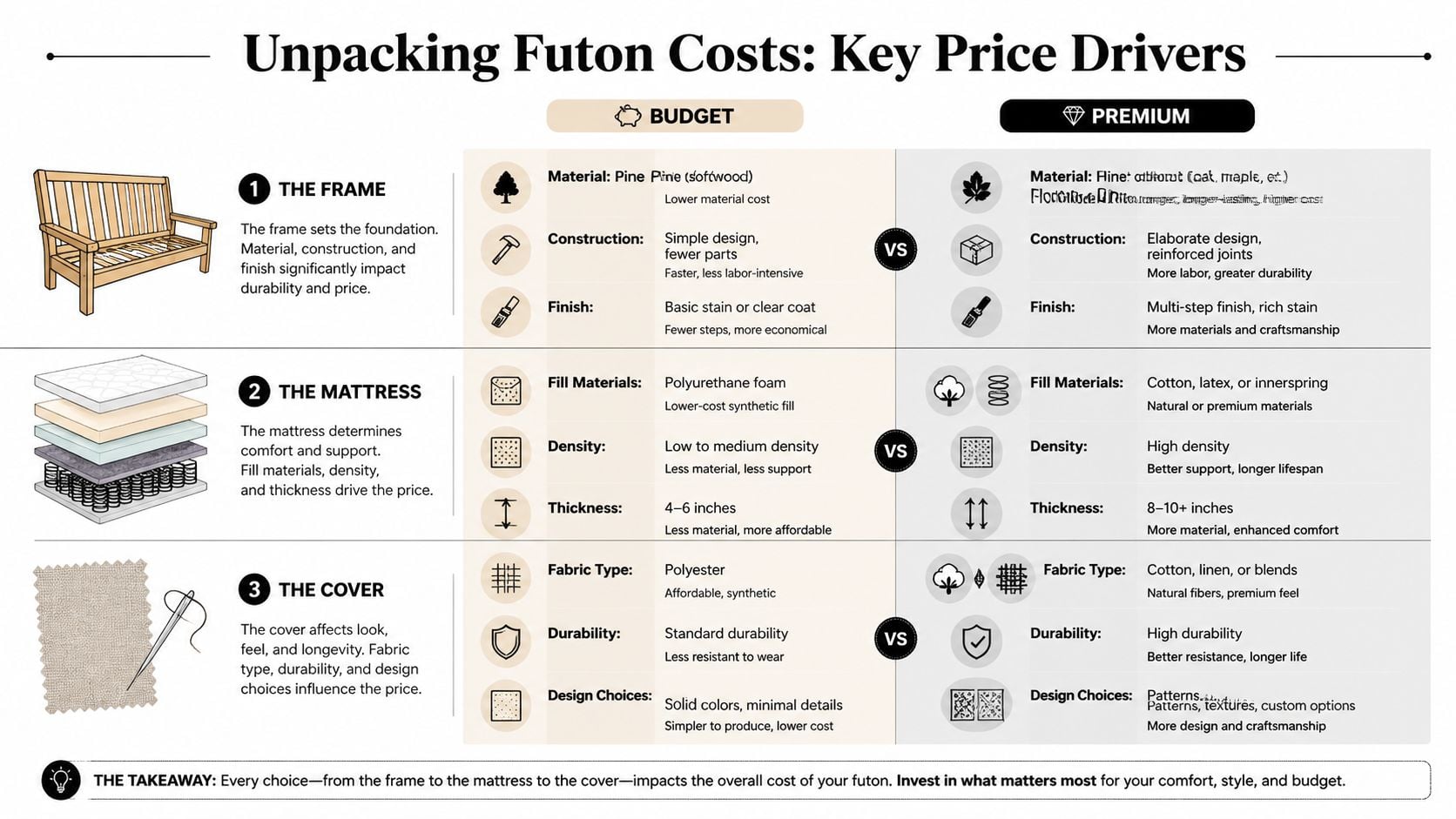
The frame matters more than most people think
The frame does the heavy lifting. It supports sitting, sleeping, folding, and repeated movement. If the frame is weak, the whole futon feels weak no matter how nice the cushion looks.
Verified frame data shows a big difference between wood types. Solid hardwood frames carry a 133% to 300% price premium over softwood, with hardwood frames listed around $400 to $800+ compared to $150 to $350 for pine or other softwood options, according to this futon frame durability and pricing analysis.
That sounds like a lot until you look at lifespan.
- Hardwood futons are associated with 10+ year lifespans
- Budget softwood models are associated with about 2 to 4 years
- A $500 hardwood futon lasting 10 years works out to $50 per year
- A $250 softwood futon lasting 3 years works out to $83 per year
That’s the heart of total cost of ownership.
The mattress changes both feel and value
Two futons can share a similar frame shape and still feel completely different. The mattress is why. Some are built mainly for occasional use. Others are meant to handle regular seating and sleeping without flattening out quickly.
When shoppers get frustrated, it’s often because they judged the futon by style alone and didn’t ask enough questions about what’s inside the mattress. A firmer, denser, better-built mattress usually costs more, but it also changes comfort in a big way.
What to ask in the showroom: “Is this mattress mainly for occasional guests, or is it built for regular use?”
Covers, finish, and moving parts add cost too
The outer fabric isn’t just decoration. It affects wear, cleaning, and how the futon fits your room. The same goes for the conversion action. A futon that opens and closes smoothly tends to reflect better construction than one that feels stiff, loose, or awkward.
Here’s a short checklist we like to use with shoppers:
- Check the wood first: Ask whether it’s softwood, mixed wood, or solid hardwood.
- Sit with purpose: Don’t just perch on the edge. Sit back the way you would during a real evening at home.
- Open and close it: If the mechanism feels clumsy on day one, it won’t get more charming later.
- Ask about intended use: Daily use and occasional use should not be priced or judged the same way.
If you enjoy shopping with a little more strategy, our smart furniture shopping guide walks through that process in plain language.
The Value of USA and Amish Craftsmanship
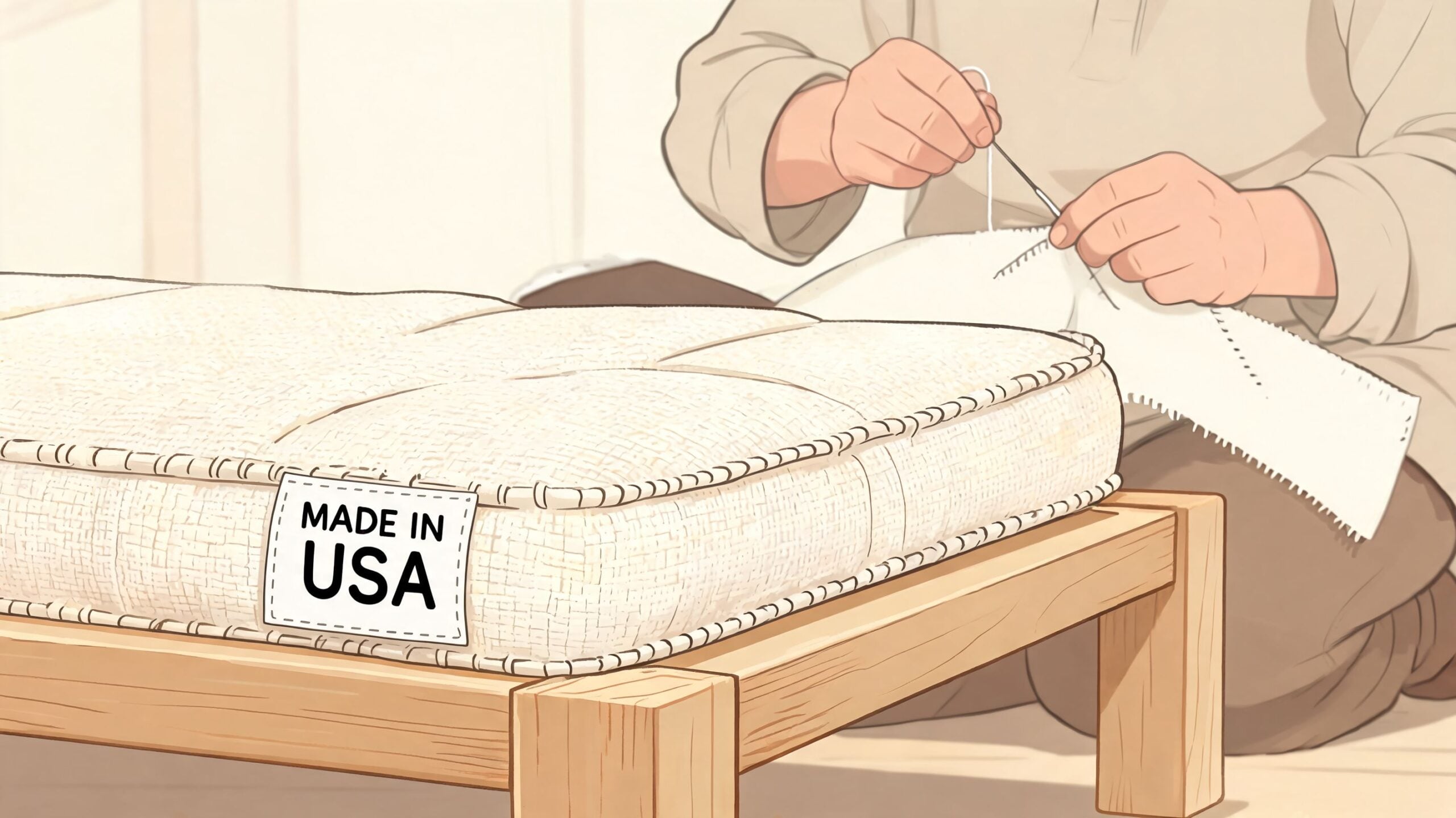
When we talk about better futon value, we’re not only talking about thicker wood or nicer fabric. We’re also talking about how the piece is made, who made it, and whether it was built with the expectation that someone will still want it years from now.
That part matters a lot to our family because American-made and Amish-made furniture has long been part of what we focus on in our showroom.
Craftsmanship shows up in daily use
A well-made futon often feels different in ways that don’t always jump off a price tag. The frame feels steadier. The finish looks cleaner. The operation feels more solid. The whole piece seems less “temporary.”
That’s why shoppers who care about long-term value often end up drawn to:
- Solid wood construction instead of lighter, less durable alternatives
- Better joinery and finishing
- Made-in-USA production with more consistent build standards
- Amish craftsmanship that emphasizes durability over shortcuts
None of that means every household needs the same thing. It does mean there’s a reason some futons cost more and still make sense.
Paying more can mean replacing less
We’ve seen this across many furniture categories, not just futons. A piece built with care often asks for more up front, but less drama later. Less wobble. Less wear. Less regret.
That’s especially important if your futon isn’t just backup furniture. If it has to function in a living room, home office, guest space, or smaller home where every piece has to earn its place, build quality matters.
Good craftsmanship isn’t about being fancy. It’s about buying a piece that still feels worth having after the novelty wears off.
If you’d like to learn more about what sets that style of construction apart, our article on the advantages of Amish furniture goes deeper into the details.
Futon vs Sleeper Sofa Which is Best for You
A futon isn’t the only answer, and we like being honest about that. Sometimes a sleeper sofa makes more sense. Sometimes a futon is the cleaner fit. The right choice depends on how you live.
Where a futon often makes more sense
Futons are usually a strong fit for people who want flexibility without too much fuss. They tend to work well in apartments, offices, spare rooms, and multipurpose spaces where the furniture has to adapt.
Many shoppers like futons because:
- The sleep surface is straightforward
- They’re often easier to understand mechanically
- They can suit smaller rooms well
- Wood-frame styles can bring a warmer furniture look
For someone who wants a practical sofa-bed without too many hidden parts, a futon can feel refreshingly simple.
Where a sleeper sofa may be the better pick
A sleeper sofa may fit better if your top priority is a more traditional couch look. Some shoppers want a piece that blends in completely with a living room setup and doesn’t read visually as a futon.
Here’s a simple side-by-side look:
| Question | Futon | Sleeper sofa |
|---|---|---|
| Need a simpler conversion? | Often a good fit | Can be more involved |
| Want a traditional sofa appearance? | Sometimes | Often stronger fit |
| Need a small-space solution? | Often very practical | Depends on model |
| Care about wood-frame style? | Common option | Less common |
The key is not to assume one category is always “better.” It’s more useful to ask what the room needs and how often guests will sleep there.
For a fuller side-by-side breakdown, our futon vs sofa bed comparison can help you narrow it down.
A good choice is the one that matches real life
If you host overnight guests a few times a year and need a compact seating piece the rest of the time, a futon can be very sensible. If you want the room to read as a traditional living room first and a sleep space second, a sleeper sofa may feel more natural.
That’s why we always encourage people to think about the room on a Tuesday night, not just during a holiday visit. That normal-life picture usually tells you which direction to go.
Find Your Futon at Our Milwaukee Showroom
A futon can look great on a screen and still disappoint the minute it reaches your home. The frame may feel lighter than expected. The mattress may sit firmer or flatter than it looked online. And for many Milwaukee-area shoppers, the biggest question shows up before anyone even sits down. Will it make it through the door, around the corner, and into the room where it needs to live?
That question matters a lot in older homes, condos, apartments, and senior living spaces. Price is only one part of the decision. A lower sticker price does not help much if the piece is awkward to deliver, hard to open, or not built for the way you plan to use it.
Seeing futons in person clears up a lot of that confusion. You can feel the difference between a lighter frame and solid wood. You can open and close the mechanism yourself. You can compare a guest-room futon with one that needs to handle more regular sleeping, the same way you would compare a weekend-use grill to one built for nightly family dinners.
Local shoppers often come in looking for help with practical questions like these:
- Small-scale furniture for apartments and tighter rooms
- Heavier-duty pieces for households that need extra support
- Come-apart sofas and sectionals for narrow entries and tricky stairways
- In-person guidance so the purchase fits the room, the doorway, and the budget
At BILTRITE Furniture-Leather-Mattresses, those details can be sorted out face to face instead of guessed from a photo. That usually leads to a better choice, especially if you are trying to weigh total cost of ownership against the tag on day one.
A well-made futon often costs more upfront for the same reason a good pair of work boots costs more than a bargain pair. Better materials usually last longer, feel better in daily use, and create fewer regrets later. If a stronger frame, a better mattress, or a smarter delivery fit keeps you from replacing the piece early, the higher starting price can end up being the better value.
Our team brings generations of furniture experience to those conversations, and that helps when the answer is not obvious. Some shoppers need a futon for a guest room that gets used a few times a year. Others need something that will be sat on every day, slept on regularly, and moved into a tighter space without trouble.
We are also closed on Sundays and Mondays because family time matters to us. That has been part of how we do business for a long time.
If futon prices feel confusing, the clearest way to understand them is to sit on a few, open a few, and compare the materials side by side.
We’d love to see you in Greenfield. Stop by BILTRITE Furniture-Leather-Mattresses and let our family help you compare futon options with honest guidance, solid value, and real in-person testing that makes the price differences much easier to understand.