How to Remove Odor From a Leather Couch: A Fun, Easy Guide

Hey neighbor! So, your leather couch has a funky smell, huh? Before you can tackle it, you have to do a little detective work. Is it a pet accident? A spilled drink? Maybe a bit of mildew from our humid Wisconsin summers? Each one needs a slightly different game plan.
Identifying That Mystery Smell on Your Leather Couch
Our family has been in the furniture business here in the Metro Milwaukee area since 1928, so believe us, we've heard it all when it comes to strange furniture smells! If your favorite leather couch has started to smell a little…off, you're not alone. It happens to the best of us, whether it's from a furry friend, a Friday night food fumble, or just years of family movie nights.
But before you start scrubbing, let's figure out what we're up against. Pinpointing the source is the single most important step in getting your beautiful USA-made or Amish-crafted leather furniture smelling fresh again.
Common Couch Odors and Their Causes
Different smells tell different stories. Don't be shy—get up close and take a good sniff. A sharp, ammonia-like scent is a dead giveaway for a pet accident. If it's more of a damp, earthy odor, you're probably dealing with mildew.
Here’s a quick rundown of the usual suspects:
- Pet Odors: This is often a sharp, distinct smell, usually concentrated where your pet had an accident or has claimed their favorite nap spot.
- Food and Drink Spills: These can range from sour, like spilled milk, to just plain stale and old.
- Musty or Mildew Smells: A very common issue in Metro Milwaukee homes! This points to moisture that's gotten trapped in or under the cushions.
- Smoke: This is a tough one. It’s a lingering, acrid smell that seems to have soaked into the entire piece of furniture, not just one area.
To help you get started, here's a quick reference guide to point you in the right direction.
Quick Odor Identification Guide
| Odor Type | Common Cause | First Action Step |
|---|---|---|
| Sharp & Ammoniac | Pet urine | Blot the area immediately with a clean, dry cloth. |
| Sour or Spoiled | Food/drink spills (e.g., milk) | Gently wipe with a damp cloth and mild soap solution. |
| Damp & Earthy | Mildew or mold | Air out the cushions in a dry, sunny spot if possible. |
| Acrid & Pervasive | Cigarette or fire smoke | Ventilate the room and wipe the entire couch down. |
This table should give you a solid starting point for diagnostics. Once you have a good idea of the cause, you can move on to the right cleaning method.
Since BILTRITE Furniture opened its doors in Greenfield, Wisconsin, back in 1928, we've seen countless leather couches, many carrying unwanted odors. It’s a very common issue—in fact, some reports show that up to 65% of leather furniture owners report odor issues within the first five years, often due to pet accidents, smoke, or mildew.
Knowing the type of leather you have is also a huge help. Our guide on upholstery materials can give you a better idea of what you're working with.
Once you’ve nailed down the culprit, you’re ready to pick the right cleaning method. And if you're ever stumped, our awesome sales associates—with over 400 years of combined experience—are always here to help. Just stop by our showroom in Greenfield, and we can talk about keeping your furniture in fantastic shape for years to come.
Starting with Gentle DIY Deodorizing Methods
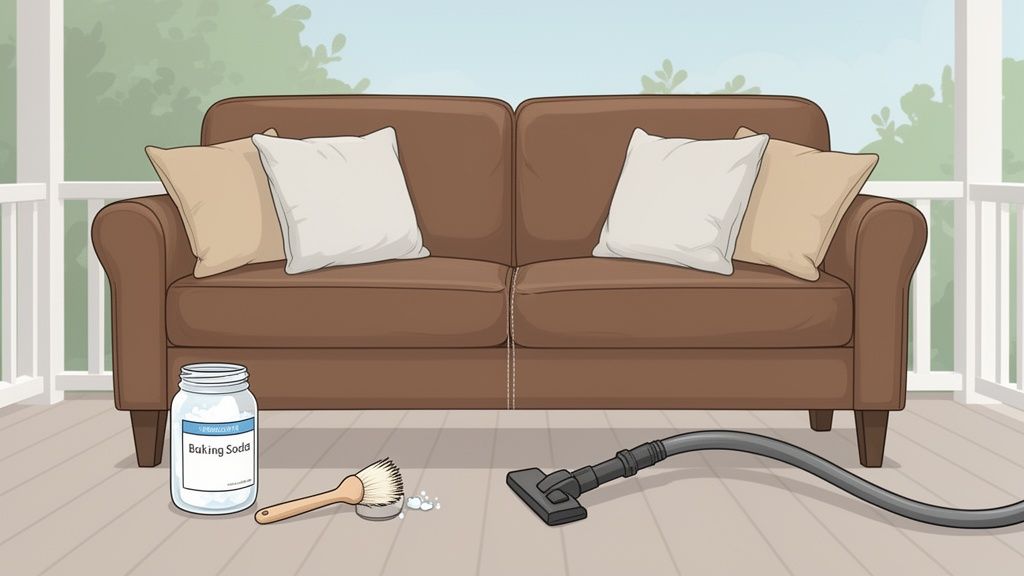
Before you reach for any heavy-duty cleaners, let’s start with the simple, safe solutions our family has relied on for decades. More often than not, a gentle approach is all your leather couch needs to get back to smelling fresh and clean.
We’re going to walk through two incredibly effective methods using household staples you probably already have: fresh air and baking soda. These are the safest first steps for any type of leather, from the durable sectionals we have for big families to more delicate, high-end styles.
The Surprising Power of Fresh Air
Sometimes, the best fix is also the easiest one. If your couch just has a general stuffiness or a mild, lingering smell, a little fresh air can truly work wonders. Leather is a natural, porous material—just like us, it benefits from good ventilation.
Here’s our go-to process for airing out a piece of furniture:
- Find a Shaded, Dry Spot: A covered porch, an open garage, or even just a room with all the windows wide open is a great choice. The key is to avoid direct sunlight. Direct sun is leather’s enemy; it will cause fading and drying, so always stick to the shade.
- Take All the Cushions Off: Pull off every removable cushion and pillow. Stand them up on their sides so air can circulate all around them. This is crucial for releasing trapped odors from deep within the couch’s frame and foam.
- Give It Plenty of Time: Let the couch and its cushions air out for at least several hours. If the weather is nice and dry, a full day is even better. You’ll be surprised how much this simple step can dissipate those unwanted smells.
Using Baking Soda to Absorb Odors
If a good airing out didn’t quite do the trick, it’s time to bring out the secret weapon of household cleaning: baking soda. It's not just for baking! Baking soda is a natural, gentle deodorizer that excels at absorbing stubborn smells, whether they’re from last night’s takeout or your family pet’s favorite napping spot.
A little BILTRITE family secret: use a soft, dry brush to gently work the baking soda into the seams and crevices of the couch. Odors love to hide in those tight spots, and this helps the baking soda get right to the source.
Applying it is simple. First, make sure your couch is completely dry. Then, sprinkle a generous layer of baking soda over the entire surface, paying extra attention to the areas that seem to be the source of the smell.
Let it sit for at least a few hours. For really tough, set-in odors, letting it sit overnight is your best bet.
Once the baking soda has worked its magic, it's time for cleanup. Grab a vacuum with a soft brush attachment and carefully suck up all the powder. Be thorough and make sure you get into all the nooks and crannies! For more tips, check out our guide on how to clean leather furniture naturally. These gentle methods are always a fantastic starting point for any odor issue.
Using a Vinegar Solution for Tougher Odors
So, you’ve tried fresh air and baking soda, but a stubborn smell is still hanging around your leather couch? Don't throw in the towel just yet! It’s time to pull out a slightly stronger, yet still perfectly natural, solution from our family playbook: the classic white vinegar and water mix.
It might sound a bit old-fashioned, but this method is a true lifesaver for those really persistent odors. Vinegar is incredible at neutralizing acidic smells like pet urine and cutting through musty scents that can pop up during our humid Wisconsin summers. It’s a go-to in our homes for a reason!
Mixing and Applying Your Solution
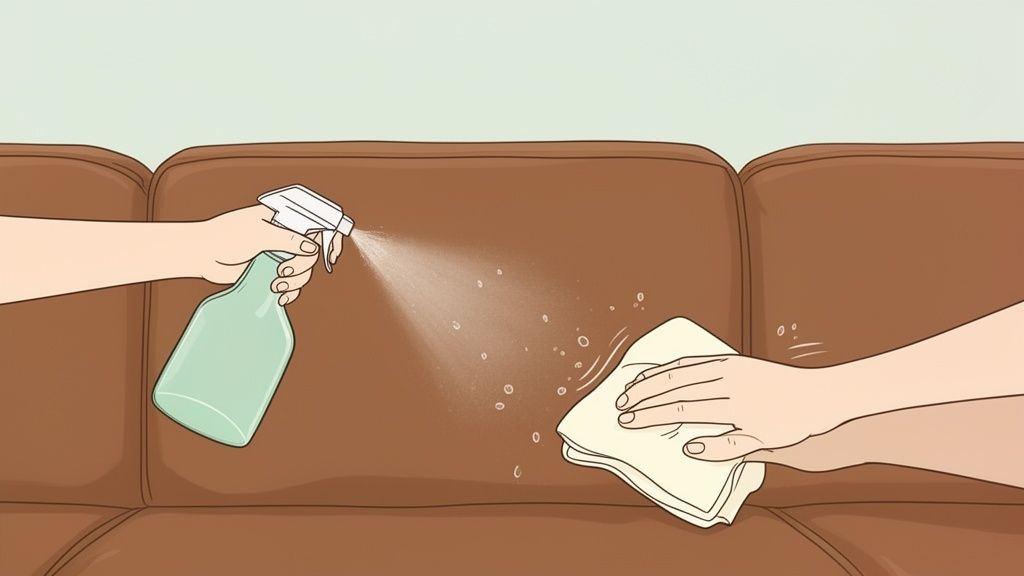
The recipe is about as simple as it gets. Just mix equal parts plain white vinegar and water in a clean spray bottle. Give it a quick shake, and you're ready to tackle that odor.
Now, how you apply it is what really matters. You want to lightly mist the smelly area, not drench it. Think fine dew, not a downpour. Over-saturating leather can lead to water spots or even damage, and nobody wants that.
Here’s our trusted method:
- Always Spot Test First! This is non-negotiable. Find a hidden spot on your couch—like on the back or under a cushion—and spray a tiny amount. Gently wipe it and let it dry completely to make sure it doesn’t mess with the color of your leather.
- Mist Lightly. Once you’re in the clear, hold the bottle about a foot away from the surface and give the affected area a light, even misting.
- Wipe, Don't Scrub. Immediately grab a soft, clean cloth (microfiber is great for this) and gently wipe the solution away. The goal is to let the vinegar work its magic on the odor without soaking deep into the leather.
This trick works wonders for a lot of smells, but it's especially good against mildew. In fact, that sharp, vinegar-like tang of mold is an issue for about 35% of leather couches in high-humidity places like the Midwest. A simple white vinegar solution is the gold standard, neutralizing 75-90% of those odor-causing acids without any harsh chemicals.
Ensuring a Dry and Fresh Finish
After you’ve wiped the surface, the final and most crucial step is letting the leather dry completely. You can aim a fan at the spot or open a window to get the air circulating and speed things up. This helps prevent any water marks and ensures that the vinegar smell—which will fade as it dries—disappears right along with the bad odor.
This same principle of tackling odors without harsh chemicals applies to other furniture, too. If you're dealing with a funky smell somewhere else in the house, our guide on how to remove smells from your mattress might be just what you need.
Keeping Your Leather Couch Smelling Fresh for Years
Fantastic job! Your couch smells fresh and clean again. Now, the big question is how to keep it that way. At BILTRITE, we know that protecting the beautiful USA-made or Amish-crafted furniture you invested in is all about prevention.
Think of it this way—an ounce of prevention is worth a pound of cure, especially with leather. A few simple, consistent habits can stop new odors from ever taking hold. It doesn't take much, but it makes a world of difference in keeping your furniture a welcoming centerpiece of your home for years to come.
Build a Simple Maintenance Routine
The number one secret to long-term freshness is stopping odor-causing dirt and dust from building up in the first place. You don't need a complicated plan; just a few minutes each week will do the trick.
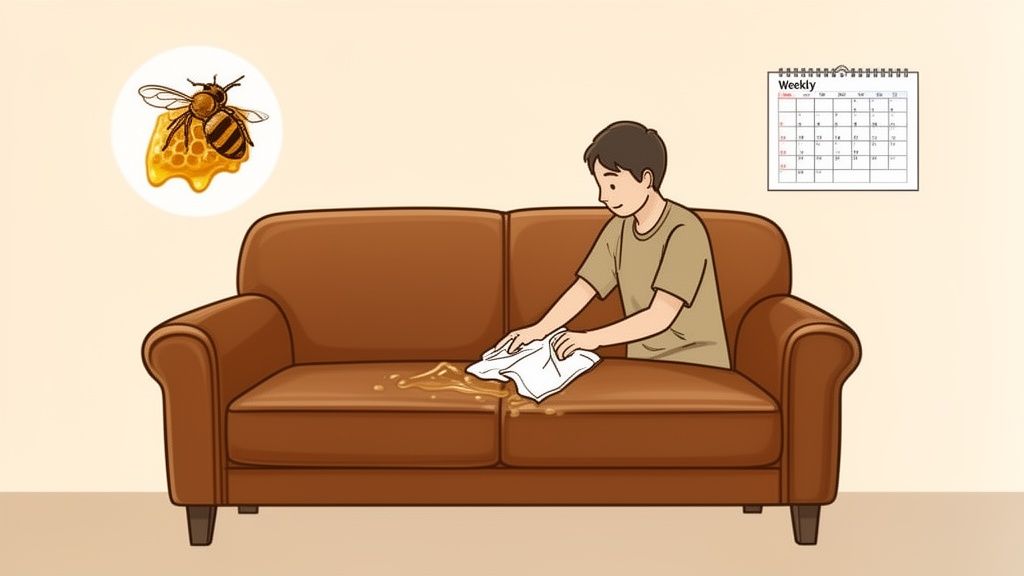
Make it a habit to give your leather couch a quick wipe-down with a dry microfiber cloth during your weekly cleaning. This lifts away dust and allergens before they can settle into the grain.
Then, grab your vacuum and use the soft brush attachment to get into the seams and crevices. Crumbs, pet hair, and other little bits of life love to hide there, and they can be a major source of odors over time if left unchecked.
The Importance of Leather Conditioning
Here’s a tip our family has passed down for generations: leather is a natural material, and just like skin, it needs moisture to stay healthy. Dry, brittle leather is far more likely to crack and absorb spills and smells. That’s where conditioning comes in.
Regular conditioning keeps your leather supple and creates a protective barrier. We've always had the best results with conditioners that use natural ingredients like beeswax. They nourish the leather without leaving a greasy or sticky residue.
A well-conditioned couch is a happy couch! It not only feels softer but also resists stains and smells much more effectively. Think of it as giving your furniture a shield against everyday life.
Applying it is easy. Just put a small amount on a soft cloth and work it into the leather in gentle, circular motions. For a detailed walkthrough, check out our guide on how to condition a leather sofa, which covers everything you need to know. Aim to condition your couch every six to twelve months to keep it in fantastic shape.
Smart Habits for a Fresh-Smelling Couch
Finally, a few smart habits can prevent most odor emergencies before they even start. How you live with your leather furniture makes a huge impact on its longevity and freshness.
- Be Mindful of Placement: Keep your leather furniture away from direct sunlight, which can cause fading and drying. Also, try to avoid placing it in damp areas like basements, as that’s an open invitation for musty mildew smells.
- Act Fast on Spills: Accidents happen, especially in a busy family home! The key is to blot spills immediately with a clean, dry cloth. Don't rub—blot! The quicker you absorb the liquid, the less chance it has to soak in and leave a lasting odor.
These simple habits will protect your investment and ensure your couch is a source of comfort, not concern. If you ever have questions about caring for your specific piece, come say hi at our Greenfield showroom! Our team loves to share what we've learned since 1928.
Knowing When to Call a Professional for Help
We’re big believers in a good DIY fix here at BILTRITE. Our family has been sharing these kinds of tips since we first opened our doors back in 1928, and we love empowering our customers. That said, we also know when it's time to call in the experts.
Some odors are just too stubborn for household solutions, and that’s perfectly okay! Think of it as protecting your investment. You chose a beautiful, better-quality leather couch for a reason, and sometimes the smartest move is to let a professional leather cleaning service take over. Their expertise can be the difference between a fresh-smelling couch and one that's accidentally damaged.
Signs It Is Time to Make the Call
If you find yourself nodding along to any of the points below, it's probably time to put down the vinegar spray and pick up the phone.
- The Smell Just Won't Quit: You’ve aired it out, tried baking soda, and even used the vinegar solution, but that funky odor is still hanging on for dear life.
- You're Dealing with Severe Mold or Mildew: A small musty spot is one thing. But if you see significant mold growth, it's a job for a professional who can safely remove it without spreading spores throughout your home.
- The Stain is Large or Deeply Set-In: A huge, mysterious stain that’s been there for a while needs more industrial-strength power than a simple home remedy can provide.
- You're Worried About Damage: If you’re already concerned about issues like peeling or cracking, it’s best to let an expert handle the cleaning. You can learn more about why your leather couch is peeling in our detailed guide.
Professional leather cleaning is a real game-changer. An analysis of over 10,000 jobs found that expert treatments restored 92% of odor-plagued couches to like-new condition. They also reduced embedded pollutants like allergens by 85%.
At BILTRITE, we know our Amish and USA-made leather sofas deserve expert care to last for generations. Professional services have specialized, pH-balanced cleaners and tools to deep-clean your couch safely. They can correctly identify the leather type and use the right method for the job. You can explore more about professional leather cleaning methods and their effectiveness to see exactly how they do it.
Bringing in a pro is a worthy investment to keep the furniture you love in the family. And when you're ready for your next quality piece, come on down to our showroom in Greenfield—we’d love to help!
Common Questions About Leather Couch Care
We get a lot of questions about leather care from our friends and neighbors here in the Metro Milwaukee area. After being in this business since 1928, our family has heard just about everything! Here are a few of the most common questions we hear in our Greenfield showroom, along with our best, honest advice.
Can I Use Commercial Leather Cleaners From a Big Box Store?
You certainly can, but we always say to proceed with caution! Many commercial cleaners are filled with harsh chemicals that can strip the natural oils right out of your leather. This can lead to dryness, cracking, or even discoloration over time.
The wrong product on the wrong type of leather can cause irreversible damage. That's why we always recommend starting with gentle, natural methods first. If you do decide to go with a commercial product, ALWAYS test it on a small, hidden area of your couch—like underneath a cushion—to see how the leather reacts before applying it everywhere.
How Often Should I Clean and Condition My Leather Couch?
For general upkeep, a light dusting or vacuuming with a soft brush attachment once a week is a fantastic habit. This simple step prevents everyday dirt and grime from settling into the grain and causing future problems. It’s a small effort for a big reward!
As for a deeper clean and conditioning, we typically recommend doing it once or twice a year. The frequency really depends on how much use your couch gets.
- If it’s in a high-traffic family room with kids and pets, conditioning every six months is a great idea to keep it protected.
- For a couch in a quieter part of the house, once a year should be plenty to keep the leather hydrated and happy.
Think of leather conditioning like moisturizing your own skin. In a climate like ours with dry winters, it's essential for preventing cracks and keeping the material soft and resilient. A well-cared-for couch is one that lasts for generations.
My New Leather Couch Has a Strong Chemical Smell. Is That Normal?
Yes, this is completely normal and almost always temporary! That distinct "new leather" smell is often a combination of the tanning process and the finishing products used to protect the material. Don’t worry; it won’t stick around for long.
The best way to deal with it is good old-fashioned ventilation. If you can, open the windows in the room for a few days to let the couch air out. This scent is caused by Volatile Organic Compounds (VOCs) off-gassing, and fresh air is the quickest and most effective way to dissipate them.
The smell should fade significantly within a week or two. If it’s really bothering you, you can also try the baking soda trick we mentioned earlier in this guide to help absorb some of that initial strong odor. It’s a safe and easy way to speed up the process.
At BILTRITE Furniture, we're passionate about helping our Metro Milwaukee neighbors find and care for furniture they'll love for a lifetime. Whether you're looking for durable USA-made pieces, timeless Amish craftsmanship, or one of the 60+ mattress models we have in stock, our family is here to help. We’d love to see you in our store! Come say hi and let our team's 400+ years of combined experience guide you! https://www.biltritefurniture.com