Small Tables for Kitchen: Smart Picks for Tight Spaces


A renter nudges a folding table away from the refrigerator so the door can open. A parent shifts homework aside to make room for breakfast, while mail, laptops, and grocery bags compete for the same few inches of tabletop. That's the daily reality behind the search for small tables for kitchen spaces. The right table shouldn't merely fit. It should help the room work harder.
The best choice usually isn't the smallest top available. A fixed round table may handle weekday meals beautifully, but a drop-leaf or extendable design can preserve circulation most days and create room when family or friends visit. Shape, height, clearance, material, and household routine all matter more than a quick measurement against the wall.
When a Tiny Kitchen Feels Like a Big Puzzle
A renter pulls a table away from the refrigerator so the door can open. A parent clears homework for breakfast, while mail, laptops, and grocery bags compete for the same tabletop. In a small kitchen, one oversized choice can disrupt the whole room.
A table that is slightly too wide can block foot traffic, pin chairs against cabinets, or force people to turn sideways between the table and counter. A top that is too small creates another problem, becoming a permanent drop zone instead of a useful place to eat, work, or gather.
Shoppers naturally ask for the smallest table possible, especially in an apartment, condo, kitchenette, or breakfast nook. That instinct makes sense, but permanently tiny is rarely the smartest target. A drop-leaf or extendable table often keeps daily circulation open while giving you useful surface when guests arrive. Explore small-space furniture solutions that address the table, seating, and surrounding layout together. BILTRITE's small-scale and Amish-made options are worth considering when you want adaptable construction without filling the room.
Compact kitchen tables have long served as working household furniture, not merely decorative dining pieces. Historical writing about the British working-class kitchen table describes it as a daily center for eating, work, and family life, while showing how its role shifted as domestic space and household patterns changed after the Second World War. The kitchen table's domestic history explains why today's small tables for kitchen use still need to handle several jobs.
The showroom questions that matter
Start with routine, then judge the style:
- Who eats there daily? A couple needs a different footprint from a family that also uses the table for schoolwork.
- What else happens there? Homework, remote work, crafts, meal preparation, and entertaining all affect the best design.
- How does traffic move? A table near a refrigerator, doorway, radiator, or main walkway needs careful clearance.
- What happens on weekends? Occasional guests make an extendable or drop-leaf top more useful than a permanently tiny surface.
Practical rule: A small table should be judged by the space it needs with chairs pulled out, not by the tabletop alone.
Round or rectangular, fixed or adaptable, and standard or counter height each involve a trade-off. Measure the working space first, then choose the table that serves ordinary days and occasional company.
Picking the Right Table Height for Your Space
A couple eats breakfast, one person answers email, and a child finishes homework at the same small kitchen table. Height determines whether those jobs feel comfortable or awkward, so choose for daily use rather than the smallest possible footprint.
Standard dining height is about 28 to 30 inches, according to small-area dining furniture guidance. It is the safest starting point for most apartments, works with ordinary dining chairs, and suits meals, homework, and longer seated tasks. For a compact room, BILTRITE's small-scale and Amish-made tables are worth considering, especially when a drop-leaf or extendable design gives you more surface only when guests arrive.
Counter height creates an island-style setup. It pairs with counter stools and connects visually with nearby counters, making it useful for quick meals, food preparation, or brief standing tasks. Check the stool height carefully. A taller seat does not suit every adult or child, and the foot support must feel stable.
Bar height raises the surface further. Stools can tuck beneath it, saving some visual and floor space in a tight eat-in kitchen, but the trade-off is comfort. Young children, shorter adults, and anyone who needs easy seated access may find it awkward. Standard dining height also gives wheelchair users a simpler relationship between seat and tabletop because the underside is easier to match.
Small Kitchen Table Heights at a Glance
| Height Style | Top Height | Seat Height | Best For | Main Trade-off |
|---|---|---|---|---|
| Standard dining | About 28–30 inches | Typical dining-chair seat | Everyday meals, homework, families | Uses chairs that need room to pull back |
| Counter | About 34–36 inches | Counter stool height | Island-style kitchens, flexible work surfaces | Taller seating may not suit every household |
| Bar | About 40–42 inches | Bar stool height | Tight spaces where stools tuck underneath | Less comfortable for toddlers and some adults |
These ranges are summarized in BILTRITE's dining table height guide. Ceiling height affects the visual result too. Standard dining height keeps a low-ceiling kitchen calmer, while counter or bar height makes more sense when surrounding cabinetry and stools already establish a taller line.
Before buying, sit at the table with the intended chair or stool. Leave knee space beneath the top and enough room to pull seating out without blocking the walkway. A drop-leaf or extendable standard-height table usually serves apartment living better than a permanently tiny top. Families with toddlers should favor stable seating and clear supervision over the last bit of floor savings.
Sizing Your Small Table Without the Guesswork
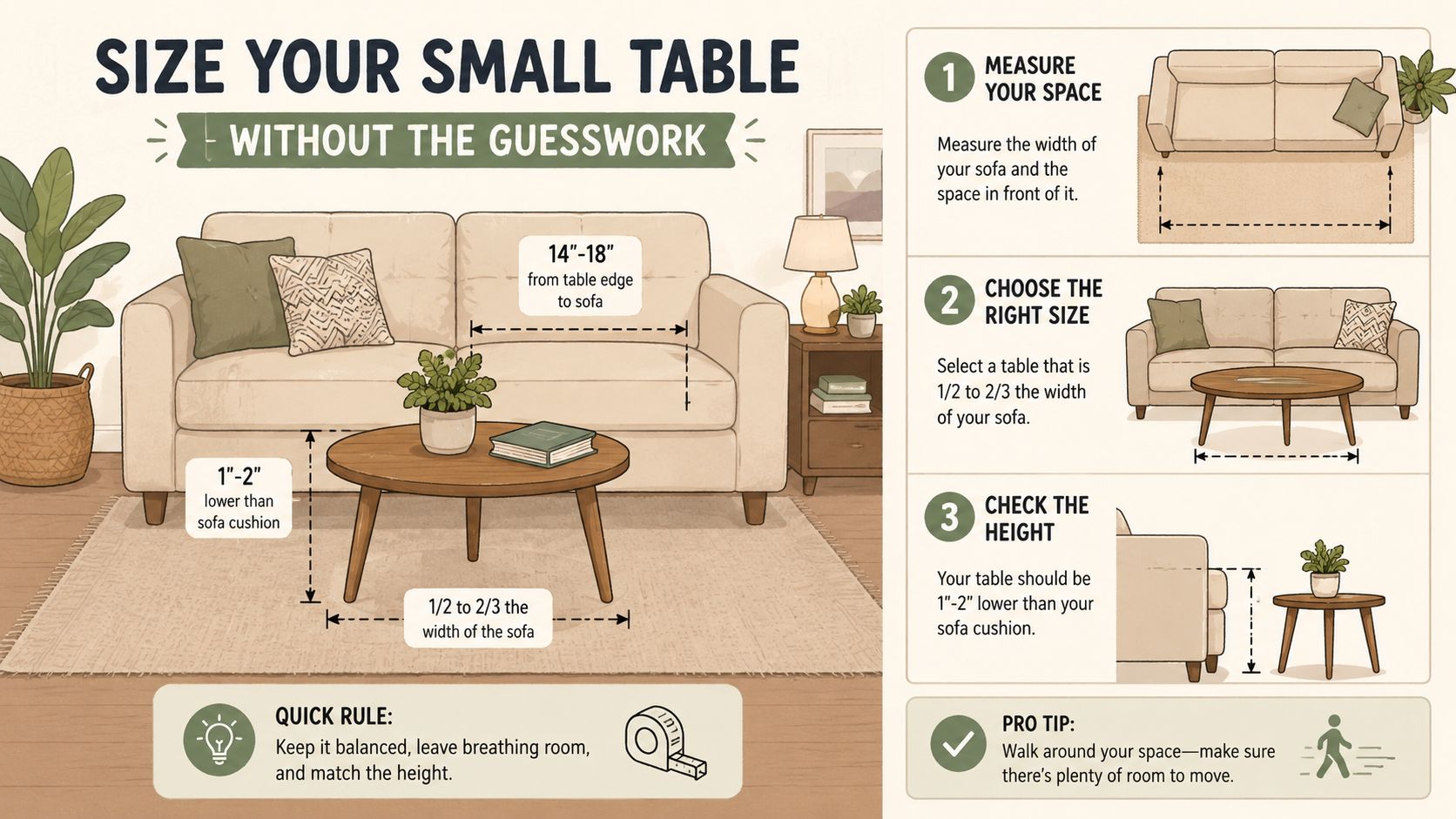
The measurement process starts with the usable area, not the room's advertised dimensions. Subtract the space occupied by appliances, cabinet doors, door swings, radiators, and any path people must use to reach another room. Then place the proposed table inside what remains.
Sizing guidance commonly places compact tables in the 2-to-4-person range, with round designs scaling from intimate two-person settings to small-family use. One guide lists a 25.6-inch round table for 2 to 3 people, a 29.5-inch table for 3 to 4, and a 33.4-inch table for about 4 people. The same guide identifies a 19.7-inch table for 2 people in a 6-foot by 6-foot room, while a 39.3-inch round table can seat 6 comfortably. Compact table sizing guidance gives shoppers a practical range, but the chair envelope still determines whether the arrangement works.
A separate planning guide places two-seater round tables at 22 to 28 inches, four-seater tables at 34 to 38 inches, and six-seater tables at 40 to 44 inches. These figures are useful starting points, not permission to ignore the room around them.
Measure the chair zone
Allow at least 36 inches from the table edge to walls or obstacles so chairs can slide out. Primary walkways benefit from 42 to 48 inches, while 32 inches may work only when nobody needs to pass behind a seated diner, according to dining-room clearance guidance.
Painter's tape makes the test simple. Mark the tabletop on the floor, then mark the chair positions and walk around the perimeter. Open the refrigerator and nearby cabinet doors. Sit in each taped chair position, pull it back, and check whether another person can pass without twisting.
Use this quick cheat sheet before shopping:
- Two diners: Consider a compact round or rectangular top, but test chair movement first.
- Three to four diners: A modest round top often keeps circulation smoother than a cornered rectangle.
- Daily work use: Add surface area for laptops, notebooks, or craft supplies rather than sizing only for plates.
- Traffic path: Treat 36 inches as the minimum around the table and aim wider where people regularly walk.
- Nook: Check baseboards, outlets, radiators, and window trim before choosing the final footprint.
For additional planning help, shoppers can review BILTRITE's dining table size guide. A good measurement on the floor is more reliable than judging a table by its showroom appearance.
Shapes That Actually Work in Small Kitchens
Shape controls traffic flow as much as seating. Round tables remove sharp corners from busy paths, while rectangular tables make better use of a narrow wall or galley layout. Square tables can fit a true nook neatly, but they may waste corner space when the household needs to move around all four sides.
A 36-to-44-inch round table is commonly recommended for compact kitchens and is generally described as seating up to four people comfortably. Round table sizing guidance also presents a 42-inch round table as a practical fit for small kitchens and eat-in spaces. Seating planning often allows 22 to 24 inches of table edge per person, with 24 to 30 inches offering a more comfortable place setting, as outlined in round dining table planning rules.
Compare the daily footprint
| Shape | Daily Footprint | Seats When Expanded | Best For |
|---|---|---|---|
| Round | Compact, with no corner intrusion | Up to four in a compact setting | Walkways, eat-in nooks, family interaction |
| Square | Efficient against two walls or a banquette | Usually limited unless specially designed | Corner nooks and balanced seating |
| Drop-leaf | Can sit close to a wall when folded | Expands for shared meals | Apartments and multipurpose kitchens |
| Extendable | Slightly more structure every day | Adds capacity for guests | Households that host occasionally |
A rectangular table wins a narrow galley when its long edge runs with the room. A round table wins where people pass around the table or where a corner would catch hips and bags. A square design works well with a banquette, but it needs careful attention to the person seated in the corner.
Drop-leaf tables deserve more respect than they usually get. When folded, the leaf can keep the table close to a wall, then open for a family meal. Extendable tables make a similar trade, using a little more daily space in exchange for meaningful flexibility when guests arrive. Current market reporting describes continued demand for multifunctional and extendable dining tables, with compact and foldable designs identified as an opportunity area in a recent dining table market report.
Leave at least 24 inches behind every chair for basic sit-and-stand comfort, and use the wider clearance guidance from the sizing section when that space is also a walkway. More shape and seating advice appears in BILTRITE's guide to table shapes and seating arrangements.
Why Materials Matter More Than You Think
A small kitchen table often gets more abuse than a formal dining table. It catches coffee rings, homework marks, grocery bags, craft supplies, and hurried meals. The material determines how calmly the surface handles that routine.
Solid wood is the strongest all-around recommendation for daily family use. Oak, maple, and walnut offer a substantial feel, while solid wood furniture guidance describes these tables as durable, sturdy, and suited to long-term everyday use. Solid wood dining table guidance also notes that solid wood can resist dents and offer lasting value compared with composite materials.
Match the surface to the household
Veneered MDF and plywood can provide stable, budget-conscious options, especially in apartments where seasonal indoor dryness may be a concern. They can look attractive and keep the overall price accessible, but damaged edges and deep surface wear are harder to repair invisibly.
Metal bases paired with wood or stone tops suit industrial interiors and can make cleaning straightforward. Glass visually opens a dark corner because it lets the eye travel through the base, but fingerprints, scratches, and visible smudges become part of the maintenance routine. Stone or quartz suits households that treat the table as a serious prep extension, though the surface may feel heavier visually and require more care around stains or edges.
Warm materials are gaining attention in small-space design, including sustainable woods, certified timber, reclaimed wood, mixed materials, and rounded silhouettes. Trend coverage also reports that wood held the largest share of the dining table market in 2025, while metal and premium segments continued growing, supporting a durability-first approach rather than a race toward the visually lightest option. Dining table material and design trends provides that market context.
Finish decides how the table ages
A matte sealer is the practical pick for a busy kitchen because it tends to disguise everyday wear. High-gloss finishes show scuffs, fingerprints, and surface clutter more readily. The finish should also match the household's willingness to use coasters, wipe spills quickly, and protect the top during crafts.
BILTRITE Furniture-Leather-Mattresses offers small-scale dining options alongside USA-made, Amish-made, and solid-wood furniture, giving shoppers a chance to compare construction and finishes in person. Dining table finish guidance can help narrow the surface choice before a showroom visit.
Real Ways Families Use a Small Kitchen Table Every Day
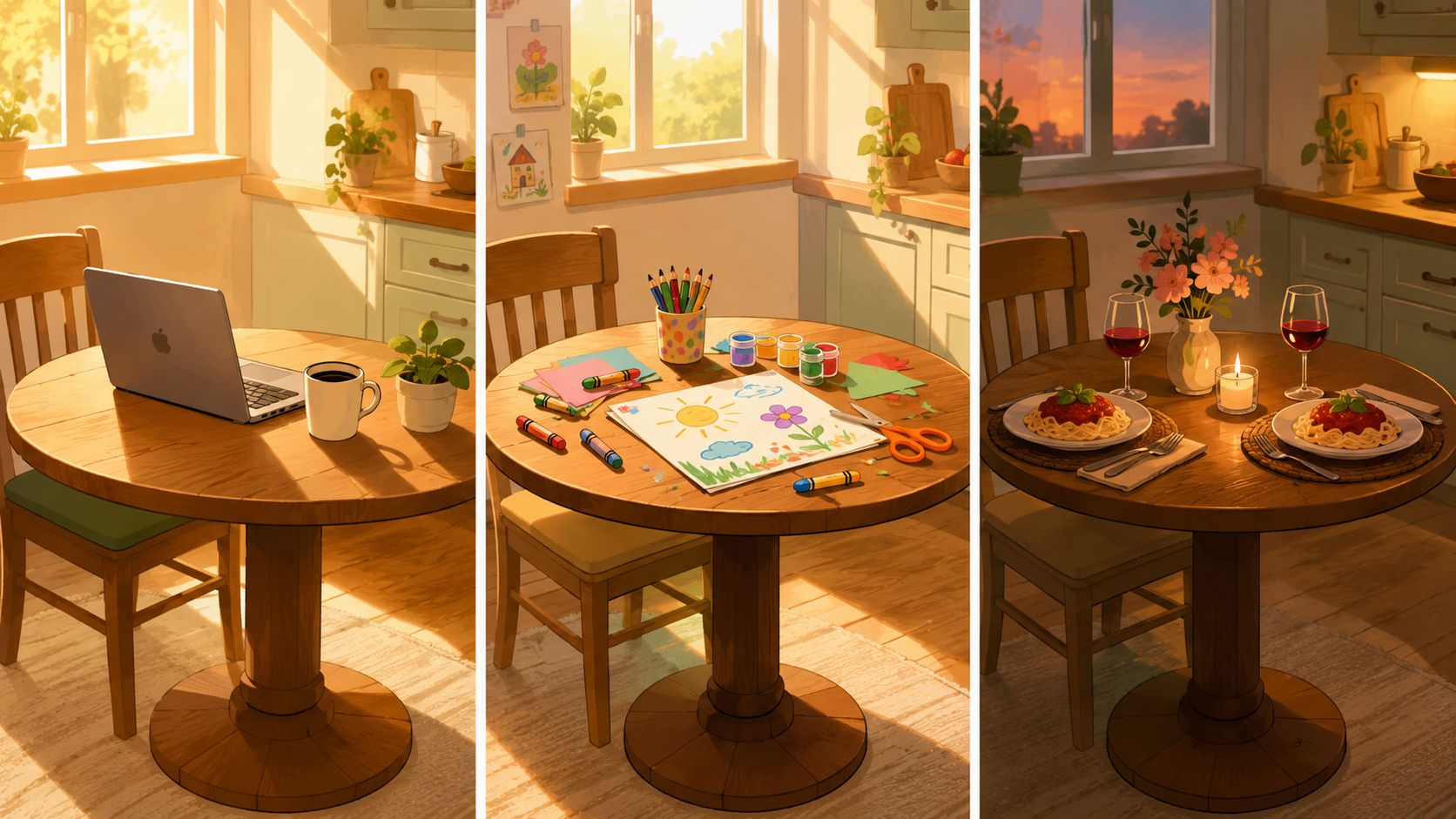
A table's true size becomes obvious during the hours nobody photographs. The remote-work couple needs room for screens in the morning, clear space for dinner at night, and legs that don't turn every cable into a trip hazard. For that routine, a 36-by-48-inch extendable table can provide a useful working surface while retaining the option to open up for guests.
The extension matters because the table doesn't have to remain in hosting mode every day. Closed, it supports meals and work without taking over the kitchen. Open, it can handle extra place settings when the household invites people over.
The family command center
A family with school-age children uses the table as homework station, art studio, snack counter, and weekend breakfast bar. That household benefits from a sturdy solid-wood drop-leaf design with a finish that wipes clean. The leaves can stay folded during a rushed school morning, then open when children need more room for notebooks or a shared project.
Stability matters here. A table that shifts when a child leans on it creates frustration and safety concerns, while a dependable base makes the surface feel ready for whatever the day brings. Storage hooks or a nearby wall shelf can keep backpacks, craft supplies, and chargers from permanently occupying the tabletop.
An empty-nester who hosts regularly faces a different problem. A 42-inch round table can serve four people comfortably for everyday meals, then expand when adult children and grandchildren come for a shared supper. The everyday footprint stays sociable and compact, while the occasional capacity comes from the table's mechanism rather than from a permanently oversized top.
The winning small table is the one that fits the household's busiest routine, not the one that looks smallest in a floor plan.
These profiles point to one conclusion. A fixed table may suit a household with predictable meals, but adaptable designs often serve changing routines better. The right question is how the table switches between eating, working, studying, and hosting without making the kitchen feel crowded.
Styling Tricks That Make a Small Kitchen Feel Bigger
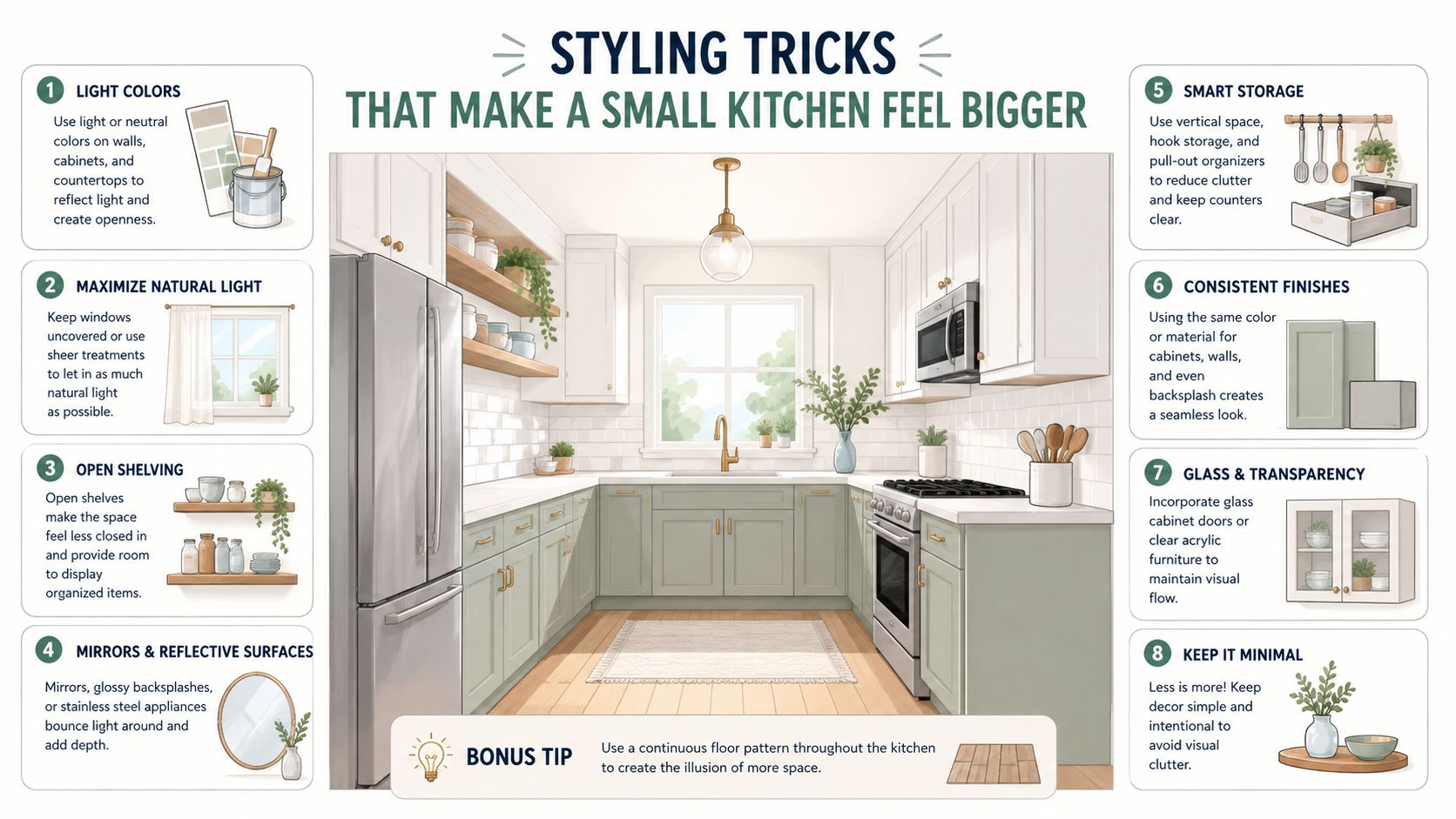
A small kitchen can feel more open without moving a wall. The visual goal is to keep the floor readable, reduce bulky interruptions, and give the eye a clear path around the table.
Start with the base. A pedestal table frees up sight lines and gives diners more flexibility for leg placement than a busy four-leg arrangement. It can also make chair positions easier to adjust in a tight nook.
Make the floor and walls work harder
Choose chairs with low or open backs when possible. Solid, tall chair backs can create a visual barrier, while open construction lets light and sight lines continue through the dining area.
A runner rug can extend beyond the table and pull attention lengthwise through the kitchen. The rug should not interfere with chair legs or door swings, but a longer visual line can make the floor feel deeper than a small isolated mat.
Lighting should define the table without lowering the room visually. A pendant hung 30 to 34 inches above the tabletop can create a focused dining zone, while simple window treatments keep daylight prominent. The fixture should be scaled to the table and placed where it won't interfere with sight lines.
Remove visual clutter
Use a controlled palette of two or three finishes. For example, a warm wood table, a simple painted wall, and one metal accent can feel more settled than a collection of competing tones.
Keep the tabletop useful:
- Choose a low tray: It gathers salt, napkins, or condiments without creating a tall centerpiece.
- Use a slim vase: A narrow profile preserves conversation and working space.
- Move dishes upward: Wall-mounted shelves can hold frequently used plates without turning the table into storage.
- Keep chairs light: Open backs and narrow profiles preserve the room's visual breathing space.
- Favor rounded edges: Softer corners can help busy kitchens feel less rigid and reduce sharp contact points around walkways.
The table should look ready for dinner, not permanently staged. A clear surface makes a compact kitchen feel larger because it gives the room fewer competing objects to process.
Your Short Checklist Before You Buy
A confident purchase begins with a short, honest inventory of the household. Daily seating and hosting seating aren't always the same, and that difference often points toward a drop-leaf or extendable design rather than a permanently tiny table.
Check the room first
Measure the tabletop footprint, then measure the chair area around it. Keep at least 36 inches between the table edge and nearby walls or obstacles, with wider space preferred where people regularly walk, as outlined in dining table clearance guidance.
Before choosing a shape, check every path the table could interrupt:
- Appliance doors: Open the refrigerator, oven, and dishwasher fully.
- Cabinet drawers: Test lower drawers and doors with a chair pulled out.
- Entry routes: Measure doorways, hallways, stairways, and elevators for delivery access.
- Room fixtures: Account for radiators, outlets, baseboards, trim, and heating vents.
- Chair movement: Sit down, push back, and ask whether another person can pass comfortably.
Match the table to real use
Decide whether the table will remain fixed or need to change size. A fixed round top keeps daily life simple, while a drop-leaf design hugs a wall and an extendable top adds capacity for guests. Test the mechanism before committing. It should feel secure, easy to operate, and practical enough that the household will use it.
Height must match the chairs or stools already in the home. Check knee clearance beneath the top, especially if the table will serve as a homework or remote-work station. A low-ceiling room often benefits from a visually lighter standard-height arrangement, while counter height can work when the kitchen already revolves around an island-style layout.
Material and finish deserve equal attention. Solid wood is a strong choice for frequent use, while an easy-clean matte finish can make daily marks less noticeable. Storage hooks underneath can keep bags and supplies off the surface, but they shouldn't interfere with knees or chair placement.
A Greenfield showroom visit turns measurements into a real decision. Sitting at the table, testing an extension, checking chair clearance, and feeling the finish reveal details that a photograph can't show.
BILTRITE Furniture-Leather-Mattresses offers small-scale dining furniture for apartments, condos, and kitchenettes, along with USA-made, Amish-made, solid-wood, and heavy-duty options. Visit BILTRITE Furniture-Leather-Mattresses in Greenfield, bring the room measurements, and let the experienced showroom team help find a small kitchen table that fits daily family life.