3 DAY MATTRESS SALE! THURSDAY - FRIDAY - SATURDAY!
LABOR DAY SALE HELD OVER ENDS SATURDAY, SEPTEMBER 19 AT 5PM!
NO CREDIT CARD FEES!
1000's of Items IN-STOCK + 500 Mattresses!
Largest selection of USA Made Furniture & Mattresses + Amish Made!
FREE In-Store Design Services!
BUY LOCAL & LOVE YOUR HOME!
3 DAY MATTRESS SALE! THURSDAY - FRIDAY - SATURDAY!
LABOR DAY SALE HELD OVER ENDS SATURDAY, SEPTEMBER 19 AT 5PM!
NO CREDIT CARD FEES!
1000's of Items IN-STOCK + 500 Mattresses!
Largest selection of USA Made Furniture & Mattresses + Amish Made!
FREE In-Store Design Services!
BUY LOCAL & LOVE YOUR HOME!
OPEN LABOR DAY | Tuesday-Thursday 10am to 6pm | Friday 10am to 7pm | Saturday 10am to 5pm | Sunday Closed To Be With Family & Friends | Monday Showroom Closed
5430 West Layton Ave, Greenfield - Metro Milwaukee
Hardwood floors look beautiful until the first ring of chair marks shows up under the dining table. Then the question hits, which pads protect the finish, and which ones just look busy while doing nothing?
The honest answer is that not all furniture pads are equal. The right pad spreads weight, reduces scraping, and stays put when chairs get pushed in and out every day. The wrong one falls off, compresses flat, or lets the furniture leg hit the floor finish anyway.
Why Your Hardwood Floors Need More Than Just Any Pad
The problem usually starts without much notice. A family moves in, the table gets set, chairs get pulled back and forth, and nobody notices anything for a while. Then one day the light hits the floor at the right angle and the wear pattern is obvious, especially under dining chairs and other pieces that move a lot.
That happens because furniture legs concentrate force at small contact points. Over time, those points create micro-abrasions and dents, and the finish starts looking tired long before the floor itself is worn out. For a simple home-protection overview, this guide to protecting hardwood floors from furniture fits the same common-sense approach, protect every contact point before damage starts, not after.
Practical rule: if furniture touches hardwood, it needs protection under each contact point, not just the legs that seem to move the most.
This is why cheap, undersized pads disappoint. They don't cover the full footprint, so the edge of the leg still presses into the finish. Once that happens, the pad isn't really solving the problem, it's just delaying the repair bill.
Families with active dining spaces notice this fastest. Chairs get shoved, twisted, and dragged, and the floor takes the load in exactly the same few spots every day. That repeated motion is why the best furniture pads for hardwood floors aren't the fanciest ones, they're the ones that fit properly and keep the leg material away from the wood.
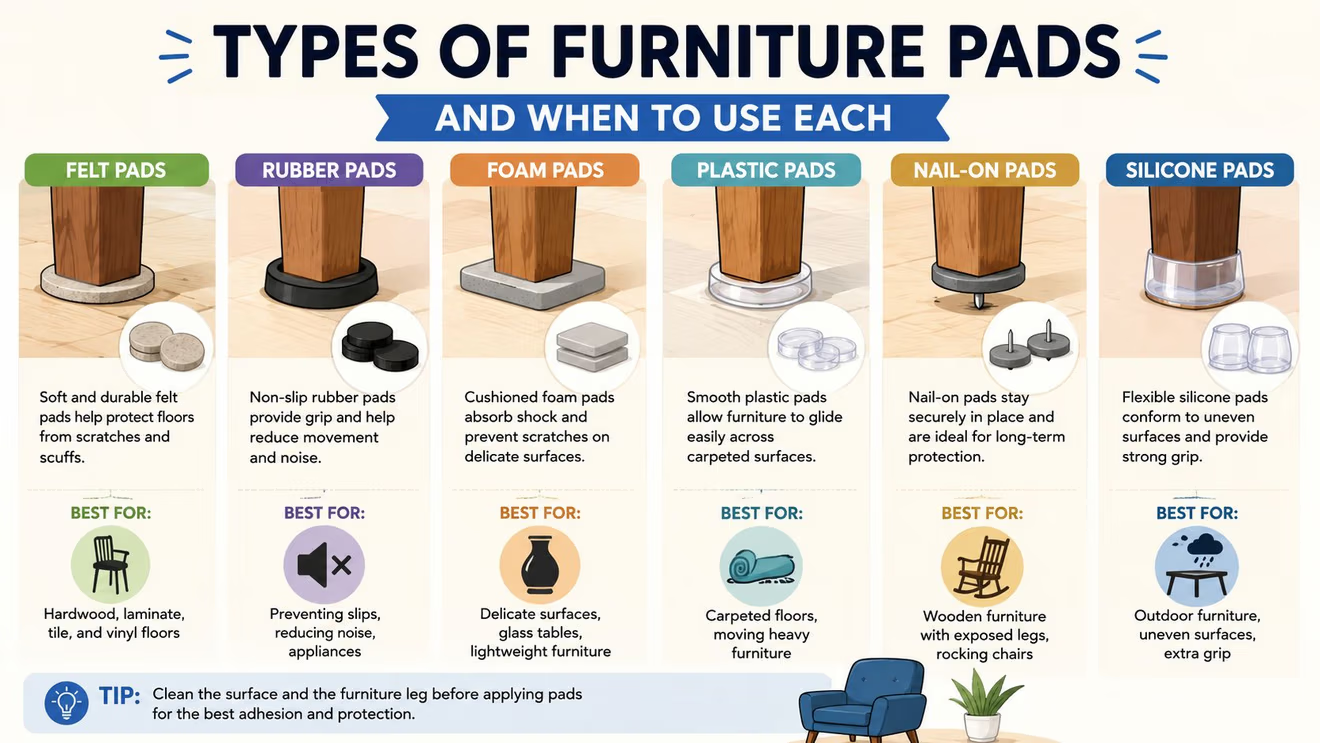
Types of Furniture Pads and When to Use Each
Felt pads are the everyday winner
For hardwood, high-density felt pads are the clear first choice. They're the most consistently recommended protector because they spread contact over a larger area and reduce scratch risk better than hard plastic or bare feet. One expert guide calls felt pads the safest everyday option for hardwood and other hard surfaces, and another flooring source says thick felt used correctly can reduce scratches and dents under dining chairs by up to 90%source.
That matters most for dining chairs, side chairs, stools, and other pieces that move constantly. Felt gives a softer landing, which is exactly what hardwood needs.
Rubber or silicone pads belong in a narrower lane
Rubber-style pads can add grip, and that sounds helpful until the floor finish starts getting scuffed or discolored. They're more useful where slipping is the bigger concern than surface wear, but hardwood usually needs a smoother interface, not a tackier one. For most wood floors, felt still wins.
Plastic glides are for movement, not protection
Plastic glides help furniture slide, which is why people reach for them. The tradeoff is that hard plastic can behave more like a runner than a cushion, and that's the wrong direction for finished hardwood. If the goal is floor protection, plastic is rarely the first pick.
Nail-on, tap-on, and slip-on options each have a place
Nail-on and screw-in options are more permanent and can work for some heavier furniture, but they're not the easiest choice for delicate hardwood because installation has to be exact. Tap-on styles can be secure, but only if they stay centered. Slip-on covers are useful for odd shapes and pieces that move around a lot, especially when the leg form makes adhesive pads awkward.
For a deeper look at how moving furniture differs from resting furniture, the heavy-duty furniture sliders for carpet page is useful as a contrast, because a pad that works on one surface may not belong on another.
The simplest way to choose is this, match the pad to how the furniture behaves. A chair that moves daily needs a different solution than a dresser that stays in one place for years. That's the whole game.
Material Quality and Attachment Methods That Actually Work
Dense felt beats thin felt every time
The felt itself has to do real work, not just look soft. A commonly cited benchmark in retail specs is about 1/5-inch, or roughly 5 mm, felt thickness for better cushioning under chair and table legs source. Thinner felt compresses faster, which means it loses its ability to distribute load and the wood-to-wood contact comes back sooner than people expect.
That's why the hidden cost of bargain pads is real. A cheap multi-pack can seem fine on day one, then flatten, shift, or peel before the furniture has even settled into regular use. Once the pad compresses, the leg carries more of the force and the floor absorbs more of the wear.
Good felt should feel dense, not fluffy. If it collapses under a fingernail instantly, it probably won't last long under a chair leg.
Attachment matters as much as the cushion
Self-adhesive pads are popular because they're easy, but convenience doesn't guarantee performance. The adhesive has to keep the pad centered during repeated side-to-side motion, and that's where many cheap options fail. Chairs don't just press down, they shift laterally every time someone gets up or sits down.
Tap-on or nail-in pads are more secure, but they also need careful installation. Slip-on covers can work well on irregular shapes because they wrap the foot instead of relying on a tiny adhesive footprint. Each method has a place, but the right one depends on the leg shape, the furniture weight, and how often the piece moves.
For homes with furniture that sits higher or needs a little more clearance, the furniture risers page connects well with this decision, because height changes can affect both access and stability.
The key is simple. The more movement a piece sees, the more important it is that the attachment stays centered and secure. A great pad that falls off isn't a great pad at all.
Sizing, Weight Capacity, and Installation Best Practices
Start with the footprint, not the furniture style. The pad should be slightly larger than the leg footprint so the leg material never touches the finish. If the pad is smaller than the foot, the edges take the punishment first, and that's where scratches start.
Heavy pieces need more cushion, not less. One expert review notes that 2-inch pads are versatile for many furniture feet, while heavier pieces may need 5 to 6 mm thickness to keep cushioning under static load source. That same source also points out that thicker felt-and-rubber constructions can reach about 0.31 inches in layered designs for added durability and grip source. The point isn't to chase the thickest product on the shelf, it's to give the furniture enough support so the leg doesn't punch through the pad.
A good install follows a clean sequence:
Clean the leg bottom first. Dust and old adhesive ruin adhesion fast.
Check the shape. Round, square, tapered, and wide-base legs all need different pad footprints.
Center the pad carefully. Off-center placement lets the leg edge touch the floor.
Press firmly and wait before moving. Adhesive needs time to settle before the furniture gets shifted.
Let the adhesive bond before the first move. Rushing that step is one of the fastest ways to make a good pad fail early.
Maintenance matters too. One furniture-pad guide says felt pads can wear out in 6 to 12 months on active pieces like kitchen chairs, so regular inspection isn't optional source. If the felt looks thin, the edge is curling, or the pad has drifted off-center, replacement should happen right away.
Furniture Pad Sizing Guide
Furniture Type
Typical Weight
Recommended Pad Size
Minimum Thickness
Dining chair
Light to moderate
Around 2 inches
About 1/5 inch, or 5 mm
Armchair
Moderate
Sized to the full footprint
About 5 mm
Dresser
Heavier
Larger than the leg base
Thicker felt or layered construction
Entertainment center
Heavier, mostly stationary
Full contact coverage under each point
Thicker felt or layered construction
For concrete floors, the right approach changes again, which is why the heavy-duty furniture sliders for concrete page belongs in any homeowner's reference stack. Hardwood is less forgiving, so the sizing has to be more exact.
Common Mistakes That Damage Hardwood Floors
The biggest mistake is using pads that are too small. When the pad doesn't extend beyond the leg footprint, the leg edge still reaches the finish, and that's how dents and shiny wear rings begin. A lot of people think any pad is better than no pad, but undersized protection can still leave a floor exposed.
Another common error is choosing hard glides because they seem durable. Durability doesn't help if the surface under the furniture is too unforgiving for wood. Hardwood needs contact that distributes pressure, not a hard point that slides and scuffs.
People also forget that every contact point needs protection. A sofa with one leg padded and the others ignored is still a floor-damage risk. The same goes for heavy furniture, weight doesn't remove the need for pads, it usually makes proper sizing more important.
Cheap adhesive pads create one more headache. They can lose grip, drift off center, or wear down faster than expected, especially on pieces moved daily. Once the pad shifts, the exposed edge becomes the problem.
Ignore old pads at your peril. If the felt is flat or the adhesive has dried out, the floor is already less protected.
Don't reuse a pad that no longer holds. A weak bond is worse than a fresh installation.
Don't assume all felt is equal. Low-density felt collapses sooner and stops spreading load effectively.
The safest habit is regular inspection. Active chairs deserve a quick check every so often, and anything showing compression or loose edges should be replaced before it starts marking the floor.
Testing Quality and Getting Expert Help Locally
Good pads don't hide their quality very well, so test them before buying. Press the felt with a fingernail, and dense material should resist instead of collapsing immediately. Check the packaging for thickness details, because the numbers tell more than glossy wording ever will.
Adhesive deserves its own test. A pad that peels away easily in the hand is probably going to fail sooner under chair movement. That's especially true for dining furniture, where lateral motion is constant and centered placement matters just as much as the cushion itself.
Local showroom help is worth a lot here because furniture isn't abstract in person. A trained sales associate can look at the leg shape, the furniture weight, and how the piece is used in the home, then point toward the right pad style with much less guessing. That hands-on advice matters more than scrolling through a screen and hoping the description matches reality.
It also helps to compare materials side by side. Feeling dense felt, comparing adhesive strength, and seeing how a chair or table sits on a display floor makes the choice far easier. For homes that want the setup handled cleanly, the white-glove delivery service page shows how careful in-home handling fits the same mindset, protect the furniture, protect the floor, and remove the guesswork.
The best choice is the one that fits the actual furniture, not the one that sounded good in a product listing.
Families who want fewer mistakes should shop where they can ask direct questions and inspect materials in person. That's the fastest way to avoid pads that look fine online but fail in daily use.
If your hardwood floors are already taking a beating from chairs, tables, or heavy furniture, it's time to get hands-on help and choose the right protection the first time. Visit BILTRITE Furniture-Leather-Mattresses in Greenfield to see quality furniture in person, talk through the best pad options for your home, and get advice from a team that knows how to protect hardwood the right way.