Battery Power Pack for Power Recliner: The Complete Guide


You finally found the recliner that feels right. The cushion supports the back just right, the footrest moves smoothly, and the color fits the room. Then the trouble starts, because the nearest outlet is behind a console table, across the rug, or nowhere near the spot where the chair belongs.
That's where a battery power pack for power recliner comes in. It lets the chair live where the room looks and functions best, instead of wherever the wall plug happens to be. For a lot of Metro Milwaukee homes, that simple shift makes the whole room feel cleaner, safer, and easier to arrange.
At BILTRITE, we've heard this question for generations, and it's a good one. A battery pack isn't a fancy add-on for tech people. It's a practical accessory for families who want comfort without a cord stretched across the floor.
Why Your Power Recliner Might Need a Battery Pack
The most common reason is simple, the outlet is in the wrong place. A chair can sit exactly where it belongs visually, then feel awkward in real life because a cord has to snake across the room. That's especially frustrating in living rooms where furniture placement, traffic flow, and clean sightlines all matter.
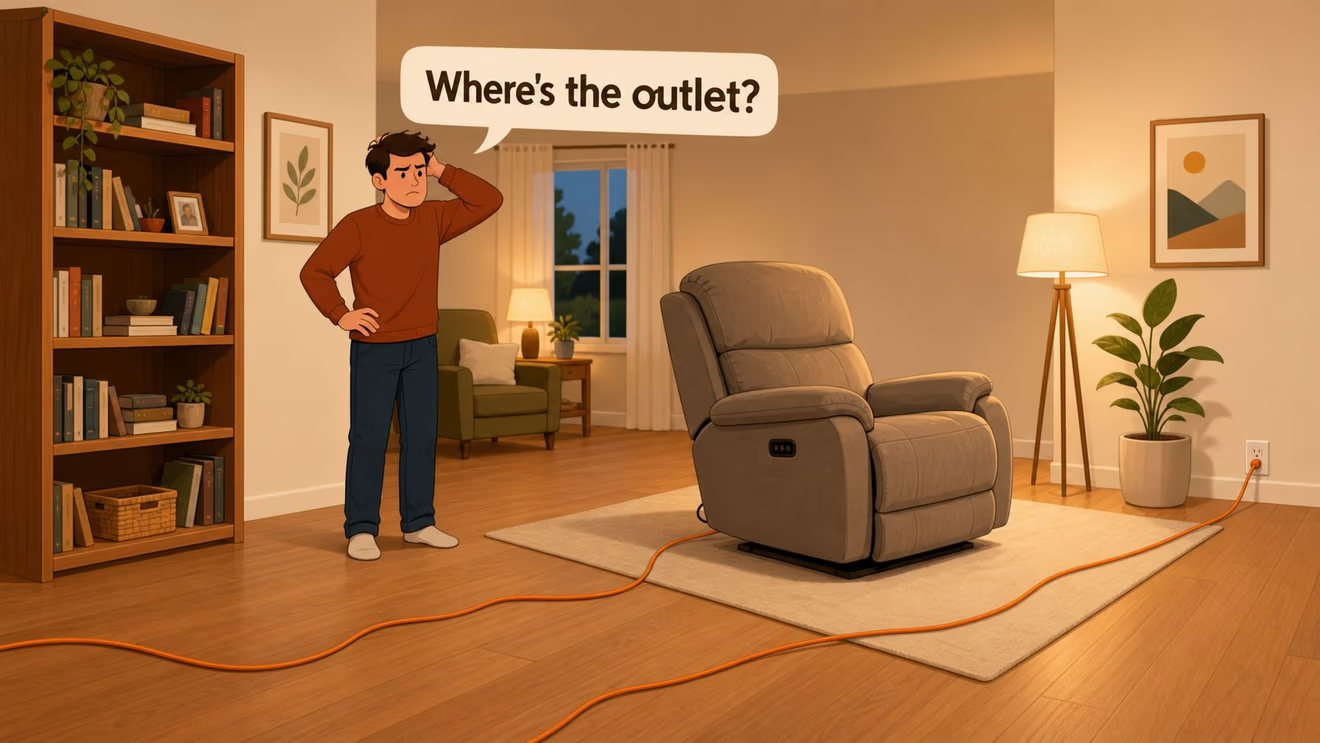
A battery pack solves that by powering the recliner without tying it to the wall. In plain terms, it gives the chair its own portable power source, so the recliner can sit closer to a window, in the center of a layout, or wherever the room feels most comfortable. That's why battery-powered seating has become a normal part of how many families set up a room.
Practical rule: if the cord determines where the recliner has to live, the room is being arranged around the outlet instead of around the people using it.
For some households, that's mainly about looks. For others, it's about reducing trip hazards, especially in homes where kids, guests, or mobility concerns make loose cords a hassle. A cordless setup can also make it easier to clean around the chair and adjust the room without dragging furniture toward a plug.
BILTRITE talks about recliners this way because furniture should fit the household, not the other way around. Our ultimate recliner buying guide helps shoppers think through comfort, layout, and space before they choose a chair, and battery packs fit naturally into that conversation.
Understanding Battery Capacity and Cycle Counts
Battery labels can look more technical than they really are, but the numbers usually answer a few simple questions. mAh tells you how much energy the pack can store, Wh tells you how much usable work that energy can do, and cycle counts show how many recline-and-return actions the chair may handle before it needs a recharge. That makes the label less like a puzzle and more like a small map of how the chair will behave at home.
Start with the numbers that matter most
A smaller pack can still make sense if the recliner is used only now and then. A larger pack can still fall short if the motor draws more power or the chair gets adjusted often. Capacity alone does not tell the whole story, even though that is the first number many shoppers focus on.
One documented example shows an 1,800 mAh, 45 Wh pack rated for up to 200 recline cycles or about 4 to 6 weeks of typical use (source). Broader guidance from EcoFlow points to standard recliner packs in the 2,000 mAh to 5,000 mAh range, with performance that often works out to about 20 to 80 reclining cycles per charge depending on motor efficiency and how often the chair is adjusted.
What cycle counts really mean at home
Cycle counts are easier to picture than raw capacity. If someone settles into the chair once at night and makes only a few adjustments, the pack lasts longer. If the chair gets moved throughout the day, the same pack drains faster. That is why one household may describe a pack as lasting for weeks, while another family sees it run down much sooner.
A higher capacity number helps, but the chair's motor and the family's habits decide how far that charge really goes.
That is also why a battery power pack for power recliner should fit the way the room is used. A family room chair that sits ready for weekend movies has different needs from a daily reading chair that gets adjusted many times. Metro Milwaukee homes often run into this same choice between a pack that supports everyday cordless convenience and one that is meant more for backup, so the right answer depends on the layout, the routine, and how often the chair has to move. BILTRITE's power reclining seating guide is a helpful reminder that features, comfort, and power needs usually belong in the same conversation.
Cordless Convenience Versus Emergency Backup
A lot of the confusion starts with the word “battery.” Some packs are built so a recliner can sit where you want it without a cord hanging across the room. Others are meant to keep the chair working during an outage or to help it get back to a usable position when the power cuts out.
Everyday convenience packs
These packs let a recliner live anywhere in the room. They are charged separately, then disconnected for regular use so the chair stays cordless. For a living room, den, or family room where furniture gets rearranged, that kind of setup keeps the floor clear and avoids a cable running under a rug or across a walkway.
Some battery systems are designed for that cordless routine, and guidance from YouTube guidance notes that leaving the pack plugged in after charging can shorten battery life. That point matters because many shoppers assume a battery should stay connected all the time, when the better habit may be to charge it, disconnect it, and let the chair run on battery power as intended.
Emergency backup packs
Other systems are built more like a safety net. They help the chair keep working during an outage or keep it from being left in an awkward position if the power goes out at the wrong moment. Guidance from Woodstock Outlet education explains that some battery systems are sold as backup support for power outages, and newer models may include low-battery alerts and different charging behavior. Those alerts can be helpful for a household that wants a heads-up before the chair loses power.
The difference is simple. Convenience packs are about where the chair sits and how clean the room looks. Backup packs are about keeping the chair usable when the lights go out, or when the person in the chair wants extra peace of mind.
That choice usually comes down to the room and the routine. A chair in a regular TV room may call for cordless convenience, especially if cords would get in the way. A chair used for rest, mobility support, or outage readiness may call for backup behavior instead. BILTRITE's types of power reclining seating guide fits that conversation well, because the style of seating and the power setup usually need to match the way the room works.
How to Check Compatibility Before You Buy
The safest battery choice is the one that matches the chair. That sounds obvious, but compatibility mistakes happen when a buyer focuses only on capacity and forgets the connection details. A pack can have the right idea and still be the wrong fit.
Start with the connector and motor label
The first step is to look for the recliner's motor label or model information. That label usually tells you what power the chair expects, and it gives a showroom team something concrete to match against. The connector matters just as much, because the wrong plug can keep the chair from working properly and can create avoidable frustration.
Voltage matching is part of that check too. The chair and the battery pack need to speak the same electrical language, or at least be designed for the same setup. If the connection or voltage is off, the pack may not power the chair correctly, even if the battery itself is fully charged.
Check how the pack will live in the chair
Physical fit matters more than people expect. Some packs mount neatly under the chair, some attach in a more compact spot, and some need a little more room around the frame. A bulky pack can be awkward in a tight space, especially in smaller rooms where every inch counts.
Here's a simple checklist to keep the process sane:
- Match the connector type so the plug fits the chair without forcing it.
- Verify the voltage requirement on the motor label before anything else.
- Confirm mounting space so the pack doesn't interfere with the frame or the floor.
- Bring the model information to the showroom so an experienced associate can help narrow the choices.
That last step matters because a knowledgeable team can often spot a mismatch before money is spent. At BILTRITE, bringing the chair details into the store makes the conversation much easier, and it helps avoid unnecessary returns or guesswork. For shoppers comparing chair styles, our power recliner chair page is a helpful starting point before that in-person visit.
Real-World Capacity and Performance Comparisons
Specs make more sense side by side, especially with recliner batteries. Capacity, energy, and cycle count do not always rise together in a neat line, so two packs with similar labels can behave differently once they are installed in a real chair. The motor's demand and the household's habits shape what happens next.
A simple comparison of documented pack performance
| Battery Pack | Capacity (mAh) | Energy (Wh) | Estimated Cycles |
|---|---|---|---|
| Limoss Akku ZB-B1800 | 1,800 | 45 | Up to 200 |
| Okin BS-17 | 2,550 | 65 | Up to 200 to 250 |
| Standard pack range | 2,000 to 5,000 | Not always listed | About 20 to 80 per charge |
| High-capacity example | 7,500 | Not always listed | Around 1,000 |
The table gives a useful starting point, but it does not tell the whole story. A smaller pack can still work well if the chair sees light use and the motor is efficient. A larger pack can carry the chair for longer stretches, yet the chair's actual demand still decides how much of that stored power gets used.
One comparison of major battery systems reported the Enouvation E6 at about 1,200 recline cycles per charge, while the FreeMotion P50 delivered about 900 cycles. That difference shows how pack design and size can change the way a chair behaves in daily use, especially for homes that want more time between charges. For readers who want to compare those systems more closely, Woodstock Outlet education lays out the basic distinction in a straightforward way.
What changes the result at home
Motor load matters. So does how often the chair gets adjusted. A chair used gently in the evening will behave differently than one used repeatedly throughout the day. A spec sheet should be treated as a range of possibility, not a promise that every home will see the same result.
That point matters for Milwaukee homes with different room layouts and routines. A recliner in a quiet den may need a pack for cordless convenience, while a chair in a traffic-heavy family room may need more of an emergency backup feel, just enough reserve to finish the night without hunting for an outlet. The right pack depends on how the chair lives in the room, not just on the number printed on the label.
Some newer systems also include low-charge alerts, with some signaling at 10% or lower. That small detail can prevent a lot of frustration, because nobody wants to settle in for a quiet evening and discover the chair is about to stop working.
For shoppers who want a broader look at upkeep and long-term care, BILTRITE's maintenance resource is a helpful place to start alongside battery planning.
Safety Tips and Maintenance Best Practices
Battery packs are built for routine use, but they still need a little respect. The biggest mistakes usually come from overcharging habits, poor storage, or treating the pack like a permanent fixture instead of a wear item. Good care keeps the chair dependable and helps the pack last as long as it reasonably can.
Charge with a little discipline
A simple charging habit protects the pack. Let it charge the way the manufacturer intends, then unplug it when the cycle is complete. That matters in homes where chargers and phones stay plugged in around the clock, because a recliner battery is a different kind of device and should be handled on its own terms.
Battery health also deserves attention. Once runtime drops below 50% of original capacity, the pack is often giving a clear sign that replacement planning should begin. If the chair used to hold a charge comfortably and now seems to need constant attention, the battery may be nearing the end of its useful life.
Watch the environment and the calendar
A recliner battery pack usually gives years of service, but it does not last forever. Better-quality packs can hold up longer under favorable conditions, while premium packs may do well for a longer stretch when they are kept in good indoor settings. The point is simple, these packs are durable, but they are still service parts.
Independent consumer guidance also notes that many power recliner battery packs provide up to several weeks of use on a full charge and are often rated for roughly 100 to 300 chair-operation cycles. That makes battery packs more like a replaceable comfort part than a permanent power source.
Good maintenance habit: treat a recliner battery as a replaceable comfort part, not as a once-and-done appliance.
Heat and humidity can shorten life, and cold conditions can reduce available capacity. A pack usually does best in a normal indoor setting, not in a harsh environment. If a chair starts behaving differently, the battery is often the first place to check.
For a practical reminder on keeping furniture in good shape, BILTRITE's maintenance tips and care guide is a useful place to start.
Visit BILTRITE for Hands-On Help and Expert Advice
Battery specs help, but hands-on testing helps more. A recliner feels different in a real room, under real lighting, with real people sitting in it. That's why many Metro Milwaukee shoppers prefer to see the chair and talk through the battery setup in person before making a choice.

BILTRITE has been family-owned and operated since 1928, and that history still shapes how we help people today. Our Greenfield showroom gives shoppers a place to compare seating, ask practical questions, and sort out details like power needs, room layout, and comfort goals without pressure. Our sales associates bring over 400 years of combined experience to those conversations, and that experience matters when the right answer depends on a chair's actual setup.
We also know that buying local means more than convenience. It means dealing with people who live in the same community, understand the same homes, and care about long-term satisfaction instead of a quick sale. That's a big reason families from Milwaukee, Waukesha, Brookfield, and nearby communities keep coming back.
If a new recliner is on the list, or if an existing chair needs the right battery setup, stop by our showroom in Greenfield and talk it through with us. A good fit starts with the chair in front of you, not just the numbers on a box.
A CTA for BILTRITE Furniture-Leather-Mattresses. Come on down to our showroom in Greenfield, see the chairs in person, and let our family help you choose a recliner setup that fits your home and your routine.