Maple Furniture Guide for Grain Types Finishes and Care


You're probably standing in a showroom, running a hand over a dining table, and wondering why one maple finish looks warm and soft while another looks a little blotchy or flat. That confusion is normal. Maple furniture can look calm and simple at first glance, but the wood's grain, species, and finish prep change the final result more than most shoppers expect.
For families choosing pieces that need to work hard every day, maple often deserves a closer look. It has a long place in furniture making, from Maple & Co. in 1841 to the sturdy case goods and tables people still bring into busy homes today, and in North America it remains a foundational furniture wood because of its durability and stainability. Our showroom hears the same question a lot, though, what makes one maple piece look rich and another look uneven? That's where the finish details matter.
Discover Maple Furniture Heritage
A lot of people walk into our Greenfield showroom thinking maple is just “the light wood.” Then they see one piece that feels traditional, another that looks clean and modern, and a third that has a warm, hand-finished character. That spread makes more sense once the wood's history comes into view. Maple furniture has a long historical pedigree in the global furniture trade, with Maple & Co. established in 1841, and maple remained associated with premium craftsmanship through the Victorian and Edwardian eras. Maple & Co. history
That heritage still matters today because maple never became a one-note specialty wood. In North American homes, it keeps showing up where people want a balance of durability, affordability, and a surface that takes stain well. That combination helps explain why it has stayed a core material in solid-wood furniture rather than drifting into the background.
A family-owned showroom notices this in real life. One shopper might want a maple cabinet that blends into a smaller condo. Another wants a dining piece that can stand up to daily use and still feel refined. A third wants a finish that feels more handcrafted, which is where USA-made and Amish-made construction usually start to matter more than a catalog photo.
The reason maple has stayed relevant is simple. It serves both style and function without asking buyers to choose only one. In a home, that's a bit like a good pair of work boots that still looks sharp enough to wear to dinner.
Practical rule: If a wood has stayed useful for nearly two centuries, it usually earned that place by solving real household problems, not by looking pretty on a sales floor.
For shoppers who want a closer look at what distinguishes handcrafted construction, our guide to what Amish furniture means is a helpful companion to maple's history.
Understanding Maple Species And Grain
Maple isn't one single look, and that's where many buyers get tripped up. Hard maple and softer maple types can feel like two different fabrics. One is tighter and more structured, the other a little looser and easier to work with visually. That difference changes how a chair leg, drawer front, or table top behaves in daily use.
The most important number shoppers hear about hard maple is its Janka hardness of about 1,450 lbf, with density around 0.70 g/cm³, which helps explain why it resists denting well in load-bearing furniture parts. Those traits are why hard maple is commonly specified for furniture, cabinet making, table tops, and kitchen work surfaces. Hard maple properties
Grain tells the story
Grain is where maple starts to show its personality. A fine, uniform grain gives maple that clean, contemporary look many people want in a bedroom set or dining piece. More figured patterns, such as birdseye or curly grain, add movement and character, but they also make finish choice more important because the wood surface won't read the same way in every light.
The easiest way to think about grain is to compare it to fabric weave. A tight weave looks smooth and even. A looser or more expressive weave catches light differently and reveals more texture. Maple usually leans toward the smoother end, which is part of why it shows up so often in tables, bedroom furniture, and case goods.
Practical rule: Tight grain helps a piece look calm and modern, while figured grain adds personality, but asks more from the finisher.
That is why shoppers often see maple in rooms where a clean backdrop matters. For a deeper walkthrough on construction choices, the guide on the best wood for furniture is worth pairing with this species and grain discussion.
Weighing Maple Durability And Tradeoffs
Maple earns its reputation because it handles real life well. A family dining table gets bumped by chairs, brushed by elbows, and cleaned over and over. A dresser top holds lamps, baskets, and the occasional pile of laundry. In that kind of use, hard maple's resistance to denting makes sense, and the wood's stiffness supports strong furniture parts without feeling flimsy.
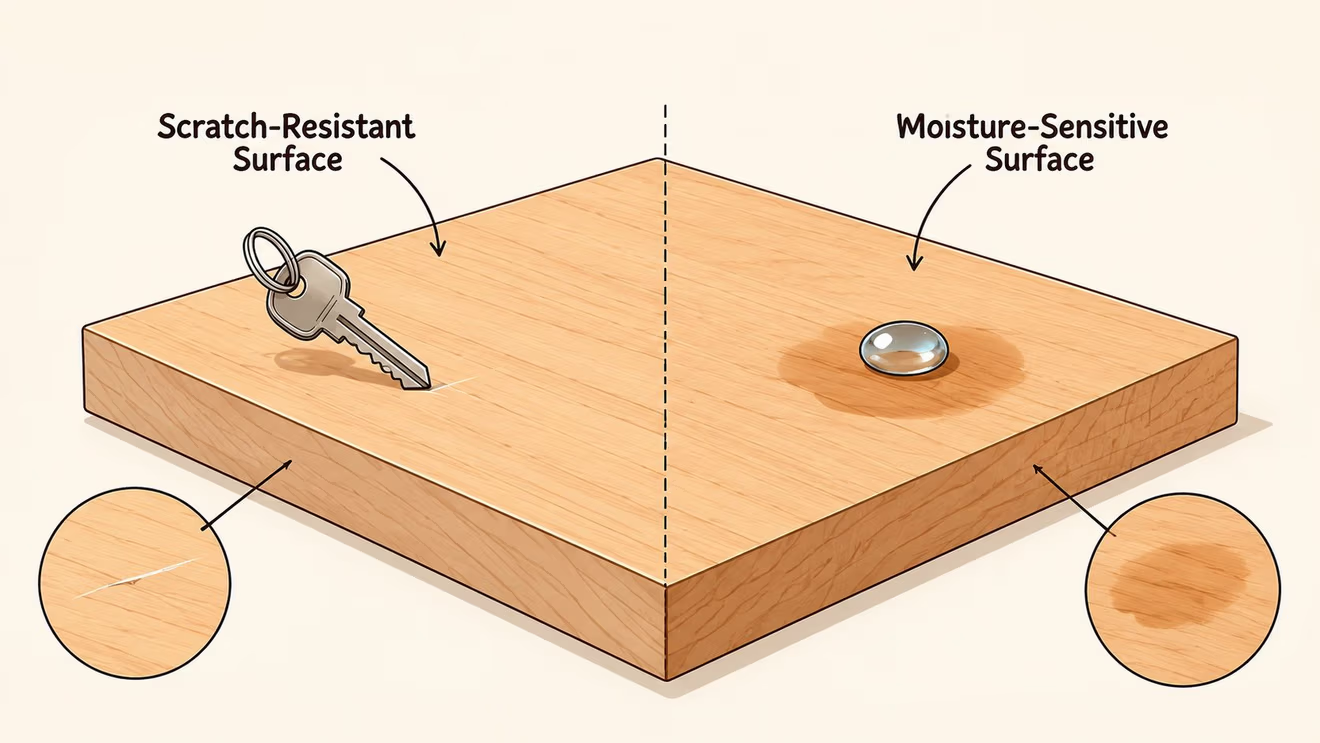
Still, buyers shouldn't treat maple like a magic solution. The wood can be finish-sensitive, and that's the part many shoppers don't hear enough about. Maple furniture is prized for durability but often needs pre-stain conditioning to prevent blotchy absorption, a detail many consumer guides overlook. Maple stain guidance
Why the tradeoff matters in real homes
A dark stain can look uneven on maple if the surface prep isn't careful. That doesn't mean maple is a bad choice. It means the wood rewards thoughtful finishing, especially if the goal is a rich color rather than a natural or lightly toned look.
That tradeoff matters a lot for families, apartment dwellers, and senior-living households. Maple is tough enough for repeated use, but it also tends to look best when the finish strategy respects the grain and the wood's tighter structure. In practical terms, that often makes maple a stronger candidate for people who want long ownership cycles and don't want to replace furniture every few years.
The contrarian lesson is worth saying plainly. Maple's value is not only strength. Its real value comes from the balance between durability and appearance control. Some shoppers will be happiest with a clear finish that lets the wood stay calm and consistent. Others will want a darker tone, but should be ready for more finish care and more testing before committing.
Maple is a sensible choice when the room needs furniture that can work hard, but the finish process has to be part of the buying decision too.
For anyone comparing maple finishes to other common approaches, the guide on choosing the best wood finish for a dining table fits naturally here.
Selecting Finishes And Stains For Maple
Finish work decides whether maple looks polished or patchy. That's why shoppers who assume “wood is wood” often end up surprised. Maple's surface is smooth enough to look elegant, but that same tight structure can make stain absorb inconsistently if the finisher skips preparation. The result is often a piece that looks darker in one area and lighter in another.
The first step is usually grain lifting. A woodworking guide notes that finishers often damp-spong maple before sanding and staining, then use methods like dye plus an oil/varnish mix to get an aged look without blotching. That process matters because it gives the finish a better base to sit on. Maple finishing methods
What finish choices do differently
Oil finishes tend to deepen the wood and bring out warmth. Shellac can add a cleaner, more controlled surface. Clear topcoats are often the safest choice when the goal is to preserve maple's natural look and avoid uneven color breaks. Stain can work too, but the prep has to be right, especially if the color is darker or more dramatic.
Here's the simplest way to think about it. If the room needs a calm, modern feel, clear or lightly colored finishes often show maple at its best. If the room calls for more age or depth, a dye-based approach can help, but only if the prep stays consistent across the whole piece.
- Clear topcoat: Best when the buyer wants the grain and natural color to stay front and center.
- Oil or oil/varnish blend: Helpful when warmth and softness matter more than a sharp, modern read.
- Pre-stain conditioning: Useful when stain is involved and even absorption is the priority.
- Dye-based color work: Better for controlled color changes when the finisher knows the wood well.
A well-finished maple table doesn't need to shout. It just needs to look even, intentional, and suited to the room. That's why finish samples matter so much. What looks rich under showroom lighting can look muddy at home, so test pieces and real samples are worth the patience.
Identifying Genuine Maple Furniture
Real maple has a feel that's hard to fake once a shopper knows what to look for. Tight, even grain is a good starting point. Clean edge profiles and thoughtful joinery tell the rest of the story. A solid maple drawer box, for example, says a lot more about the piece than a glossy surface ever will.
The easiest way to shop is to slow down and check the parts people usually ignore. Drawer interiors, back panels, corner blocks, and leg joints often reveal whether the furniture is built from solid wood or just made to look that way. In a showroom, the small details usually separate a better-made piece from a merely pretty one.
What to inspect in person
Look for three things. First, the grain should feel consistent, not overly busy or artificially repetitive. Second, the joinery should look substantial, especially where stress happens. Third, the overall piece should feel intentional, not hollow or overly light for its size.
Our showroom icons for USA-made and Amish-made furniture help buyers spot pieces built with those priorities in mind. That matters because construction standards often influence the long-term ownership experience more than a finish color does. If a piece uses stronger joinery and solid wood where it counts, it tends to hold up better under daily use.
A good rule is simple, if the outside looks polished but the inside feels flimsy, the piece probably isn't giving the buyer the value they think it is.
For a practical walkthrough on the visual signs of solid wood, the guide on how to tell if furniture is real wood pairs well with this checklist.
Matching Maple Furniture To Rooms And Styles
Maple works in more rooms than many shoppers expect because its look can shift from soft to crisp depending on finish. In a home office, light maple bookshelves can keep the room feeling open instead of heavy. In a dining room, a sturdier maple table can anchor the space without overwhelming it. The wood adapts well when the room needs structure but not visual clutter.
One family might choose maple for a condo because the lighter color keeps the room from feeling cramped. Another might choose it for a busy dining space because the surface can handle daily use while still looking refined. A senior-living household may prefer maple case goods because the furniture needs to be dependable, easy to understand, and built for repeated use.
Style pairings that make sense
Maple often looks strongest in modern minimalist settings when the finish is clear or lightly toned. It also fits farmhouse spaces when the wood is paired with simple shapes and sturdy proportions. In more traditional rooms, maple can take a warmer finish and still feel grounded, especially in bedroom sets or storage pieces.
The nicest part is that maple doesn't force the room into one style lane. It can act like a neutral jacket, dressed up or down depending on the details around it. Hardware, edge profiles, and seat shape can push the same wood in different directions.
For smaller homes, the best maple pieces are often the ones with clean lines and practical scale. For high-traffic rooms, heavier-duty tables, storage, and seating make sense because they reduce replacement stress. That's one reason maple keeps showing up in both small-scale and family-use furniture.
Caring For Maple Furniture And Buying Tips
Maple is easy to live with when the care routine stays simple. Dust it regularly with a soft cloth, keep it out of harsh direct sunlight when possible, and avoid soaking the surface during cleaning. If the finish calls for it, use occasional oiling carefully and only as appropriate for the piece's topcoat. The goal is steady maintenance, not constant attention.
Long-term value is where maple often wins. Consumers often overlook that maple's value comes from performance-minded details like solid-maple joinery and warranties, which makes it a strong fit for small spaces, high-use households, and senior living furniture. Maple long-term value
A simple buying table
| Feature | Maple | Oak | Cherry |
|---|---|---|---|
| Look | Light, clean, and adaptable | More open-grained and traditional | Warmer and more color-rich |
| Durability feel | Strong for daily use | Strong and familiar | Good, but often chosen for appearance first |
| Refinishing ease | Needs careful prep for even results | Generally more forgiving in visible grain | Often valued for its warm finish character |
A key buying tip is to match the wood to the use case, not just the look. Maple is often a smart choice for households that want a hard-working piece with a clean profile. Oak may appeal when a more pronounced grain is part of the room's character. Cherry usually suits buyers who want warmth and richness to carry more of the visual weight.
Local showroom shopping helps here because the buyer can check scale, weight, drawer action, and finish in person. That matters even more with maple, since small changes in lighting can change how a finish reads. A family-owned store also gives buyers a better chance to ask questions about USA-made, Amish-made, and solid wood construction before they commit.
For maintenance details and everyday care habits, the guide on wood furniture maintenance is a practical next step.
Ready to see maple in person, compare finishes under real lighting, and ask questions about USA-made and Amish-made craftsmanship? Visit BILTRITE Furniture-Leather-Mattresses in Greenfield today, and let the team help you find a piece that fits your home, your space, and the way your family lives.