Heavy Duty Furniture Sliders for Concrete: Pro Tips

A heavy bookshelf on a concrete basement floor can turn a simple room refresh into a wrestling match. The piece barely budges, the floor feels gritty, and nobody wants to damage a solid wood leg just to move a chair a few feet.
That's where the right slider setup changes everything. Good heavy duty furniture sliders for concrete help large pieces move with control, not chaos. They also protect the kind of better-built furniture families want to keep for years, especially heavier solid wood, USA-made, and Amish-made pieces that aren't meant to be dragged across a rough surface.
Families in Metro Milwaukee run into this all the time in basements, lofts, rec rooms, workshops, and finished lower levels. A concrete floor looks tough, but it still creates friction, catches debris, and punishes the wrong kind of pad. A little know-how goes a long way.
Table of Contents
- Welcome to the Easiest Way to Rearrange Your Room
- Choosing the Right Sliders for Your Concrete Floor
- Prepping Your Furniture and Floor for the Big Move
- The Safe and Easy Way to Slide Heavy Furniture
- After the Move and When to Call for Backup
- The BILTRITE Touch and Why Local Expertise Matters
Welcome to the Easiest Way to Rearrange Your Room
A familiar situation plays out in plenty of homes. A family wants to shift a sectional in the lower level so the TV has a better angle. Or a homeowner wants to move a solid wood bookcase in a loft to make room for a desk. The idea sounds simple until the furniture meets concrete.
Concrete is stubborn. It's rigid, sometimes dusty, and often less even than it looks. That means a heavy piece can catch, scrape, or feel stuck even when two adults are trying to move it carefully.
That's why sliders matter so much. They create a controlled contact point between the furniture and the floor, which makes movement smoother and safer when they're chosen and used the right way.
Practical rule: The goal isn't to force heavy furniture across concrete. The goal is to reduce friction, keep the weight supported, and move slowly enough to stay in control.
People often get confused because they assume any little furniture pad will do the job. It won't. A pad that works for stationary floor protection isn't always the right choice for moving a heavy piece across a rough hard surface.
This is especially important with higher-quality furniture. Solid wood dining sets, substantial dressers, and heavier upholstered pieces are built with durability in mind, but they still need the right moving method. Protecting the floor matters. Protecting the furniture matters too.
A safe move usually comes down to a few simple ideas:
- Use the right slider type: Concrete needs a hard-surface design, not a soft pad meant only to sit in place.
- Support the leg fully: If the slider is too small, the leg edge can concentrate too much weight in one spot.
- Keep the move calm: Fast shoving usually creates the very problem people hoped to avoid.
Once those basics are clear, moving furniture on concrete stops feeling like guesswork.
Choosing the Right Sliders for Your Concrete Floor
The best slider for carpet isn't automatically the best slider for concrete. That mix-up causes a lot of frustration. Concrete asks for a tougher, slicker contact surface and a better fit under the furniture leg.
Why concrete changes the rules
For concrete, the most reliable setup is a hard-surface slider with a low-friction bottom and a leg-diameter match, based on product guidance for hard floors and rugged environments that includes concrete and ceramic tile, with multiple slider shapes available for different furniture bases (hard-surface slider guidance for concrete and rugged use).
That point about fit matters more than many people expect. On a rigid floor like concrete, weight transfers hard at the edge of the furniture leg. If the slider doesn't fully cover the base, pressure gets focused into a smaller point, which makes binding more likely.
A quick comparison helps:
| Slider choice | How it tends to behave on concrete |
|---|---|
| Hard-surface slider with low-friction bottom | Better glide on rigid surfaces and better suited for moving |
| Soft felt-style stationary pad | Better for staying put than for repeated sliding on abrasive concrete |
| Undersized slider | More likely to catch on seams, debris, or rough spots |
| Properly sized round or sled-style slider | Better load spread under the furniture foot or base |
A related issue is shape. Some furniture has clear round legs. Some has block feet. Some larger pieces distribute weight across broader edges or base rails. That's why round pieces, sled-style sliders, and larger appliance-style shapes can each make sense depending on the furniture.
For readers who want more floor-protection basics, this guide on how to protect floors from furniture gives helpful context.
How to match size and shape to the furniture
A good fit starts with the actual contact point, not the furniture name. A “dresser slider” or “sofa slider” label isn't enough by itself.
Use this simple check:
- Measure the leg or base contact area. The slider should fully cover it.
- Choose the shape that matches the footprint. Round for round legs, broader shapes for wider bases.
- Think about load points. The heaviest corners deserve the most stable support.
- Skip the undersized option. That's the most common technical mistake.
If a furniture leg hangs over the edge of a slider, the setup is already working against the move.
People also wonder if bigger is always better. Not necessarily. The goal is full support and stable contact, not a giant puck under every piece. A slider that's appropriately sized and well seated under the leg usually works better than one that's oversized but unstable.
Prepping Your Furniture and Floor for the Big Move
Preparation is where an easy move usually begins. Most trouble on concrete comes from grit, poor placement, or trying to move too much weight before the path is ready.
Start with the path, not the furniture
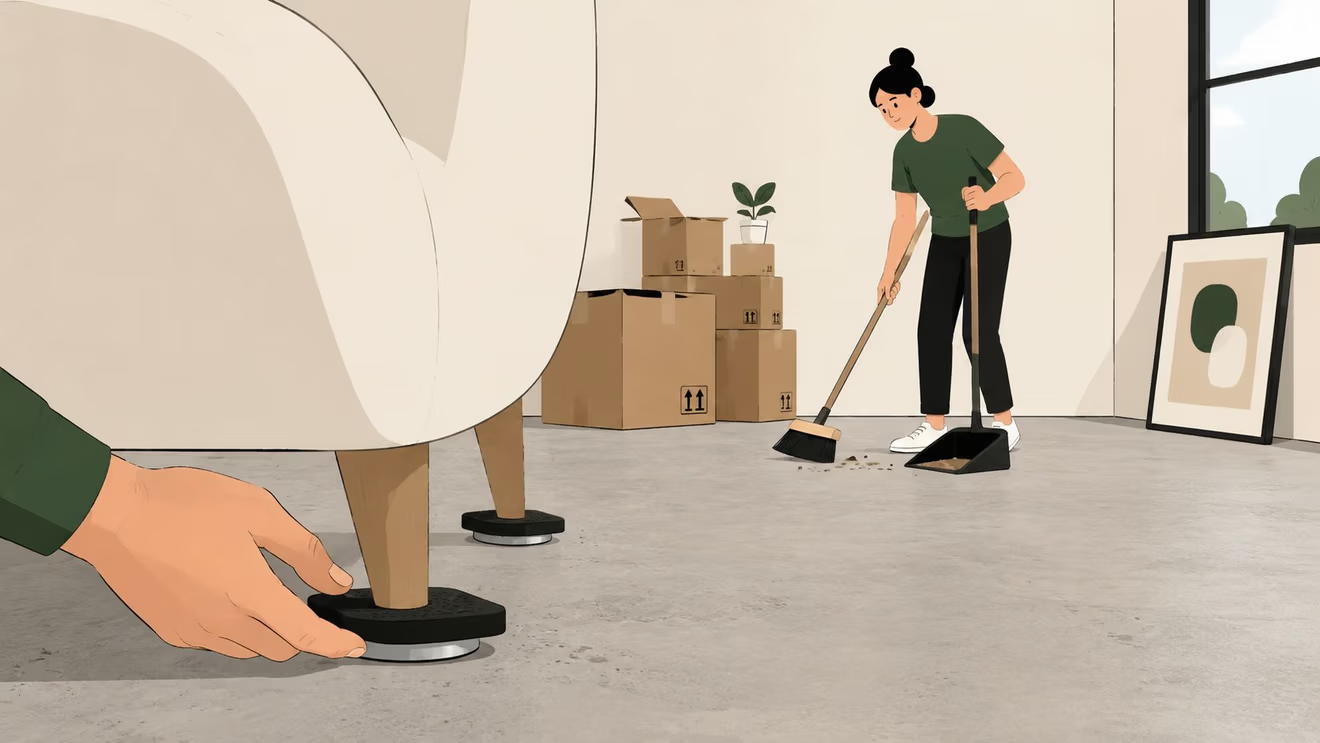
It's tempting to go straight to lifting the sofa corner, but the floor deserves attention first. Concrete often hides tiny pebbles, dust, and bits of debris that act like brakes.
A better routine looks like this:
- Clear the route: Move baskets, cords, rugs, toys, and anything else that could snag.
- Sweep thoroughly: Dust and grit increase drag and can scratch the underside of the slider.
- Wipe the travel path if needed: A slightly cleaner surface gives the slider a better chance to glide evenly.
If the piece has removable contents, take them out. Empty drawers, loose shelves, and stacked items all make the furniture harder to control. Less shifting inside the piece also means less surprise while moving.
For households that need help sizing furniture and measuring spaces before a move, this article on how to measure furniture is a practical companion.
Get the sliders seated correctly
Once the path is ready, the sliders need to go under the furniture carefully. That usually means tilting one side just enough to place them, not lifting the whole piece higher than necessary.
Keep these details in mind:
- Center the leg on the slider: Off-center placement can make a corner slip or wobble.
- Check every contact point: One missing or crooked slider can throw the load out of balance.
- Test with a partial shift first: A tiny controlled movement reveals problems before the full move begins.
A five-second test push can save a lot of strain. If a slider binds right away, it's better to reset it than force the piece forward.
People sometimes ask whether cleaning the slider matters too. It does. The underside should be free of dirt before the move starts. Clean floor, clean slider, centered leg. Those three details make a noticeable difference.
The Safe and Easy Way to Slide Heavy Furniture
The actual move should feel controlled, not dramatic. If a heavy piece starts lurching, twisting, or resisting in a jerky way, the technique usually needs correcting.
Use movement that keeps the load stable
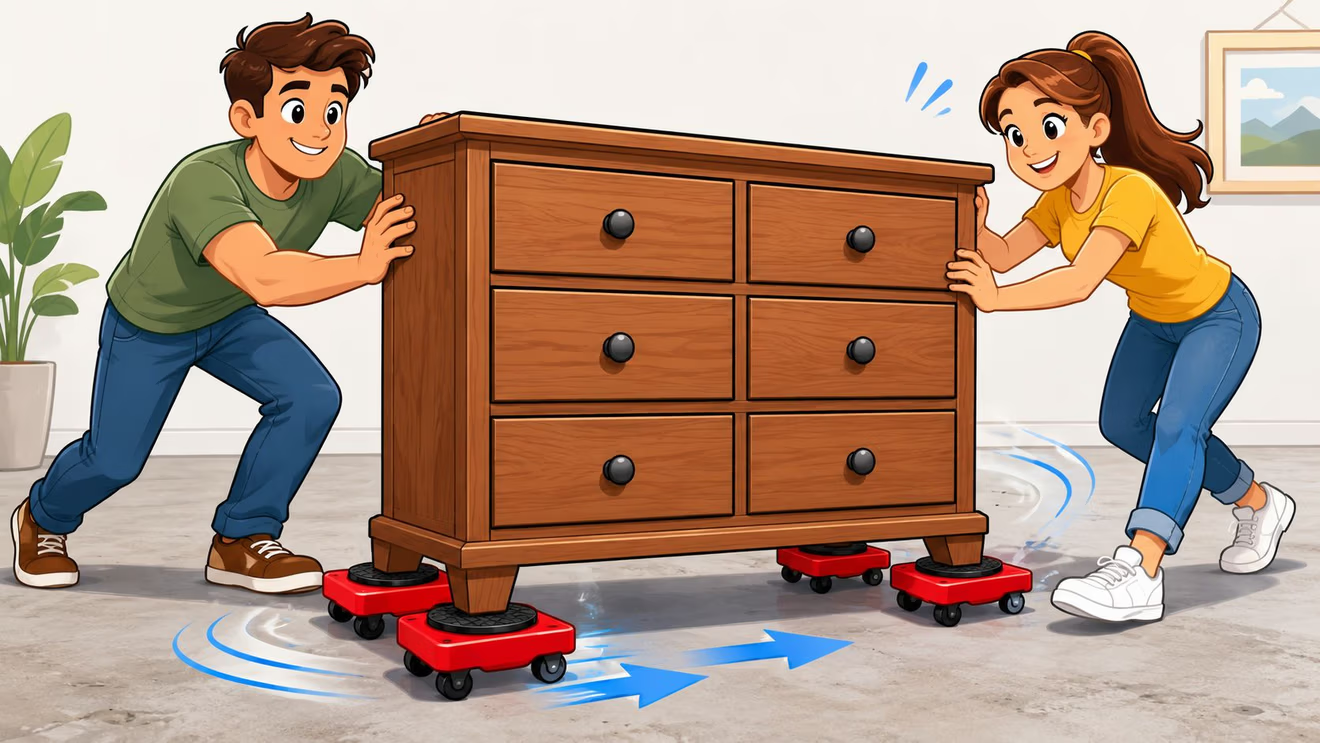
A mainstream hard-floor slider product can be rated to move up to 1,000 lb per set, but the guidance attached to that kind of product also makes the key point clear: success depends on the move protocol, especially keeping the load centered and avoiding twisting while pushing (hard-floor slider rating and movement guidance).
That means good moving form matters as much as the slider itself. A careful team can move a heavy item much more smoothly than a strong person trying to muscle it across the room.
A safe pattern looks like this:
- One person pushes with steady pressure.
- Another person watches the front edge, corners, and slider position.
- The furniture moves in short, straight segments.
- Small corrections happen between pushes, not during a hard shove.
The body position matters too. Pushing from the legs is usually safer than bending and yanking with the back or arms. Slow pressure gives the sliders time to do their job.
For tougher access situations, this related guide on how to move heavy furniture upstairs covers other challenges that sliders alone won't solve.
What usually goes wrong
The most common mistake is trying to turn and push at the same time. That twist can shift the load and pop a slider partly out of place. It also makes one edge dig harder into the floor.
Another frequent problem is using soft-foot furniture glides meant for stationary protection. They help protect surfaces when furniture stays put, but they aren't optimized for movement on abrasive concrete, where friction and grit work against them.
A few warning signs mean it's time to stop and reset:
- One corner lags behind: A slider may be crooked or missing.
- The piece starts rotating: The push isn't centered.
- The effort suddenly increases: Debris, a seam, or a misaligned slider may be causing a bind.
Move heavy furniture on concrete like a controlled glide, not a sprint. Straight lines beat sharp turns.
Blankets, cardboard, and random scraps can seem clever in the moment, but they often bunch up, tear, or shift under load. When the furniture is valuable and the floor is unforgiving, purpose-built movement tools are the safer choice.
After the Move and When to Call for Backup
Once the piece is where it belongs, the job isn't quite done. A few small follow-up steps help protect both the furniture and the sliders for the next time.
A few small steps after placement
Remove the sliders carefully, one side at a time. The furniture should be lowered gently so the feet land flat and evenly.
Then give the sliders a quick once-over:
- Wipe off grit: Concrete dust and tiny particles can stay stuck to the underside.
- Inspect for wear: If a slider looks gouged or misshapen, it may not perform well next time.
- Store the set together: Keeping them in one spot avoids hunting for mismatched pieces later.
This is also a good moment to check final placement. Is the bookcase square to the wall? Does the sofa still allow enough walkway space? A small adjustment right away is easier than a big correction later.
When sliders are not the best tool
Sliders are excellent for many same-level moves across concrete, but they're not the answer for every situation. Very awkward items can require a different approach.
A furniture dolly often makes more sense when a piece is extremely heavy, broad, or difficult to balance. Moving straps may help when control matters more than glide. Tight corners, stairs, and level changes all deserve extra caution.
For shoppers who want to understand professional setup help, this explanation of what white glove delivery service means is worth a look.
Sometimes the smartest move is knowing when not to force it. If the item is top-heavy, fragile, loaded with contents, or headed through a narrow opening, backup is the safer call.
The BILTRITE Touch and Why Local Expertise Matters
Good furniture deserves good handling. That's especially true with heavier pieces made from solid wood or built for busy family life. Moving them well isn't just about convenience. It's part of taking care of an investment.

Why buying local helps long after delivery day
Local furniture guidance has value beyond the showroom floor. A knowledgeable team can help people think through scale, room flow, access, and daily use before a piece ever enters the house.
That matters in real homes. A basement family room with concrete floors needs different planning than a carpeted bedroom. A hefty Amish-made dining table may call for different care than a lightweight occasional chair. Better advice up front can prevent a lot of stress later.
There's also peace of mind in working with people who understand construction quality. Heavy-duty pieces, small-scale furniture for tighter rooms, and solid wood items all bring different delivery and placement questions. Personal service helps families sort those out without guesswork.
Good furniture shopping isn't only about what looks nice in the store. It's also about how that piece lives in the home.
What neighbors can expect in Greenfield
BILTRITE Furniture-Leather-Mattresses has served Metro Milwaukee since 1928, and that fourth-generation family ownership shapes how the store helps customers every day. The showroom focuses on affordable, better-quality furniture and mattresses, with a strong emphasis on USA-made, Amish-made, solid-wood, and heavy-duty options.
The team brings over 400 years of combined experience, which gives shoppers a real advantage when they need practical help with room planning, furniture fit, comfort, durability, and delivery questions. The mattress department includes over 60 models, so families can compare comfort and support in person instead of guessing from a screen.
Because BILTRITE doesn't sell online, the in-store experience stays front and center. Shoppers can see the craftsmanship up close, ask questions, and get guidance that fits their home, whether they're furnishing an apartment, a family room, or a full house. More about that hands-on approach appears on the BILTRITE advantage page.
The store is also proud to be closed on Sundays and Mondays so family time stays family time. That local, people-first mindset still matters, and it shows in how neighbors are treated.
For anyone ready to protect a favorite dresser, rearrange a lower level, or shop for better-built furniture that's made to last, BILTRITE Furniture-Leather-Mattresses is well worth a visit in Greenfield. Neighbors can stop in, say hello, explore USA-made and Amish-made choices, and get friendly help from a team that knows furniture inside and out.