Your Green Sofa and Loveseat Guide


A lot of folks walk into our showroom with the same look on their face. They’re excited, they’ve saved a few inspiration photos, and they know they want something more interesting than beige or gray. Then the questions start. Will green feel too bold? Will it work with the rug? Will the dog hair show? Will it fit through the condo hallway?
That’s a normal place to start.
A green sofa and loveseat can be warm, calming, dramatic, classic, or playful depending on the shade, the fabric, and the room around it. The tricky part isn’t whether green can work. It can. The tricky part is choosing the right green, in the right build, for the way your household lives.
Our family has been helping Milwaukee-area homes get comfortable since 1928, and after four generations, we’ve learned something simple. Furniture decisions go better when you slow down just enough to ask practical questions before you fall in love with the look. That’s especially true with a color that has personality.
Welcome to the Green Side
A young couple came in recently with a phone full of ideas. One photo showed a soft sage loveseat with a light rug and airy curtains. Another showed a deep green sofa with dark wood tables and moody lighting. They liked both. They also had no idea which one made sense for their own living room.
That’s where the fun starts.
Green has moved from “interesting accent color” to a real upholstery choice people are actively shopping for. According to Furniture Village’s green sofa search analysis, interest in green sofas has seen a 22% increase since 2020. That tells us something we see every day in the store. Families want color, but they still want it to feel livable.
Why green feels easier than people expect
Green confuses people at first because they think of it as one big category. It isn’t. Green can act almost like a neutral when you choose the right version.
A dusty sage can feel quiet and relaxed. A forest green can feel grounded and cozy. A jewel-toned emerald can dress up a room without making it feel stiff.
Practical rule: If you’re nervous about color, start by asking whether you want the room to feel calm, cozy, or energetic. Your answer usually points you toward the right family of green faster than a paint chip ever will.
There’s also a reason green keeps showing up in refreshed living rooms. It plays nicely with wood, leather, brass, black metal, cream textiles, and natural light. If your home already has those elements, you’re not starting from scratch.
Where people usually get stuck
Most shoppers don’t struggle with whether they like green. They struggle with whether they can live with it every day.
That’s a smart concern. A green sofa and loveseat isn’t just for the first week after delivery. It needs to hold up to movie nights, naps, snack crumbs, pets circling three times before lying down, and the way the room looks in January when the light is completely different than it was in July.
If you’d like a little confidence boost before choosing a color piece, our guide on adding color to your home without painting is a helpful place to get your bearings.
Finding Your Family's Favorite Green
Picking a shade gets easier when you stop asking, “Which green is in style?” and start asking, “Which green fits the mood of our home?”
That one shift clears up a lot.
The calm greens
Sage, moss, and muted olive are the shades people often describe as relaxing. They don’t shout for attention. They settle into a room.
If your living room gets morning light, a soft green can feel fresh without looking chilly. If your room is already busy with family photos, patterned curtains, or a colorful rug, these quieter greens help the space breathe.
A sage green loveseat also works nicely in smaller homes because it adds color without visually crowding the room. That matters when every piece has to earn its place.
The cozy greens
Forest, olive, and deeper woodland tones feel a little richer and more wrapped-up. They’re terrific for TV rooms, dens, and family spaces where you want a grounded look.
These shades often look especially good with:
- Warm wood tones that add depth instead of contrast
- Cream or oatmeal rugs that keep the room from getting too dark
- Plaids, knits, and woven pillows that make the seating feel inviting
- Black or bronze accents for a polished finish
A deeper green can also hide the daily visual clutter of family life better than very pale upholstery. Not every shopper thinks about that at first, but they’re glad when they do.
A sofa color doesn’t live alone. It changes with the floor, the wall color, the lamp light, and the sunlight coming through your windows.
The dressier greens
Emerald and brighter greens are for households that want the seating to be part comfort piece, part statement piece. These shades can look polished, especially in velvet or other fabric with a bit of depth.
They tend to shine in rooms with simpler supporting pieces. If the sofa is the star, the rug and accent chairs don’t need to compete.
Here’s a simple way to look at it:
| Green family | Room feeling | Works well with |
|---|---|---|
| Sage and muted green | Light, calm, easygoing | Pale woods, linen textures, soft neutrals |
| Olive and forest | Cozy, grounded, collected | Medium to dark woods, leather, warm metals |
| Emerald and vivid green | Bold, polished, lively | Cleaner lines, fewer competing colors, richer textures |
A quick showroom test
When you’re choosing between two shades, don’t stare at the whole sofa first. Look at a cushion or fabric swatch and ask three questions:
- Do I like this in daylight?
- Will I still like it in lamplight at night?
- Does it flatter the things I already own, like my rug, floor, and coffee table?
People often get tripped up because they fall in love with a green under one set of lights. Then they bring it home and it reads warmer, cooler, duller, or brighter than expected.
That’s one reason custom options are so useful. You don’t have to settle for “close enough” if what you really want is a specific kind of sage or a deeper olive with a little gray in it.
Choosing a Fabric That Can Handle Real Life
Color gets the attention. Fabric decides whether you’ll still be happy five years from now.
The selection of a green sofa and loveseat is less about decorating and more about daily life. A family with a big dog needs different upholstery than a quiet condo household. A home where everyone eats popcorn during the game needs something different than a formal sitting room.
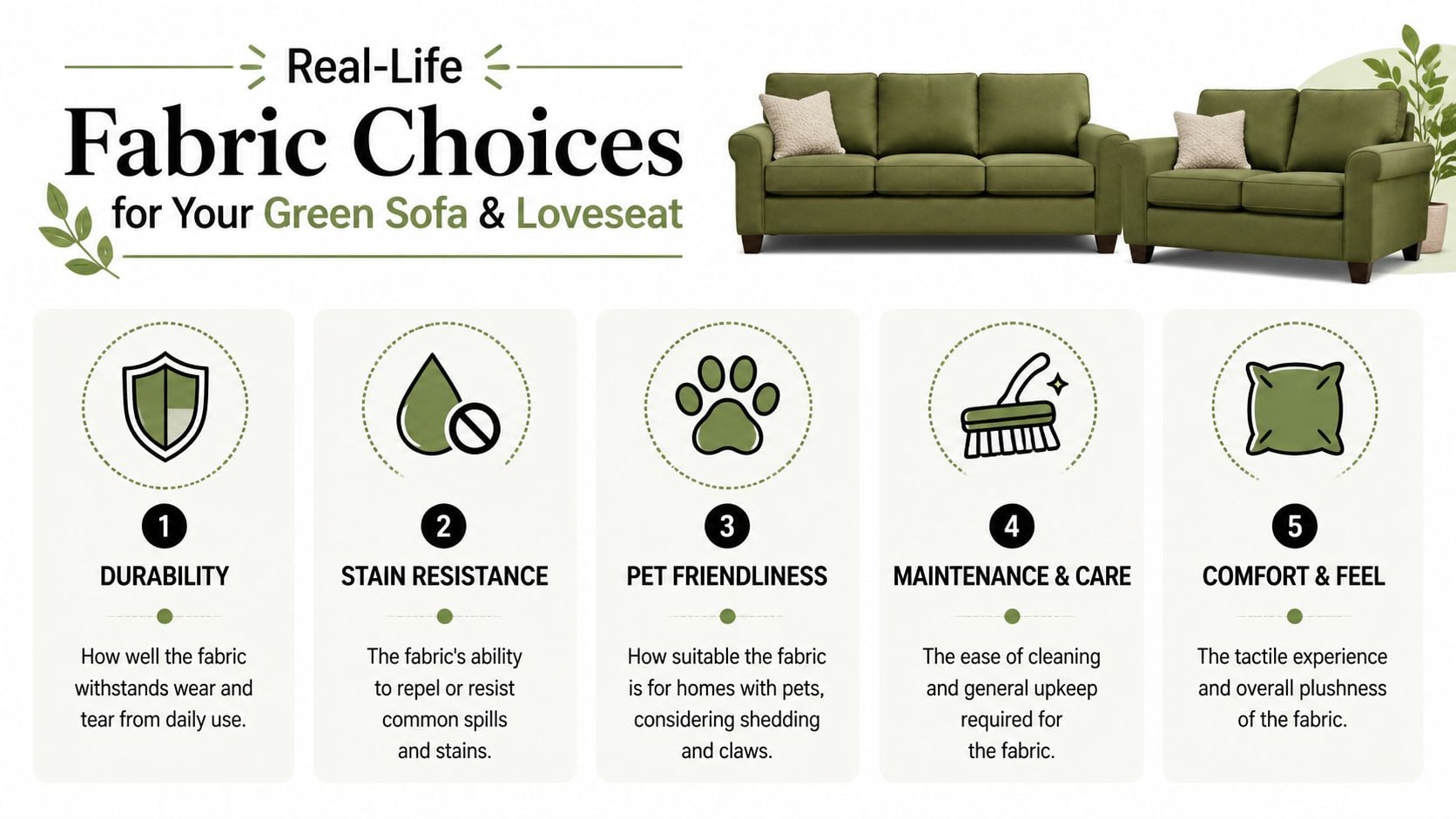
Performance fabric for busy homes
If your sofa is where life happens, performance fabric deserves a serious look. These fabrics are built for repeat use and easier cleanup, which is why so many families ask for them first.
Durability matters here. According to Living Spaces product specifications for a green reclining set, high-performance weaves can achieve over 50,000 double rubs, which is far above the standard for heavy home use. In plain language, that means the fabric is built to handle a lot of sitting, scooting, and everyday friction with less pilling and wear.
That doesn’t mean every performance fabric feels stiff or overly technical. Some are soft, textured, and comfortable enough that people are surprised when they hear what they’re designed to handle.
Velvet for richness and depth
Green velvet has a look people remember. It catches light beautifully, makes color look fuller, and can turn a simple silhouette into something special.
Velvet often makes sense when style is high on your priority list and your household habits are gentler. If you love a dressier room or want a loveseat that feels a little more elevated, velvet can be a strong fit.
The trade-off is practical. Velvet usually asks for more intentional care than a textured performance weave. In homes with active kids or pets that launch themselves onto the cushions, some shoppers prefer a tighter, more forgiving fabric.
Leather for easy wipe-ups and character
Leather takes green in a different direction. Some green leathers feel classic and library-like. Others lean more modern.
For households worried about spills, leather can be appealing because many everyday messes are easier to wipe up. It also develops character with age. Folks who like furniture that looks more lived-in over time often appreciate that.
The main question with leather isn’t just cleanup. It’s whether you like the feel, the temperature, and the more structured look compared to plush fabric.
A side-by-side way to think about it
| Fabric type | Usually a good fit for | Watch-outs |
|---|---|---|
| Performance fabric | Families, frequent use, pet homes, TV rooms | Texture and color vary a lot, so sample it first |
| Velvet | Dressier spaces, rich color lovers, statement seating | Can need more care with marks, pressure, and pet use |
| Leather | Easy wipe-ups, classic style, long-term character | Feel and appearance are different from fabric comfort |
Shopper note: If your first sentence is “We actually use our couch all day,” start with durability and cleanup, not appearance. You’ll still have plenty of attractive options.
Many Milwaukee-area shoppers are also balancing two things at once. They want something that looks current, but they don’t want furniture they have to fuss over. That’s where practical upholstery earns its keep.
If you want a deeper look at how modern textiles are built for everyday messes, our article on the benefits of performance fabrics explains what to watch for.
Sizing and Layout for Your Milwaukee Home
A beautiful sofa that doesn’t fit your room, or your stairwell, becomes a headache fast.
We’ve seen every kind of layout challenge over the years. Bay View bungalows with tighter entries. Condos with tricky elevators. Older homes with turns that look manageable until delivery day. Senior living spaces where scale matters just as much as comfort.

Start with the room, not the product tag
Before you choose a green sofa and loveseat set, measure the room where it will live. Not just the wall. The room.
Write down:
- Wall length where the main sofa may go
- Distance to the coffee table area so there’s still walking space
- Room openings and traffic paths around the seating
- Nearby windows, radiators, and floor vents that can affect placement
A loveseat can be a smart problem-solver in homes where a full second sofa would crowd the space. It gives you seating without making the room feel blocked off.
Then measure the path into the home
This is the step people skip when they get excited, and it’s one of the most important.
Measure the narrowest points from the outside door to the final room. That includes entry doors, storm doors, stairways, hallway turns, and any railing pinch points. If you live in a condo or apartment, include elevator dimensions too.
According to Castlery’s green sofa overview, many households in urban areas live in homes under 1,200 square feet, which makes space-saving designs and come-apart loveseats under 60 inches especially useful for tighter layouts. That local reality is why smaller-scale seating gets so much attention in our area.
If you can only measure one extra thing today, measure the narrowest doorway and the tightest turn. Those two numbers save a lot of stress.
Small scale doesn’t mean skimpy
People sometimes hear “small scale” and worry it means less comfort. Not so. Good small-scale furniture is proportioned for tighter rooms.
That usually means slimmer arms, a shallower overall footprint, and cleaner lines that don’t eat up visual space. You can still get supportive seating. You’re just not wasting inches where your room can’t spare them.
A green loveseat is often a smart choice in:
- Apartments and condos where every path through the room matters
- Senior living spaces where comfort and easy movement both count
- Secondary seating areas like dens, offices, or reading corners
- Open-concept rooms where bulky pieces can interrupt flow
Come-apart designs solve real delivery problems
Some sofas and loveseats are built to come apart for delivery, which can be a lifesaver in older Milwaukee-area homes and tighter upper-level spaces. That feature doesn’t get talked about enough, but it’s one of those practical details that can make a big difference.
A well-made come-apart piece helps you solve the path problem without giving up the comfort or look you want in the room itself.
If you need help making sense of widths, depths, and standard measurements, our guide to sofa dimensions in inches is a handy resource to keep open while you measure.
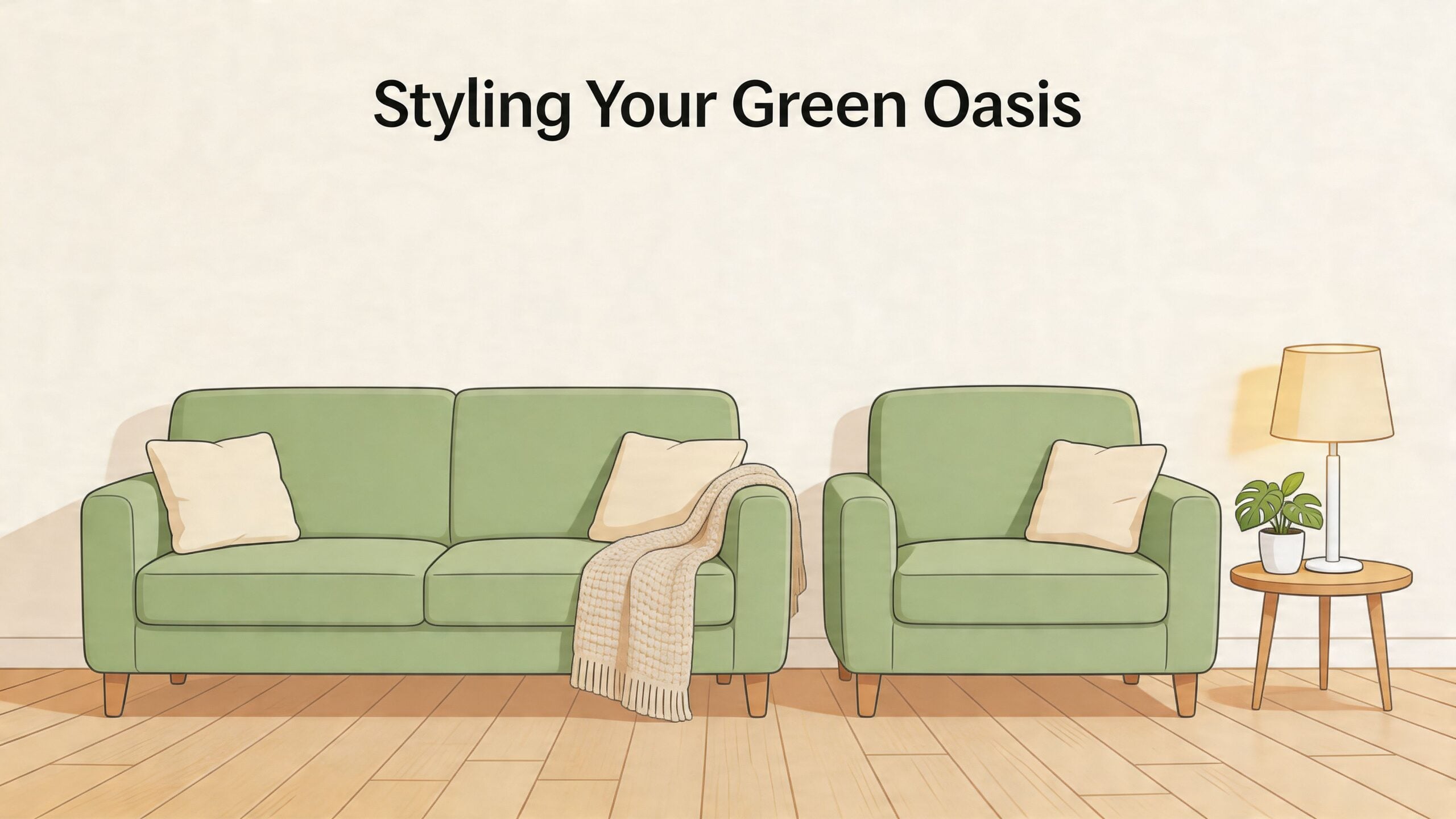
Styling Your New Green Centerpiece
Once the size and fabric questions are settled, green becomes fun again.
A green sofa and loveseat can anchor the whole room, but it doesn’t need a parade of accessories to do it. In many homes, the strongest styling move is choosing a few supporting pieces that let the seating color breathe.
A cozy Northwoods feeling
Take a forest green sofa and pair it with warm wood tables, a cream rug, and a couple of plaid or woven pillows. Add a soft throw and maybe a lamp with a darker metal finish. The room starts to feel settled, relaxed, and ready for a long Wisconsin winter evening.
This look works well when you want comfort first but don’t want the room to feel rustic in a heavy-handed way. The green carries enough personality on its own.
A modern lakefront mood
A sage or muted olive loveseat can head in a fresher direction. Think lighter woods, linen-like textures, simple art, and soft neutral curtains. Instead of lots of contrast, you get a quieter layered look.
That’s often a strong choice for homes that get good natural light or for smaller rooms that need to stay visually open.
A collected, city-style room
If you lean eclectic, olive and emerald are both versatile. Mix in a brass floor lamp, a darker wood coffee table, and a few pillows that borrow one or two colors from the art in the room.
The trick isn’t piling on more stuff. It’s repeating tones so the room feels connected.
A few easy styling habits help:
- Keep nearby large surfaces calmer when the sofa color is rich
- Repeat green once or twice in a plant, pillow, or artwork so the upholstery doesn’t feel isolated
- Use contrast thoughtfully with cream, camel, black, or natural oak
- Choose texture over clutter when you want the room to feel finished
A good living room doesn’t look “done” because every corner is filled. It looks done because the pieces relate to one another.
If you’d like a few more ideas for pulling the whole room together, our article on how to style a living room gives a simple starting point.
The BILTRITE Promise USA-Made and Amish-Built to Last
A lot of furniture advice stops at color and shape. That’s fine for inspiration, but it skips one of the biggest questions a family should ask. What is this piece made of, and how long is it likely to last?
That question matters even more for a sofa and loveseat because these are some of the hardest-working pieces in the house.
The frame matters more than most people realize
When people compare two green sofas side by side, they often notice the fabric first. The frame is doing the quiet work underneath. It decides a lot about how the piece will feel after years of use.
According to Living Spaces’ discussion of green sofa content gaps and durability, solid wood frames can last 20 to 30 years, compared with 5 to 10 years for typical engineered wood frames. That’s a major difference for households that want to buy with the long view in mind.
That’s a big reason we put so much value on USA-made, Amish-made, and solid wood construction. Those aren’t just labels on a floor sign. They tell you something meaningful about how a piece was built and what kind of service life you can reasonably expect from it.
Better value isn’t the same as cheapest price
We’ve been part of the Metro Milwaukee community since 1928, and our family has always believed affordable furniture should still be well made. A lower ticket doesn’t help much if the frame loosens, the seat support gives out, or the whole piece feels tired too quickly.
That doesn’t mean every shopper needs the same build level. It does mean it’s smart to match the construction to the way the furniture will be used.
For example:
- A high-traffic family room may call for a tougher frame and more durable seat setup
- A condo sitting room might prioritize scale and tailoring, while still benefiting from quality construction
- A home with pets and kids often needs both sturdy upholstery and a frame that won’t quit early
Why local showroom shopping still matters
There’s only so much you can tell from a photo. Two sofas can look similar online and feel completely different in person. Seat depth, cushion support, arm height, and overall build are easier to understand when you can sit down and compare.
That’s one reason many shoppers still prefer a showroom experience for living room furniture. You can see the green in real light, touch the fabric, test the seat, and ask practical questions.
For readers comparing construction details, this guide to American-made sofas is a useful overview. BILTRITE Furniture-Leather-Mattresses carries a range that includes USA-made, Amish-made, solid-wood, small-scale, heavy-duty, and come-apart options, which makes it relevant for households balancing style with long-term use.
Ready to Find Your New Favorite Seat?
After thinking through color, fabric, size, and construction, the feeling of overwhelm significantly lessens. That’s the goal. A green sofa and loveseat shouldn’t feel like a gamble. It should feel like a smart, enjoyable choice that suits your room and the way your family lives.
The nicest part of this process is that green gives you a lot of room to be yourself. Maybe your home wants a soft sage loveseat that keeps things calm. Maybe it wants a richer olive set that makes the whole room feel warmer. Maybe you need something compact for a condo, or something tougher for a household where the seating gets used from morning coffee to late-night movies.
We’ve learned over four generations that the right furniture usually doesn’t announce itself with flashy words. It feels comfortable. It looks at home. It fits the room, fits the doorway, and fits the way people gather.
That last part matters.
A sofa and loveseat set becomes the background for ordinary life. Kids climb on it. Grandkids visit. Friends settle in. Someone ends up taking a nap there during the holidays. If the color makes you smile and the build holds up to the years ahead, that’s a decision you’ll feel good about for a long time.
And while reading helps, there are some things you just have to experience in person. You need to see whether that sage looks soft or gray in real light. You need to feel whether the fabric feels smooth, textured, cool, or cozy. You need to sit down and decide if the seat supports you the way you want.
That part can’t be replaced by a screen.
Come visit BILTRITE Furniture-Leather-Mattresses in Greenfield and say hello. Our family has served Metro Milwaukee since 1928, and our team is here to help you compare colors, test comfort, measure for fit, and find a green sofa and loveseat that makes sense for your home.