How to Remove Scratches from Wood Furniture Easy DIY Solutions

Oh, that sinking feeling when you spot a fresh scratch on a beloved piece of wood furniture. We’ve all been there! But here's what decades in the furniture business have taught us: most of those everyday scuffs are surprisingly easy to fix. Most minor surface scratches can be handled in minutes with a few simple tricks, while even deeper marks can often be blended away with a little patience.
Your Guide to Assessing Wood Furniture Scratches
Before you reach for any polish or filler, you have to play detective. Here at BILTRITE, serving our Metro Milwaukee neighbors since 1928, we know the most critical step is understanding the damage. Not all scratches are created equal, and the right repair depends entirely on how deep it is and the type of finish on your furniture.
Life happens, especially around well-loved, solid wood pieces. Those battle scars from keys, pet claws, or energetic kids are exactly why so many people are choosing to repair rather than replace. In fact, the global market for wood furniture repair was valued at a huge $2.5 billion in 2025 and is projected to climb to $4 billion by 2033. It’s a smart, sustainable trend, and you can learn more about it in this detailed market report.
Start with a Clean Slate
First things first: you can't properly assess or repair a scratch on a dirty surface. Any dust or grime will get trapped in your repair, making the final result look murky and obvious.
Gently wipe the area with a soft, lint-free cloth dampened with warm water and just a touch of mild dish soap. Immediately follow up with a dry cloth to make sure no moisture lingers. This quick clean also prevents you from accidentally grinding dirt into the finish, which could make things worse. If you're tackling a different kind of mark, our guide on how to remove water stains from wood can help.
The Fingernail Test: A Simple, Classic Trick
This is one of our go-to methods because it’s so simple and it just works! To gauge the depth of a scratch, lightly run your fingernail across it, going perpendicular to the direction of the mark.
- If your nail glides smoothly over the top, you’re in luck. This is just a superficial scuff in the protective top coat (the lacquer or varnish), making it an easy fix.
- If your nail catches inside the groove, the damage has broken through the finish and has reached the bare wood. This will take a bit more effort to fill and blend.
Quick Scratch Assessment Guide
Use this simple table to quickly identify the scratch on your furniture and figure out the best way to begin your repair.
| Scratch Type | How It Looks and Feels | Best First Step |
|---|---|---|
| Surface Scuff | A light, often white-ish mark. Your fingernail glides over it. | Furniture polish or a simple household remedy like a walnut or coffee grounds. |
| Shallow Scratch | Your fingernail just barely catches. The color is lighter than the wood. | A specialized repair marker, wax stick, or a blended stain application. |
| Deep Scratch | Your fingernail clearly catches. You can see the lighter, raw wood beneath. | A wood filler putty or epoxy stick that needs to be colored and sealed. |
| Gouge or Chip | A significant dent or chunk of wood is missing. | Wood filler followed by careful sanding, staining, and finish matching. |
This quick check helps you avoid using the wrong product and ensures you start with the right tools for the job, saving you time and frustration.
Know Your Furniture's Finish
The type of finish on your piece is a huge factor in a successful repair. Most modern furniture, especially the durable, USA and Amish-made furniture we carry, has a hard, protective lacquer or polyurethane finish. Vintage or specialty pieces, on the other hand, might have a softer oil or wax finish.
Here’s a quick way to check: find a hidden spot, like the underside of a table, and apply a single drop of boiled linseed oil. If the oil beads up on the surface, you have a hard, sealed finish. If it soaks right in, it's likely an oil finish. Knowing this helps you choose a repair product that will actually bond with and blend into the original surface.
Once you know the depth of the scratch and the type of finish, you're ready to pick the right solution and bring your furniture back to life.
Simple DIY Fixes for Minor Surface Scratches
So, you’ve taken a look and confirmed it’s just a minor surface scratch. That’s great news! This is where you can roll up your sleeves and have a little fun, and you might not even need to leave your kitchen to find a wonderful solution. As a family business that’s been helping Milwaukee families find beautiful USA and Amish-made furniture since 1928, we’re big fans of simple, effective fixes.
Before jumping into a repair, it helps to be certain about what you’re dealing with. This quick decision tree is a great way to visualize that simple assessment process we talked about.

As the graphic shows, a quick fingernail test is often all you need. If your nail glides right over it, a gentle DIY approach should work beautifully. If it catches, you’re likely looking at a deeper gouge that needs a bit more attention.
The Famous Walnut Trick
This is an old-school classic for a reason—it honestly works! If you’ve got a light-colored scratch on a medium-to-dark wood finish, just grab a raw, shelled walnut.
Break it in half and rub the exposed "meat" of the nut directly along the scratch, making sure to follow the wood grain. The natural oils seep into the wood, gently darkening the abrasion and helping it blend in. Just let it sit for a few minutes, then buff the spot with a soft, clean cloth. You might be surprised at how well it disappears!
Other Clever Kitchen Hacks
Your pantry probably holds a few other secret weapons for those minor scuffs. The idea here is to gently re-introduce a bit of color back into the damaged area.
- For Darker Woods: Try making a paste with instant coffee grounds and just a few drops of water. Use a cotton swab to dab a tiny amount onto the scratch, let it sit for 5-10 minutes, then gently wipe away any excess.
- For Reddish Tones: A damp black tea bag can do the trick. Steep the bag in a tablespoon of hot water for a couple of minutes. Gently dab the tea onto the scratch, applying it in thin layers until the color looks right.
A quick word of advice: always test these methods on a hidden spot first—like the back of a leg—to make sure the color is a good match for your furniture’s finish.
The Power of a Good Furniture Polish
Sometimes, the simplest fix is just giving your furniture the routine care it deserves. A quality furniture polish does more than just shine; its oils and conditioners can actually fill in those microscopic scuffs, making them seem to vanish. Keeping furniture in top shape is a big deal for homeowners. In fact, the global furniture polish market is projected to reach $24.3 billion by 2025, and households make up a huge 45% of that. It’s clear that people in places like Metro Milwaukee know that protecting their investment is just smart.
Proper cleaning and polishing are the first steps in great furniture care. For more tips on that, you can check out our guide on how to clean wood furniture. This kind of maintenance doesn't just hide tiny flaws; it nourishes the wood, which helps prevent future drying and cracking. At BILTRITE, we’ve always believed that well-cared-for furniture is happy furniture.
Repairing Deeper Scratches and Gouges
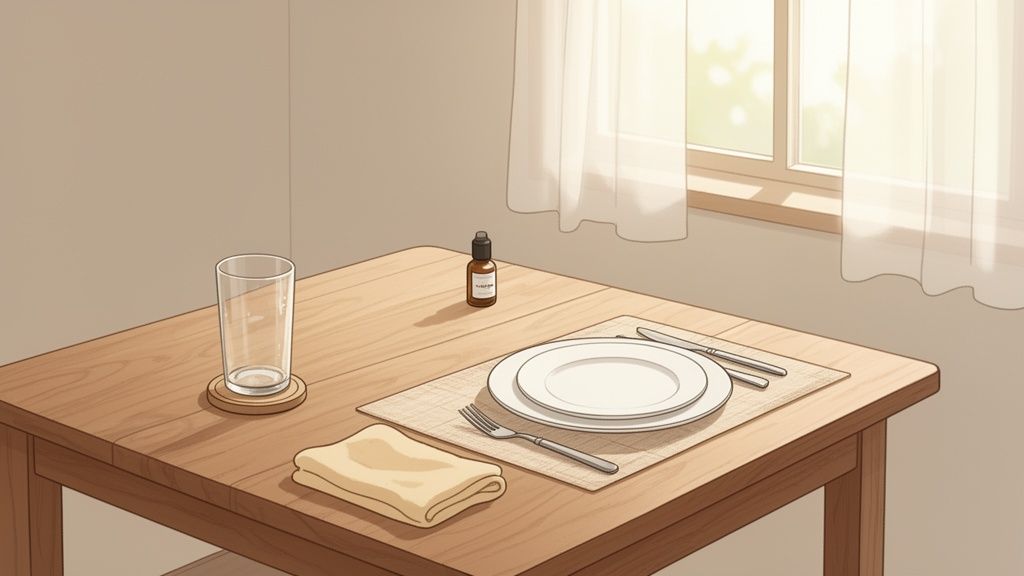
So, the scratch you’re staring at is a bit more than a faint scuff. If your fingernail catches in it, don’t worry! This is where we get to bring out some specialized tools. Think of it less like major surgery and more like a satisfying weekend project that restores your furniture's character.
What about those more noticeable marks that have broken through the finish? It’s time to graduate from pantry remedies to tools designed for the job. Here at BILTRITE, we know that the solid wood furniture we love is built to last, and a good repair is just part of its story.
Your Go-To Repair Tools
For these medium-depth scratches, your best friends will be products like wood filler sticks, wax pencils, and stain markers. You can find these at most hardware stores, and they're incredibly user-friendly.
- Wood Filler & Wax Sticks: These are fantastic for filling in the depth of a scratch. They come in various shades and can be applied directly into the gouge to make it level with the surrounding surface.
- Stain & Touch-Up Markers: Think of these as magic wands for restoring color. After you've filled a scratch, a marker in a matching shade can help blend the repair seamlessly with the wood's grain.
The trick is choosing the right color. It's always a smart move to select a shade slightly lighter than your furniture, as you can always go darker. And just like with our kitchen hacks, always test your marker or stick on a hidden spot first! The underside of a table or the back of a leg is a great place to check the color match before you commit.
A Natural Alternative: Olive Oil and Vinegar
If you prefer a gentler approach before reaching for the hardware store kit, there’s another classic blend you can try. It's a simple mix of olive oil and vinegar, and it works by nourishing the wood while the vinegar gently cleans.
For this method, mix 3/4 cup of olive oil with 1/4 cup of white vinegar. Dab a soft cloth into the mixture and rub it into the scratch, following the direction of the wood grain. The oil helps moisturize and darken the exposed wood, diminishing the scratch's appearance. Let it soak in, then buff the area with a clean, dry cloth. This works best on scratches that have just broken the surface.
At BILTRITE, we believe in lasting quality. The heavy-duty finishes on our Amish and USA-made furniture are designed for real life, which is why a good topcoat is so important for protecting against day-to-day wear and tear.
Understanding the Finish
Speaking of topcoats, the quality of a furniture's finish is its first line of defense. It's a big deal in the furniture world. The global market for wood coatings was valued at $12.62 billion in 2025 and is expected to grow, all thanks to innovations that boost scratch resistance. This is why we're so proud that many of our Amish-made pieces feature finishes tested to endure 10,000+ abrasion cycles—it’s a true investment in longevity.
For really deep gouges or extensive damage, a more involved repair might be needed, which can sometimes mean refinishing the surface. For a closer look at that process, check out our guide on how to refinish wood furniture.
Ultimately, tackling these deeper scratches is about taking a patient, step-by-step approach. Fill the depth, match the color, and blend it in. It's a simple process that can make a huge difference in how you feel about your furniture.
Keeping Your Wood Furniture Beautiful for Years
You did it! That pesky scratch is a thing of the past. Now, let's talk about the best way to handle scratches in the future—by stopping them before they start.
Here at BILTRITE, we've spent four generations helping Milwaukee families find beautiful, solid wood furniture. We've learned a thing or two, and we can tell you with certainty that proactive care is the best care. Creating a simple routine is the secret to keeping your pieces looking incredible for decades.
Think of your furniture's finish as a shield. The best defense is a strong offense, which all starts with gentle, consistent cleaning.
Daily Habits Make a Huge Difference
Your first line of defense is nothing fancy: just a soft, dry, lint-free cloth. A quick dusting every few days prevents airborne grit and dust from settling on the surface. That grit is what causes tiny micro-scratches when other objects are slid across it.
For stickier spots or fingerprints, a cloth slightly dampened with water is usually all you need. The key is to immediately follow up with a dry cloth to prevent any moisture from lingering on the finish. For daily upkeep, it's best to avoid harsh chemical cleaners, as they can wear down the protective topcoat over time.
Coasters Are a Family's Best Friend
We really can't say it enough: coasters and placemats are non-negotiable for protecting real wood furniture! They're the simplest and most effective way to prevent the two biggest culprits of surface damage—moisture rings and heat marks.
- Coasters: Make it a house rule for everyone to use them for all drinks, hot or cold. The condensation from a cold glass can leave a white ring just as easily as a hot mug of coffee.
- Placemats & Trivets: These are absolutely essential for dining tables and servers. They shield the surface not only from hot dishes but also from scratches from plates, silverware, and serving utensils.
Making this a habit protects your investment and ensures your dining table is always ready for the next family gathering.
Here in Metro Milwaukee, we know how much the weather can swing from a humid summer to a dry winter. These changes can cause wood to expand and contract, which puts stress on the finish. Keeping your home's humidity level as stable as possible helps protect your furniture from the inside out.
The Impact of Sunlight and Climate
Direct sunlight is another sneaky enemy of wood furniture. Over time, UV rays can fade the color and dry out the wood's finish, making it brittle and more susceptible to damage.
If you can, try to position your most valuable pieces away from windows that get intense, direct sun all day. If that’s not an option, simply using blinds or curtains during the brightest hours can make a huge difference.
A regular polishing schedule also helps tremendously. Polishing isn't just about shine; it’s about feeding and conditioning the wood. For most modern lacquered finishes, like those on many of our USA and Amish-made pieces, a quality furniture polish every few months is plenty. This adds a thin, protective layer that repels moisture and makes routine dusting even easier.
By adopting these simple habits, you're not just cleaning your furniture; you're actively preserving it for the next generation. This kind of preventative care is a cornerstone of responsible furniture ownership. For a deeper dive, check out our ultimate guide to protecting wood furniture from scratches and stains. It’s packed with even more tips to help you keep your furniture looking its best.
When to Call a Professional for Furniture Repair
We are huge fans of a good DIY project. There’s something incredibly satisfying about fixing things with your own two hands! But after being in the furniture business since 1928, we also know the value of calling for backup.
Some repairs are less of a simple fix and more of a delicate operation. Knowing when to hand the reins to a professional can save you a ton of headaches and, more importantly, protect your beautiful furniture. Sometimes, an enthusiastic DIY repair can accidentally do more harm than good. Our goal is to help you feel confident in your choice, whether that’s grabbing a wax stick or dialing up a local expert.
Signs a Scratch Needs an Expert's Touch
So, how do you know when you’ve crossed the line from a simple touch-up to a professional-level job? It’s usually pretty clear once you know what to look for. Think of it like deciding between a bandage and needing stitches—some wounds just need a doctor.
Consider calling a pro if you see any of these issues:
- Extremely Deep Gouges: We’re talking about more than just a surface scratch. If a chunk of wood is missing or the damage is so deep that simple fillers won't make it level, a professional can rebuild the area in a way that’s structurally sound and invisible.
- Extensive Water Damage: If a scratch is accompanied by dark stains, a raised grain, or bubbling in the finish, this points to water damage. An expert knows how to properly dry the wood, treat the stains, and repair the finish without trapping moisture inside.
- Damage on Antiques or Veneers: Antique furniture often has delicate, shellac-based finishes that modern repair products can easily ruin. Likewise, since wood veneer is just a very thin layer of wood, it's incredibly easy to accidentally sand right through it. Pros have the gentle touch and specialized knowledge these pieces require.
Finding a Great Pro in Metro Milwaukee
One of the best parts of being a local, family-owned business is our deep connection to the community. We believe in supporting other skilled local craftspeople! When you're looking for a furniture repair specialist in the Milwaukee area, you’re not just hiring help; you’re investing in local expertise.
When you start your search, we suggest asking a few key questions to find the right fit for you and your furniture.
A great place to start is asking, "Can you show me examples of similar repairs you've completed?" Seeing before-and-after photos of their work can give you a fantastic idea of their skill level and attention to detail.
Before you commit, it’s always a good idea to get a written quote that outlines the work to be done and the total cost. Any reputable restorer will happily provide one. They should also be able to explain their process—what materials they'll use and how they plan to match the original stain and finish.
At the end of the day, whether you fix it yourself or call a pro, the goal is the same: to keep the furniture you love looking its best. And if a piece is ever beyond a simple repair, we’d love to see you in our Greenfield showroom. Our awesome team can help you find a new, durable, USA-made piece that will last for generations to come.
Come See the Difference Quality Furniture Makes
Taking care of well-made furniture is a true pleasure, and it all starts with buying pieces that were built to last in the first place. For over 95 years and across four generations, our family has been helping Milwaukee-area families find affordable, better-quality furniture that stands the test of time. We truly believe in the strength of real solid wood, the incredible skill of our Amish craftsmen, and the pride that comes with offering USA-made pieces.
When you know your furniture is made from high-quality materials, you feel more confident in maintaining it. That's why we’re so passionate about what we sell; it’s an investment in your home.
When you walk into our showroom in Greenfield, you’ll find a team with over 400 years of combined experience ready to offer friendly, no-pressure advice. You can see and feel the heavy-duty construction for yourself—no particleboard here! If you're curious about what sets these pieces apart, our guide to the best solid wood furniture brands is a great place to start your research.
Whether you're furnishing a small apartment or searching for a durable dining set for a busy family, we’re here to help you find exactly what you need. We'd love to see you in our store! Come say hi and let us help you find the next great piece for your home.
We Get Asked This A Lot…
As a family business that’s been part of the Milwaukee community since 1928, we’ve answered just about every question you can imagine when it comes to furniture. It’s only natural—when you invest in a beautiful piece of solid wood, you want to keep it looking that way. Here are a few of the most common questions we hear from our neighbors.
Can I Just Use Coconut Oil on a Scratch?
This is a really popular one, especially with all the home hacks you see online! While some natural oils, like walnut oil, can temporarily darken and hide a minor scratch by soaking into the exposed wood, we'd steer clear of most cooking oils.
Oils like coconut or even vegetable oil can go rancid over time. Not only does this create a funky smell, but it leaves behind a sticky film that becomes a magnet for dust and grime, making the problem worse in the long run. It's much safer to stick with products specifically designed for wood care.
Do These Fixes Work on Wood Veneer or Laminate?
This is a fantastic and really important question. The methods we’ve been talking about are strictly for real solid wood. You have to be much more careful with other materials.
Veneer is just a paper-thin layer of nice wood glued over a core material (like particleboard). If you try to sand or even rub too aggressively, you can easily go right through that top layer, and there’s no fixing that. Laminate is a different beast entirely—it’s basically a photograph of wood grain on a plastic-like surface.
For both veneer and laminate, your only real option for a scratch is a careful touch-up with wax filler sticks or colored repair markers made for those specific surfaces.
Here at BILTRITE, we've always specialized in the real deal: solid wood furniture built by incredible USA and Amish craftsmen. It's made to be lived with, repaired, and passed down through generations.
How Often Should I Be Polishing My Furniture?
There’s no magic number here, as it really depends on the piece’s finish and how much daily use it gets.
For most modern, lacquered finishes, a light polish every few months is plenty. If you have a softer, oiled finish, you might need to re-apply a conditioning oil once or twice a year to keep the wood from drying out. The biggest mistake people make is over-polishing, which can create a cloudy, dull buildup.
Honestly, your best defense is just regular dusting with a soft, dry cloth!
At BILTRITE Furniture, we believe part of the joy of owning quality furniture is knowing how to care for it. If you’re looking for a piece that will stand the test of time, we’d love for you to stop by our showroom. Find your next family heirloom at https://www.biltritefurniture.com.